As long as I can remember I have wanted to travel. I am happiest talking about travels, planning travels and of course travelling. I have already travel to all seven continents and 75+ countries and I truely believe that travel bug only gets worse the more places you see!
A Kiwi born and bred, I have spent almost as long living abroad as I have back in Aoteoroa but am now back living in Christchurch and making the most of the amazing scenery we have here. I am lucky to be able to call this place home.
I have always writen journals on my trips in the days before blogs, moving to an online format in 2007 when I left the UK on what turned out to be a 6 year journey back to New Zealand. One day I may get around to uploading those old blogs, but for now I am focusing on an upcoming 4 month trip to South America.
I hope you enjoy my updates.
Galapagos week 3 … how is that possible that it is week 3 already? I don’t know about you, but I do like a routine and I am very comfortable in my routine here!
Classes are going ok, especially now I have my head back in learning mode. That said I am having to learn a lot of grammar and verb conjugations (unfortunately this is teaching me how little I know about English grammar). I am using a little more Spanish at home with my ‘family’ and around the time and feeling a little more confident about it. Of course, some days it really clicks and others I just seem to hit a wall and have not idea what is going on. 😬😂
I have been enjoying watching the football world cup (despite the fact that neither Ecuador nor New Zealand are in it and made the effort to watch most of the England games – it did help that they were all at midday! As I watched the England v Colombia game it seemed like such a long time ago I was playing football with the future Colombian football stars back in Taganga. Of course, it was not really that long ago but I have just done so much since then!
One of the things I really love about Puerto Ayora is that any day, every day, all day you can walk around town and see the wildlife interacting their fellow island inhabitants – sealions sharing benches with people, iguanas doing sun salutations on the footpath, sealions and pelicans waiting for scraps at the fish market (some patiently, others not so much). 😂
They illuminate the water front at night and there are always baby sharks and rays swimming around, avoiding the sealions and fishing pelicans (though I think they are too big for the pelicans to eat!).
After a week of classes, I walked down to the Charles Darwin Research station – I had been there before last year but enjoyed wandering around again, admiring the good work they are doing recovering the tortoise populations on the islands.
I ended up having a busy weekend (why does that always happen when you don’t plan it that way??). Saturday consisted of a morning of football watching before walking down to the beautiful Tortuga Bay. I walked down the beach to the shelter swimming area (the main beach has very strong currents so swimming is not allowed). I took the opportunity to get some swimming in and think I had probably swum about 1km before finding myself a little to close to a smallish reef shark!
Not sure who was more surprised (or scared) but we both swam in different directions pretty quickly and I decided I had swum enough. I had a beautiful stroll back along the beach taking photos of the wildlife … iguanas, fishing pelicans and other sea birds.
Sunday was diving day (quickly becoming my favourite day of the week). The first dive was at Mosquera again – and I saw the usage suspects … hammerheads, Galapagos sharks, rays, turtles and the most incredible school of barracuda which I swam amongst – so special.
Next dive was at Daphne. It was a dive site more in keeping with those I had dived in Fiji with coral formations covered in nudibranchs, Christmas tree worms and lots and lots and lots of colourful fish. We were joined on a couple of occasions by ever playful sealions and managed to wake a few sleeping turtles and reef sharks. In area, there were so many starfish – more than I have every seen in one place.
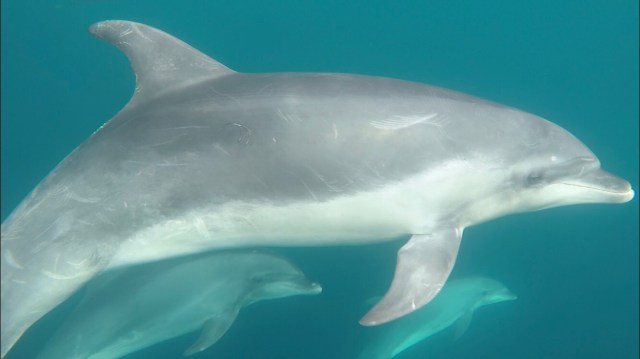
And then … on the way back to the boat we came across a large pod of dolphins so we quickly jumped back in to the water and caught up with. When the dolphins had moved on, they seemed to be replaced by sharks so we quickly jumped back in the boat. The dolphins then doubled back and swam around the bow of the boat for a while as we sailed home.
Dolphins around the bow, blue footed boobies fishing nearby and pelicans flying by – I can’t think of anything better! 😊
All in all, another amazing day out – to be honest, that is pretty standard for the Galapagos Islands and just I cannot underestimate how lucky I am to consider days (and dives) like this to be normal!!
The perfect day ended off just as well with a birthday celebration (mine) with my family.
For the weekend I headed to Isabella – the largest island in the archipelago and as it turned out, a rough two-hour ride in a water taxi to get to (of this was not helped by the unplanned mojitos the night before 🤪).
Getting the water taxi appeared to be organised chaos. Firstly you had to register with your captain as there are numerous boats all leaving around the same time and each has its little area near the wharf where it registers it passengers. Once registered you are given a lanyard with the boat’s name on it so people know what boat you are on.
Next, you wait amongst the masses (ideally with others on the same boat – normally around 20-25 people) until your boat is called for quarantine inspection which either consists of an officer giving your bag a cursory inspection, or lining the bags up on the wharf for sniffer dogs to walk over. The purpose of this is to maintain each individual island’s unique biological integrity.
From here we jumped on a small ‘shuttle’ boat that took us to our launch for the interisland journey.
As mentioned before, the journey was a rough one! I had hoped to take a nap but that was just not possible when you were constantly being slammed against the bench seats as they boat slammed over the swells. By the time we arrived I was very grateful I was not doing the return journey that same day as some people I got chatting too where. As always, upon arrival, sea lions were on hand to entertain us whilst we waited for the shuttle to take us to shore.👍🏻
Unfortuantely, there was a low fog over the island (which remained most of the time I was there) so could not see the active volcano.
I had booked a snorkelling trip to a spot called Los Tuneles, which meant just an hour after arriving, I was back on a boat for another 50 minutes smashing over the swells! For someone who does not really like the high seas I seem to be spending a fair amount of time in them these days 😬
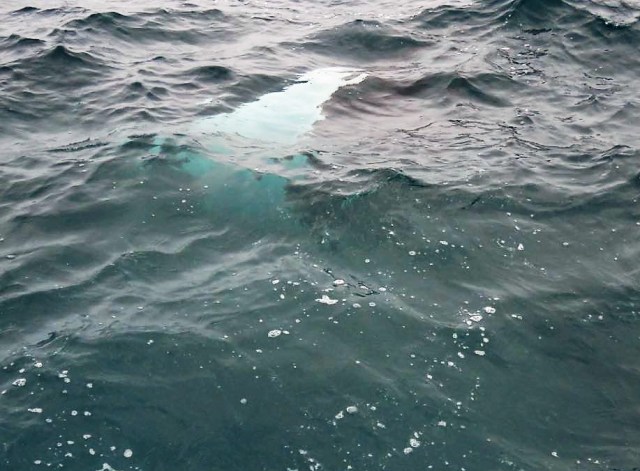
The first of the firsts for the day was manta rays! I have never send them before and they were feeding close to the surface so could just see them – next time I see them I want to be in the water with them!
Honestly – this is a manta ray lol
A little later we donned our wetsuits (short ones) and mask and snorkels and jumped in the water near the mangrove clad shore line. Initially the water was quite cold and the snorkel was a little dull as we weaved our way in and out of the rocky coves, shallow corals and the ‘tunnels’ formed by collapsed lava flows – but 2 hours 15 minutes later I was buzzing and it had turned in to the most EPIC snorkel ever. Firstly we saw massive turtles, many reef sharks and the usual assortment of fish.
We then moved in to more shallow water and here we were joined by a couple of endangered Galapagos penguins. They were more than happy to go about their business of catching their lunch right in front of our faces – literally, too close at some points for the camera! We watched them for about 10 minutes and it was incredible!
Some of the group decided to get out then as they were cold but we were still on the hunt for the illusive sea horses in the mangroves which I have never seen before – so just 4 of us continued the hunt. Along the way a sea lion joined us 😁👍🏻 swimming around and around, a couple of times right up to my camera – again just the most incredible experience.
Then we found the sea horse – much bigger than I had expected and well camouflaged in the tangled root system of the mangroves. It was also the first one I have ever seen in the wild which made it even more exciting.
After lunch on board we surfed the boat in through the reef to cruise quietly through the most amazing landscape of little lava islands, collapsed lava tunnels forming natural bridges and of course cactus – the water so clear we could see turtles gracefully cruising through the water …. it was incredible to think that more amazing places like this are being created as we were there (though we still could not see the volcano which is erupting)!
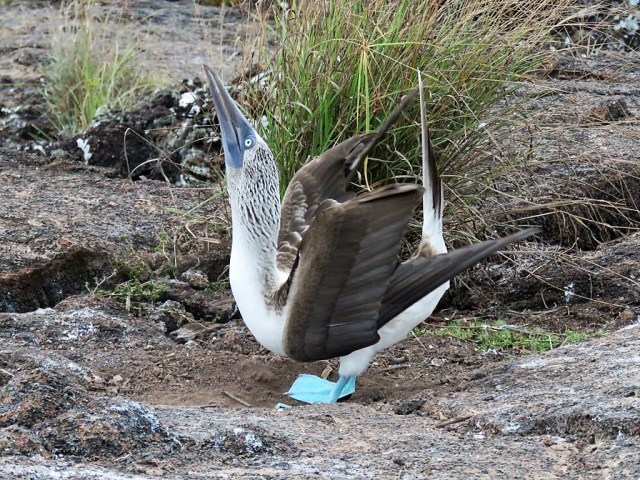
We then took a quick land excursion to see some of the blue footed boobies nesting in the area and to round of the already amazing day they were in full on mating mode and doing their famous boobie mating dance 😘. This started with the male showing off his blue feet by strutting from one side to the other and finishing off by pointing his head and bill up to the sky while raising his tail and wings (known as ‘sky pointing’ I think).
I cannot stress just how amazing this day – just when I think these wonderful islands have shown me the best they have to offer, they come up with something new to blow my mind.
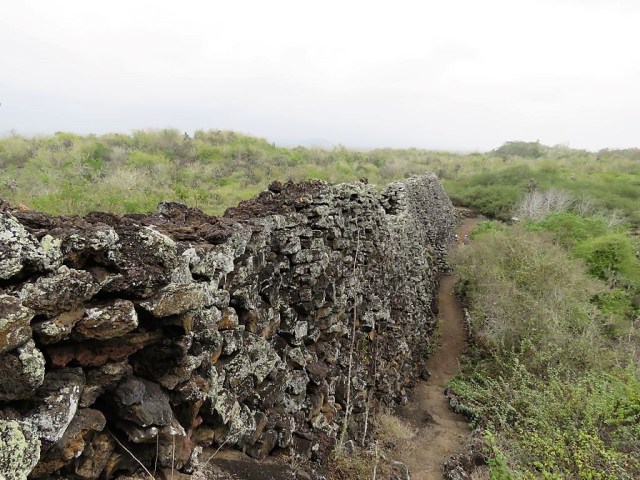
After a quiet Saturday night, I hired a bike on Sunday morning and rode the 5-6 km trial out to the Wall of Tears which was built between 1946-1959 at the site that was the infamous Isabella Penitentiary Colony, back in the days when rather than tourists, the islands were a popular destination for political prisoners and ‘deliquents’. The wall is now described as a ‘futile construction’ which the prisoners were forced to build by hand out of the heavy volcanic rock for no other reason but to make them suffer!
From here it was a short hike up to a lookout point at what was an old US army radar installation (long since removed). From here you could see most of the south coast of the island but sadly still no erupting volcano!
The 5-6 km trail was dotted with numerous stops along the way, some planned and sign posted such as beautiful mangrove areas with crystal clean water, beaches covered in marine iguanas small and large. They were so well camouflaged against the rocks I almost did not see them until I was about to step on them – suddenly they all started moving and I saw the rocks were covered in them 👍🏻
Other stops were less planned such as giant tortoises on the side of the road and in some cases on the road causing somewhat of a road block 😂 and of course iguanas crossing the road. As I quietly rode around, I could not help thinking just how lucky I was to be here again in these truly special islands.
On the way back to town I took a short detour to a nearby lake to see flamingos – there were only 7-8 of them and they all appeared to be sleeping but they did move ever now and then – some of them were a beautiful deep pink colour – far more colourful than I had seen before.
Back to town to shower off the dust from the ride and before being picked up for the launch back to Santa Cruz. Seating on the launch was first in, first served – either outside where you had fresh air but a chance of getting very wet, or inside where it was stuffy and hot! I had got a prime spot on the way over just on the cusp of inside and out but was one of the last people to get on the return boat and ended up sitting inside which was not ideal.
To be honest I think the trip was a little better than the one over except for the fact that the engines keeping stopping leaving us rolling around in the swells 😬. It happened 5 or 6 times and I must admit I was a little concerned if we were going to make it 🤪 and it was really not clear what the issue was.
2-4 different launches run the same journey at the same time – perhaps for safety but of course the others had gone ahead of us given all our stops! Before too much worry set in we finally made it back to the safe haven of Puerto Ayora and were greeted by frolicking sea lions ❤️ they just can’t help but make you smile.
One of the many positives about staying with a family, is getting to enjoy local family life. My host had a friend from the mainland visiting and had arranged a full day out of sightseeing for us all on Sunday.
Although the Galapagos Islands are pretty much smack bang on the equator they are not the tropical paradise many expect (though of course they are a paradise) and they have two distinct seasons.
The dry, orgarua, season, which runs from July to December. “Garua” refers to the fog and mist that common hangs on the higher elevations during this season. The hot or wet season lasts from January through June, with March and April generally being the wettest months
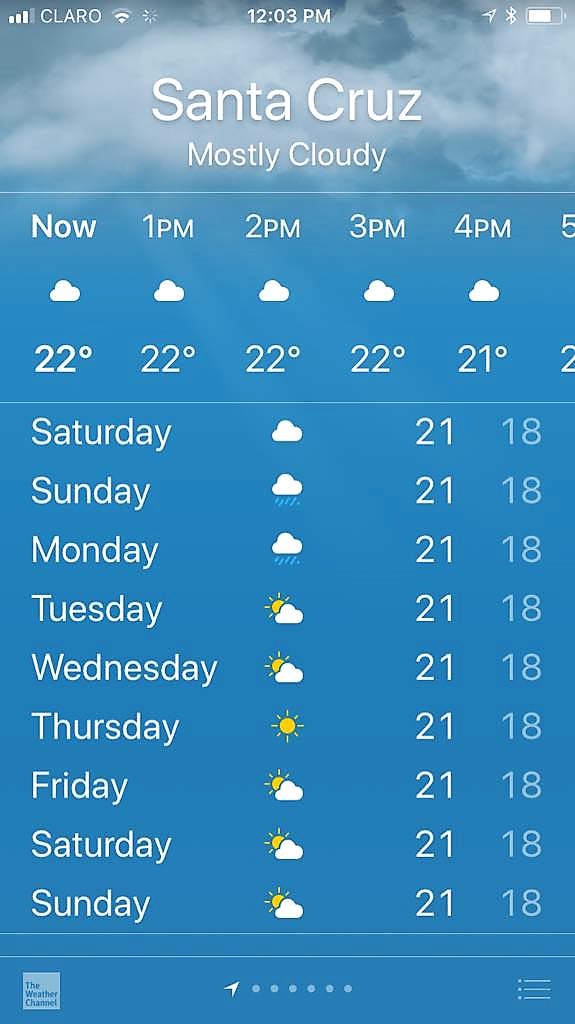
Now it is the Garua season which has less rain than other times of the year and is slightly cooler due to Humboldt Ocean currents – of course this means the water is slightly colder than earlier in the year (so we are diving in 7mm wetsuits!), but that is the current that brings in all that great nutrient rich waters which brings all the marine wildlife with it!
With all that being said there is rarely very little variation in the forecast as you can see from the photo below!
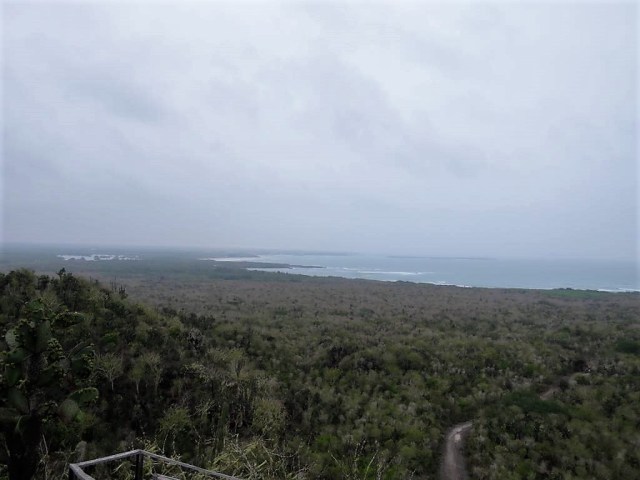
What is even more interesting, is that as you cross the island of Santa Cruz (approximately 40km from one side to the other and an elevation of 864m), you can literally pass through 2-3 different weather systems!
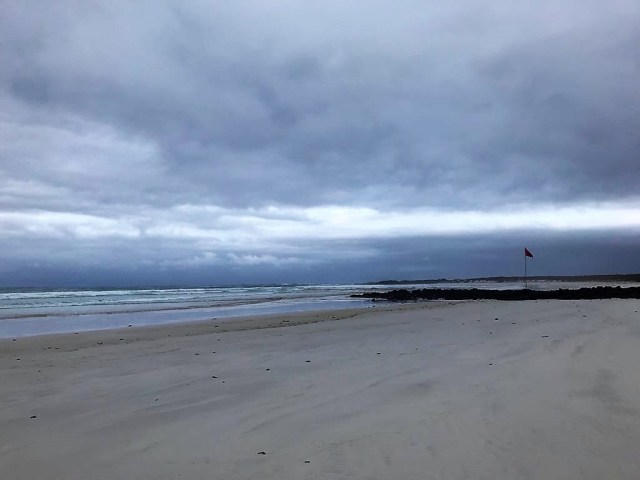
Despite the weather, it was a great day out. We walked through the lava tunnels (including have to crawl in one part – though we passed a couple who had taken their bikes through which must have been a challenge), visited a tortoise ‘ranch’ (in fact the same one I went to on my first day in the islands last year) and the to Playa el Garrapatero, a lovely little beach. Unfortunately, as it was overcast, the water was too cold for me to swim though it did not put others off. I spent a lovely hour exploring the lava formations, rock pools and taking photos of birds – because you can never have enough photos of Galapagos birds right?
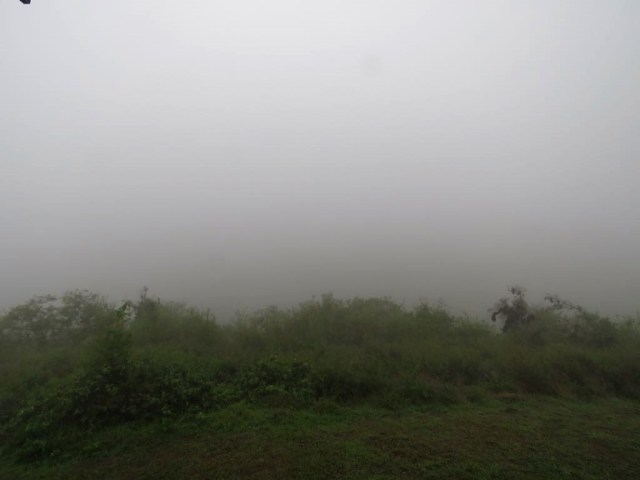
Our final stop was a reserve area (the Reserva Ecological Cerro Mesa) for a viewpoint of the island – according to their brochure the scenic look has a “view of countless bays, islands, inlets and cliffs … from a 500m elevation I meta and cliffs”. Of course it was all covered in mist so all we saw was mist 😂. But, we did see the volcano crater – the Cerro Mesa crater is allegedly the “world’s largest collapse of a subterranean magma chamber” – (1km in diameter and 130m deep). You could walk down but it really was not the right weather for that!
I had to rush to finish my homework over breakfast on Monday (that will teach me to leave it to the last minute) – there were a couple of questions I asked my family for help with and they did not know the answer!! My host ‘Mum’ even texted her father who is a Spanish teacher! This week I had a different teacher for three days as my normal teacher was away. I really enjoyed his lessons and the fact that he didn’t give me any homework 🤪.
Now I have a routine, I am trying to go for a run/walk 3-4 days a week – the aim is be fitter when I leave here than when I arrived as I really do need to be fitter for the next physical challenge in about 6 weeks’ time – the Inca trial. Sometimes I run around the town (often getting lost in the narrow little ‘suburban streets) and sometimes I run the track down to the beach and back (a 6km round trip). Good to be getting out and doing some exercise as well as being able to explore this little piece of the island.
I have been excited by the amount of volcanic activity in the islands in the recent weeks. After all, the islands were formed by this kind of volcanic activity so it is almost like being here during a bit of a growth spurt. Fernandina (an island I had visited last year) started erupting the day before I arrived in the islands. The lava was running in to the sea on the far side anyway so there was no way of seeing it as a tourist.
On Tuesday the news came in that Sierra Negra on Isabella had erupted! I had hiked to the rim of its caldera last year and had contemplated doing it again this year but access to the site had been suspended since earlier in the year because the increased activity! Now 3 days before I was planning to visit the island it erupted …. I was concerned that I might not be able to go to the island, or, if I could go would I be able to see it. (FYI I did get to go to the island but no I could not see the volcano, more about that in another post!)
To finish off the week I went diving again. This time to Gordon Rocks, a dive site about 2 hours sailing away from Santa Cruz. It was another two amazing dives with lots of fish, sharks, rays and turtles. Highlights for me was seeing a turtle getting it’s shell cleaned and swimming through the middle of a school of barracuda only to be taken by surprise by a turtle right next to us. Finally and most exciting was a Mola Mola (or Sunfish) – it was relatively small for a Mola Mola (they are the heaviest known bony fish in the world and adults typically weigh between 247 and 1,000 kg). But nevertheless I was thrilled to see it!
The sun came out for the 2 hour sail back (and for once I actually enjoyed the boating experience), relaxing on the deck in the sun.
Despite having an early start planned for Saturday (it seems every morning is an early start!) I decided to take a walk through the town on Friday night and I bumped in to a girl I had met earlier in the week watching the football. She had been working on a super yacht until it hit a rock and broke its rudder. The boat was now stranded on the Galápagos until a new rudder could be built (in Germany) and then shipped to somewhere (maybe New Zealand) to be installed!
She was on her way out of the country after waiting around over a month with no progress 😬 after months of working on a boat with an all male crew (except her) she was welcoming of some female company and I was happy for some good conversation in English! 🤪. It was an unexpected but nice evening even though the drinks were probably not the best idea as I was ocean bound to Isabella early the next day 😔.
I ended my time in Panama with a 2.30am pick up and very little sleep as the neighbouring clubs were pumping out the music all night!
The first of three flights for the day was Panama City to Bogota and Bogota was freezing! Thankfully I only had a short time here. Next up was Bogota to Quito where I had to do a separate registration and bag check for the Galapagos islands. As is typical, I allowed plenty of time for this transfer and extra requirements and there was no queue so I was through quickly and then had to wait for the bag check in to open so I could drop my bag again! I guess it beats not having enough time and there being a long queue!
It was a great feeling being back in the islands and of course the first smile always comes when the airport staff have to chase the iguanas of the road so the bus can get out!
I arrived in Puerto Ayora and was met by the Spanish teacher, Carol before being taken to my host family. They live just a few minutes’ walk from the main part of the town and the water front and 5-7 minutes’ walk from the language school so is perfectly placed.
The family are lovely, Patricia and her two daughters Camila and Maria Gracia – Camila learns English as the same place I will learn Spanish so it is great that some one in the house speaks English when I get stuck with Spanish!
I have a massive room and with my own bathroom with an interesting island quirk – the electricity in the bathroom apparently only works when the neighbour is home and turns their lights on 😬 so lots of cold showers in the dark are in my future!), there is no Wi-Fi but they are getting it … I am not holding my breath as things like that happen slowly here. One thing I am certain of, it will be great to be able to unpack for a month 👍🏻
I will definitely need to learn real patience for the internet here – as it is so slow! So so, so much patience is needed (can you tell I am writing this while I wait for one page to load!). This is not a personal challenge I had planned for myself, but will be one nevertheless 😬👍🏻
After an early night and a very long day of travel, I started my Spanish lessons and my first day was just tests etc. to assess my level – the week started with lots of Spanish and lots homework! It’s going to be full on 4 weeks I am sure.
By the end of week one I had a massive headache, it may be that I wasn’t drinking enough water or, it maybe my head was about to explode with so much info! 3 hours lessons then 1-2 hours homework each day and my family are only supposed to speak Spanish to me 😬 I know it is good for my learning but the struggle is real! It has been a long time since I have had to learn so much – definitely a good work out for the brain after many years of stagnation and a mental challenge for myself.
To balance out that mental workout, managed to get out for a run Thursday morning – it was good to get out and the mornings are just the perfect temperature for running. I look forward to exploring the town a little more on these morning ambles.
Finally, it was Friday and as I did not have to rush and do my homework for the next day, I went for a walk to a local mangrove area and lagoon. There was not a huge amount of wildlife around at the time (they were probably all having their siesta) but I did manage to spot a night heron and a turtle.
Down by the main wharf in town, there are lots of little iguanas around (when I was here in October there were no little ones so I guess just that time of year). You really have to watch where you are walking so you don’t step on them.
My afternoon walk also took me past the small fish market where they were unloading some fish. A very cheeky sea lion was getting in amongst all the fish as they unloaded it but was very well behaved and not eating the fish but waiting for scraps the gave it every now and then. Obviously, this is an everyday but he was definitely getting in the way! Of course, there were also other beggars in the form of pelicans, herons and frigate birds all waiting for their chance to grab some scraps.
For my first weekend, I headed off on my first dives – to the islands of Seymour North and Mosquera. I was told they were fairly easy dives, not too deep and not too much current. I had read a lot of info online while trying to pick which dive company to go with but ended up being more like pot luck as I booked through a friend of my host. Fortunately, it turned out to be a great company. They have a sail boat rather than the regular small dive boats and although this means it takes a bit longer to get to the dive sites, there is far more room to relax (and nap) between and after dives.
The only challenge was that although we got in to our wetsuits on the yacht, we had to get the rest of our gear on in the panga (tender) which was somewhat of a challenge in the swells! Still we managed it and I was always grateful to get out of the boat bouncing around and under the water!
The first dive for the day was pretty quite, nothing majorly exciting, though plenty of fish, turtles and reef sharks.
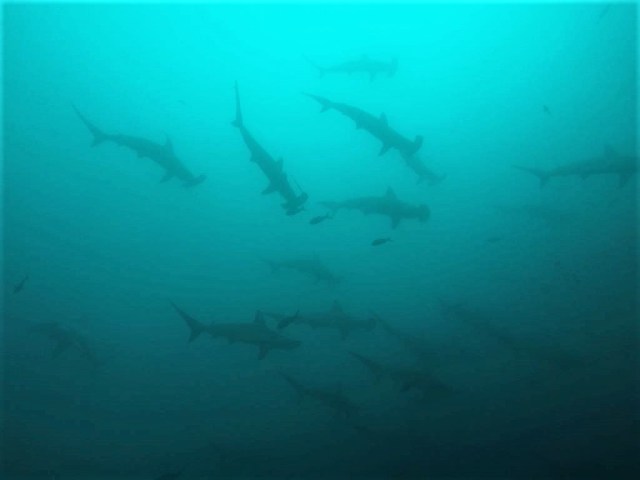
On the second dive we saw around 30 hammerhead sharks swimming by above us, as well as eagle rays, turtles, Galapagos sharks and loads of fish – my ‘buddy’ was and Israeli guy, nice enough but as with the ones in Colombia I played paint ball with, he was not one to comply with instructions – we were given clear instructions to stay together if we saw Galapagos sharks as they can be dangerous – of course he went of chasing it to get the perfect photo, I stuck with the guide. Quite prepared to sacrifice my buddy for the sake of the group 😬🤪
The other issue we had was one of the group of 4 we were diving with used his air very quickly and he was almost finished his tank when the rest of us were half way through, thankfully the guide did not use much so on both dives he ended up sharing his air so we did not need to cut short our under water time.
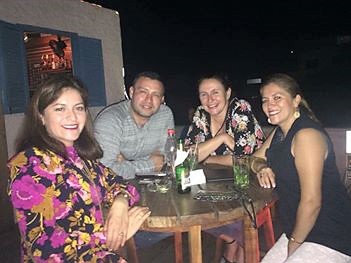
To round of my first week, I went out dancing with my host ‘Mum’ (who is pretty much my age) and a couple of her friends. Thankfully one of whom spoke English! Had fun dancing to the Reggaetón and salsa music with a mojito in hand 😘 A perfect ending to my first week back in the Galapagos Islands.
Panama had been an after-thought in my planning so I did not give it much time, in hindsight I wish I had given it longer as I really enjoyed it.
After a relatively comfortable two-hour journey to the city, I was dropped at my hostel in the old part of the city (Casco Viejo – declared a UNESCO world heritage site in 2003). I must say, the Magnolia Inn is definitely the best hostel I have stayed in on this trip.
What makes a great hostel?? Air conditioning that stays on all day, good quality toilet paper and a toilet you can actually put paper in – simple pleasures lol. (Just to provide a little more background on the toilet paper comment – in much of South America (and in some parts of Asia), plumbing is not as good as home and therefore toilet paper does not flush properly. So …. it must be placed in a bin beside the toilet! It takes many days to get used to doing this, and of course then many days to change back. Sounds a little gross I know, and at first it is a little gross, but as with everything you get used to it.)
Thankfully I did not find the city as hot or humid as Cartagena though it certainly was not cold!
With only a couple of days in the city I had to make the most of the time and was up early on my first morning to join a day trip – Ocean to Ocean Canal and Jungle. It was an overcast rainy day but at least that meant it was cooler, unfortunately dull days are never good for taking photos.
I was picked up just before 7am and by 8am I was in a small boat on the Panama Canal zooming along next to the giant container ships.
Of course, no visit to Panama is complete without a visit to the Panama Canal. The Panama Canal is still considered one of the great feats of modern engineering, despite being completed over 100 years ago. It cuts 82km through the Isthmus of Panama from the Pacific Ocean to the Atlantic Ocean, saving thousands of kilometres off the trip which used to have to go south around the bottom of South America. A trip from San Francisco to New York now saves around 12,500km off the journey.
14,000 ships now go through annually and the opening of the new locks in 2016 allows the much larger ships to transit through the canal (though they only operator in one direction at a time where the older, smaller locks are dual lane enabling ships to go in both directions all day).
Ships must book their slot in advance to transit the canal and fees range from $2000 for the smallest yachts to $1.2Mt for the biggest container ships – this of course must be paid in cash! Once the fee is paid, the process of transiting begins with the ships engines being checked, as they must transit using their engines and a breakdown could cause massive disruptions.
Next, each ship is given at least one Canal ‘pilot’ (they can receive up to four pilots depending on the level of risk of the cargo). Once under Canal pilot control, the ship adds a half red, half white flag to their mast to indicate that they are under control of a local pilot.
Added to this, they can also have up to 4 tugs (through the new locks), or 8 ‘mules’ guiding them through the locks. It was clear that not only does the canal bring in much money for the country, it also creates a huge amount of employment for the city and country.
To finish the lesson for today, I was most interested to learn that the decision to expand the canal/locks actually required a national referendum and the construction was very mindful of any ecological impact.
My parents transited the canal when they immigrated to New Zealand 40+ years ago and to be honest, I don’t think the experience would have changed much in that time.
Now, where was I? … on a small boat zipping around Gatun Lake (an artificial lake created to reduce the amount of excavation needed for the canal). In many of the small inlets of the lake there is an abundance of wildlife which showed just a fraction of the diverse within the country.
Our first stop was ‘Monkey Island’ – famous of course for monkeys. The reason it is so easy to see the monkeys here was because they feed them! I have mix feelings about feeding them but I guess it was only a very small amount and guide very strict about not giving more to ensure it is not enough to replace their normal diet and change their behaviour too much 😬. Here we saw capuchin monkeys, Tamarins, Snail eagles (or that is what they were told they were called and they were catching and eating snails as we watched lol), toucans, howler monkeys (that we had heard at night on the lost city trek) and lots of other birds.
As one of the most biodiverse countries in the world, Panama has an incredible 119 protected areas and national parks in the country. Some of which are called ‘absolute’ which means no one can go there 👍🏻. Great to see the lengths they are going to, to protect their biodiversity.
After crossing the country on the highway (or the dry canal as the guide called it), we arrived in Colon on the other side of the country. 80% of treasures plundered from South America travelled through Panama on their way back to Spain and before the roads and the canal, the conquistadors trekked 13 days across the country. Train tracks were then installed cutting the journey to just 3 hours, and today the modern highway means the ocean to ocean trip takes just 45 minutes!
Colon by the way is one of the biggest, if not the biggest, duty free zones in the world and is the second biggest sector in the country.
Our first stop here was the Visitors Centre at Agua Clara – the new locks opened in 2016 to allow for the Panamax ships to pass through the canal. We watched one of the large ships being guided in to the first lock by four tug boats (don’t forget they also already had at least one Panamanian pilot on board), before watching a short video about the process behind building the new locks. By the time the video had finished the ship was completely in the first lock, and the water level was dropping to reach that of the next lock.
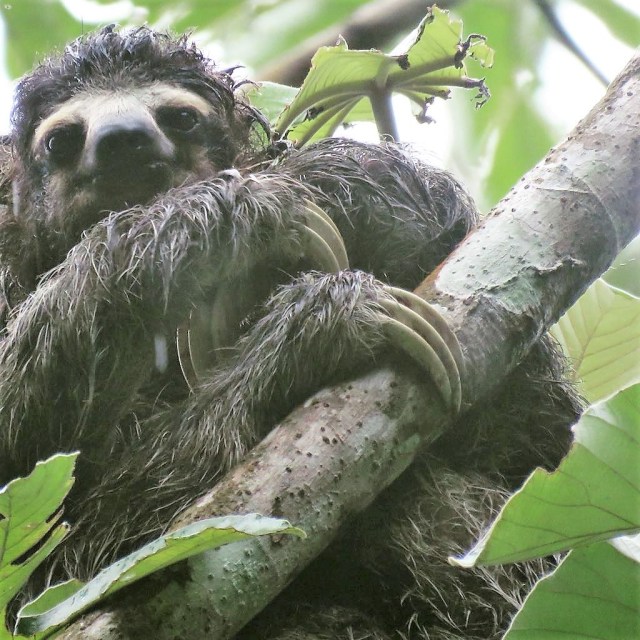
Our guide was constantly looking up in to the trees as he drove (not exactly safe but thankfully there were not many vehicles on the road) and his efforts were rewarded when he spotted a sloth high up in a tree. The poor thing looked rather miserable as the rain picked up but perhaps that is just how it always looked lol. Never the less I thought it was incredibly cute and am now a big fan of sloths!
We then crossed the river on a small vehicle ferry and drove into the San Lorenzo National Park. Just before reaching the reserve, we drove through an abandoned military facility made up of what must have been very nice houses and a massive solar panel installation. It now lay in ruins, slowly being reclaimed by the jungle and with all the house windows and solar panels gone. Apparently, this was all part of the former US army base, abandoned when the US withdrew.
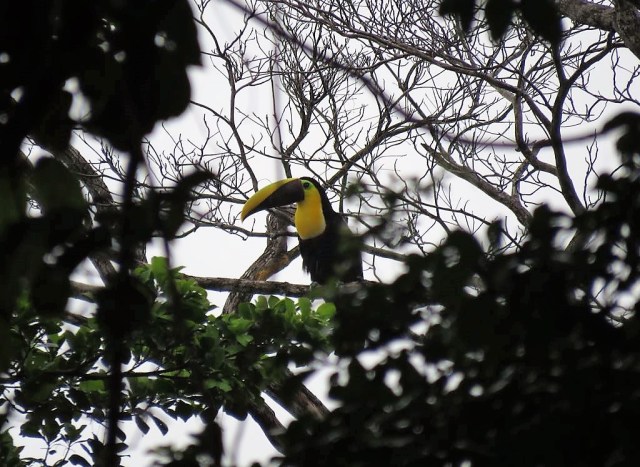
Aptly it was raining as we drove through the narrow road in the rain forest. But the guide (whilst driving!) managed to spot another kind of toucan high up in the trees – this time a Chestnut Mandible toucan. As we stopped at the fort we spotted a white eagle and the calls of Howler Monkeys rang through the trees!
The original San Lorenzo Castle on this site was built in 1595 by the Spaniards to protect the mouth of the Chagres River and their treasurers from pirate attack. Again, Sir Francis Drake seemed to be making a pest of himself in the region as he attacked the castle before it was even finished being built 1596. Other famous pirates who was active here and in fact is a big part of Panamanian history was good all Capitan Morgan (in 1671 when he went on to attack Panama City on the Pacific side of the isthmus) – of the rum fame (I am sure he is proud of the legacy he left behind lol). The remains that we see today are actually from a fortress built in 1768 and are really not more than ruins.
In the 20th century the fort became part of the area designated by the US military forces for the coastal defences of the Panama Canal.
As we returned through the forest, we were surrounded by the howls of howler monkeys and spotted a Coati family crossing the road – including a baby who ran across after the parents almost getting squashed in the process – thankfully we did not hit it!
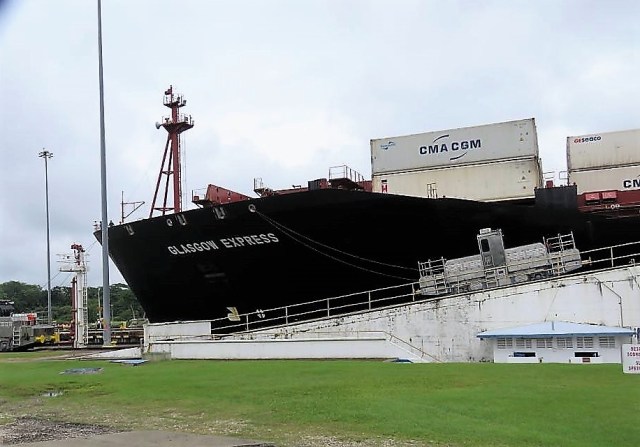
When we got back to the river there was a long queue for the ferry so the guide decided we would cross at the locks. I must admit I was excited by the prospect of seeing the locks up close and in action so to speak. We first had to wait for a ship to exit one of the old locks, and in fact it was one of the ships we had seen in Gatun Lake round 7 hours earlier, giving us a true indication of how long it takes for a ship to pass through the canal. We also got to see the ‘mules’ or small trains at work guiding the ship – the ‘Glasgow Express’ had 8 ‘mules’ guiding it through, each dropping its line as that part of the ship exited the lock. Although the ship fitted through the older, small lock system, it only had .5m leeway on each side which of course requires incredible precision in transit.
Once the ship was clear, the lock doors shut again and the lock started filling for the next ship to transit. We then we crossed just in from of the doors and then over the top of the doors for the new lock with a ship inside – this route was so much better than going back on the ferry but unfortunately when the new bridge they are building is finished, driving across the locks won’t be an option – there is probably a span of about 10 meters left to complete on the bridge so it was amazing to get the opportunity to do this.
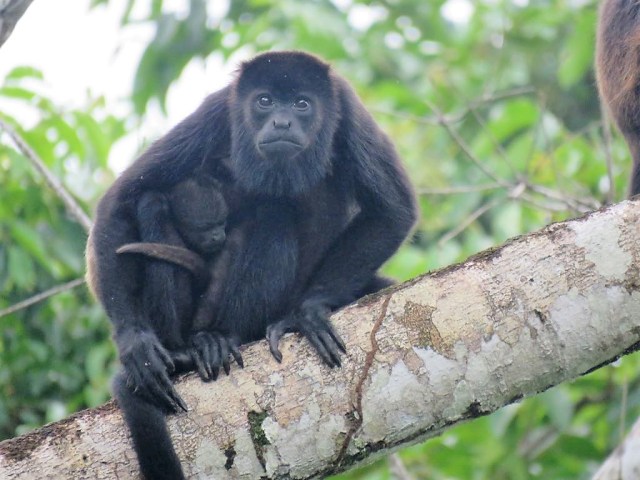
And as soon as we exited the locks, the ever-vigilant guide spotted a troop of howler monkeys in trees on the road side. The most visible were a couple of mothers with small babies who seemed content to sit there and look down at us looking up at them! 👍🏻
It was a great day out and with the limited time I had in the city I managed to see wildlife and the canal.
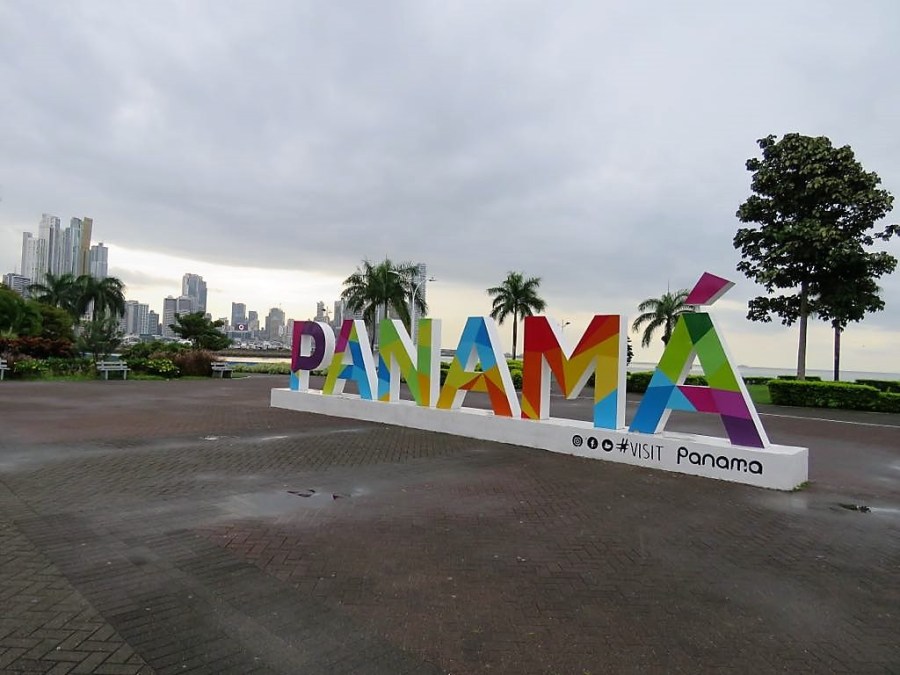
The next day I spent exploring the city, starting with a run along the water front on great running/ cycle path. The city seemed like a great mixture of old and new and I particularly loved the area along the water front with the rough and ready fishing boats, overshadowed by the sparkly, modern high rises. It was also fun to see how many people were getting up early to huddle around TVs in small bars watching the football world cup. Panama are in it this year for the first time ever, but unfortunately, I was to miss their first game by day.
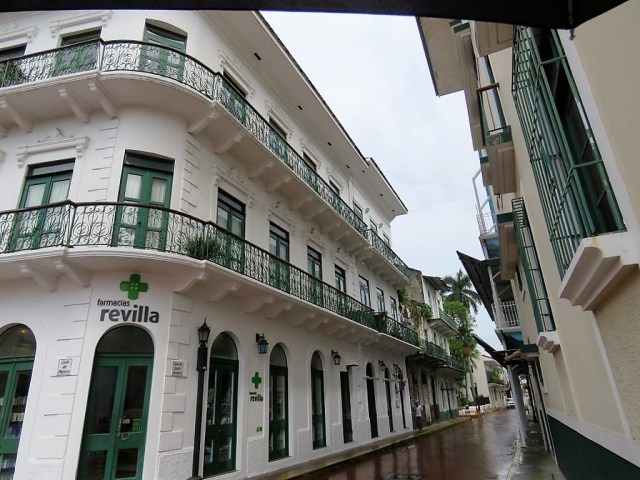
I then took some time to walk around the old part of the city – Casco Viejo. Even this part of the city is vastly contrasting with some building carefully restored to their former glory, others left in ruins, some only with the façade remaining.
Panama City is really a place where many worlds co-exist. On top of that, it is only a short drive in to wonderful, critter filled rain forests and a modern wonder of the world. Apparently, it also has great beaches and diving which unfortunately I did not get time to try out!
The next challenge for me was more mental but in fact more psychological – a five-day sailing trip from Cartagena to Port Lindo in Panama, via the San Blas Islands. I have an a pretty strong fear of open ocean sailing/boating and have been sick many times at sea – typically in small boats. Having braved (and survived) the Drakes Passage (to Antarctica) a few years ago and two weeks around the Galapagos Islands last year, I bravely booked this trip. Of course, as is often the case, the fear was unfounded.
I felt better after the predeparture meeting the night before we left Cartagena. Certainly better than the trepidation I felt after the lost city trek predeparture meeting 😬. The Capitan (an American) seemed to have the right balance of safety and fun. He had numerous rules (of course) for life on the boat but the first two were most important; Rule number one – stay on the boat i.e. don’t fall overboard particularly during the 36-hour open ocean crossing and rule 2 don’t be a douchebag! Not sure if the second is a standard sailing rule but it worked for me 😜.
It became apparent at the meeting that it was going to be a boat full of guys. There were only four girls and two of those where in couples 😬. I think many of the young guys were a little disappointed and it was odd coming off a trip with mostly girls for the last 3 weeks. Still, by the end of the trip we were all one big happy international family – NZ, UK, Ireland, Netherlands, Germany, Brazil, HK, Canada and the USA.
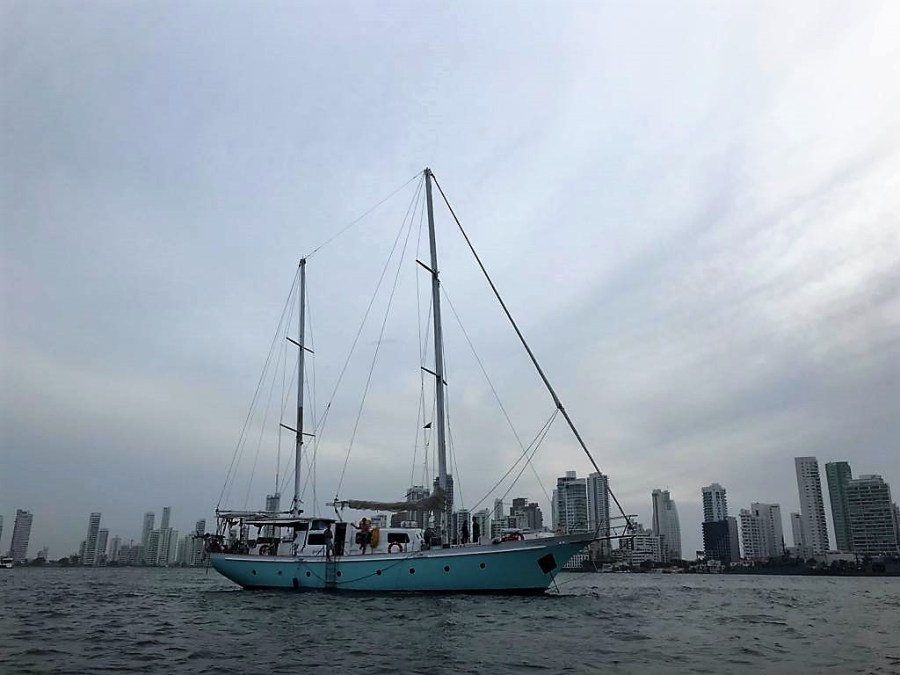
Soveriegn Grace & Wildcat gang
On our departure day, we all met at the supermarket near the marina to stock up on drinks and snacks for the trip before heading to the wharf to board. Not before our bags were given a thorough search by the Colombian police!
As we got on board the Sovereign Grace (74ft and 60 tonne yacht) we put our shoes in a bag and they were put in the hold – shoes were not necessary again until we got off the boat in Panama 6 days later! We also met Coco, the boat dog – he loves being in the dingy, swimming, paddle boarding – all the things you would expect a boat dog to love.
As we sailed out of Cartagena, many of my crew mates cracked open their first beer and ate a big dinner! Perhaps because I am older and wiser (or perhaps not) I knew that the sailing was never going to be completely smooth so I gave both a miss! Thankfully it was not that rough but there were 2-3 metre swells which meant the boat rolled a lot. I did not sleep well due to the rolling (despite working out the best way to wedge myself in my bunk so I did not roll around too much) and spent most of the first day watching Netflix in my bed – I did not have my sea legs and did not feel comfortable walking around the boat much. It was also a pretty noisy first couple of nights as our things moved around and we quickly learnt the importance of safely stowing everything.
The 2nd evening was calmer and I sat out the back of the boat watching the amazing lightning light up the sky 👍🏻 (apparently it is very common around here) then it started to rain hard – all the crew ran around ensuring all the hatches were closed before taking the opportunity to take a ‘Rain bath’
Thankfully that part of the deck I was sitting was undercover and it soon became my favourite place to sit. (It was also where the crew slept so I did have to wait for them to wake up before I could sit there in the morning.)
On the third morning we woke up in Panama – the view from the bathroom window was of the Panamanian mainland and on the other side, the 365 San Blas islands. It was still over cast from the nights rain but the moody sky was very atmospheric.
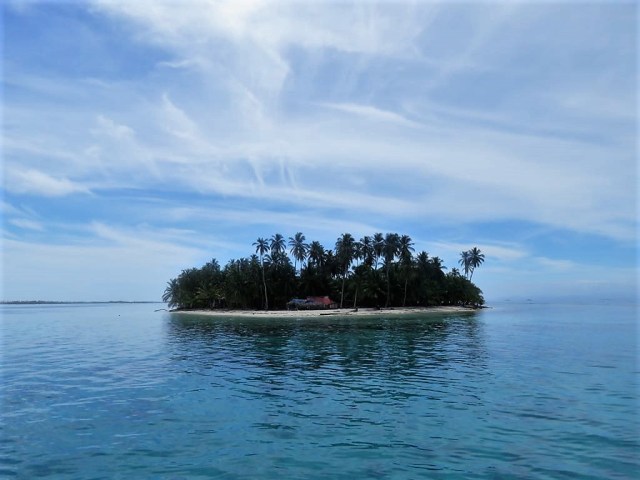
Time for some facts. The San Blas islands are a group of islands in the archipelago de San Blas, located in the northwest of Panama facing the Caribbean Sea. There are actually 378 islands within the archipelago but most people like to say there is 365 islands, one for each day of the year! The majority of the islands have no inhabitants (some are merely blips in a vast ocean), but on the larger ones the indigenous Kuna (or Guna) people live. Interestingly, the archipelago de San Blas is an autonomous territory in Panama formally called Kuna Yala.
We spent the morning snorkelling near a small island in Caribbean water as warm as a warm bath and as the day cleared up we spent the afternoon on a slightly larger island where one Kuna family lived. We spent the afternoon swimming, playing volleyball and frisbee.
Fact time again. The Kuna people have their own laws, norms and values and these are generally different to those of the traditional Panamanian culture. Of the approximately 300,000 Kuna’s that live in Panama (in three politically autonomous areas including the San Blas islands), Costa Rica and Colombia, only 50,000 live on the San Blas Islands.
Like the Wiwa we met in Colombia, each Kuna community has a political and spiritual leader (here called a saila) who memorises songs which retell the sacred history, legends and laws of the people. He also administers day to day social affairs for the community
As we wandered around one of the larger islands we noticed a number of Swastika like flags flying – upon doing some research when we got back to civilisation, I discovered that the Kuna Swastika flag was adopted after 1925 rebellion against Panamanian suppression. According to one explanation, it symbolises the four sides of the world or the origin from which peoples of the world emerged. The flag is also used for the province of San Blas as well as Kuna ethnic flag. In 1942 they actually modified the flag and added a red ring encompassing the centre of the swastika because of Nazi associations; the ring was later abandoned!
Day turned to night and the boys lit a fire as it got dark – unfortunately most of the wood was wet and it was amusing watching the boys try and battle it out in the manly task of fire lighting! The crew brought dinner over to the beach and we eat it around the kerosene assisted fire.
As we headed back to the boat in the dingy, the boats wake stirred up the florescent plankton trailed behind us 😘.
Day four started with the crew catching a large king mackerel. They always have lines trawling behind the boat and in fact they had lost something big the first day as it pulled out 200m of line before snapping it! The fishing achievement was followed by three wonderful dolphins who joined us and swam under the bow of the boat for about 15 minutes.
The sun was also out this morning and this meant we had a great snorkelling stop at a tiny sandbar. We swam from the boat and Coco joined us for the swim. It seemed like a long way for his stumpy legs but he managed to beat us all.
That afternoon we meet up with the sister boat of the Sovereign Grace – the Wild Card – and together we all spent the day on an island before a beautiful sunset (with rum in coconuts) and then a costume party and massive bonfire in the evening. The other boat had just used dress up clothes from the boat but we were encouraged by our captain to collect things from the island to make our costumes. I joined with two of the other girls and we made similar costumes out of palm fronds and leaves. It was clearly worth the effort as we won the girls competition. 👍🏻 It was a great night.
Day 4 and most people were hungover from the nights partying and our first stop was the Panama immigration office on a tiny island run by the Kuna – it was a massive contrast between being incredibly informal and laid back to an immigration officer who took his job very seriously. The captain had already given him our passports and a printed list of our names. We walked in barefoot (though the boys were asked to put a shirt on) and sat in front of the officer when he called our name – he asked how long we were staying and how we were leaving the country and that was that!
Apparently, if he is given a handwritten list, he gets out his ruler and ensures all the t’s are crossed at the same height and all the i’s are dotted the same! Oh, and we also had to pay out US$20 Kuna tax here!
After we had formally entered Panama, we travelled to another island for to spend our last afternoon playing volleyball and swimming – this time amongst starfish which we had not seen before.
Back on boat and set sail for the final time, this time to Puerto Lindo on the mainland of Panama. As soon as we started sailing the roll of the boat picked up and moving around the boat was difficult again! By 8pm I was ready to head to bed (I actually just needed to go to the bathroom but decided it was not worth the effort to go back up to the deck again!). Wedged up in my bunk, I managed a decent night’s sleep and we arrived in to the harbour in the early hours of the morning so our last few hours’ sleep were calm and peaceful.
That last morning on board was a stormy morning, but we were safely moored in the beautiful little port surrounded by jungle clad hills and I enjoyed watching the lighting from my usual seat on the boat for the last time.
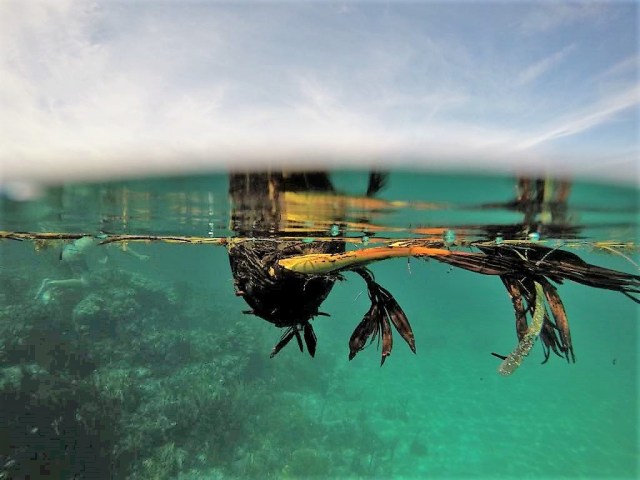
Artistic impression – sprouting coconut (above and below)
It was an incredible 6 days of being sandy and salty and one I was lucky to survive without being sick – some were sea sick, others (in fact almost everyone) had a terrible 24-hour stomach bug which wiped them out for a day at least – so I was very fortunate not to be affected
The food was amazing. We were given fours meals a day – a light breakfast between 7-9 for early risers (fruit, cereal, toast), a cooked breakfast around 10 (sometimes it was a meal I would have called lunch rather than breakfast), lunch around 1.30-2 and dinner between 6-8 depending on what we are doing and whether we were having it on the beach or on the boat.
Back on land and we waited for our transport to Panama City in a small restaurant on the water front (there really was nothing else in this town). Of course, the lady there had a TV and she was watching the opening of the Soccer World Cup Robbie Williams singing 😂.
It was only two hours from Puerto Lindo on the Caribbean coast, to Panama City on the Pacific coast via the town of Colon. It was small narrow roads as far as Colon and then a great highway across the country. It is these contradictions of old vs new and Latin vs western that Panama is full of.
It’s my final day in Colombia as I start to write this (of course I am now finishing it in Panama!) and I am in somewhat of a reflective mood.
The 3 week tour through Colombia was amazing – each week was completely different and all with many highlights – yes even the hiking 👍🏻.
After my return to Santa Marta, I had one more farewell dinner and a fun night out with the group before we all said goodbye the following day and suddenly I had to start thinking for myself again! 😬
Of course, one of the downsides of an organised tour is you get so used to being taken to places and being organised and then suddenly you are left to make your own arrangements! Thankfully I had booked a couple of extra nights in Santa Marta to try and gather my thoughts and think about what to do in the next few days.
I had time to get laundry done and repack, also time to relax and breathe, though I did end up on antibiotics for my knee (more as a prophylactic than anything else) and with a stinking cold (I blame going from jungle air back in to air conditioning 😔).
I really could not decide what to do with my last few days and did not really have the energy to travel too far so I decided to pop back up to Minca in the foothills of the mountains in the hope of seeing a few more birds. To be honest, I had expected to see more on the Lost City hike but was probably too busy looking at the ground in front of me to see any birds that were around!
Let me take a minute to talk about crazy driving (as the drive back up to Minca reminded me of just how crazy the Colombian drivers are)!
Back at the beginning of my time in Colombia, just before our first long bus trip, our guide explained to us that drivers obey the road rules and do not overtake on double yellow lines on the windy mountain roads, but they will pass if they determine that it is safe! I guess we just have to trust their judgement and faith in overtaking on blind corners. On that road back up to Minca I saw someone on a motor bike overtaking a van that was already overtaking a car on a windy hill road just before a blind corner – I had to close my eyes as had there been a car coming the other way, there would be no where for them to go.
I am surprised that during my time here I have actually only seen one crash (it was a horrific one on the road from Santa Marta to Cartagena) so I guess their unofficial ‘rules’ must work for them most of the time. Of course it does not help when the crazy driving is combined with many vehicles that don’t appear road worthy, some with a massive emission problems.
While I am sidetracked, did you know that cycling is Colombia’s second most popular sport after soccer? Cyclists are also mad – zooming down narrow mountain roads around hairpin bends on the wrong side of the road! 😬
Back to Minca and I was met by a drunk Irish guy (who tells me it is his birthday), and rather than a hostel, his place was rather random with no other guests so I decided to stay only 1 night rather than 2. Nevertheless I had a good night’s sleep in the cooler climate and far less noise than the noisy music filled Santa Marta and Cartagena streets.
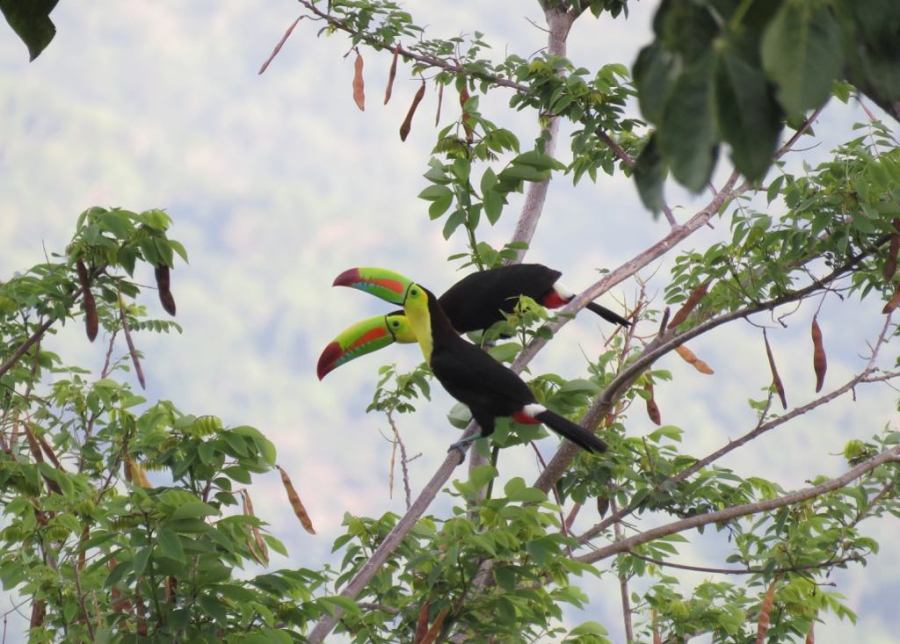
The following morning, the bird watching (with the now hungover Irish guy) was far from professional but it was a nice stroll through the outskirts of the town – most importantly I achieved my goal and saw wild toucans. 👍🏻
Back in Santa Marta and after only one night in the new hostel and I was bitten more than I had been the whole time on the lost city trek – mostly on 1 arm 😬. Initially I thought it was great that I had the dorm room all to myself but not when it is full of mosquitos and there is no one else for them to bite!
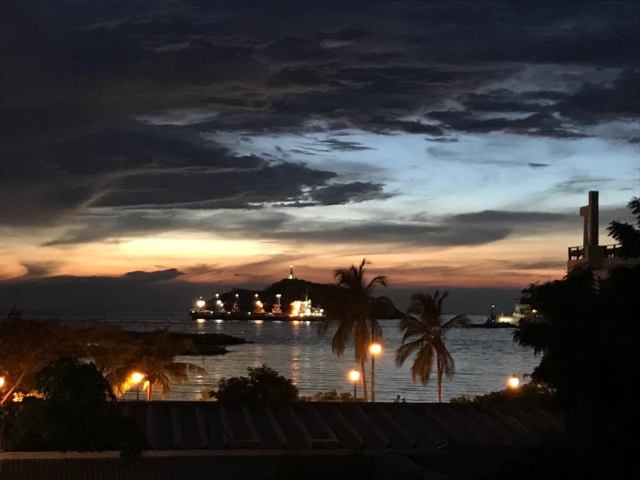
For my last night in Santa Marta, I sat on the water front, watching the sunset (behind cloud 😬) – there were people strolling after work, birds flocking to the trees to roost, people selling everything from sunglasses, coffee out of a thermos, souvenirs, churros etc., people swimming, salsa music playing from a nearby roof top. Close to a perfect end.
I even managed a quick morning walk/run the following morning before catching the shuttle bus back to Cartagena. In typical Colombian style it was an hour late picking me up and then delayed by the horrible crash (I couldn’t work out how it happened but the cab of a truck had basically been ripped apart – the ambulance was clearly not needed 😔).
The bus seemed to take for ever and I did not get to the hostel in Cartagena until after 3.30 (was due at 1.30) but at least it was door to door. Unfortunately it seems that hostels here advertise that they have aircon, but in fact they only put it on at night between 6-7pm to 8am. So it is impossible to do anything in the room outside as of those hours as they just become a sweat boxes – tough when you’re trying to pack /unpack and impossible to take a nap 😔 (I know, if that is my biggest problem I have it pretty easy 😄).
In these last few days in Colombia, Juan Valdez became my happy place – the Colombian equivalent of Starbucks with great aircon to give respite from the never-ending heat and humidity and good, reliable wifi – oh and not surprisingly decent coffee. Every day I would spent a couple of hours sipping on a large latte and working on my blog.
I also had a last night out with three of the girls from the Lost City Hike – nice to catch up again before we all headed off in different directions.
In summary, there is not one thing specific thing to come to Colombia for – there are many. Contrasting landscapes and climate from south to north and the striking landscapes and beautiful Pachamama throughout. From the sprawling metropolitan cities of Bogota and Medellín to the amazing beaches of the Caribbean coast, flanked by jungle covered mountains – not to mention the friendly people.
What were my favourite things? Pachamama, the vibrant and loud Caribbean coast 😄, oh and the amazing juices – (limonada de coco, pineapple and mint were my favourites).
Colombia is a fascinating blend of old and new, and a country that has literally reinvented itself over the last 20 years from one of the most dangerous in the world to one that is warm and welcoming to tourists daring to visit.
I bid a sad farewell to Colombia after almost 4 weeks but it is time for the next adventure.
We trekked to the Lost City with Wiwa tours and as such, had a special insight in to the Wiwa cultural, in particular through our guide Leandro.
The Wiwa is one of the four autonomous indigenous groups that live and in the Sierra Nevada de Sant Marta mountains – Kogui, Arhuaco, Kankuamo and Wiwa. All four believe that the Sierra Nevada is the heart of the world – a sacred territory and a source of knowledge that should be cared for by respecting traditional principles and spiritual work.
Social organisation, clothing and language different from group to group but they share a common view on creation and the law of origin that governs the lives of the communities.
We were lucky enough to spend the five days with Leandro, our Wiwa guide, as well visit the Wiwa community of Gotsezhi to learn more about their way of life.
The most obvious of their traditions was the men’s poporo – that is the wooden device Leandro has in his hand in almost all the photos of him. The poporo is given to a man when he is ready to get married and consists of two parts; the receptacle made from a gourd which typical comes from the husband’s family and a wooden stick from the wife to be family. The gourd contains powdered lime (made from calcined sea shells that must be collected from a certain place at a certain time of the day). They chew coca leaves, which they mix with the lime, as they go about their daily activities. The stick, with the mixture of coca leave ‘juice’, saliva and lime is then rubbed around the top of the receptacle – over time this grows to epic proportions and when it gets too heavy to carry, they get a new one! (Leandro has only been married for just over a year so his is relatively small still.)
These actions are fundamental aspects of their relationship with the spiritual world and the poporo represents their ‘partner’ and in ‘her’ they keep their thoughts and their words so they do not get carried away in the wind. It is believed that chewing the coca leaves hep the to remember and recite myths and genealogies during long, late night sessions – we were witness to Leandro doing this almost all day, every day and he rarely put it down.
As the men get poporos, the girls are given a spindle when they reach puberty which symbolises the being of their fertile age. In the spiritual world, this represents their ‘partner’. As with the poporo for the men, the act of spinning and weaving symbolise life and thought and the thread itself is considered thought. When woven together they become the fabric of life that will be used to make clothes and bags for their men.
(They weave either with cotton or a fibres from a plant similar to flax or aloe vera.)
Getting the fibre for weaving
Women weaving
Weaving is also sometimes used as a ‘punishment’ for men who are guilty of ‘improper behaviour’ – they are sometimes ordered to weave and while doing so, they must recall the sacred principals of the god of creation and the Universal Mother.
Both weaving and using the poporo are fundamental parts of the Wiwa’s beliefs and principals.
Another fundamental part of the Wiwa believes is the Mamo, or spiritual leader. This role can be inherited from father to son, or an apprentice can be selected as a young boy (there is also a female equivalent called a Saga who deals with the female issues). We met the apprentice Mamo in Gotsezhi as the current Mamo was away on a cultural exchange in Peru! Apparently, he is a very well-travelled Mamo and has even been to the UK!
He talked to us about his role in the community and the work that he does – he often spends all day sitting and meditating under a tree (which is where we met him) during which he is trying to restore equilibrium to the earth. He told us that the biggest challenge to him in his role is global warming, that we are not giving enough back to mother natural and this is causing the change in weather patterns often leading to too much rain and landslides or not enough). It was incredible to see that some one who lives in such an isolated and generally insular society sees the same issues that the rest of the world does.
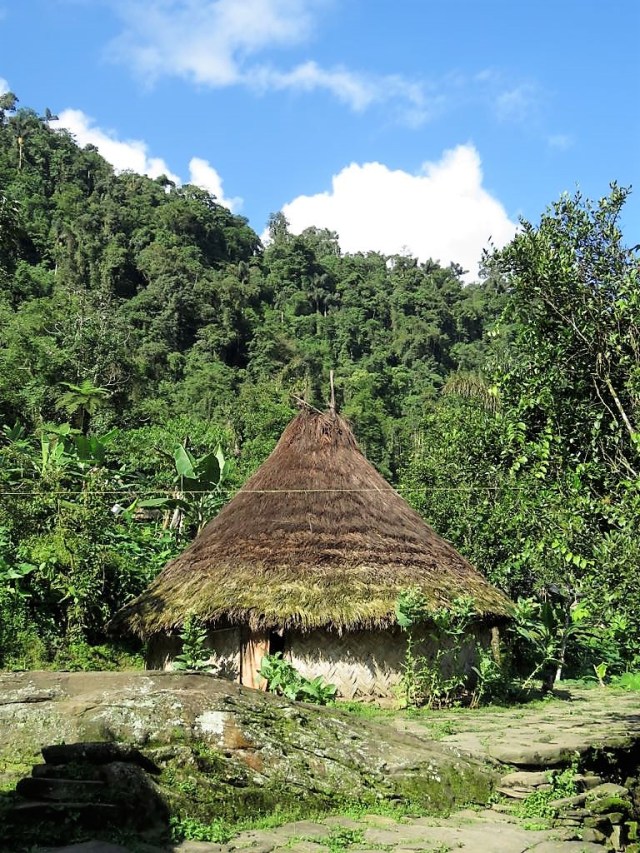
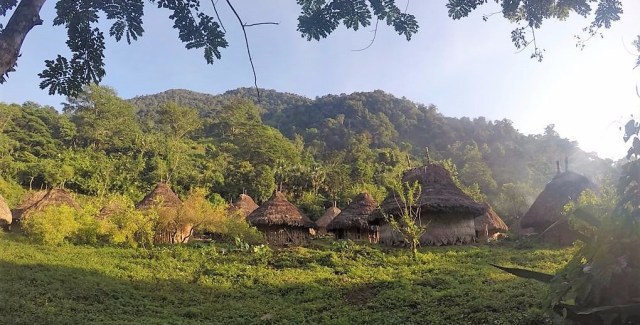
That said, the Wiwa are way more in touch with nature than most of us our – they worship the two highest peaks of the Sierra Nevada mountains and consider them sacred. Each of the Wiwa houses have 2 sticks sticking out the top which represent these two sacred snow-capped peaks.
The introduction of tourism through Wiwa Tours in partnership with Planeterra, has given the community an opportunity to educate travellers about their culture and way of life, as well a chance for local artisans to sell handicrafts.
Since returning from the trek, I have met others who also trekked to the Lost City through other companies and they mentioned that they learnt very little about the indigenous people of the area – I count myself very fortunate to have had such an enriching experience with the wonderful Wiwa people.
There are a few things on this trip that have been chosen to push me outside my comfort zone – something I don’t do too often (they call it a comfort zone for a reason right 😃?). The Lost City trek was the first of those – to challenge me physically.
To the local indigenous people, the lost city (or Ciudad Perdida in Spanish) in the Sierra Nevada De Santa Marta mountains is the heart of the world and in pre-Columbian times, the area was home to various indigenous communities of which the Tayrona were the most developed.
As with many of the pre-Spanish cultures in South and Central America, the Tayronas were an advanced civilisation with a complex social structure and advanced engineering skills who built vast stone terraces on the rugged slopes of the mountains on which they built their thatched wooden houses.
Ciudad Perdida, built between the 11th and 14th centuries, is thought to be the largest of these ‘cities’ (widely considered the capital with a population of up to 4,000 people) and the Tayrona were the first advanced civilisations that the Spaniards encountered in South America in 1499. They were astonished by their gold work and out of that the story of El Dorado was born.
Over the course of the following 75 years, the Tayrona’s fiercely fought the Spanish, ending in the almost total decimation of the Tayrona people. Those that survived the battles and diseases the Spaniards bought, fled high in the mountains and their civilisation was lost.
Ciudad Perdida was ‘discovered’ again in 1975 by grave robbers before the government sent in troops and archaeologist to protect and study the site – but not before the grave robbers dubbed the site ‘Infierno Verde’ or ‘Green Hell’ due to the number of deaths occurring.
Set between 950m to 1300m above sea level the only way to get to the city is a two-day hike in to the mountains and although the wooden houses of the Tayrona are long gone, the remaining terraces and the remoteness of the site is still a big draw for visitors.
Although the site has been open to tourists for many years now, it was actually the kidnapping of tourists in 2003 that bought international notoriety to the area. A group of tourists were kidnapped by the ENL, one of the guerrilla groups active in the area at the time, some of were kept captive for three months in the jungle before being released – you can read more about this here if you are interested … https://www.theguardian.com/world/2011/jan/26/my-kidnapper-colombia-hostage-mark-henderson
Of course, that was all in the past and the area is now safe, though still monitored by the military and is now part of the main stream tourist route through Colombia.
Unfortunately, instead of being reassured about the trek after the welcome meeting with our new guide the night before our departure, I was more apprehensive – whoever decided that 7pm the night before a 5.30am departure is the time to talk about what you should take and packing clearly had not tried to buy duct tape at 8pm on Sunday night in Santa Marta 😬 – apparently to fix holes in mosquito nets 👍🏻.
Again, the packing anxiety sets in – trying to pack a small bag for a 5-day trek which of course was too heavy to start with (including 2.5 litres of water). Also, the welcome meeting was the first time we had heard it might get down to 12c at night – what???? All we had been told up until that point was about the heat and humidity! I could not take anything more so decided to take the risk and hope that a couple of merino tops would do the job. (Just a quick note to say it never got anywhere near that cold – that was something we could only dream of lol.)
So, it was filled with dread and trepidation that I set off at 5.30am the following morning in to the mountains with our guide Juan Diego and our Wiwa guide (from one of the local indigenous tribes) Leandro. Unfortunately, Leandro did not speak English and from my limited Spanish I knew the translations we got were often not complete! Thankfully there were enough Spanish speakers amongst us that we got the full story in the end.
We travelled from the paved streets of Santa Marta to the dirt tracks of the foothills of the mountains and the town of Machete Pelao (apparently named after the many machete fights that use to take place there 😬.) Here were we given a true hiking breakfast of Potato and chicken bone soup 😬, then eggs, arepa (a local ‘bread’ make of maize flour) and a big pile of cheese! This was probably the first of many miscommunications as many of us did not realise we were getting a full breakfast and ate 2-3 bread rolls provided at the hotel before we left at 5.30!
The trek is described as challenging with many very steep ascents or descents – also ‘scrambling’ over rocks and alongside raging rivers etc. was required in some places, all this done in the scoring jungle heat and humidity. I have actually never sweated so much in my entire life!
Below I have just included my notes and thoughts as I made them during the hike ….
Day 1: today we walked approximately 16kms with many steep ascents and descents – I thought I was going to pass out at one stage from heat exhaustion 😬. I was dripping wet with sweat by about 3 minutes in and it did not get better. It only cooled down slightly by a little rain in the last 30-40 minutes of the days walk.
The exhaustion of this first day was not helped by the frustration with our guide as he kept telling us misleading times for parts of the hike! I know it did not matter but I needed to mentally prepare myself for what was to come!
Despite all that, I enjoyed the night at the Wiwa camp – being back in nature, with us all bunking down in one big shelter with mozzie nets. We were all so tired, we had eaten dinner and were in bed by 7.30😔.
This and all the camps we stayed in were fairly well equipped with real toilets, showers and a little shop selling cold drinks and snacks.
Day 2 and the jungle tried even harder to kill me 😬. On one particularly steep ascent I turned my ankle and landed on my knee getting a number of deep dirt filled gouges 😔 after a quick clean the guides patched me up with a ‘jungle bandage’, consisting of a sanitary pad covered by a bandage👍🏻. The upside of this incident is that one of the guides carried my bag for part of the way – what a difference it made and I actually enjoyed part of the walk even though there was lots of steep ascents.
The last 2 hours I was back carrying my bag and it was hard – the swear pours of you all day and it seems just not possible to drink enough water to replace it. By the end of the day’s hike I was feeling faint and desperate to lie down. Fortunately, our lunch stop was where we were to spend the rest of our day chilling – after our 6am start (hiking that is) and approximately 11 km of hiking up and down steep hill sides.
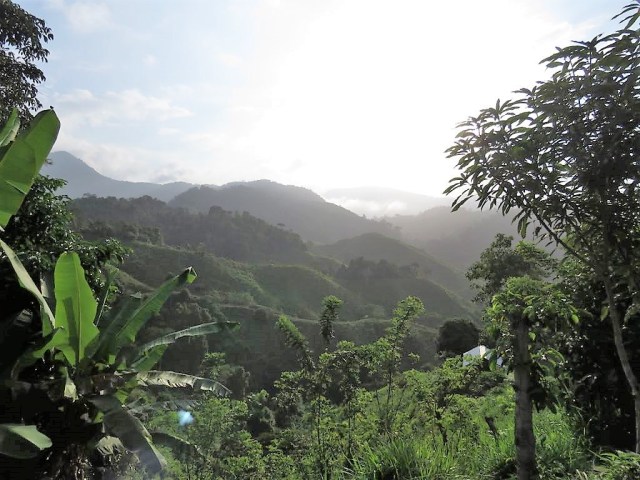
When I got a moment to take my eyes off the track in front of me and look at around me, it was amazing – it truly is beautiful. We had also walked through some Wiwa and Kogui communities and saw many of them on the tracks with their mules and dogs – some even walking in bare feet or gumboots full of water from the river crossings. Very few photos unfortunately (except for those taken from a distance) as they are a very private and shy people (except for Leandro our Wiwa guide who apparently is an oddity amongst his people for being so outgoing)!
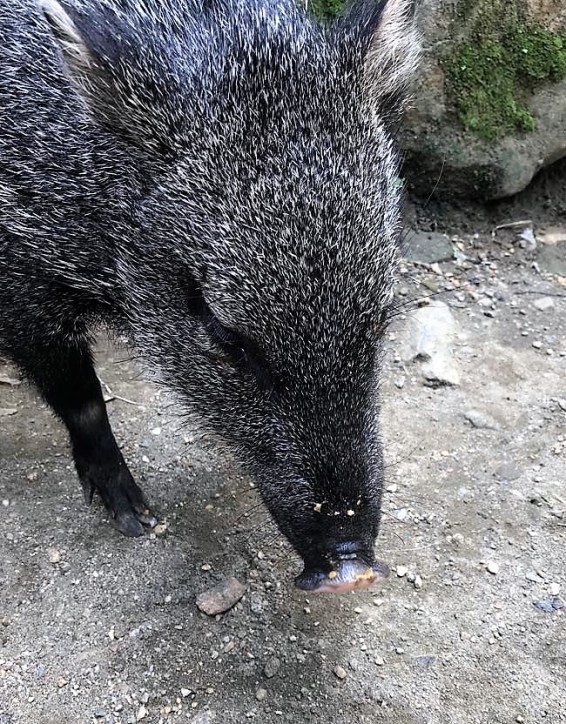
The best thing about the camp for the night was the pet peccary – kind of like a pig has been crossed with a porcupine as his fur was almost like quills – he was so cute and loved having his belly rubbed😃. I also loved sleeping to the sound of the roaring river just below us. I wish we could have stayed here longer (and not just to avoid any more hiking!).
Meet Pepe the Peccary
Day 3 and we had another 4.30am start and that pride that came before my fall on day 2 had diminished to the point that another girl and I asked to have a mule carry our bags – when I had hiked the day before without it, it made the world of difference and I decided I would rather try an enjoy the hiking just a little rather than struggle on.
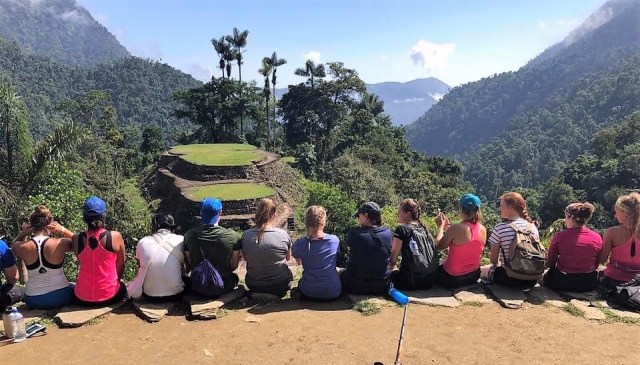
The good news is that day 3 did not try to kill me but did a good job of kicking my butt 😬 – for 19kms in total. After the 4.30am wake up call, we started our final hike in to the lost city. 1 km of rough ups and downs, a river crossing up to mid-thigh in some places and then 1200 steps made by the ancient Tayrona who by all accounts were tiny little people and their stairs were definitely made for little feet – though in some places they had broken away so we were scrambling rather than walking upstairs – of course as expected the pain so far was worth it.
Although all the buildings have disappeared as they were made of straw and wood but the platforms on which they were built remains and it was easy to image the vast city high in the mountains – 1200 metres above sea level
It really was a beautiful place – one of the spiritual leaders (a Mamo) of the local tribe still lives there but he was not home when we visited 😔.
Upon arrival in the city we had to perform a cleansing ritual where we had to put all our negative thoughts in to a coca leaf and leave in the middle of a circle before walking around the circle to lock in the negative thoughts. If I understood correctly, the site is closed each September for the local Mamo’s to cleanse the site – both physically and spiritually, including the negative thoughts we had left behind.
We spent 2-3 hours wandering around the vast site with Leandro explaining more about the culture, the city and the original inhabitants of which he and the other indigenous tribes living in the area today and considered descendants.
(Stay tuned for the next blog for an explanation about what he has in his hand and what he is doing with it!)
Back to the camp for lunch before we set off on a gruelling 4-5 hours back to the camp from night two.
Day 4 started off incredibly chilled as we did not have to get up before daylight 👍🏻 and the only walk for the morning was 20 minutes to a beautiful waterfall before going through my now familiar first aid ritual to make sure the gouges in my knee do not get infected. (As an after note, I did get some antibiotics when I got back to town just to ensure infection did not set in and as I write this it is all healing well 👍🏻.
As much as I really have not enjoyed the hiking I have loved being in the camps and in the jungle. It was a full moon on night 4 and it was stunning. As I lay on a bench watching a flock of parakeets and a hawk fly by, I wished the whole trip was more relaxed so I could get more moments like that to just enjoy being there.
Given our morning was so chilled, our afternoon walk was not fun – a very long, steep ascent was the theme of the day 😬 but least it was only 2.30-3 hours in total for the day and an ice cream shop on the way made a world of difference. Even though it was only a short walking day we still managed almost 10km through the day.
The main excitement for the day was when Molly almost stepped on a large snake across the path – she stepped over it not realising it was there. I was walking behind her and saw it as it reared up and I called out to warn her – she was terrified and ran of screaming before bursting in to tears. I am pretty certain the snake was as scared as she was and it quickly slithered off in to the undergrowth, of course that did not help calm her nerves at the time.
As we caught up to the others, they did not believe Molly’s story of her brush with death- even our guide found it hard to believe – thankful Leandro our Wiwa guide had been walking with us and also saw it so could back up our story 😬. apparently it was a pretty rare sighting and we are yet to be reassured it was not a poisonous snake!
Our last camp was a beautiful spot with a lovely view – we had the small camp to ourselves and enjoyed our final night in our bunk beds under our mosquito nets although we did not get much sleep due to snoring, insects, beetles diving bombing you in the toilets, beds breaking (not mine thankfully), mules walking past and other general jungle noises … in our sleep deprived state we found most of these things pretty hilarious.
Day 5 and despite very little sleep we had our final 5am start. It was finally a day when I enjoyed the hike – despite a few very steep parts, it was interspersed with nice flat parts – it was almost all in the shade which made it much easier without such intense heat. We walked a total of about 12.5km today when we arrived at Gotsezhi. A Wiwa community where G Adventures (the company I had travelled with through Colombia) support a community project.
As we had walked so fast we arrived by 11 and got the opportunity to chill out in the hammocks before a lunch cooked for us by women from the community. We then meet with the local Mamo (actually the apprentice as the Mamo was away) and taught about more about the culture and traditions – I have decided to write a separate blog about the Wiwa who we travelled with as this post is already way to long (I hope it is not as physically exhausting to read as it was to do the hike!)
By this point we were all desperate to get back to civilisation and its trimmings – proper showers, clean clothes (by this point most of us had been wearing the same clothes for many days and words can not describe how smelly and dirty they were), internet etc. We jumped back in the 4x4s that had dropped us in Machete Pelao what seemed like a life time ago and headed back to Santa Marta over dirt tracks that could not really be called roads – 4x4s only and I am sure after heavy rains not even that!
Apologies that this is somewhat disjointed but as I said, it is more a collection of thoughts I made during the hike. To summarise – I hated it and I loved it. It was physically exhausted and mentally challenging and truly pushed me to my limits. But I survived and am sure I am stronger for the experience.
(Mention must go to the great group of people I walked with – 5 days in tough conditions and we could always have a laugh at the end of each day 👍🏻. Don’t think I would have got through it without them.)
Parque Nacional Natural (PNN) Tayrona is one of Colombia’s most popular national park. It covers 12,000 hectares of land, running from the Sierra Nevada de Santa Marta mountains to the coast, as well as including 3,000 hectares of sea.
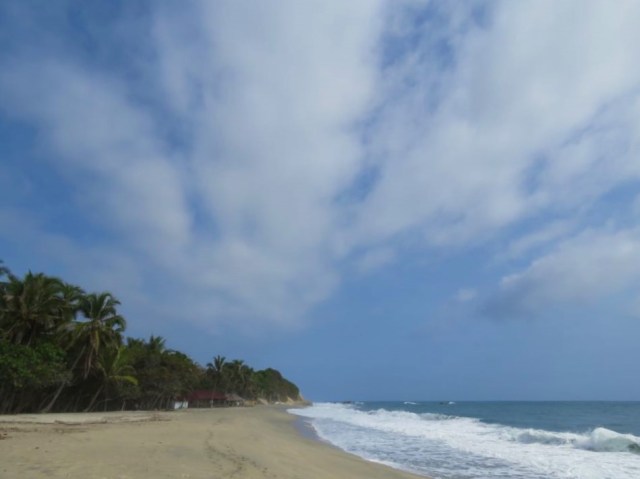
For most people, the park’s biggest draw is the beautiful beaches that can be reached via boat, or a 2-hour hike through the forest. We did the walk and as has been the theme of the last part of the trip, it was hot and it was humid! The walk wasn’t particularly challenging but the conditions made it that much harder – I guess it was a practice day for the upcoming trek in just a few days’ time.
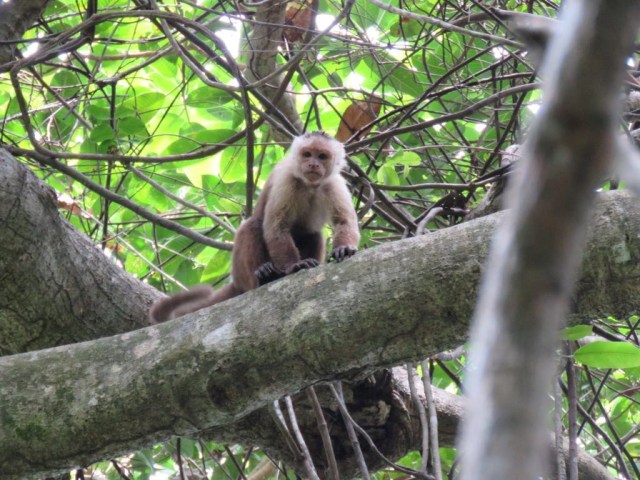
We were lucky enough to come across a troop of Capuchin monkeys – we had been told that several species of monkeys lived in the area but we would be unlikely to see any as they tended to stay away from the people on the tracks. It was a large troop of 10-20 monkeys travelling through the forest – oddly they all stopped at a certain point to look down at us, just as we were looking up at them lol.
The beach, when we reached it, was truly beautiful and well worth the hike in, that said, we could not get in the ocean quick enough to cool down. Sadly, we then had to hike back out which heated us back up!
It was also here in the park that we came across the local indigenous people for the first time. They live within the park (as they did before it was a national park) and now days make a little money selling coconuts to the hot and tired hikers.
We spent the night at a cute little villa on the hill near the beach – hammocks and mangos were pretty much the theme of this place. Not much more I could ask for really. It was here I was reminded just how much I love the smell of the tropics first thing in the morning – just before it gets to hot when there is a hint of fermenting mangos in the air (it is mango season and there were so many mangos dropping off the trees).
We had the morning free so I took a morning walk down to the beach which, although not a swimming beach due to the currents, but it was definitely a lovely walking beach at least until it got too hot when I had to return to my hammock in the shade.
Our final stop for this part of the trip was Santa Marta, just an hour away. It is actually South America’s oldest surviving city, established in 1525 and although it could have the charm of Cartagena, restorations otothe old part of the city has not yet been carried out so most of it looks rather faded and run down. It tends to be somewhere that people tend to use as a starting point for other places rather than a destination in its own right.
That said, I actually liked it’s less than perfect charm and its cooling ocean breeze in the mornings and evenings, making a stroll along the waterfront rather pleasant – at least until around 8am anyway!
Proving yet again the ‘small world’ theory, I bumped in to someone I knew walking down the street in Santa Marta – Flo had been a volunteer in Fiji a few years ago and I had kept up with her life on social media and knew she was in the area as she and her boyfriend had been travelling around South America for the last 8 months. It was great to catch up over lunch the following day and get some tips on my upcoming travels – most of which she has just done!
If you an instagrammer do go and follow her – she has some awesome content if you like travel stories and pictures #floboniface.
Election weekend was looming in Colombia and that meant a ban on the sale or consumption of alcohol amongst other measures to ensure a peaceful election (e.g. the countries borders were also shut for the weekend). People went to panic buying mode, how can people possibly live from 6pm on Saturday night to 6am on Monday morning without being able to buy alcohol lol?? Seems we all survived though some where rather perturbed that all the bars and clubs were shut!
Still, we enjoyed yet another farewell dinner before welcoming 4 new people the following day for the last stretch of the Colombian journey.
PS The election was just a prelimary one to narrow done the candidates and two will now go to head for the presidency in a week or twos time. (Not before the nationals attention has been diverted to the more important football world cup about to start.)











































 Cockneykiwi takes flight