A mere five days later and I was back at Stansted airport again. The drive at 6.30am on a Saturday was great with very little traffic until I got to within a mile of the airport and came into a massive queue of traffic!
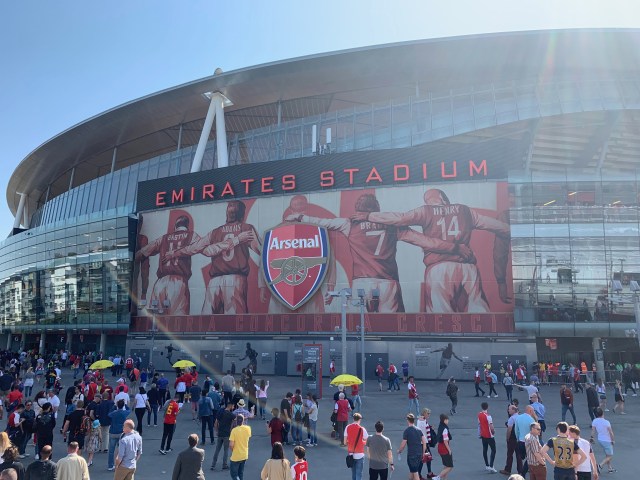
That was telling of how crazy the terminal was going to be. Mostly full of football fans going to Madrid for the champions cup final (I think I got that right) – it looked like extra flights had been laid on so it was even busier than normal. It is days like this where paying the small extra fee for fast track security is worth all it costs and then some!
(I also learnt the benefits of paying of priority boarding on my flight back from Malta just a few days ago. When the plane is full there is just not enough room for everyone’s bags and arguments were breaking out between those who boarded near the end and could not find space in the overhead lockers for their bags . That said, I am pretty certain some of the bags on board where above the size and weight limits!
While I was waiting for my flight there was an announcement was made saying that one of the flights to Madrid had its departure time moved from 9am to 8.30 – when do they ever bring a departure forward? I wondered how many would have missed it as they are drinking in the bar 🤔. Apparently, there were also some famous old football players sitting near me in the airport – lots of people asking to take photos with them but I have no idea who they were 🤦🏻♀️👍🏻
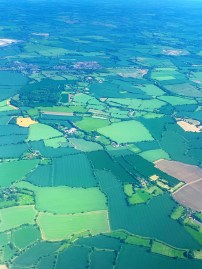
Despite all the extra payments and fast tracks, it does not get me priority in any of the cafes which were packed with big queues … or on the tarmac with the queue of aircraft waiting to take off!
As this trip was partly a business trip (yay for an office in Vienna), I had the luxury of a taxi pick up from the airport and free accommodation in the form of the company apartment – of course the downside of that is that I am staying out in the suburbs. The upside is not only that it is free, but that I get the fun of working out the underground network!
Of course I would expect nothing less than an organised, efficient underground service and that is exactly what I got – it would have helped if I could remember what station I needed to get off at but that was a minor detail 🤦🏻♀️😂. First stop in the city was food – a Viennese sausage and a Viennese beer – both went down pretty well 👍🏻


Now this is not the first time I had been to Austria and in fact I had been to Vienna before (it was last century to be fair) but oddly I remember nothing about! I remember other parts of Austria like Salzburg and Innsbruck but just nothing about Vienna so clearly nothing stuck out at the time (I must take a look back at my photos next time I am home). I must say it did a better job this time lol.
It had been a lovely warm day when I arrived, but the clouds came over just as my late afternoon walking tour started and I had not brought either my umbrella or raincoat with me (they were in my bag in the apartment) but thankfully I did not need them.
As with all most European cities, Venice has a long and interesting history and in fact, in the early 1900s it was the 5th largest city in the world and it was an important cultural centre.
For 640 years, Vienna was the seat of power for the Habsburg dynasty. At the height of their power they ruled most of continental Europe, mostly achieved through shrewd marriages. It was the assassination of Archduke Franz Ferdinand (the heir to the Hapsburg Austro-Hungarian throne) in Sarajevo in 1914 that instigated World War I and the decline of the family dynasty.


During their rule, they were generous patrons of the arts and this attracted great musicians, artists and minds from around Europe to the city with great balls and concerts taking place.
Of course, over the years, different rulers had differing styles of leadership. Holy Roman Emperor, Joseph II who ruled from 1780 to his death in 1790 was known as one of the three great Enlightenment monarchs. He built an incredible reading hall when most locals were illiterate and his daughter Maria Theresa made it mandatory for children between 6-12 to go to school.


He used his own money to build hospitals and homes for homeless and was known as “a man of people”. He would walk the streets in disguise and talk to people on the street. One of his more progressive moves was to give religious freedom – before then people had to be catholic, leave the country, or go to prison! Unfortunately, after his death, many his new laws were overturned as they were too progressive.
In stark contrast, his sister Marie Antoinette lived a lavish lifestyle filled with balls and ballet. She went on to marry Louis 16th of French and was decapitated during French Revolution!
In 1810, Napoleon married Marie Louise, one of the daughters of the head of Hapsburg family and a granddaughter of Joseph (another political move), however he did not attend the wedding in Vienna and one of her uncles (Archduke Charles) stepped in his place to act as proxy! The French Ambassador wrote “the bridegroom’s absence did not dampen the festivities” … “The marriage of H.M. the Emperor with the Archduchess Marie Louise has been celebrated with unsurpassable magnificence, to which the preceding fêtes bore no comparison.” They did later have a civil wedding (in fact two) in France which they both attended, still these European aristocrats had some odd ways.


Beethoven moved to Vienna from Germany in 1818 as he had always wanted to study under Mozart – unfortunately, Mozart died years before he got his chance in 1791 at the young age of 35.
Another great Viennese institution is the Vienna Boys choir which was initially formed in 1498. Today the choir (not the same boys of course lol) continues to enthral audiences. I did not have an opportunity to see them but apparently their “voices fill the hall like sunlight”. There was a lot of free music around the city but none at times I could go 😩 as I always had other plans.


The Hapsburg monarchy collapsed as World War I approached and after the war, what used to be a huge Empire, Austria became a small land locked country.
As World War II approached, 130,000 Jews fled Austria, including the likes of Billy Wilder (Hollywood director), Max Steiner (film composer who has had multiple Oscar nominations) and Dr. Sigmund Freud (famous Austrian neurologist and the founder of psychoanalysis). Sadly, the vast majority of the 65,000 who did not or could not leave died in concentration camps during the war.
A square in the city has been left empty in memory of the 400 people who were buried alive in an air raid shelter under a building on that spot. Instead of rebuilding, a 4-part monument in honour to those who died during the war was put on the sight.

As we walked around the city admiring the wonderful architecture, through arches into beautiful courtyards and boulevards. There was a beautiful curved building lining the street. There was supposed to be two curved buildings but the second one was never built. In 1938, Hitler stood on the balcony of this building promising food and jobs. People cheered him, not knowing he was leading them into the city’s and country’s darkness years. No one else has ever given a speech from that balcony!


In the architecture, the Hapsburgs where not just showing power but also

showing their legitimate right to power. Carved statues of the Deeds of Hercules, half man/half God – the Hapsburgs believed that they related to him as they were men doing the deeds of God and that some people were just born to rule!!
It was such a beautiful evening to explore such a beautiful city when it wasn’t crowded and the sky and lighting was stunning. We strolled down one of the beautiful shopping streets, spotting the shops that had proven themselves good enough for the king and emperor, noted by the sign on door or window. This street also had the ‘most beautiful public toilets’ decorated with mosaics and glass inlay doors. They are still toilets today, but they also have poetry readings in them!!


In the middle for the shopping street we found the Trinity column. Each time there was a plague or a flood (or other such tragedy), people thought they were being punished by God so the statue depicts Leopold begging for forgiveness on behalf of his people, as well as the coat of arms of Austria, Hungary and Bohemia. On the top sits a choir of Angels with the Holy Trinity. The Holy Trinity had particularly significance when they were fighting against the Ottoman empire as they believed it was three (the Holy Trinity) against one (Islam).
The final stop for the evening was Vienna’s (if not Austria’s) most important landmark – St Stephens. There has been a site since 1137 and what you see now is the third iteration. It took 200 years to build and at the time no other tower in the empire could be taller than the 147m high tower of the church.

After the tour I wandered around the small market by the church – weird and wonderful flavoured cheese (not sure sitting in the hot sun all day did them any favours), giant pretzels, some covered in chocolate (the same Place sold pretzel Christmas decorations – a must for all good Christmas trees 😂)! I was going to get what I think was raspberry beer but they were sold out so instead had a giant tubular donut kind of thing – apparently called a Baumkuchen (also know as a funnel cake).


The streets were filled with very talented musicians – string quartets, pianist, singers and on the way back to the train station I passed the famous Vienna Opera House. They screen the operas live on a big screen outside and sat for a short while and enjoyed one of the songs from the opera (don’t know what opera though ) – I am sure the outside viewing was as well received as those inside and makes the opera available to everyone.


Of course, I have really only seen a small part of the city, and not the ‘real’ everyday Vienna of today and planned to see a little more the next day.
Sunday morning and it was already 21 C by 7am so I had to get out into the day. I caught the train to a station along the Danube and planned a walk back from there to where I was meeting friend’s late morning. (Another reason for the trip was to meet up with some friends from New Zealand who were on holiday in Europe.)
When you plan a walk online, purely to get from one point to another, you have no real idea what you will come across. I was pleasantly surprised by my walk – along the banks of the Danube, past the University, apartments, some very modern Biotech companies and through a huge beautiful park. It was all so peaceful at 9am on a Sunday.


I then walked past a smaller river, lined with beautiful old buildings and then an even smaller river (or canal) with some very odd sculptures on one of the bridges crossing the canal??? 🤔🤔🤔


By this stage, I was back in the first district with contrast between the beautiful wide tree lined boulevards and narrow cobbled streets (not narrow by Valletta or Dubrovnik standards though).
After all this walking I was ready for some breakfast and I decided to go to the famous Cafe Central. In 1913, it was the place to be seen. In that summer you could have bumped into the likes of Dr Sigmund Freud (world renown psychoanalyst), Joseph Stalin (Soviet Politician), Leon Trotsky (Russian revolutionary), Josip Tito (Yugoslav communist revolutionary) or Franz Ferdinand (heir to the Austrian throne). Even a young Adolf Hitler frequented the café.
There was a queue to get in, but only because it had not opened and it was massive inside so there was plenty of room. I just had to make sure I ordered quickly to get ahead of the rush.


The interior was beautiful, unchanged from the times all the ‘good, the bad and the ugly’ of the world sat here and caused (rather than solves) the problems of the world. I choose my words carefully as surely, they all were all great minds – sadly some of them used their greatness for evil and collectively they changed the future of Europe. If only these walls could talk!
I enjoyed an iced Viennese coffee (espescially as it came with ice cream) and apple strudel (could I be more cliché?? 🤔😂) as well as the famous Viennese cafe culture which is as important now as it was then.
I did a quick change in to pretty sandals and top before heading to meet my friends and take in yet another of the famous Viennese must dos – the Lipizzaner horses of the Spanish Riding School.
Once I found the right entrance (3rd time lucky) the narrow winding staircase was a clue to the fact I was definitely in the cheap seats 😂 though paying the cheapest price was probably a giveaway – just meant I had to stand to look down on the horses. To be honest I was happier with that than paying the 200-300 euros required for the lower tier seats 👍🏻.
It was a beautiful ornate, air-conditioned auditorium with Viennese classical music playing. Apparently, they use to hold beautiful balls in the same space.


The Spanish Riding School dates back to the Habsburg Monarchy in 1572 and is dedicated to the preservation of classical dressage and the training of Lipizzaner horses. The horses originally come from Spain (hence the name) and apparently are known as the Ferrari of horses!
Both horses and riders spend over 10 years training until they are full ‘schooled’ and the performance showcased the different stages of their training. A couple of fun facts … firstly, the first women riders were admitted in 2008, breaking with 436 years of tradition of only men being allowed to ride and secondly, the horses are actually born a dark grey colour, which changes to pure white as they age. Many of the younger horses in the performance were still grey rather than white.
It is a common myth that the movements were developed to aid in battle; in fact, they were used to strengthen the war horse’s body and mind and make him a supreme athlete, not to attack. Most of the movements are based on those naturally performed by the horse when at liberty apparently. Despite that, and although I could appreciate the beauty of the ‘ballet’ of the horses, I am not sure I am a fan as the trainers use whips in training and the ring and wear spurs on their boots when riding!
That said, it was beautiful and it was a shame that you could not take photos during the performance.
After the performance I had time to catch up with my friends and we enjoyed a couple of hours wandering around the lovely Albertina gallery. It was full of beautiful art works by the likes of Rubens, Picasso, Monet, Degas and Matisse. My favourites were by someone called Paul Signac, a French neo-impressionist who lived between 1863 and 1935. I had never heard of him before but I was really drawn to his pieces.


After lunch, I had the chance to go inside St Stephens where it was nice and cool (compared to the 28C it was by this time outside). The cool air was filled with the scent of candles and incense which was lovely.


I was surprised to see that the shops (except for the specific tourist shops) were not open, nor were the supermarkets which resulted in me eating a bar of chocolate my friends had bought me from NZ for my dinner as I was definitely caught out by the observance of the ‘day of rest’.
Monday rolled around and it was back to work for me, all be it in the Vienna office. It was another scorcher – 29 C and unfortunately the office aircon was not working!! It was hot and I joked that we had done it to make the client delegation from the DRC feel at home as they tuned up in their dress uniforms looking cool 😂😂.
I had a couple more days of the heat before returning the cool of the UK office!


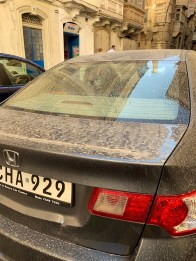 nkfully I had a seat inside the jeep, but my fellow travellers were left in the back with a roof by no sides so in just a few minutes they were soaked through! One really interesting thing about the rain is that it was ‘sandy’, apparently with sand brought over from north Africa, just 280km to the south.







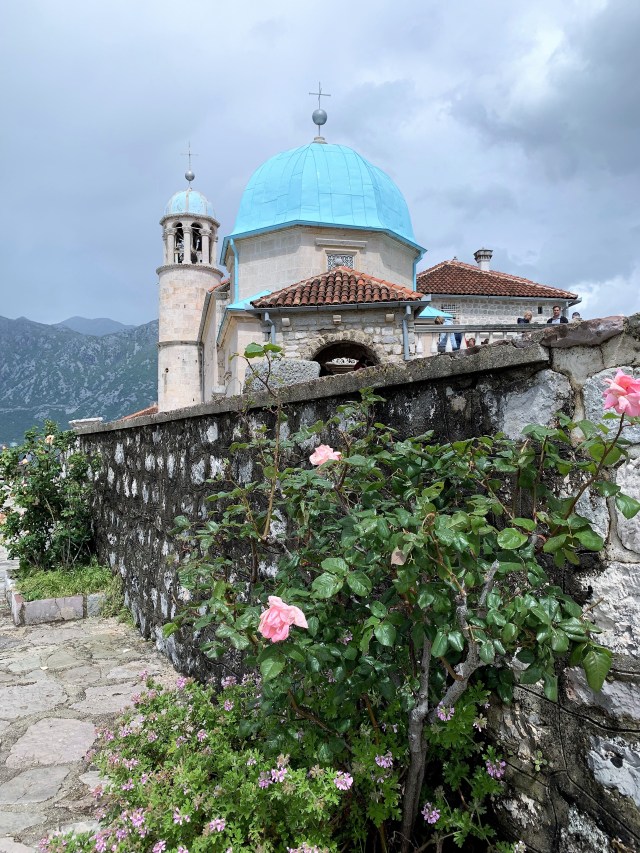
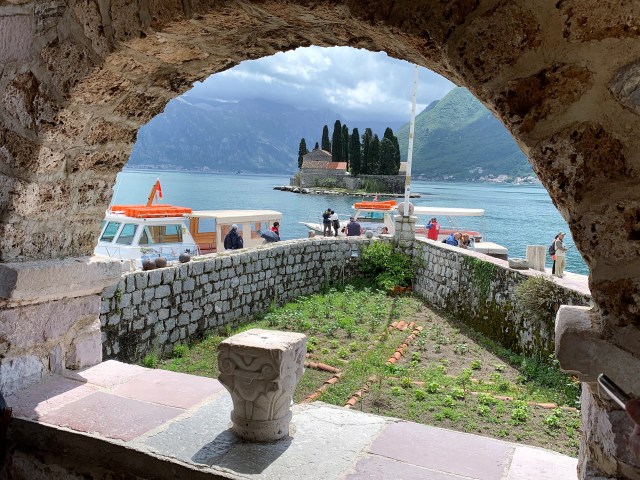
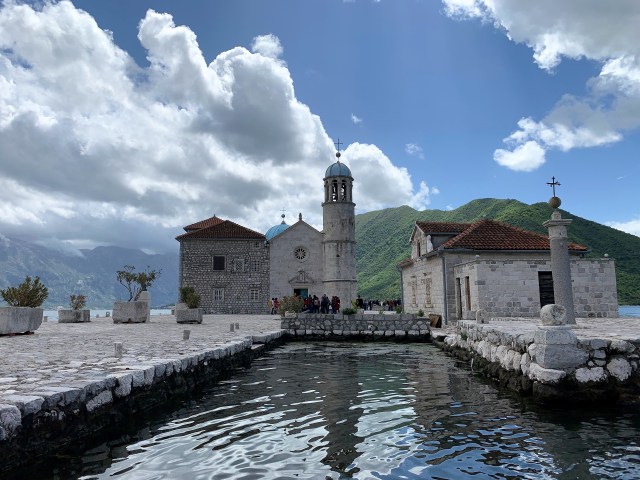
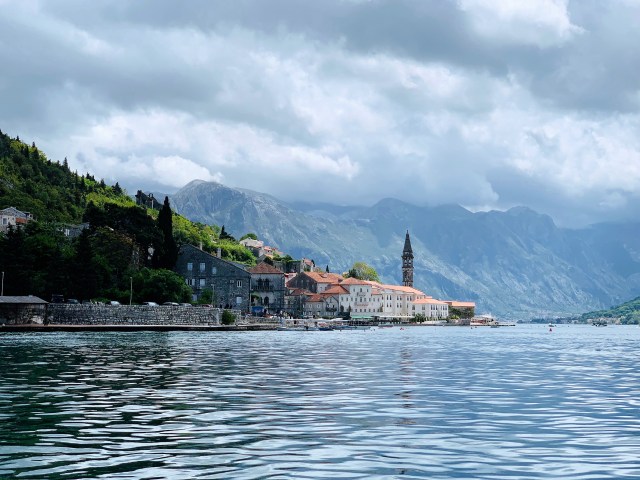

















 We travelled north out of the city, passing The Kelpies – 30 metre high horse-head sculptures which are apparently the worlds largest equine statues! The name comes from the shapeshifting Scottish water spirit, whose favourite shape is that of the heavy horses of Scottish industry who use to pull the barges and coal trains.
Our first stop of the day was at Deanston Whisky distillery – an important point to note, Scottish whisky is not spelt with an e i.e. whiskey. Who knew?? The building that the Deanston distillery calls home was built in 1785 as a Cotton Mill which was at the forefront of Scotlands move from agriculture to industralisation during the industrial revolution.
To staff the mill, they built a self-contained village which still forms the centre of Deanston and even issued their own currency called Deanstons (due to the shortage of coins they branded old French and Spanish coins with the Deanston stamp). Of course, these coins were only redeemable in the grocer and haberdashery of Deanston.
Deaston was also the first village in Scotland to use gas lighting, 45 years before its neighbouring village of Doune! Incredibly, the factory installed electical turbines in 1949, which to this day provide all of the electricity using water from the near by river. They were certainly early adoptors of the need to move to a sustainable power source.
When the cotton industry declined in the 60’s, the Deaston mill closed up business, but the buildings were converted to a distillery with the first bottle of Deaston Highland single malt scotch whiksy being produced in 1974. The water from the near by River Teith is not only used to power the plant, but also used in the production of the whisky and many of the casks they use come from Kentucky.
Oddly, in the US, they can only use casks once when making whisky (apparently the sole reason for this is to keep casks makers in work). So Deaston buy the once used kegs for a much cheaper price than new ones, other kegs they use come from Europe and have had red wine in them and some have previously be used for rum etc. The red wine and rum ones are more expensive but are used for special edition whisky.
We travelled north out of the city, passing The Kelpies – 30 metre high horse-head sculptures which are apparently the worlds largest equine statues! The name comes from the shapeshifting Scottish water spirit, whose favourite shape is that of the heavy horses of Scottish industry who use to pull the barges and coal trains.
Our first stop of the day was at Deanston Whisky distillery – an important point to note, Scottish whisky is not spelt with an e i.e. whiskey. Who knew?? The building that the Deanston distillery calls home was built in 1785 as a Cotton Mill which was at the forefront of Scotlands move from agriculture to industralisation during the industrial revolution.
To staff the mill, they built a self-contained village which still forms the centre of Deanston and even issued their own currency called Deanstons (due to the shortage of coins they branded old French and Spanish coins with the Deanston stamp). Of course, these coins were only redeemable in the grocer and haberdashery of Deanston.
Deaston was also the first village in Scotland to use gas lighting, 45 years before its neighbouring village of Doune! Incredibly, the factory installed electical turbines in 1949, which to this day provide all of the electricity using water from the near by river. They were certainly early adoptors of the need to move to a sustainable power source.
When the cotton industry declined in the 60’s, the Deaston mill closed up business, but the buildings were converted to a distillery with the first bottle of Deaston Highland single malt scotch whiksy being produced in 1974. The water from the near by River Teith is not only used to power the plant, but also used in the production of the whisky and many of the casks they use come from Kentucky.
Oddly, in the US, they can only use casks once when making whisky (apparently the sole reason for this is to keep casks makers in work). So Deaston buy the once used kegs for a much cheaper price than new ones, other kegs they use come from Europe and have had red wine in them and some have previously be used for rum etc. The red wine and rum ones are more expensive but are used for special edition whisky.


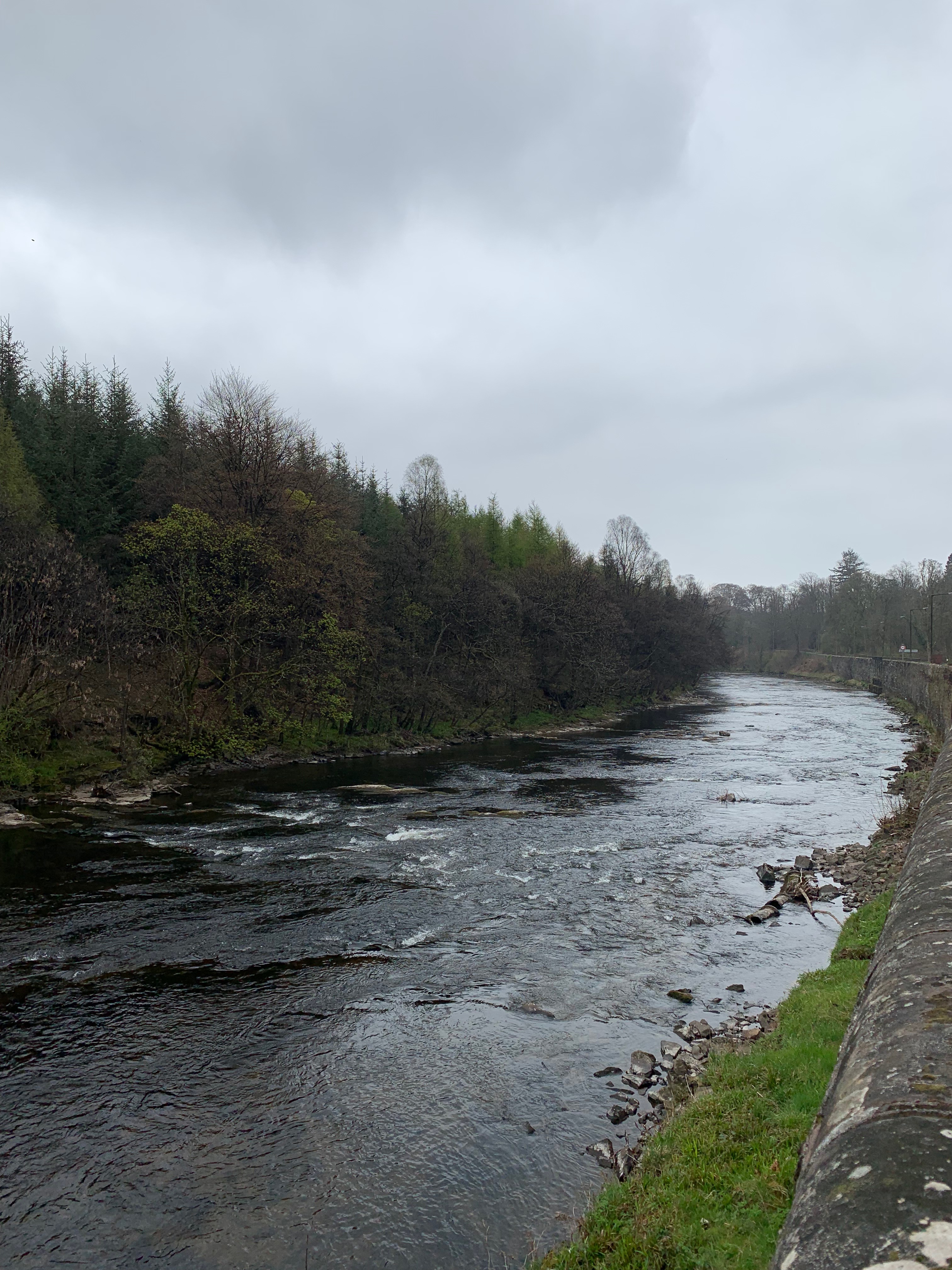 I must admit, although learning about the history of Deanston and the whisky making process was interesting, I was more interested was the origins of the saying “armed to the tieth”. I always thought it was teeth but no, the saying came from soldiers not being allowed to take weapons in to Stirling so they would have to leave their weapons when they reached the River Teith – on the banks of which the Distillery sits.
As we travelled north through the Highlands, the cloud and rain closed in. Our guide kept saying the weather would clear but it seemed not to be the case. They like rain in the Highlands as it is just whisky ready to be made lol. Despite the weather, Glencoe was beautiful and we briefly (and I mean briefly) braved the wind and rain to jump out of the bus to take a photo.
I must admit, although learning about the history of Deanston and the whisky making process was interesting, I was more interested was the origins of the saying “armed to the tieth”. I always thought it was teeth but no, the saying came from soldiers not being allowed to take weapons in to Stirling so they would have to leave their weapons when they reached the River Teith – on the banks of which the Distillery sits.
As we travelled north through the Highlands, the cloud and rain closed in. Our guide kept saying the weather would clear but it seemed not to be the case. They like rain in the Highlands as it is just whisky ready to be made lol. Despite the weather, Glencoe was beautiful and we briefly (and I mean briefly) braved the wind and rain to jump out of the bus to take a photo.


















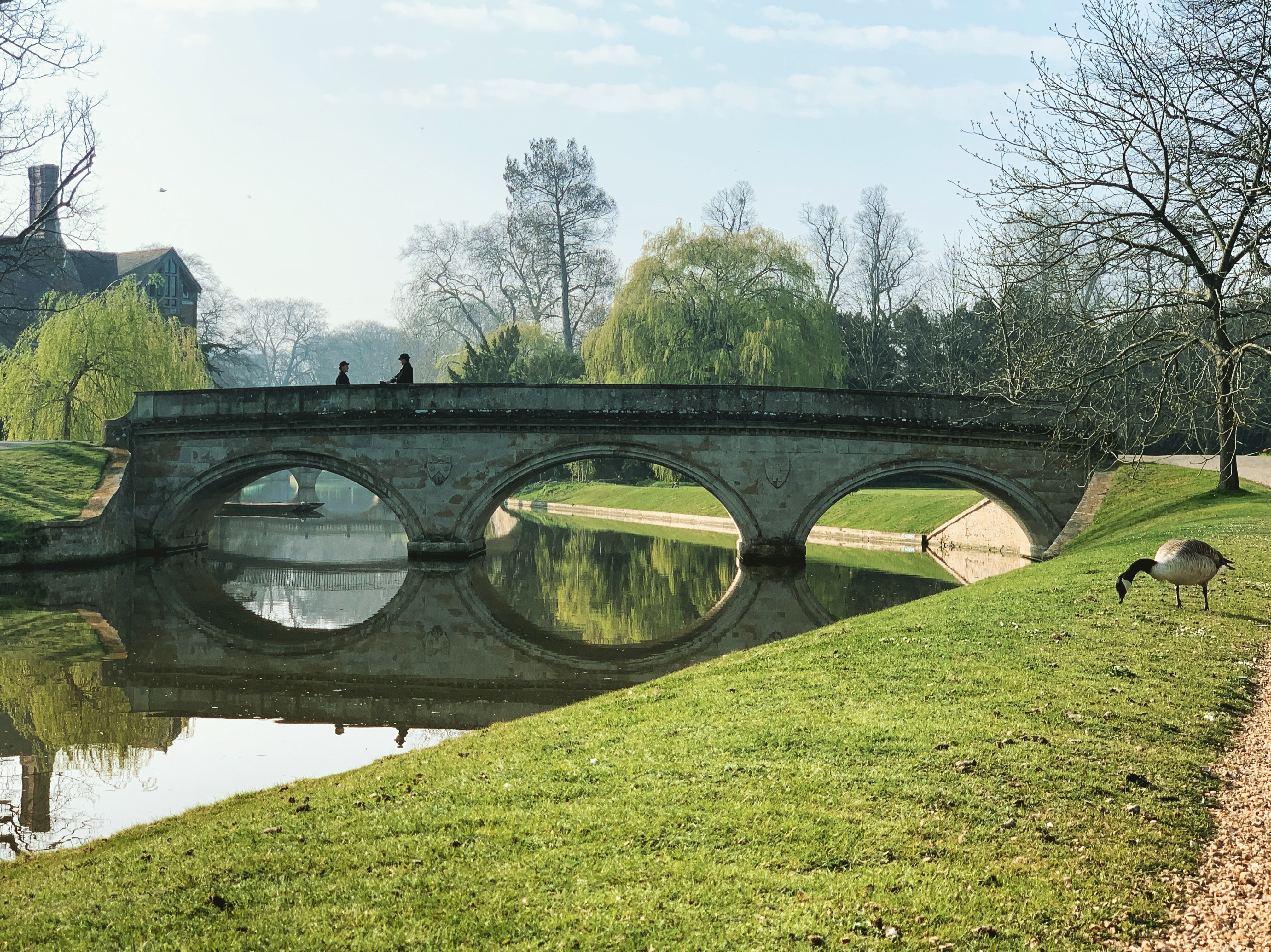 Some of the detours I take, take me to places I am probably not supposed to be – I just act like I belong and no one seems to stop me 👍🏻I continued wandering the streets and the near by meadows until I came across Cassius and Gonville College (which was actually closed that day but I didn’t even realise until I was walking out and over heard someone else being told they weren’t allowed in!) 🤦🏻♀️
Gonville & Caius College, the fourth oldest colleges at Cambridge founded in 1348 and one of the wealthiest. It boasted 14 nobel prize winners (second after Trinity College) including Francis Crick (joint discoverer of the structure of DNA – as a side note, I saw a very interesting play called Photograph 51 about this discovery a few weeks, primarly about Dr Rosalind Franklin, an x-ray Crystallographer who was key in the discovery of the double helix strucutre but overlooked when it came to the noble prize for the discovery). Dr Stephen Hawkings received a research fellowship here to and it is where he got his PhD in applied maths and theoretical physics.
Some of the detours I take, take me to places I am probably not supposed to be – I just act like I belong and no one seems to stop me 👍🏻I continued wandering the streets and the near by meadows until I came across Cassius and Gonville College (which was actually closed that day but I didn’t even realise until I was walking out and over heard someone else being told they weren’t allowed in!) 🤦🏻♀️
Gonville & Caius College, the fourth oldest colleges at Cambridge founded in 1348 and one of the wealthiest. It boasted 14 nobel prize winners (second after Trinity College) including Francis Crick (joint discoverer of the structure of DNA – as a side note, I saw a very interesting play called Photograph 51 about this discovery a few weeks, primarly about Dr Rosalind Franklin, an x-ray Crystallographer who was key in the discovery of the double helix strucutre but overlooked when it came to the noble prize for the discovery). Dr Stephen Hawkings received a research fellowship here to and it is where he got his PhD in applied maths and theoretical physics.




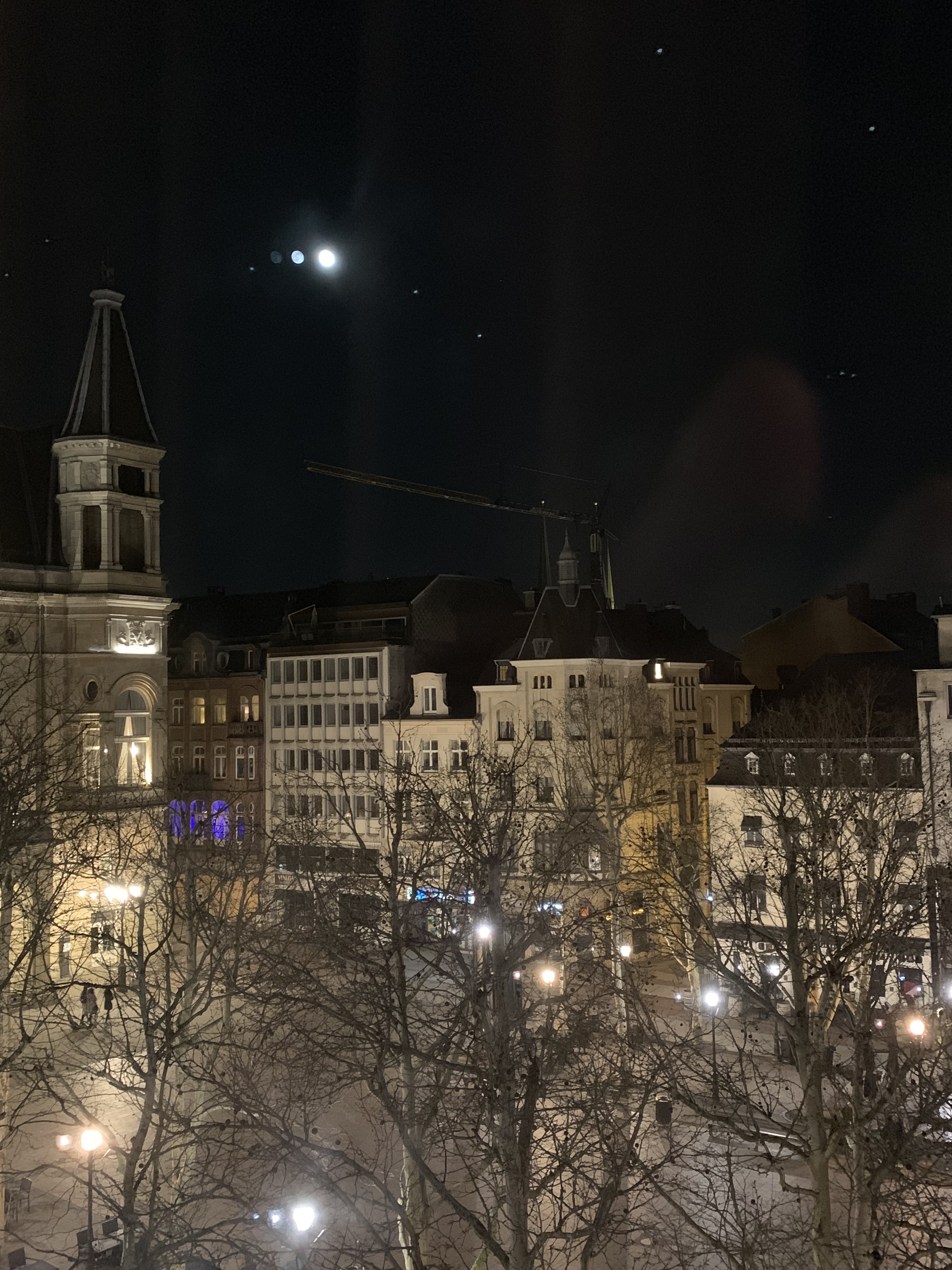








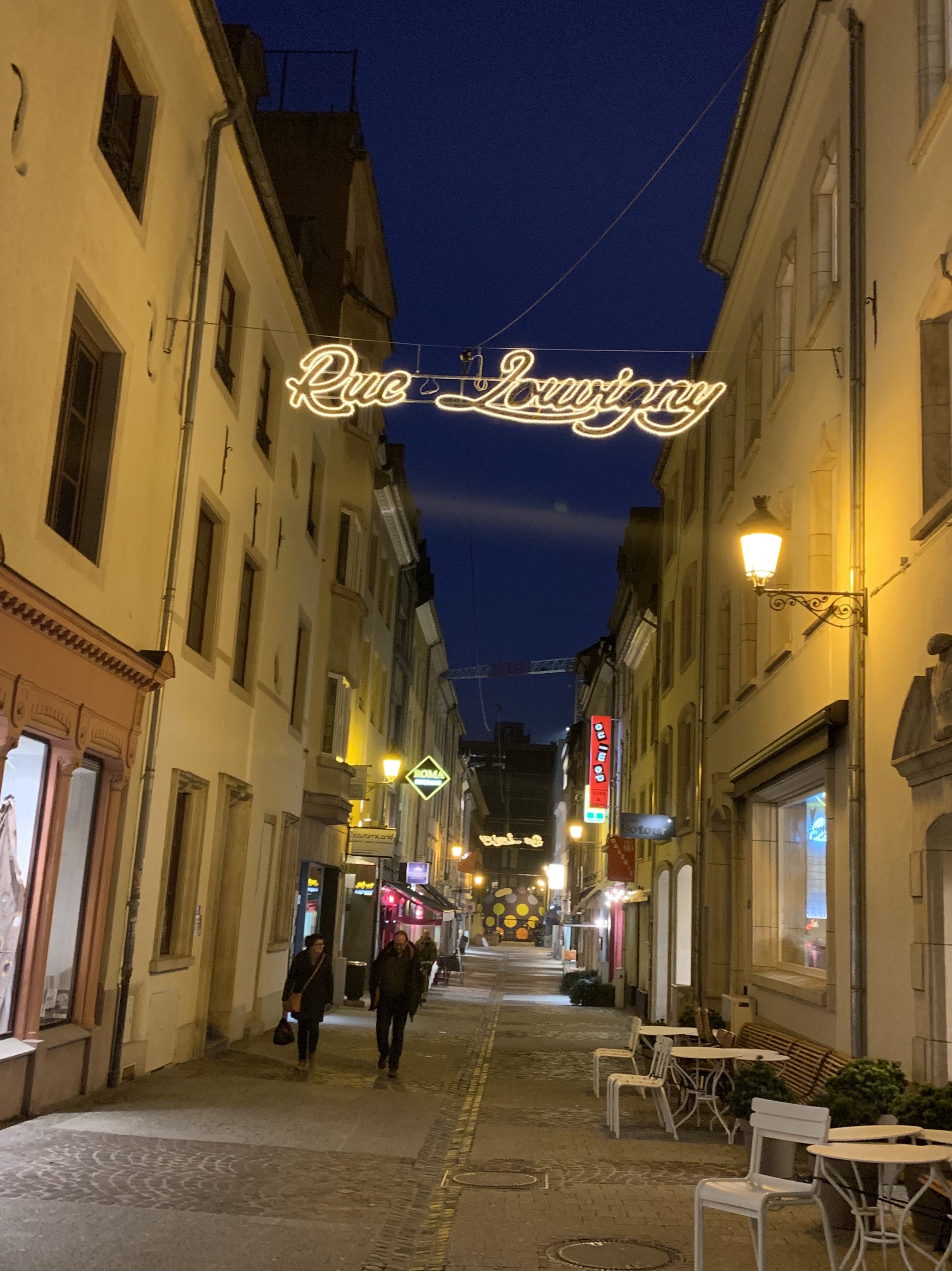










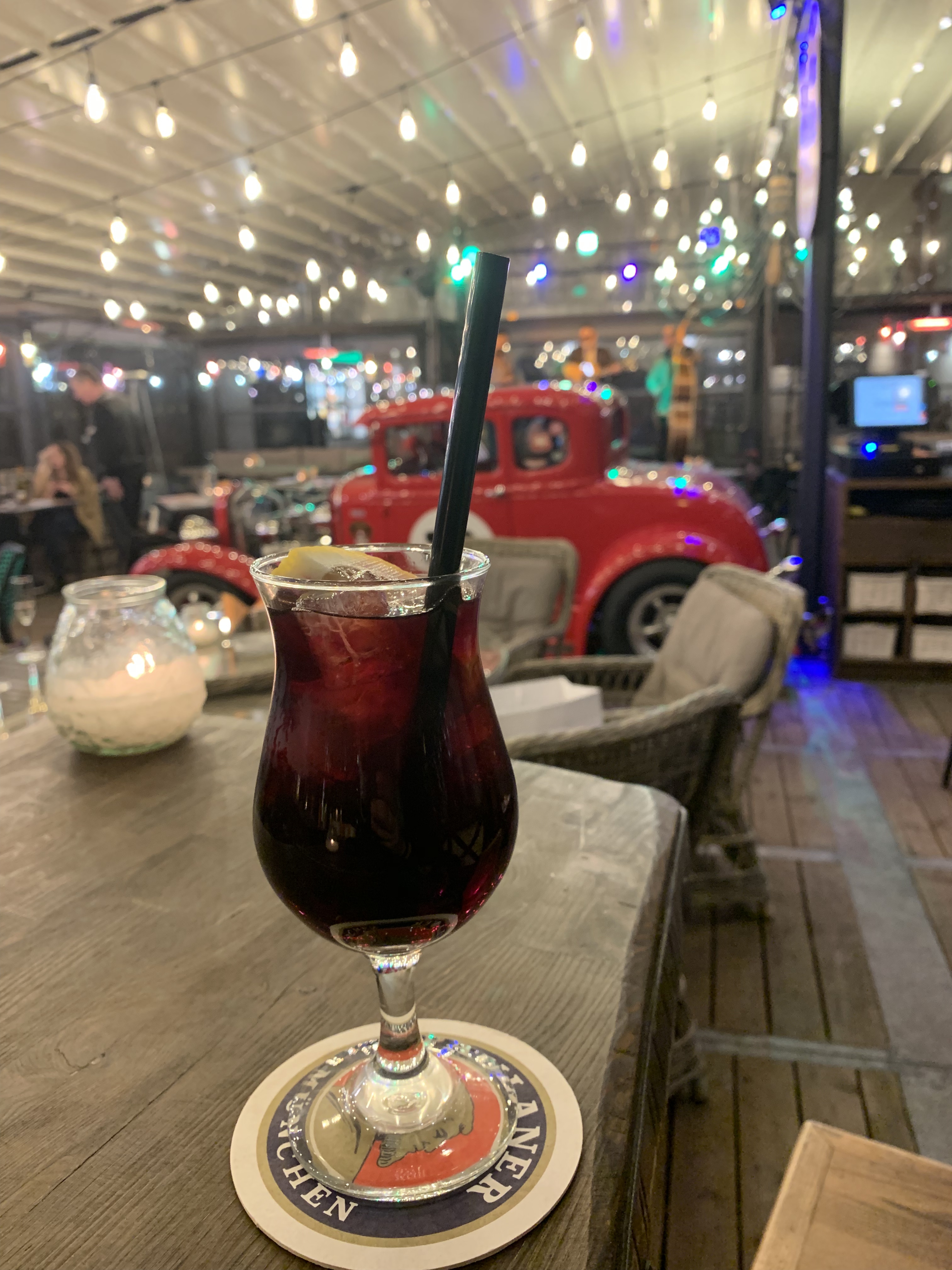
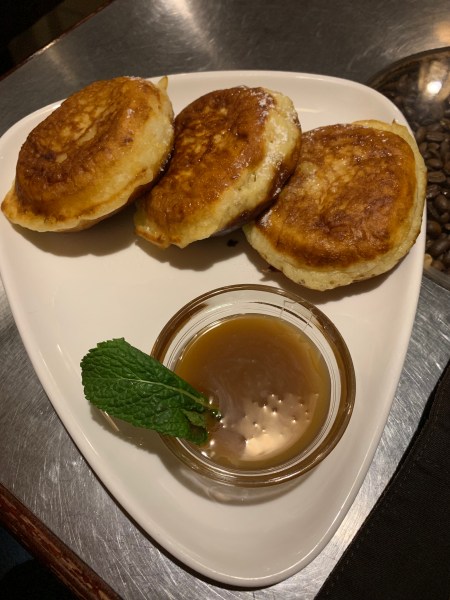 My final stop for the night a cafe for a raspberry gin and tonic (ok so I was not completely done after the first 2 drinks) and some traditional yeast pancakes – again delicious and I convinced myself I needed them to soak up the alcohol.