Unseen Fiordland and Stewart Island (Part 2) – Stewart Island revisited

November 2020

After a good night’s sleep moored in the very calm Paterson’s Inlet, I woke up to a beautiful view of Ulva island (I didn’t make it for sunrise which is now around 5am 🥴).  The air was also full of bird song from the island.  Fun fact, Paterson Inlet is the  inlet with the most shoreline in the Southern Hemisphere!

After a big buffet breakfast we got ready for our first on shore expedition to Ulva Island and being the first day everyone was ready early for our 8am departure – raring to go. 
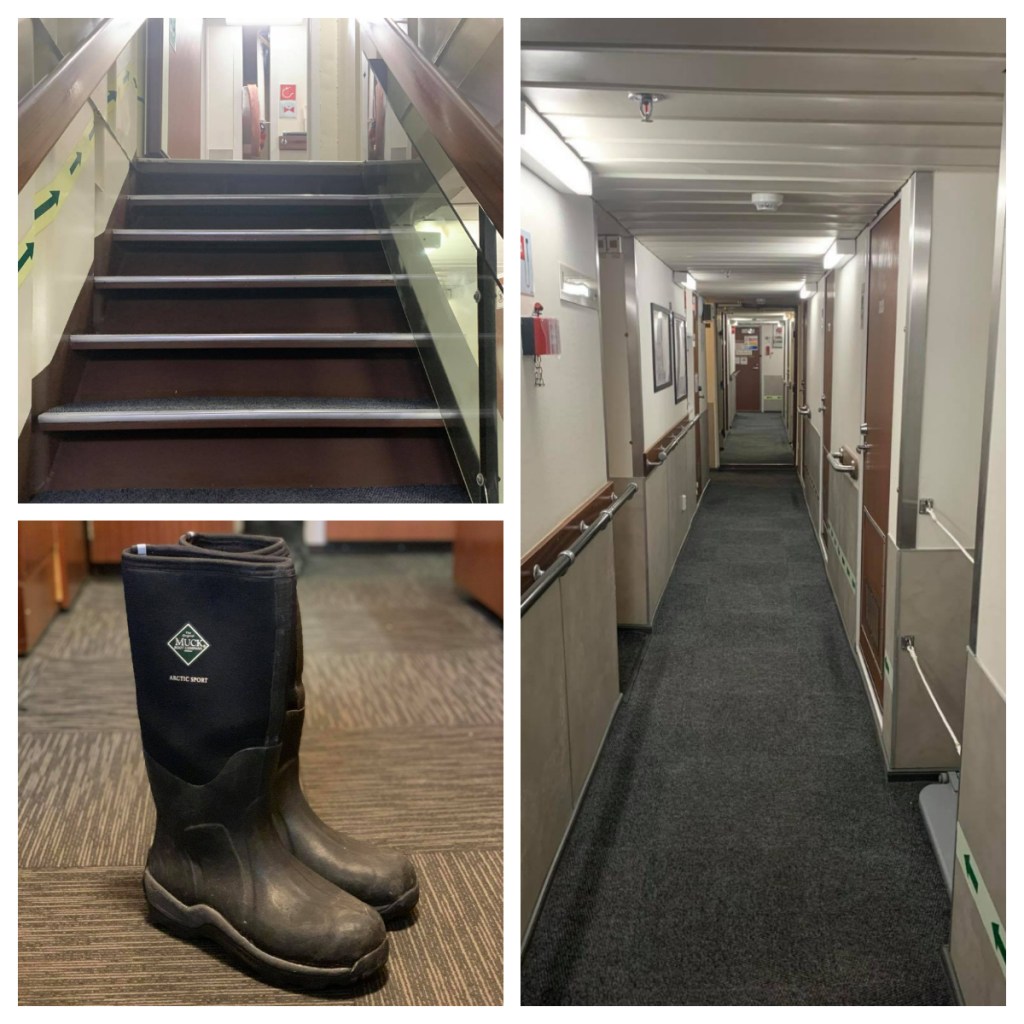
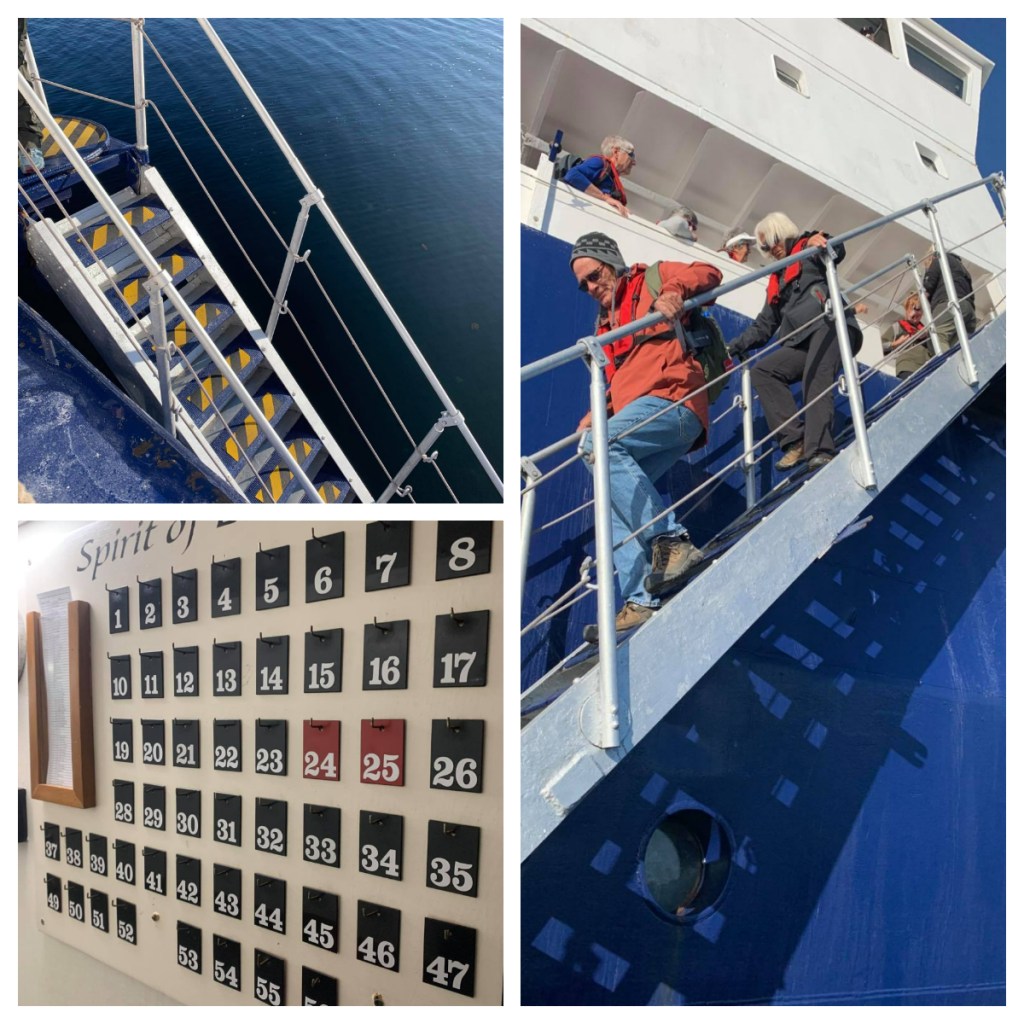
Initial comparisons of small vs big expedition ships (the bigger ship being the one I went to Antarctica on in 2014/15) – the bigger ship had a dedicated muck room for getting dressed in your outside gear rather than 3 people trying to do that in our small room (it’s not that bad but difficult if we are all trying to get ready at the same time (which we inevitably were).  Secondly on the big ship we typically exited the ship at sea level straight into the zodiacs … on this ship there we steep stairs to decent.  Nothing that I could not deal with though.

Now, if you are a regular reader, you will know I had been to Ulva Island just a few short weeks previous but it is definitely the kind of place that I could return to multiple times and, as with nature, every time would be different.  All 50 of us disembarked the zodiacs on to the small wharf at Post Office Cove and we were able to choose which group we wanted to join – fast walkers, moderate walkers and potterers.

All the guides were provided by Ulva’s Guided Walks (who I had used the last time I was there) and I recognised one of the guides as Ulva herself and immediately decided I would join her group regardless of which one it was! Ulva Goodwille is well known on Stewart Island (she is named after Ulva Island) and she has even written a book about Ulva Island (which I was lucky enough to get a signed copy when I visited the last time).  She is a direct descendant of the first Maori people of Stewart Island and is clearly very passionate about the island and it’s inhabitants. 

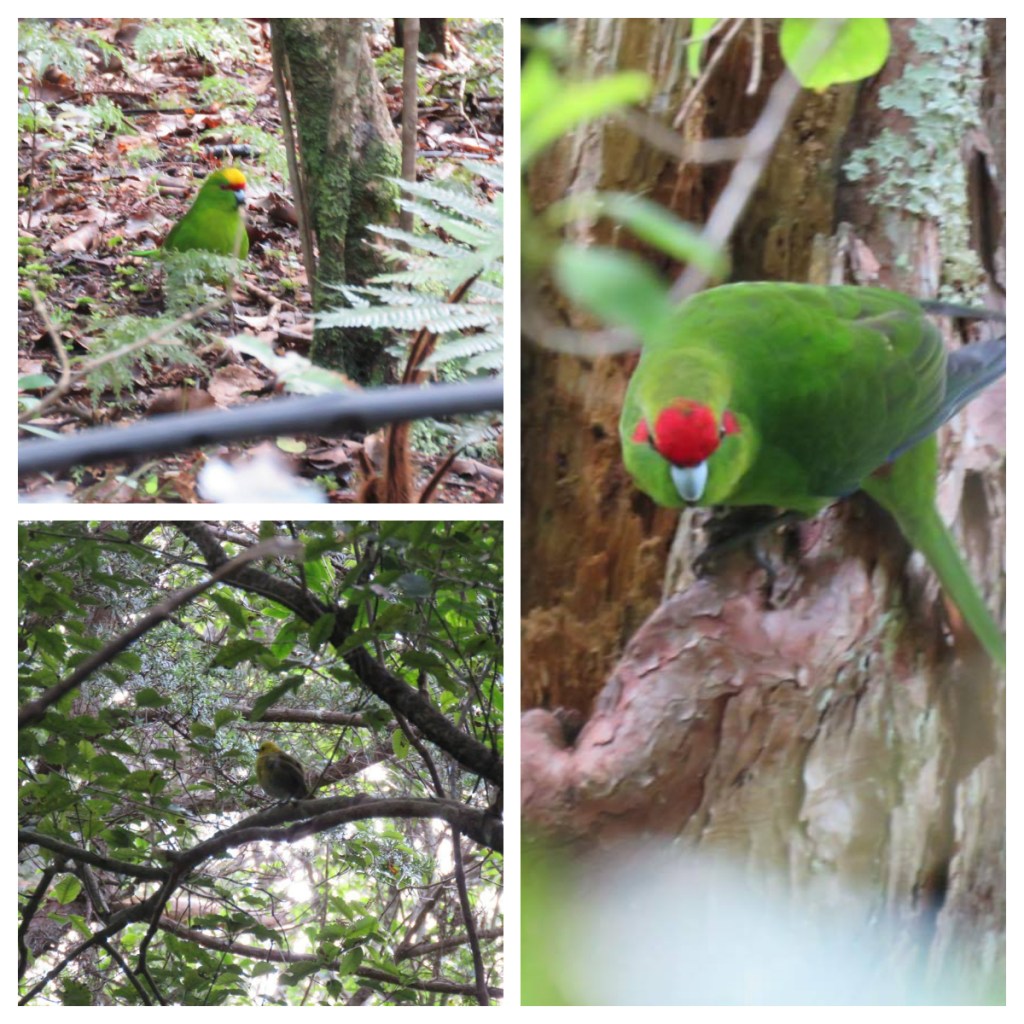
It turned out, Ulva was leading the potterers group which was fine by me and it was even better because there was only 5 people in the group as opposed to the other groups that had 20 or so.  We did not have to potterer far to come across two Red Crowned Kakariki feeding chicks in a hole in the tree – we could not see the chicks but they were definitely keeping their parents busy.

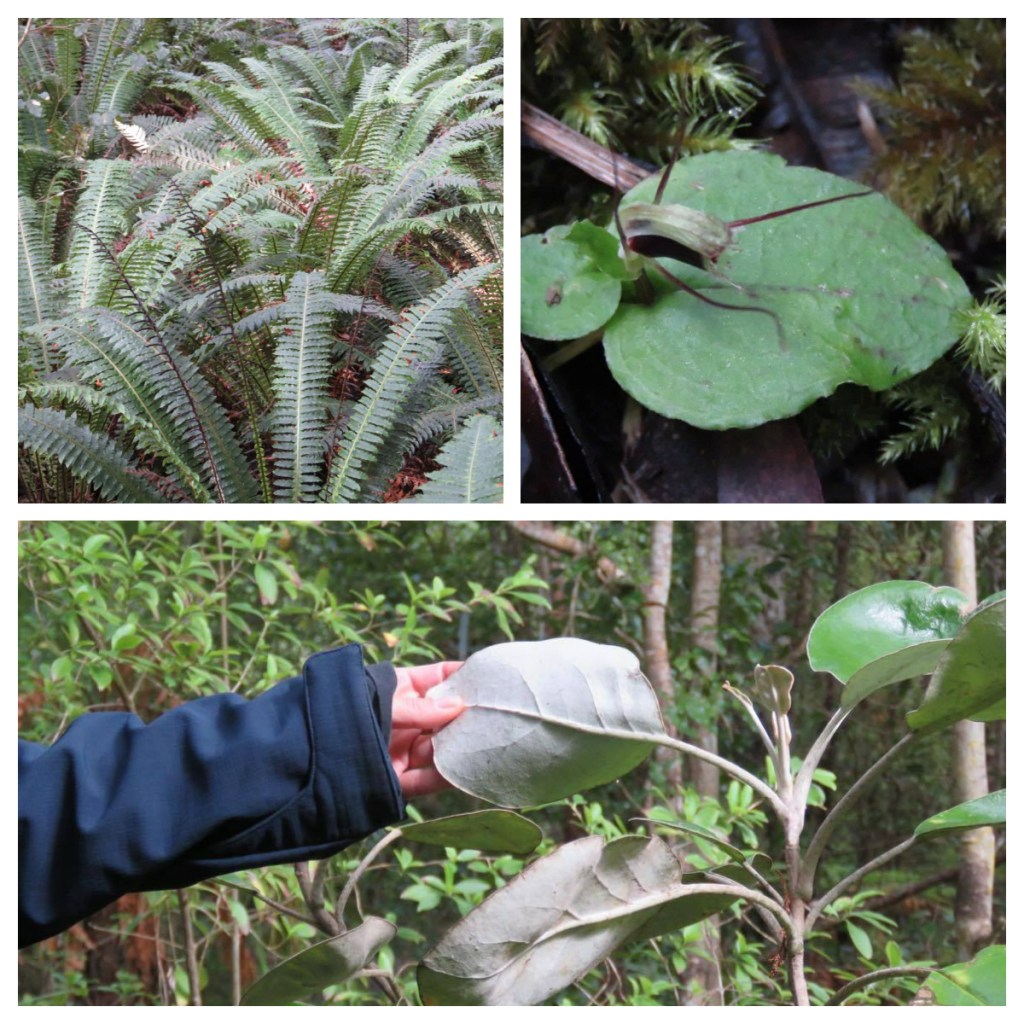
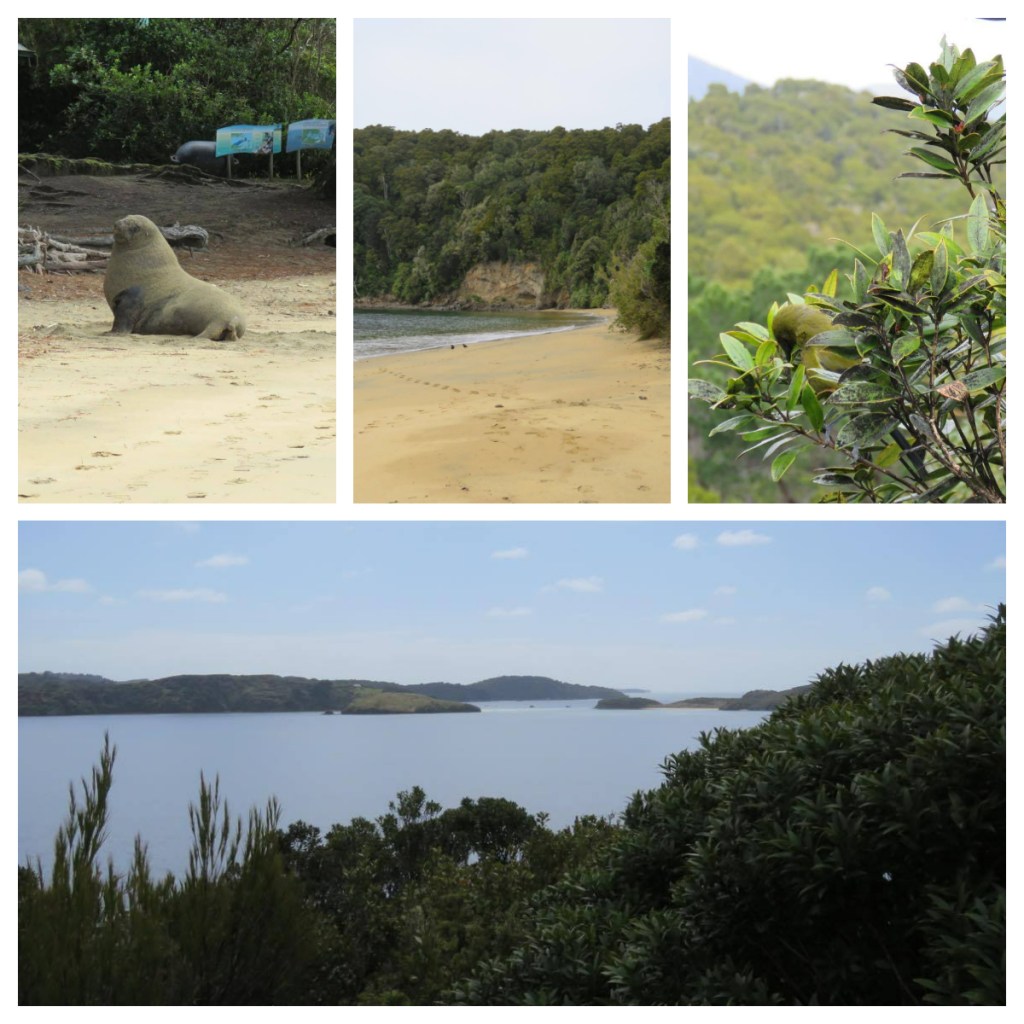
The whole island was filled with amazing bellbird song, occasionally interrupted by three saddlebacks, who, according to Ulva (who clearly speaks Saddleback lol) were all very angry!!  We saw kereru, bellbirds and tuis doing ‘zoomies’ through the trees.  We tasted some of the sooty mould (odd I know 😂) which tasted very sweet and learnt about the 73 species of endemic coprosma (only found in New Zealand) which can be identified by the dots up the centre of the leaf (see the photo).

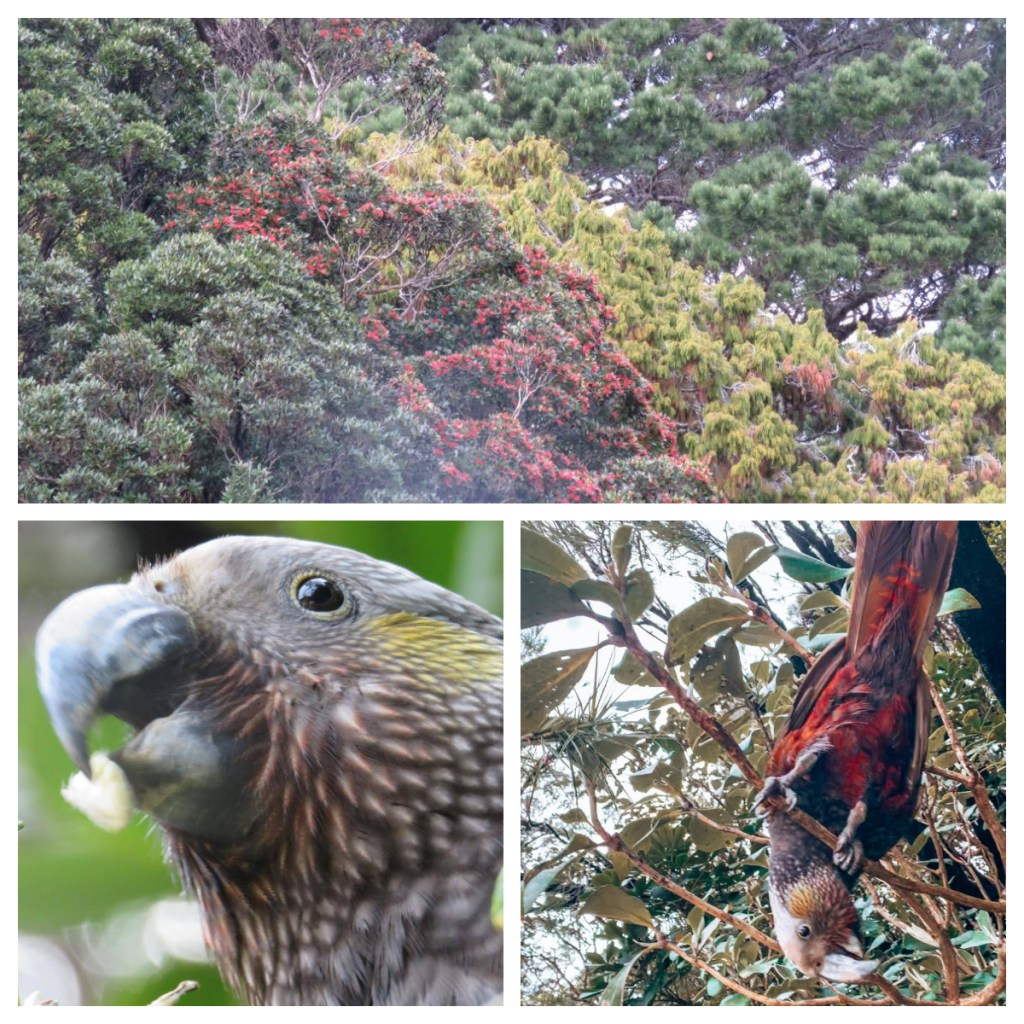
In hindsight perhaps it was a little too ‘pottery’ for me but I loved all the stories Ulva was sharing with us.  One of my favourites was the story of the Kaka, who used to have a red head, but the Kakariki stole the red feathers, so now Kaka have white feathers on their head and why the Kakariki are always “laughing” 😂.

Slightly more factual stories included her theory that saddlebacks could be flightless in 1000 years as they hate to fly and will avoid it if they can!  They nest on the ground and ‘run’ up branches rather than fly.   Of course, the existence of predator free islands like Ulva are the only place they can truly live this way and survive.

We learnt about the Robin’s who at this time of the year have ‘brooder patches’, where they pull out some breast feathers so their skin is closer to their eggs.  It was clear that most are sitting on eggs currently.

We passed massive 500 year old Rimu trees and tiny orchids, so tiny they were easy to miss.  There were almost no orchids in bloom when I was on the island before, but this time there were a few more including tiny green hooded orchids and bamboo orchids. 

As we were admiring a morepork, who was comfortable tuck up in the incredible root system of a large South Rata tree (morepork are owls and therefore predominately nocturnal), a tui swooped in and dive bombed it!  The morepork are predators and the tui must have eggs or chicks nearby that it was protecting.  We didn’t see where the morepork went and never saw it again.

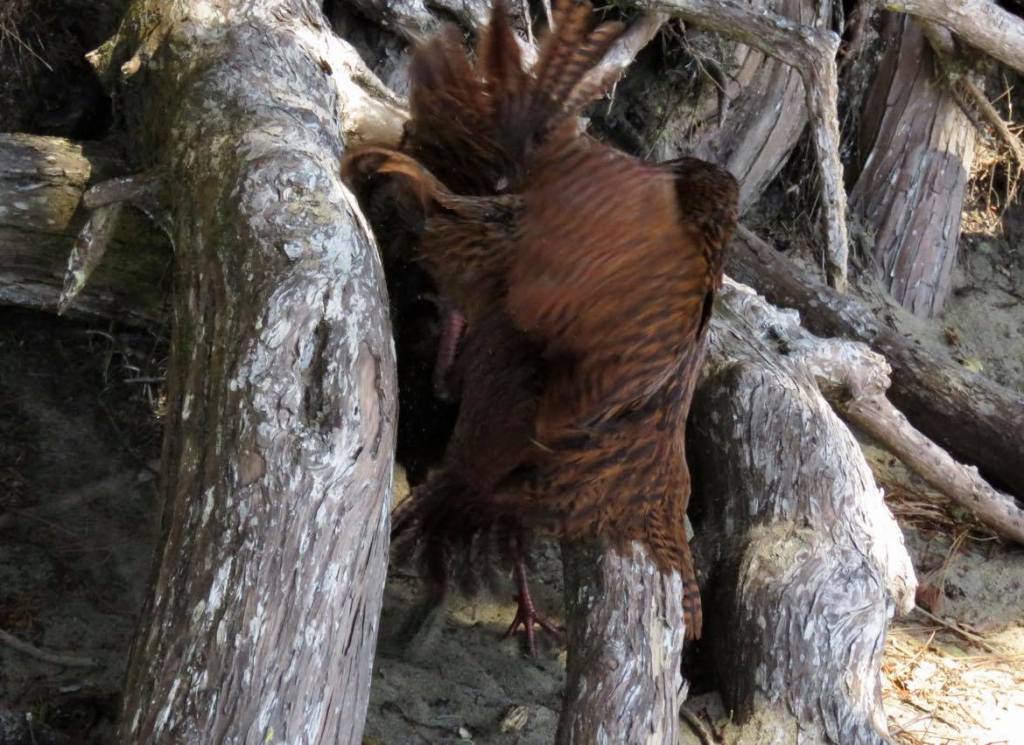
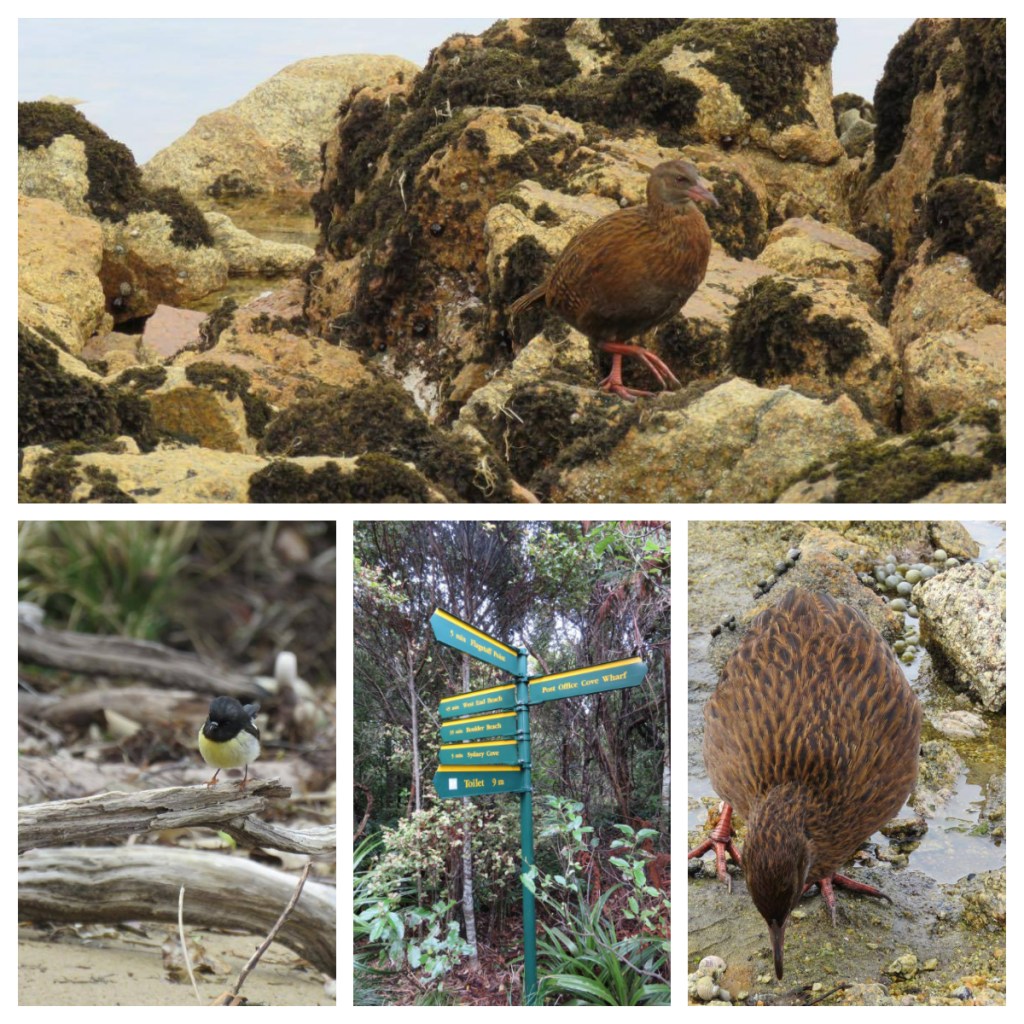
Back down near the beach we came across a Rifleman’s nest (New Zealand’s smallest bird).  There was a tiny feather near the entrance but sadly we did not see the bird themselves … instead we got to watch some battling weka!  The weka wars went on for some time before one of them gave up and wandered off lol.

It was a beautiful morning on Ulva Island but too soon it was time to head back to the ship and as we had lunch, the ship moved around to Kaipipi Bay, one of the many small bays that line Paterson’s Inlet.  From here we headed back on to land for a walk back to Oban.  We ended up walking along the last stretch of the Rakiura 3 day track down into town along with those who had actually done the 3 day walk 😂.  They look exhausted but happy and we bumped into them again cooling off their tired feet in the ocean.

It was a warm sunny day and Oban, and the town was very busy (as was the bar) so I just decided to chill a little by the beach, fascinated by the amazing colours and patterns in the sand and it was not long before it was time to get the zodiac back to the ship which was now anchored in the harbour just offshore.

Settling into our onboard routine, we had a recap of the day in the bar before another great dinner.  One of the staff had been asking around about the jellyfish from the previous night.  Apparently, they were speckled jellyfish and at this time of year there are many of them due to additional nutrients in the water.

During the early hours of the morning, we moved again, this time around to the eastern coast of Stewart Island at Port Adventure (the movement made a nice little swell to rock me to sleep lol) and we work to another beautiful morning which I started with coffee on the deck before breakfast.  It also helped that breakfast was not until 7.30 (rather than 6.45 the day before though we are clearly getting into the routine of boat life).

Weirdly, by morning, my phone was saying the time was 4.30am rather than 7.30am 🤔🤔 but when I went in to the world time it had the right time for Wellington – had we changed times zones over night?? No… apparently the ship (from Vladivostok) has some technology that phones are picking up … so it is showing the time in Vladivostok 🥴 or are we on the way to Vladivostok – technology is wonderful but weird … even my offline maps thought we were in Russia and all my photos show they were taken in Vladivostok?!?  Thank goodness I was not relying on the alarm to wake up!!

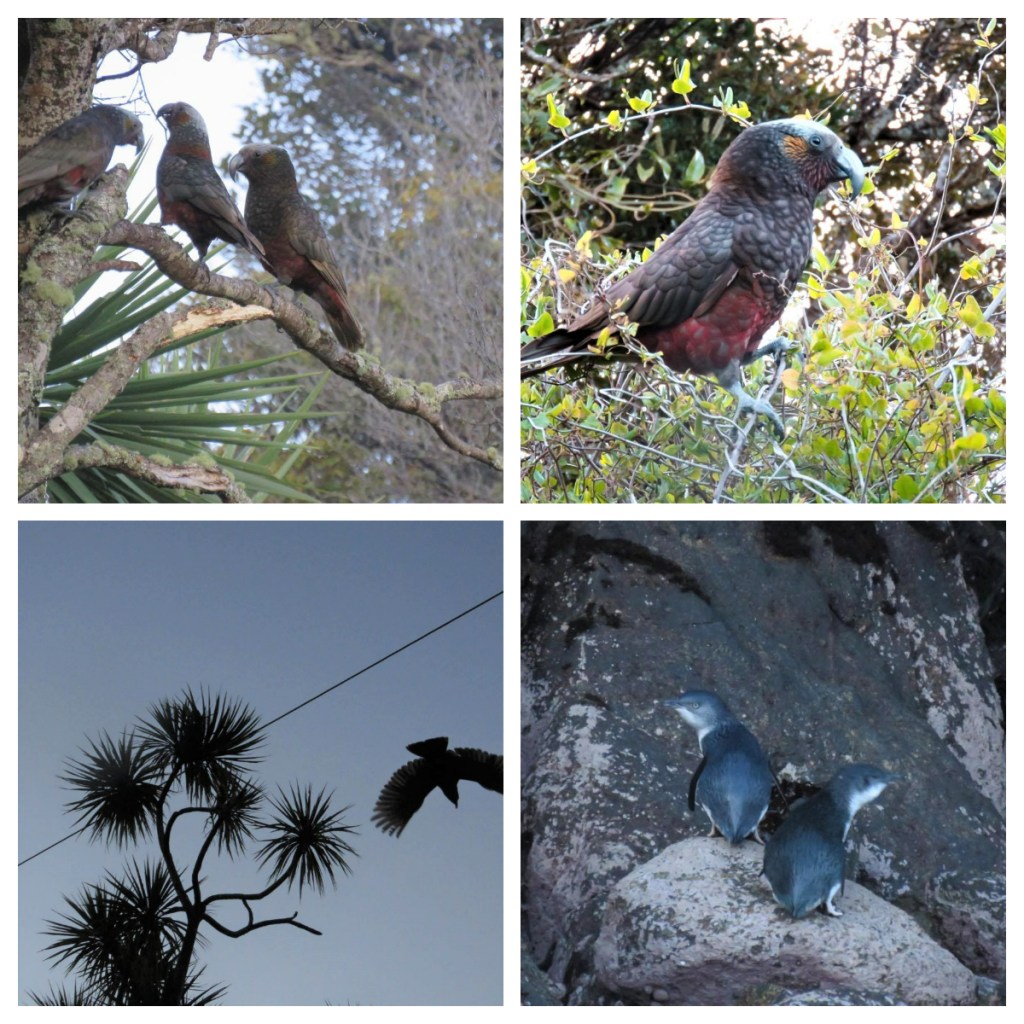
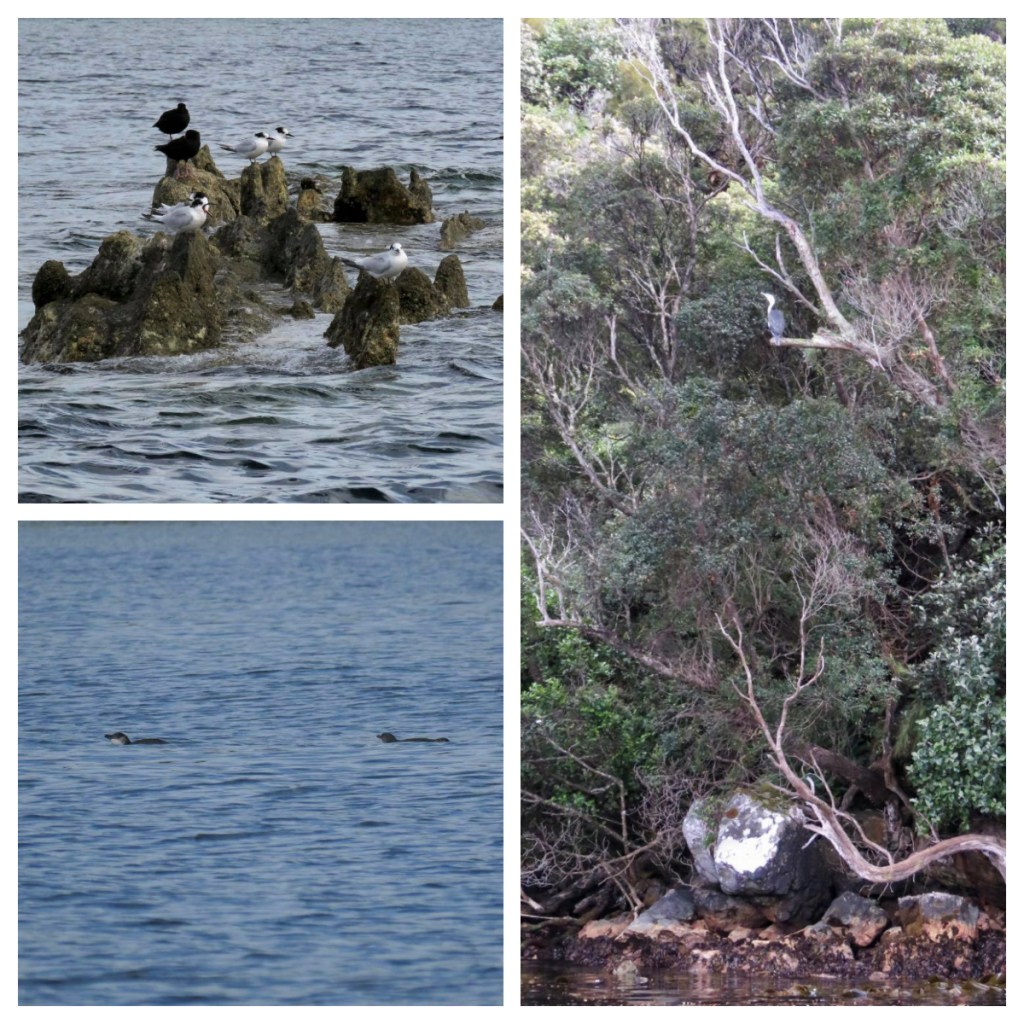
By 8.45 (New Zealand time) we were out on the water in the zodiacs (there are enough zodiacs for everyone onboard to be out on the water at the same time) and started cruising around some of the bays, passing a few Little Blue penguins in the water and some Foveaux Shags chilling out in the trees.  Apparently, they can be black or black and white! 

As we cruised along the southern arm of the bay, we spotted our first Fiordland Crested penguin, hiding out under a branch on the side of the water and spotted kaka flying overhead.  We admired white fronted terns and variable oyster catchers, all posed on a small group of rocks.  It was so peaceful and calm when we turned the engines off … it was also warm – too warm for all the clothes I was wearing when we were going slow, but I was grateful for them when we picked up some speed!
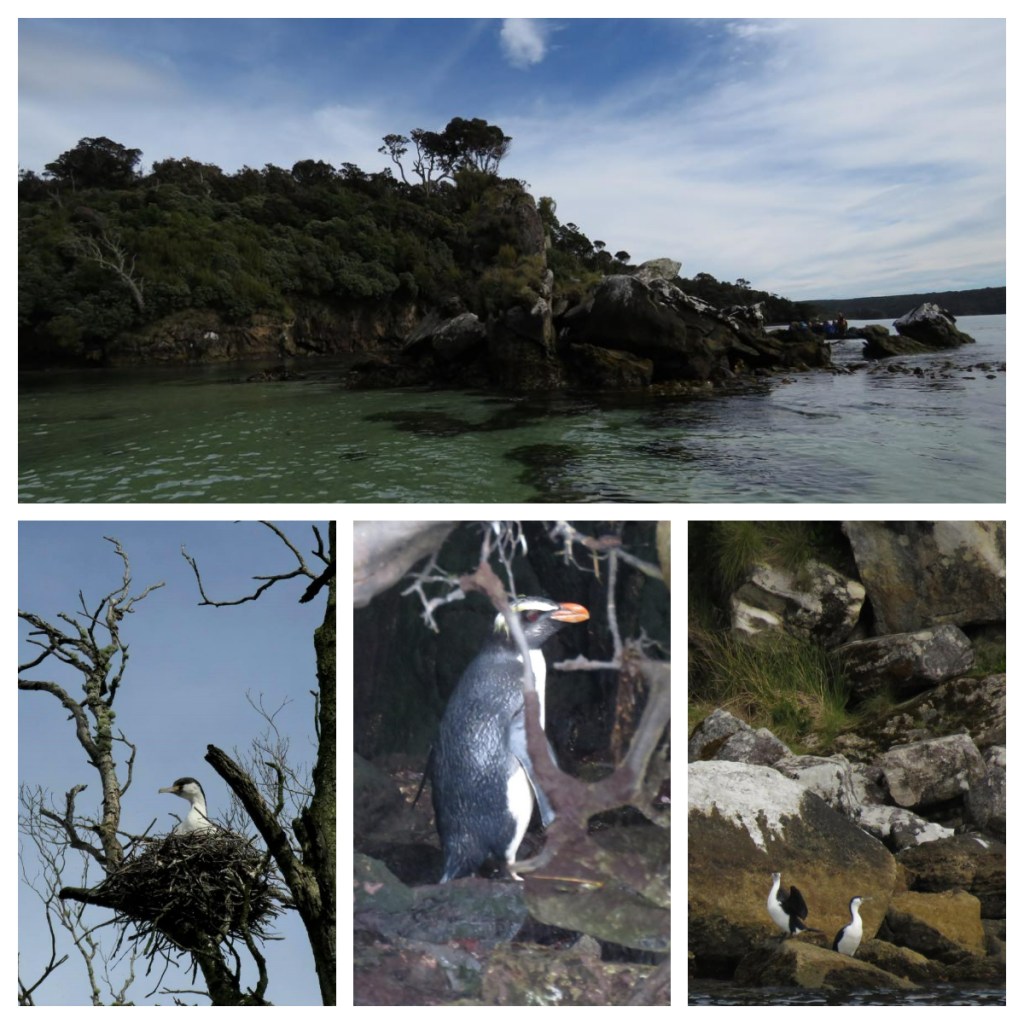
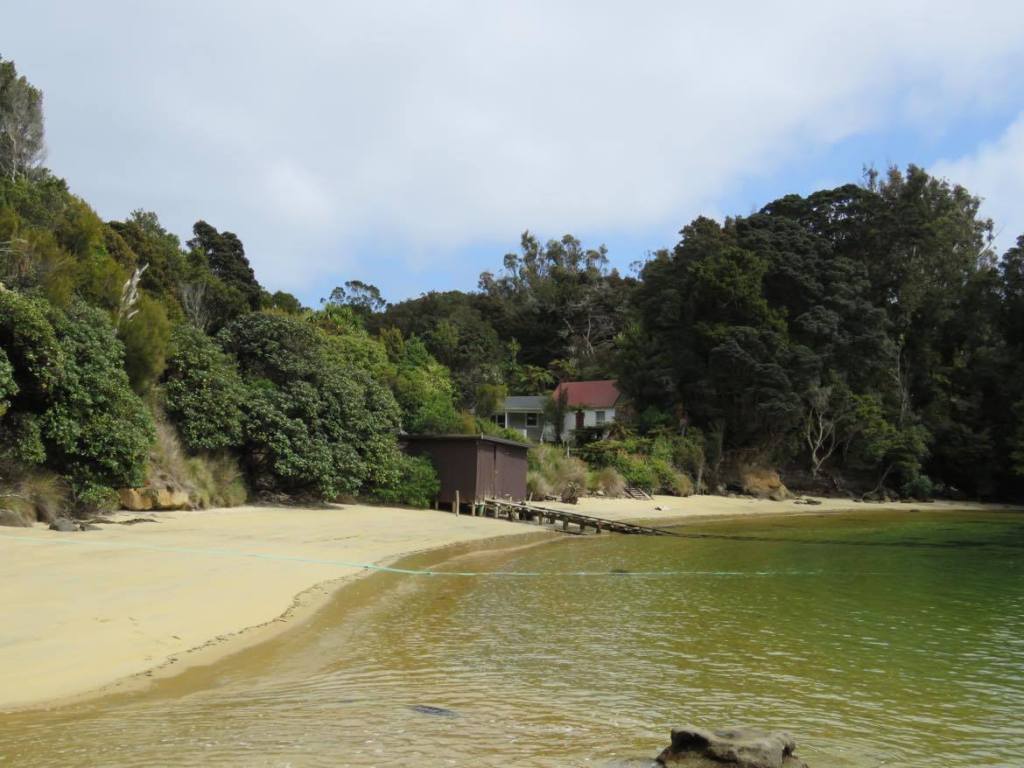
We had a brief land stop at the Port Adventure Hunters hut (to give the crew time for a quick outboard motor repair) and I spent the time admiring the beach with its beautiful mixture of coloured shells, rocks and seaweed. 

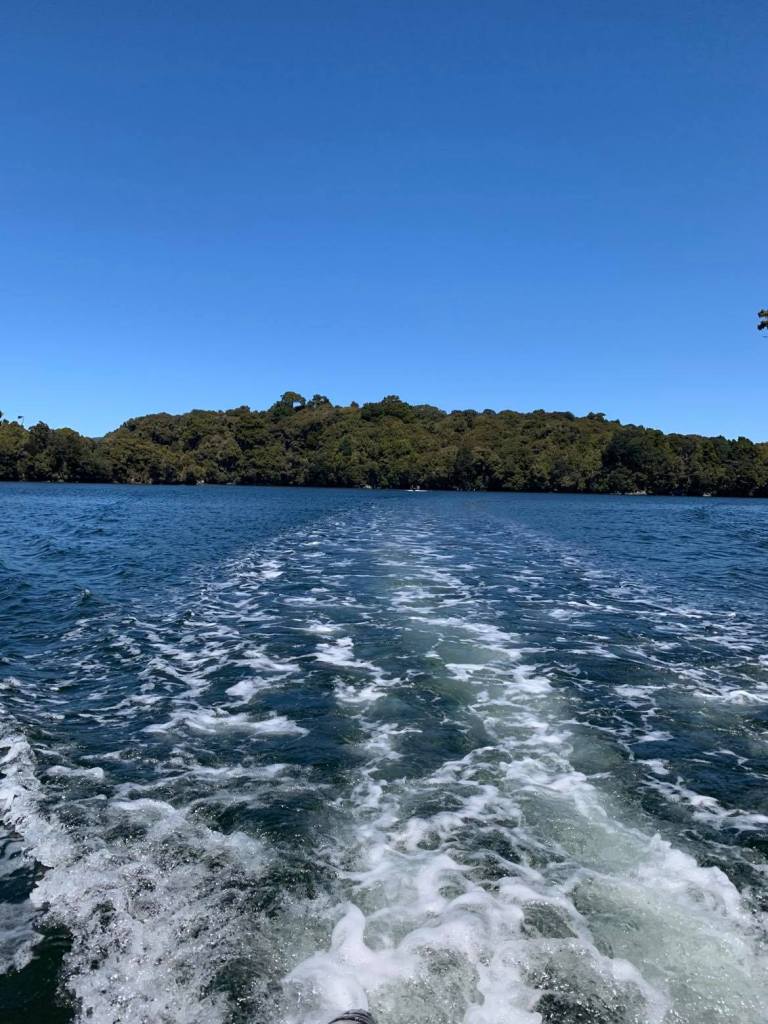
With all the zodiacs back in working order, we headed down beautiful Heron River – it had a real central/ South American vibe to it, with jungle on both sides of the dark river – I almost expect to see alligators in the water, or monkeys in the trees. 

As the river narrowed and shallowed, I ended up helping Heidi our guide row the zodiac (as it was too shallow to use the outboards) – but at least I avoided having to get in to push us over rocks in the really shallow parts 👍🏻 lol.  Apparently, the plan had been to try and get as far down the river to see a waterfall … we did, and it was about 10 cm high 😂😂

Back on the ship and we quickly lifted the anchor and set sail as we sat down for lunch.  After all the paddling efforts of the morning I was ravenously hungry and I was surprised when my phone pinged during lunch, meaning I had reception (which we don’t have for much of the trip).  It seems we had abandoned the route we were supposed to take around the south of Stewart island and instead went back past Oban (hence the phone reception) and along the north coast.   I understand that sometimes things have to change, particularly on trips like this, but it was disappointing they we could not do the plan but also that they really did not tell us about it …

We spent the afternoon at sea in somewhat choppy water so had a couple of lectures – I missed the first one of Maori settlement of Auckland Islands (we are not going there, and I was exhausted after my paddling exploits of the morning), the second was on the Southern Ocean which we were experiencing so I did go to that one – key takeaway for me is that the southern ocean is the biggest ‘continuous’ ocean in the world.  It was certainly continuously moving at this time!

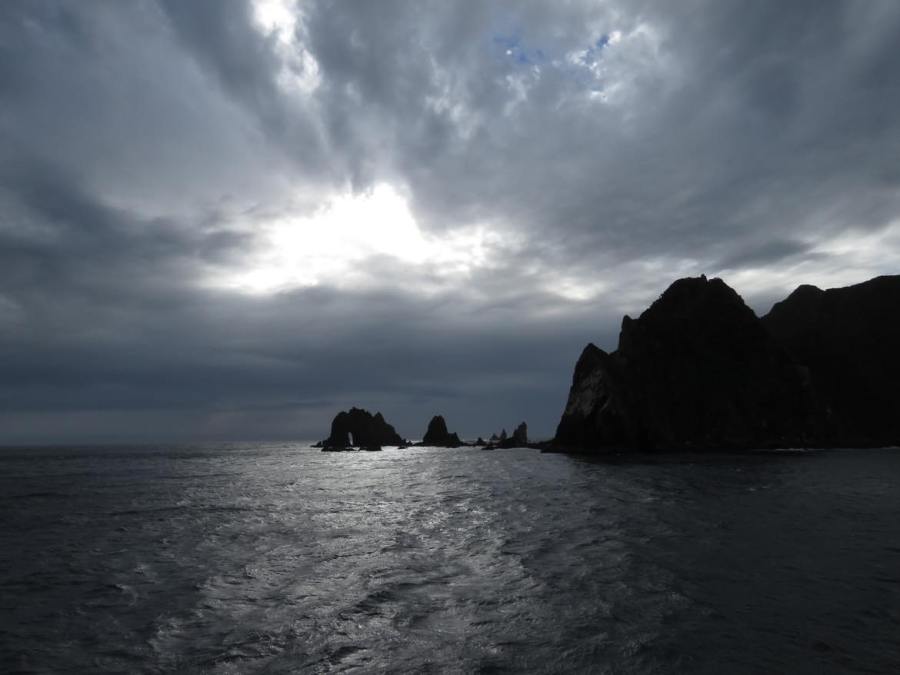
We did a drive by of the Solander Islands, a group of 3 rocky islands that are the tips of an extinct volcano that is believed to have last erupted between 150,000 and 400,000 years ago.  It is believed that it is the size of Mt Taranaki, the rest of which is submerged. It was named after one of Cooks botanists – clearly Solander was not as popular as Banks who got a large peninsular (was thought to be an island at the time), Solander basically got a lump of granite in a remote part of the ocean!

It was beautiful sight with the dramatic skies – albatross and giant petrel soaring around the ship and sealions frolicking in the sea around us.  It was truly beautiful and remote part of our wonderful big backyard that not many people get to see.

We then set sail across to the mainland (the South Island that is😂).  I decided to forego dinner (though I was disappointed to be missing out on rib eye steak) but it was pretty rough by my standards and getting around the ship was tough.  It was definitely the roughest seas I had had in my limited sailing career (although many onboard had seen much worse).  Apparently, the crew and staff enjoyed a rather large dinner as many people did not eat!!

Unseen Fiordland and Stewart Island (Part 1) – All aboard …

November 2020

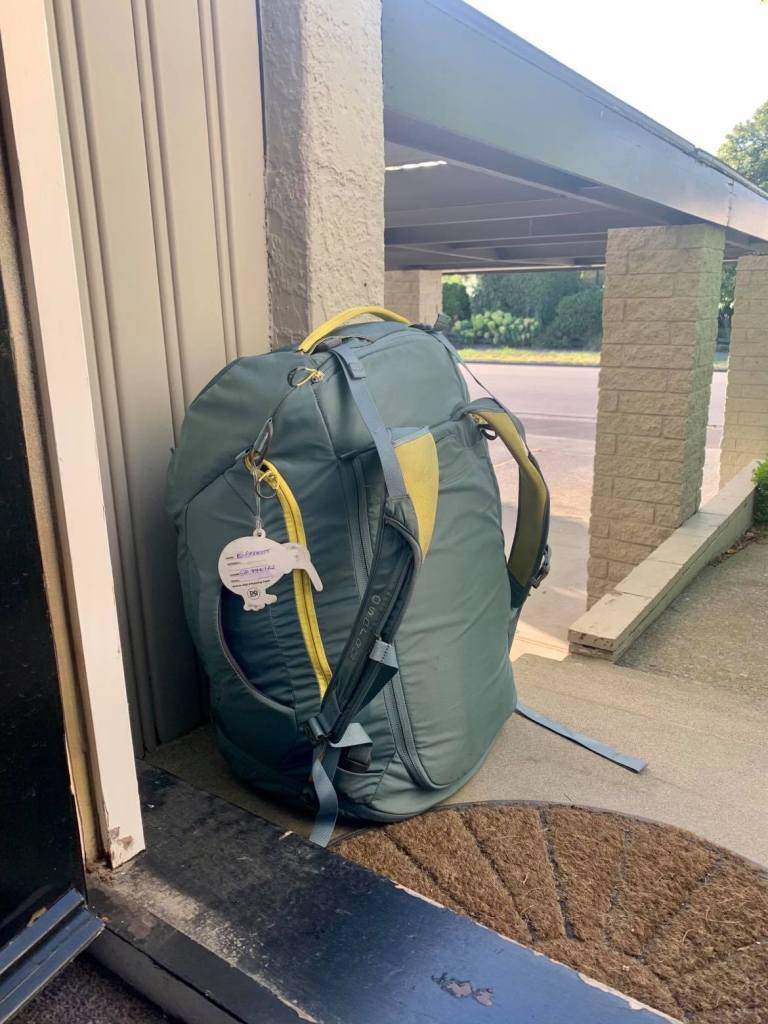
The level of excitement for this trip was akin to that of an overseas trip, and technical I would be crossing the seas 😂.  Packing even involved the ‘big boy’ bag coming out, probably unnecessarily but why not – why I need to take as much for a week as I did for 4 months a couple of years ago don’t I 🥴.

Bear with me as this 7 day trip will be a number of blogs – not sure how many yet, we will just have to see how much I write lol.

I had been following the Christchurch based Heritage Expedition trips for some time – particularly with an eye on trips in the South Pacific and north east Russia – and of course their Antarctica trips, and as with all tour operators worldwide, Covid had decimated the majority of their clients (overseas guests).  Fortunately for me, that meant it freed up time and trips for the humble kiwi in our big backyard – I jumped at the opportunity to explore remote parts of country you can only see by sea.

The arrival of my ship even made the news as the first passenger ship (and it predominately Russian crew) granted permission to enter the country through the Covid border restrictions – it arrived just 8 days before my departure which added to the excitement.

And so, I was back on a plane to Invercargill (for the second time in 2 months) and this time it was a fully masked flight.  I had been wearing one on my last couple of flights, but it was now mandatory on all flights – better safe than sorry 👍🏻.

The New Zealand small town syndrome set in before I even left the airport, as I bumped into a girl I had followed and chatted with on social media when I was in the UK and she was in Spain.  She had finally got back to New Zealand a few months earlier with her German boyfriend – it’s always nice to meet someone in person.

In Invercargill, I got a shuttle to the ‘joining’ hotel, unfortunately it was a long way from the main part of the town, so I had to kill some time in the bar 😂 till the meeting time.  At least I could sit down, have something to eat and drink.

Now we knew the crew was covid free as they had spent over 40 days at sea getting here and had had 3 covid tests, but what about the passengers? I had nightmares about it becoming the ‘covid ship’ and being trapped for weeks!  To ensure this did not happen we had had to complete a health declaration 10 days and 2 days before departure, just noting if we had any symptoms …. and before boarding the bus (to get to the boat) they had medical staff checking our temperature, throat and lungs (breathing) to deem us ‘fit for travel’ – thankfully I passed 🥳😂 (New Zealand did not have any reported cases of Covid in the community at this time so the medical check was just an extra precaution.)

To be honest, it was all a bit disorganised, with no real clear instruction as to what we were supposed to do – I stumbled across the medical ‘line’ as I wandered around the reception area of the hotel, and once cleared medically there was no further instruction, so I just found a comfortable seat and read by book … I could have mingled but decided that there was plenty of time for that when we were on our way.

My tactic of sitting alone ended up getting me targeted for an interview … there were a fair amount of press around as it was the first passenger ‘cruise’ to go head in a covid world … I was not sure it would ever see the print or tv, but I hope the photos/ videos were not close ups – I hadn’t even brushed my hair 😂😂!  (FYI – there was an article with a photo, as well as a TV segment!)

Just prior to departure we had a so called ‘bag security check’, although there was no real check, we just had to identify our bags and were assigned our cabin number which we had to remember 😂 – then there was a little more standing around before we boarded the bus and headed to Bluff – the southern most point of the South Island and the departure point for our boat.

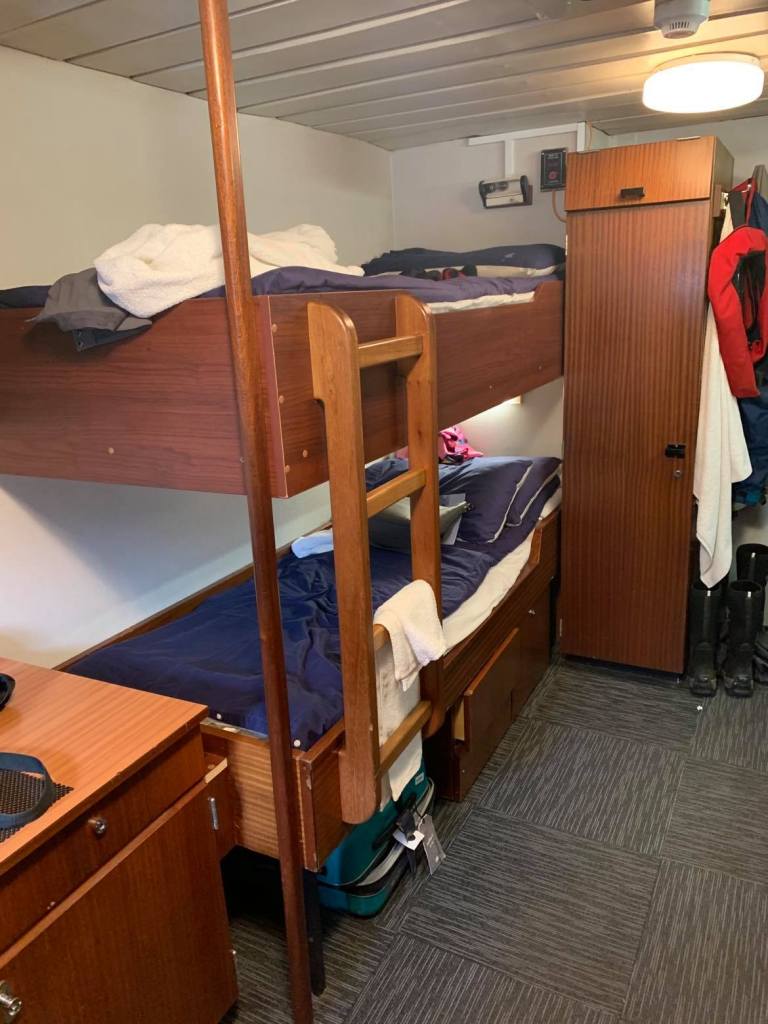
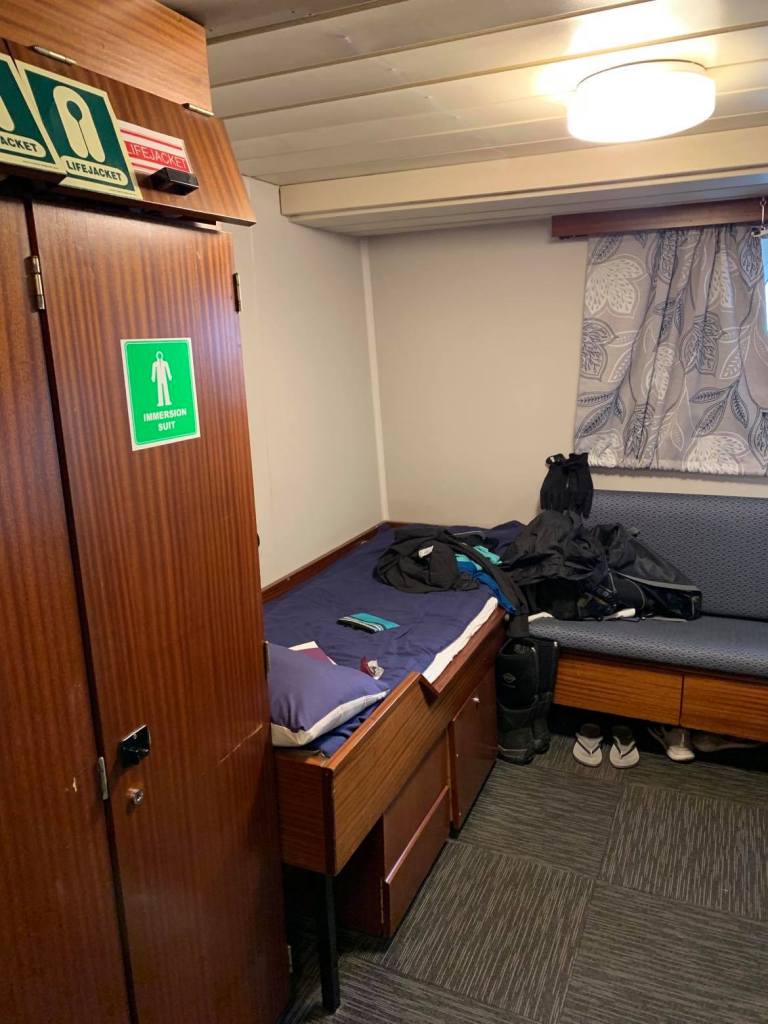
Finally, onboard and I found my cabin which was small but with plenty of storage (which is necessary as you need to be able to put everything secure in rougher seas).  I was in a triple berth (the cheapest option) but was lucky enough to get the single bed (as opposed to the bunk) and soon met my room mates Helen (who I had chatted with briefly at the hotel) and Anne.

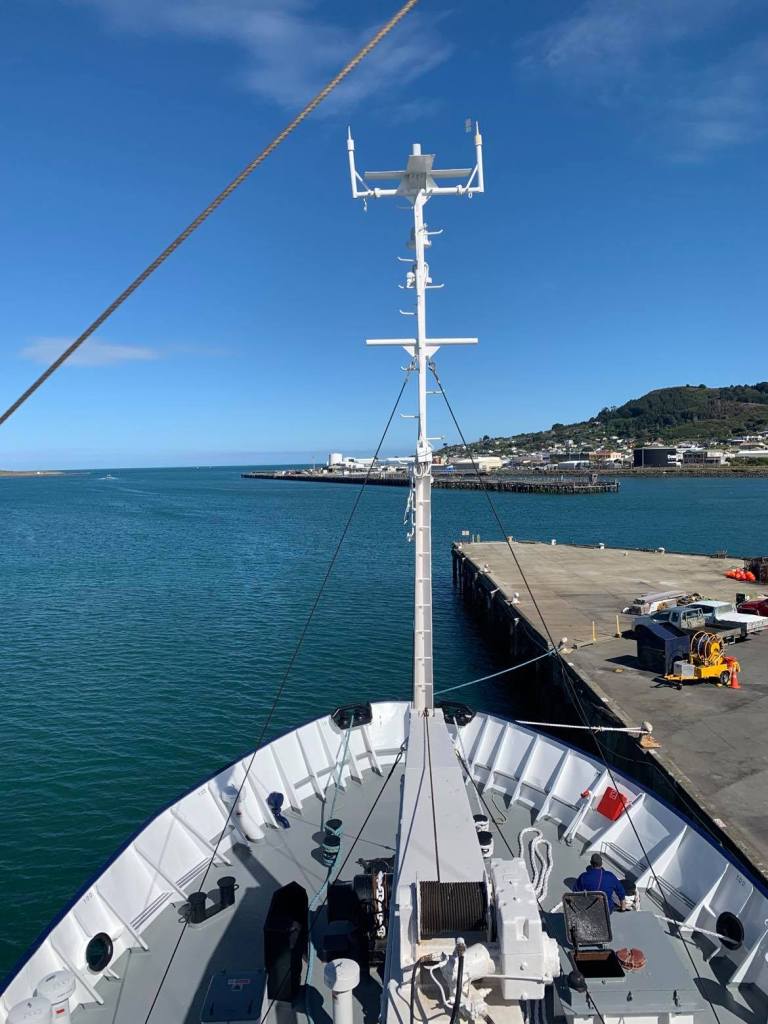
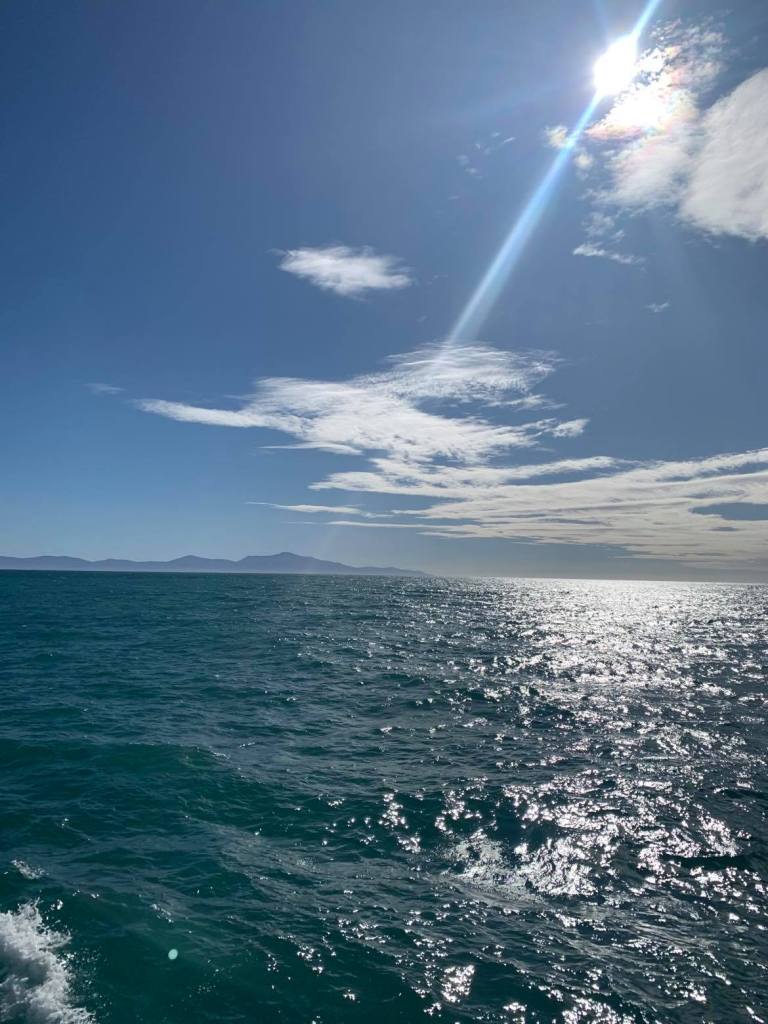
After a quick introduction to the staff (all who said how grateful they were to be back at work) we were finally on our way and heading out of the harbour and into Foveaux Strait just after 5pm.  Apparently, the Strait (which I flew over just a few weeks earlier) can be rough, and the boat certainly had some movement to it, but it was not too bad.  We had a little time to stand on the deck and enjoy the views before heading back down the stairs into the lecture room for the all important safety briefing.

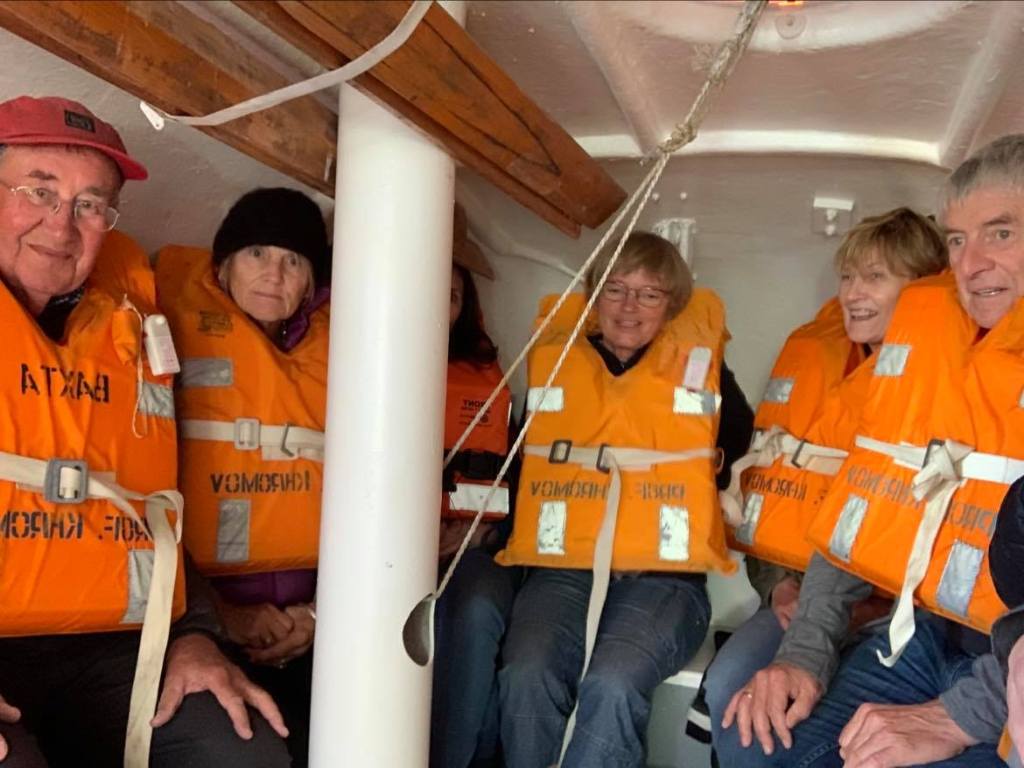
The safety briefing was followed by an ‘abandon ship’ drill where we actually had to get in the lifeboat – now I have been on a number of boat trips in recent years and although we have had safety drills, actually getting in the lifeboat was a first for me!  It looks like it would be a cramped few hours or days …. if we ever actually had to use them!!!
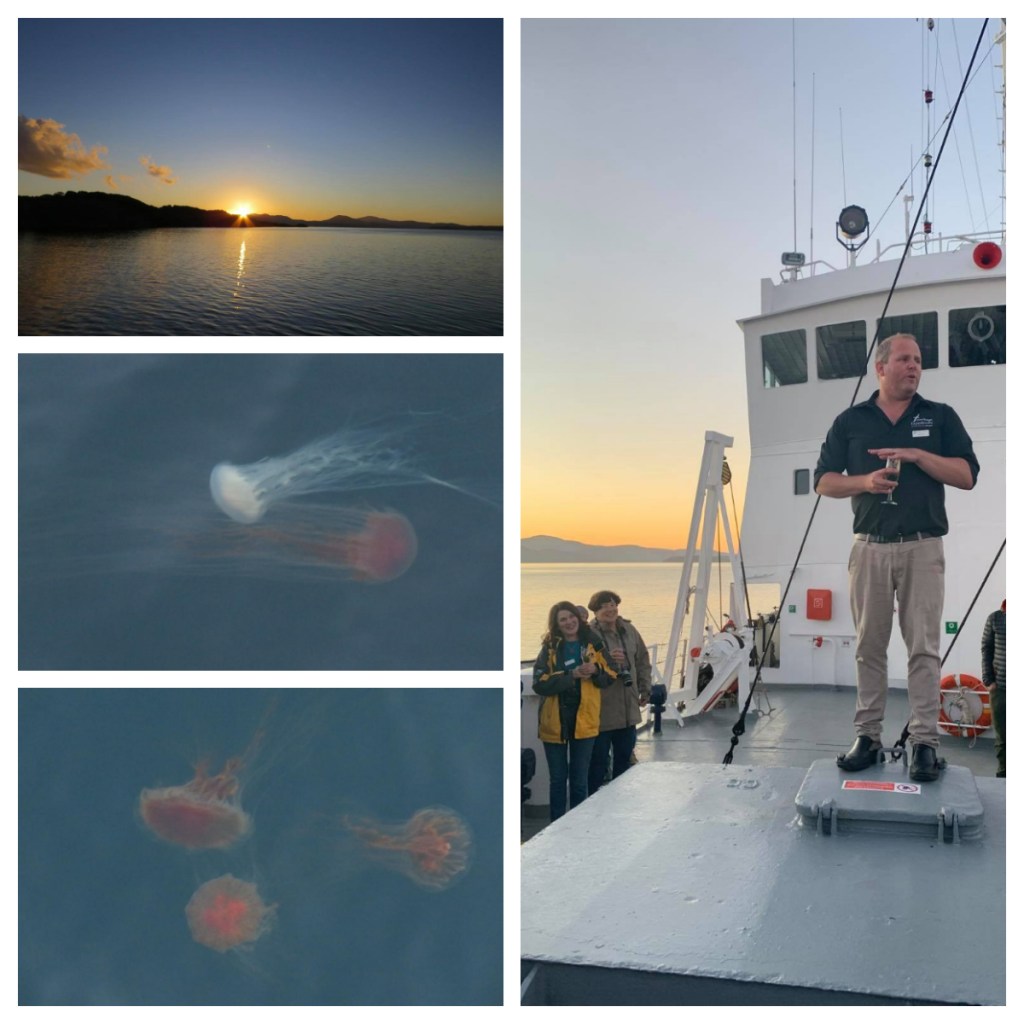
Just over 2 hours sailing and we were anchored in Paterson Bay, Stewart Island.  Where we were treated to a great 3 course dinner, followed by champagne on the deck to toast the first expedition of the season.  It was a beautiful and warm evening as the sun set, and we could hear bird song from nearby Ulva Island.  The ship was also surrounded by jellyfish, so many jellyfish – no one knew why??  Unfortunately, I could not get any good photos as trying to focus through water and at almost transparent jellyfish is challenging lol.

And we finished the first day on the boat being lulled to sleep by the gentle rocking of the ship in the sheltered waters. 

Just before I finish of this first blog, let me show you around the boat and show you how things work ….

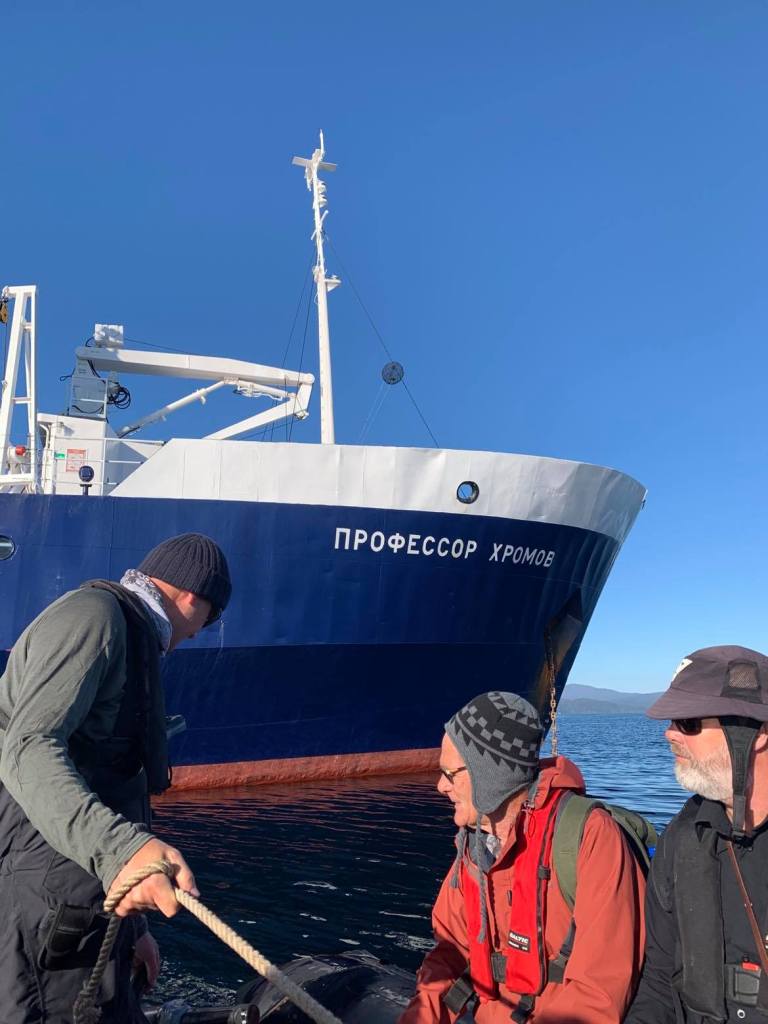
The Spirit of Enderby is a fully ice-strengthened expedition vessel that started life as the Professor Khromov in Vladivostok, Russia in 1984.   Despite the name change, the Professor’s photo still has pride of place on the wall.  I had hoped to find out who Professor Khromov actually was, but I have had no luck with my internet searches.

The ship only takes 50 passengers in a variety of cabins (and it was full, including a two man film crew from TVNZ who would be filming a number of articles for the TV news later in the week), but I had opted for the el cheapo (who am I fooling, none of the cabins were cheap!) triple cabin with shared bathroom facilities.  With the poor ship plumbing, it was back to no toilet paper in the toilet but in a bin next to it (like in much of South America).  Annoyingly it takes me a week to get used to but I did my best lol.  Thankfully the room did have a small porthole so at least we could assess the weather in the morning before heading upstairs. 

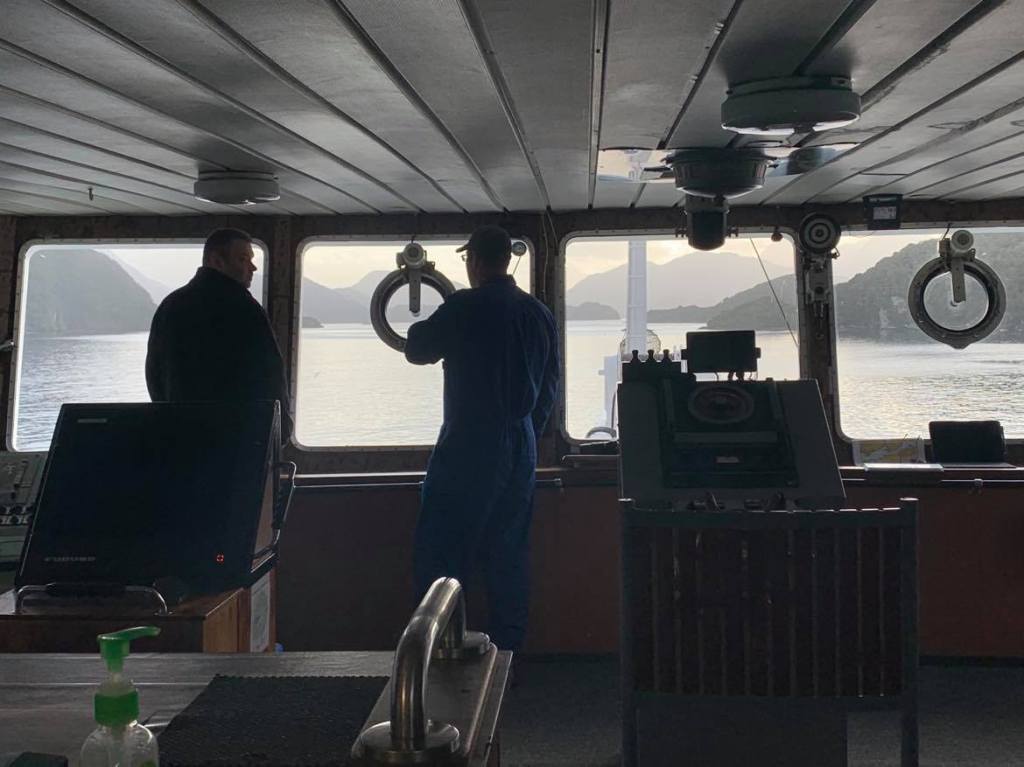
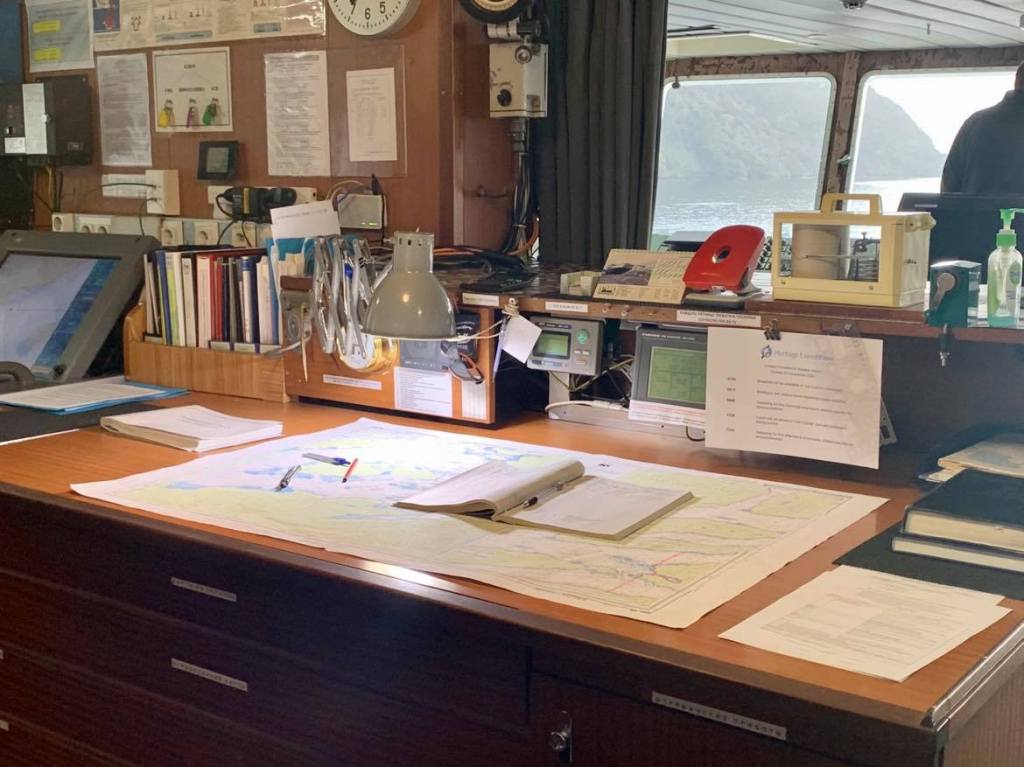
Except for when we were going in and out of port, the bridge was open for us to visit.  Most of the crew were Russian and did not speak English so there was not much conversation to be had but there was a great view from the elevated vantage point.

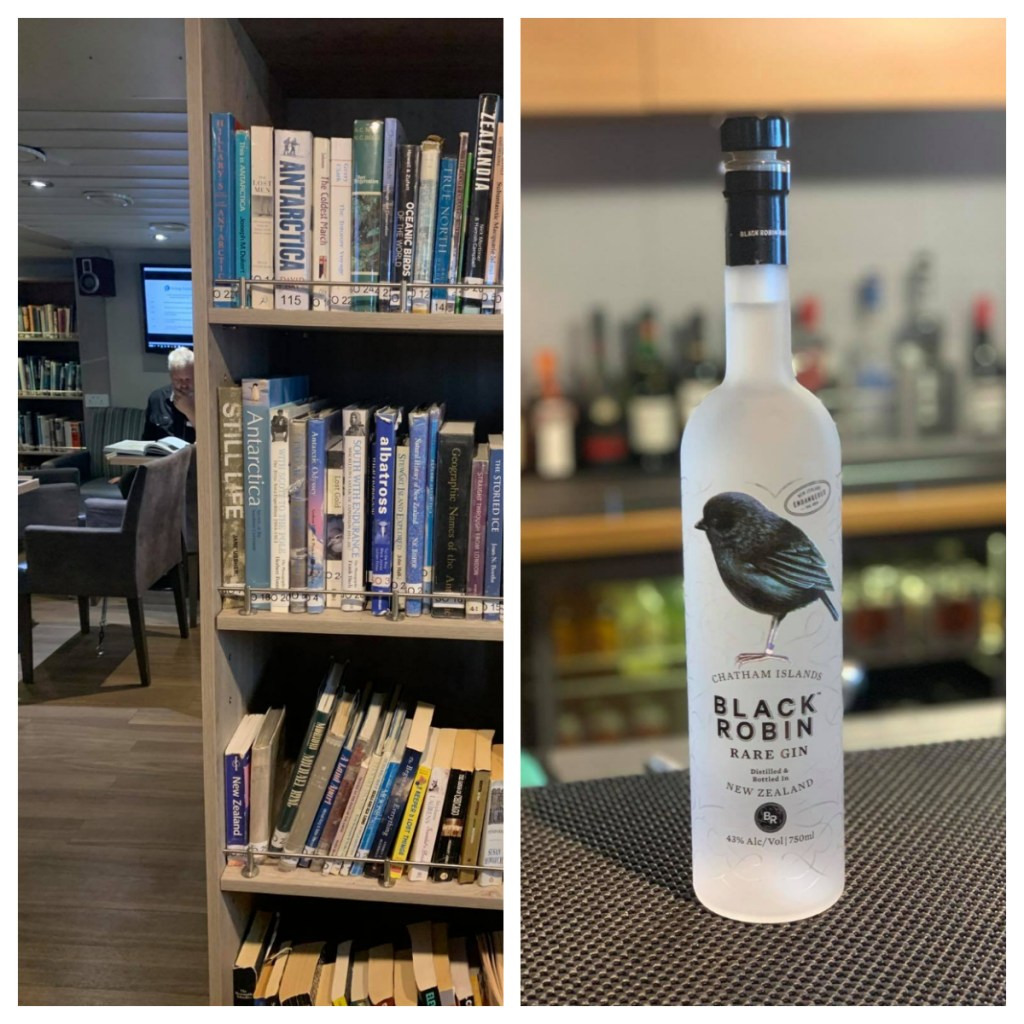
There was a small bar/library area where you could get coffee/tea/biscuits all day, and more importantly a sneaky gin and tonic in the evening before dinner.  It was here we would meet to recap on the day and for the expedition staff (and the keen birders among us) to make note of the species they spotted during the day. As a side note, if you get a chance to try this Black Robin gin – do it, it was amazing!
Another important room is of course the dining room, split in to two parts, each side of the small galley.  Here we had a buffet breakfast, a two course lunch and a three course dinner – of which we could choose the main (which we did at lunchtime).  The food was great and there was always plenty of it.  Definitely nothing to complain about, although sometimes the meal times could drag on a bit, though it was a nice opportunity to socialise and chat with fellow travellers about the day.

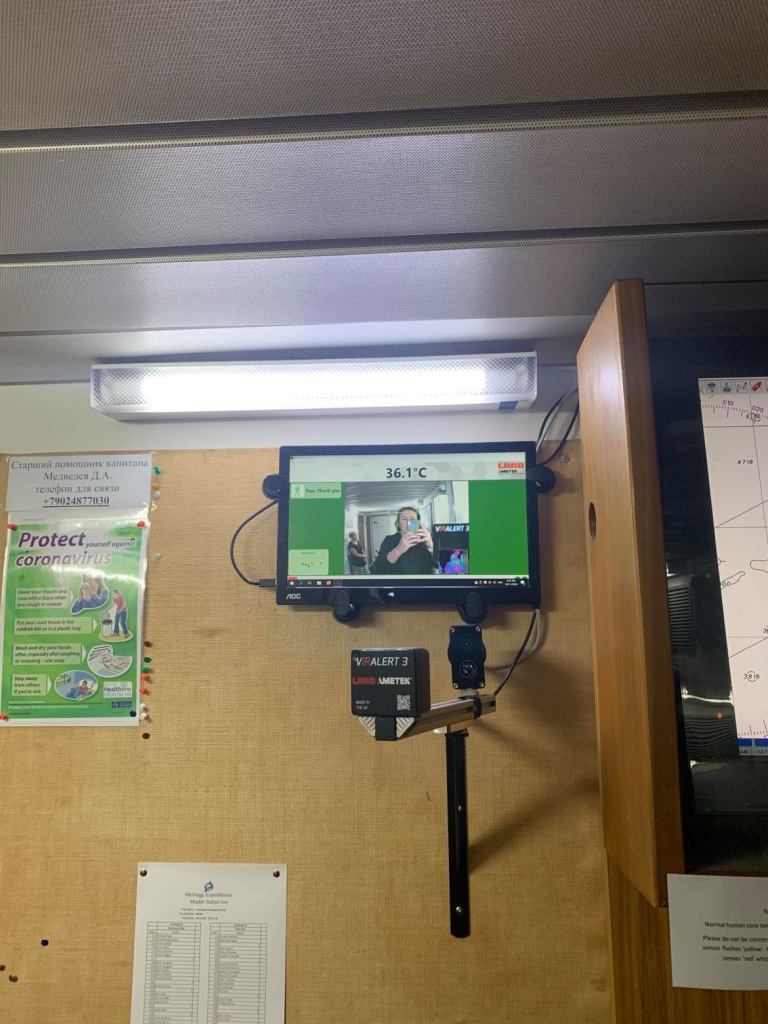
As part of their commitment to ensuring the ship was Covid free, we had to have our temperature taken before every meal.  Basically, you just had to stand in front of a camera attached to a TV screen which would take your temperature and advise if you were in the normal range.  I must admit I am not sure how effective it was, but no one ever tested in the red zone (which meant they needed to go and see the onboard doctor – who gets to come along for free in return for performing any medical duties required).

Finally, on the lower level we had the small lecture room where, not surprisingly we had lectures, not that there was a lot of opportunity on this trip as we were normally out and about.

The procedure for excursions was similar to that of my Antarctic cruise a few years ago.  We had been lent gumboots (or muck boats as they are called on the ship) and we would get dressed in them, waterproof pants and jackets for our zodiac trips (all trips, whether than were land or zodiac, started with a ride in a zodiac as we never stopped anywhere with a wharf or jetty we could use). 

Once dressed in our Zodiac gear (and seriously over heating lol) we had to put on our life jackets and turn our personal tag on a board (everyone was allocated a number) to show that we had left the boat.  The final step was boot/shoe washing (to avoid any biodiversity hazards which was not so important on this trip but a big deal in the sub-Antarctic islands and Antarctica). 

Once all that was done, we had to wait on either port or starboard side (the corridors and areas along the side of the boat on the outside were very narrow so you needed to go out the opposite door to where we were boarding, around the stern (and the boat washing station) to get to the gang plank queue.    And of course, we had to do all of that in reverse when coming back on to the boat!

Unfortunately, with such a short trip some people are only just getting use to procedure lol.

Roaming Rakiura – Part 2

October 2020

After a late night, we were up early for our visit to nearby Ulva Island.  A must do when visiting Rakiura and again, this is something you can easily do without a guide but I always like to know about what I am seeing and of course they know where to look for things lol. We met our guide, Leah, (again we used Ulva Guided Walks) at the small wharf in Golden Bay and the caught the water taxi across Paterson Inlet to the island (passing a few Little blue penguins bobbing around in water) – just a 7 minute journey.   

Today, Ulva Island (named after an island in the Scottish Hebrides islands) is a predator free sanctuary just off the coast of the Stewart Island mainland.  It became predator free in 1997 and is one of the few sanctuaries in New Zealand that has undisturbed podocarp forest – it really is like stepping back in time. 

Visited occasionally by the local Ngāi Tahu Māori, the island was occupied in 1872 by Charles Traill (from the Orkney Islands) who established the first post office in the region – he called the bay he lived in Post Office Bay and this is where we arrived on the island.  When the mail boat arrived, he would raise a flag and the locals would put on their finest clothes and make their way to the island to collect their mail and catch up on the local gossip.

Charles was a keen botanist and conservationist and established extensive gardens in the area around his house and the post office/shop.  Some of these exotic tree species still remain and are the only non-native trees on the island.  In 1922 the island became the first scenic reserve in New Zealand, and he post office operated until 1923.  Today, the island is managed by the Department of Conservation, except for the 7 hectares of privately owned land where the homestead still remains (256 hectares in total).

We were greeted by some very early blooming rata trees (apparently is a sign of a long, hot summer) and a very inquisitive Kaka who got so close I thought it was going to take my phone (which I was videoing it on) right out of my hands!  According to Leah, the Stewart Island Kaka have their own dialect, distinct from those on the mainland – of course, I do not speak Kaka so cannot confirm or deny this but what I can say is they like to make their presence known!!

As the island is now pest free (no stoats, mice, rabbits etc.) it has a great population of many of New Zealand native birds that are struggling elsewhere.  Kākāriki, kererū (wood pigeon), korimako (bellbird), pīpipi (brown creeper), miromiro (tomtit), pīwakawaka (fantail), tūī, Stewart Island tokoeka (brown kiwi), Tīeke (saddleback), mohua (yellowhead), toutouwai (Stewart Island robin) and tītitipounamu (rifleman) can all be found on the island. 

The current population of robins were founded by 20 individuals released in the late 90’s – today they are thriving and on almost every walk on the island you will be visited by at least one robin. They are incredibly confident and appear to have no fear as they dance around, trying to mimic rain on the earth to disturb the insects which they feed on.  They are also a fan of you scuffing up some of the earth with your foot to help them out. 

Another fun fact about the birds of the island, Tieke (or Saddleback) here are unique as they do not develop their ‘saddle’ until adulthood, the North Island species on the other hand are born with it.  Also, relatively unique in the bird world, the juvenile will stay with their parents for a year and will help gather food for the following years chicks before leaving the family.

Ulva is so small it is easy to cover most of the island in a day, depending on how much time you want to spend watching and listening to the birds and studying the plant life.  I like to spend a lot of time doing that and therefore we only waked a couple of the tracks.  And there was a bird symphony – Leah could identify Mohua (sometimes called a bush canary), brown creeper and grey warbler – unfortunately we could not see them all as they were high in the canopy.

We saw Red crowned kakariki ❤️❤️ eating last summer’s berries off grown, Tuis feeding on tree fuchsia (the largest species of fuchsia in the world).  We had a brief glimpse of a Yellow crowned kakariki and a Mohua (Yellow head) who apparently are often seen together (perhaps all the yellow headed birds stick together lol).  And we spotted another juvenile saddleback which had its wattles and saddle just coming through.

The bush is stunning, and as I previously mentioned, a perfect example of an ancient podocarp forest (one of the best in the country as it has never been cleared or milled).  There are towering Rimu and totaras – apparently if a grown man can reach their arms around the Rimu and touch it is around 250 years old.  The ground was full of beautiful umbrella mosses ❤️and Leah pointed out a so called dinosaur plant – a fern ally which is 400 million years old (perhaps not that exact plant, but the species itself)!    We saw Spider Orchids, just starting to flower and bamboo orchids, not quite in flower yet and beautiful crown ferns with their connected root system.  And don’t forget the cute Hen & Chicken fern whose spores grow as miniature ferns on its fronds before they drop off to set out into the world on their own lol.  We were grateful to have Leah tell us lots of wonderful stories about the trees and plants – some fact, some a little more mythical.

One of the most fascinating stories was that of the Ulva Island postcard tree – which despite its name, has had numerous uses.  Not surprisingly, its broad leaves used to be used as postcards.  They could be written on and posted (even internationally) until the 1970s!!  Other uses include toilet paper (as good as 3 ply apparently) and a crash pad for Sooty Shearwaters who are not great at landing to use these trees to soften the blow so to speak. lol

One of tracks took us out on to Boulder Beach, where we watched Weka feeding on crabs (sometimes with a little assistance by lifting rocks to expose the crabs).  As typical with Wekas, they had little fear of us, and just carried on their own business.

Further on we came to Sydney Cove, a stunning tropical looking beach of golden sand and turquoise water.   Here we were greeted by a huge sea lion, who had just hauled himself up the beach.  He was the biggest I had seen and even the biggest Leah (our guide had seen) so we had to be careful to get past him.  The rule is to never cross between a sea lion and the sea, effectively cutting off their escape route, however this guy left us no option, so we moved quickly and quietly around him. 

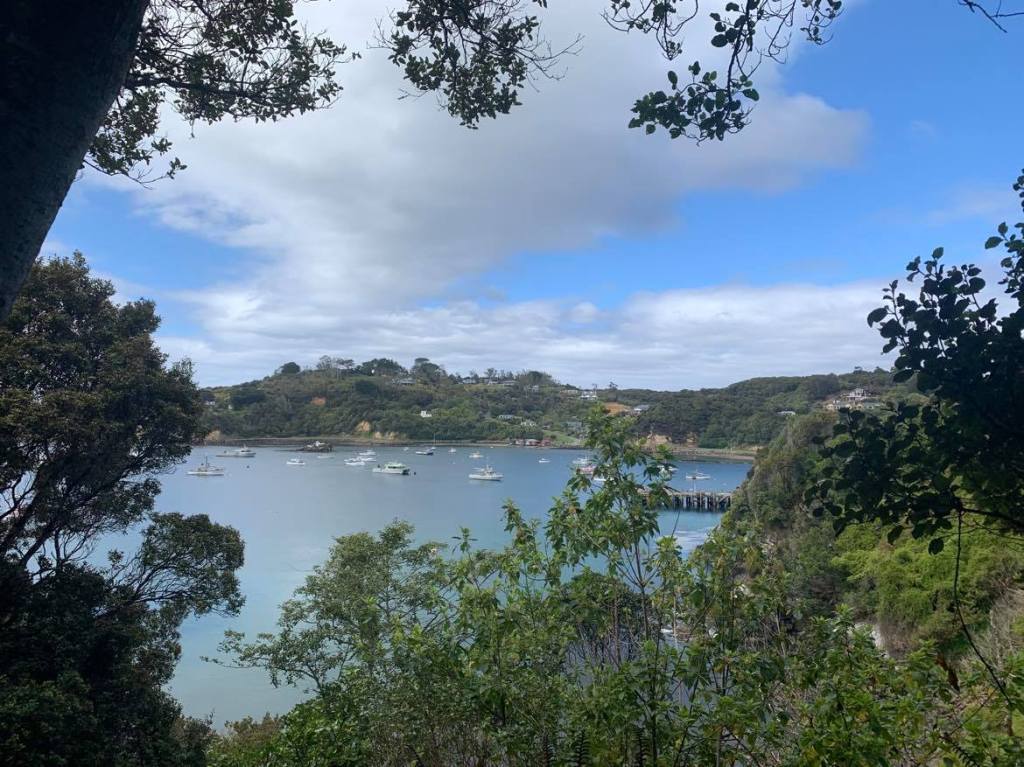
Our final stop on Ulva was at Flagstaff Point, not surprisingly, the point where Charles Traill use to raise his flag to advertise that the post had arrived.  Today it is a lovely lookout over Paterson Inlet. 

It was a wonderful morning spent on Ulva Island and we were so happy we had Leah to guide us around   – we would have missed out on so much had we gone on our own.

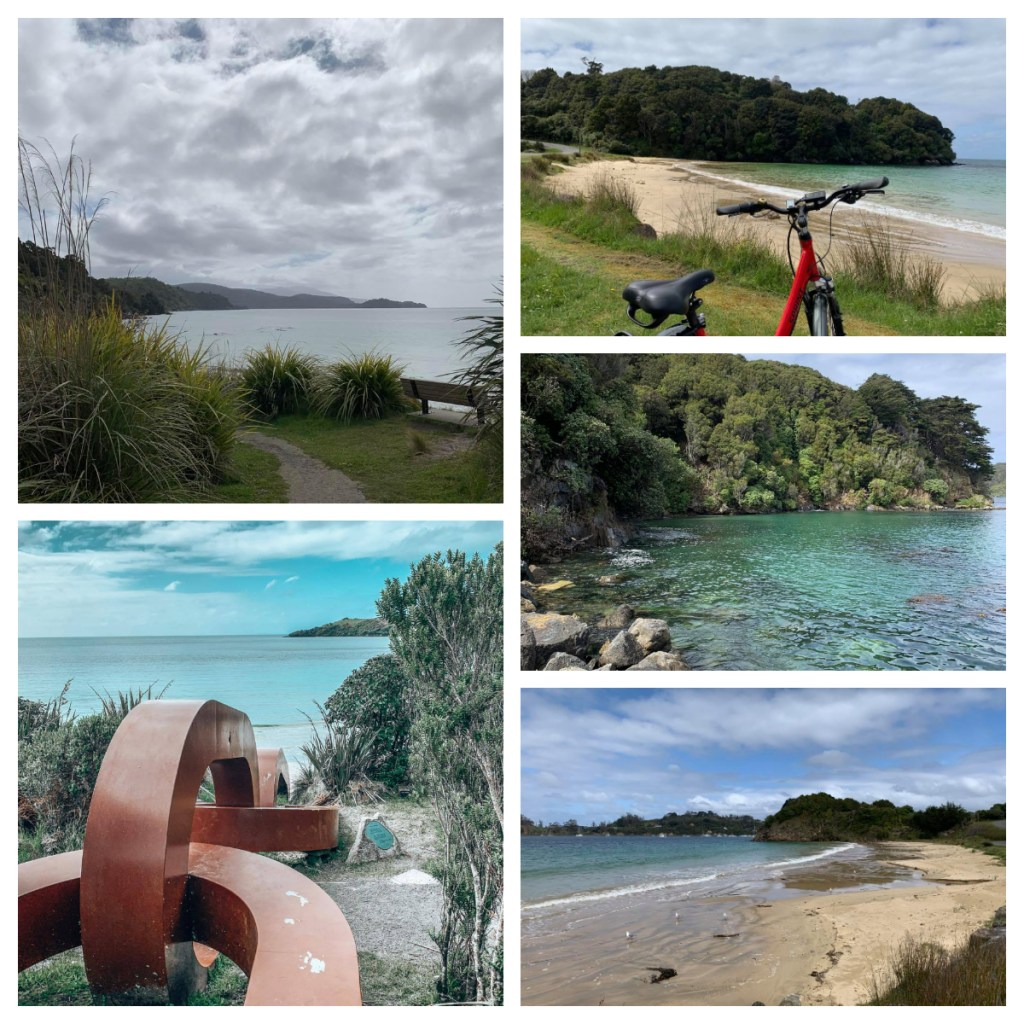
Back in Oban, we decided to hire a couple of e-bikes to explore a little further.  First, we headed one way out of town and at the end of road we found ourselves in Lee Bay, the starting point for the Rakiura Track (one of New Zealand’s Great Walks).  It is also the site of a huge chain that goes into the sea –Te Puka, the anchor stone.  As the Maori legend of creation has it, Maui (now of Moana fame) used Rakiura as an anchor for the great ancestral canoe (Te Waka o Aoraki – the South Island).  (FYI – the North Island is the fish he and his brothers caught.) 

As it turned out, we were actually not far from where we were kiwi spotting the night before and could see the predator proof fence as it went up from the sea.  It was so peaceful to just sit on a beach for a bit, taking in the sun and listening to the bird song. 

Back on the bikes and we head back through town, out the other side and along to the end of the bay to visit Ackers Stone House.  Lewis Ackers was an American whaler who settled on the island in 1836, before Oban was established.  He built the house himself to house his Maori wife and their 9 children.  Apparently, they had bunk beds stacked 5 high to sleep everyone in the small house!  They certainly had an amazing view (on a nice day)!

We zoomed back into town using the throttle and hardly pedaling at all – it was my first time on an e-bike, and I do not think it will be my last lol.

For our final morning, we had thought about doing another walk but decided just to relax.  After dropping off our bags at the plane ‘depot’ (a small office in town), we wandered around the shops (all 3 of them lol).   We walked up the hill by the church and over the small headland to a view over bathing beach -it was a beautiful golden beach though you must have to be careful not to be caught at high tide!!

Back to town and we went back to the DoC office to watch some of the videos about the island history that they play on loop until it was ready to board our flight back to the mainland.

What a wonderful place Rakiura/Stewart Island is.  Oddly, it is somewhere they New Zealanders don’t tend to go, and the vast majority of their visitors are passengers on cruise ships.  Of course, 2020 changed all that and they are one of the few places in New Zealand that have managed to sustain their tourism industry with New Zealanders who are exploring home more rather than going overseas. Even the flight in and out is worth the visit.

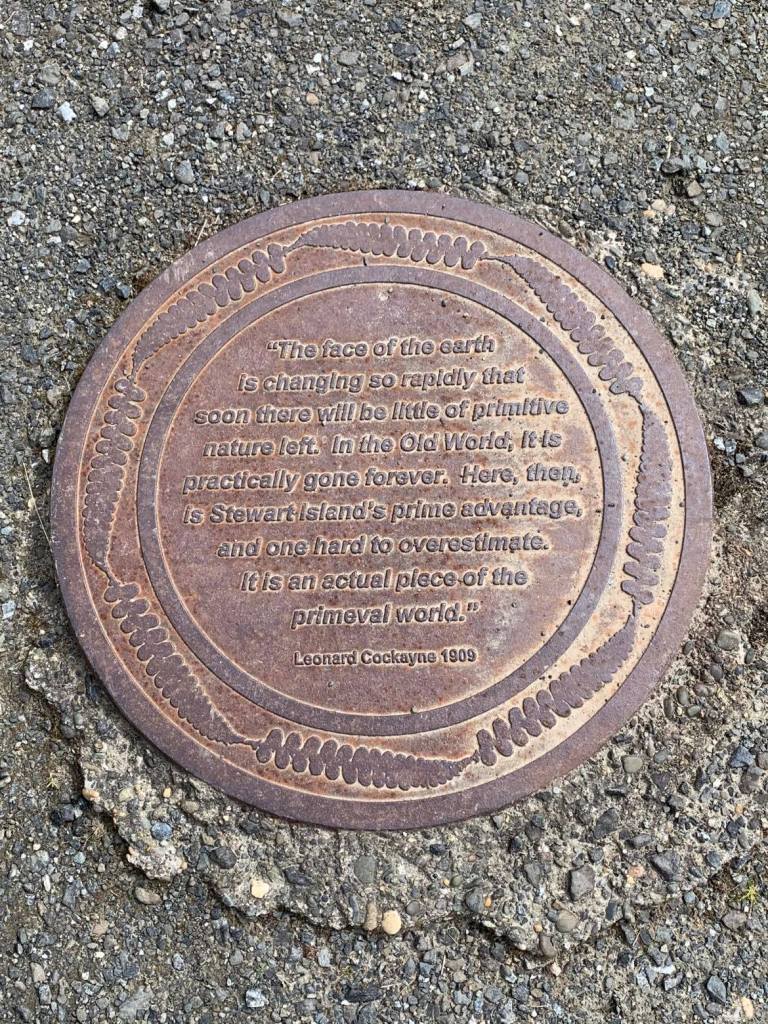
I will leave you with a quote from Leonard Cockayne (considered New Zealand’s greatest botanist and a founder of modern science in New Zealand) in 1909 “The face of the earth is changing so rapidly that soon there will be little of primitive nature left.  In the Old World, it is practically gone forever.  Here, there is Stewart Island’s prime advantage, and one hard to overestimate.  It is an actual piece of the primeval world.”  He was not wrong!

Rakiura … the land of glowing skies

October 2020

Somehow, I had not been to Stewart Island before, despite it being New Zealand’s 3rd largest island – and then I manage to go twice in one year lol.  There will be more about my second trip in another blog post (something to look forward to lol). I had also intended this to be one post, but after writing it, it seems better suited to two – I don’t want to bore you more than necessary lol.

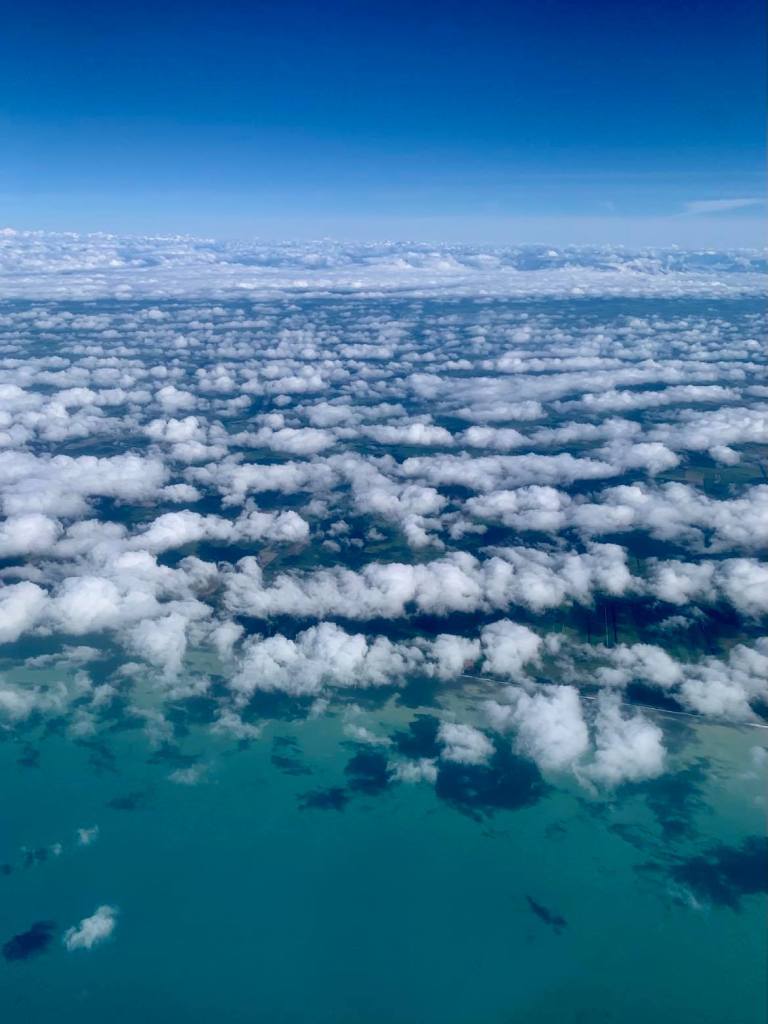
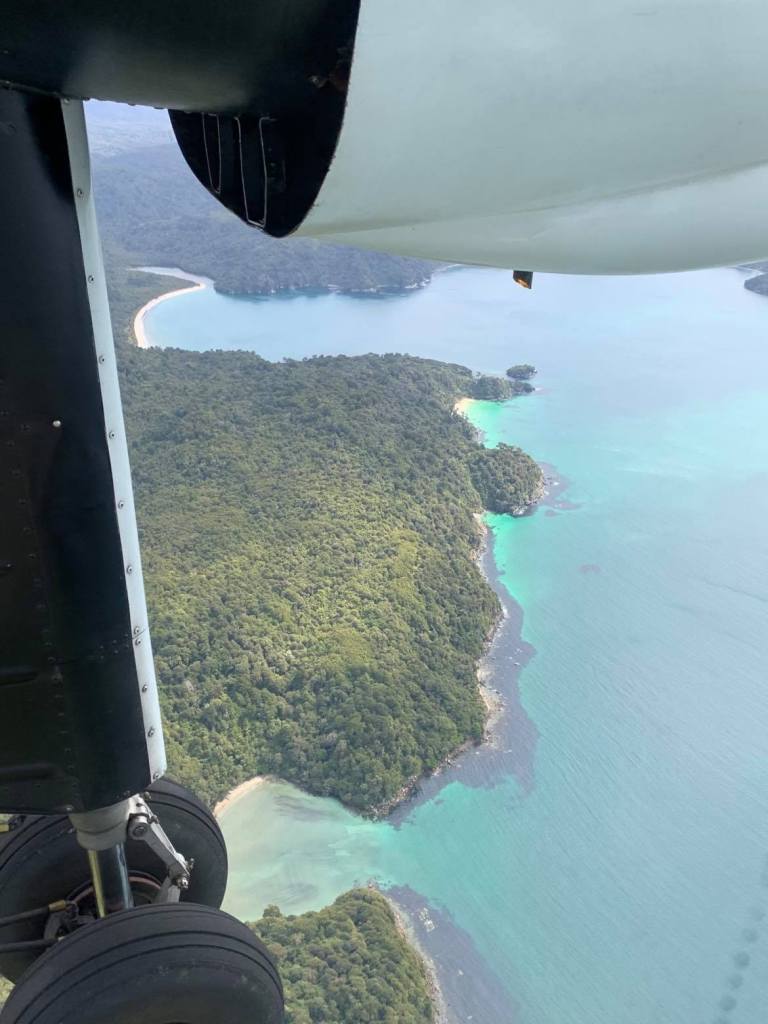
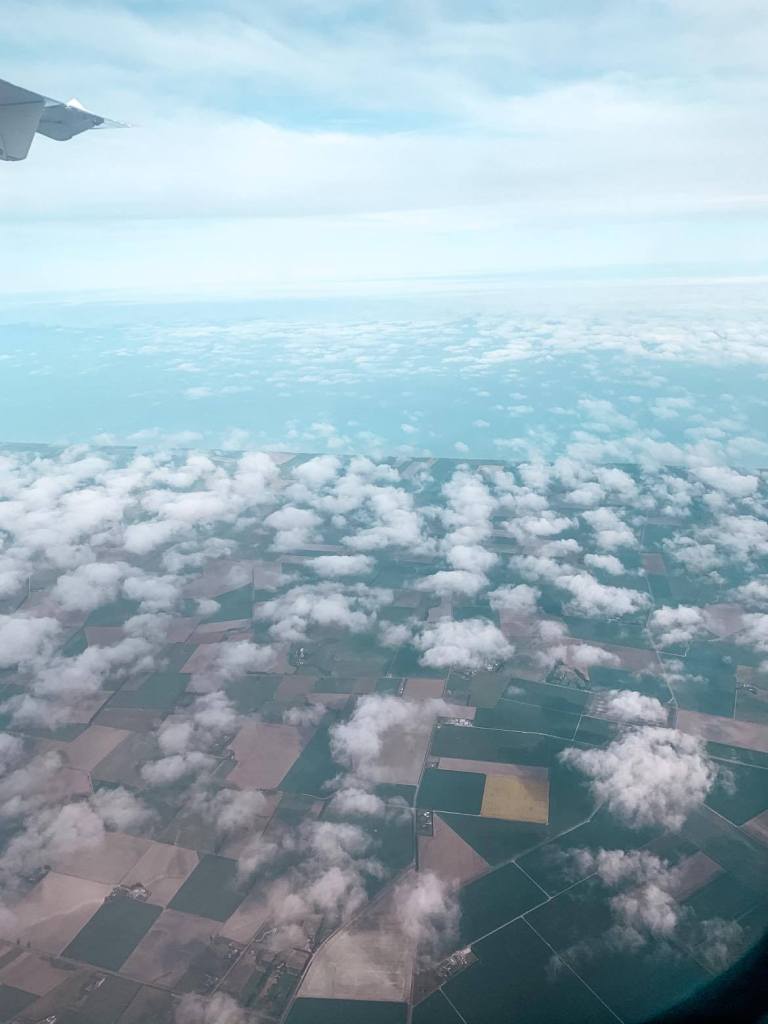
For the first time since I returned to New Zealand in February as the world shut down, I was back at the airport and on a plane (I must admit I missed it) and it was a beautiful day for flying. Firstly a flight from Christchurch to Invercargill (around 1 hour 20 minutes), New Zealand’s most southerly city, and then the short hop from Invercargill to Oban, the only town on Rakiura (only 10-20 minutes depending on the wind).  The beautiful day lead to some lovely areial photos (I must always have the window seat for this reason!)

Invercargill is truly a small city airport and Stewart Island Flights is most definitely a small town airline.  They fly only between Stewart Island and Invercargill on their two Britten Norman Islanders which take just 10 passengers (including the pilot) – they also have a Piper Cherokee which is even smaller.  The pilots end up doing much of the work, including taking the passengers to the plane (we had to walk through the baggage area to get to the plane 😂), loading the baggage and of course do the inflight safety briefing. 

The flight was a little bumpy and we did not seem to be very high above the ocean …. but why would you go high when you are landing in 15 minutes!  It took us out over the small town of Bluff as we said  goodbye to the mainland (as we South Islanders like to call the South Island) and across Foveaux Strait on to the first amazing views of Stewart Island with its bush covered hills, perfect half- moon bays with clear  turquoise water.

We landed on the airstrip just outside of Oban and the plane was quickly unloaded (and reloaded for its quick turnaround and flight back to Invercargill) and we were bused in to the depot, a short walk from the South Sea Hotel where we were staying.   If you get the opportunity to travel to Stewart Island, I would highly recommend the flight – not only is it quick, you get amazing views and avoid having to travel to Bluff and then ferry (a far longer journey).

Stewart Island or Rakiura (meaning ‘glowing skies’ after the Aurora Australis you can sometimes see from the island) has a long history of Māori habitation (around the 13th century) and was then settled by European sealers and whalers from around 1800 and subsequently loggers who set up a number of large timber mills on the island.  It got its name Stewart Island from William Stewart, the first mate on one of the early sealer ships.  Thankfully in the 1890’s a large part of the island was protected from milling or development which leaves us with the beautiful bush covered island we see today.

Oban itself, is named after Oban in Scotland (which means little bay) and is based around Halfmoon Bay and has around 380 permanent inhabitants and as we wandered around the town (it does not take long) it was filled with bird song.  Although it was a beautiful sunny day, this gave an impression of a much warmer day than it was, and the wind was bitterly cold.  Despite this, the local children from the school (just across the road from the waterfront) were wearing shorts and t-shirts and playing in the water!! 

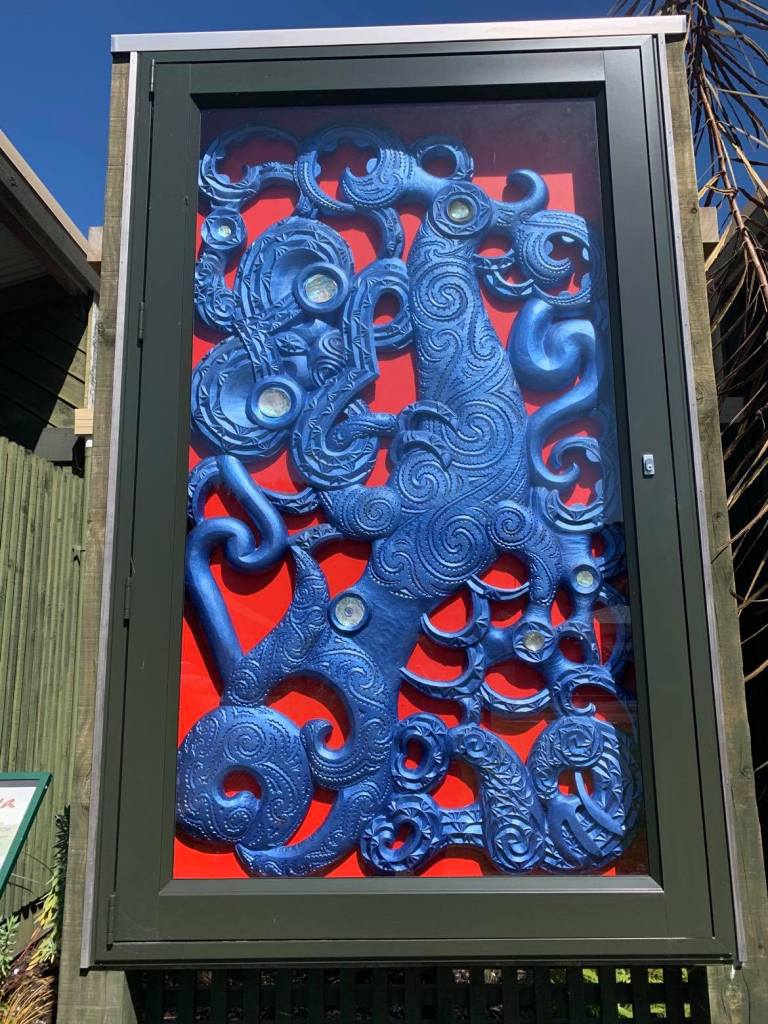
We stopped by the Department of Conservation (DoC) office to check out the local walking tracks and I was drawn to the beautiful carving they have outside.  It tells the tale of Kewa, a great whale who chewed through the South Island, separating Stewart Island/Rakiura and creating Te Ara a Kewa or the pathway of Kewa, also known as Foveaux Strait.

We had overheard an a conversation in a shop (there aren’t many of them) where a couple of the locals discussed how lovely the day was and that it didn’t happen very often! Upon hearing that, we were determined to make the most of it and headed out on a couple of the short walks around the town.  They were lovely walks and I was amazed with the amount of tuis were saw.  As usually, I spent far too long taking photos in the hope of that perfect shot.  I think I did ok lol

For dinner we headed to the local pub, one of the few places there is to eat outside of peak season (although there are not many more options in high season), and it was very busy.  We were lucky to get a table (as we had not booked) but managed to enjoy a good meal.   Not only was a good meal but it was a big one and we struggled with our full bellies up the hill behind the town to Observation Point to see the sunset over Paterson Inlet.   It was so beautiful and peaceful (except for the occasional tui or kereru) and well worth the struggle.  By this time, the wind has also dropped so it was significantly warmer.

On the way back to town it was clear the South Island Kaka (one of New Zealand’s native parrots) were out living it up for the evening.  1,2,3,4 on the trees … and lots flying around.  It was amazing to see.  And to round off the day – we headed to the wharf to spot a few little blue penguins coming in for the night.  Sadly, it was too dark for decent photos, but it was great to see them.

We were actually staying in the accommodation attached to the hotel (just across the road from the wharf) – we were in a motel style room out the back, but there are also options to stay in the pub building itself which might be a little noisy if you were not planning on joining the drinking in the pub just below you – that said, you would get to enjoy the sea view.

Our first morning on the island and we up to what looked like some amazing light.  Never one to miss out on a photo opportunity, I threw on my shoes and coat over my Pajamas and quickly walked the short walk to the water front and it was well worth it, the sunrise was beautiful – so moody and colourful.  The forecast was for rain and it looked like it might be coming later in the day but not yet, so we definitely wanted to get out early.  

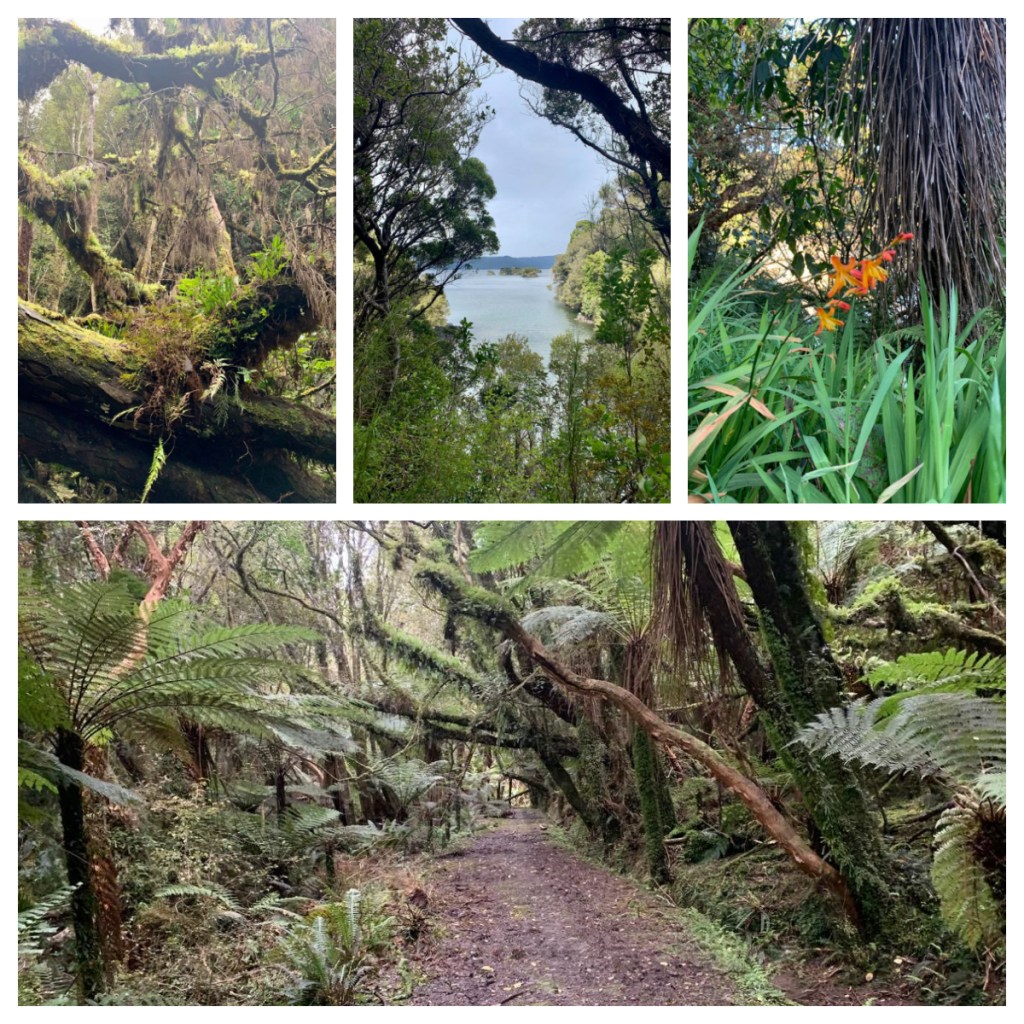
We did two 2 walks – Fern Gully and Ryan’s Creek.  Both walks you can do from Oban and about 10 km in total.  The tracks were good with just a few small some muddy areas, thankfully nowhere near as bad as it was for some friends who had been here just a couple weeks before.  There were not so many birds on these walks, but we did spot a bellbird and some oyster catchers when we made it down to the sea… 

At one point it appeared to be raining bark on the track, we looked up to see a Kaka ripping apart a branch and throwing the discarded bits to the ground. Typical Kaka (and their cousin Kea) behavior and they are well known for their destructive nature!  Again, it was a bit dark for any decent photos but amazing to stand and watch for a while. 

Back in town and we had lunch at the small café – as I mentioned before, at this time of year there are only 3 places to ‘dine out’ and the small supermarket where you can buy sandwiches and groceries etc.  We were sure to spend money at each of them. 

We had been lucky to avoid rain so far (although the photo taken just after lunch certainly looks like the calm before the storm) but our luck ran out when we decided to check out the small souvenir shop – just as we got there, the rain started and it got heavier and heavier so we decided to make a run for it and get back to the room😂.  I won’t lie, the rain was a good excuse to relax for the afternoon.

Thankfully the rain cleared in time for our evening Kiwi spotting tour.  I know a few people who have been lucky to see a kiwi walking around the roads just out of town, but as we did not have a car and wanted to have a higher change of spotting the elusive national bird of New Zealand we booked a tour with Ulva’s Guided Walks.  We did not regret it.

As you may know, Kiwis are nocturnal and so our tour started at 9pm (of course the time varies depending on the time of the sunset throughout the year).   It’s worth noting that despite being nocturnal, it is actually possible to have a kiwi encounter in broad daylight, if you are incredibly lucky.  Some say this is because there are fewer predators here, but it may also be due to the fact that in mid-summer (their breeding season), there are very few hours of darkness this far south so they need to feed during the day as well.

There is a population of around 13,000 Stewart Island kiwi (a sub species of Tokoeka, one of the five species of Kiwi), found only on Stewart Island and are considered a threatened species.  Thankfully the island is currently free from possums, stoats and ferrets which is vital to the health of the population.

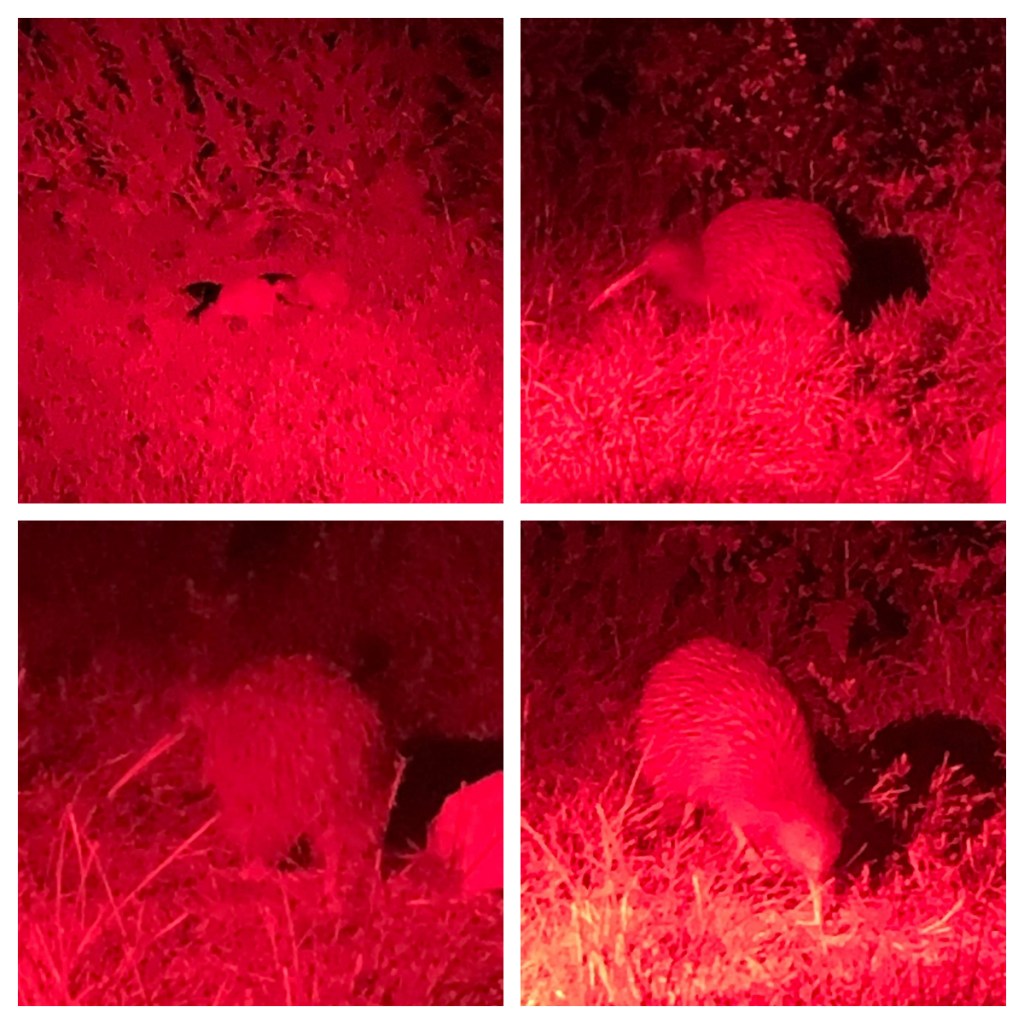
We met up with our guide and where driven only a short distance out of town, where we parked up and walked into a grassy area, just off the road.  Not far away we came across our first pair of kiwi (kiwis are generally monogamous and pair for long lengths of time).  We had red light torches to light the way – interesting it is the same technical we had used in Zimbabwe when hunting with lions, as the red light does not startle the game (and in this case the kiwi) like white light does.  And with this light we had a great view of the kiwi who do not seem particularly by our presence as they when on their way feeding, as some point coming quite close to us.

After this first encounter, we headed inside a predator proof fence (oddly set up the US based Dancing Star Foundation – Dancing Star Foundation – Biodiversity Conservation – Translocations) were we came across another pair of kiwi.  Interesting, the kiwi inside the fence where more skittish than the ones outside.  Apparently because they have less predators … and visitors in general and are therefore less habituated. 

It was a beautiful evening, after the afternoon rain.  The sky was full of stars (including shooting stars) and the calls of morepork and kiwi filled the air.  I cannot recommend the experience enough, and the chance to see our elusive national bird is one not to be missed.

Stay tuned for Part 2 …coming soon.