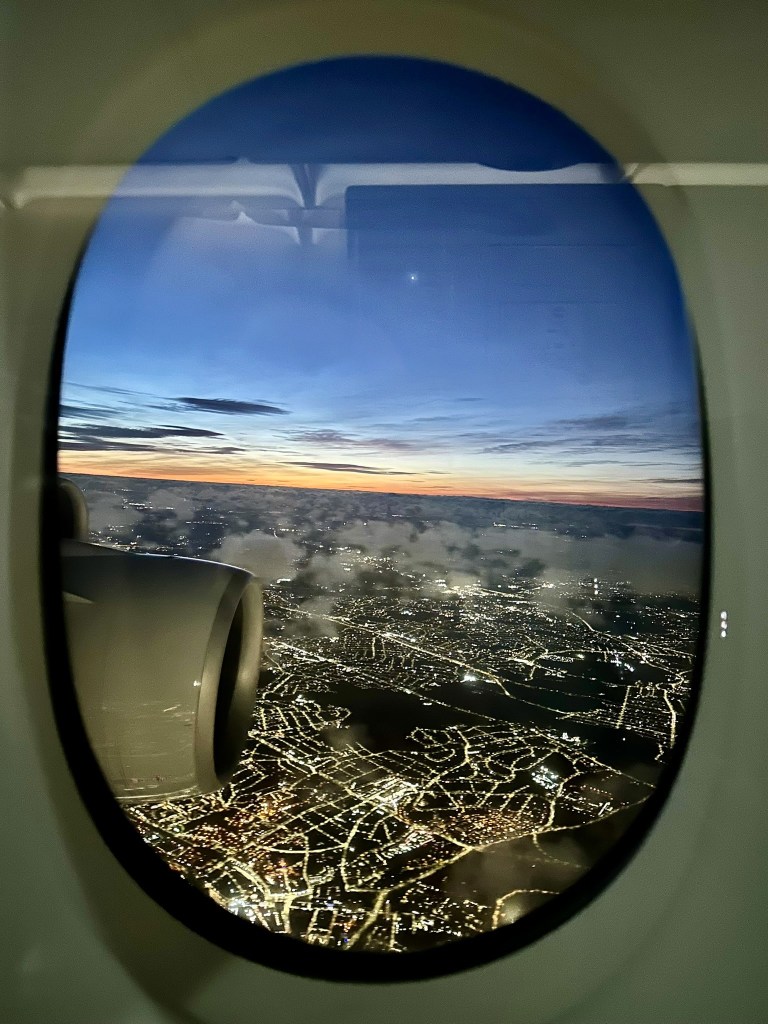
The Wild West (& West End)

Galway, Ireland & London, England

Dec 2023/January 2024

After a full Irish breakfast (pretty similar to a full English breakfast but perhaps with Irish Soda bread) I met up with my friend Suzanne to drive from Dublin in the east to Galway in the west – a nice 3 hour drive through the countryside.

Galway grew up around a fortification built in 1124, today, despite being the 4th largest city in the Republic of Ireland, Galway only has a population of around 86,000. It is a very popular tourist destination due to its strong artistic and musical traditions, its lively atmosphere, great food and nearby dramatic landscapes.   

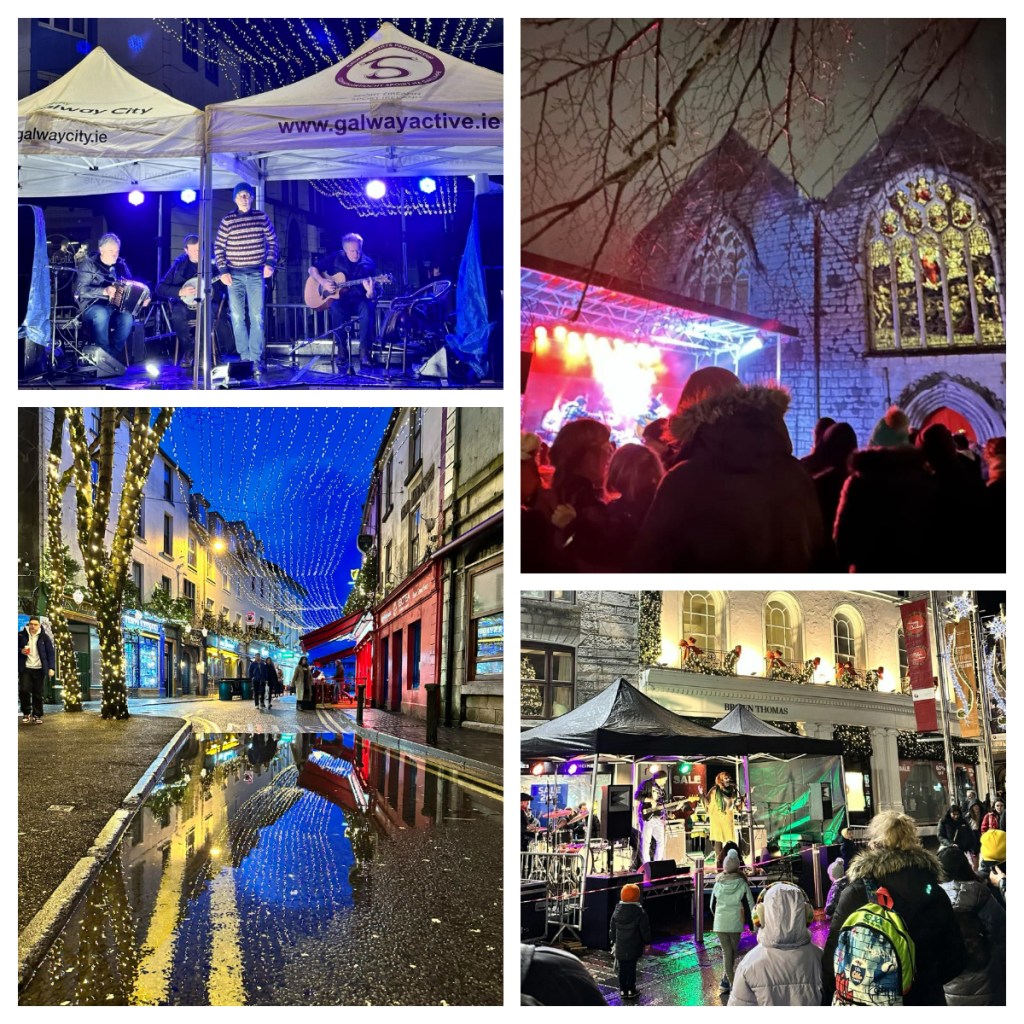
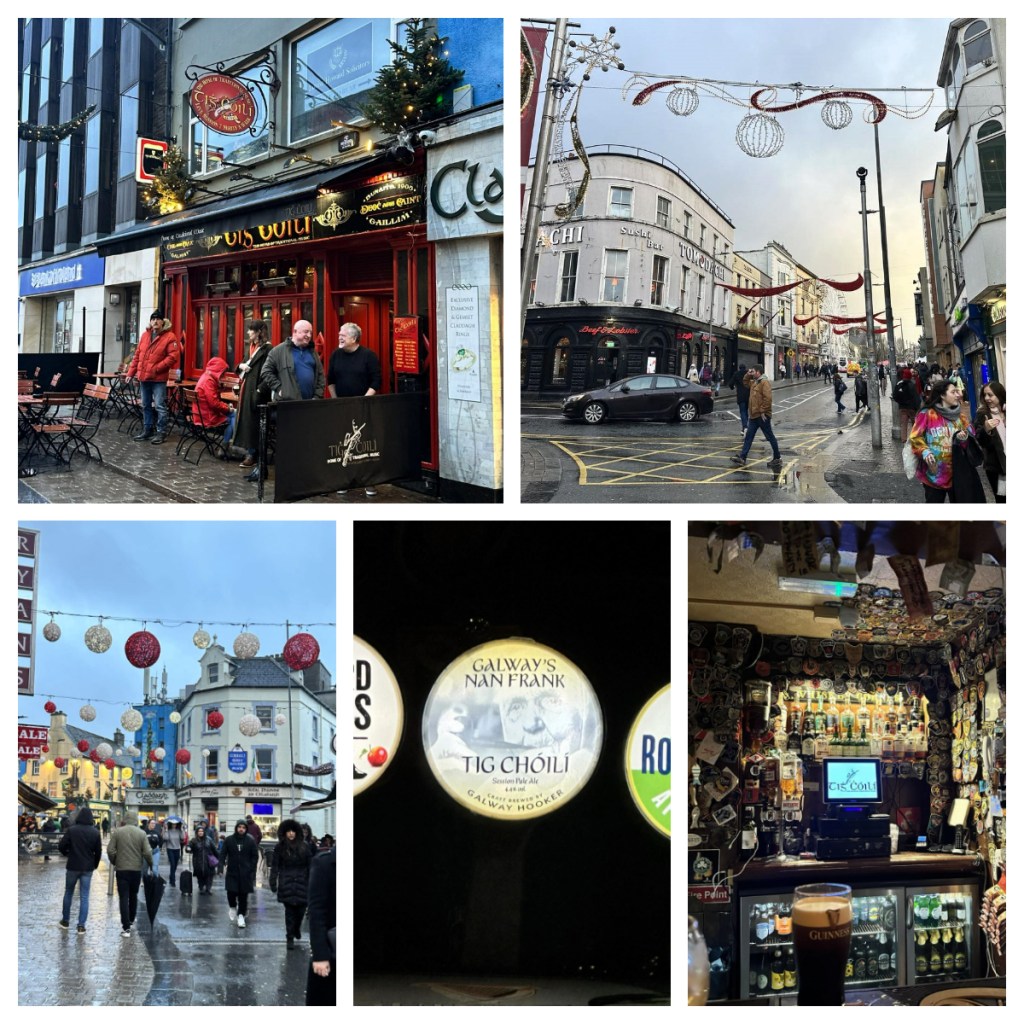
By the time we had arrived it was already midafternoon, so after checking to our hotel we headed out for something to eat.  There was a small Christmas fair in the central square and lots of beautiful Christmas lights around small old town and the light rain was not going to put us off exploring – in fact it was a great excuse to check out Tig Choili.  Touted as the home of traditional music it did not disappoint as they had a live trad music session going on as we arrived.  The small bar was packed with people and atmosphere.
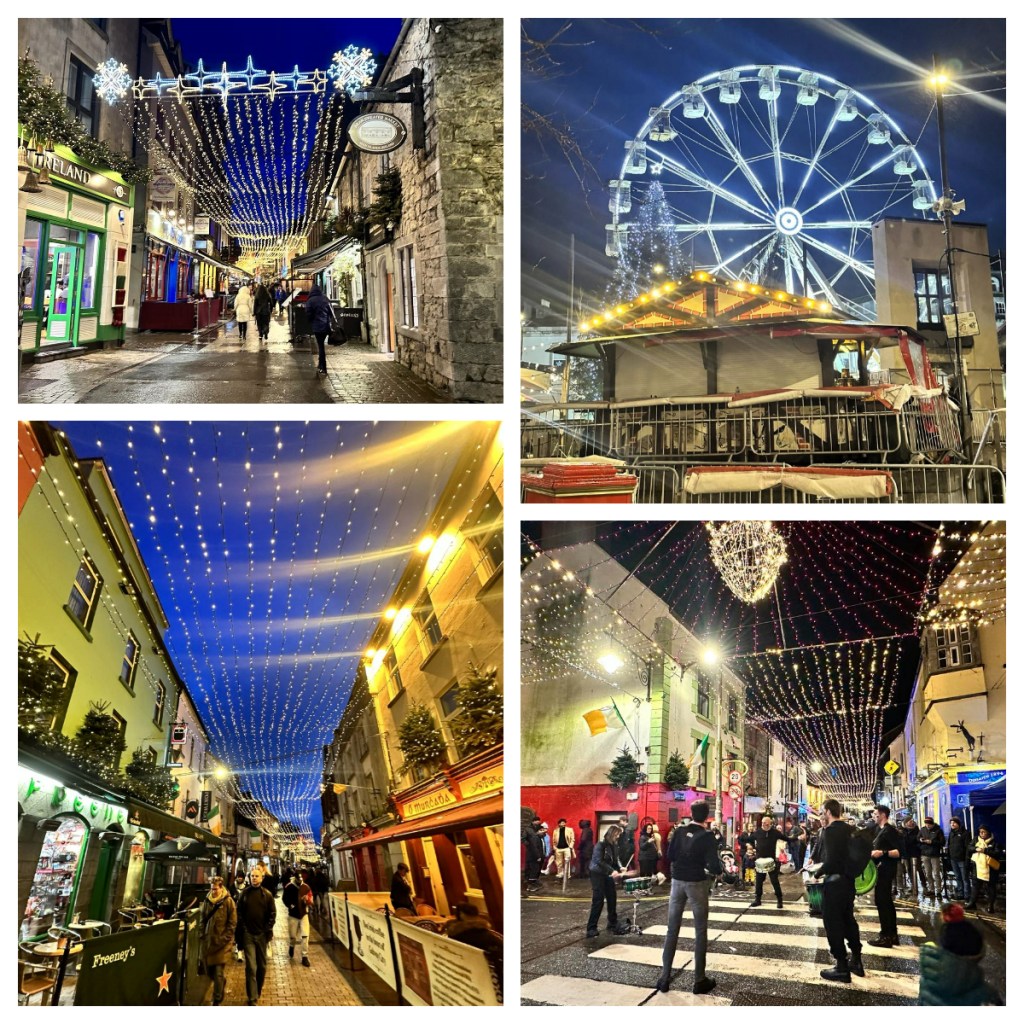
As it started to get dark, the lights came on and the puddles were filled with reflections (we all know I love a good reflection) and, as it was New Years Eve (did I mention it was New Years Eve?)  there was a programme of buskers set up around the old town.  We spent time wandering around the different stages enjoying the music – ranging from drumming, soul to trad.  (If you are on Instagram, check out the reel I did about the evening).  It was a great event.
We headed back to the hotel to get changed and before going back out to Monroes, a popular live music venue who were hosting Kíla, a popular Irish folk music group.  We had planned to stay here till midnight, but a friend of Suzanne’s who lived on the nearby Aran Islands was in town as asked us to join him at a small French restaurant across the road.  We did and it was fabulous – they were obviously hosting a 1920’s themed New Years eve dinner and we sat on the side, enjoying champagne and singing around the piano.  It was a great way to top of the evening and ring in the new year.

The hotel breakfast the next morning included another full Irish (it would be rude not to) before we decided to walk the 3km out to the Salthill Promenade.  Unfortunately, the rain really got us this time, setting in about 10 minutes into our walk … but we preserved and fully made it out to meet up with some other friends of Suzanne’s who were out here for a traditional New Years Day swim!! Ah, these Irish are a funny lot lol. 
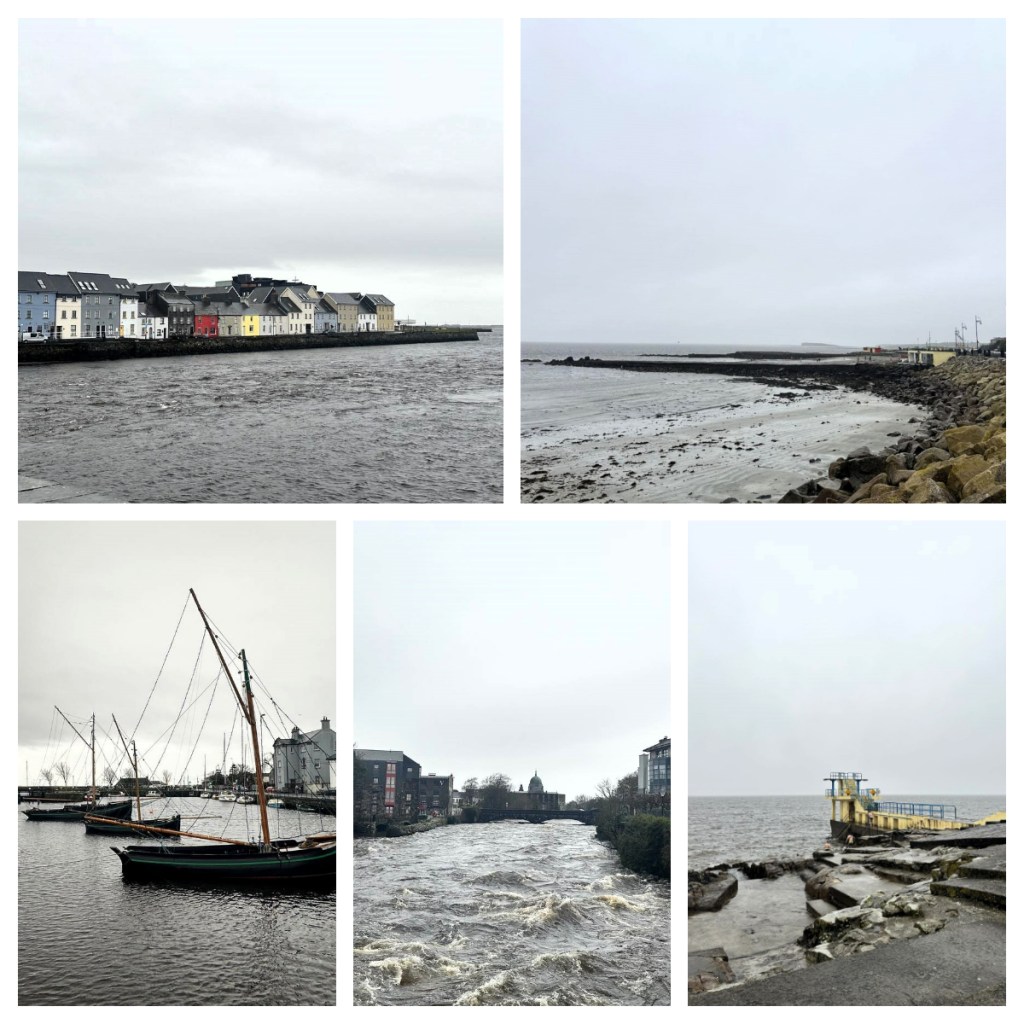
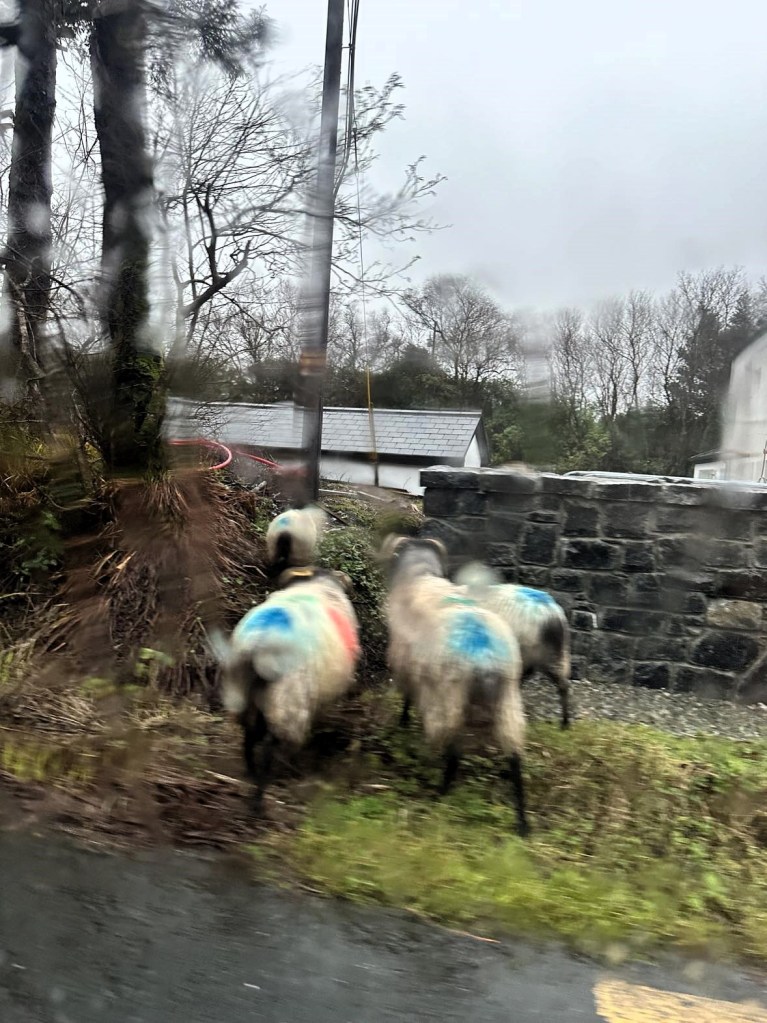
After a chat over coffee, it was time to hit the road again, this time to Clifden, the so-called capital of County Connemara.  The morning rain continued as we drove the 1 hour 20 minute drive through some surface flooding and sheep on the road – made me feel right at home lol. 

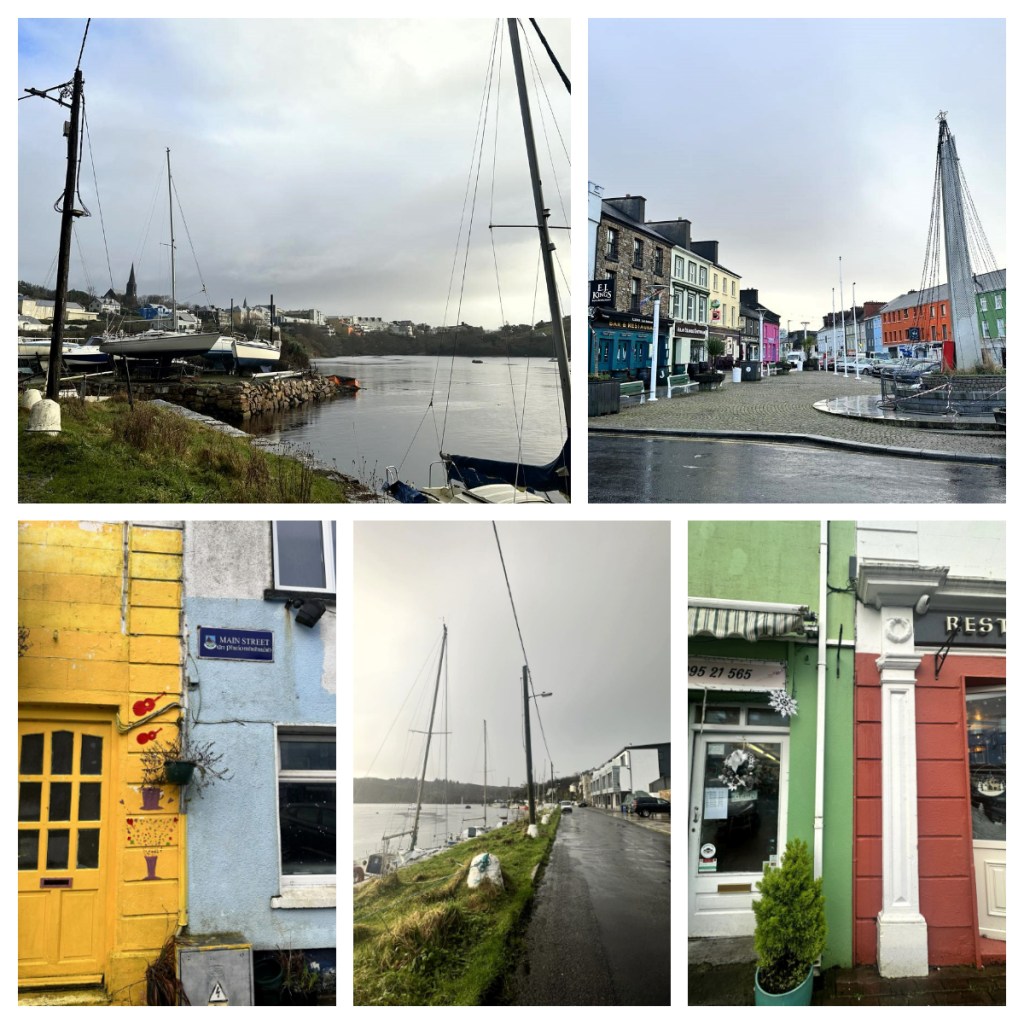
Despite its size (population around 2,500) it is the economic capital of the area and is the base for some of the best sites around this part of the west coast.  After a lovely dinner and a couple of drinks, we settled for an early night.

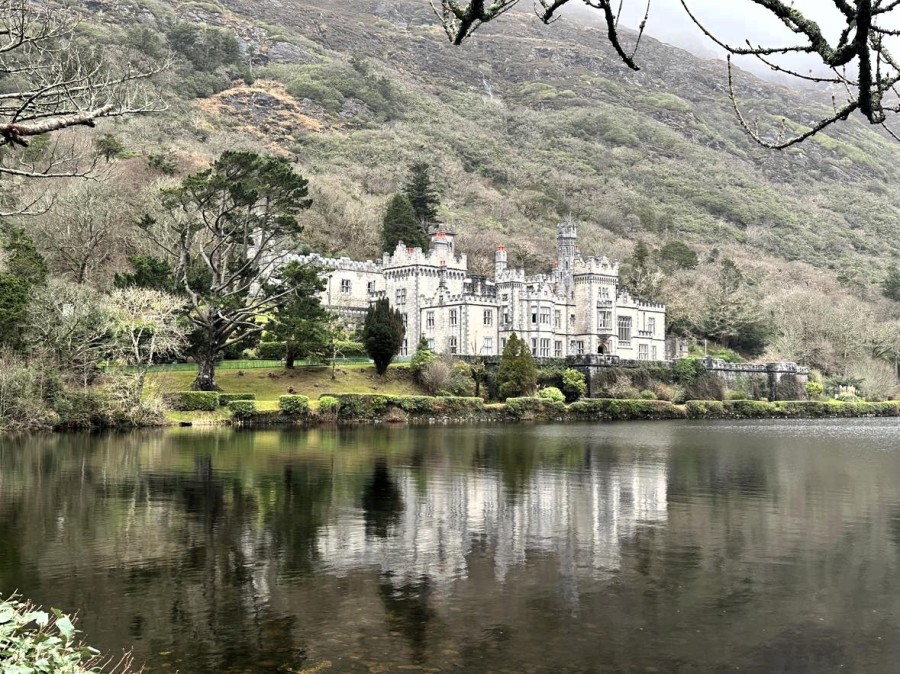
January 2nd, we set out to explore the area.  It was still overcast with a little rain, but we were not going to let us stop us.  First stop was the beautiful Kylemore Castle.  We were lucky enough to have a break in the weather and managed to get a moody version of that icon reflection view but decided to start in the Victorian walled garden as we were unsure how long the weather would hold! 

But first some history … Mitchell Henry, a wealthy doctor from London, built Kylemore Castle in 1868 for his wife Margaret after they feel in love with the area on their honeymoon in the 1840s.  The castle took 100 men 4 years to build and had 33 bedrooms, 4 bathrooms (which is a crazy ratio in today’s world), 4 sitting rooms, a ball room and of course rooms for all the servants.

When his beloved Margaret died in 1874 (of a fever she contracted in Egypt), Mitchell spent less and less time at Kylemore.  He did however build a Gothic chapel and mausoleum which holds the bodies of Margaret and Mitchell.

In 1903 the estate was sold to the Duke and Duchess of Manchester who lived there for a few years before having to sell it to repay gambling debts!! 

In 1920 the site was purchased by Irish Benedictine nuns after they had to flee their original location of Ypres in Belgium because of the war.  They ran a farm on the site and opened a school in 1923 which attracted the children of nobility from around the world as boarders (including an Indian princess and even Madonna tried to get her daughter in) and local girls as day students (for whom it is free).  Sadly, the school was forced to close in 2010 due to lack of students. 
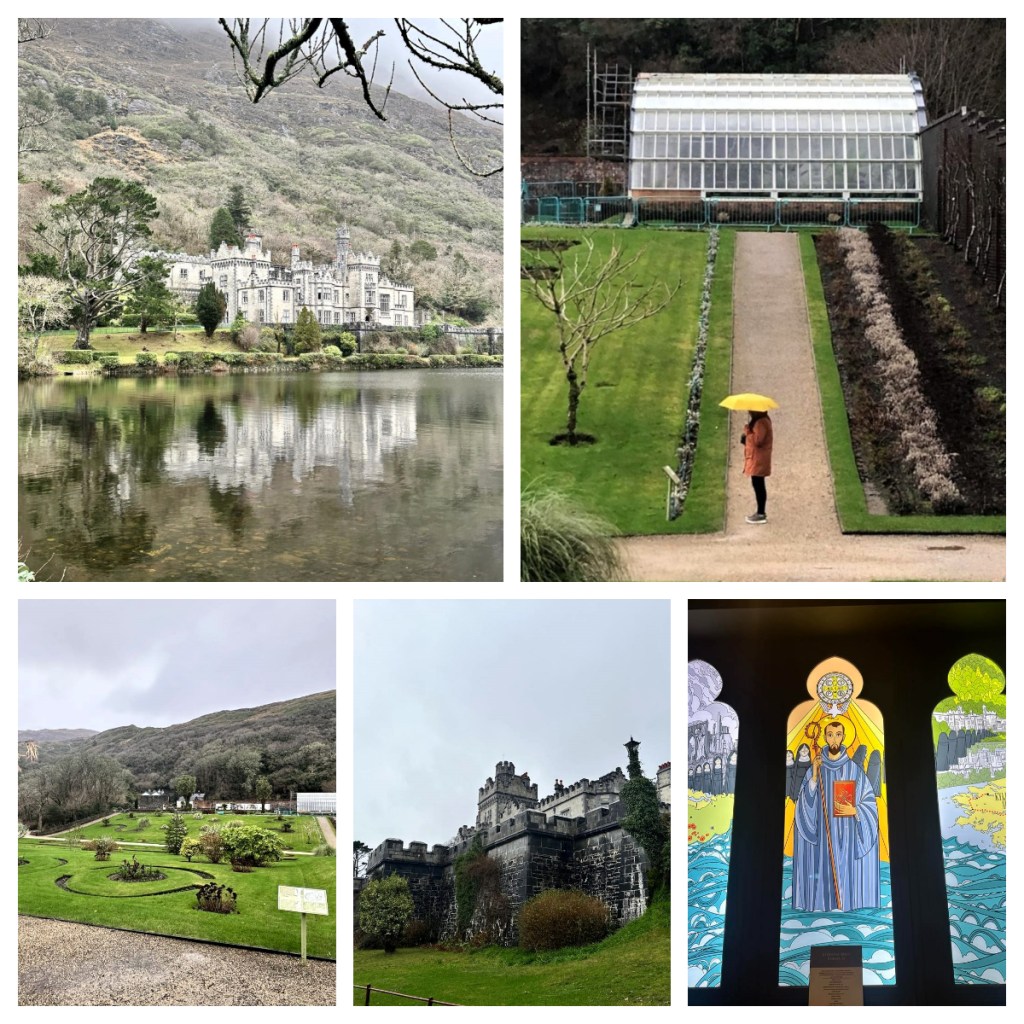
Back to our visit … we caught the shuttle bus the short distance to the gardens and enjoyed a strolled around it, learning abouts its history from its informative panels.  The 6 acre garden was created along with the castle in the late 1800s.  In its heyday, it had 21 glasshouses and 40 gardeners!! 

After many years of neglect, the nuns brought the gardens back to life and feed the nuns and the students from the school from the produce grown here, but it was not until 1995 when a group of historical restoration consultants, garden archaeologists and architects were brought together to bring the gardens back to their former glory.

After a short walk around the gardens, we caught the shuttle bus back to the reception area and took a short walk to the castle to join a history tour.  Our guide was so enthusiastic about the castle and it’s story, and it was fascinating learning more about the castle in a more personal way. 

We learnt about the fantasy fairytale exterior design and all the modern trappings it was built with inside including electric lights, gas heating and indoor plumbing.  In fact, it was one of the first private homes to have self-sufficient electricity from an onsite hydroelectric turbine.

Kylemore was great, but we had more to see before it got dark, so we moved on for a brief lunch stop in Letterfrack, a village founded by the Quakers in the mid-19th century, before continuing down narrow country lanes, through beautiful moody landscapes to Claddaghduff, the ‘jumping’ off point to reach the tidal island of Omey Island.  The island is said to have been one of the last lingering strongholds for pagans, before the monastery, Feichin’s Church was built in the 7th century. Subsequently it has supported some successful farms over the years.  Currently, the population is listed as 5!

At low tide, you can walk across the sand to the island, and in fact you can even drive!  Despite being there at low tide, there was still a few fairly wet spots and although my shoes were waterproof, I didn’t want them covered in saltwater so decided to wander around the foreshore while Suzanne went over to the island to explore.   My choice did not disappoint as I enjoyed just strolling around the beautiful wild beach and was awarded by a stunning rainbow. 🌈

Back in Clifden, now the New Year rush is over, many of the bars, restaurants and even hotels were closing up until February or March.  Thankfully we had one more night to have a couple of drinks in a couple of the local pubs, ending up in the bar by the hotel where there was live music and then to the hotel lobby where there was a piano player – actually the same guy who was playing the piano in the bar we ended up in on New Year’s Eve – small world lol.
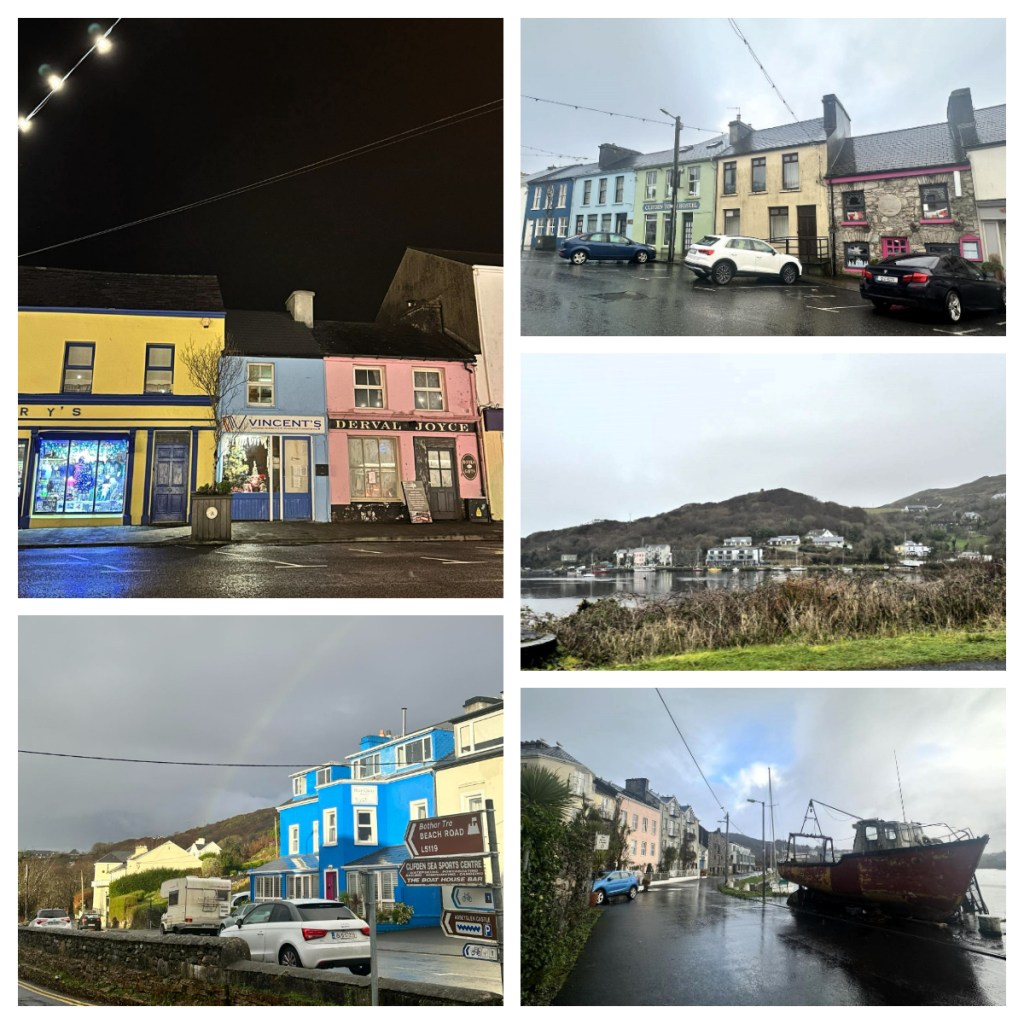
On our final morning away, Suzanne was not feeling well, so I got up and despite the rain, I headed out for a morning walk through the town and down to the waterfront.  Clifden is not a big town, but it was nice to stretch the legs before we headed back to Dublin, via a quick stop at Ireland’s oldest pub – Sean’s Bar in Athlone.  Established in 900AD!  I admit I do love the Irish pub atmosphere – dark, cosy, warm fire – nothing like it in the winter.

As well as Suzanne starting not to feel well, Ania, who I was supposed to stay with back in Dublin, tested positive for covid (Covid – disrupting plans since 2020)!  Despite feeling sick, Suzanne kindly offered a bed in her place for the night and it definitely an early night all around! 

Next morning I headed just around the corner to the airport bus stop.  It only ran from this area every 2 hours, so I went super early.  It was a lovely morning for my last trip through the city and I was lucky enough to get an earlier flight to London for my last couple of nights.

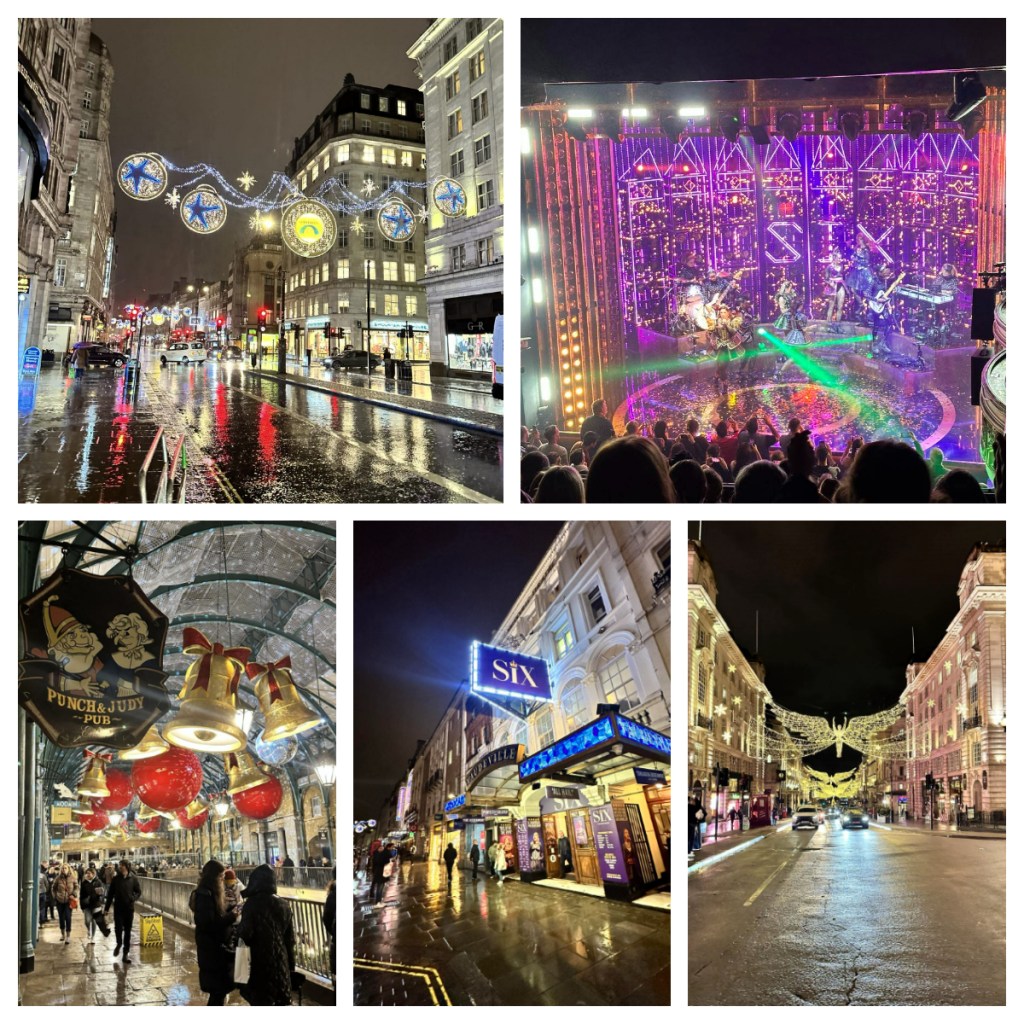
I caught the tube into the city to my hotel in Piccadilly – it was called a cocoon room, and it was true to its name in size, but it was clean, comfortable and in a great location, so I was happy.  By this point I felt like I was fighting to keep those Irish germs at bay and as the day went on, it became clear I was losing the battle.  After a quick nap I managed to head out in the torrential rain to see the Christmas lights, enjoy a bite at Pizza Express (an old favourite) and see Six – The Musical.   The musical was great fun and despite not feeling the best, the evening reminded me just how much I love London. 

The next morning, I managed to make it out for a walk around some of the central tourist attractions – around Trafalgar Square and down Pall Mall, just in time to catch the procession for the changing of the guard.  It was incredible to see how many people come to watch the regular event.  Just a great bit of English pomp and ceremony. 

In the afternoon I made my way out to the west of the city to visit an old friend and it was wonderful to catch up her, but I did have to have an early night and sadly felt even worse the next morning.  All final day activities were cancelled due to this unwanted Irish souvenir, and I had to book a day room in hotel at airport were I basically slept all day, until it was time to head to the airport for my flights home.

Despite the Irish germs, it was a great trip exploring new places and catching up with friends.

Back to the Republic

Ireland

December 2023

After another great night’s sleep, I left Belfast and drove south, back across the invisible border to the Republic of Ireland – there was not sign indicating the border on this road either!

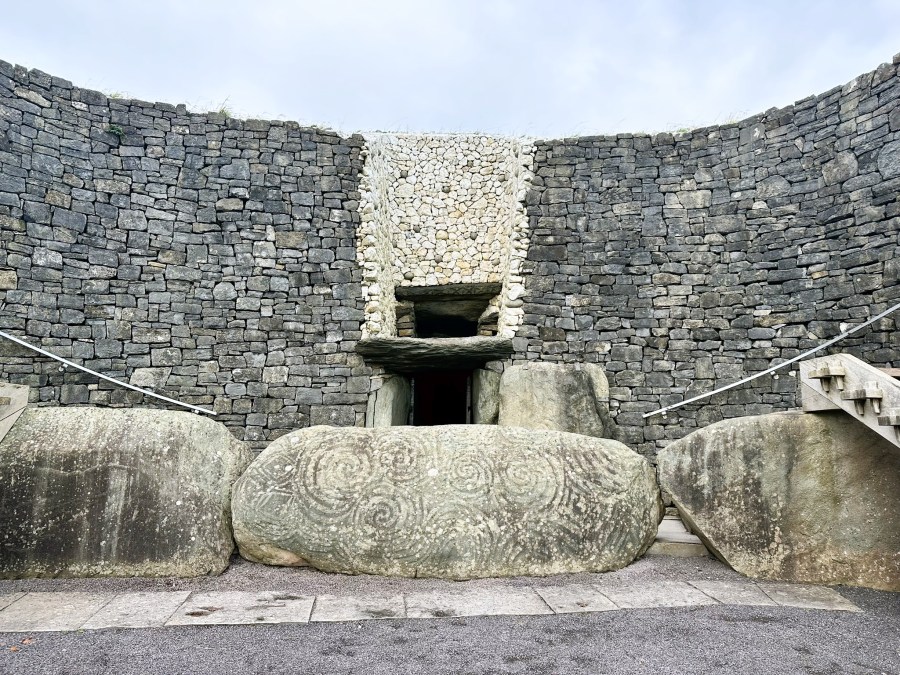
My destination the Boyne Valley in County Meath and the World Heritage Site of Brú na Bóinne.  Until I started researching for this trip, I was completely unaware of the Neolithic history of Ireland and that there are various stone age sites that you can visit – Newgrange being touted as “the jewel in the crown of Ireland’s Ancient East”.  Created around 5,200 years ago (3,200BC), it is older than Stonehenge, the Egyptian Pyramids at Giza and even the ancient city of Petra in Jordan!!  This blows my mind!

To visit Newgrange, the most well know of the passage tombs in the complex, you must start at the Brú na Bóinne Visitor Centre.  It was a cold day and the visitor’s centre was fairly quiet but given the staffing levels I assume they have much busier days/moments – there were 3 people within about 10 metres of each other, first to check my booking, the second to give me my ticket, and a third to check the ticket I was just given (in front of them) 🤔😂.  I have not seen such a great job creation scheme since the small shops in Japan!

Your visit to the site includes a bus from the visitor’s centre to the site itself and as you enter you are allocated to a specific bus time.  I had around 30 minutes to explore the really interesting exhibits and information.  Apparently, the Boyne area has many Neolithic sites which date back to the “new stone age” era when humans started farming and living in settled groups.  For them, Brú na Bóinne was a sacred place.

From the visitors centre, it was around a 5 minute walk across the River Boyne to the bus stop where I joined a group of people on the bus to the site itself.  A short ride down narrow country lanes and we got our first glimpse of the passage tomb of Newgrange. 

It is understood that passage tombs were used to contain the remains of the dead and it is likely that they were actually built over the bodies, rather than the bodies placed in afterwards.  However, Newgrange is considered to be more than just a passage tomb and is considered more likely an Ancient Temple with astrological, spiritual and ceremonial importance. In fact, this site has amazing examples of megalithic art on a scale not found anywhere else in the world!

We had time to wander around the mound, around 85m in diameter and 13m high (covering a total of around 1 acre) before meeting the guide for our time inside the tomb.  Unfortunately you could not take photos inside the tomb, which is a shame as the engineering that went in to the building of the tomb was amazing, as were the unique artworks. 

One of the most special things about the site, is that on the winter solstice, the passage and burial chamber are lit with the sun as it rises.  As we stood in the passage, which these days is lit with electrical lights, the guide turned off the lights and recreated the moment of the sun rising on the winter solstice.  As with other ancient wonders like the pryamids of Giza and those in the South American Mayan world, the astronomical knowledge of the architects, engineers and astronomers who built them is incredible.

It was a really interesting visit and the countryside was beautiful despite the freezing weather, I was just grateful it wasn’t raining.

From Brú na Bóinne it was only a short drive (down more narrow country lanes) to Slane where I was to spend the night.  I was a little early to check in to my accommodation so headed first to the Hill of Slane. 

Legend has it, in 433, St Patrick lit a fire on the hill, in defiance of the law of pagan High King Laoire, who forbade the lighting of any fire before his fire, on the nearby Hill Of Tara, was lit on the spring equinox. Despite being angry, the King was impressed by St Patrick’s devotion, he allowed him to continue his missionary work which brought Christianity to Ireland (basically putting the putting King out of a job)!

The hill is only 158m high and from the carpark it was just a short walk to the top which today houses the ruins of a Franciscan Monastery dating back to 1512 as well as those of a college built to house four priests.   From the ruins, there were also beautiful views out over the countryside.

From the hill I headed back in to the small village of Slane (population around 1,500) for lunch at the Village Inn and a quick visit to the nearby 18th century castle.  It was unfortunately closed so could only admire it from the outside, but I did pop in to it’s neighbouring whiskey distillery to do a little souvenir shopping before I made my way to my AirBnB. 

I had thought about heading to the pub later for some dinner but it was so cold and the Airbnb was so cozy I just stayed in!

When I headed out at 8am the next morning it was dark and raining but I had to set off to the airport to drop off my rental car.  I had been fortunate so far in avoiding the worst of the rain but not so this morning. 

From the airport I took the bus back to city and headed back to the same hostel I had been in before Christmas.  The hostel was ok and conveniently located and I had decided it was easier to go with the familiar rather than have to find my way to another place.  This time I had splashed out and booked myself a single, private room and luckily enough it was ready for me to check in to early.  Please note – a private room in a hostel = a room about the size of a shoe box but at least it was clean and I had my own bathroom.

With no time to rest, I dropped my bags and headed straight out. First to see the Jameson distillery.  Not being a whiskey drinker myself, I didn’t go in, but wanted to see it and make a few small purchases for gifts .. and it was kind of on my way … to the Guinness storehouse. I am also not a big Guinness drinker but I like it more than whiskey so thought I should visit!

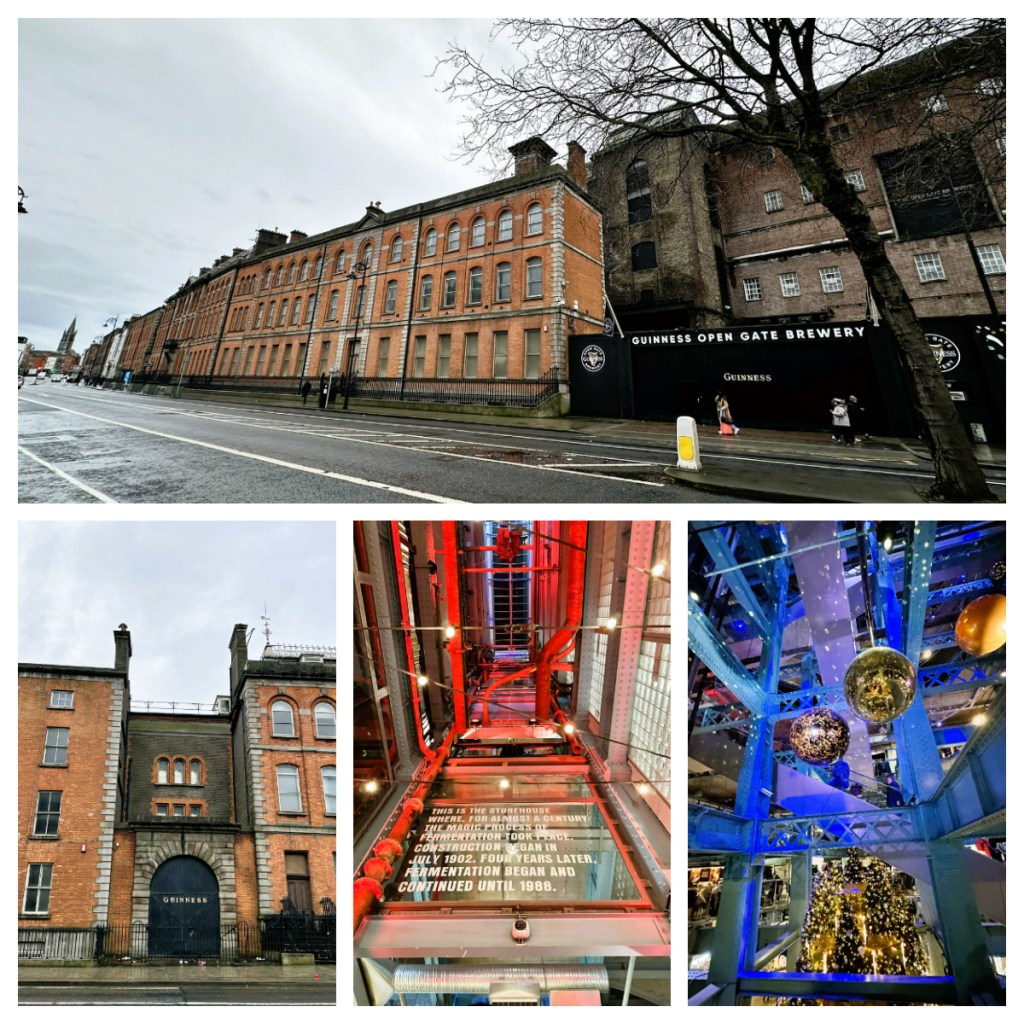
The Guiness store house is a huge imposing building taking up a whole block and let’s be honest, you must be living under a rock if you were not familiar with the iconic Irish beer which can be found all over the world.

Arthur Guinness started brewing on this site over 250 years and in 1759, he had the foresight to sign a 9,000 year lease on this St James’s Gate Brewery!  Now that shows true commitment to his product!  The Guinness family today continue not only the brewing legacy but also the philanthropic one, supporting and donating to various charities, historic building restorations and underprivileged communities and as well as maintaining a high level of employee welfare. 

As you worked your way up the levels (7 levels in total), you explored the history of Guinness and how they make it – from grain to glass.  To be honest, although it was interesting, there were a few too many people in some areas so I did not spend much time waiting around to read all the information panels and wasn’t that fussed with the place … until I reached the sterile “tasting room”.  It was completely white and sterile and when the room was full, they closed the door!  It had areas where you could enjoy the aromas of different parts of the beer and were each given a shot of Guiness.  I now actually started to feel like I was in the beer version of Willy Wonka’s chocolate factory – so many different floors and rooms!

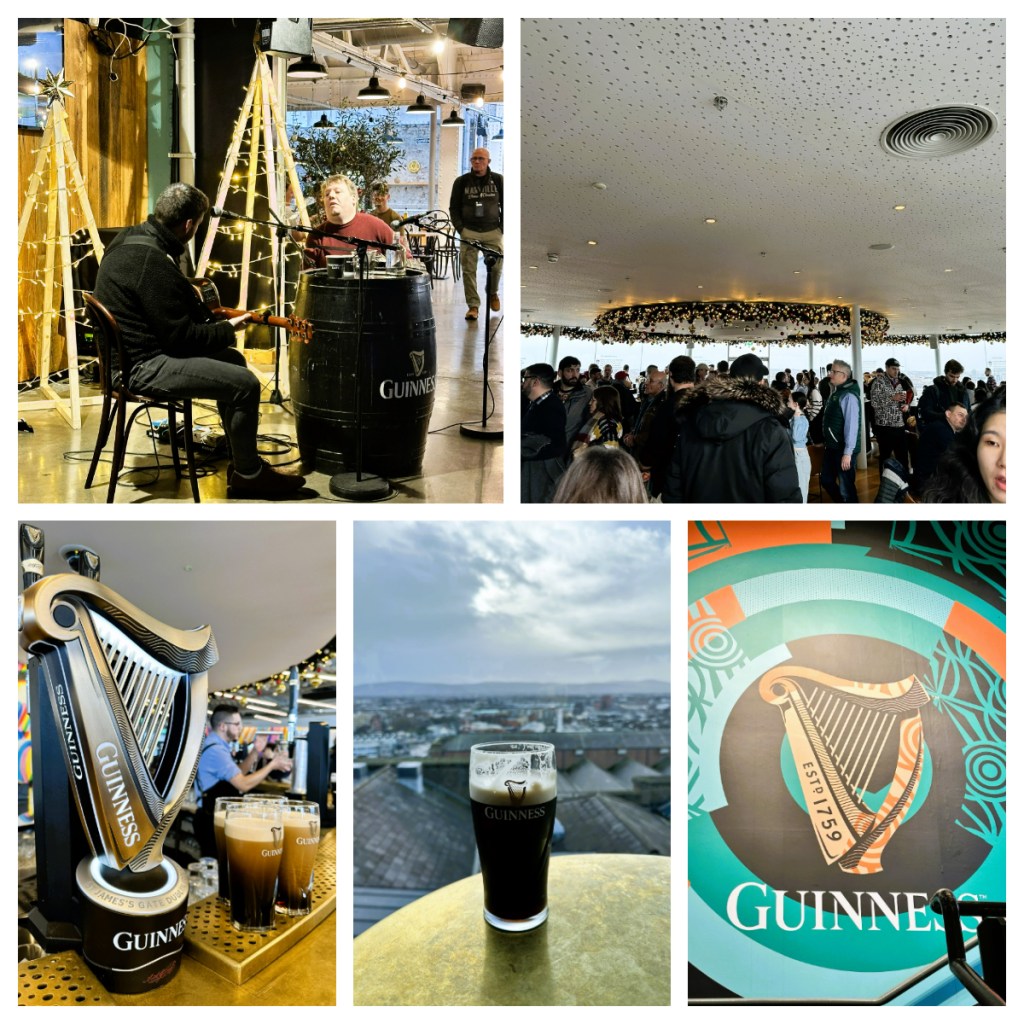
From here we moved I to the Velvet room (I think that was its name) for a brief talk about how to drink Guiness.  This room was filled with paintings of Guinness’s past and information about their contributions.  Instructions were given … “Pause and smell the aromas before taking a big slug lol.  Don’t sip just the creamy white head as that is for texture rather than taste”.  I must admit – I actually enjoyed it.  Perhaps I have always been drinking it wrong.

The final stop was for a free pint of Guinness (well, it is included in the entrance price) in the circular Gravity bar, one of Dublin’s most unique roof top bar, with a great view over the city. I was very lucky to get a seat after only a short time so could properly enjoy the view and my pint. 

I then headed down a couple of levels to one of the numerous restaurants for a Steak and Guinness pie (it had to be done) and to enjoy the magically Christmas decorations around the 7 story central core and the traditional music and dancing on show.  It was a perfect end to my visit. 

After an enjoyable couple of hours, I headed back out in to the cold for a 30 minute walk through a more gritty suburban part of the city.  (Turns out I could have walked through the lovely gardens of the museum of modern art, rather than the grungy back streets but thanks to google maps for keeping it real 🥴😂.)

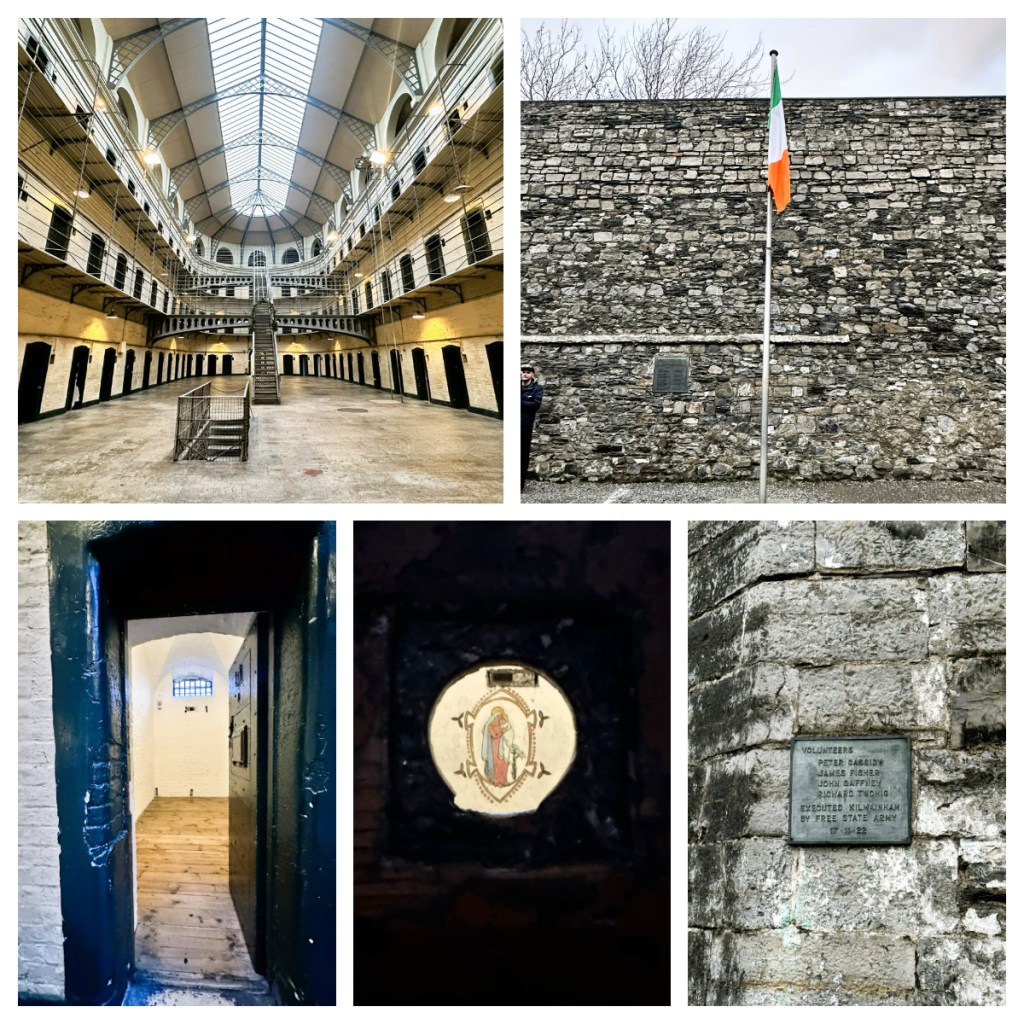
My friends had told me that Kilmainham Gaol as a must see in Dublin and that bookings were hard to come by so I had scheduled a reminder to book as soon as they began available (a month before the visit date) to make sure I got a ticket. 

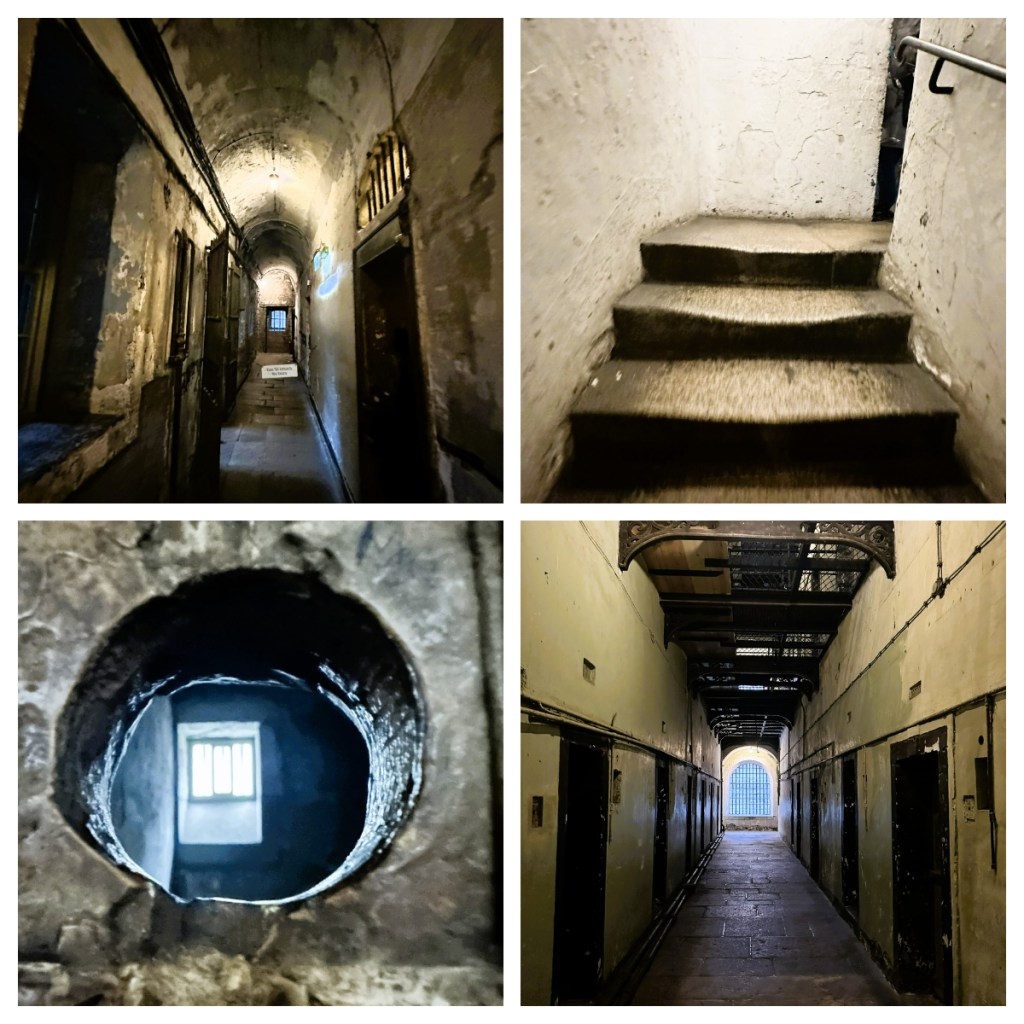
Since it was opened in 1796 as the Dublin County Gaol, until it was closed in 1924, thousands of men, women and children were held Kilmainham Gaol for offences that ranged from owing money or begging to political prisoners involved in the many Irish uprisings – from the 1798 rebellion, the 1916 Easter Rising, the Anglo-Irish war of 1919-1921 and the Irish Civil War in 1922/23. When the prison closed, the initial consensus was to tear it down as it held many bad memories, but in the 1960’s, a group of revolutionary veterans decided to preserve it as a national monument rather than tear it down so they can share the stories that are a huge part of Ireland’s history.

As if closing the loop, in 1966 the new museum was opened by the President of the day, Éamon de Valera. He had been one of the last prisoners released in 1924!

Our guide took us from the Court House, through what was a catholic chapel before we moved in to the earliest part of the prison – cells built for reform, based on the concept of “silence, supervision and separation” however the in the early days, the overcrowded prison did not allow for any reform or separation, with men, women and children all crammed in together in small cells with no heating (gas heating was not installed until 1890s. 

There was supposed to be 1 person per cell and in the  holding cells for those going to Australia, there could be up to 3 per cell … and their waiting time did not count as part of their sentence.  Some inmates were as young as 10 or 11.  In fact, the youngest prisoner was 3 year old Thomas Roberts who in 1856 he was imprisoned for begging. Sadly there is no record as to what happened to him when he left. During the famine there were up to 5 per cell as people were trying to get in to prison to get food! 

As we moved through the prison, from the oldest sections to newer areas, some of the cells showed the names of men and women who were help in them.  Many of the leaders of the unsuccessful rebellions against the British were held here – some were even executed on the grounds whilst others were released and went on to be part of future governments. Most of these leaders were not military men (and in some cases women), they were teachers, artists and poets.   

The most recent wing of the prison was much improved from those earlier areas.  Built in 1861 in the  panoctogan style, known as the all seeing eye – a guard can stand on the central platform and see everything.  It also considers that light is key for reformation and the glass room givens plenty of light. 

The tour ended in the execution yard, perhaps one of the most important sites in Irish history.  The site of a number of brutal executions, including public hangings.  The British started to lose support from many of the Irish citizens due these executions of politic prisoners and the treatment of the bodies after execution – in some instances they refused to give the bodies back to the families.  Who knows what they were hiding.  

It’s new life as a national monument also finds it popular as a location for movies, appearing in films such as the Italian Job, Michael Collins, In the name of the Father and even Paddington 2.

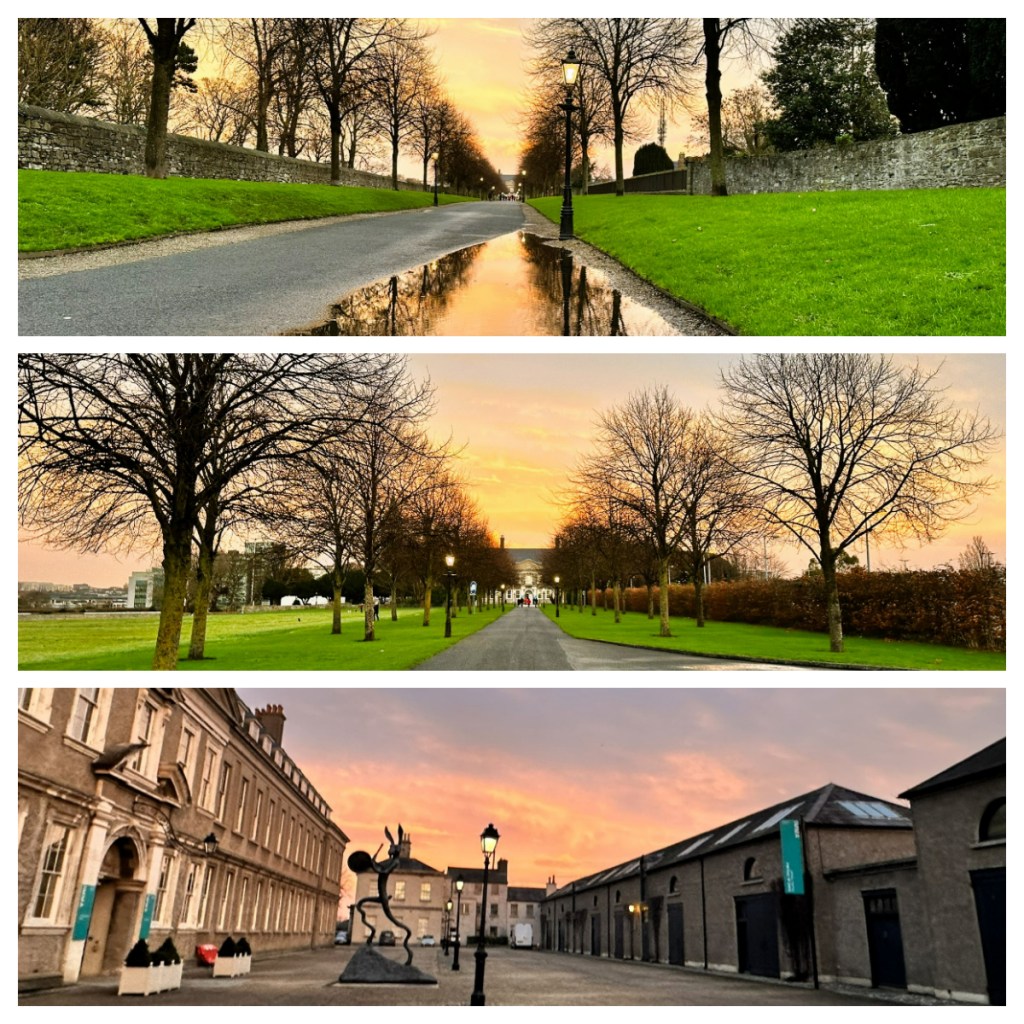
As I exited the prisoner I spotted the start of a beautiful sunset and I couldn’t resist taking a walk through the gardens of the museum of modern art before finding a bus back to my hostel, just in time to freshen up and change before fun night around Temple Bar with my friend Ania. 

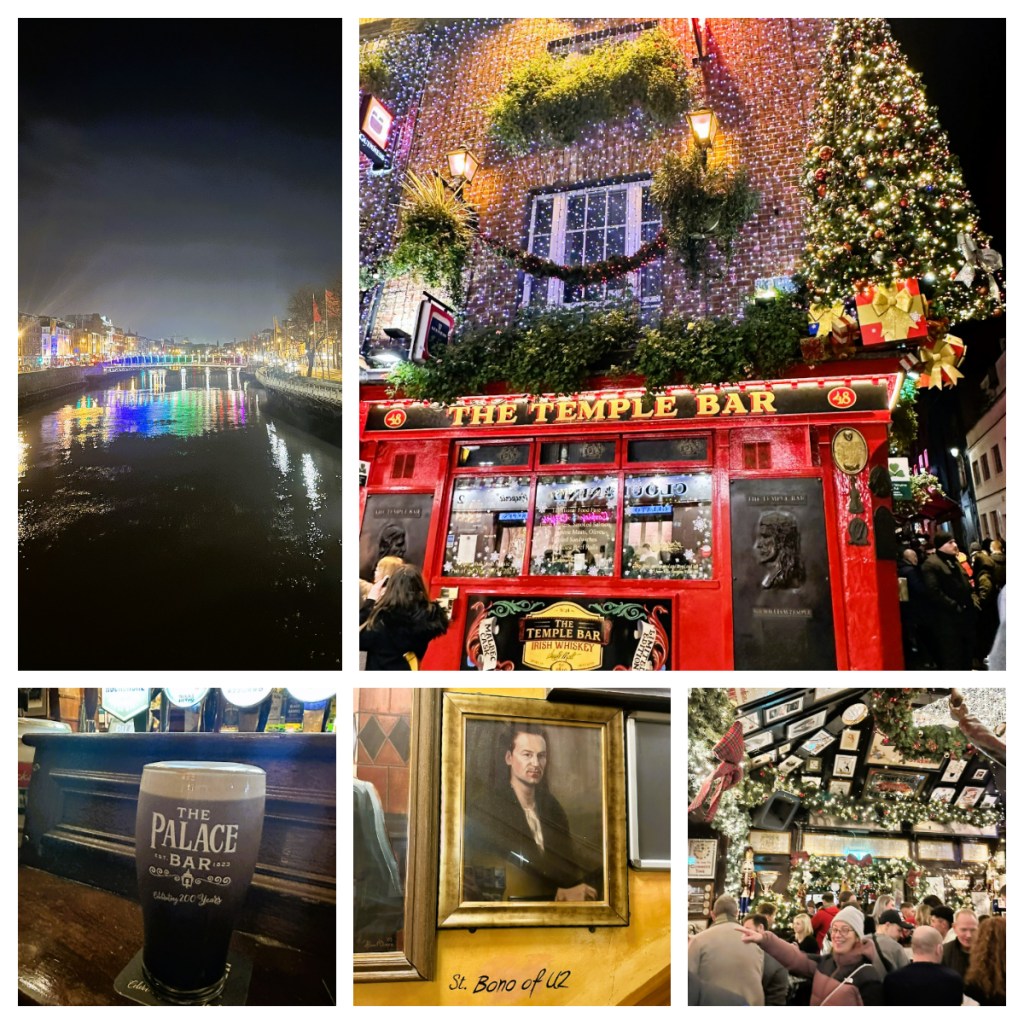
It was really busy and lots of tourists but fun never the less. I had been warned that the bars in Temple Bar are costly and they were not kidding!!  A pint of Heineken and a gin and tonic cost euro 26 – $45 – I am not sure where in NZ you would pay that much!  Let’s consider the budget well and truly blown 🥴  That said, it was a perfect day to finish off my time in Dublin.

Exploring Belfast

Northern Ireland, December 2023

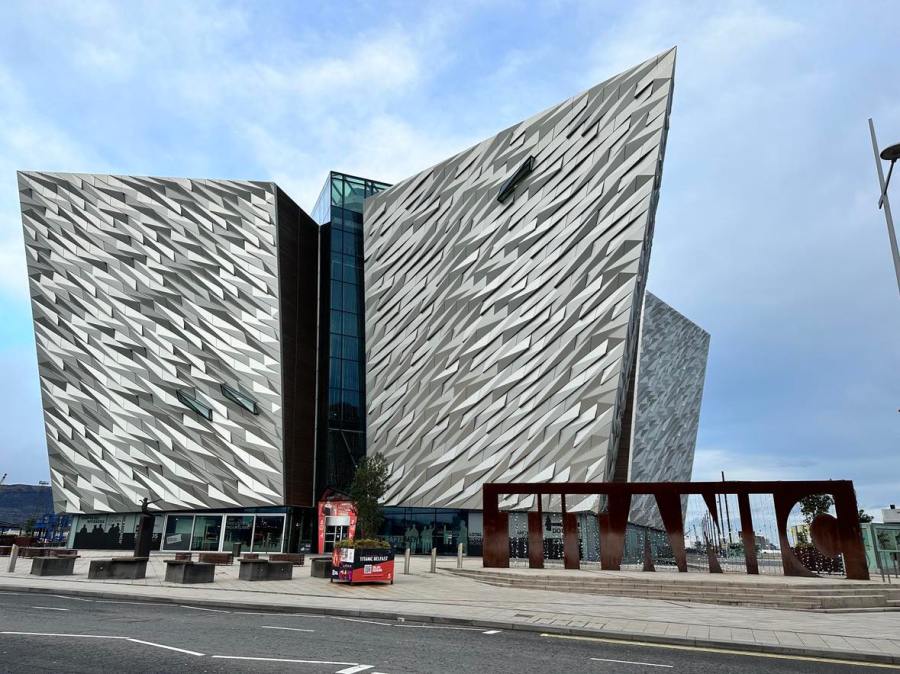
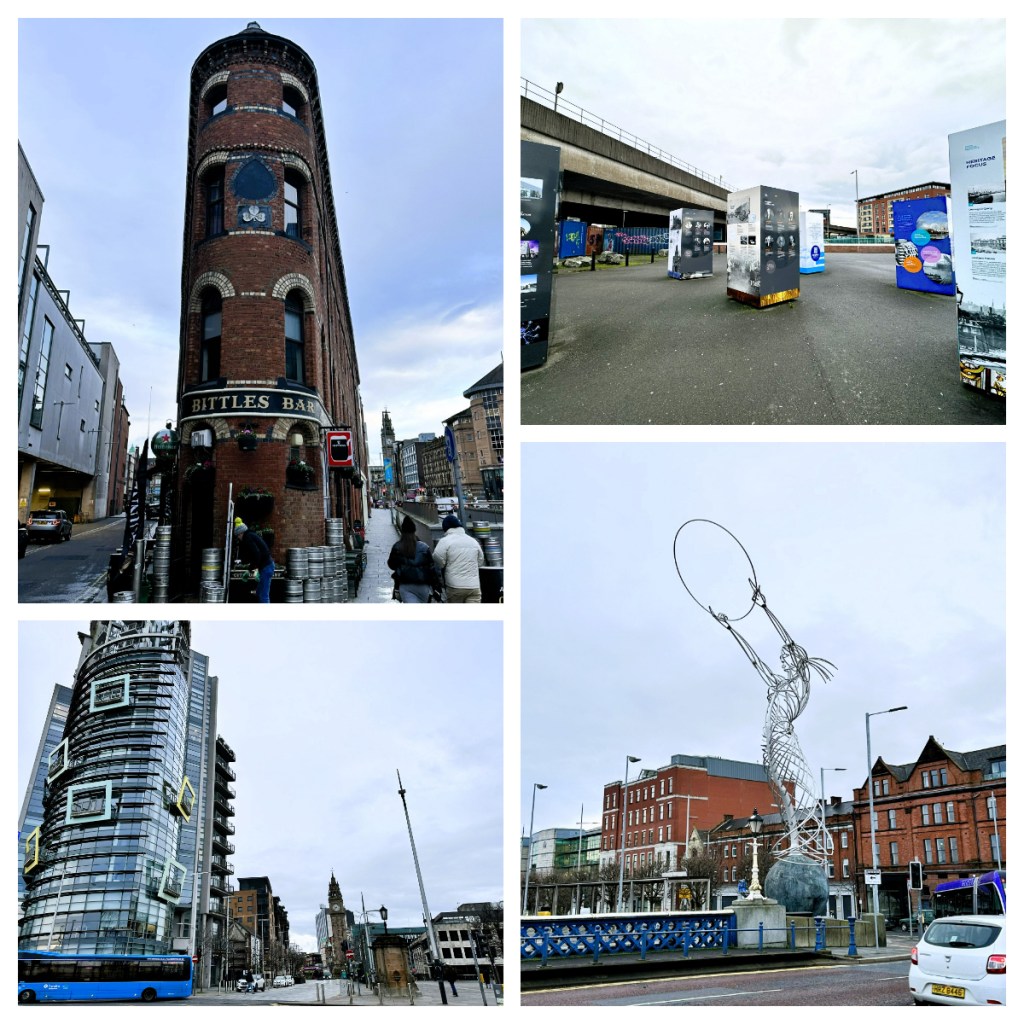
Awaking refreshed from a very comfortable night’s sleep and not a single regret about my room upgrade lol. I had two main things booked for the day – visit the Titanic Museum in the morning, and a Black Cab politic tour in the afternoon.  As I was now staying centrally, I took the opportunity to wander around first thing.  There is not much commentary to photos I took as I wandered, I just took photos of things I liked the look of and planned to find out more about the locations later!

I came across City Hall which was beautifully decorated for Christmas.  I wish I had explored a little more last night as I arrived just as they were in the process of dismantling the Christmas market in front of it (which had finished before Xmas) and taking down all the decorations.  So I got some lovely photos with lots of trucks in the pictures 🥴.

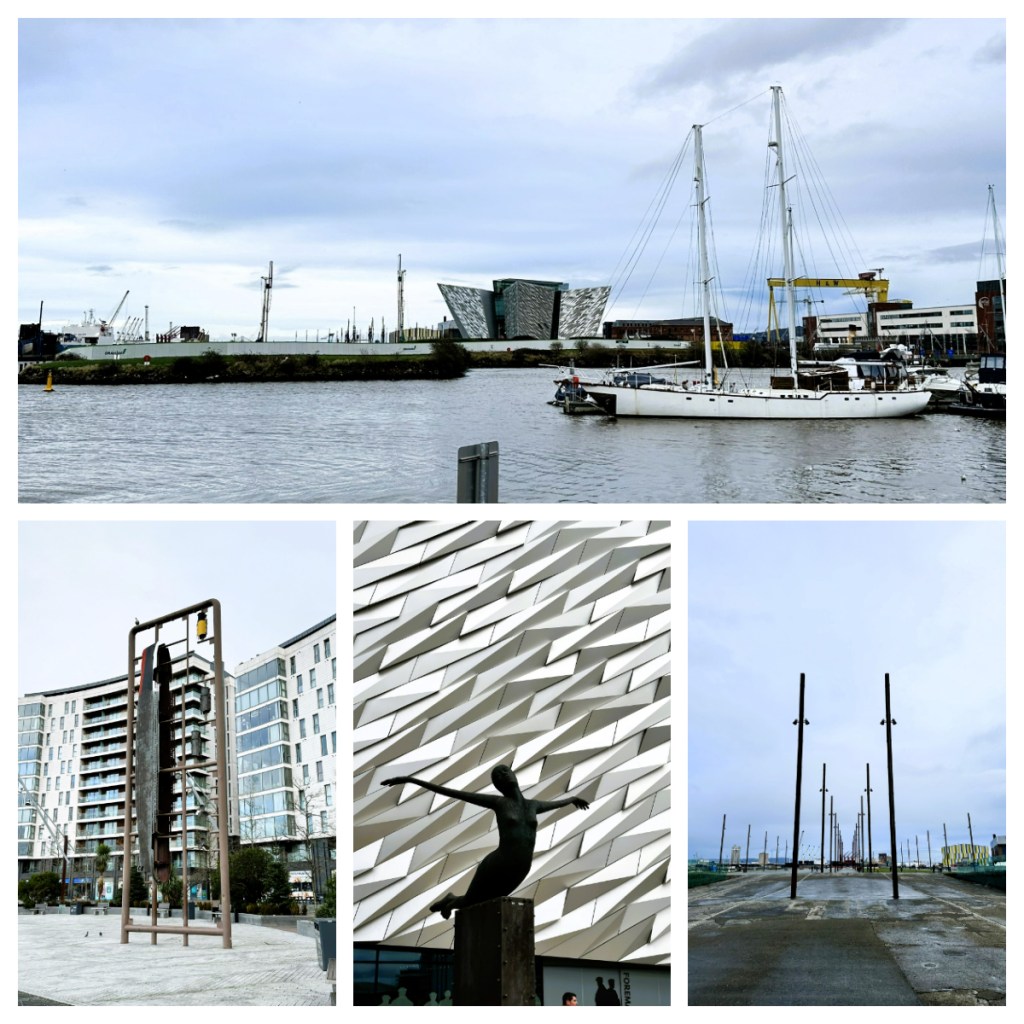
I paused for a hot chocolate at the large indoor Victoria Centre (a shopping centre) before continuing my wandering in the general direction of my first stop.  This took me across the river Lagan on to the Titanic Trail.  There were lots of very informative signs about historical Belfast and its ship building industry and I even spotted a couple of “city” seals in the river 😂. 

When I arrived at the museum there were a lot of people gathered outside.  Thinking it was not open yet, I took the opportunity to explore the outside area and the Olympic slipway where the Titanic was “born”.  In fact, it was actually security alert that had evacuated the building 🤦🏻‍♀️.  Thankfully I did not have to wait long before we were allowed in as it was bitterly cold. 

I had prebooked online which meant I could walk straight in and that I also got an audio guide.  Although it was not really necessary as there was plenty of good information around the museum, I enjoyed listening rather than having to try a read the sometimes crowded signs. 

The museum covered the history of the city including key trades such as linen, rope making, tobacco and ship building.  At one time, Belfast had the largest ship yard and glass blowing manufacturers in the world!

After going though the original gates from the Harland and Wolff shipyards we joined a short ride through a re-creation of the shipyards of the time to experience the heat and noise the workers had to endure.   Incredibly, the Titanic had more than 3 million rivets in it, most of which were put in by hand!

Now, I am pretty sure everyone knows the story of the Titanic. Launched in Belfast in 1912, it was the largest ship afloat at the time she was launched by the White Star Line.  Her inaugural journey was to take her from Southampton in England to New York with some of the wealthiest people of the time on board, as well as hundreds of European emigrants, travelling to build a new life in North America.

But, as we know, she never made it to her destination. On April 14th, she hit an iceberg mid Atlantic and sank in around 4 hours.  Touted as unsinkable, crew and guests were ill prepared for such a catastrophe and the ship only had life boats for about half the people on board! 

The audio guide took me through the exhibits, hearing emotional stories from survivors and displaying artifacts from the ship herself.  It seems that the disaster was the result of a domino effect:  weather, ice warnings, the lookout did not have  binoculars, the ship was going too fast for the conditions, flooding in low bulk heads, not enough lifeboats, no emergency drill … After the sinking of the Titanic, much was changed in maritime legal requirements, some of which remains in place.

The last part of the museum goes through all the modern day exploration of the wreck, with some incredible images of the wreck in recent years.  Even if you only have a short time in Belfast, I would highlighy recommend allowing a couple of hours to visit the Titanic Museum.

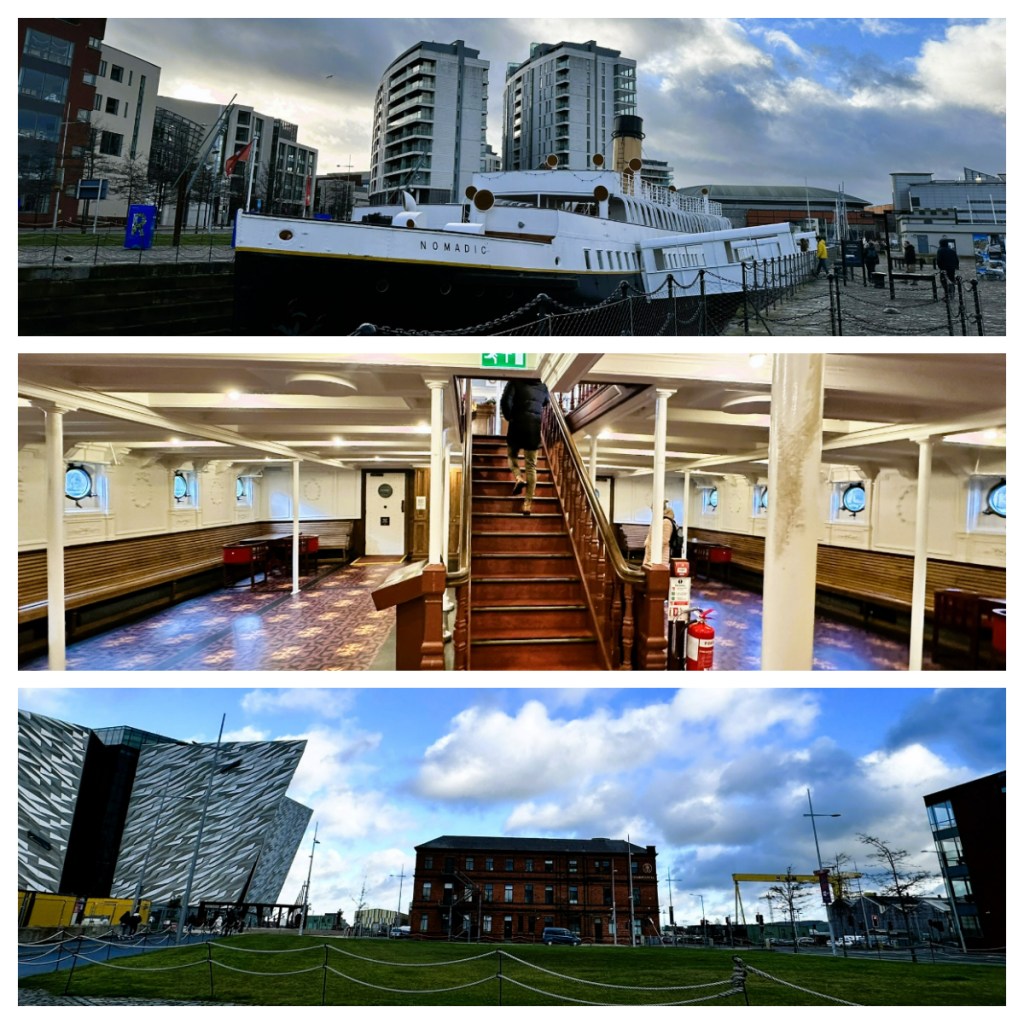
As part of the ticket for the Titanic Museum, you also can visit the SS Nomadic.  Launched the year before the Titanic in 1911, she was used as a tender, to transfer passengers and mail to and from the Titanic and her sister ship, the Olympic.  She is the only White Star Line ship left today and is moored in a dry dock just across from the museum. 

She is a beauty and if only the tender, I can only imagine how beautiful the Titanic herself was.

By the time I had finished in the museum the sun had come out, but it was still bitterly cold for the 30 minute walk back across the river to where I was staying and on the hunt for somewhere to have some lunch.  I had googled “where to eat in Belfast” and ended up at the Crown Liquor Saloon.  Described as a “gem of Victoriana”, the Crown Liquor Saloon was apparently one of the best gin palaces in the British Isles!  It dates back to 1826 and is apparently now owned by the National Trust who has ensured it has been sympathetically restored.

Unbeknown to me, I was only a couple of minutes walk from my hotel and in fact, I had passed it on my brief walk the evening before, but had rejected going inside as it looked dodgy 😂.  Now there is a prefect example for not judging a book by its cover!    Coincidentally,  my pick up for my afternoon tour was at the hotel I was now staying in.  Still definitely no regrets for moving accommodation (ask me again when I have to pay my credit card bill 🥴). 

My afternoon tour was one of the famous Black Cab political tours, another “must do” when in Belfast.  Not surprisingly, the tour is in a Black Cab and the driver, your guide, is a local who lived through “the Troubles” of the city. 

I will preface what I am about to right by saying that my guide, Billy, started off my telling me that he is Catholic, and therefore the stories he told me would be from his perspective, growing up during the worst of the city’s troubles.  It’s also important to note that the issues in Northern Ireland are incredibly complex and we real owned scratched the surface of the issues and my only regret was that I did not book a longer tour!!  That said, this is what I was told/learnt …

In 1921 the partition of Ireland lead to the creation of The Republic of Ireland and Northern Ireland.  Generally speaking the Protestants aligned themselves with Great Britain/UK, whilst the Catholics were staunchly Irish.  As Northern Ireland became part of the UK, the Irish population were discriminated against. Not being allowed to speak Irish, play Irish sport, practice their religion etc.  They could not have a proper education, nor were they allowed certain jobs.  1969 was not the beginning of the troubles in Northern Ireland (they date back to the partition), despite be earmarked as the start of the 30 year-long “Troubles”.

The Falls Road area of Belfast was (and I think still is) 100% catholic, though in the 60s/70s the city’s population was around 65% protestants who had all the positions of power.  It was here on Falls Road in August 1969, a Civil Rights march (in support of those in the Battle of Bogside in Derry) was attacked by Protestant loyalists, resulting in the death of 7 people (apparently the police fired bullets above the crowds, but in some cases they went in to buildings, killing innocent people inside). 100’s more were wounded many Catholic owned homes and businesses were destroyed. The police sided with the so called loyalists and failed to protect the Catholic people and areas.

The British Army were deployed to restore order and they ended up staying for 37 years (finally leaving in 2007, despite the official cease fire happening in 1994) and the riots led to the formation of the Provisional Irish Republican Army (the Irish led IRA), and the growth of loyalist paramilitaries e.g the Ulster Volunteer Force (UVF).  Accordingly to my according to Billy, there were 2-3 months in 1969 when it was not safe for Catholics to leave there homes and he missed a lot of school as a child in the early 70s as it was not safe to go.

Divis Tower is the only remaining building in what was a complex of 29 terraces and flats and it was used by the Police and British Army as a look out point and sniper nest. They took over the top few floors and left Catholic families living in the lower 17 floors to protect them.  However this also meant that they could only gain access by being dropped on the roof by helicopter.  Apparently they stayed there until 2005!

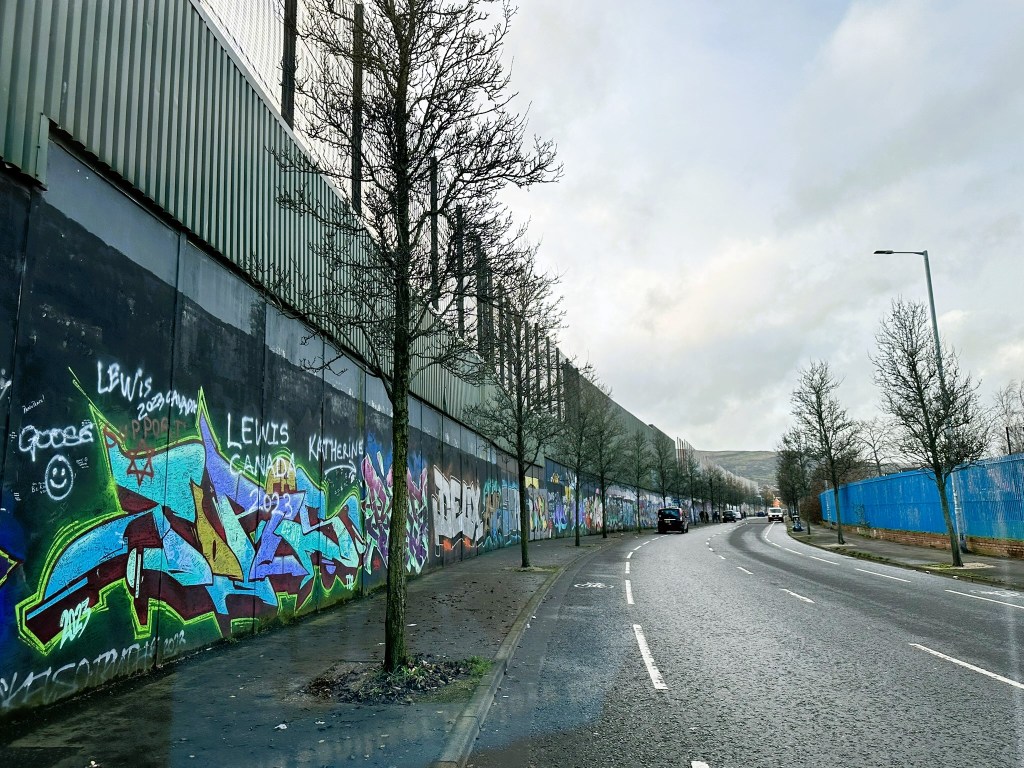
I must admit I was completely unaware that Belfast had walls, known as Peace Walls, separating parts of the city!!  The building of these started in 1969 to keep the two communities apart and today there are still around 30 walls left, around 13 miles of walls.  They were called Peace Walls as everyone understood that they were to keep the peace by minimising inter-community violence and therefore each side could feel safe in their homes.  Even today some of the gates in the walls are closed at night, others are just closed if there are increased tensions.

My guide was sure to point out that the walls have been built in Catholic gardens and very close to Catholic houses (in some cases as little as a metre from the house) – they were never built in protestant gardens!

These days, things are much calmer and are far less black and white (or Irish and British) as they once were. Even inter-community marriages are not uncommon today.  Despite this, although there have been discussions about taking the walls down, the majority of the communities still feel more comfortable keeping them in place and today they are covered in murals, old and new, some of which are now famous landmarks of the city.

We spent some time looking at the murals on both sides of the walls.  They ranged from more historical murals showing the victims of the 1981 hunger strikes to much modern murals showing support for the Palestine/Israel conflict – with the Catholics supporting Palestine (as they feel they are being persecuted in the same way that they were) and the Protestants supporting Israel.  On some of the more abstract murals, more like graffiti, visitors are encouraged to sign their names.

Today, in more peaceful times, the Sinn Fein politic party continues the fight in the Houses of Parliament on both sides of the border for a unified Ireland and in Belfast there are neutral zones where people are not allowed to fly flags of any kind or support any specific side or party.  That said, according to Billy, they are still at least two generations away from real peace, as those who lived through the Troubles still remind their children to “remember who you are, where you come from and what you have lost”.

I found this tour particularly interesting as I grew up only hearing the British side of the story, and living in London in the 1990’s, I experienced the fear of IRA bombs in the city (at least 3 went off in hearing distance).  I found it important to finally hear the other side of the story and be reminded that all stories have two sides.

During my wandering, I had discovered that my hotel was right next to the Grand Opera House and that there was a traditional UK Christmas pantomime on – I felt to round out my cultural experience for the day I should attend, and I managed to nab one of the last tickets. The Opera house is a beautiful example of Frank Matcham architecture opened in 1895 and today it was showing Snow White and the Seven Dwarfs and as with all pantos, although they may be touted for children there is plenty of double meanings for the adults 😉and it was great fun.

And to top it off, it turned out that I was sitting right by famous Northern Irish actress and singer Rachel Tucker – star of the West End.  All in all, a perfect way to finish up my few days in Northern Ireland.  

And to the North – Northern Ireland and the Causeway Cause

December 2023

4 days in and still waking at 4am 🤦🏻‍♀️but I won’t let that stop me, perhaps just slow me down a little lol.

Boxing Day, or St Stephens Day as they call it in Ireland, was a beautiful morning to be heading back to the airport to pick up my rental car and head north.  As always, I wanted to make sure I had plenty of time so went to get the 8.15 bus – which never came 🤦🏻‍♀️so it was a good job I was not in a hurry.  I did just have to stand on the side of the road in 4c for an extra 40 minutes waiting for the next one! 

Actually, its not entirely true that the bus did not turn up.  There was an AirCoach parked up near the bus stop but no driver – perhaps someone had a big night the night before! 

When the next bus came it said it was full – still no explanation as to what happened to the previous bus!  Thankfully I managed to get one of the last seats and finally made it to the airport.  But the fun was not yet over for the day.  I joined a long slow queue for my rental car pick up, to be told when I finally made the front of that queue that I needed to go somewhere else and to go wait outside for the shuttle bus 🤦🏻‍♀️!   And guess what – then join another queue!!!

Finally, I was in my car, and after a short amount of time getting use to it (remembering to change gears and to stop turning on the windscreen wipers instead of the indicators lol), I was glad to get out of the city, passing through some small towns and beautiful farmlands.  Sadly, no photos as I am now driving. 

I had not expected a border crossing when going from the Republic of Ireland to Northern Ireland, but I expected at least a sign!!  But there was literally nothing, just a sudden and subtle change in speed signs from kilometres per hour to miles per hour!   It was all rather odd, and it was clear that not everyone got the subtle change as they continued driving at 60kph and not 60mph – that is not such a subtle difference lol. 

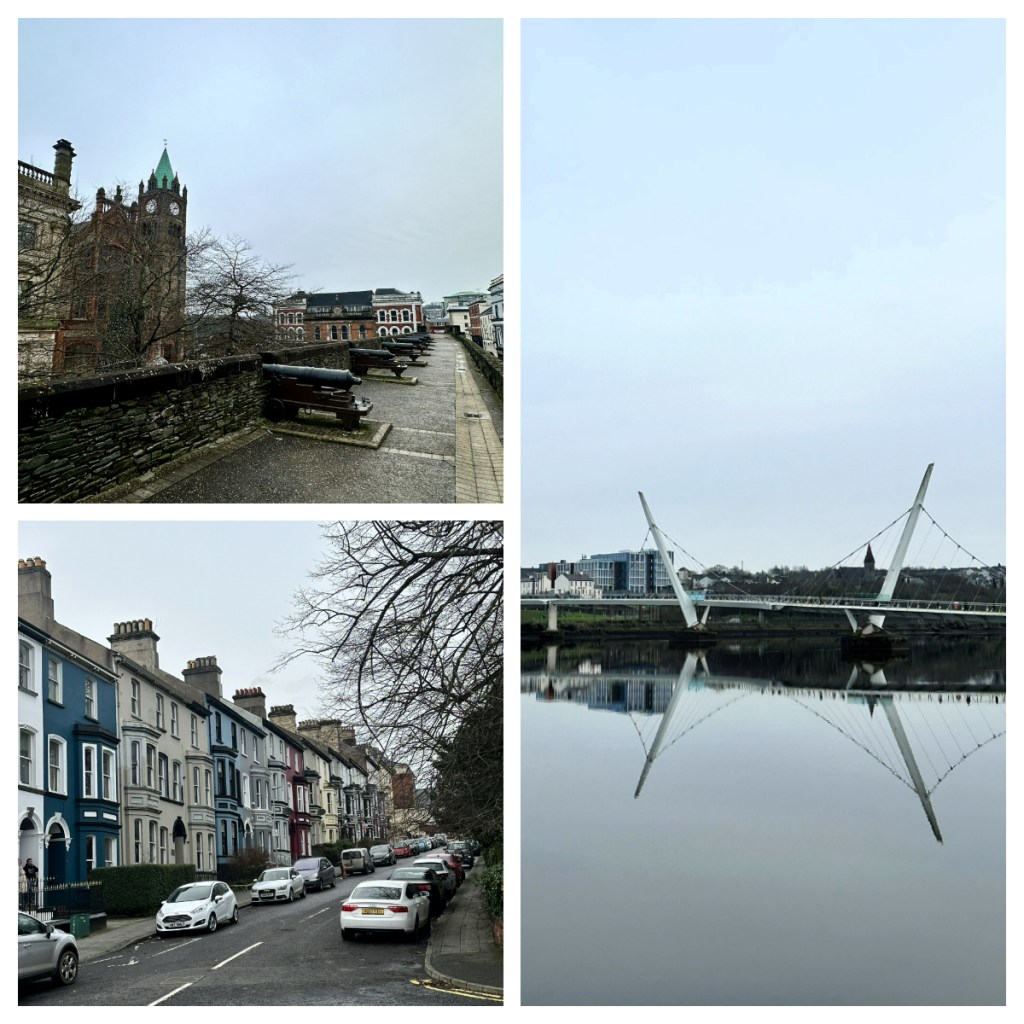
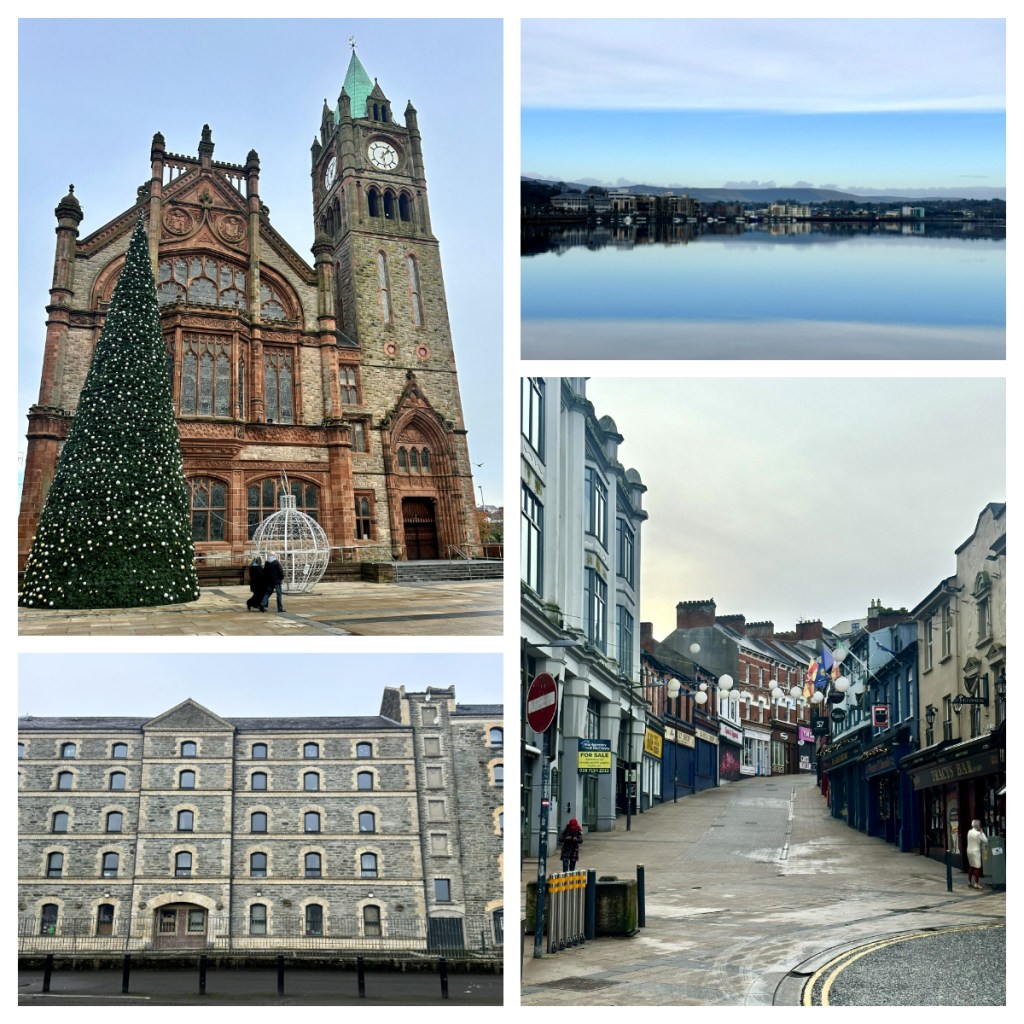
It was around 3.5 hours drive to my first stop of the day – Londonderry, or Derry as it seems is the preferred name.  It is the only remaining completely walled city in Ireland sitting on the banks of the river Foyle.  The walls were built in the early 1600’s as defenses and they were never breached!  Still today it provides a walkway around the entire inner city.

As with the rest of Northern Ireland, the history of Derry is complex and it is considered one of the oldest continuously inhabited places in Ireland, dating back thousands of years.  From the Tudor conquests in the early 1600’s to the Irish Rebellion later that century, the city became an important port for Irish emigrants leaving for the new world in the 18th and 19th centuries.

The Irish War of Independence between the Irish republican Army (IRA) and the British Forces ended with the partition of Northern Ireland in 1921, before and after which, sectarian violence raged.  I will go in to this a little more in when I write about my time in Belfast where I took one of the political tours to learn more about the partition and later the Troubles.   The result of the Partition of Ireland was that Derry suddenly became a border city.

The city and its port (one of the key reasons Britian wanted to maintain it during the partition) played an important role for the Allied navies as a base and jumping off point for shipping convoys between Europe and North America. 

Now that is probably enough of a history – or perhaps too much?  Unfortunately, given it was a holiday, I could not get a walking tour, so I had downloaded an online one.  It was ok but an in person one would have been better.

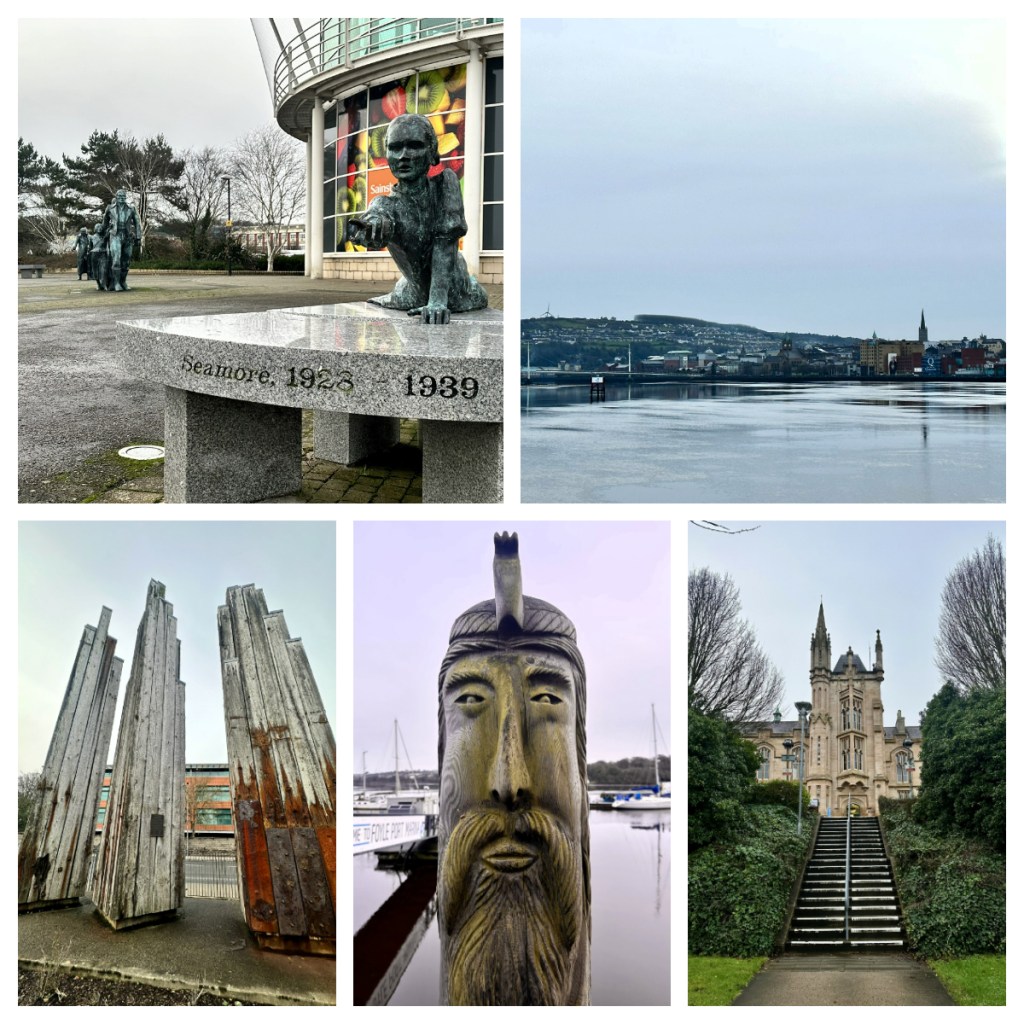
The walk took me passed the Guildhall and along the river Foyle, passed the Peace Bridge which opened in 2011.  The guide talked about the importance of textile industry and shipping to the city (see the brief history above) with stops along the way to see monuments to the shipping industry, Manannan Mac Lyr, the Great Northern Sea God in Celtic mythology and those who left from here in search of a better life. 

I continued up the hill, passed the some of the buildings of Ulster University and back down to the city walls and back to my car.  As I drove out of the city, I passed the famous “Free Derry corner” in the Bogside neighbourhood.   Between 1969 and 1972, this was a self-declared autonomous nationalist area (which they barricaded off from the security forces) and was the site of the Battle of Bogside in 1969.  It was also the site of the 1972 riot when 14 unarmed civilians were killed by British paratroopers – the event known as Bloody Sunday. 

By this time, it was almost 3pm and the darkness comes early here, particularly on these overcast days, so I hurried as quickly as the narrow country roads would allow to my next stop – the Dark Hedges.  Described as an avenue of beech trees, it was made famous when it appeared in Game of Thrones.  Firstly, I will say, it looks nothing like the images I had seen online, and I did hear some comments on the radio that they think it will disappear within the next 15 years if nothing is done to preserve it!  Not sure I would have said it was worth the detour, but my FOMO (fear of missing out) would have got the best of me if I had not gone and seen it for myself lol. 

It was really getting dark now as my final 30 minutes driving for the day took me along more narrow country lanes with no streetlights, definitely not my favourite driving conditions but I guess I had to be grateful that it wasn’t raining! 

After a long, cold day (I don’t think it has got above 5 degrees all day) I had hoped to get something warm to eat in the local pub in the village of Articlave where I was staying. Unfortunately, even though they were open, they were not serving food so I headed straight to my AirBnB and enjoyed a bougee cold dinner of mozzarella and prosciutto which I had bought in Dublin.  It was a comfortable house and nice room, and I had a great night’s sleep.

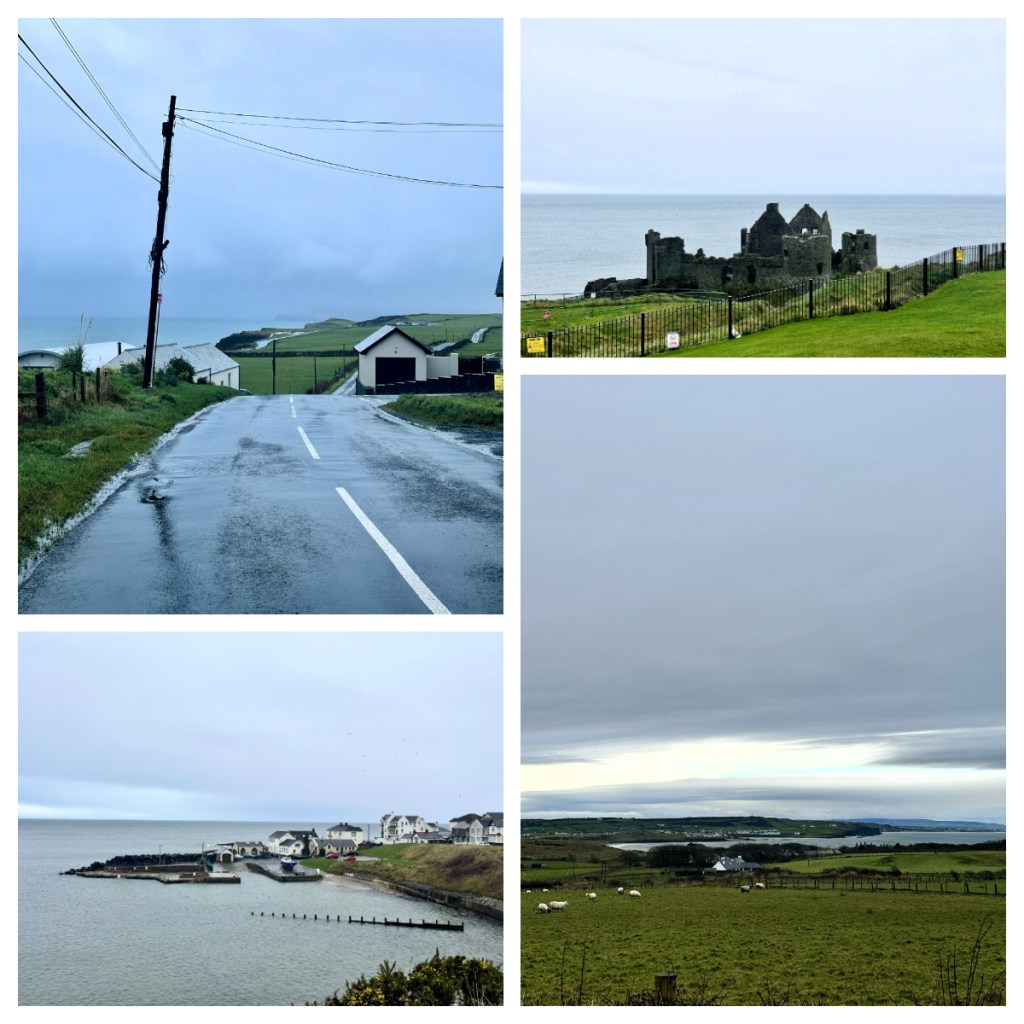
Over night it had rained and rained (I believe from Storm Gerrit who was ravaging the UK) and after fighting the household cats for my breakfast, I was back on the road, splashing through surface flooding to drive the Causeway Coastal Route – the coastal road between Derry and Belfast.

My first stop was at Dunluce Castle, a 16th/17th century castle built on the site of a 13th century fort.  The castle has had a colourful passed, being the home of Scottish chieftains and Irish ‘royalty’ and has been subject to a number of sieges, Sadly, it was left to ruin in the late 1600s when the Earl of Antrim moved on.  Unfortunately, the castle was closed so I could not explore, but you could still get a view of it from the car park.  

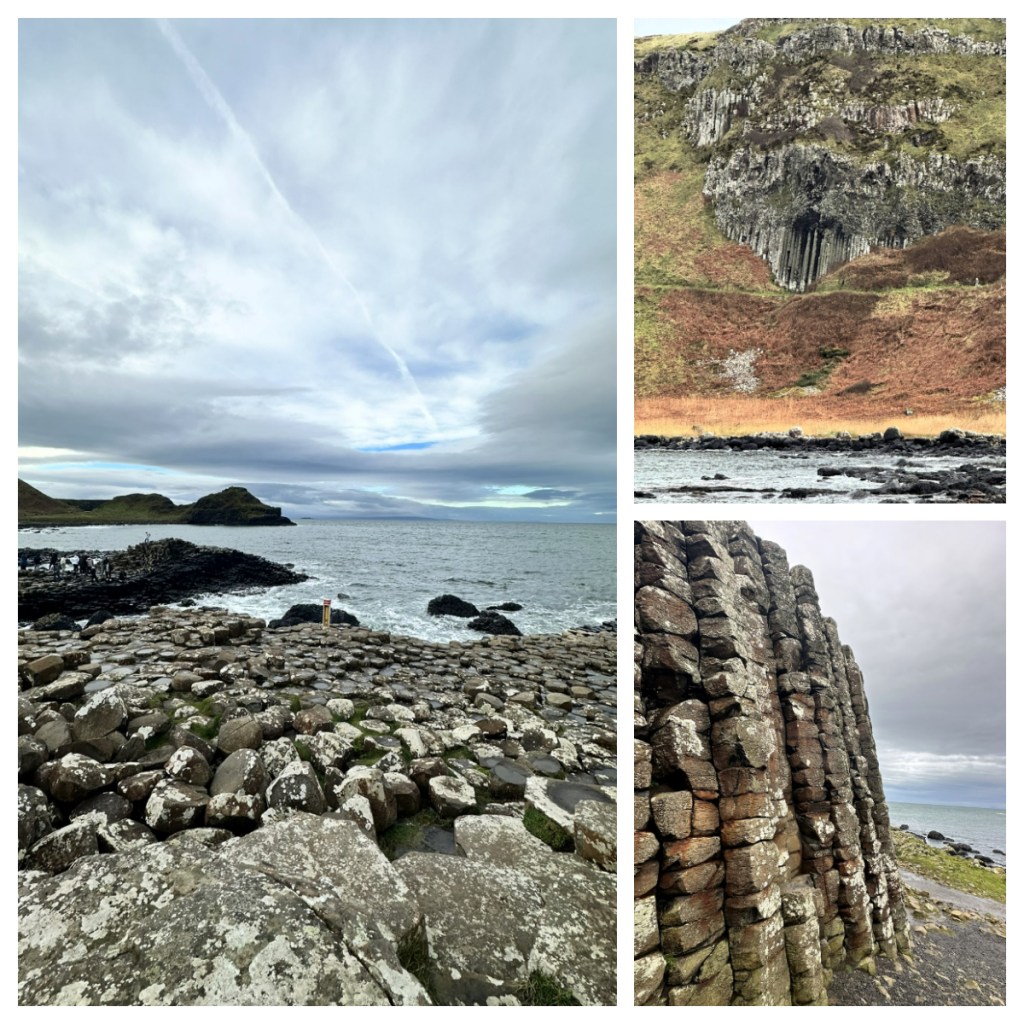
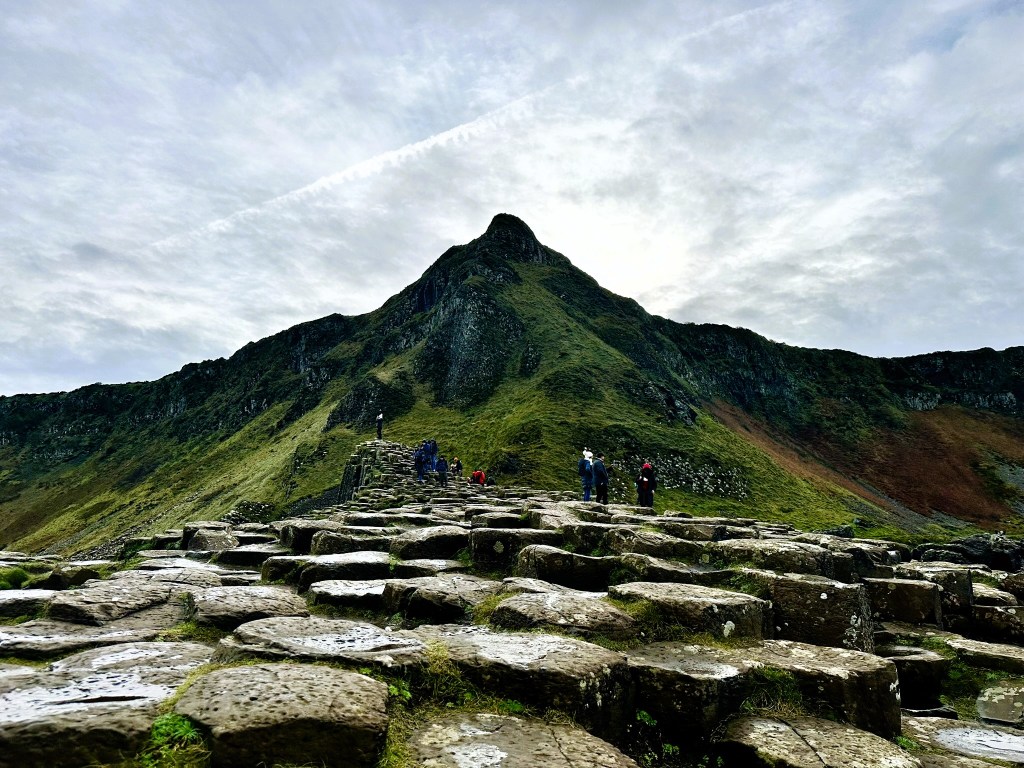
From here I took a quick detour through the cute seaside town of Portballintrae, before reaching one of the main sites for the day, the Giants Causeway, a UNESCO World Heritage site (Natural Landscape) which came to fame as its portrayal in Game of Thrones (I have never watched the show but wonder if I should give the number of filming sites I have been to!)

The guided tour that is part of your entrance fee starts in the information centre, and from here we walked down the road toward the causeway as our guide regaled us with information about the geology and the myth of the area. 

Geologically speaking, the 40,000 black basalt columns, are thought to be around 60 million years old, and the result of tectonic plate movements and successive lava flows.  There use to be over 60,000 columns but they were quarried in the early days and can be seen in buildings around the area, such as Dunluce Castle.  The site was declared a UNESCO World Heritage Site in 1986 (the only one in Northern Ireland) and it is one of Northern Ireland’s most popular tourist sites.  Thankfully be the off season it was not too busy (they sometimes get 7,000 people visit in a day). 

Now, there is the geological stories of Giant’s Causeway, there is also the legend of the infamous Finn MacCool.  The Irish take their mythology very seriously and much of it dates back to pre-Christian Ireland one of these is the mythical giant Finn. 

When Finn’s beloved Ireland was threatened by the Scottish giant Benandonner, he tore up the Antrim landscape and threw its pieces into the sea, resulting in a pathway across for Scotland.  When, Finn recognised just how strong Benandonner was, he made a hasty retreat back to Ireland where he disguised himself as a baby.  When Benandonner arrived at Finn’s house, he saw the huge baby and was terrified to think how big Finn must be if this was his baby – it was now his turn to flee, destroying as much of the Giant’s Causeway as he could on his way back to Scotland.   And of course, that is how it got its name.

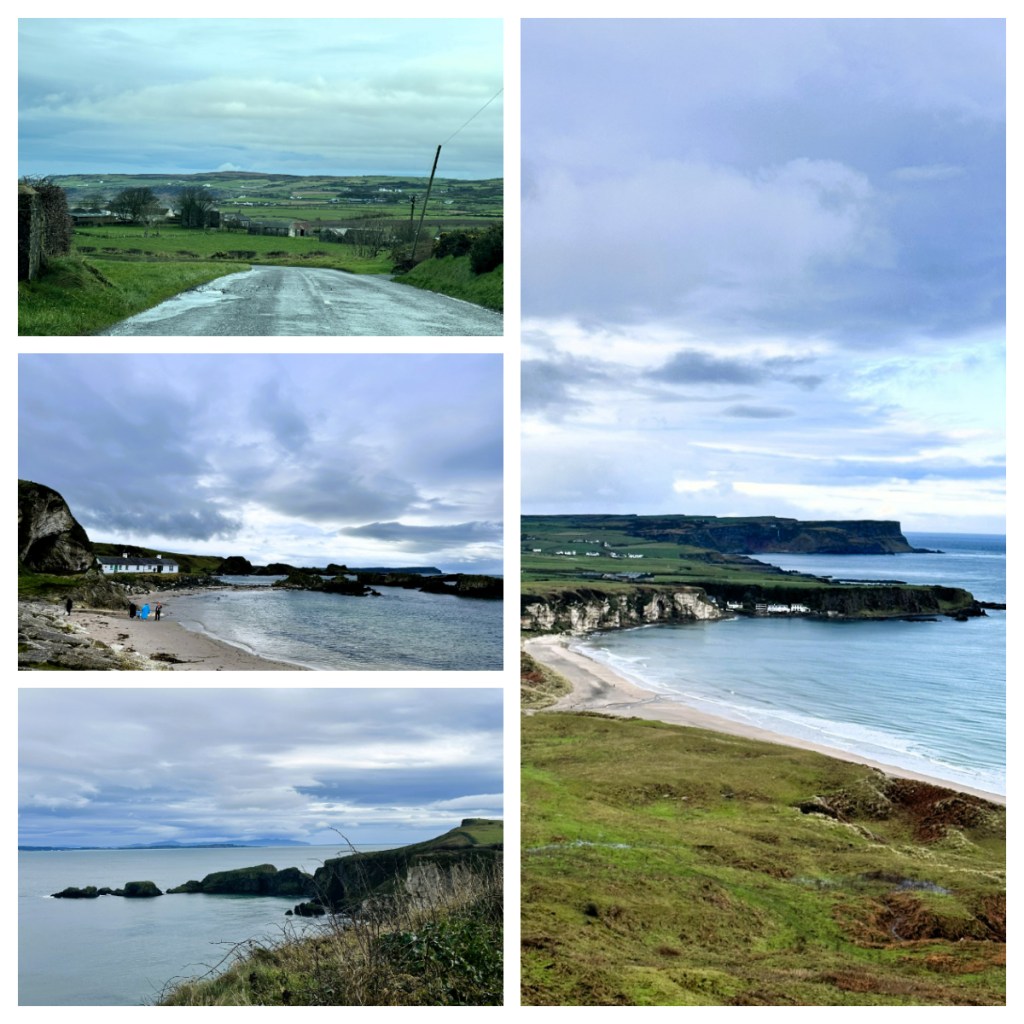
From the Giant’s Causeway, I continued along the coast, taking a another short detour in to the picturesque town of Ballintoy Harbour, apparently another Game of Thrones filming location and stopping along the way at viewpoints (the beauty of doing this independently rather than with one of the many tours is that I can stop wherever I want!) until I reached the next stop on the route – Carrick-a-Rede.

Carrick-a-Rede is a rope bridge that links the mainland to the tiny island of Carrickarede.   The rope bridge was first built in 1755 by Salmon fishermen who used the island as a base for the Salmon fishing season.  Of course, the build has been rebuilt many times over the years and today the 2008 built bridge, meets today’s health and safety requirements.   Sadly, due to the decline of the local salmon population (due mainly due to pollution and overfishing), 2002 saw the end of the salmon fishing industry in the area.

It was around a kilometre walk from the car park to the rope bridge, which is only around 20m long, but sits around 30ms above the exposed coastline.  As it was the low season, it was fairly quiet, and I can only image how long you might have to wait to cross in the summer.   As it was, it still took some time to get across, waiting for the group in front of me to take their photos/videos and then for the assistant to help someone across who had frozen just a few steps out on the bridge! 🥴

After the torrential rain of the night before, it had turned in to a beautiful day for my drive – a moody sky but no rain when I was doing my outdoor activities.  I was very fortunate!

I took another detour down a very narrow windy road to follow a sign to Kinbane Castle.  Built in 1547, what was a two story castle has been left for ruins after numerous sieges by the English and the raging weather.  When I reached the car park and saw the steep narrow pathway down the side of the cliff to the castle – I decided to enjoy the stunning view from the top 🥴🥴.

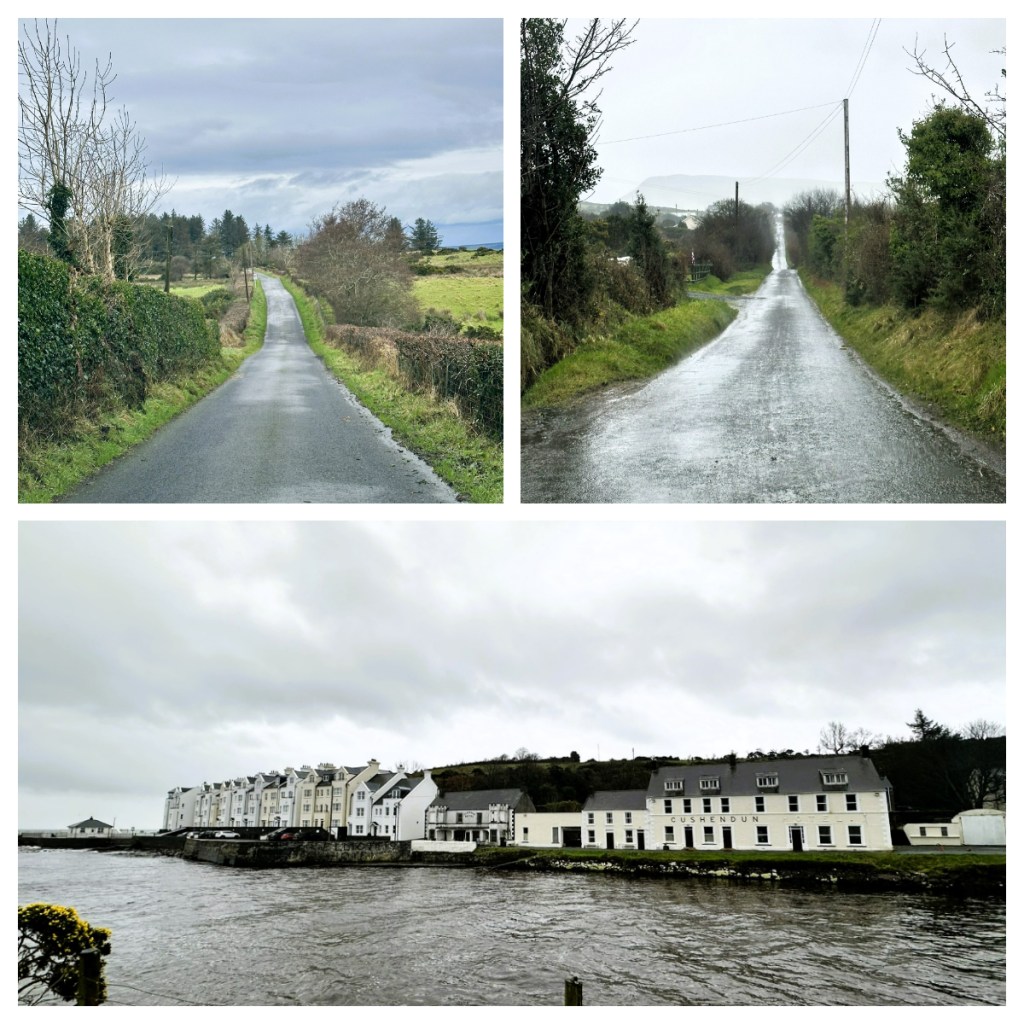
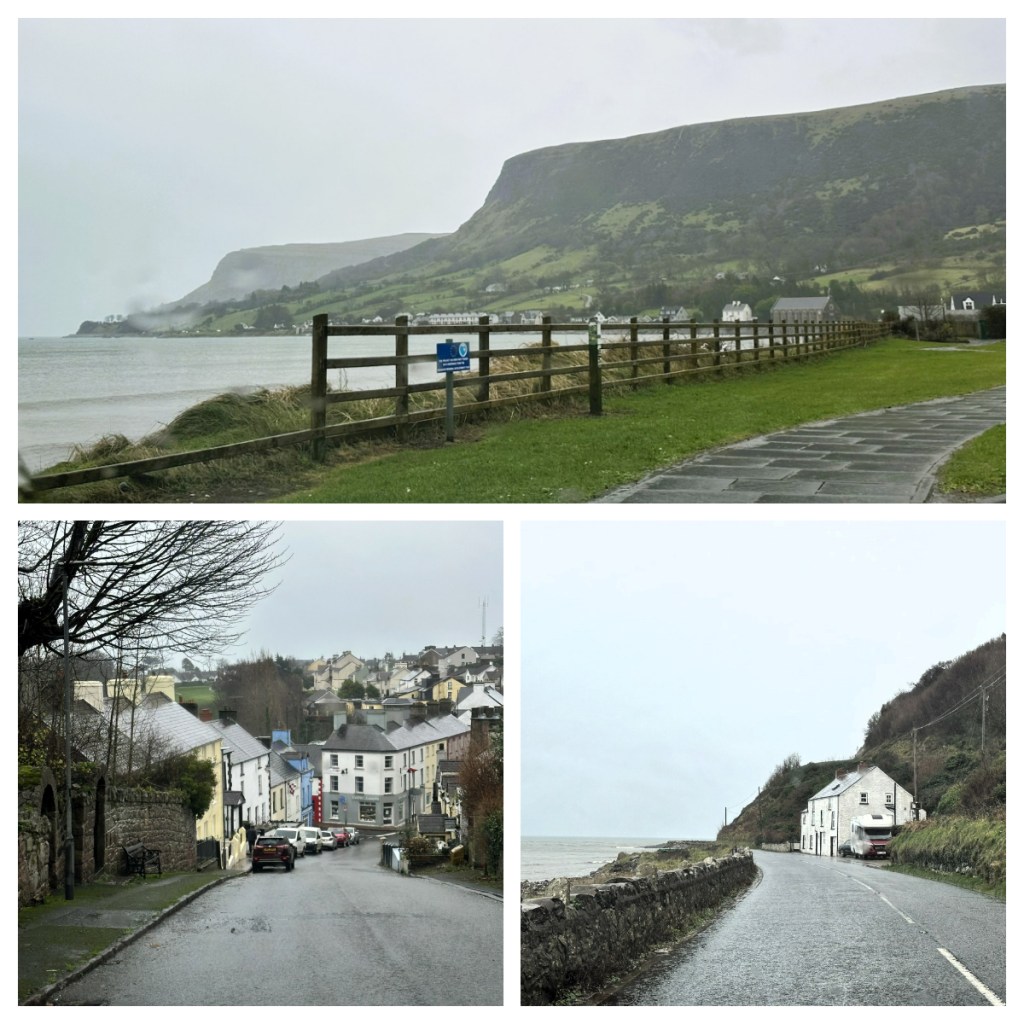
I had hoped to have a break at a café in the small town of Cushenden but unfortunately, as with many things, it was closed so after a quick photo stop, I continued.  The weather had started to deteriorate by this point, and I continued to question some life choices as some of the roads google maps took me on where barely roads in my opinion 🥴.  The dodgy road took me back to the coast and it continued right along the sea front.  The narrow road was covered in debris from the storm overnight and still had some surface flooding.  In fact, my final planned stop was literally washed out as the road was shut and the detour was another 20 minutes, so I decided to call it a day and head for the Belfast (still on some dodgy roads until I finally hit the motorway with some relief). 

After a long but successful day, I made my way to the Airbnb I had booked in Belfast.  Unfortunately, I was not keen on the area or the set up so I decided to book myself a hotel … the cost was worth a comfortable couple of nights, so I treated myself.  I was exhausted after another beautiful, busy day so was happy to be having somewhere comfortable to rest and relax to recharge.

An Irish Christmas

December 2023

It’s been a number of years since I have been away for Xmas – obviously it is summer in New Zealand which means longer holidays are possible with all the public holidays, so this year I thought I would take advantage of that and head north, way north … in hind sight, probably not the best idea going from summer to winter and travelling at the busiest time of the year … but, someone’s got to do it!

I caught Singapore Airlines straight out of Christchurch, no one in line at check in, no one in line for customs, no one in line for immigration – and that is why I would always try and travel to/from Christchurch if I can.  It is 10 hours to Singapore, then a 3 hour layover, followed by the long 14-15 hour leg from Singapore to London. I managed to get some sleep but of course never enough, or at the right time of the ‘day’. 

I had less than an hour to get to my gate for my final flight of the day in Heathrow, but with a delay of over an hour, I ended up having much longer.  I filled the extra time eating – probably 3 breakfasts in all, enjoying my favourite UK foods as I spotted them – including a Pret a Manger Christmas sandwich and being reminded that flat whites (coffee) in England do not equal flat whites in NZ!!  Almost 1 hour 20 late my final flight took off, a 1 hour hop to Dublin, the capital of the Republic of Ireland. 

We had a fairly long walk from the plane to immigration and baggage claim but that meant my bag was already out – all so quick and efficient.  I headed straight out the doors into some fresh air (finally) and then on to the Aircoach to the city centre.   Unfortunately, my hostel room was not ready, so I dropped my bag and headed out. Now the struggle really started – to stay away!

I wandered the streets, stopping to enjoy some of the many buskers along the famous Grafton Street,  including one I had often seen videos of on social media – I didn’t even know she was from Dublin so it was a nice surprise to see her live.  (Her name is Allie Sherlock and she has over 2.3M followers on Instagram along – check her our.)

I stopped in pub for some food and there was a musician playing, he started playing Fairytale of New York by the Pogues.  It was probably very corny and touristy but to me, it could not have been more perfect.   

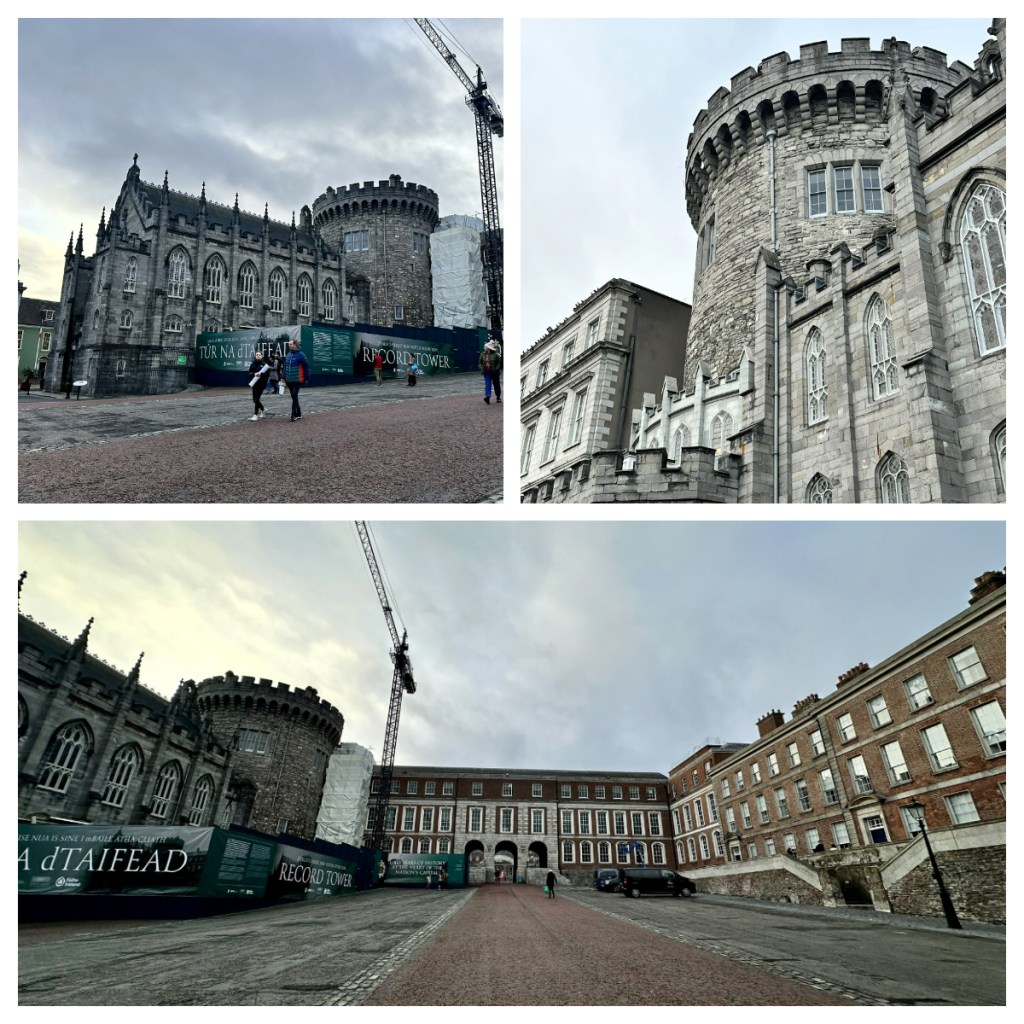
With still more time to kill, I joined a walking tour.  If things had gone to plan, I would have done a tour at 11am and be napping by 2pm, but the flight delay meant that was not possible so here I was 🥴.  The first stop of the tour was Dublin Castle where the guide, Kieran, gave us brief rundown of Irish history 101.  I should probably mention that he started off by telling us the Irish saying “you should never let the truth get in the way of a good story” – so some of what he told us may not be based on fact lol!

First stop Dublin castle where we learnt about the “arrival of strangers” as the arrival of the Vikings were known.  Historically, the Vikings were marauders, coming in to pillage Irish settlements and then leave, until around 800AD when a group of Vikings created the earliest and longest lasting Viking kingdom in Ireland.  They named it Dyflin, which then became Dubh Linn, the Irish for Black pool, a black water pond, part of the River Poodle, near their camp. 

Dublin Castle itself, was initial built on the same area as the Viking settlement in 1171 just after the Anglo Norman invasion began 800 years of English occupation, with the castle being the seat of English power.

In its life, the castle has been a military fortress, a prison, a treasury and law courts.  Following Ireland’s independence in 1922 Dublin Castle handed over to the new Irish government and it continues to be a key government complex.   Most of the original castle was destroyed in a fire in the 1600’s and has been rebuilt steady over the centuries. 

Kieran told us an interesting story about the theft of the Irish Crown Jewels that had been kept in safe, in a strong room.  They were discovered missing in July 1907.  They had just vanished without a trace.  Despite an extensive investigation, including the use of physics and Arthur Conan Doyle (because he had written the Sherlock Holmes stories), and a hefty reward being offered, to this day they have not been found.  Another fun fact, Bram Stoker (of Dracula fame) used to work in the castle when it was part of the Treasury. 

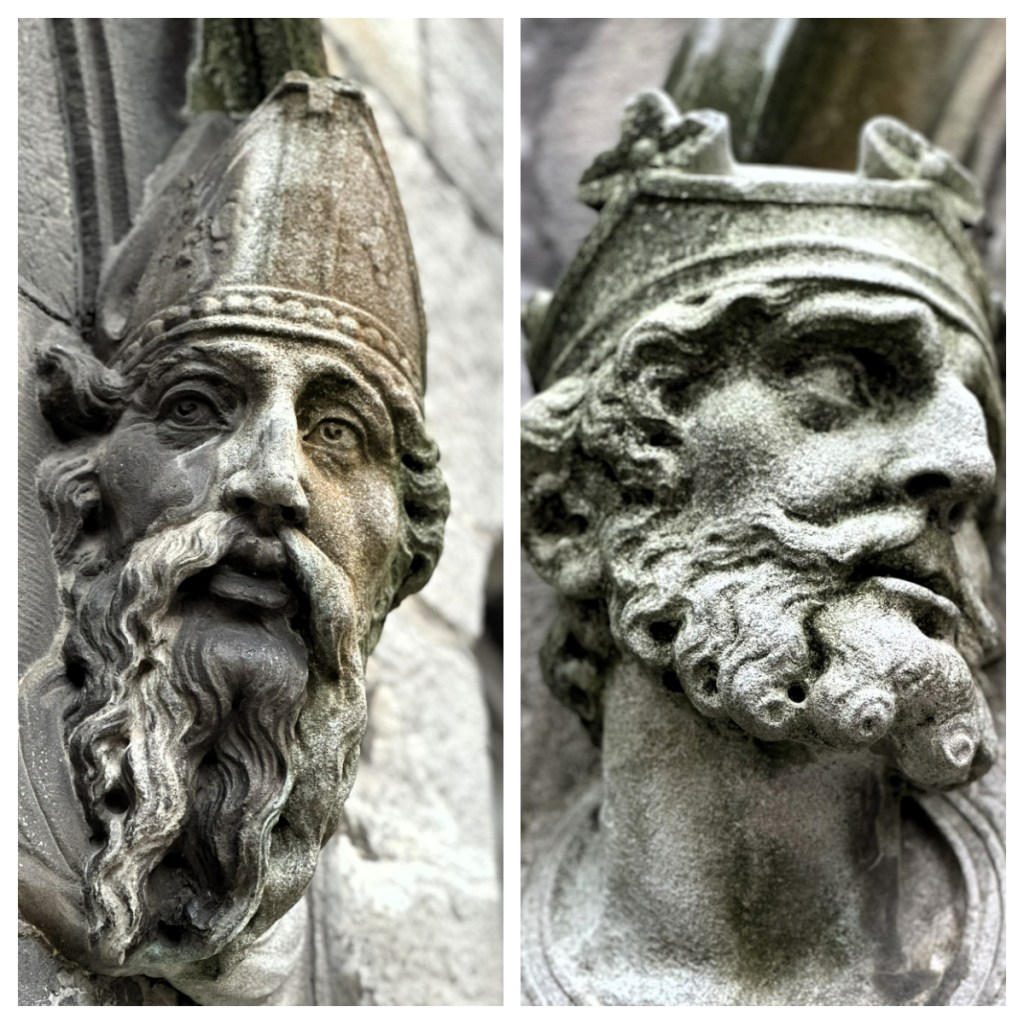
Speaking of fun facts, did you know St Patrick was not Irish???  He was actually Welsh! He was kidnapped by Irish pirates as a teenager and spent 6 years in Ireland as a slave.  He returned home for some time where he found God,  before returning to Ireland as a missionary to convert the then Irish pagans to Christianity.  To top it all off, Americans invented St Patrick’s day and it was first celebrated in the USA in 1932, before spreading back across the ocean to Ireland. 

We talked about the Gaelic language.  Ireland became official a bilingual country in 1922.  Prior to this, the ruling English had done a pretty good job of eradicating the language.  At one time it was illegal to speak it, resulting in a lot of local Gaelic speakers ending up in jail with no idea why (as every time they asked what was going on, they broke the law by speaking Gaelic).  Today about 40% of the population speak with competency, and it is mandatory for government workers including the Garda (Police). 

We passed the beautiful Christ Church, one of three cathedrals in Dublin.  This protestant cathedral was initial build in 1028, but most of what we see today is from 1875.  One of it’s biggest claims to fame is that Handel’s Messiah was premiered here in 1742.  After the concert they were cleaning the pipe organ and found the dead bodies of a cat and a rat – the original Tom and Jerry of Dublin.   Apparently, their bodies are preserved and on display inside the church, along with the heard of Laurence O’Toole, the patron saint of Dublin, who died in 1180.

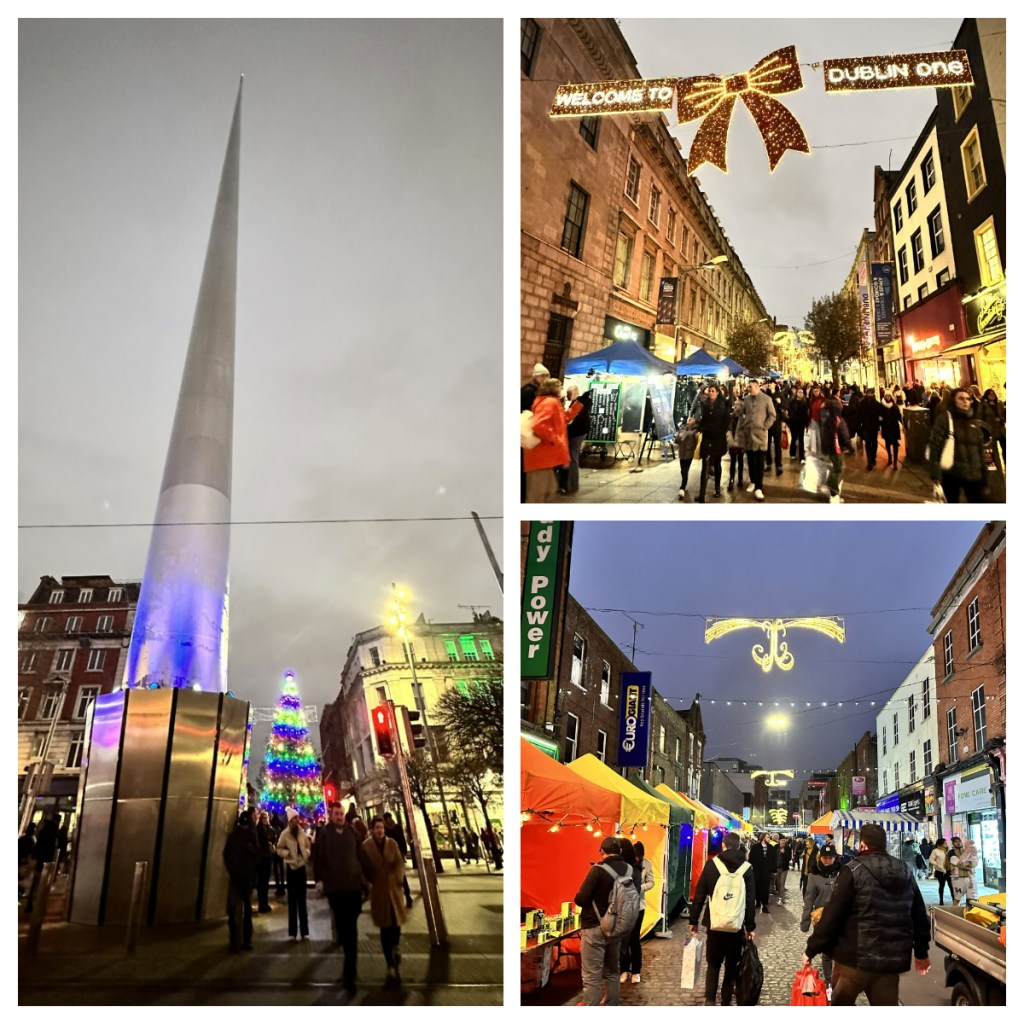
We strolled through Temple Bar, enjoying the Christmas lights before crossing over to the banks of the River Liffey, the river that runs through the city.  There are a number of pedestrian and road bridges across the river.  The most famous foot bridge is the Liffey Bridge, better known as Ha’penny Bridge due to the toll that used to be paid.  It was actually built by the same company that built the Titanic and it almost collapses a couple of times, before they replaced the wooden planks. 

The tour ended at O’Connell Bridge, this time a road bridge and the only bridge in road that is as wide as it is long.   I was grateful that it was also right near my accommodation so I could finally check in to my room around 5.30.  My room was ok, a 4 bed female dorm, with a little ensuite bathroom which had what must be the smallest shower room I have ever seen 🥴.

One thing that will take a day or two to get used too is how early it gets dark- when it got dark I was thinking it must be really late, but it was not even 5pm!!  Great for enjoying the Xmas lights though.

Not surprisingly, I was up at 4am – jet lag and time zone differences suck!  I managed to sleep a little longer before I headed out just before 8am, and again it was still surprisingly dark.  I headed to a nearby supermarket to  stock up on food for the next couple of days when most things will be closed and I will be on the road.

Shopping done, I was out for another walk before meeting my friend Suzanne for a lovely afternoon catching up.  Enjoying good food and drinks in local pubs – some very old and one that had the smell of mulled wine filling the air.

We then went and joined the crowds at the “The Busk”.   Organised by Irish singer and actor Glen Hansard, the Busk is a Christmas Eve traditional and is a fundraiser for a homeless charity.  In previous years, the likes of Bono (from U2) have turned up, but this year, my bladder got the better of me before too long, so we escaped the crowds and headed to another pub for a last one for the road. There was a lovely atmosphere around the city and in the pubs and in each one we got chatting some of the other punters but I couldn’t believe how early everything closed.  By 7.30 the pubs were closing, I couldn’t even get a hot chocolate on my way back to my hostel as all the cafes were already closed.

Christmas Day dawned and everything was quiet in Dublin except for Church bells ring out around across the city.  Suzanne came and picked me up and we did a little tour through some of the beautiful seaside suburbs of Monkstown, Dun Laogjaire, Sandy Cove and Dalky.  We managed to find a park amongst the crowds at Sandy Cove – a famous spot for a Christmas Day swim.    There was so many people enjoying a dip in sea – not me though, I don’t swim in the sea in New Zealand so I definitely not going to do it in Ireland lol. 

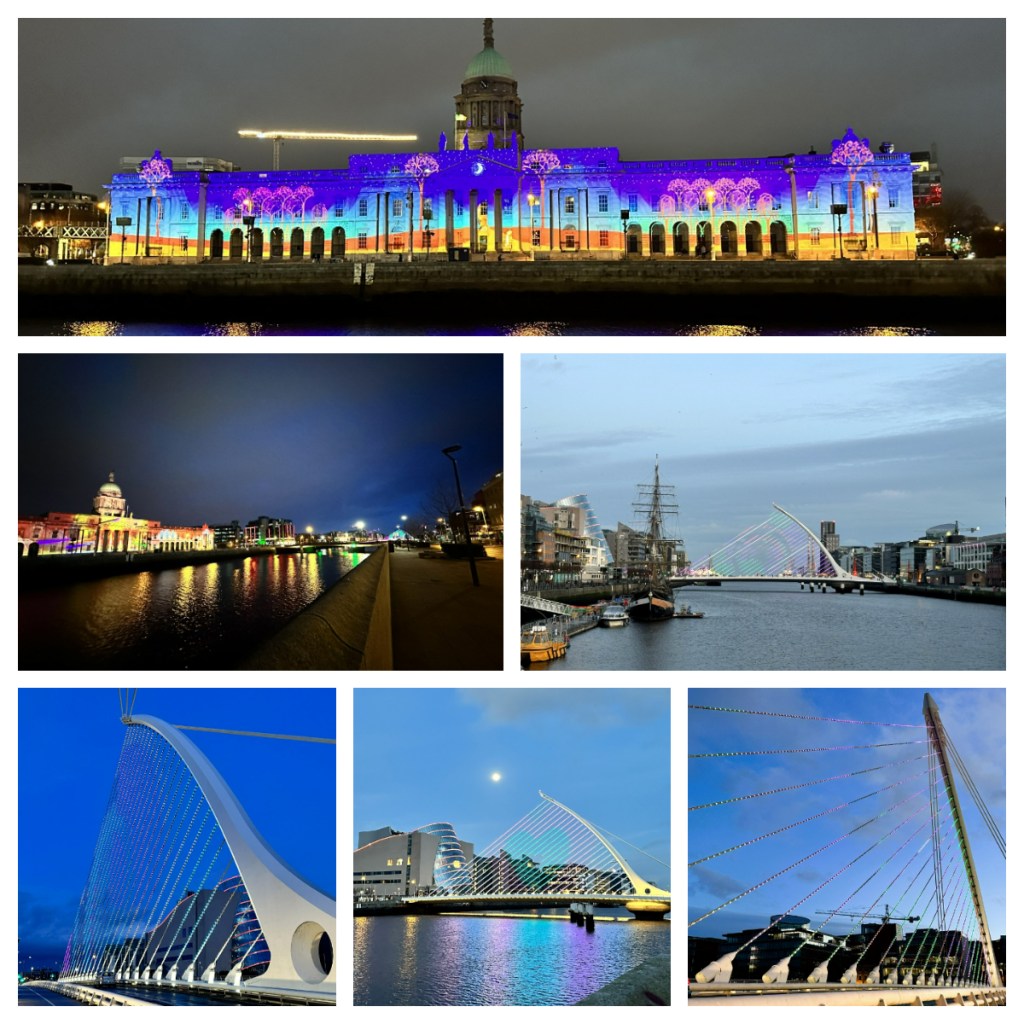
After a wonderful full Irish breakfast (ok, it was lunch time) and mimosas at Suzanne’s, I needed another walk lol.  This time I walked down along the river to enjoy the Christmas lights projected on to the Custom House and those on Samuel Beckett Bridge.  It was a great way to end my first few days in Dublin. 

A wildlife weekend

Otago Peninsula, May 2023

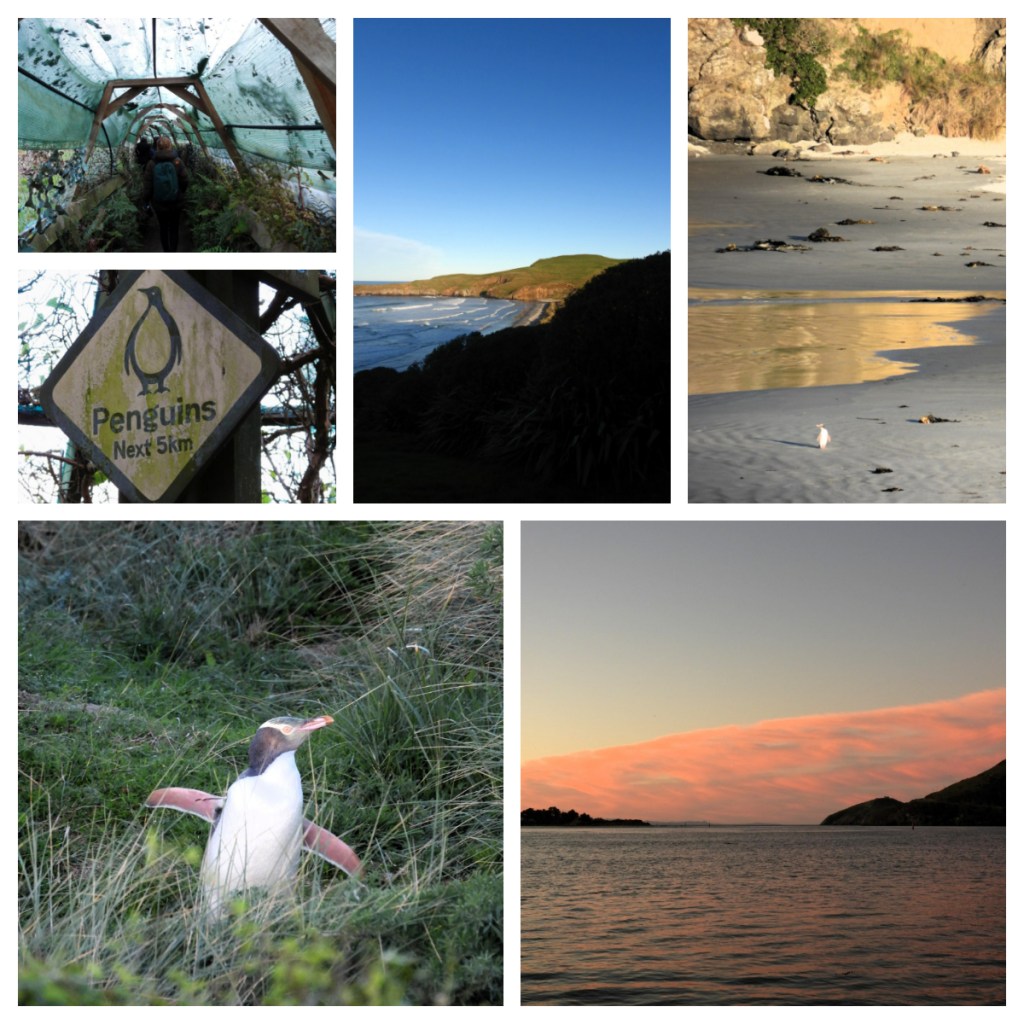
I have been somewhat absent over the last few months … lots of excuses but let’s not go there lol.   So, this is bit of a throw back to May 2023 when I joined my friend Harriet on a wonderful weekend exploring the Otago Peninsula.  I am not sure many people realise what a special place this area is, and most of the amazing wildlife experiences are just a short drive from the city of Dunedin.  

Given this was a wildlife weekend, we had decided to stay in the small seaside town of Brighton, just a 10-15 drive from the city.  We had a beautiful Airbnb with a view of the river, just a few minutes’ walk from the beach.  With this beauty and isolation comes no wifi, no TV and even no phone reception in the house!  😱.  No really stress though, we lit the fire and cracked open a bottle of wine.

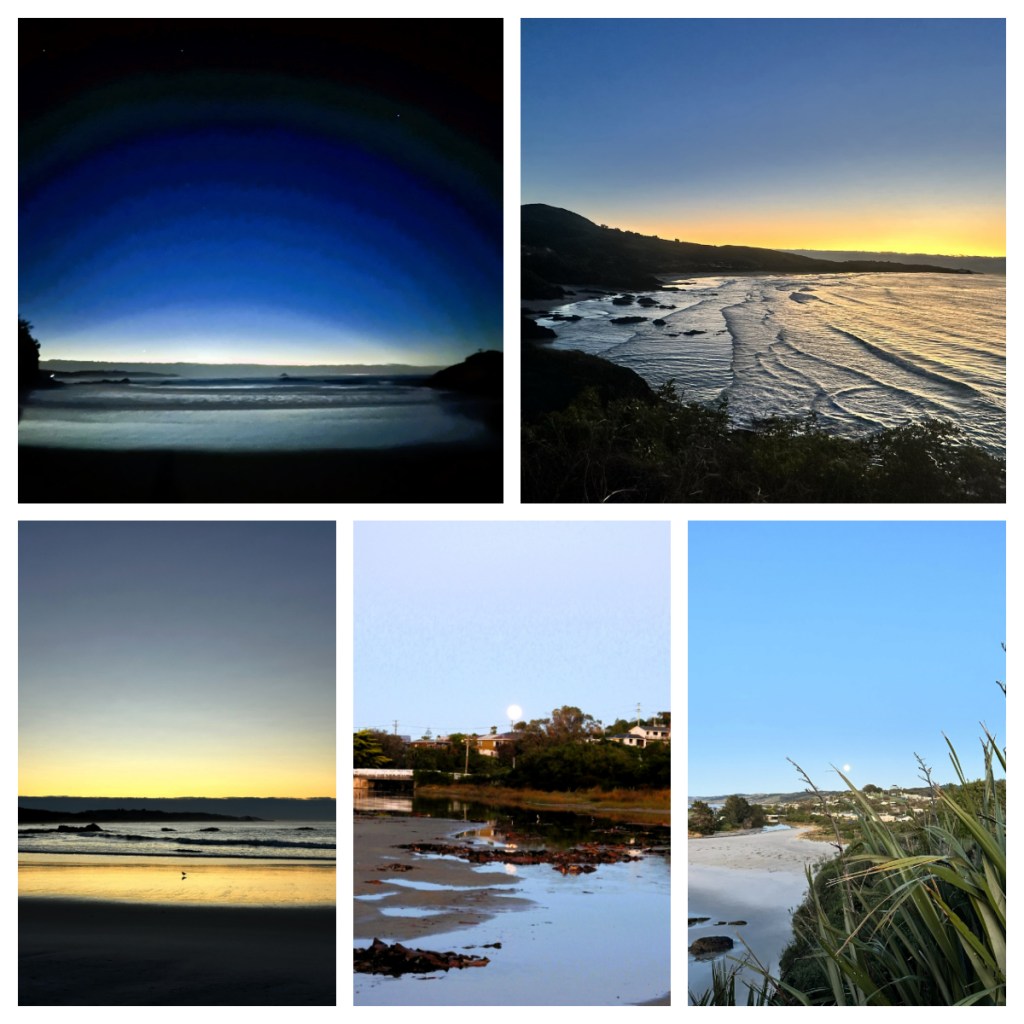
Harriet and I are both early risers, so we were up early on our first morning and headed out on a lovely walk down to see the sunrise.  Unfortunately, there was cloud along the horizon so no real sunrise (and it did not help that there was another peninsular in the way to see it even if it was clear).  To make up for that, there was also a huge full moon still on its down – it was a lovely way to start the day. 

On the way back to the house, we picked up a coffee and breakfast from the cute Brighton Beach Cafe before returning home to enjoy on our veranda watching the bellbirds and tui in the garden.

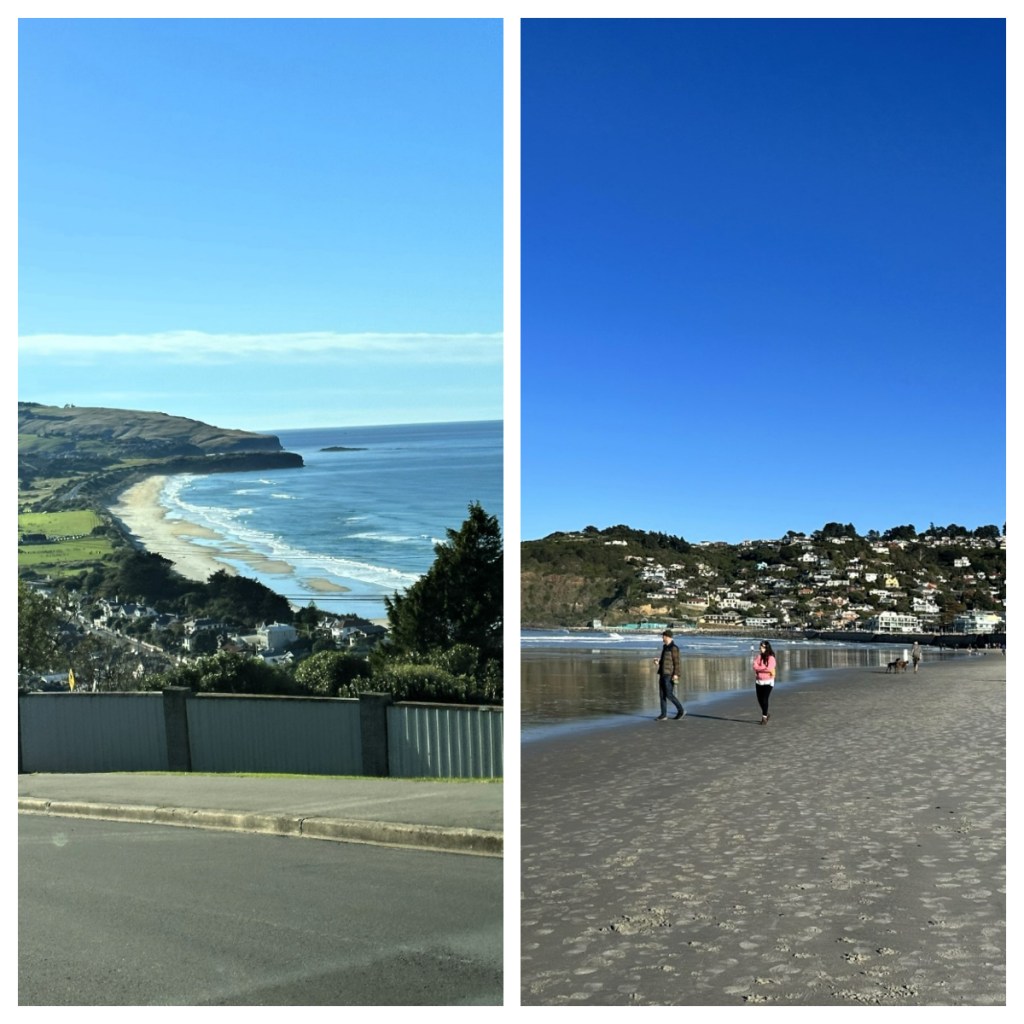
Ready for an exciting day, our first stop was in the lovely seaside suburb of St Clair where we enjoyed another coffee and another beach walk before the beautiful drive around the peninsula to Taiaroa Head and the Royal Albatross Centre. (A should note, the whole area is full of the beautiful beaches!)

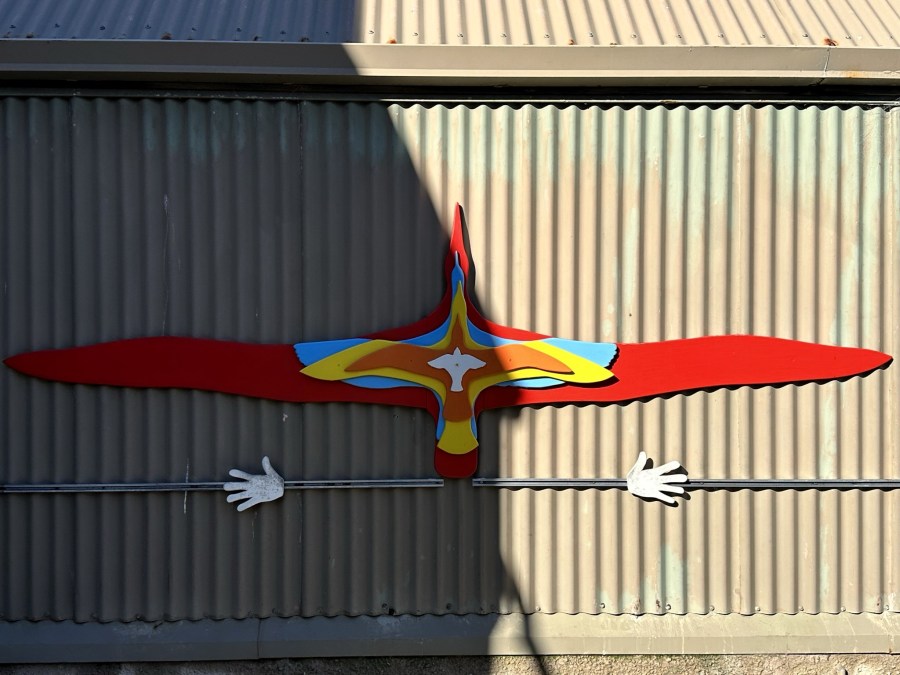
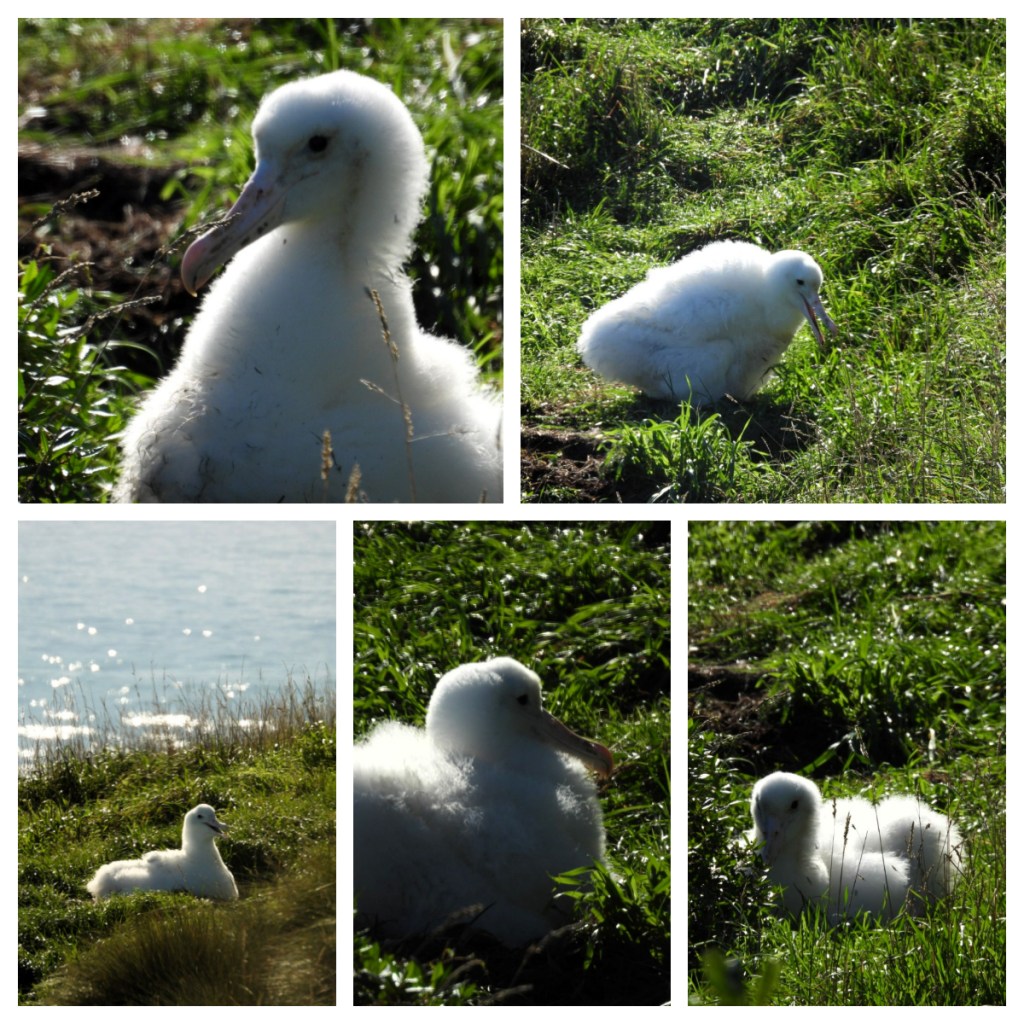
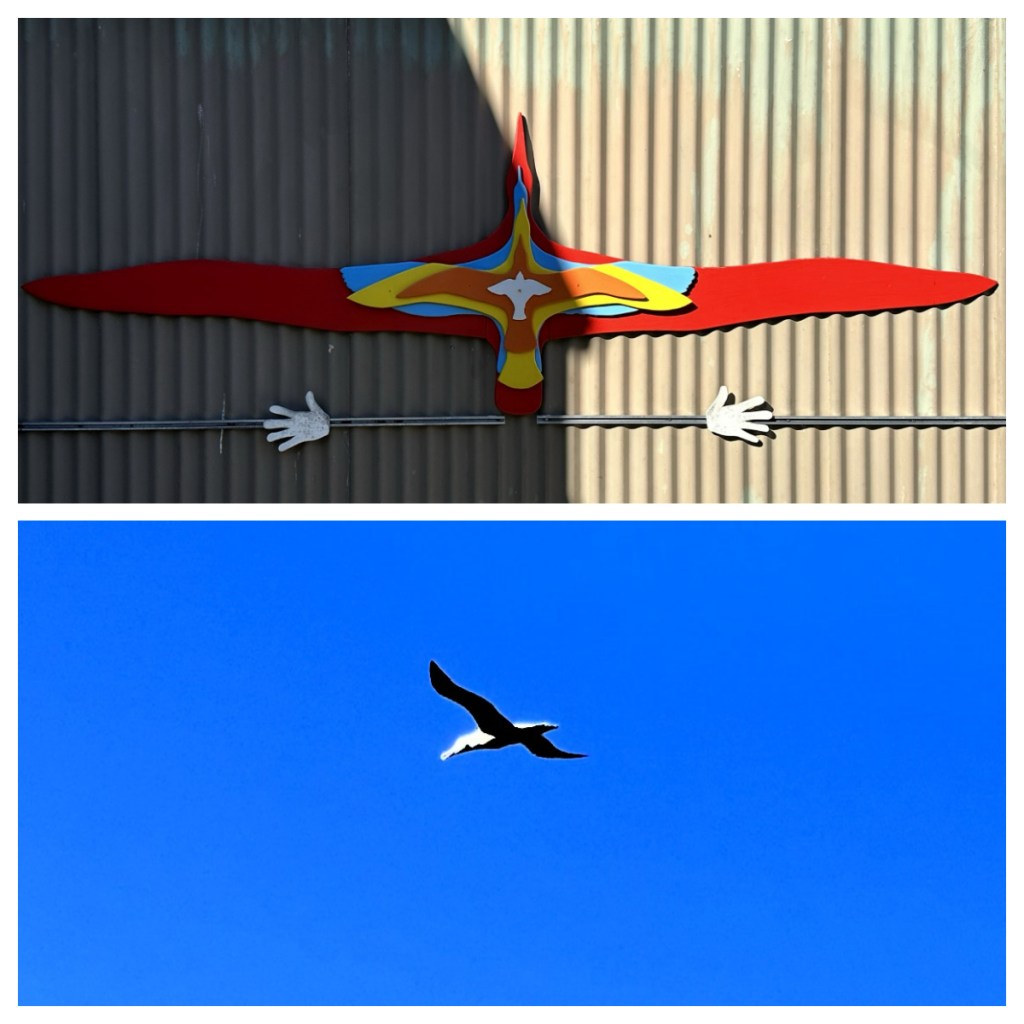
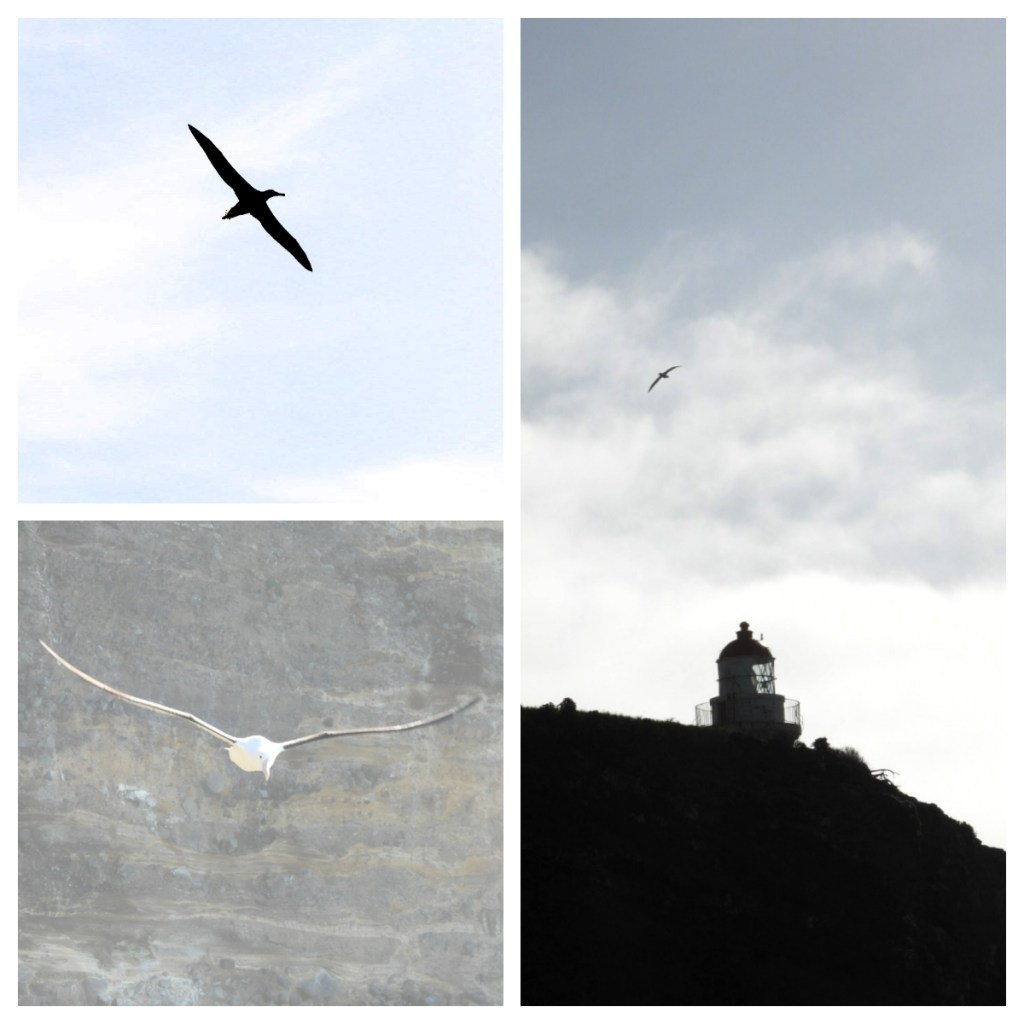
Taiaroa Head is one of only two mainland breeding colonies of the Northern Royal Albatross in the world and the Royal Albatross Centre does a great job of walking you through the story of these magnificent bird and their conservation efforts to ensure the future of the species. 

From the main information centre, it is a short walk up to the Observatory where you get a ‘birds’ eye’ view (pun intended) of the birds.  At this time of year, we were lucky enough to see 7-8 fluffy chunky chicks, approximately 3 months old and already 10kg!!  These chicks will be here till around September when they fledge and set off on their 5 years OE (overseas experience) by which time they are ready to look for mate and settle down back on Taiaroa Heads during the breeding season. 


These Albatross mate for life, and after a number of years ‘dating’, at around 8-10 years old they only see each other once every two years for breeding and chick raising.   To ensure their breeding success, the staff at the centre remove the eggs when laid and replace them with dummy eggs.  They then hatch the chicks in an incubator before replacing the hatched chick back in the nest when it is dry and stable. Apparently, the parents don’t seem to notice, or perhaps they don’t mind??

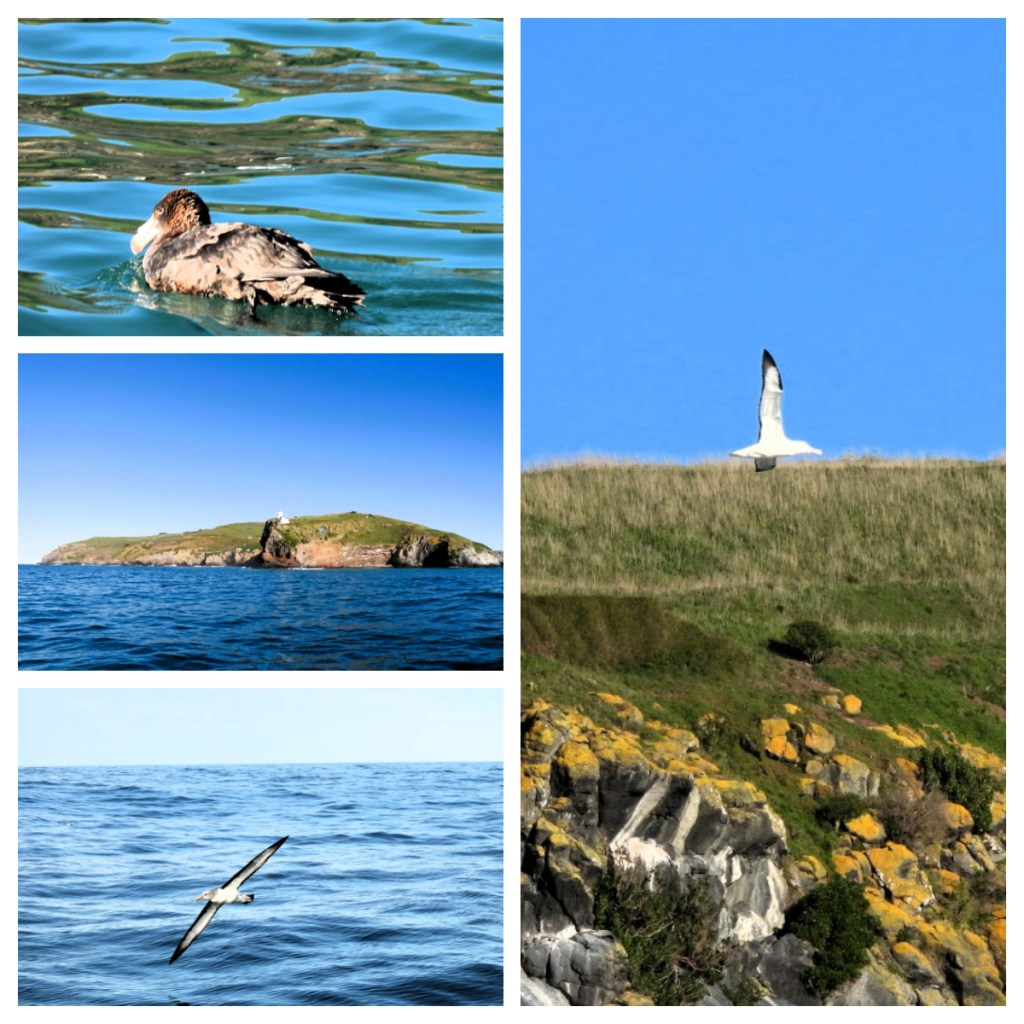
We were also lucky enough to see one adult out at sea, soaring in the wind currents on its 3m wingspan

From the Royal Albatross Centre, we travelled a short distance back towards town, to board the Monarch Wildlife Cruise.  The boat followed along the harbour channel, enjoying the sites of the beautiful Aramoana Beach to our left and the World War II gun emplacement and bunkers along the coastline on our right.  We continued out through the heads and out to open ocean, spotting wildlife on the way, including giant Petrels, Albatross (whose chicks we had just visited) and Otago shags.  Also spotting the Taiaroa Head Light house, the first lighthouse built in the South Island in 1864.

The 2 metre swells out in the ocean made for some fun sailing and I must admit I was rather happy when we turned around and headed back to calmer seas.

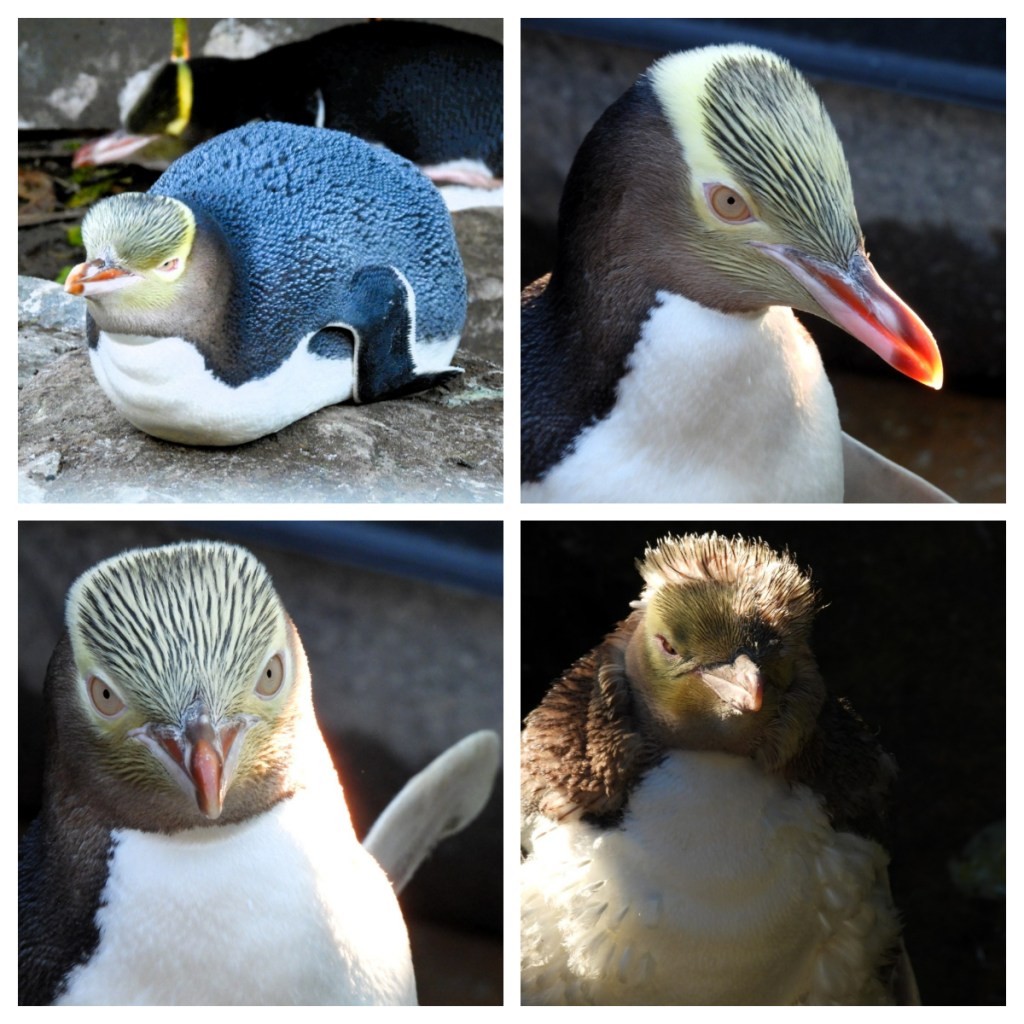
Our final stop for the day was Penguin Place (we had purchased a “triple crown combo” that included all 3 sites).  This is the home of the Yellow-Eyed Penguin Trust who focus on the conservation of the Yellow-Eyed penguin.  Known as Hoiho (noise shouter) in Māori, they are endemic to New Zealand and are the rarest penguins in the world.   Despite conservation efforts, the population is still in decline due to risk on land (where the penguins breed, nest and moult) and at sea where they feed. 

After a brief introduction to the penguins and the work of the trust, we visited the rehab centre where they were currently nursing 37 sick or injured birds back to health before they can be released back to the wild.  It was a great opportunity to get a close up look at these rare beauties.

We then took a 5 minute bus right down to the reserve where we walked through the incredible trench systems down to the viewing hides in the hope that we would catch a penguin or two making their way from the sea to their nest.  Unlike other penguin species, Hoiho are not particularly social so tend to come in one by one, rather than in ‘rafts’ like their other penguin cousins.  We were lucky enough to see a couple come in, as well as a beautiful sunset. 

The guided tours fund 100% of the conservation efforts here and it well worth a visit. 

After a long but successful wildlife spotting day, we had an early night in anticipation of another day of wildlife wonders.

We were very excited to meet up with Rod, who was one of the naturalists on our Indonesia and Papua New Guinea trip last year and as he is an Otago Peninsula local, we had reached out to see if he was free to meet up.  On Saturday, we had enjoyed a tourists view of the peninsula, and on Sunday we set off with Rod on a ‘locals’ tour 😂.

We started in a small private conservation area where Rod told us the story of the Jewelled Geckos and the antipoaching work being done.  These patterned bright green geckos are rare, and have been the subject of illegal poaching, most from overseas poachers.  Rod regaled us of crazy stories of the length’s poachers go to get these geckos, stories worthy of the CSI shows I love to watch!  I had no idea.

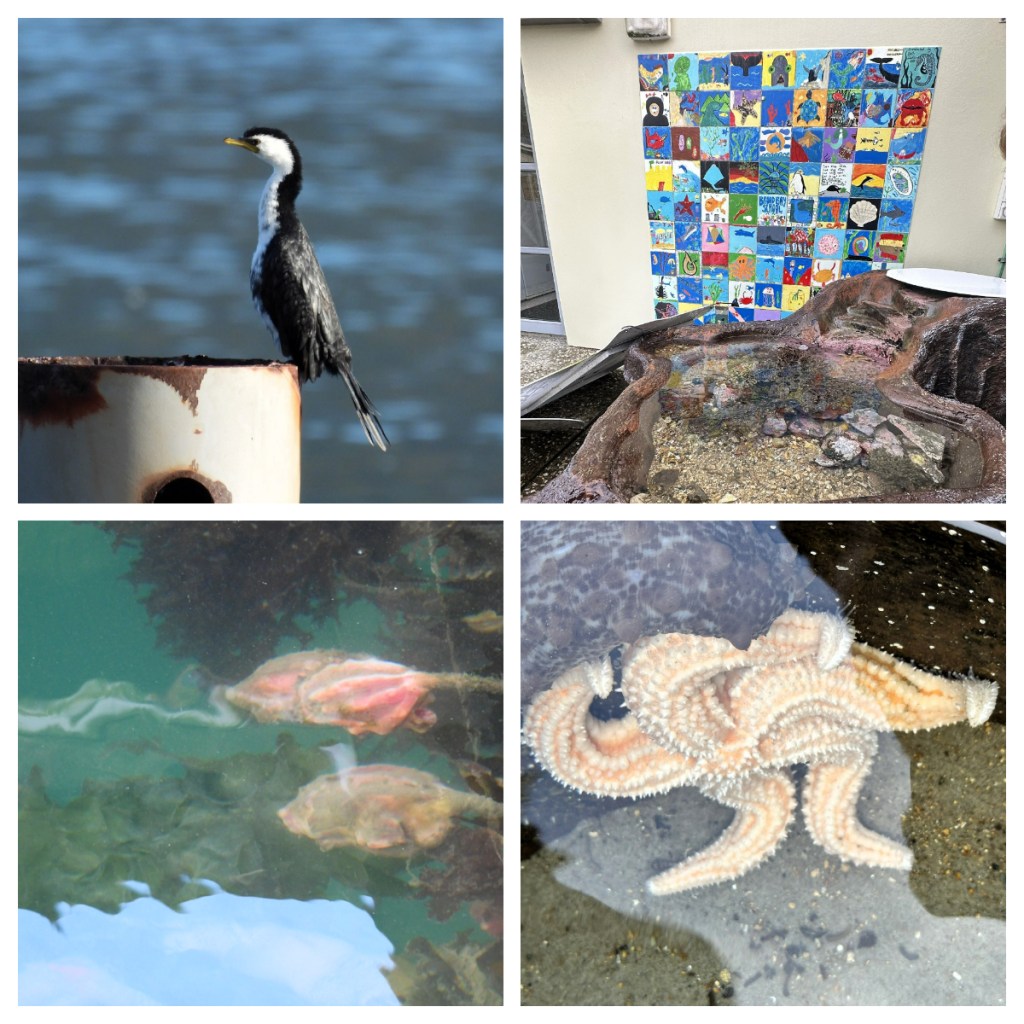
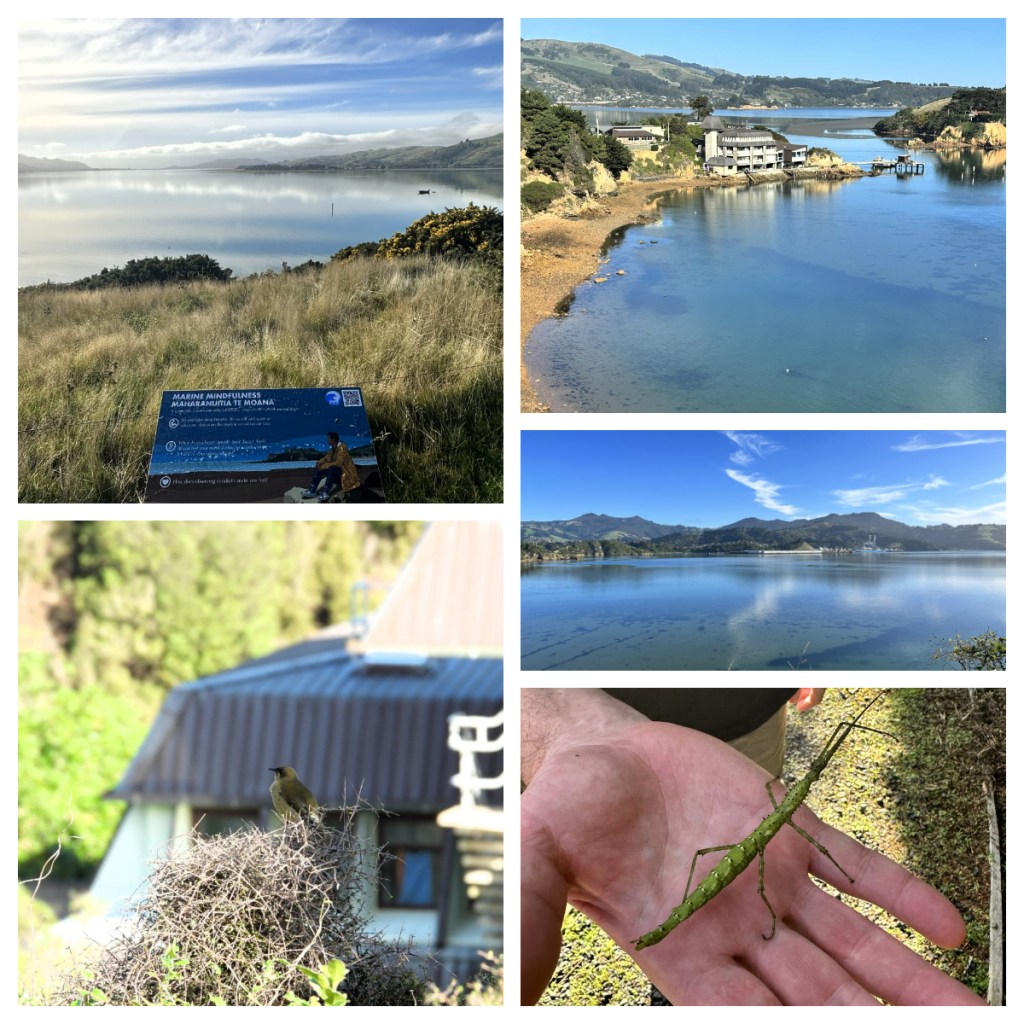
Next stop was the Otago University Portobello Marine lab facilities.  Apparently this is New Zealand’s oldest marine research facility and is still highly regarded for its facilities and the research that takes place.  Unfortunately, we could not go inside, but it was interesting to see all the tanks etc set up outside and the beautiful views from it’s wharf as Rod pointed out the little shags resting near by and all the sea tulips we could see in the water.

Right by the lab is the Portobello Peninsula Coastal bush, a lovely nature reserve that takes you out to the end of the Portobello peninsula.  It had beautiful views and was teeming with life, much of which we would not have seen if we had not been with Rod, including a prickly stick insect and a native lowland grasshopper.  The area also had some great new interpretive panels (created by a friend of Rod’s) that guides you to think about the nature around you.

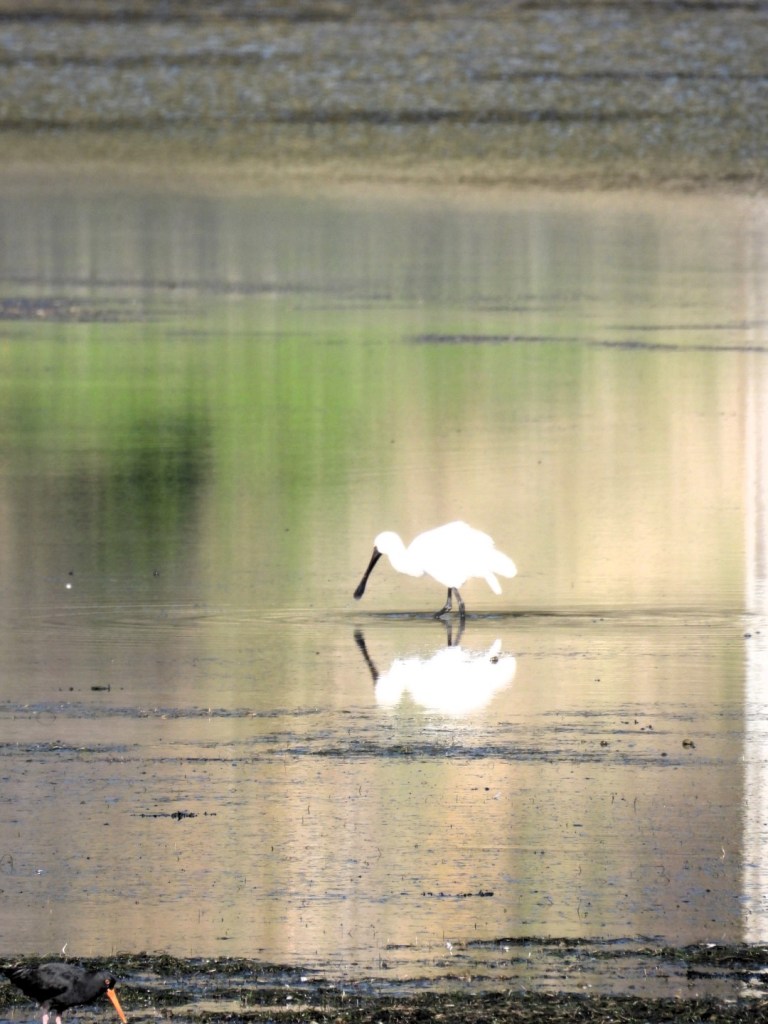
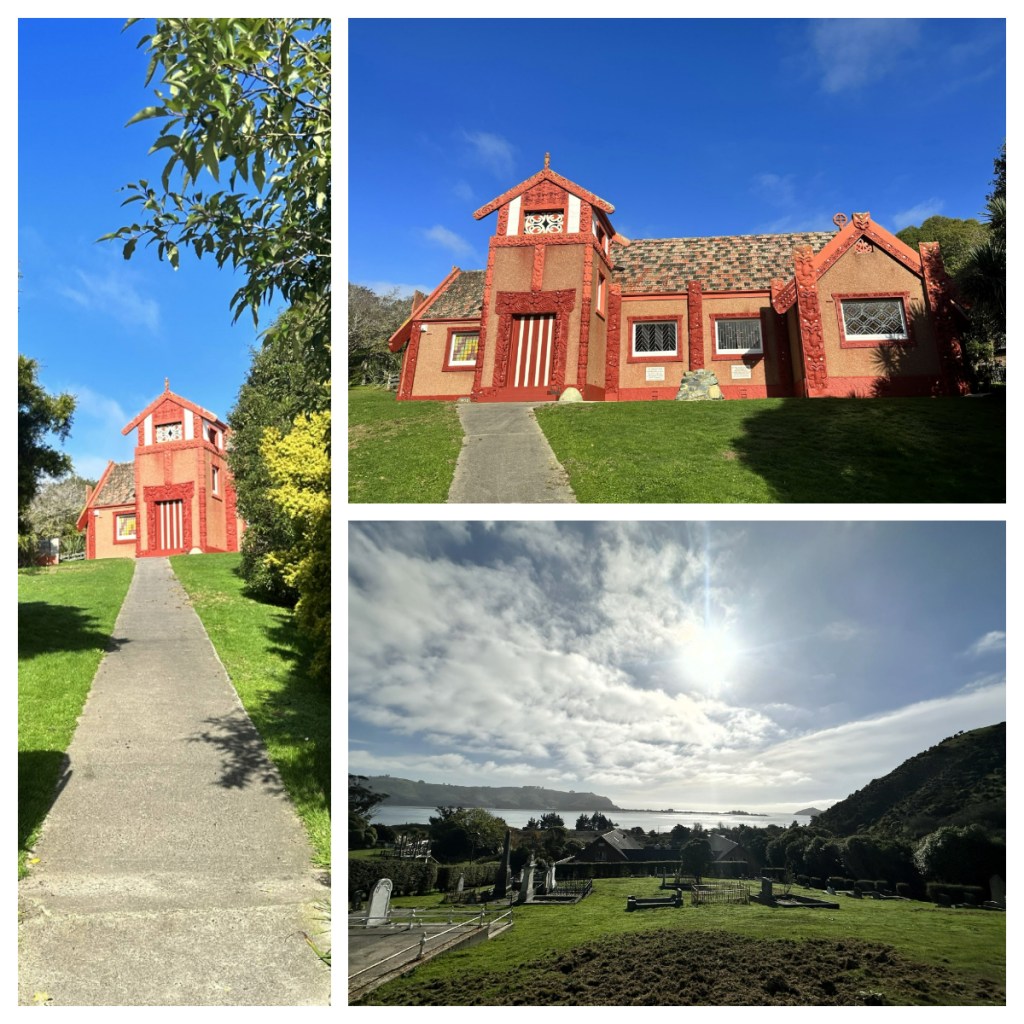
Back in the car, we followed the road that the skirts around the coastline (the tide was out now, and the wetlands were providing fruitful feeding grounds for a number of Royal Spoonbills).  Our next stop as at the beautiful Ōtākou Māori Memorial Methodist Church.  The current building (opened in 1941) replaces an original weatherboard church which was built on the same spot in 1865 which burnt down.  Today, even the ‘carvings’ are set in concrete to protect it for the future. 

The nearby cemetery, which boosted a great view, is the resting place of all but one of the Chiefs who signed the Treaty of Waitangi and the Otago Deed of Sale.  In fact, this was one of the earliest Māori settlements in the area and the name Otago, is an Anglicisation of Ōtākou.

From here we headed to the end of the peninsula at Taiaroa Head, where we had visited the albatross the day before.  Today there were four Albatross soaring around the peninsula.  It was amazing just to stand near one of the viewing arounds and watch them, sometimes running low right over our heads. 

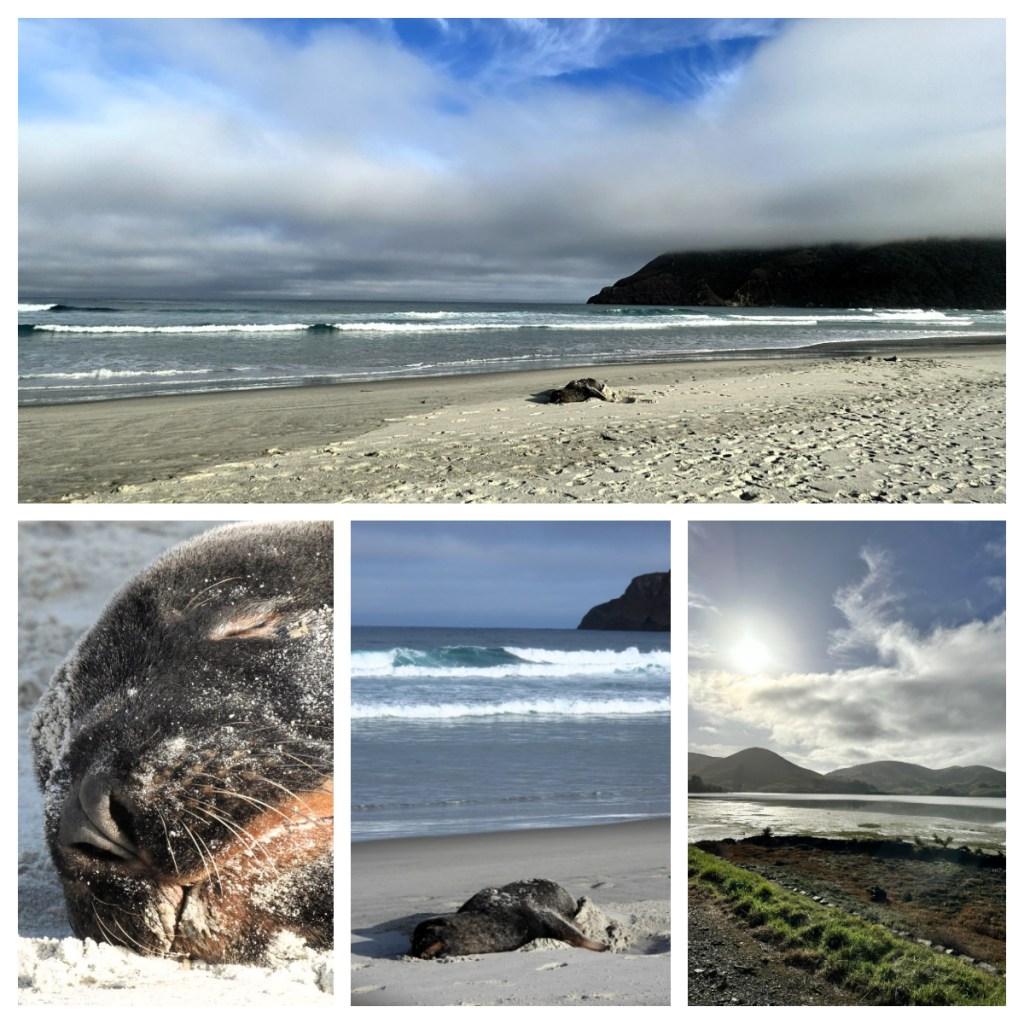
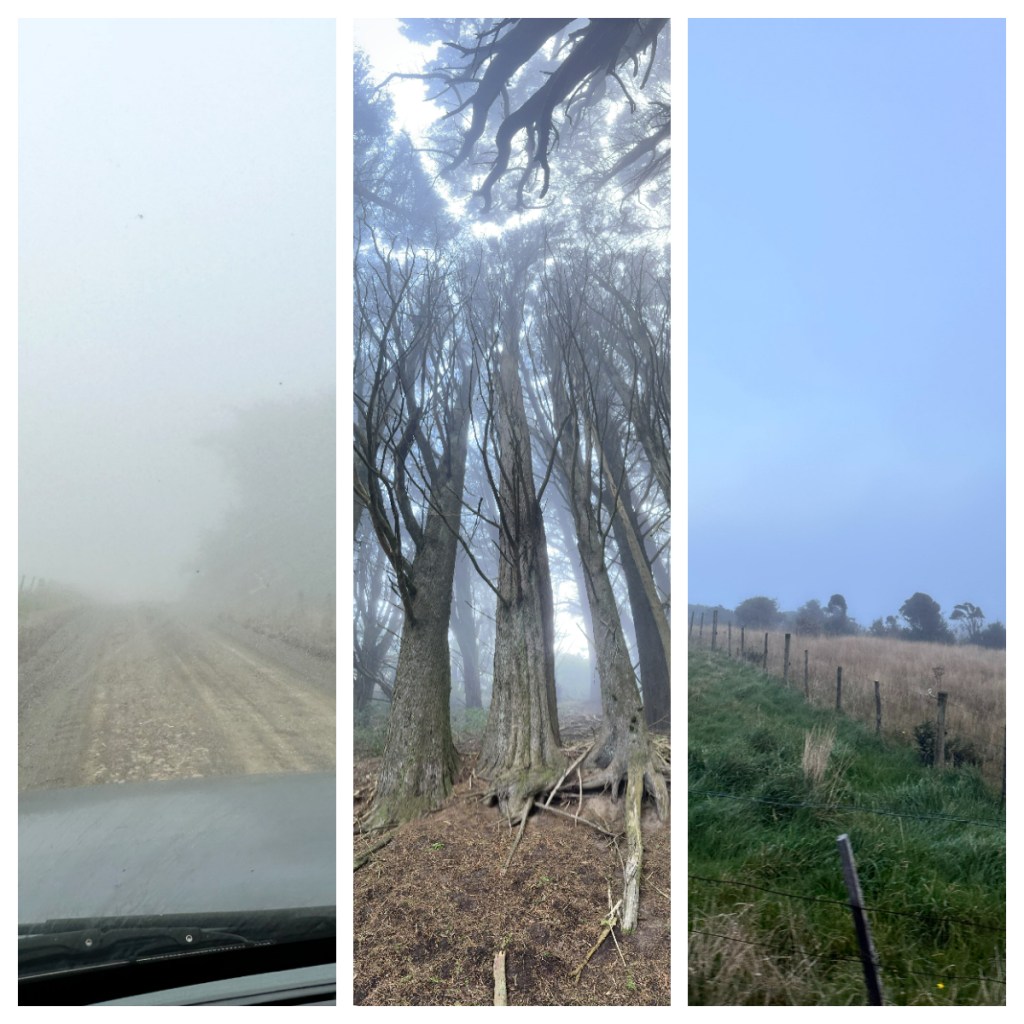
We crossed over to the other side of the peninsula for a somewhat wild beach walk (avoiding the large sea lion relaxing on the beach), before heading back up to hills – this time into the clouds of the Sandymount Recreation Reserve, through a creepy but very cool forest (really only creepy because of the cloud) and out to what is apparently a lovely view – of course we could see nothing lol.

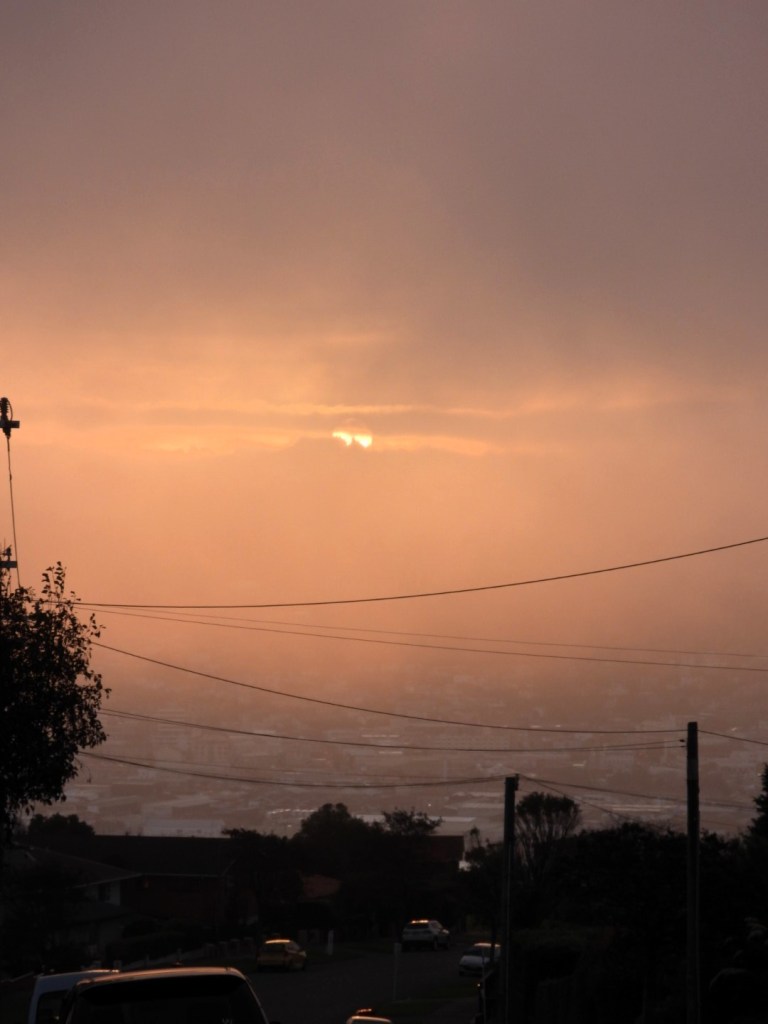
Our brilliant day out ended with an incredible golden sunset as soon as we got out of the mist.  We were so lucky to be able to spend the day with Rod and we were grateful for the knowledge and enthusiasm he has for his home and that he shared with us.

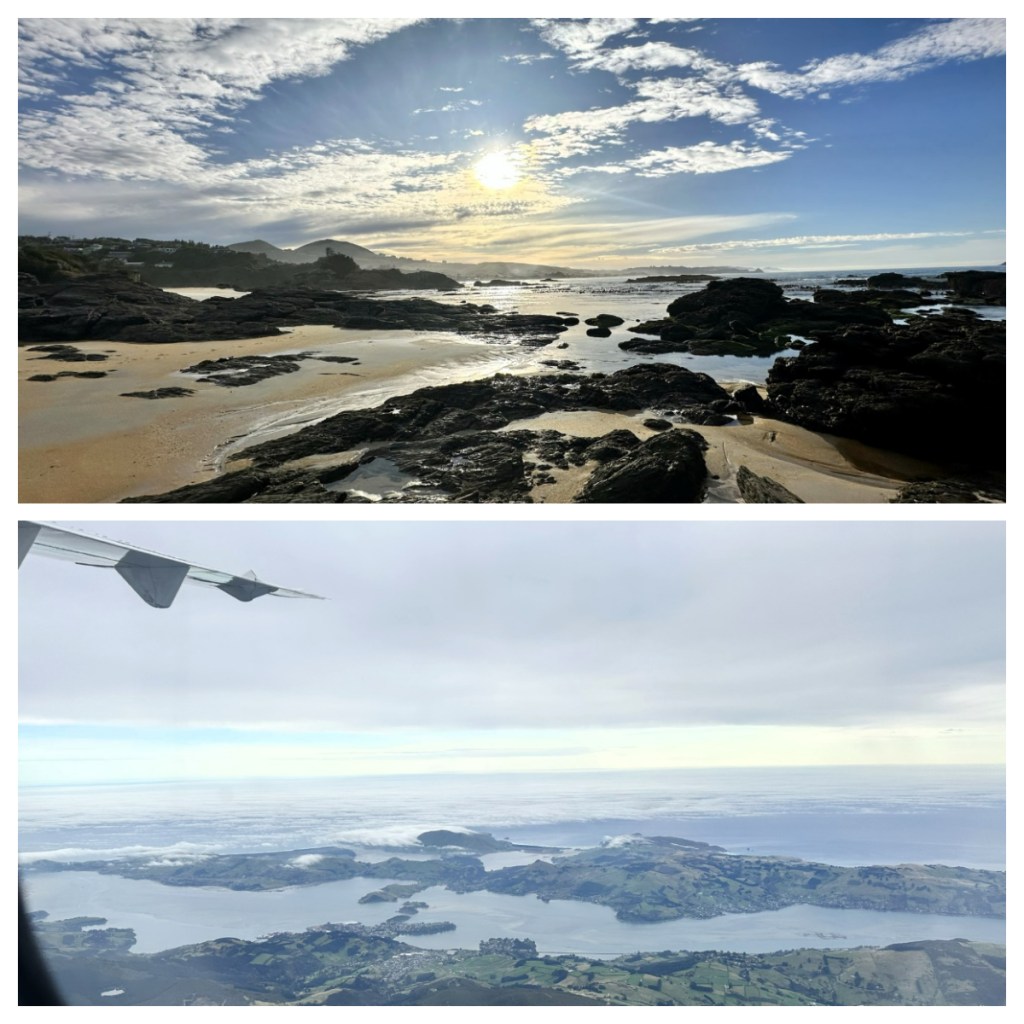
Our final morning found us back down at Brighton Beach where we explored the rock pools around the coastline before heading to the airport for a final view of the peninsula from the plane home.

What a fabulous weekend full of wildlife.  Dunedin is definitely a city with lots of hidden gems (and some less hidden) and stunning wild beaches if you are willing to search them out.

Osaka & Goodbyes

Osaka

April 2023

We meet the rest of the group back at the hotel at 2pm before we took our final Japanese train journey, 35 minutes to Osaka.  Again, our hotel was near the train station but unfortunately this time it was not walking distance to any of the sights. 

After an hour or so to rest, we took the metro to the infamous Dontonbori area. The area is an explosion of neon lights, clubs, bars, shops and street food, most famously – octopus balls.  One of the most famous sites of the area is the Glico Running Man, advertising a popular Japanese snack company.  Apparently the area was 10 times busier pre-covid than it is these days – this was definitely busy enough for me!

Unfortunately, the final group dinner arranged by our guide was disappointing.  It was in a small restaurant where we couldn’t all sit together (we could only sit in groups of 3 or 4) and it was a Chinese restaurant, a Japanese version of Chinese food 🤔, but still Chinese food.  The food was good but we all would have preferred Japanese food on our last night in Japan!

I had said goodbye to most of the group on our final night, but a few of us were staying a day or two longer and so I meet up with my Irish buddies to enjoy my last day of exploration in Osaka. For today’s sightseeing, we bought a day pass (820 yen) for the metro rather than using the Sucia card as it was going to be better value for the all the trips we have planned (turned out it was definitely better value).

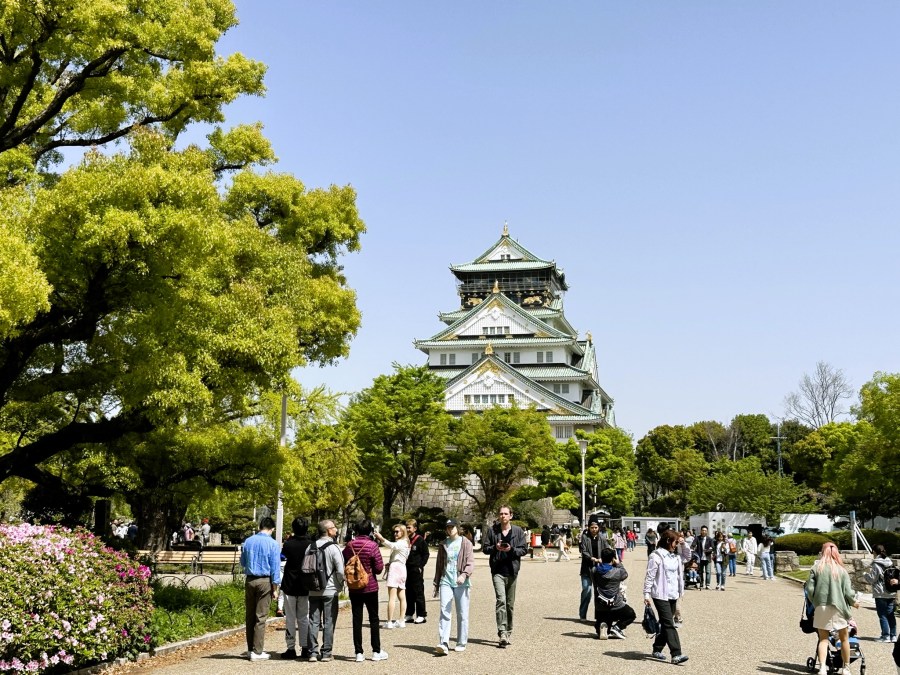
We started at Osaka castle.  The castle is beautiful, but it is a 20th century reconstruction of the castle which was originally built in the 1500’s by Toyotomi Hideyoshi, with the intent of it being the centre of a unified Japan.  Since then it has been destroyed and rebuilt a couple of times!  As it is modern on the inside, we decided not to go in, but enjoyed the beautiful gardens as we walked around the stone walls and moat. 

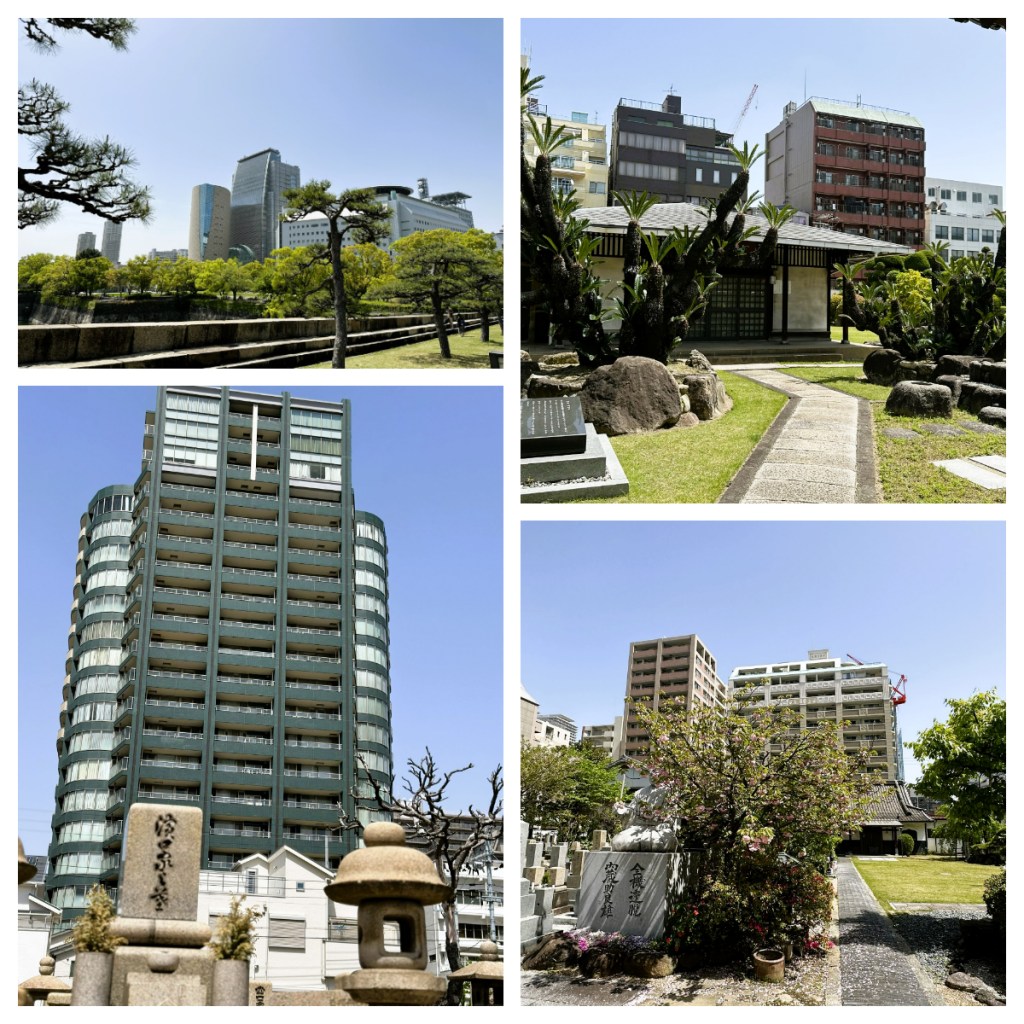
We took an ill advised, very, very, very long walk to our next sights.  Despite it being much longer than we had thought, it was nice to see the contrast of old and new buildings away from the touristy part of the city.  When we finally reached Shitenno-ji Temple, the Temple of the Four Heavenly Kings, one of the oldest temples in Japan.  It was founded in 593 by Prince Shotoku, who was partly responsible for the introduction of Buddhism in Japan. 

Of course, as with most things we have seen, the temple buildings have been burned down and rebuilt several times over the centuries, but always trying to keep the original designs.  It was a huge, beautiful complex and we took some time to explore before moving on in search of our next stop – Shinsekai tower. 

Another famous site of Osaka and I must admit we were relieved when we spotted it in the distance as I for one was already feeling weary and it was definitely time to stop for gyozas and beer and we managed to find a spot right by the tower. 

The final stop on the list for the day was the Umeda Sky Building, the 173 metre high, twin tower high rise building with the towers connected by a “Floating Garden Observatory”.   The building was just near Umeda station and we had thought we would just walk outside and see these towering buildings but unfortunately we came out of the wrong exit of the huge station and ended up walking much much further than we needed to have to find the right direction! (Seems to be the theme of the day lol)

Finally we found it and took the escalator and lifts to the top where we had great views over the city from the viewing platforms on the 39th floor.   Apparently, it is the 19th tallest building in the city, and is one of the cities most recognisable landmarks.  It was built in 1993 and there is still so much construction going on in the area surrounding it so who knows how the view will look like in the future.

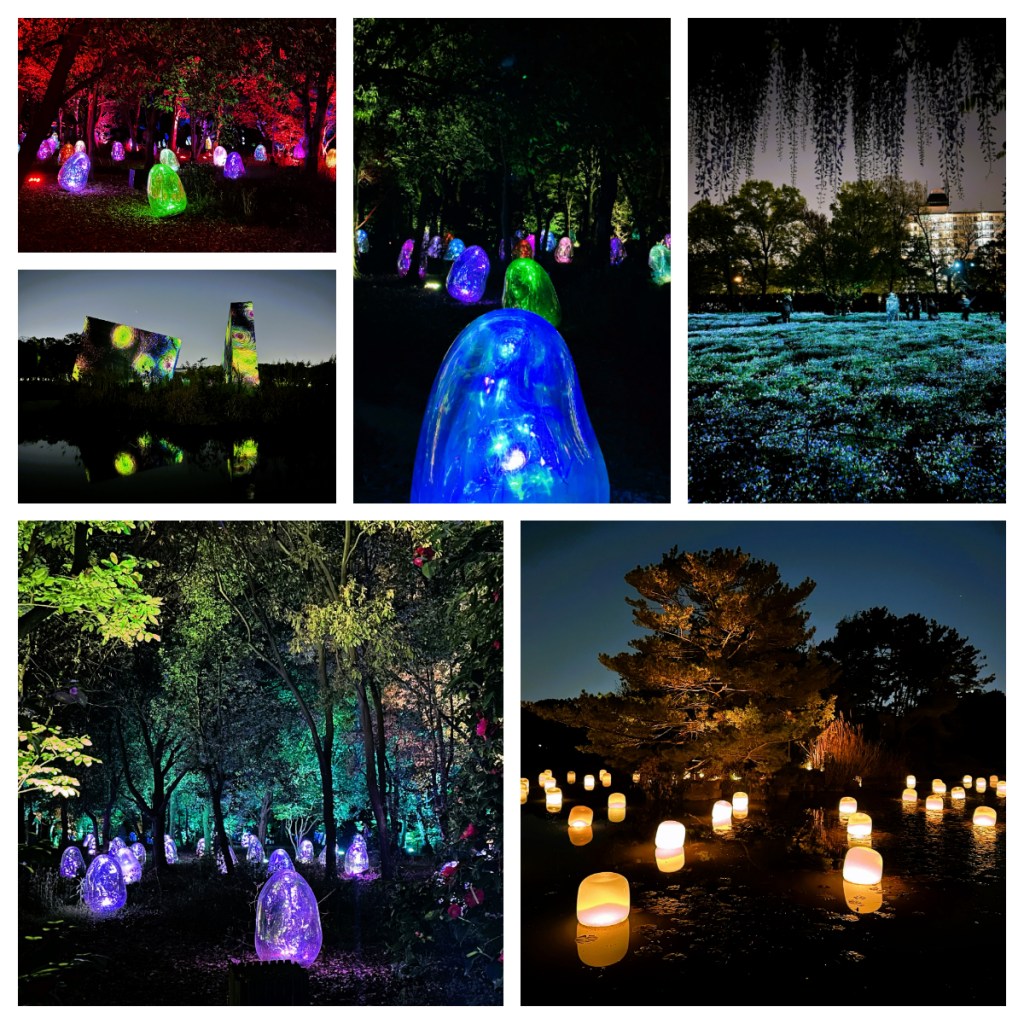
By this point my feet were throbbing and thankfully I had a couple of hours down time before it was time to set off again – this time for the botanical gardens for the TeamLab experiment.  TeamLab is an international art collective, a group of artists, formed in 2001 and they create digital artwork (in this instance) based on the concept of integrating advanced technologies and nature.  I had wanted to go to their exhibition in Tokyo but just did not have the time so was really happy when Carla (who was also staying a few more days) said that they had a exhibit in the Osaka Botantical gardens.

This ‘experiment’ is described as “digitised nature, exploring how nature can become art”.  It was a beautiful evening and a great way to spend my last night with my new friends.
I  finally had a good night’s sleep – perhaps because I had my own room 🤔 and I had time to have a leisurely breakfast (and admire the great view from the breakfast room), finish packing and use up the rest of the money on my Sucia card to pay for some dumplings (from a place that always had a long queue – even at 9.30 in the morning).   I was also grateful that I had booked an airport transfer so I didn’t have to bother with my bag on the train. 

All too soon on my way home with a short flight in to Tokyo and then back to New Zealand – the long journey gave me time to reflect on my trip.  To sum up … Japan enchanted me.  ❤️

Landing in Tokyo I was overwhelmed and thought that feeling would continue, but as I travelled around and grew more comfortable with everything, I grew to love everything and every place we visited.  I mean, what’s not to love?  A place where everyone is so polite and everywhere is so clean and organised – how could I possibly doubt my love for it. 

Below are a few things that really stood to me about Japan – some cool, some cute, some quirky and some just downright odd:

Japan manages to find that very fine line between obsessive organisation and utter chaos and is full of fun contradictions. In fact, to the untrained eye, everything looks chaotic, but in fact, the chaos is masterfully organised 😄

Toilets are generally AMAZING, even public toilets.  Except in the more rural areas where we did experience a couple of squat toilets, they have heated seats, cleaning functions (for cleaning you, wherever you may need cleaning and with varying levels of force) and some even have gentle sounds/music to play for privacy.  But, despite all there wonderfulness, there is never any way to dry your hands once washed! 🤨

Everywhere is really clean, despite the fact that there are no rubbish bins, anywhere!!!  If you have rubbish, be prepared to carry it home with you.  No one litters – anywhere, ever!  (Or so it would seem)

There is lots of amazing street food, but don’t think about walking along the street eating or drinking – it is just not done!  Either eat your food right by the stall (and you can return any rubbish to them), or take it home!

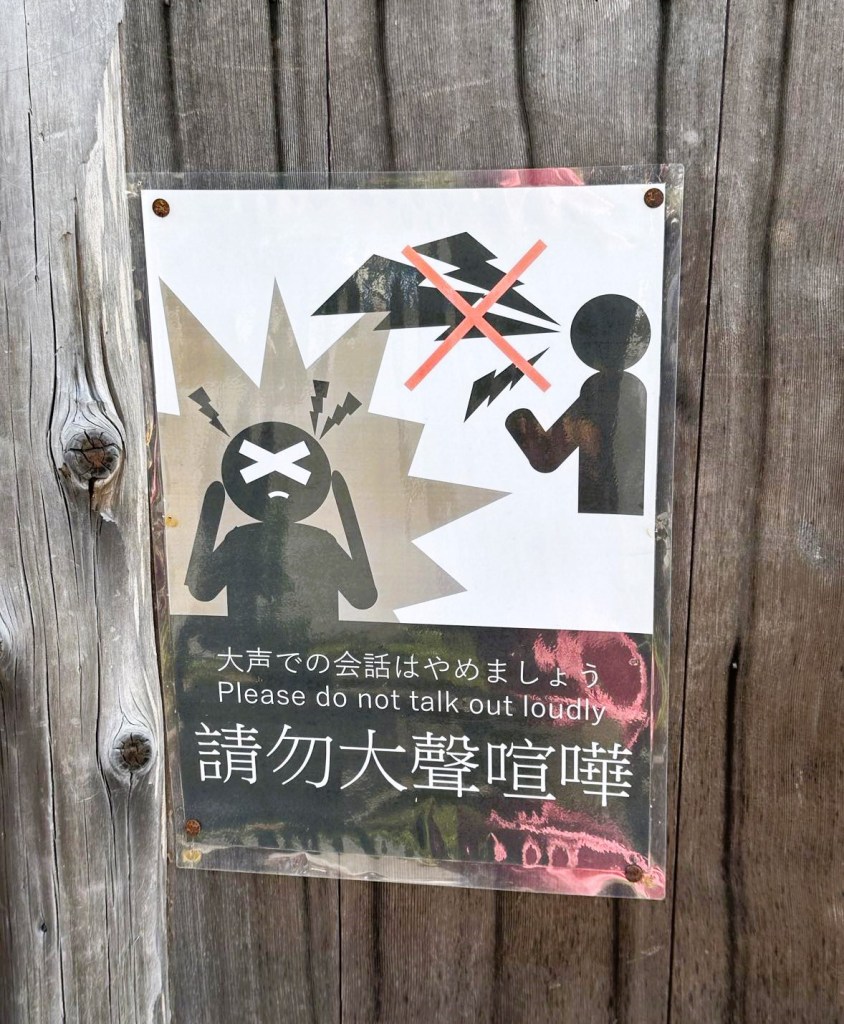
Everywhere you go, Japanese people are lovely and always willing to help.  BUT, do not be loud in public!  This means walking along the street, or, perhaps more importantly on public transport!  Talking or laughing loudly will result in looks of distain from those around you.  We even passed a sign in a street in Kyoto, warning of the dangers of being loud 😬

Japanese people are also very good at following the rules (social or otherwise).  In turn, they are very trusting that others will do the right thing.  A good example of this was if you did not have enough money on your Sucia (your public transport card), the gates would open anyway for you and trust that you would go and pay the balance once at your destination.  (Unlike in other countries where they would not let you in/out without you paying the full fare!)

Speaking of public transport, it is amazing – whether it be bus, metro or long distance train.  It is efficient, effective, sometimes quirky and or course always clean!  If you have a Sucia, or other form of travel pass, you can easily get around the cities. The Japan Rail pass is the way to go to get around the country (and includes the bullet trains) but interestingly it seems the process to buy a pass for the fastest train, is one of the slowest, most manual things you ever need to do in Japan!  It needs to be done in person and can take hours, it even includes the sales person handwriting details … on paper … in pencil!!   Perhaps it is all part of the lovely combination of keeping old traditional ways whilst embracing the future that Japan is so good at.
The have amazing attention to detail.  I loved all the different manhole covers, each city had its own version, showing designs unique to the city, some were even in colour.

Most hotels provide you with a set of PJs or something similar for use at the hotel. Not sure if they are supposed to be used to just go to the Onsen, or relax, or sleep.  They are one size fits all and surprisingly, that ‘one’ size did just fit me 😆.  

Japanese people love getting naked and sharing hot tubs, or Onsens as they are called!  The are single sex but everyone just gets in!!  No swimsuits, oh and no tattoos (in most)!  The ban on tattoos is because of the connotation in Japan of tattoos being associated with the gangs. Apparently, no swimsuits because they can bring dirt and soap into the hot spring waters from outside and are, therefore, considered unhygienic.  Despite that, they are very popular and many hotels have them, as well as there being public ones throughout the cities and towns. 

Convenience stores are very popular and are on almost every corner.  There are a number of chains (7 Eleven, Lawsons, Family Mart) and each are popular for certain convenient foods be it fried chicken, noodles, sandwiches or cakes.  They are cheap and well stocked with a huge variety of food and drinks and I probably used them way more than I should – but hey, when in Japan, do as the Japanese do right? 😉

The food is amazing.  I don’t eat seafood or fish but still was astounded by the quantity and quality of almost all the food I ate.  The Japanese concept of the Bento box, or a “little bit of everything” is a great way to eat.  Much of the food was quite simple – but as I described my amazing Hide Beef sushi – it was perfection in its simplicity. 

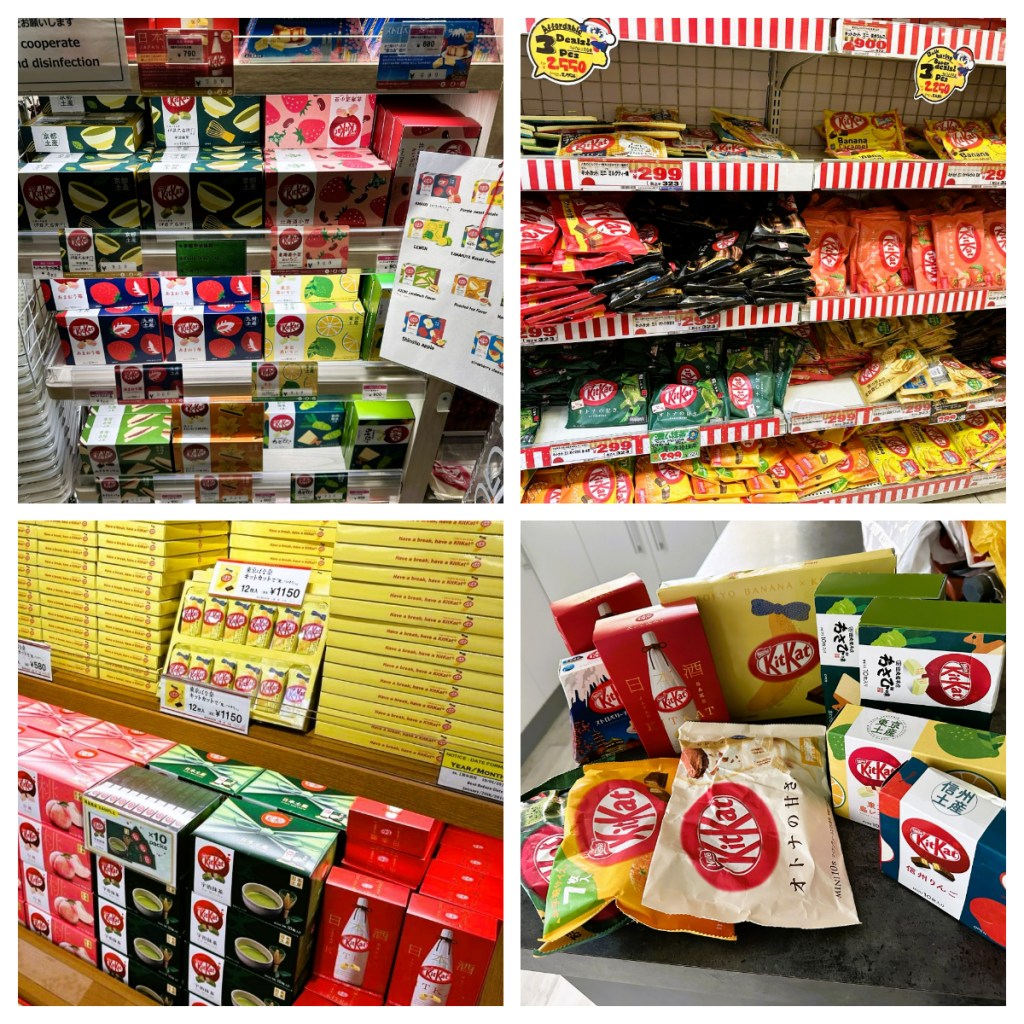
KitKats are King – I have been home over a month and still am enjoying some of the many flavours of KitKat I picked up.  I thought I had gone over board but it seems you can never have too many flavours of KitKat 🤪

In summary, Japan rocks

Kyoto -Two days is not enough !

Kyoto, Japan

April 2023

Our journey from Hiroshima to Kyoto was much longer than expected!  Instead of a less than 2 hour journey on 1 bullet train, it turned in to a much longer journey on two trains. The only explanation being that the shorter trip more expensive – surely that is what we paid for when it was in the itinerary? When we finally arrived in Kyoto, the guide suggested everyone have lunch but I for one was not prepared to waste another 1-2 hours faffing so after leaving our bags in the hotel (back to small bags only), a few of us headed straight out to visit the Nijo-jo Castle. 

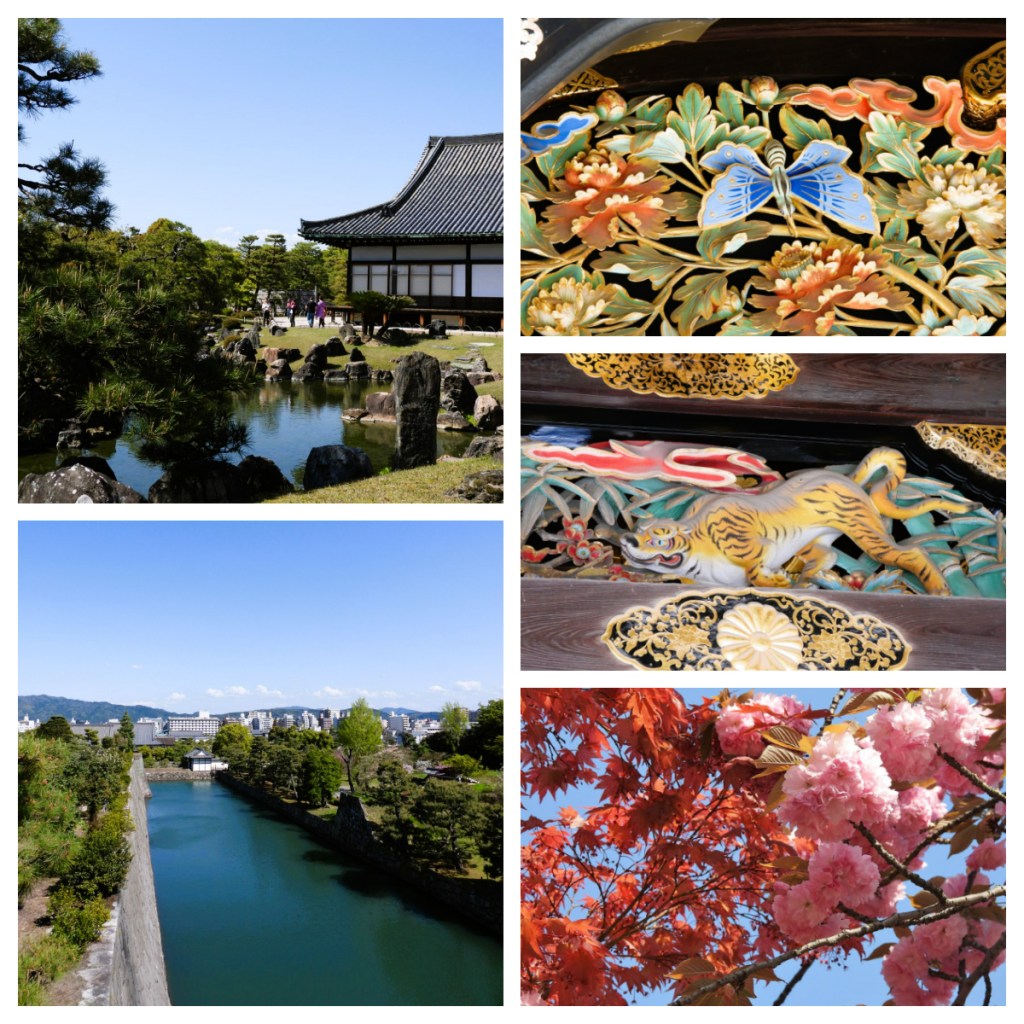
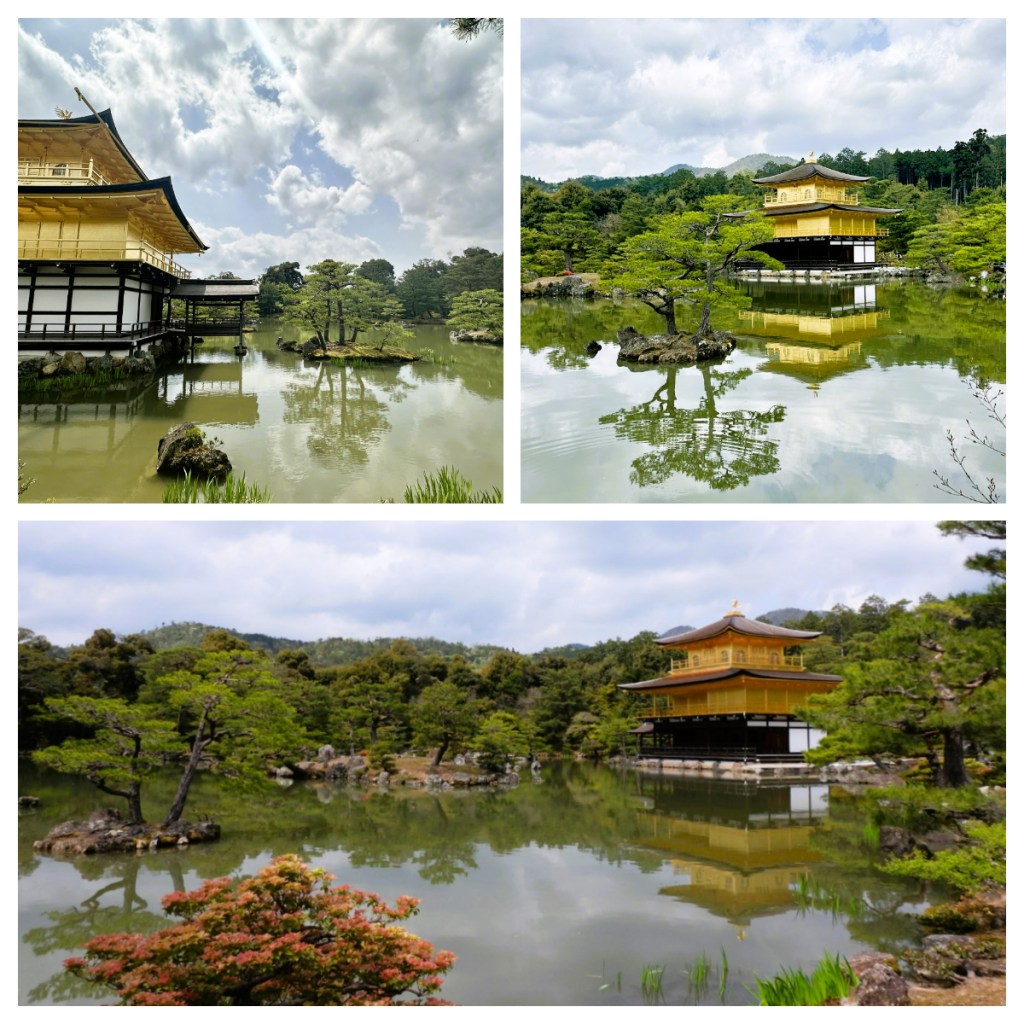
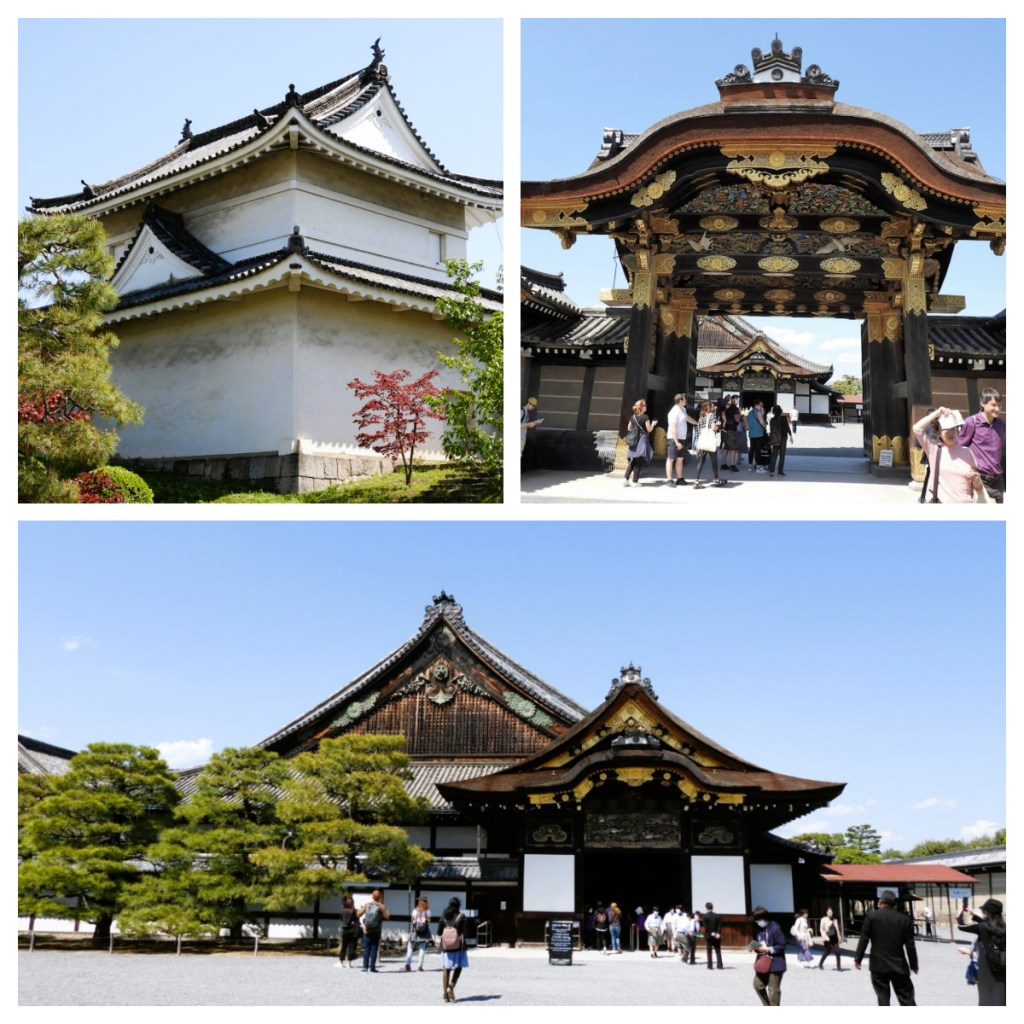
Built in 1603, Nijo-jo Castle was the Kyoto residence of Tokugawa Ieyasu (one of the lead characters of the Age of Samurai) and when his Shogunate ended in 1867, the castle became the Imperial Palace.  It was then donated to the city as a historical site and in 1994 became a UNESCO world heritage site.

You enter the castle grounds by crossing the moat and then entering the main walls of defense through the East gate before reaching the inner or secondary circle of defense and entering through the beautiful (and apparently Chinese style) Karamon Gate.  The attention to detail and stunning colours and carvings were breath taking.

Inside the second defensive walls, you finally reach Ninomaru Palace.  You could not take photos inside the palace but we were given an information leaflet and there were signs in English that gave brief information about the rooms as we made our way around the various buildings, connected by corridors and “nightingale” floors, that “sang” as you walked.  It was really more like squeaking!  Some say this was a security measure to warn of intruders, however I also read that this is actually just through wear and tear of 100 years of feet!

Either way, the singing floors and the beautifully decorated ceilings and sliding walls were well worth the visit.  As were the beautiful gardens surrounding the palace.

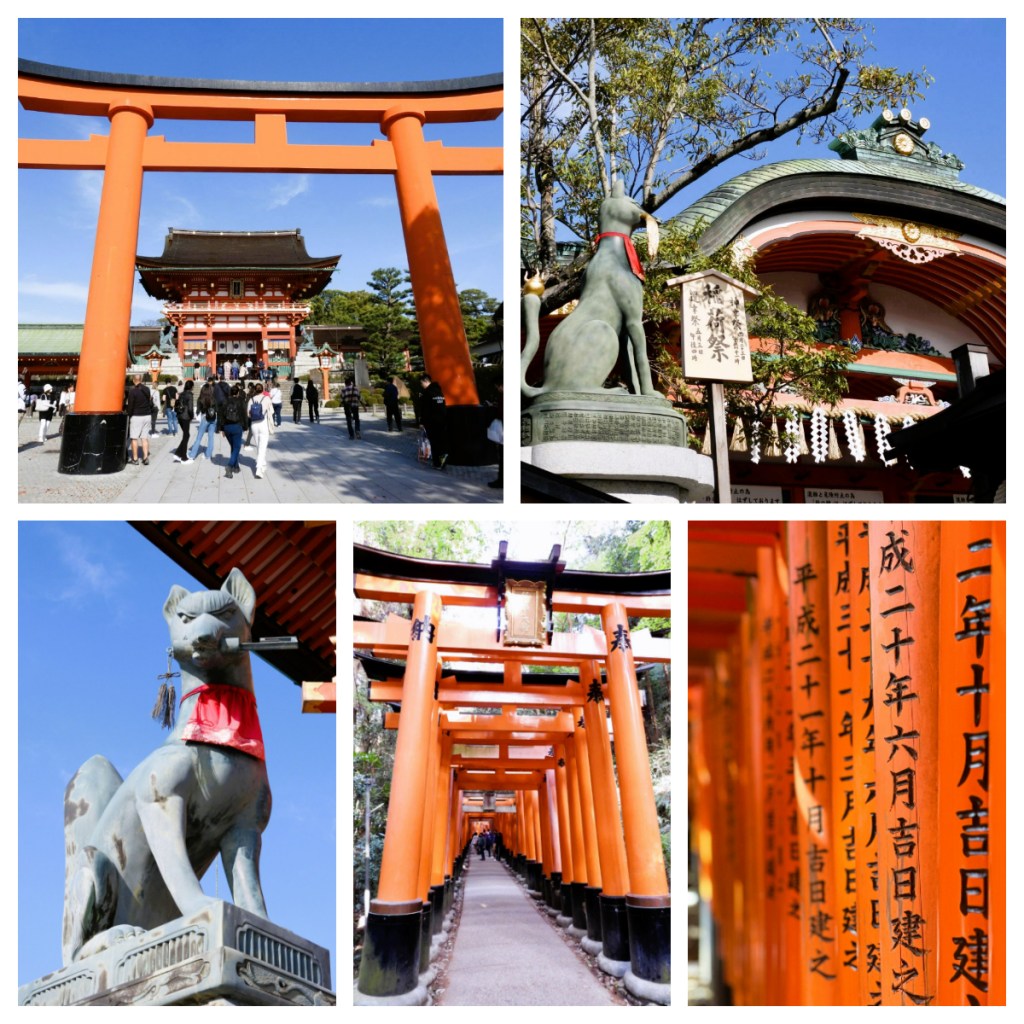
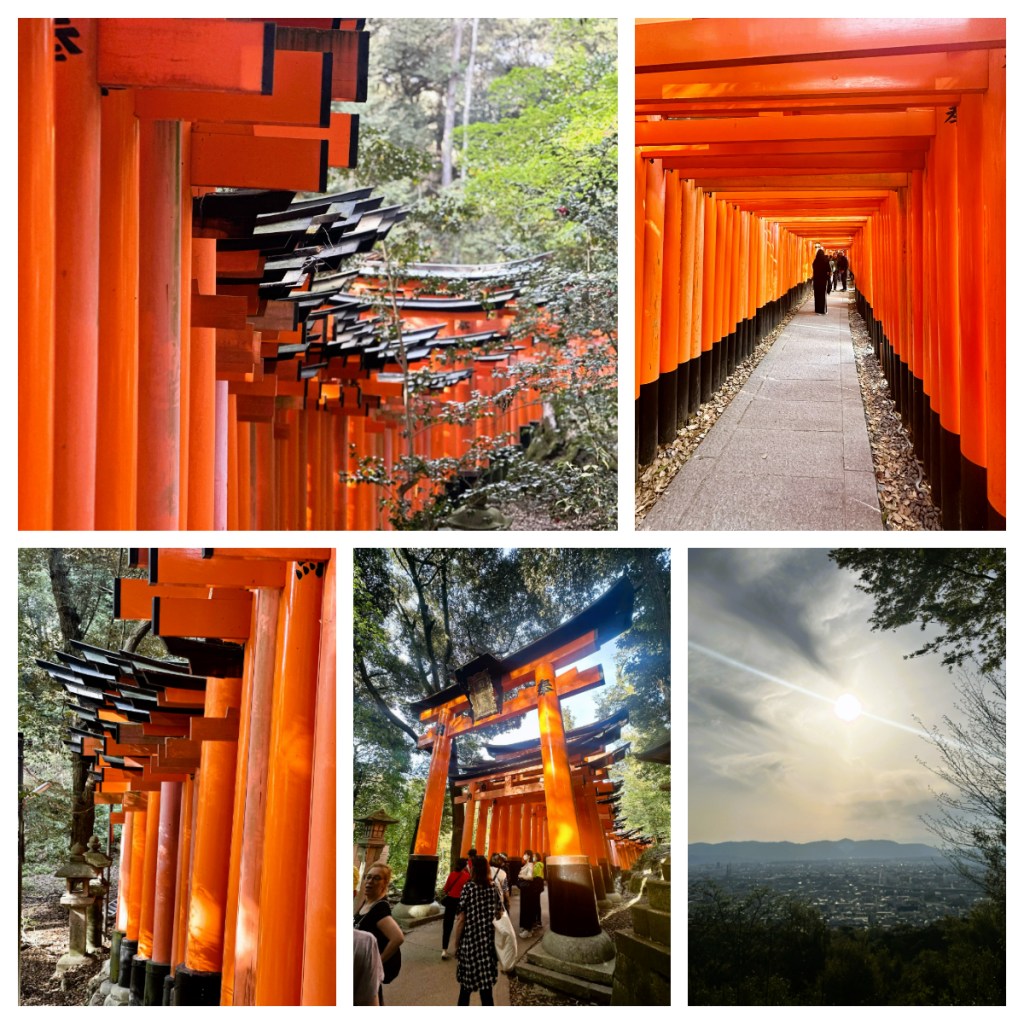
We then walked back to the train station and caught a train to one of the most iconic sites in Kyoto – the Fushimi Inari Shrine, with its thousands of red (actually a colour called vermilion) torii gates. The Shinto Shrine (dating back to 794) is one of the most important shrines dedicated to Inari , the God of Rice, whose messenger is a fox (lots of fox statues around), but despite that, the main reason crowds flock here is to see the torii gates and explore the mountain paths up Mt Inari, which are lined with rows of the gates – called Senbon Torii (“thousands of torii gates”).

The lower gates around the Shrine itself were beautiful, but also packed with people.  The higher you get, the less people there are, but also the less perfect the gates became.  I guess it is much harder to do the continual maintenance required up there.  We continued up until we reached the “beautiful view” noted on the trail maps and it was definitely worth the walk.  We could even see as far as Osaka in the distance but we didn’t stay long as dusk was beginning to fall and insects were beginning to come out.

Today was Day 7 of our JR pass that has got us around the country this far, so it was time to say goodbye to it, and rely solely on our trusty sucia card which makes travel on most public transport so easy (as long as you have enough money on it)!

Despite already being a long day, it was not over yet as there was still more to see.  So we were soon back on the train, heading to Hanami-koji Street in the Gion area, the most famous geisha district in the city, lined with old wooden machiya merchant houses.  Of course, we were hoping to be lucky enough to spot a Geisha (or Gieko as they are called in Kyoto) as they were on their way to work.  And we were!!  The first was spotted as just a glimpse from behind, but we then were in the right place at the right time to have 2 pass right by us as they rushed to their appointment. 

By this time it was after 6pm, and of course we had missed lunch, so we went on the hunt for food.  We crossed the river and walked down numerous lanes in the hope of finding somewhere open and with space and finally ended up in a German Beer house!!  Not really the ideal spot for dinner in Japan, but the food was good, as was the beer so I can’t complain. We finally made our way back to the hotel to check in at 9.45pm and of course my roommate was already asleep!  It was a long but great day.

Our first morning in Kyoto and I was keen to get up and out early. I had agreed with “the Irish” that we would meet in the lobby to leave at 8am. Not surprisingly one of them came down at 8.05 and then is going to have breakfast 🤦🏻‍♀️! As much as I enjoyed their company, and I really do, sometimes it is easier just to do things by yourself lol.

After a couple false starts finding our train platform in the huge station, we traveled out of the city and followed the crowds to the Arashiyama Bamaboo Grove (probably 1.5 hours later than I would have liked to have arrived 🥴).  There was lots of people and didn’t really look much like the photos you see – I definitely think there is some photo editing going on there!

Now I had read a bit about the forest online, including statements such as “serene and dreamlike” and the sound of the rustling wind through the bamboo being named as one of the”100 soundscapes of Japan”.  If you dream about crowded pathways through bamboo forests or if lots of people talking, well this “soundscape” is for you lol.  Honestly, it was nice, but I would not rate it highly amongst other things I saw in Kyoto. 

After walking through the busy forest, we managed to find a lovely quite suburban street to walk back on.  A nice contrast from the crowded paths and an opportunity to see how people lived.

On the map, our next destination did not seem far away but there did not appear to be any direct transport, so we had to take 2 buses to reach Kinkakuji, better known as the Golden Pavilion.  With the top two floors of the Zen temple covered in gold, it definitely lived up to its name, and the building, and its reflections in the small lake in front of it were stunning. 

The temple was most recently rebuilt in 1955, but it started life in 1408  as the retirement villa of a Shogun before becoming a temple after his death.   You cannot go in the temple itself, but the views and the gardens are a lovely distraction from the busy streets outside.

Before our next bus we stopped for a delicious, decadent crepe and after the bus, we found a cute, and very small restaurant where we had some tempura mochi and a beer.  It was a very local place with low tables though I think we got the western version, with more leg room under the table lol.

We were now back in the Gion area, we were looking for the Yasaka Pagoda, and stupidly thought it would be at the Yasaka Shrine …. It was not lol.  So after a quick look around the shrine, one of the most famous shrines in Kyoto, we walked through the historic Higashiyama area to find the elusive pagoda. 

The Yasaka Pagoda is the last remaining structure of the 6th century Hokan-ji Temple complex.  At 5 stories tall, it towers over the narrow cobbled streets and other nearby shrines and temples of the Higashiyama area – including Yasaka Koshin-do, a temple popular not for its history but for its colourful aesthetics. 

Instead of small wooden tablets that are normally used for wishes or resolutions, this shrine uses kukurizaru, small round colourful balls and they are everywhere, making great backdrops for everybodys photos. Apparently it is very popular with locals in their yukatas for photos – we spotted a few striking a pose or two lol.   Speaking of photoshoots – as I have the best phone and the only one with data I have become the photographer and navigator in these self guided days —- it’s exhausting 😂

Despite having already walked so far, the day was not over and our next temple was the Kodai-ji temple.  (Sooooooo many temples and shrine in Kyoto).  Just behind the Yasaka Shrine, the Kodai-ji Shrine was established in 1606 in memory of Toyotomi Hideyoshi, one of the stars of the Netflix programme “Age of Samurai”.  Both he, and his wife Nene are enshrined here.  Unusual for the time, he was very close to his wife and she acted as somewhat as an advisor to him. 

Apparently, his successor, Tokugawa Ieyasu helped pay for the temple which has beautifully decorated interiors and beautiful gardens around it, including a lovely little bamboo forest.   Whilst enjoy the temple gardens we spotted a giant Buddha which we had to go and check out. 

It turns out it was called Ryozen Kwanon, a tribute to “The unknown Solider WWII”.  It was built in 1955 and is described as having a “merciful dave that was modelled on its famous sculptor” and is 24 metres tall.

The area in front of the statue is considered a place of peace and good luck and here they have a large spherical “wishing precious stone” or power spot.  To have a wish come through you place your right hand on the sphere and walk around it 3 times.  We will see how that works out lol.

We stopped back by the Kodai-ji temple for an ice cream, and to spy what may have been a geisha on a video call.  Or at least it was someone all dressed up as a geisha, with geisha movements, tucked away in a corner on a call lol.  She looked beautiful either way.

We trudged back to Gion, and beyond, across the Kamogawa River to the Pontocho area to find a spot to rest our weary feet and have something to drink.  This area is one of the city’s most popular area for eating and drinking and is full of lovely narrow alleys with small resturants.  We were lucky enough to find a small place to fit us in and enjoyed some snacks and beer.  I should probably mention that often when you sit at a table in a restaurant, you are often given a small plate of something – sometimes pickled vegetables, in this instance endamame beans.  You will get charged for these, whether you ask for them or whether you eat them.  They don’t cost a lot, may 300-400 yen but I am sure it catches some people out. 

I was exhausted after such a long day, but not too tired to walk around the corner to join the queue at the Maccha House, a café chain that is famous for its extensive selection of matcha based drinks and desserts, in particular its matcha tiramisus that we had come for.  They were delicious and well worth the short wait. 

One last bus back to Kyoto station and another 10-15 minutes getting lost in Kyoto station (how many times have I been lost in Kyoto station 🤔 probably fair to say every time I have been there 😂 but at least each time we find some amazing architecture) before I could final relax after another 18,000 step day!  My Sucia card for public transport also got a massive work out today! 

On my final morning in Kyoto, I woke super early so decided to go an find one of the many coffee shops in the station (just a few minutes walk from the hotel).  Yet another opportunity to get lost of the train station 😂 but at least I got my coffee.

We were not leaving time till early afternoon so we had time to head to the beautiful Kiyomizudera, translated as “Pure Water Temple”.  Founded in 780, the temple sits in the hills in the east of Kyoto surrounded by forest, with amazing views out over the city.   It is a UNESCO world heritage site and probably my favourite temple we visited in Kyoto, if not in Japan.

As we left the temple it started raining but we still had to explore the beautiful cobbled narrow streets of the historic Sannenzaka and Ninen-zaka areas.   Sadly my photos just show streets full of umbrellas lol. 

Apparently, legend has it, if you stumble and fall on Ninenzaka, you will die within two years and if the same thing happens on Sannenzaka, death within three years!  Now, in the rain, some of the cobbles and stairs can be pretty slippery but we were all lucky to all stay on our feet. 

We continued down Ninenzaka to find one of the most famous Starbucks in Japan, maybe the world.  It is situated in a 100 year old traditional wooden Japanese tea house.  It is easy to walk straight past it’s subtle signage on the outside and inside, it has also maintained much of its original charm.  Low ceilings, dark wood, lots of small rooms, some with tatami mats and silk cushions.  There is even a small Japanese garden outside.  It is probably advisable to check that this is somewhere sit before ordering to drink in, as it is normally very busy.

Time was almost up on visit to Kyoto but we did have time to experience lunch at one of the small restaurants in the train station.  You ordered and paid for your food at a machine at the end of the restaurant where you got a ticket and then took a seat.  Your food was quickly bought to your table though we had no idea how they knew who was sitting where.  I had gyoza and beer and it was cheap and tasty. 

Kyoto definitely needs more than a couple of days. Such a beautiful city with so much to see and do.

Haunting Hiroshima & Shrine Island

Hiroshima & Miyajima, Japan

April, 2023

Today’s train journey took us from one side of the country to the other.  First train from Takayama to Nagoya, just over 2 hours through beautiful mountain towns along the Hida river.   There was a quick stop over in Nagoya in which we had to join a long queue to get some food from the small convenience store in the station before boarding our second train, a Shinkansen or bullet train which took us 1 hour to Shin Kobe.  (I discovered later, a station with the name Shin … means the Shinkansen train stops there.)  I am pretty sure the bullet train was not going full speed, but it was hard to know as we did not know how fast we are going!

The third and final train for the day was another bullet train and it took around 1.5 hours from Shin Kobe to Hiroshima – our destination for the next few days.  This train definitely went faster but no idea how fast 🥴 (The fast train in Uzbekistan had a speedometer in the carriages so you could see the speed.) From the train, we transfered to a street car (or tram, all decked out in support of the local baseball team, the Carps) for a 10 minute journey to our hotel where we dropped our bags and immediately went out to explore.

Hiroshima is the capital of the Hiroshima prefecture and today, has a population of just over a million people.  Starting as a castle town in the 1500’s, Hiroshima is one of the few Japanese towns that is more known for its more recent history, in particular August 6th, 1945 when an American B-29 bomber dropped the world’s first atomic bomb over the city. 

The explosion killed an estimated 80,000 almost immediately and tens of thousands were to die later due to their injuries and/or radiation exposure – a total of around 220,000 deaths.  It took a second bomb being dropped on Nagaskai three days later before Emperor Hirohito surrendered, effectively ending World War II.  (Thankfully the second bomb missed its target but it still managed to kill around 40,000 people.)

Our hotel was just a few minutes’ walk to the Hiroshima Peace Memorial Park.  Covering over 120,000 sq metres in the heart of the city, the area that once was the commercial and political centre of the city, hence the target of the bomb.  It was interesting that the memorials and even the park itself are focused on peace rather than the atrocities of war.  That said, there are signs of the atrocities all around. 

Within the park there are a number of monuments, including the Children’s Peace Monument, the Cenotaph arch (below which is a stone chest holding a register names of those who died) and the Peace Memorial Museum, but beyond that and across the river is the most prominent feature – the A-Bomb Dome. 

The A Bomb Dome, is also know as the Hiroshima Peace Memorial.  The building was the Prefecutural Industrial Promotion Hall and despite being at the epicentre of the explosion, it was one of the few buildings left partially standing.  Today it is a UNESCO World Heritage site and stands as a reminder to the history of the city.

The benefit of having a guide stood out today.  We wandered around the park whilst Rinrin queued for our tickets to the Peace Memorial Museum so we could just walk straight in when we were ready.   The museum tells of the city pre and post bomb, and includes person stories of the human suffering the bomb caused.  It was a very intense but necessary education.  There was also a really interesting exhibit on nuclear weapons, the dangers of them and what is currently being done to remove them from any future conflict.

Leaving the Peace Park we walked back across the river and stumbled across a large covered, pedestrian shopping street called Hondori Road.  It was lined with shops including a shop selling only socks – normal socks, big toe socks, five toe socks, frilly socks.  Whilst the others shopped, I enjoyed the Abba’s greatest hits being blasted out in the shop lol.  From here we came across a glasses shop, with an upstairs performance area, where an odd John Lennon/Yoko Ono singing duet where performing.  It was all very weird and something I am sure you can only find in Japan.  lol

We then made a beeline to the Okonomimura – described as a “Hiroshima style okonomiyaki them park”!  A building housing 24 okonomiyaki restaurants.  Okonomiyaki can be translated as “as you like it pancake” and is a popular dish consisting of batter, lots of cabbage and then a selection of toppings which can include thin strips of pork and green onion (which I had), or cheese and garlic or even intestines.  It is available all over Japan but is particularly popular in Hiroshima. 

We were lucky enough to find room for the 4 of us at one of the 24 small “restaurants” and found ourselves sitting next to someone who could explain to us what it was and how it worked.  (Yes, we had come this far without really knowing what we were doing!)  The cooking was done on the teppan, or iron griddle, right in front of us and was a performance in itself.  The finished product was huge and tasted great, and the whole experience was well worth it and a great end to the day.

Next morning (and day 10 of my trip), I took advantage of the beautiful brisk early morning for a quiet walk around Peace Park (it was only 5°).  Surprisingly there were still quite a few people around.  Mostly local people have some early morning exercise, all stopping and bowing or praying at the Cenotaph as they passed it. 

Crossing to the other side of the river, I learnt that the t-shaped Aioi Bridge is thought to be the actual target used to drop the bomb.  Surprisingly, like the nearby A Bomb Dome, the bridge partially survived and with some repairs was used for another 35 years before replacing it.  This morning I walked along the other side of the river, reading the signs about the different spots along the riverside and admiring the morning bird life and beautiful azalea hedges lining the pathways. 

Lots of countries sent plants and trees for the peace nearby Peace Park and I found a plant that looked suspiciously like a New Zealand kowhai – perhaps it was??  Also along this side of the river was lot of small monuments specific to buildings and people that died on those sites, such as one for the Hiroshima gas company.

Back at our second rate hotel (it was a flash back to the 70s) I had a second rate breakfast, although the “breakfast curry” was pretty good, and I had time to grab a decent coffee from the local Starbucks before meeting the group for our day trip.  Streetcar, train and then a short ferry took us to the small island, and UNESCO World Heritage site of Miyajima (translated as Shrine Island). (I should note that one of the two ferrys that go back and forth to the island, is run by Japan Rail and therefore is free if you have a JR pass.)

The island is one of Japan’s most popular tourist sites and one of the first things you see when approaching is the famous floating torii gate of the Itsukushima Shrine. It is probably one of the most icon images of Japan, when at hightide it looks like it is floating. 

The island has been a place of religious significance for centuries with many Shinto shrines and buddist temples all around the 30 km sq island.  A few of us ditched the rest of the group to walk down to see the torii gate as the tide was in, before walking up towards the cable car.  Not before stopping to admire the wooden Five-Story Pagoda in the Daisho-in Temple complex.  Built in 1407, it is over 27 metres tall and is another one of the iconic sites of the island.

The walk to the first cable car station took us through some of the forest that covers much of the island.  The cable car system up Mt Misen started with a circulating ropeway, with gondolas seating 8 people.   From the end of the gondola rise, we transferred to the funicular ropeway which operates 2 large gondolas that took up to 30 people.  There were great views from both gondolas across the island and out in to the Sea of Japan.

At the top gondola station, there is a great view point and then walks up to the top of Mt Misen, 535m above sea level.  On the walk up there are many other beautiful temples and we were lucky enough to spot a couple of the island’s famous deer. I should mention, that it is possible to walk all the way up (or down) the mountain, rather than take the cable car, but as always we were on a mission to see as much as possible in the few hours we had on the island!

Back down by the water front we discovered the tide had gone out, and we could now walk right out to the torii gate.  It was really cool to be able to see it close up and even touch it.  We then stopped for a long overdue drink (a local beer) and to sample some of the local delicacies from some of the many food stalls.

Deer are scared in the Shinto religion and there are over 1000 Sika deer roaming freely around the island.  I was surprised that we actually saw more in the town area then in the forest in the hills, but I guess they must get fed in town – they were certainly tamer there. 

I would have loved to have had the time to spent the night on the island, but sadly not this time, so it was back on the ferry, train and streetcar to the hotel.  Another 12km + under the belt and my feet refused to move again 😂 great day though

Torrential Takayama

Hida Takayama, Japan

April 2023

After another great breakfast we braved the rain for the short walk (actually a run today) back to the train station.  Our big bags were getting forwarded again to Hiroshima and we were definitely grateful not to be having to carry/drag those through the heavy rain.  After almost a week in Japan, this was our first day of rain – and it rained and rained!

Two trains today, back through the alps, first to Toyama where we had a very short transfer and then to our final destination of Hida Takayama, population approximately 90,000.  It was another beautiful journey through the mountains with the low cloud and waterfalls.  (You will have to take my word for that as the train windows were pretty dirty and so any photos are terrible photos (see above for examples lol).

Hida Takayama (often referred to as Takayama) is in the mountainous Hida region of Gifu Prefecture and the “Hida” in the official name is used to distinguish this town from other Takayama’s in the country.   This Takayama is known for its good quality timber and skilled carpenters as far back as the feudal times, when the rural town prospered.  The historic area of the town is well preserved and full of beautiful wooden buildings and after dropping our bags in lockers at the station and set off on foot, into the rain, to explore. 

The old town sits on the east side of the Miyagwa River which flows through the town.  At this time of year, the rapid running river is lined with beautiful cherry blossom.  We started at the Kusakabe Mingei-kan or the Kusakabe Heritage House.  A traditional Meiji-era merchants house (the current building was built in 1879) that gives you an insight into a middle class family’s life with both the architecture and the artifacts on display, some of which have been passed down through the generations.  The classic architecture involves high ceilings and air vents that allows cool air in and hot air to escape out the top in the hot and humid summer months.   

We are clearly in the countryside now and the standard of toilets that we have come accustom too is just not the same  🤦🏻‍♀️.  They often appear to be squat toilets with no fancy buttons to push.  I guess there is no need for a heated seat lol.

After a short break for some lunch (traditional ramen – which I have decided that I am not keen on, as more often than not is made from fish stock), our next stop was Sake tasting.  Did you know, the word “sake” apparently just refers to alcohol in Japan, and in fact what you want to say is nihonshu which is the fermented rice drink we normally refer to as sake.

There are seven sake breweries around Takayama but apparently, 300 years ago, there were 56 sake breweries in this town!  During the Edo period, rice was a form of currency and was given as payment, tax or tribute.  Some of the wealthy merchants started using their “tributes” to make sake. When the price of rice was low, they would sell it as sake, making a profit!

I am not sure which Brewery we went to, but it was very busy!  Thankfully we had a small seating area, around a lovely little fire pit and got to sample a sweet “Sakura” themed sake, along with a spicy one.  I must admit I am not sure I am a fan of sake drunk cold, but I don’t mind it hot (as we had a couple of times). 

The rain was still coming down and I was extremely grateful that I had invested in a pair of waterproof trainers and was enjoying having dry feet and socks! Those with soggy feet were happy that our next stop was inside – the Takayama Jinya.  A historic municipal building in which 25 generations of provincial governor lived and carried out their provincial duties from 1692 to 1868.  The building is the only one of its kind left and is now a designated national historical landmark.  It has been beautiful preserved and/or restored, and in fact was still used as a government office up until 1969!

The beautiful building was as stunning inside as it was out and there were a few key features that were pointed out:

  • Waves patterns appear frequently and are an auspicious pattern called seigaiha (sometimes written as sei-gai-ha).  It was very popular in the Edo period and it was thought that as waves spread out indefinitely across the ocean, they contain wishes for peace and prosperity that lasts forever. 
  • Almost all of the traditional buildings have nail head covers or decoration, often in the shape of the seal of the clan.  In the Jinya, they are mamuki rabbits.  Rabbits were considered the protective deity of fire (pretty important when the building is made entirely of wood and paper) and their big ears represents someone who listens well – to govern well, you must listen to the people. On top of that they are pretty cute lol
  • Beautiful Tatami mats cover the floors.  As I have mentioned before they are very expensive and very precious.  In this case, we can not even walk on them, with or without shoes on they are so precious – great for flooring 🤦🏻‍♀️
  • The architecture and space throughout the building, defines status and power i.e. different doors for civilians, shogun, monks etc
  • Tea rooms are traditionally small as they are humble and inside everyone is equal.  The doors are normally low so people have to bow when they enter and the small space inside meant Samurai could not unsheathe their swords without getting caught on roof. 

The Jinya complex also contains large, newly restored Onkura or Rice store.  It was built around 1600 making it one of the oldest of its kind in Japan.  It is also one of the largest in the country.  As I mentioned previously, rice was used as currency.  The more land you had, the more rice you had, the richer you were, and therefore the more tax you paid in rice!  These buildings housed some really interesting displays about the history and the jinya, the town and the region.

Speaking of tax, I was interested to see a large number of small boxy cars around country.  These are called “kei” cars and are made by most major Japanese car brands but are rarely seen overseas.  They have become a culture in themselves and were designed to fit in the smallest car category.  There are also limitations of size, engine capacity and power output – all in an attempt to get taxes and insurance costs down. They also fit better on the narrow streets and small car parks! Apparently more than one in three new passenger cars sold in Japan is a Kei car! 

We had a quick convenience store stop to get lunch for tomorrows journey before having an early dinner at a Hida Beef restaurant.  Hida is the lesser known cousin of the world renown Wagyu or Kobe beef.  It is specific to a black haired Japanese cattle breed that have been raised in the Gifu prefecture for at least 14 months and is known as some of the finest quality beef. 

I was not particularly hungry so chose just to have a small skewer of meat and a piece of beef sushi. It is a signature dish of the region and was basically a thin slice of rare Hida beef, laid over a mound of sushi rice, topped with a sprinkle of salt and served with a small side of pickle vegetables.  It was simplicity at its finest and may have been one of the best things I have ever eaten!!  Yes, you heard that right – ONE OF THE BEST THINGS I HAVE EVER EATEN!!!  It was so good, one was definitely not enough and I had to order two more. 

By this time (not even 6pm) it was still raining, getting dark and almost all the shops and restaurants were closing so we walked back to the train station to pick up our bags and get a bus to our accommodation for the night – tonight it was a ryokan, or traditional Japanese Inn.  We were all cold and wet and definitely ready to get warm in the ryokan’s Sento.  This one was way hotter than the previous one and I think I only last 5 minutes but that was long enough to warm up my cold bones!

I dried off and put the Katana provided (Japanese robe) on.  In almost all the hotels we have stayed in, we have been provided with pajamas or katanas which is a tradition that started in the ryokan.  I didn’t wear them in most of the places as I was worried that the Japanese “One size fits all” would not fit.  Surprisingly they did fit when I tried them on. 

Our beds here consisted of a futon (remember this is just a thin mattress on the floor) as in the temple inn, and a small traditional sobagara pillow which is filled with buckwheat husks.  It was hard, oh so hard, and not conducive to a good night’s sleep for me. 

Finally, the rain stopped and the next morning was beautiful. Of course, I went for a quick morning walk along the roaring river just across the road from the ryokan.  It was lovely to see it without the rain.  I was back in time for another great breakfast served Japanese style, with everyone sitting on the floor at a low table Japanese style and we were soon boarding the bus for our next journey.