
Armenia, April 2025

Now Ania was feeling better (almost as good as new) it was my turn to have an off day and I woke with a headache. Normally when I get headaches like this I don’t get out of bed till midday, but today I had to push through! As long as I take things slowly, I can normal survive!
We had spent the night in Jermuk, a mountain spa town with a population of around 4,000. It was particularly popular during Soviet times for medical tourism, and people from all over the USSR would come to convalesce in the therapeutic mineral springs and enjoy the fresh mountain air. They are trying to revive this legacy today in the hope it will become a modern tourism destination.
After a huge breakfast (a table set for just Ania and I) of which I hardly ate anything, we set out for a short walk around the area we were staying and to visit one of the most famous sites of the town – the Gallery of Waters. As the names suggests, it is a gallery of different temperate spring waters, each has a pipe with water flowing into an urn below. Apparently the different waters not only differ in temperature but also different mineral compositions and therefore different healing properties. We sampled them all and they were all very metallic and not particularly tasty to drink (better than the one in Georgia though) and hopefully now any cancer or liver issues I may have had have been healed! Not my headache though!

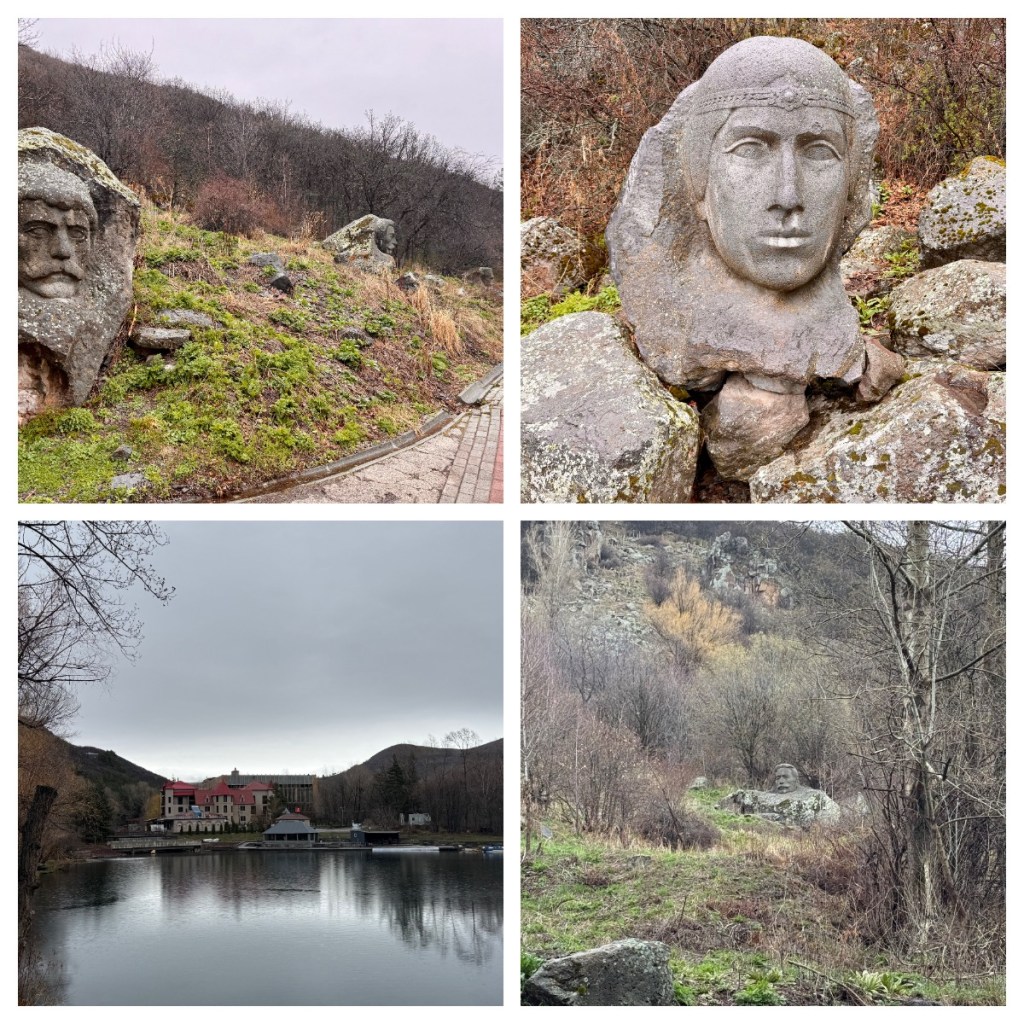
From the Gallery, we walked along the banks of the small man made lake (Sarnaghbyur Lake I believe) through the Hero’s Alley. Along the tree lined path, there are large carved busts of the “Armenian faithful”. The 6 men and one woman fought for Armenian independence during the Ottoman rule and protect villagers from the Turkish and Kurdish forces.
The final stop on our short walk, was an opportunity to explore the abandoned Palace of Culture (the building I could see from my room window). Health and Safety is definitely not a priority here as we could easily wander into the building and pick our way through the broken glass and twisted metal!
The Palace of Culture was built in the 1970’s in a classic Soviet style and many towns in ex Soviet states have similar community centres as a symbol of artistic expression. In it’s brief glory days, the complex included a swimming pool, a library, art galleries and exhibition halls and an 800 theatre hall! Not surprisingly it was once a bustling community hub.


With the collapse of the Soviet Union, funding for the building stopped and so maintenance and operational money dried up and the building lost relevance and fell into disrepair. By the early 2000’s the building was abandoned and start crumbling into the abandoned relic we were exploring.
Apparently, a local business man had purchased the building at some point with the plan to restore it, but the project never got off the ground and there is currently no firm plan to restore the building to its former glory. Instead it remains as a reminder of a bygone era and a site for adventurous explorers.
As we left Jermuk, we drove up into the clouds and it seemed that there would be no great views today. As well as cloud, there was some wind and a little rain which did not bode well for our upcoming ‘flight’. At least that is what they call a trip on the Wings of Tatev aerial tramway! The tramway is the longest reversible cable way in the world (5752 m long) and it won the World’s Leading Cable Car award in 2021 (who knew that was a thing lol).
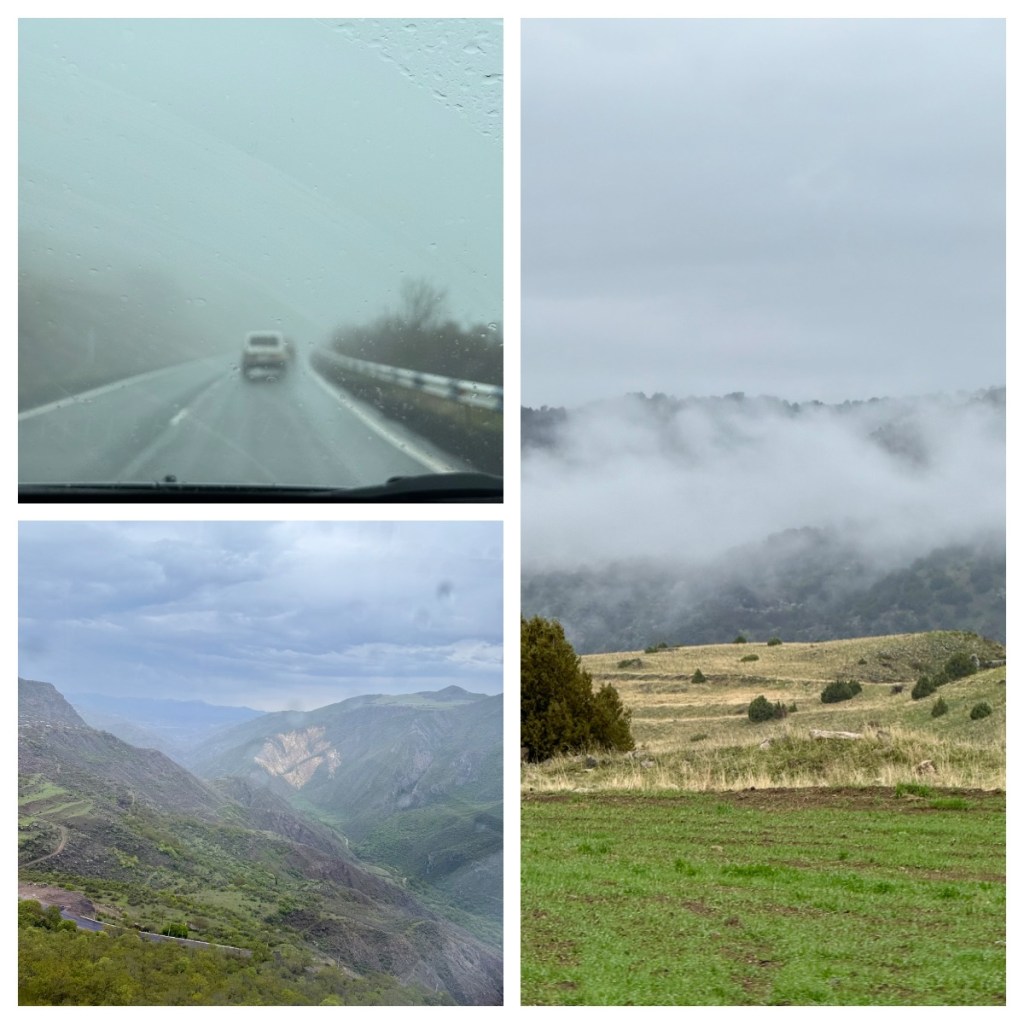

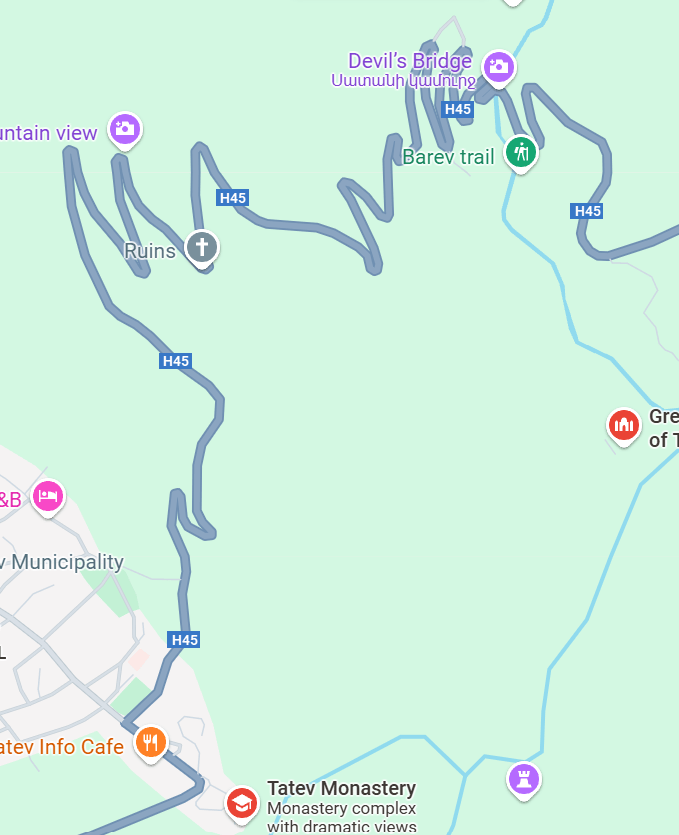
The journey takes 12 minutes to cross 320m above the gorge and the Vorotan River to the Tatev Monastery but it does not run if it the weather is bad so it was touch and go if it would be running. Thankfully it was and one was about to leave just as we arrived so we had to run to catch it – running did not help my headache, nor did the rocking of the cable car in the wind but we made it across unscathed and slowly walking around the fresh air did wonders for my headache. (It we would have had to take to drive to the monastery!)
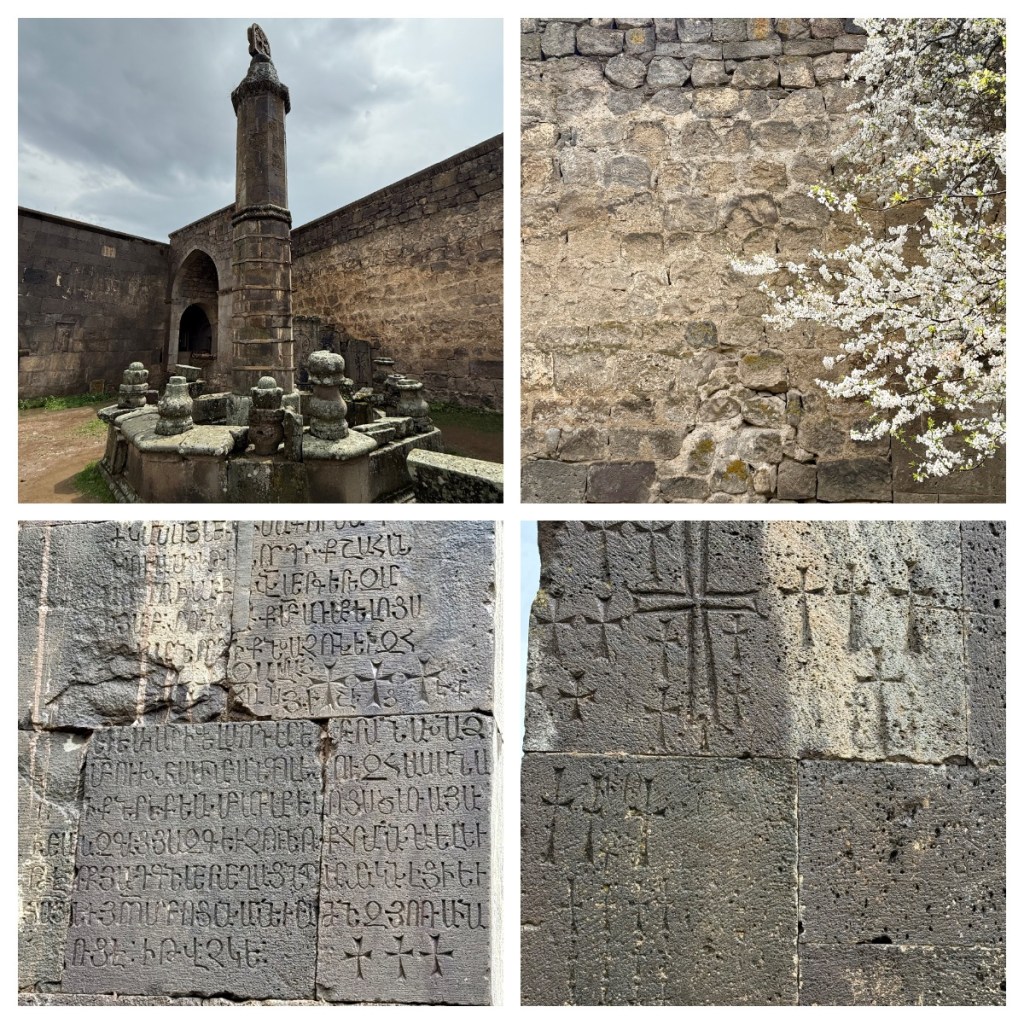
The Tatev Monastery is one of Armenia’s oldest and most important monasteries and is on the grounds of a pagan temple (there is still one column remaining from this era) and a 4th century church. The current buildings were built between the 9th and 13th century and given it’s location (and of course before the tramline) it was almost cut off from the world and therefore very safe. It was an important centre for education (spiritual and general) and over a thousand monks lived here in the 12th century!

It is still an important site today, and despite the weather, there was a couple having wedding photos in the grounds!

Apparently, the main Cathedral houses a number of important relics, including a piece of the cross, and relics of John the Baptist, Gregory the Illuminator and the Virgin Mary!
We also visited the old oil press which houses the technology used to extract oil from seeds in the 13th century. It looks like hard work!
We grabbed a kebah for lunch and again, people are so friendly, with sellers on small stalls wanting us to sample their products without accepting any money. Even the guys who we bought the kebahs from gave us fruit (at least we had purchased something from them). And of course more friendly stray dogs. Apparently, some are old shepherd dogs (that protected livestock) and in retirement they are just left to roam! Seems a sad fate, but as I have mentioned before, most of the stray dogs seems in fairly good condition and in very good spirits!
We jumped back on the cable car to cross back to our car before continuing on to the town of Goris where we were to spend the night. Before checking in to our hotel we took a short walk around the town to see some of the cave complexs in the nearby hills. We did not go close to them, but even from a distance you could see openings to caves that were actually lived in up until the 1960’s. Today, some of them house farm animals!

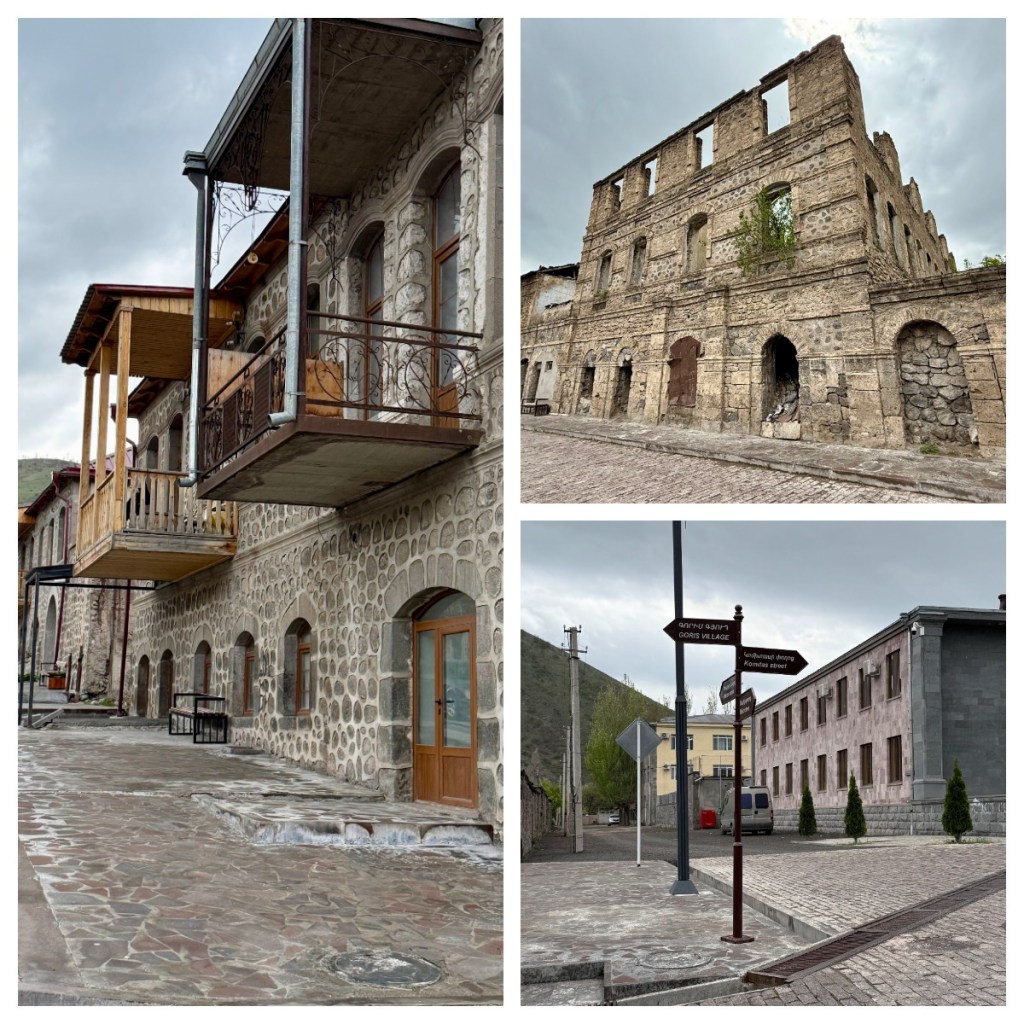
The older part of the city has had a lot of refurbishment of the two story buildings, many decorated with the local “barkash” style of plaster that is unique to Goris. As you can see from the map, Goris is very close to the disputed border with Azerbaijan and there Armenian army has a fairly big presence here.
I was grateful to have a shorter day today so I could recover from my headache and you, dear readers, may be grateful for a shorter blog lol.
 Cockneykiwi takes flight