East Cape Escape – Part 3: Flora, fauna and sauna

November 2021

This morning I was off on the road trip part of my road trip (lol) around the Tairāwhiti region – first stop was Whakatane via a lovely road around lakes and through small towns.  But my one and only reason for coming to Whakatane was to do a day trip to Moutohorā or Whale Island. 

Moutohorā is one of the most restricted pest free sanctuaries in New Zealand.  It is situated just 9km of the coast of Whakatane, not far from Whakaari/White Island which is now world famous for its eruption in December 2019 which killed 22 people.  It is just over 1.4km2 and is the remnant of an eroded volcano.  There are still geothermal areas on the island today (which is one of the highlights of the visit).

There is evidence of early Māori and European settlements, including an unsuccessful whaling station (catching only one whale 🥴), mining of sulphur (which was too poor quality) and then rock for construction of the Whakatane Harbour wall (in 1915). 

In 1965 the island was declared a wildlife refuge and once goats were cleared, a planting programme planted 12,000 native trees and grasses.  Today the island is free of not only goats, but rats, cats and rabbits (there were apparently up to ½ million and were used by Cray fisherman for bait) and is a safe haven for 190 native species. 

Because of its pest free status, bio security checks are an important part of the boating process for all passengers.  In the “Biosecurity Caravan” we had to empty our bags to ensure there were no pests, followed by checks of our shoes for soil and seeds and finally we walked through a tray of disinfectant before boarding the boat. 

It was a beautiful warm day, already 18c and sunny before we set off out through the heads at the mouth of the Whakatane River and passed The Lady on the Rock statue on top of Turuturu Rock.  The statue commemorates the bravery of Wairaka, the daughter of Toroa, the captain of the first waka to arrive in Whakatāne after a long and dangerous journey from Hawaiki (their ancestral homeland).  As the men went ashore, the canoe started to draft back out to sea and Wairaka grabbed the paddle to bring the waka back to shore (it was forbidden for women to handle a canoe!)  She cried our “Kia Whakatāne au I ahau” – I will act the part of a man – hence the name of the city.
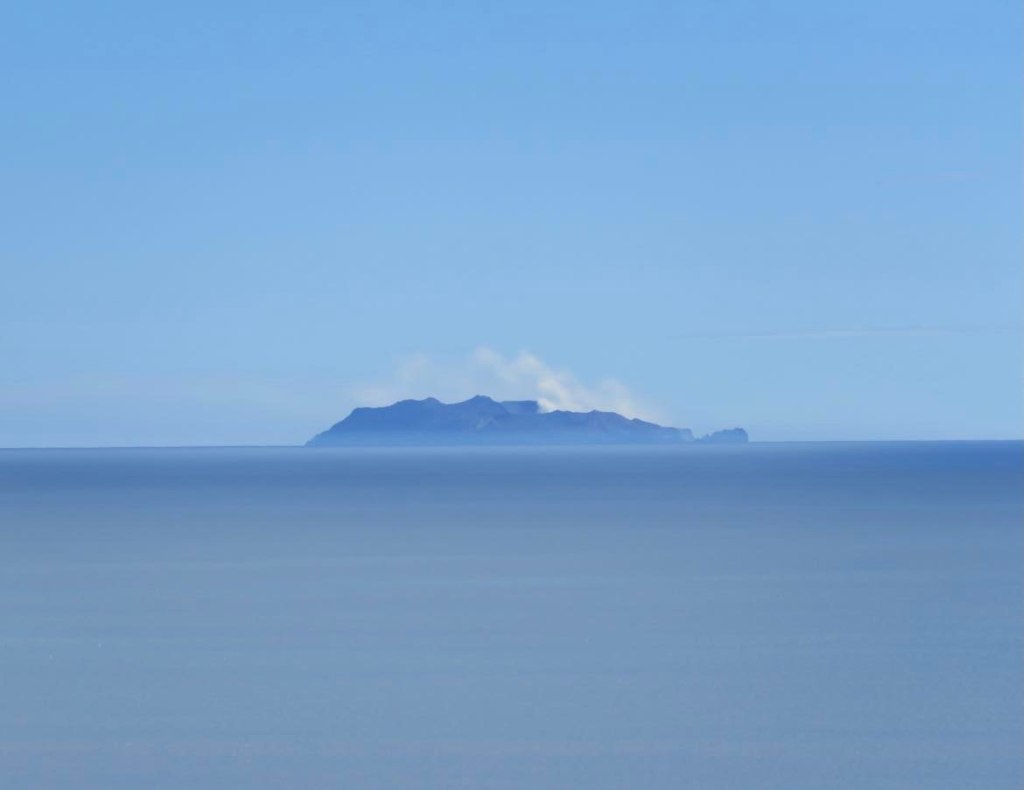
I was travelling with White Island Tours – the only way you can visit the island (unless you work for the Department of Conservation).  Not surprisingly, they are the main company that used to run the tours to Whakaari White Island prior to the eruption and were on the island at the time, losing staff members.  One of our guides had been on the island earlier in the morning – as the volcano quietly smoking away in the distance, I can’t imagine what is must have been like to have been on the water the day it erupted … or to continue to see it every day!

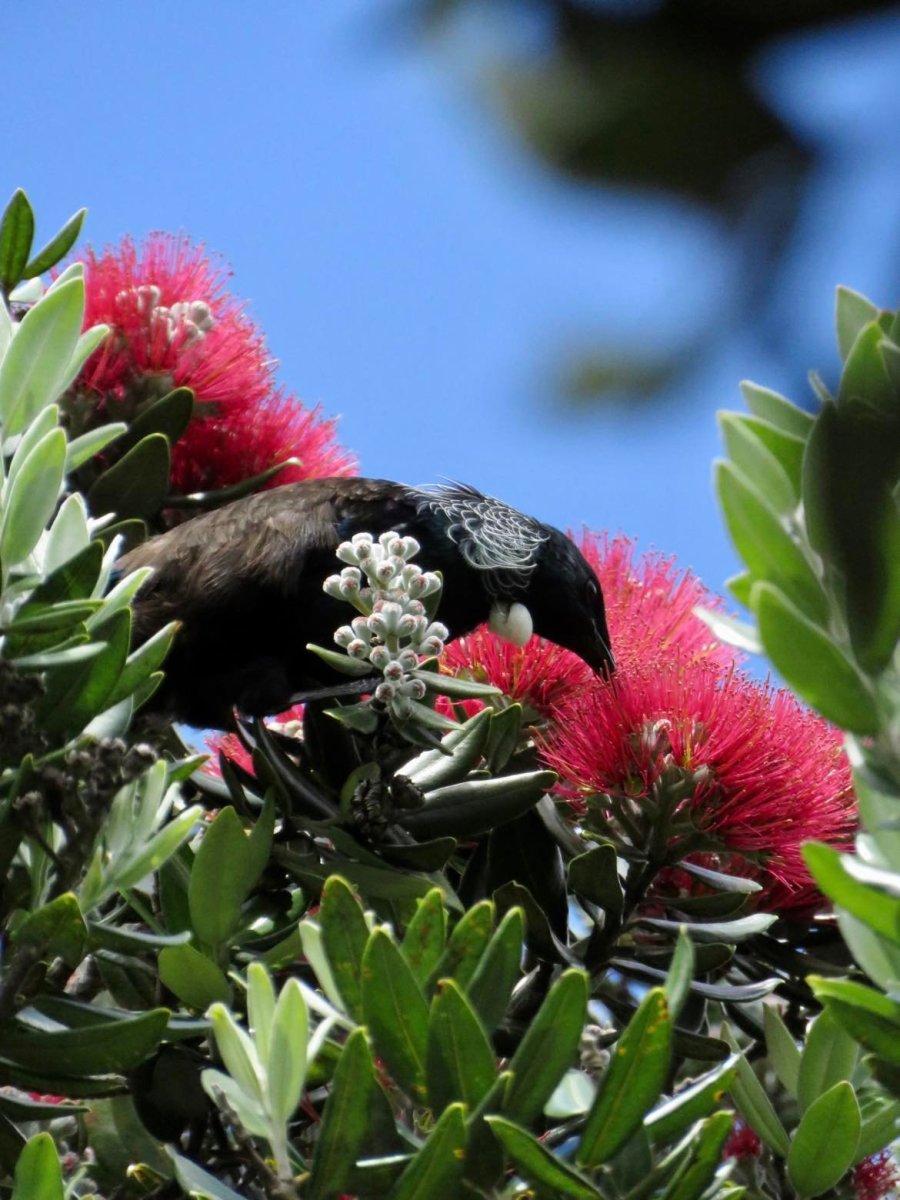
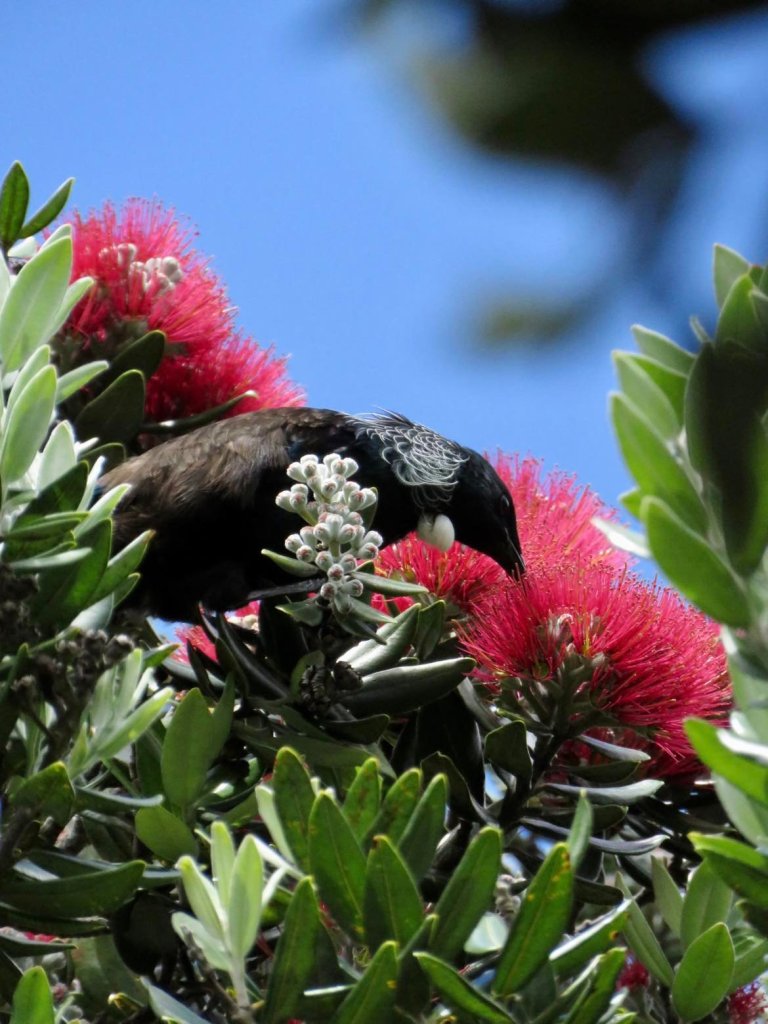
After a quick 15 minute boat ride, we landed on Moutohorā.  There is no wharf or jetty so need to be prepared to get wet feed as you wade ashore.  Unfortunately we were about 1-2 weeks too early for the full bloom of the Pohutukawa tress which covered the islands.  Luckily there were a handful that bloomed early and where already surrounded by beautiful tuis👍🏻.
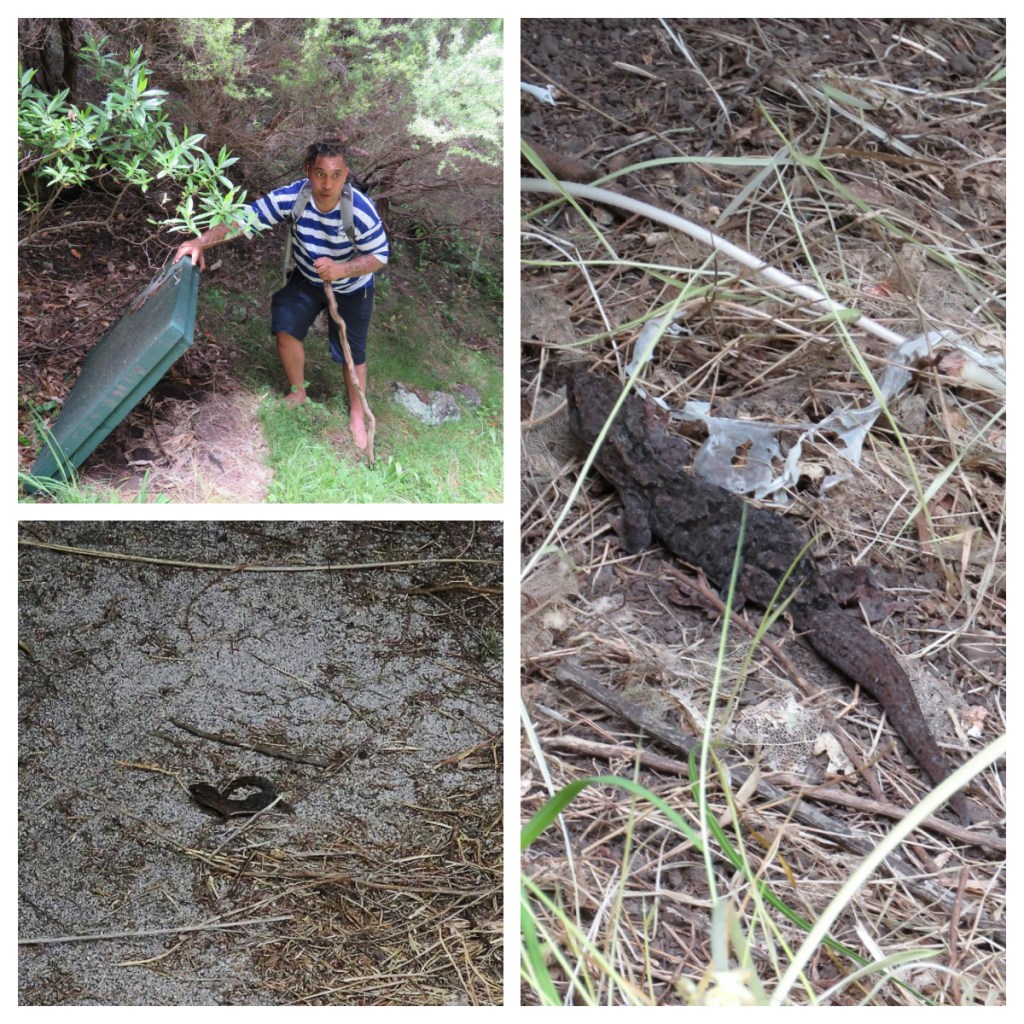
The island is a wonderful haven for New Zealand’s wildlife and it was not long before our guide pointed out a juvenile common gecko (in a purpose built ‘gecko hotel’ – really just a small, covered area, which is easy to lift to spy on the current guests).  Did you know that New Zealand geckos, unlike other reptiles around the world, give birth to live young rather than eggs.  It is believed to be an adaption to adjust to the colder climates.  They are not only slow breeding, but they are also long lived – living up to 50 years.

The air was full of bird song, but even louder was the hum of bees around the flowering kanuka.  I am not sure I have ever heard so many bees. 
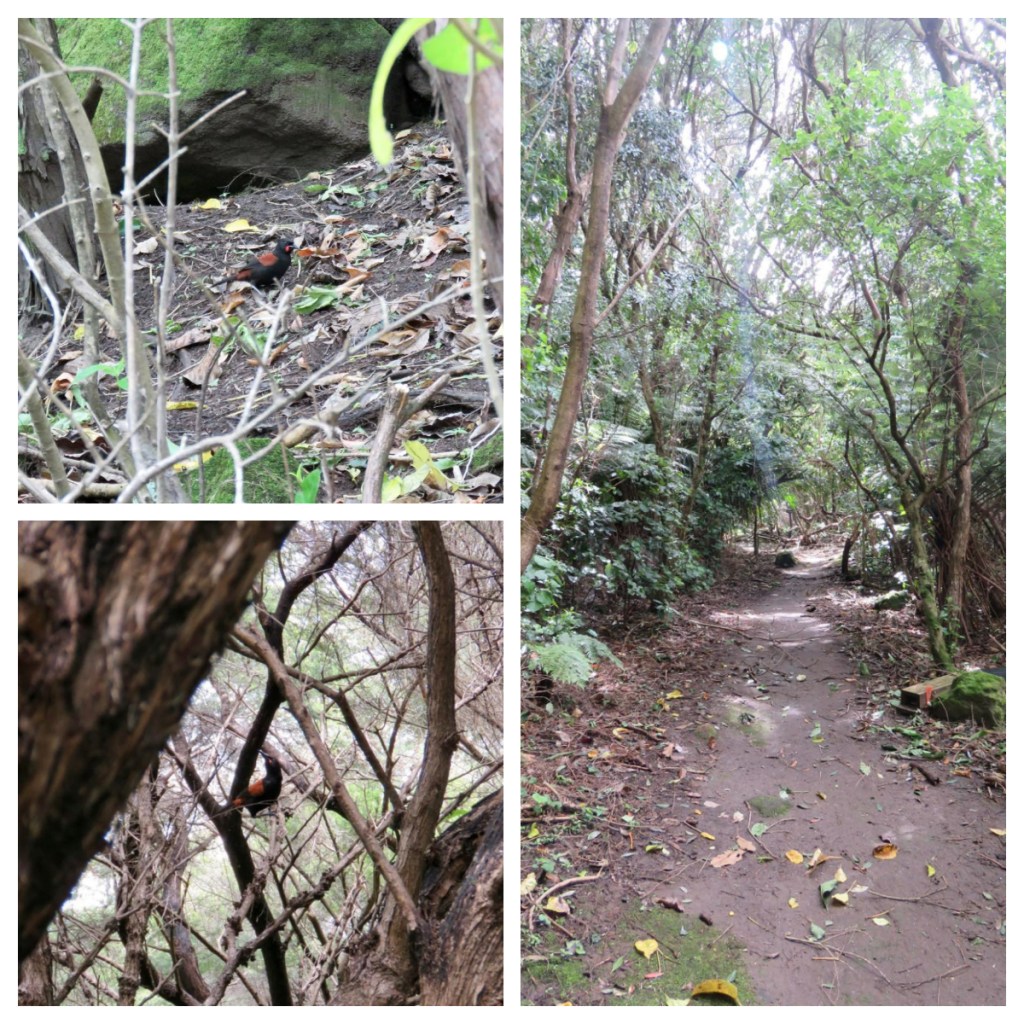
As we walked through the island (the guides in bare feet lol 🥴) we passed (or were passed by) North Island Saddlebacks – remember I met their South Island cousins on Stewart Island back in 2020.  Here the juveniles are born with their ‘saddle’ markings as opposed to the South Islands one who do not develop it until they are older.

The highlight of the day for me (although the whole day was a highlight) was seeing my first Tuatara in the wild 🙌🏻🙌🏻🙌🏻.  Tuatara are endemic to New Zealand and are the only survivors of an ancient lineage of reptiles whose ancestors lived along side dinosaurs, over 220 million years ago.

They used to live throughout the country, but populations were decimated by rats etc. and today are now only found in predator proof fenced sanctuaries and offshore islands.   They are active mainly at night but also come out during the day to bask in the sun.  To avoid being eaten by adults, juveniles tend to feed during the day!! 

Females can lay 6-8 eggs per year and are buried to keep warm and as with some other reptiles, the egg temperature can determine the sex of the young.  Once hatched they have to fend for themselves and if they survive ‘childhood’ they can live between 80-100 years.  

Did I mention just how excited I was to see them??  I had seen them before in wildlife parks (in fact I used to work at a park where we breed them), but never in their natural habitat.  It was really a thrill for me.

Kiwis have been introduced to the island, but they have not breed well, no one really knows why but it is possible they are competing for burrows with grey faced petrels that also nest in burrows on the ground.   We actually passed the bodies of a couple of petrels along the way – apparently, they are terrible at landing, often using trees/bushes to break their fall, sometimes this does not work for them!

After a walk around some of the tracks we stopped by the hut for some lunch (it used to be possible to stay the night but now it is only used for rangers).  I only had snacks rather than lunch so was finished quickly and took the opportunity to hang around by the flowering Pohutukawa’s (right by the toilet lol) watching the tuis attracted by the flowers.  I was also lucky enough to spot some of the resident Kakariki (a green parrot) but not close enough to get a photo.
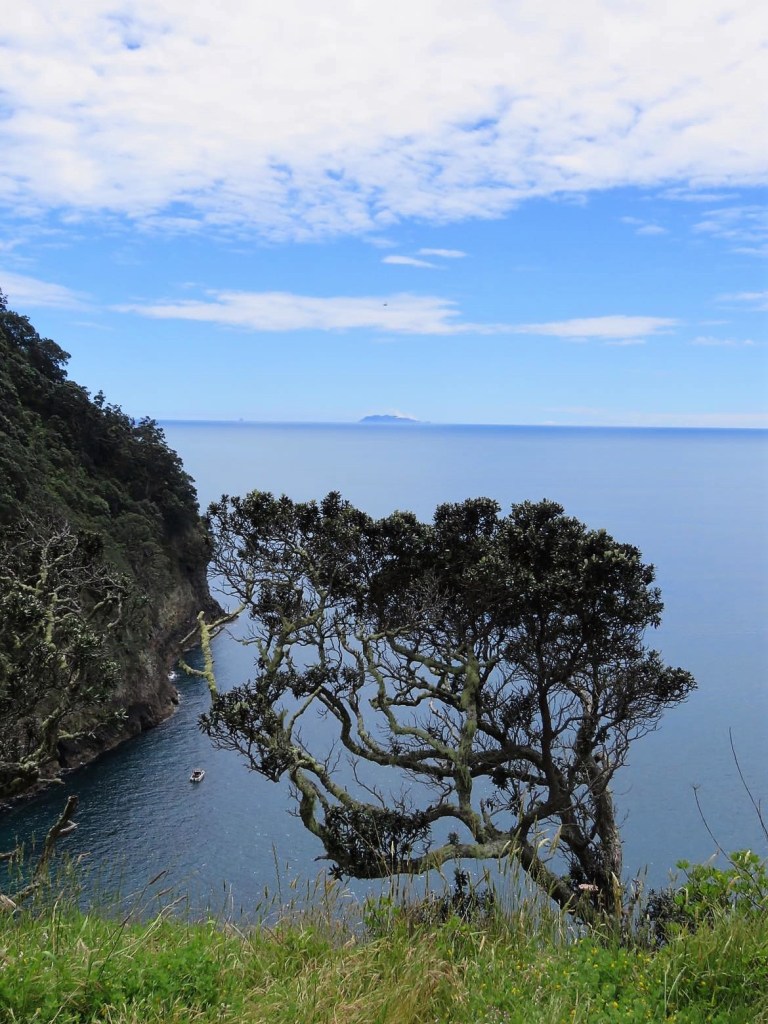
From lunch we took one of the tracks around the side of the island and down to Sulphur Bay – not surprisingly the remaining geothermal area on the island.  There were once pools in the area, but they were buried by a landslide, but you can still see the steam vents and you can definitely smell the sulphur.

The geothermal activity makes this an incredible ‘hot water beach’, you can actually see the sand bubbling in some areas it is so hot – it actually felt like I scalded my feet at one point 🥴.   The idea is to dig a hole in the sand, the perfect depth so you get right temperature water in your self made hot pool – too shallow and it was way too hot, too deep and it was too cold!   There are hot water beaches in other parts of the country, but it is rare that you find one which you can have all to yourself.

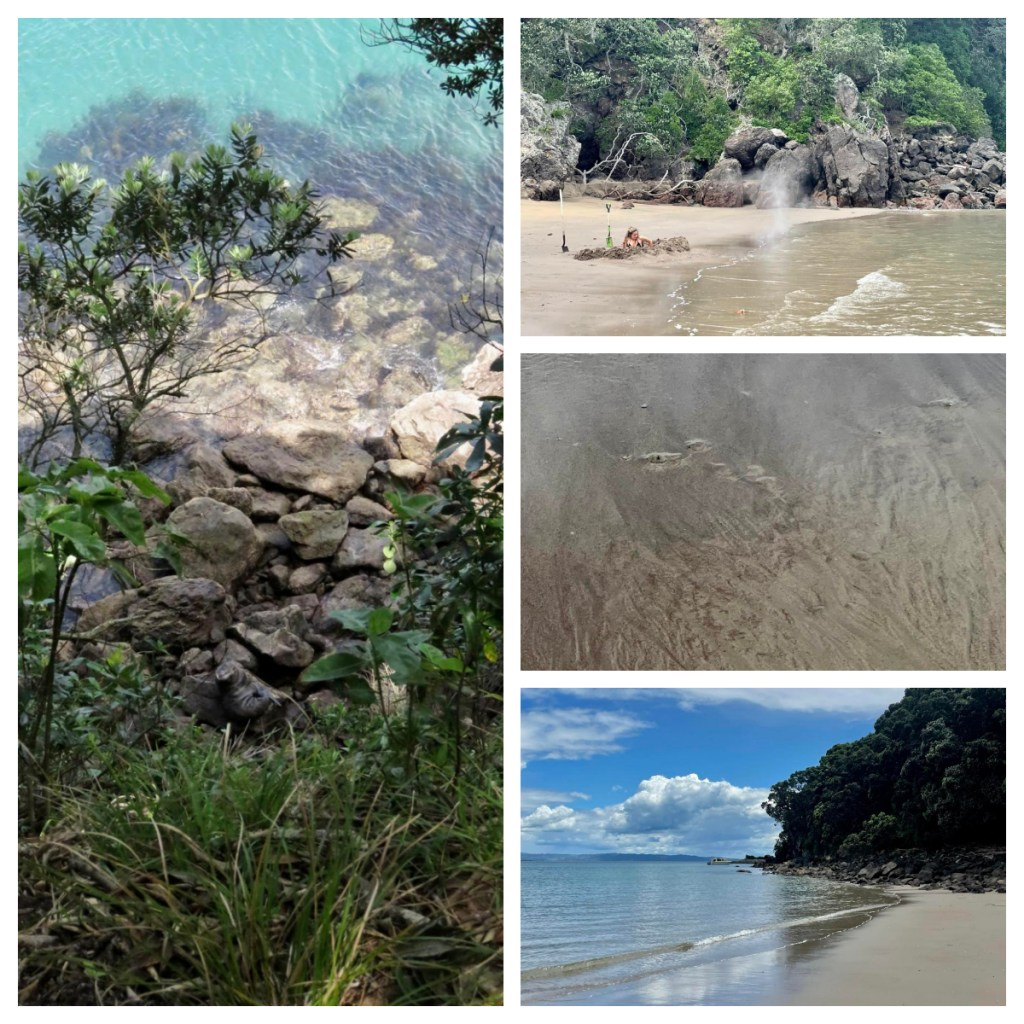
It was beautiful sitting on the beach in the sun, soaking my feet in the hot water while watching isolatied rain showers across the mainland.  What a way to spend the day.

As we headed back towards the boat, which was waiting for us at another beach, there was word of a whale sighting so instead of heading back to town, we headed out to sea.  It was already 1.45pm and they had said we would be back by 1.30pm – no one was complaining though.   On our impromptu boat trip, we saw diving petrels and penguins in the water 👍🏻 but sadly no whales today.  It was great to see the island from the sea as well, with its interesting rock formations and NZ fur seals lazying around the shore line.
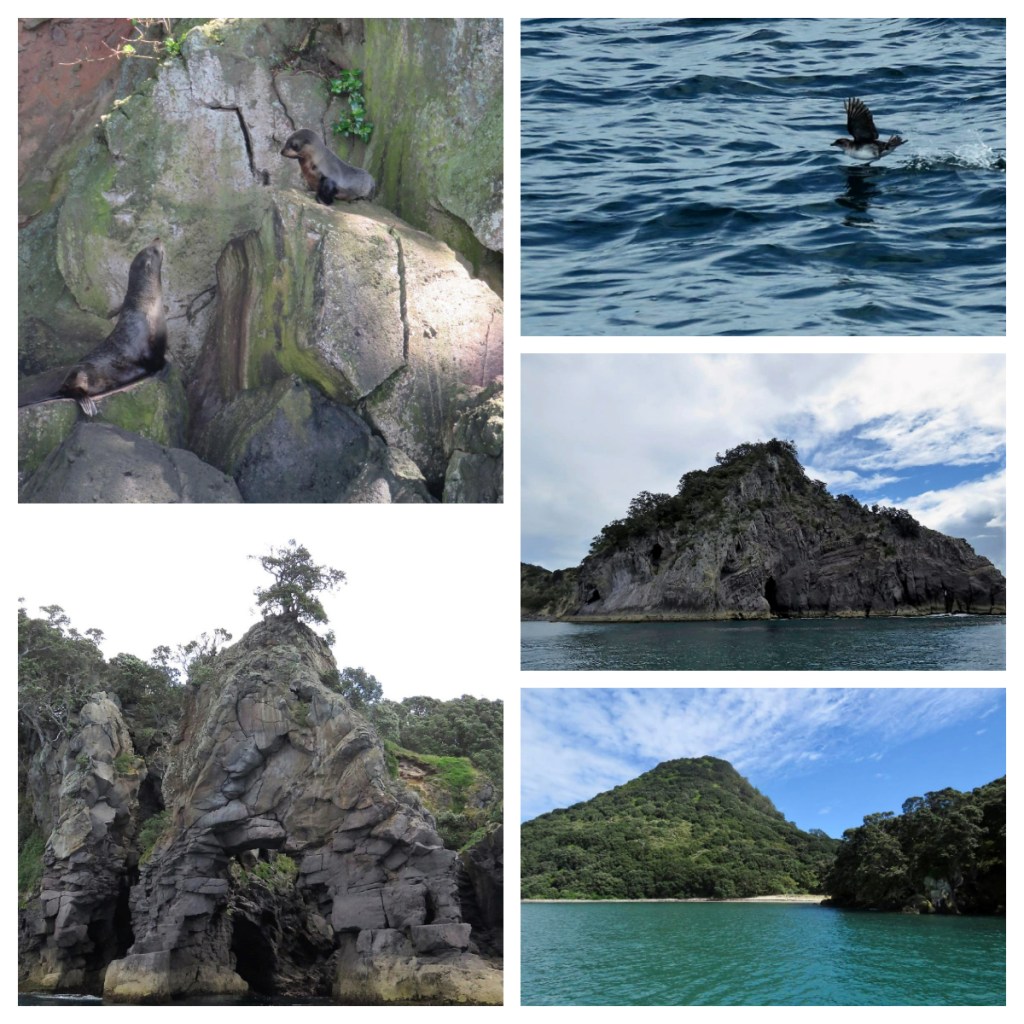
We finally arrived back back in Whakatane over an hour late – what an amazing trip which I highly recommend.

Back on the mainland it was time to hit the road as I still had some driving to do before my stop for the night.   I could not pass up the opportunity to stop at what is apparently New Zealand’s favourite beach, Ohope Beach.  It was pretty impressive with 11 kilometres of beautiful sand beach, despite being a little windswept today.  The Ohope spit itself is approximately 6 kilometres long and only 300m wide at its narrowest, making it very easy to walk from the beach on one side to the Ohiwa estuary on the other.
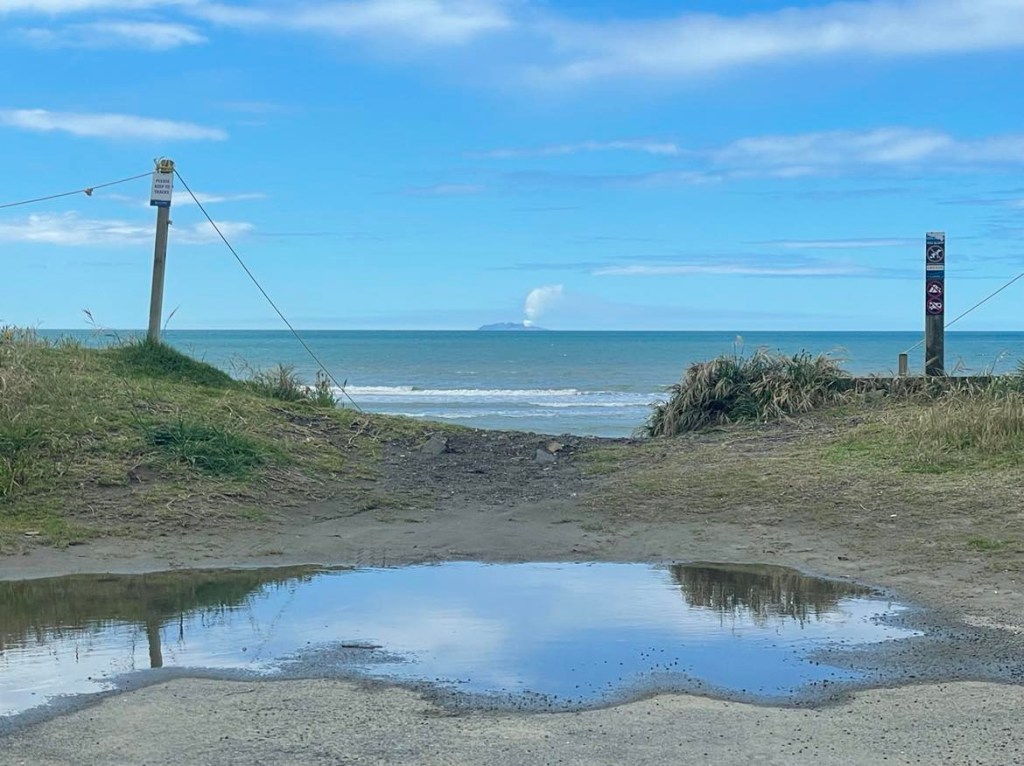
I was starving by this point, so stopped to have some lunch at the General Store, overlooking the estuary.  Unfortunately it really only had fried food (which becomes a theme for the trip) so fried food it was!

I’d been lucky to avoid the rain so far, but it finally came down as I was driving my last leg for the day.  Despite the rain it was a lovely 35 minute drive around the estuary and through small rural villages to my stop for the night at Opotiki. 
East Cape Escape – Part 1: Volcanic Valleys (Rotorua)

October 2021

As my last trip ended up with a hospital stay – this one started with one. After a late night dash to take my father in – he was admitted around 3am and so I managed to get home for a few hours’ sleep before I had to get up for a morning of work before I headed off.  FYI he is now recovering well and insisted I still go on my trip, as my brother also lives in Christchurch and would be around for him.

So, I was completely exhausted when I got to the airport!  With the resurgence of covid in New Zealand and 2 trips north and a trip to Australia already cancelled I had been on tender hooks whether this trip would ever happen, but I was finally on my way. I had spent a fair amount of time planning this trip, and I had an action packed itinerary written up (matched against a costing spreadsheet 😂🥴) so I hoped I would get it all done. 

The Air New Zealand Koru lounge is a bit different in our covid world, no more helping yourself to food or drinks (someone has to serve you) – first world problems I know. Thankfully Air New Zealand have yet again extended status tiers for another year, so I get another year of the luxury of the lounge before travelling so definitely need to make the most of it 👍🏻🥴

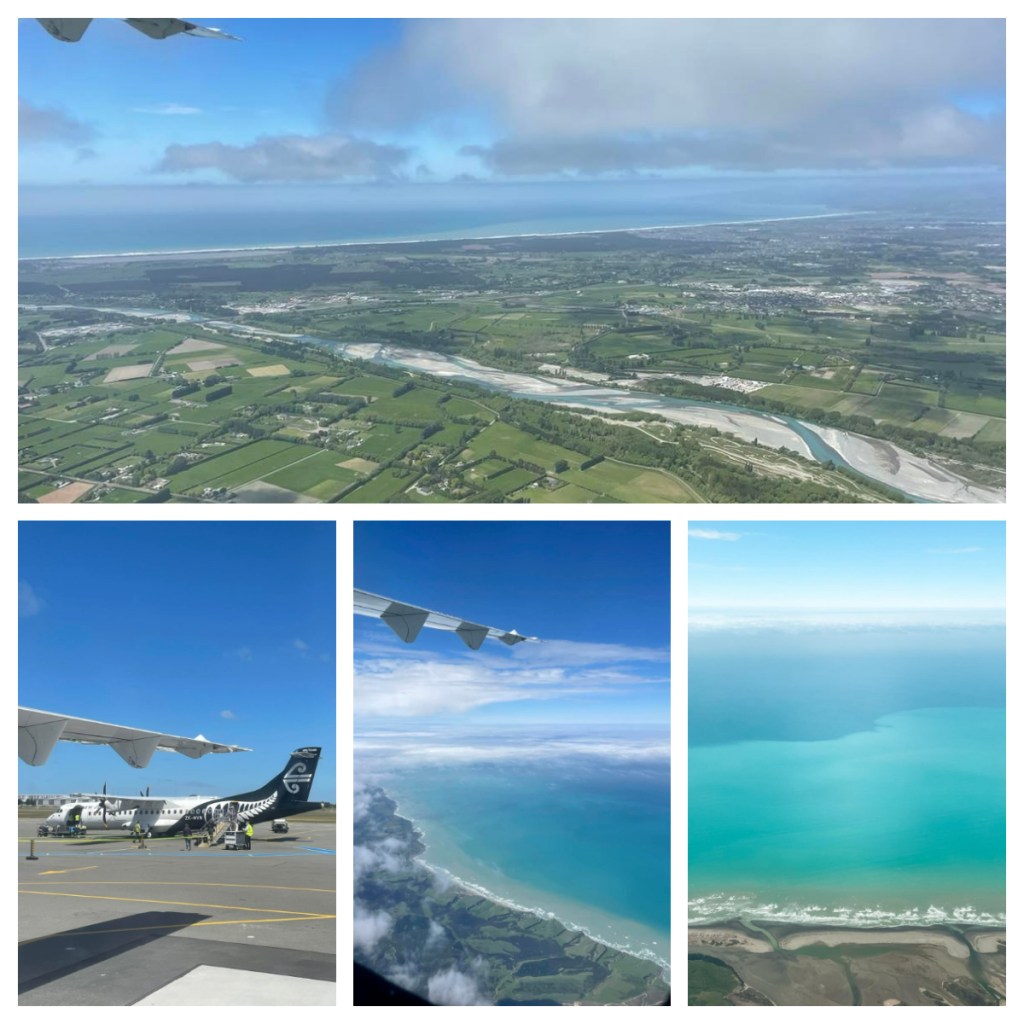
After beautiful views taking off, there was cloud cover most of the way so I could catch a few minutes sleep on the 90 minute flight (small plane = longer flight time) without feeling like I was missing out on the views 🥴, and we arrived in Rotorua to low cloud and a little rain.

It was quick and easy to pick up my rental car from Rad cars and soon I was on my way to the city. After about 10 minutes, I started to smell an odd smell and thought it might be something to do with the car (it was my first time driving a hybrid so wasn’t sure what was normal) … but then I remembered where I was … Rotorua – the hub of geothermal activity and a city that permanently smells of sulphur i.e., rotten eggs!  The city is part of the Taupo Volcanic Zone that extends from Whakaari/White Island off the east coast of the Bay of Plenty, to Mt Ruapehu in the south (both active volcanos).  The steaming vents, bubbling mud pools and spouting geysers are all around the city and have been drawing visitors from around the world since the early 1800s.

I made my way into the city (only a 15 minutes’ drive) and checked in to my accommodation -Rock Solid Backpackers.  Back in backpackers again, but at least this time I had my own ensuite room so it actually was not that cheap but after the sleepless night of the day before I was struggling to stay away so I would have slept anyway!

I took a quick walk to a nearby supermarket and a nostalgic dinner at Cobb & Co I was soon back in my room and ready to sleep.  (Cobb & Co is named after the Cobb & Co stagecoaches of the 1860s. The restaurants opened in the 1970s and where definitely a treat during my childhood.  Most seemed to have closed but I am pleased to see they are having a revival and I have just discovered that one has just opened in Christchurch – you know where I will be lol)

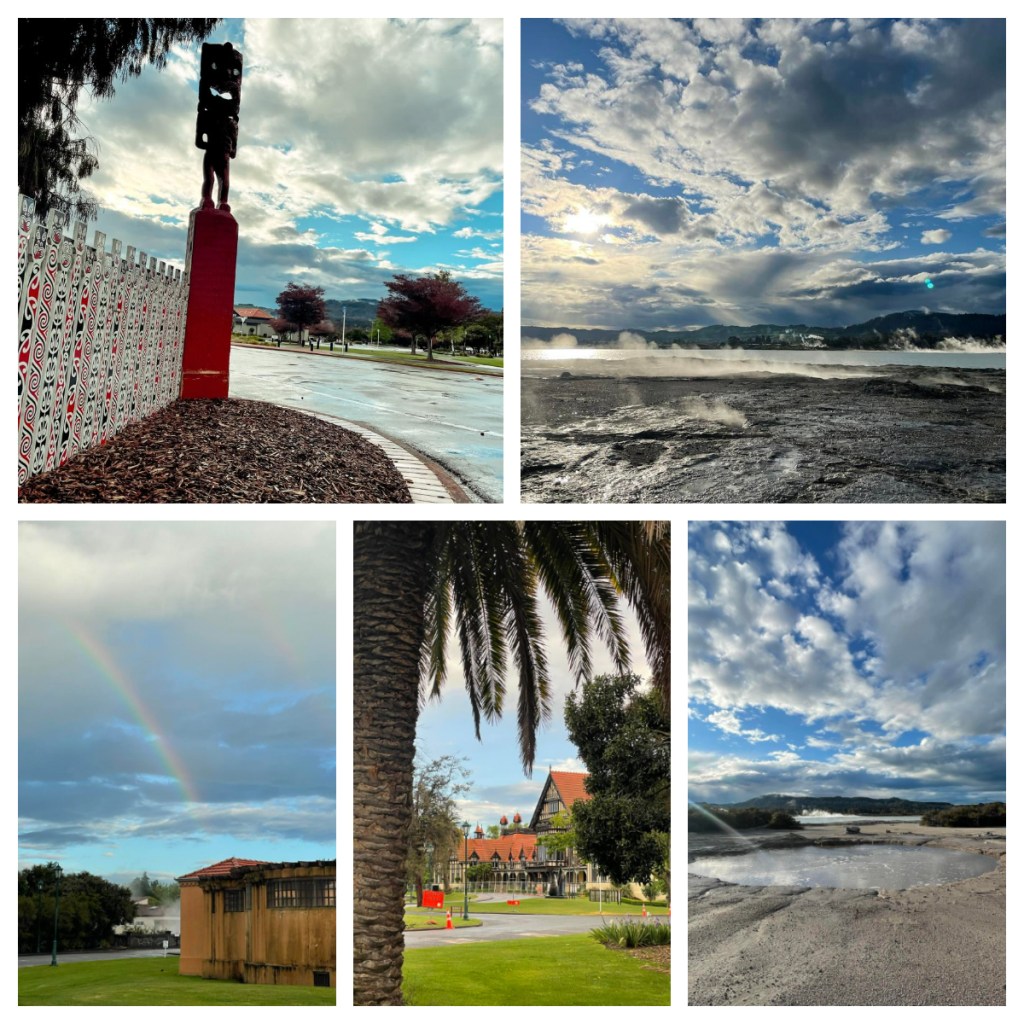
On the first morning of my holiday I woke to rain – It was forecast so I was ready for it.  As always, I was awake early so decided to take a morning stroll down to lake front and the rain stopped just as I stepped outside so that was a win. 

I had a route worked out but was stumped at every turn due to track and road closures. So, I kept wandering towards the lake, taking any road/track I could through the Government Gardens and passed the beautiful Tudor style museum building (which was closed for earthquake damage repairs).   My wandering was helped by a beautiful rainbow over the city.

My wandering paid off and I found a way to the lake but had missed the lookout point at sulphur point noted on google maps, so I back tracked a little and I found the track I wanted (I actually think it was linked to where I saw the track closed sign – whoops).  Finally, I got the views I had been looking for.   The sulphur smell was strong first thing after the rain.  The sound of boiling water/mud and seagulls, the steam, the smell and the sun rising across the lake hit all the senses. 

I wish photos or videos had smell so you could truly experience it with me 😂 According to the sign “the smells of Sulphur Bay and Lake Rotorua are from sulphurous gases belched from the depths of the earth.  The sounds are of gases and steam bubbling and roaring to the surface through narrow vents and pools.”

I was intrigued by a pool named “Cameron’s Laughing Gas Pool”.  Apparently, the mix of hydrogen sulphide and carbon dioxide rising from the pools have the same effect as laughing gas.  It was an early public bathing sight and apparently some bathers would end up laughing uncontrollably, others would pass out!!  It is probably not a bad thing that you cannot get that close anymore.

The site actually holds a lot of history – the site of a large battle between warring iwi (Ngati Tangaroamihi and Ngati Tama) and when gifted to the Crown by the Te Arawa Iwi in 1880, an area for sanatoriums, railways, hospitals, basically the establishment of a town.  They also used to mine the sulphur and in 1916, a ton of sulphur was worth GBP28 on the London market!

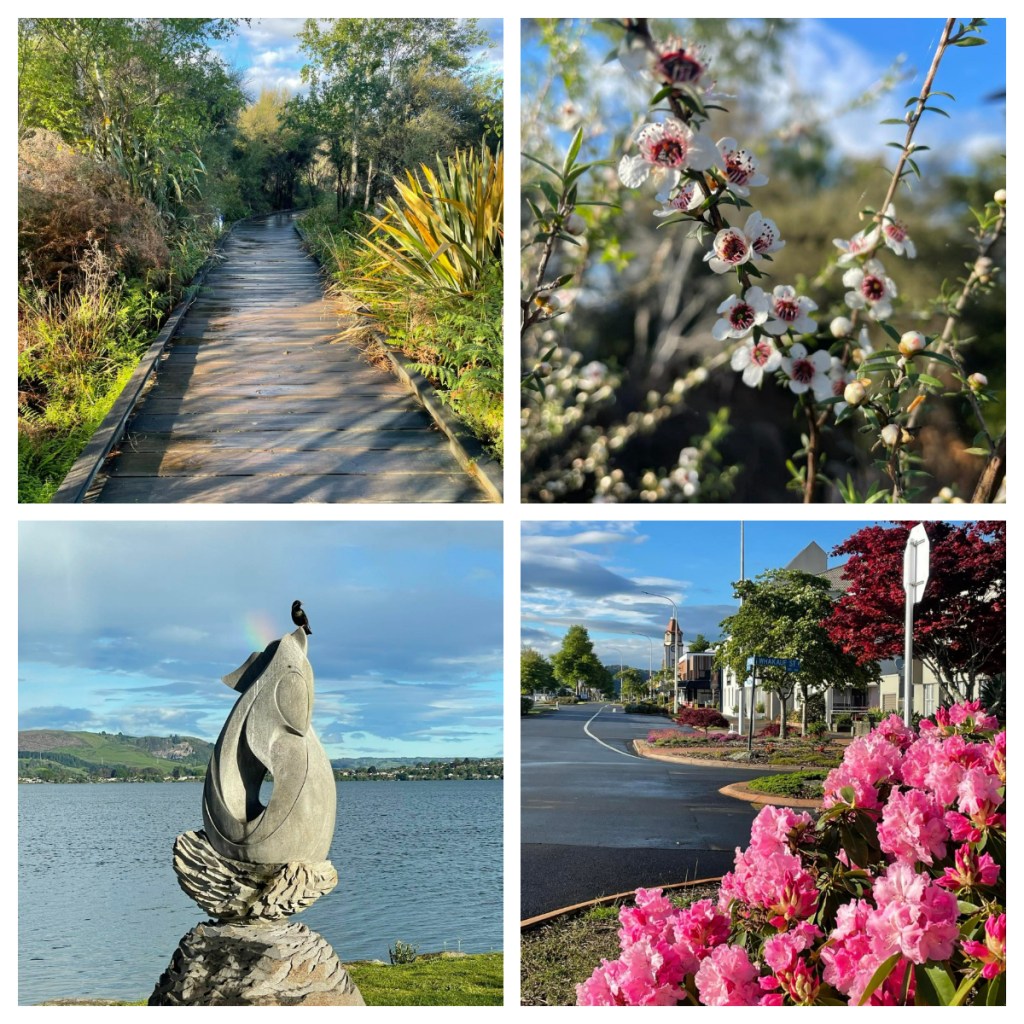
By this point I needed my sunglasses and not a raincoat and umbrella I had with me, but I decided to continue around the lake track as it was still not even 7.30 (and I had already taken so many photos and I had not even left the centre of town 🥴).  It was definitely the right decision as it was lovely track around the lake and back through wetlands with a boardwalk through beautiful flowering Kanuka and Manuka.

PSA – don’t forget insect repellent! I have thought about putting it on but when I left my room, but I was only going for a short walk in the rain!   Lesson learnt – always be prepared 😂. Oh, and I also forgot my mask and wallet – thank goodness for payWave and hoodies that you can zip up you’re your mouth and nose so I could get coffee on my way back to my room.

There is so much to do and see in and around Rotorua, but as I only had one day, I had chosen to visit a couple of geothermal regions just out of town.  First up was the Waimangu Volcanic Valley. Just 20 minutes’ drive from the city through some beautiful rolling farmland and punga lined country roads

In 1886, Mt Tarawera erupted, ripping a 17km rift in the earth, creating what is now the Waimangu Volcanic Valley.  The eruption was heard as far south as Christchurch and as far north as Northland! The area was given its name when in the early 1900s a huge geyser erupted in valley, throwing black water, steam and rocks up to 450m in the air – Waimangu is translated from Māori to Black Water.  Further steam blasts in 1917 again reshaped the valley, re-excavating Echo Crater and destroying a nearby hotel. 

The first part of the visit a 4km walk down through the rift valley.  Today it is so beautiful and peaceful, filled with birdsong, I can only image the eruptions of the passes that created what we see today (though the steam vents help with fill in that picture lol).

I had 2 hours to walk through the area and I thought that would be way longer than needed for the 4km walk, but there was so much to see, and such great information provided via the leaflet they give and the great interactive app that provides more information and interactive images showing how the area looked pre eruptions.

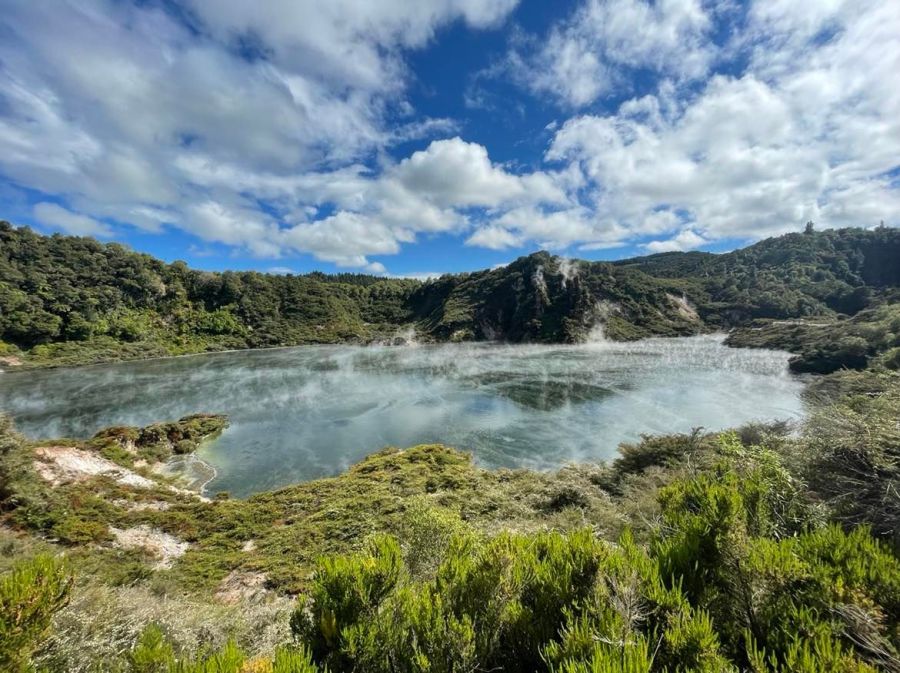
The most recent eruption happened in Frying Pan Lake in the Echo Crater and was called the Trinity Terrace Eruption.  In February 1973, a small eruption sprayed mud over 100m in the air.  Thankfully it took place in the middle of the night, and only lasted 15 minutes.

I should probably note that before the 1917 Frying Pan Flat eruption, people could walk over the area that is now Frying Pan Lake!  I was very interested to learn that the bubbling water is not actually boiling – which I always thought was the case.  It is actually carbon dioxide and Hydrogen sulphide gas bubbling up through the acidic lake water that makes it look like it is boiling.

The second part of the experience was a boat trip across Lake Rotomahana – there was only 4 of us so plenty of room to spread out and enjoy the trip mask free.  Prior to the 1886 Tarawera eruption, the area that now forms Lake Rotomahana had been home to two smaller lakes – Lake Rotomahana and Lake Rotomakariri and was the birthplace of New Zealand tourism. 

Pre 1886 Lake Rotomahana was home to the world famous Pink and White Terraces, once considered the 8th wonder of the world.  Tourists from around the world made the long journey to enjoy the natural hot pools in the silica terraces.  Using the interactive app, you could see an image of the terraces as we sailed over their former site.  I imagine they were similar to the silica terraces I visited in Pamukkale in Turkey many years ago.

The lake is also now a bird wildlife sanctuary so there were lots of birds including ducklings and cygnets. 

If you notice the golden colour around some of the vents, it is a phenomenon where blue green algae turn gold to protect itself from the UV in the sunlight, oddly nothing to do with heat or gases in the geothermal steam or water!

Back on dry land, we were shuttled back to the beginning on a bus (which you could hop on at 3 places through the walk).  It was definitely worth the visit and their app was cool, but they should definitely advertise it more and warn people it uses lot of battery, especially if you are using your phone as camera too.

It was a great morning, but I had no time to sit still, I had to quickly be on the move to my next activity ….