
Davis Strait and Sisimiut, Greenland
August/September 2024
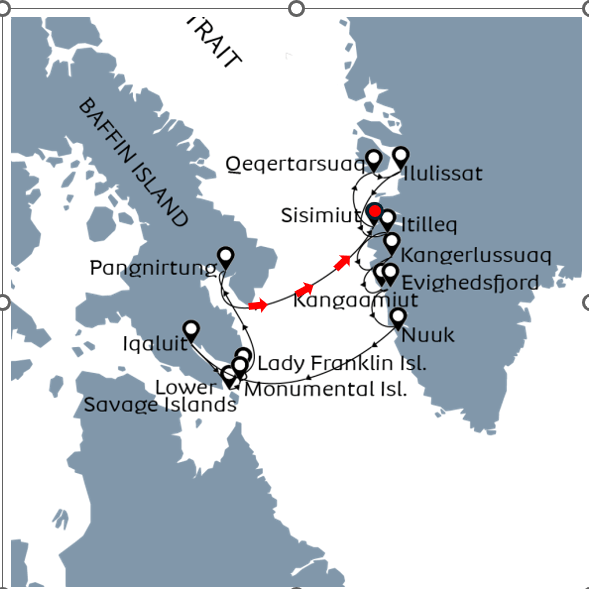
After our day in Pangnirtung, we started our trip back across the sea to Greenland which of course meant time changes again – 1 hour the first night and 2 hours the second. As there was not much to do on the sea day (thankfully there are only 2 full days at sea on this trip, one of the reasons I chose it) I thought I would do a little ship tour as I watch the icebergs float by in the distance.
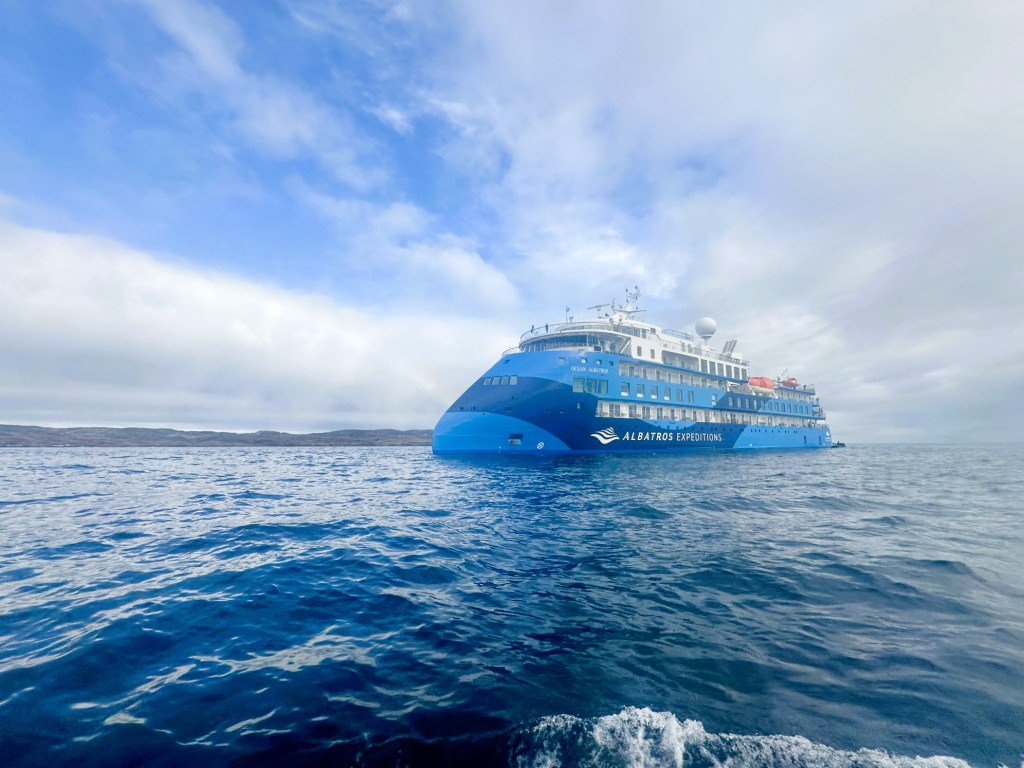
The Ocean Albatros is just over one year old and definitely the nicest expedition ship I have been on. She is Polar code 6 and Ice class 1A rated ship, with an x-bow Infinity class which apparently provides high stability – I can certain say that although the weather was never particularly bad, sailing was generally very smooth. She also uses dynamic positioning which means they don’t often need to use an anchor to stay in place, and, she is powered by low energy consumption engines which are designed to reduce emissions.
My room (one of 94) is great (better than some hotel rooms I have had) and having it to myself is a dream. I am on level 4 of the 8 story ship. The mud room is on level 3 – the area where we put on our waterproof gear and life jacket and get in the zodiacs.

Level 5 is the main congregation space with the lecture room, bar, small library, main reception and the restaurant. A great thing about this ship is that the lectures are broadcast on the TV in the rooms, so if I don’t feel like going to the lecture room, I can still watch them.
Breakfast and lunch are buffets and dinner is ala carte with free wine or beer. The wait staff are very attentive when it comes to filling up our wine glasses but it is often difficult to get a water refill 🥴.
Level 7 has the main outside area, including lots of nice chairs (which are often too wet to sit on lol), a small pool (which has been empty on this trip) and 2 small hot tubs which seem to get used a lot! This level also has a small gym and a spa – neither of which have used 🤪.
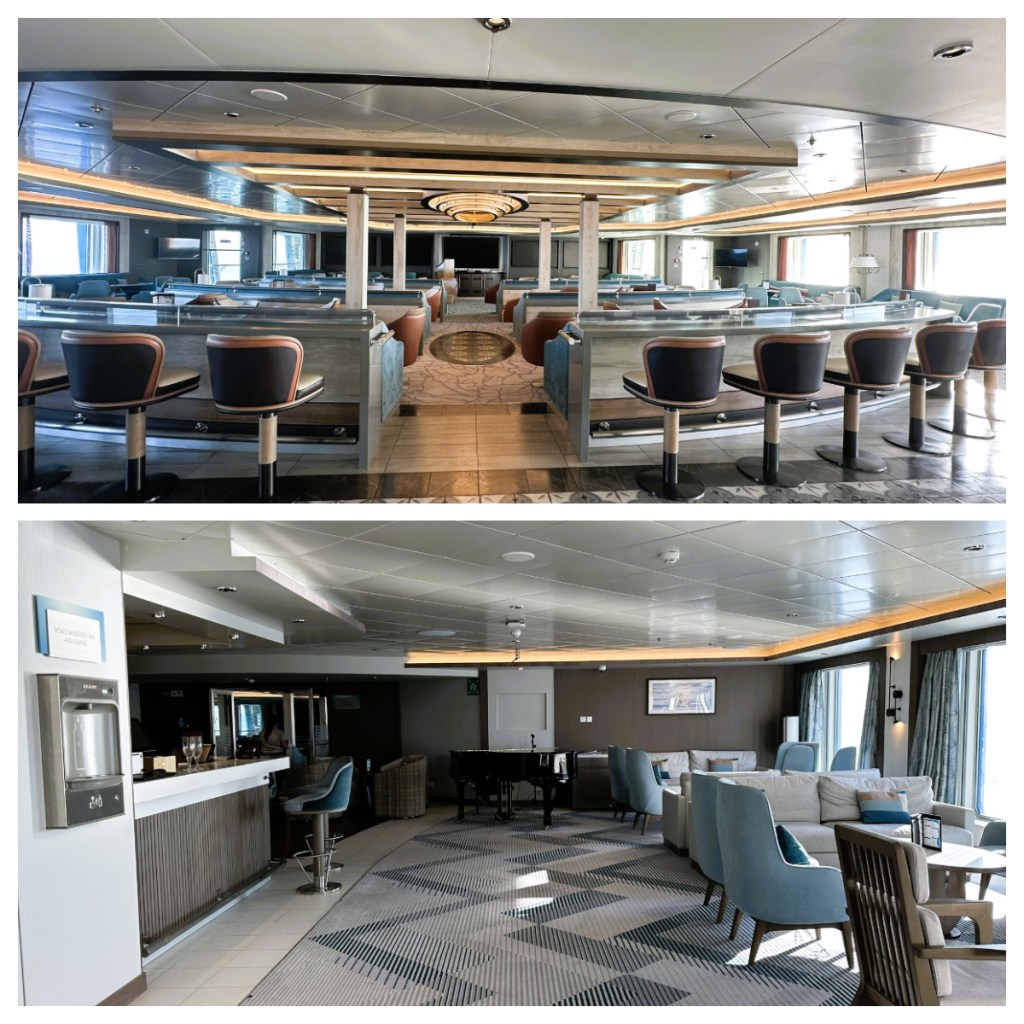
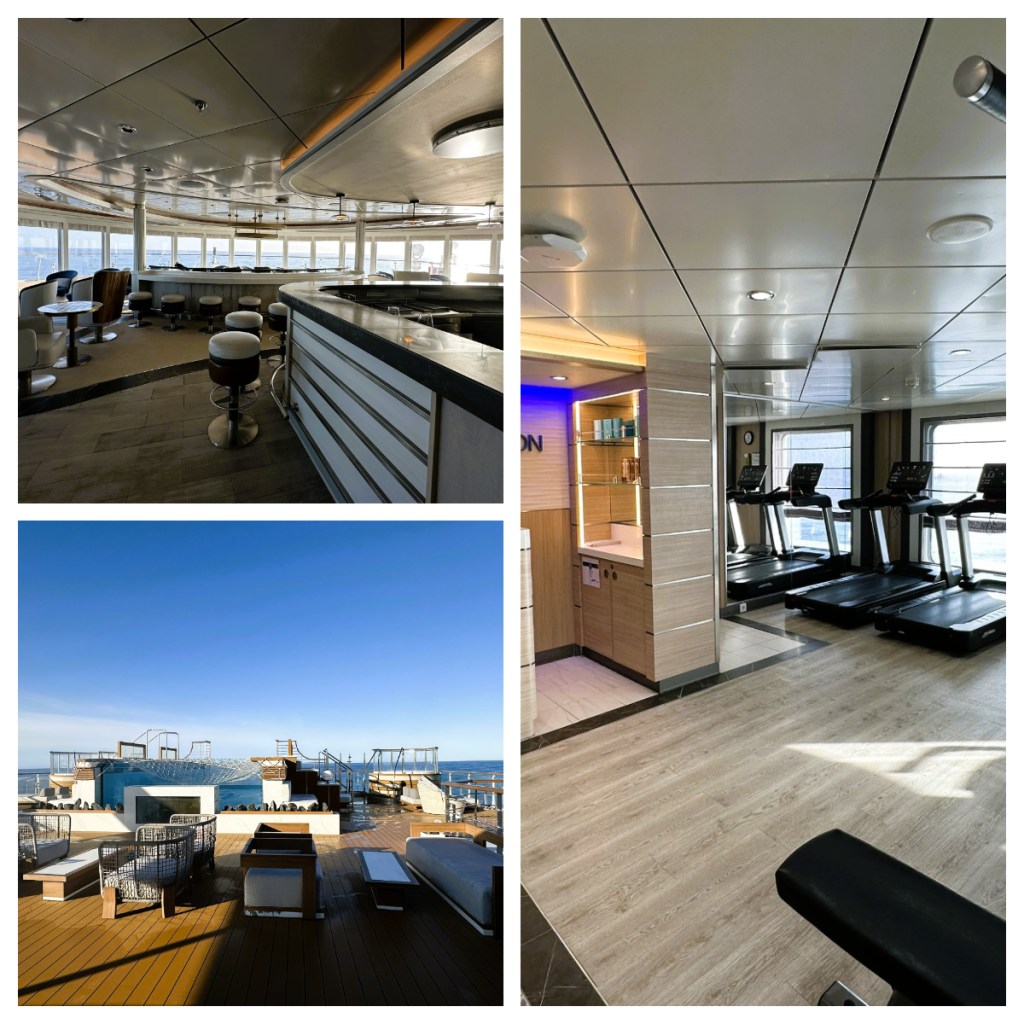
Level 8 has another small restaurant which serves the same buffet breakfast and lunch but without the queue, the observation lounge which is a great place to relax with a view and some more outside deck area.
During today’s voyage we had talks on Whales and Greenlandic hunting. All of the expedition staff have varied and interesting backgrounds, but one is truly exceptional. A French man who was a professional action sports athlete (including BASE jumping, ice climbing, paragliding etc) as well as being a commercial helicopter pilot, and then settled in a small Northern Greenlandic village with a Greenlandic wife and for the last 17 years has lived the life of a traditional hunter and fisherman, leading expeditions on the ice cap in his free time.
I learnt that basically, Inuit can hunt anything, including whales and dolphins, polar bear, seal and things that hunting for most in the world is banned. They use everything, food for humans and dogs, skins used for clothing etc. All things have quotas etc to manage the populations and much of the hunting must be done traditionally e.g. narwhal can only be killed from a kayak with a harpoon, and it is forbidden or use speedboat.
For some things like musk ox, there is a lottery to see if you can hunt them that year and the Ministry of Hunting and Fishing set quotas and provide licenses. Commercial hunters need to complete forms confirming their hunts the previous year to get their license for the next season. Mostly all hunters respect the rules.
Now I know most of the other people don’t speak the same language as me (pun intended) when they all cheered that we don’t need to go to shore in zodiacs tomorrow – that is my favourite part 🥴!
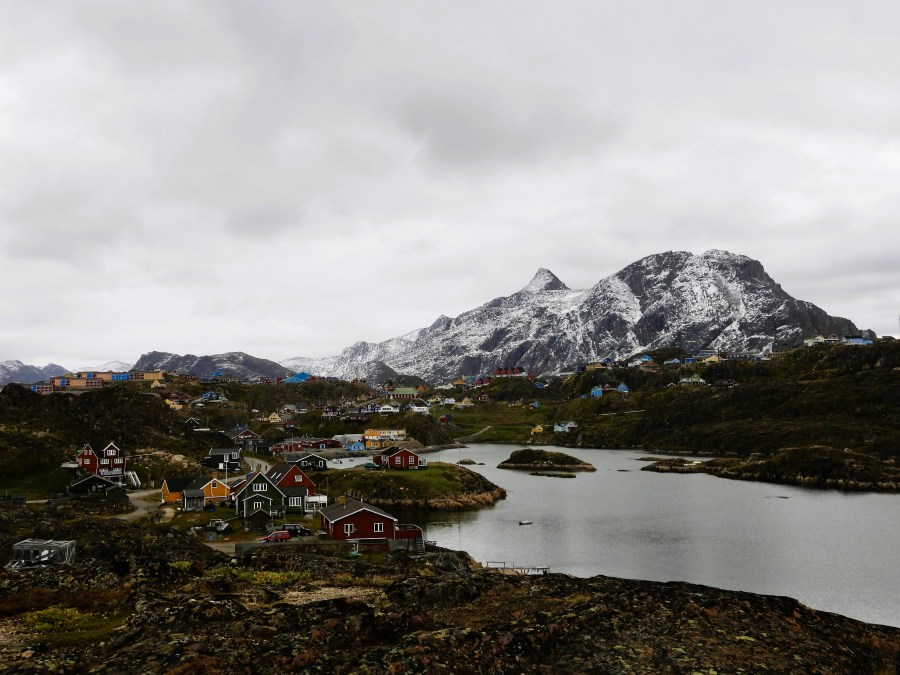
Back in Greenland, our first stop was the town of Sisimiut, meaning “the people living in a place where there are fox dens”. With a population of around 5,500, it is the second largest town in Greenland, after Nuuk.
The area was initial settled around 4,500 years ago, and like much of Greenland, it has seen settlements by the Saqqaq culture, Dorset culture and the Thule people, whom much of today’s people descend from. As it is Greenland’s northernmost year round ice free port, it is one of the main shipping based for western Greenland.
I opted to do another walk today and the walk took us to Tele Hill, not surprisingly the site of the telecommunication towers for the town. (I must admit I did take a couple of photos of the towers to bring back to my colleagues who are currently designing and working on site builds for similar towers in New Zealand lol.)
It was a fairly easy walk and the views back to town were stunning, the water beautifully clear and the route was dotted with historic ruins of house and other buildings, dating back to the 1600’s. I must admit you did have to use some imagination to see the footprints of some of them. 🥴 Thankfully there were good interpretation panels dotted around the sites, helping with the identification.
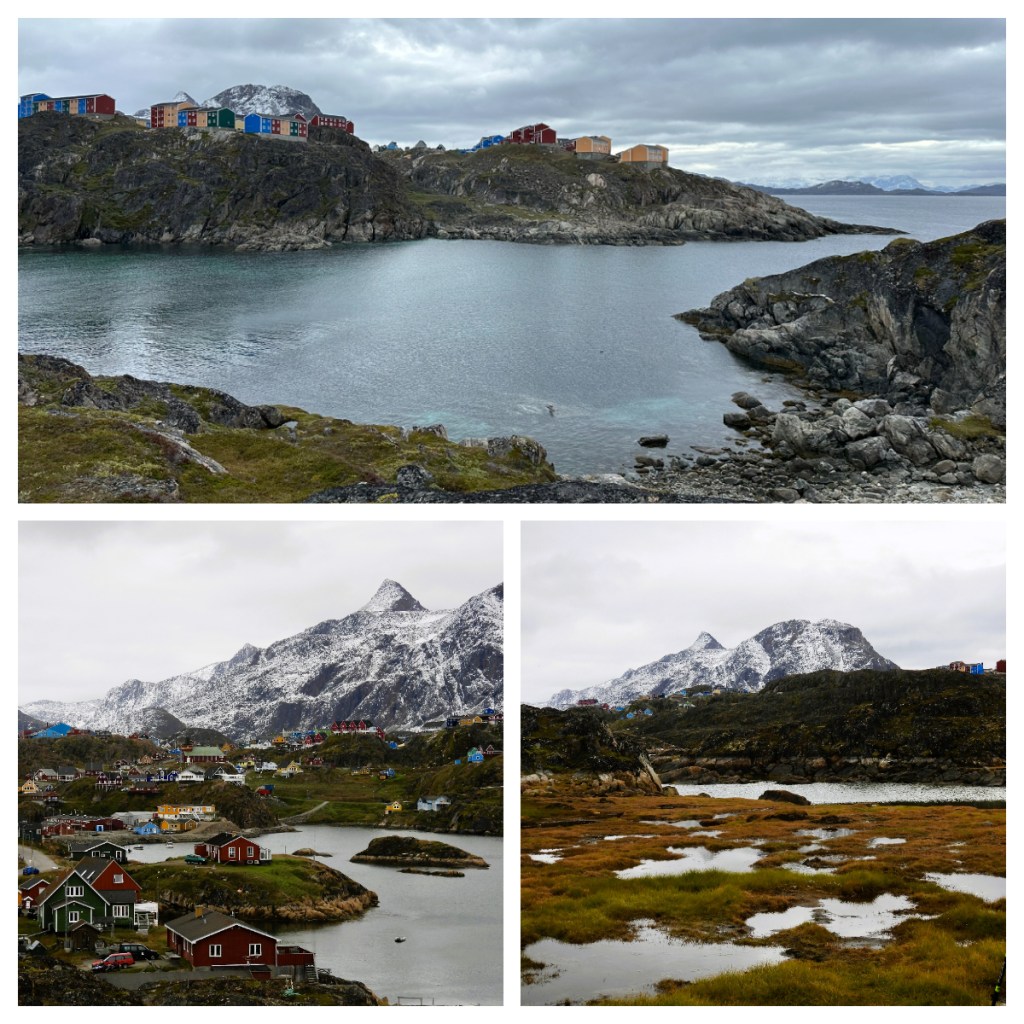

Near the telecom towers, the visible rock piles are unexamined graves – because they are unexamined, it is impossible to know just how old they are, but they are considered to be later than the likely Saqqaq culture settlement that dates back to 2300-1200BC which was also on the site.
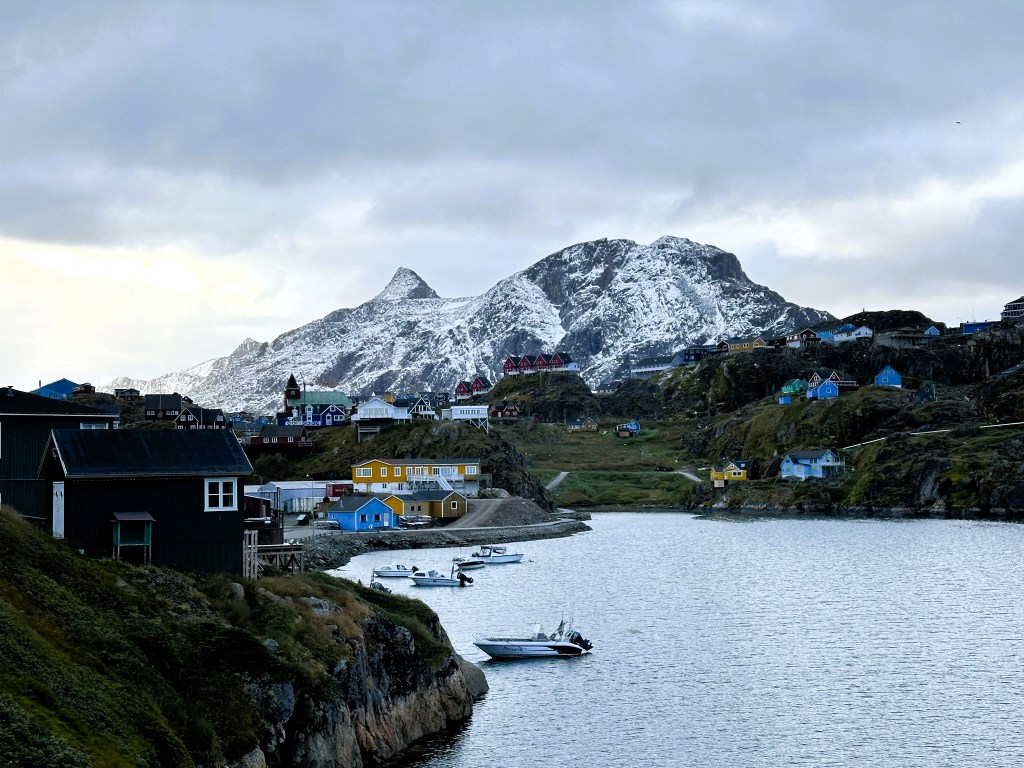
As we wandered back towards town, we learnt about the historic use of colours that are part of the traditional Greenlandic towns. Yellow indicated a doctor’s house or a hospital. Red is reserved for big churches, museums, schools and other cultural centres. Blue was for fisherman and black for prisons and police stations. These are not so strictly adhered to today and sometimes houses are painted in the colour of paint that came on the last ship!
Despite saying above that church’s are red, Sisimiut has a blue church (although it does have a red roof) – the Bethel Church. Built in 1775, it is built on rock so as not to sink into the permafrost (a never ending problem) and is the oldest church in the country.
After a lovely morning walk, I headed back to the ship for lunch before heading out again, this time to the town where I found a lovely little café with good internet. I enjoyed a half decent coffee whilst catching up from news from around the world, but I passed on the minke whale in soy sauce the café also sold! 🥴


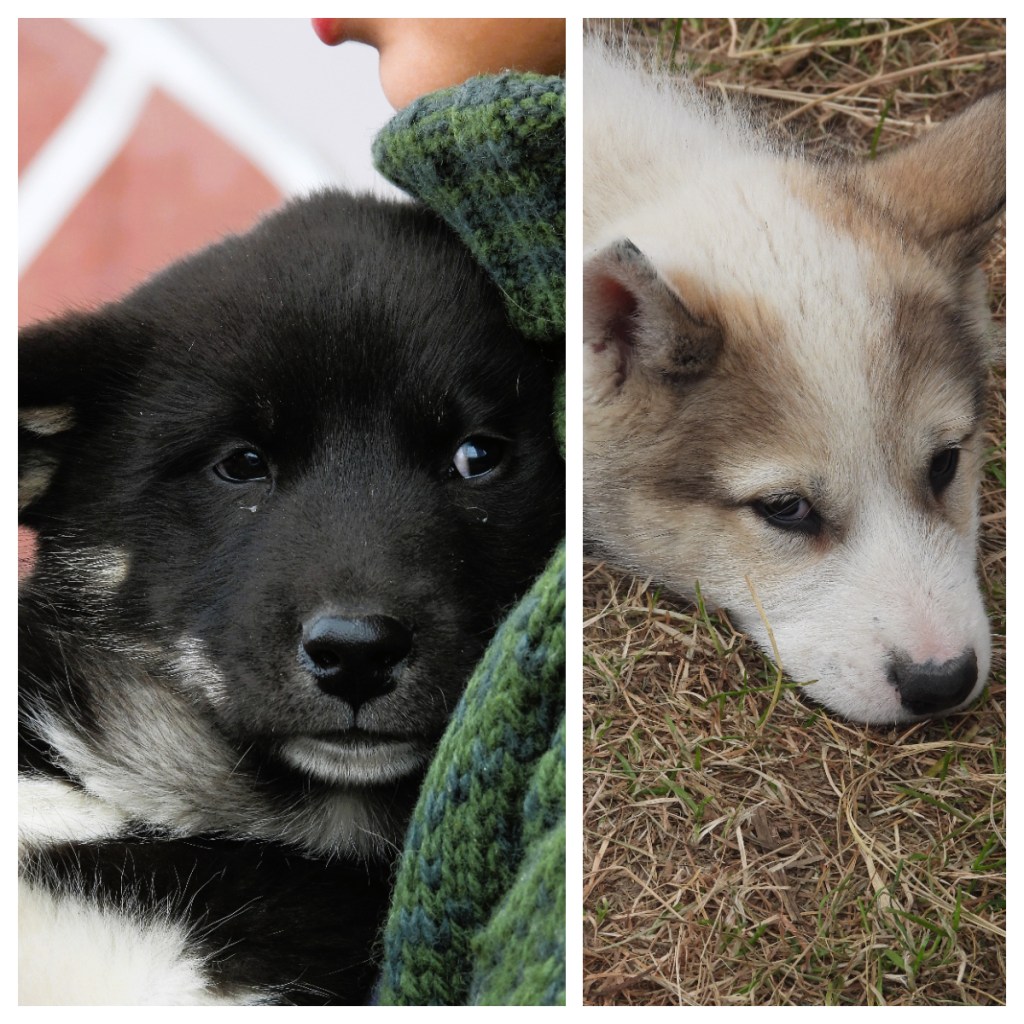
It was then my groups turn to enjoy some of the activities the town had put on for us. One of the most popular was the Greenlandic sled dog puppies or Kalaallit Qimmia. A large breed of huskie that is a national icon and important part of the Greenland identity. The breed are descendants of dogs brought to Greenland by the immigrating Inuits and even today, provide an important role in the life of Greenlanders. And let’s be honest, all puppies are adorable!
Couple of fun facts about Greenlandic Sled dogs … Firstly, they have a double coat which consists of a dense undercoat and a rough outer coat which provides the insulation needed to live in the Artic (where temperatures can drop to below -50C). And secondly, they are known for their stamina and strength and they can travel for long distances without tiring. Apparently, they are the only animal that outrun humans over long distances because of they way they burn protein without glycogen/carbs!
Next was an introduction to the Greenlandic language – which proved to be a major challenge for me but it was really interesting and the ‘teacher’ made it fun. Greenlandic is similar to all Artic and Inuit languages and for a long time it was only an oral language until missionaries wrote it down (in particularly for bible translations).
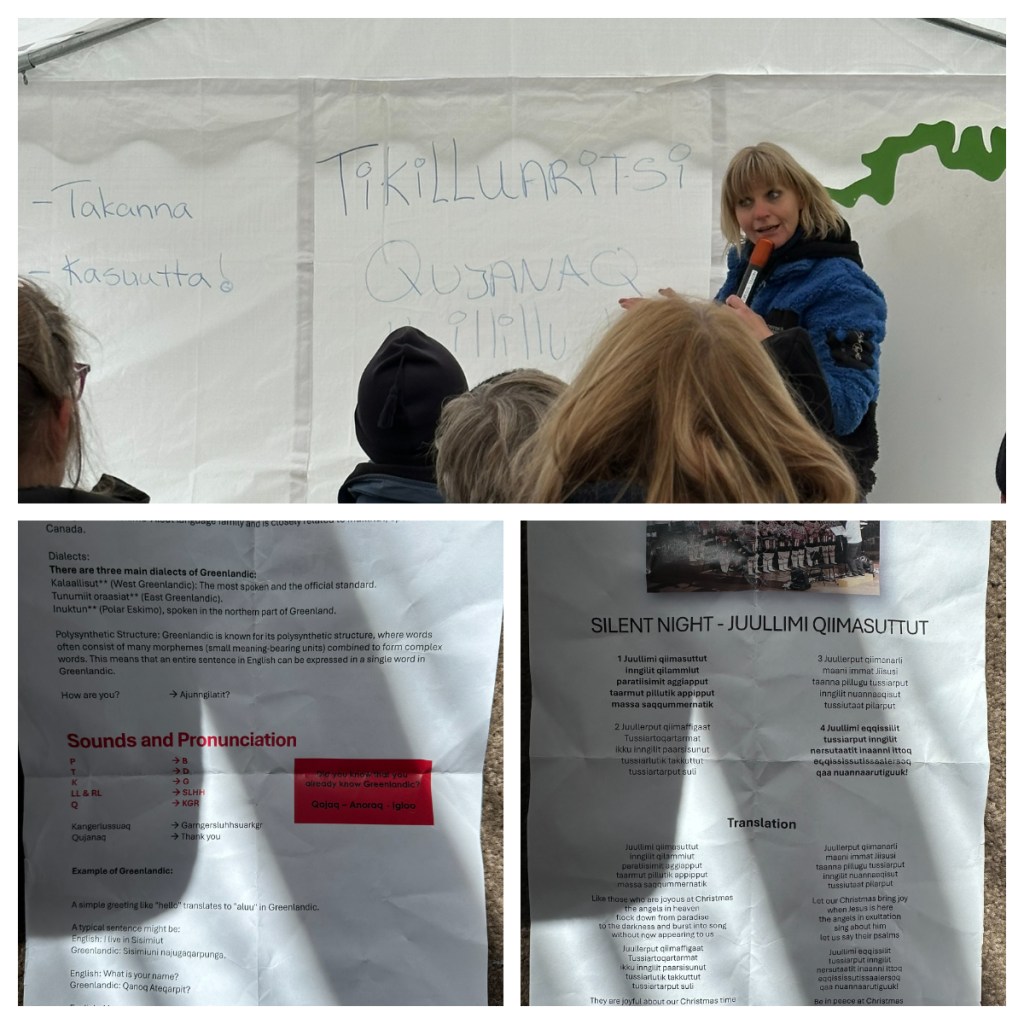
Some Greenlandic words are very long, and one word actually forms an entire sentence e.g the Greenlandic word for harbour, literally translates to “place where the skin boats are”. Did you know we used some Greenlandic words (perhaps the same in other Inuit languages) in English. Kayak, Igloo and Anorak are three that have Greenlandic origins.
A few of the other challenging ‘basics’ of the language are; all t’s are pronounced d’s, k = g and rl and ll have a sound I can not say or spell 🤣🥴. To round off our lesson we have to sing a song (it was to the tune of Silent Night) in Greenlandic – no sure we were particularly successful lol but it was fun.
Next up was authentic local food tasting and not surprisingly I did not try much. Unadventurous maybe, but I don’t like fish at the best of times so I can’t see that raw whale is going to work for me (I know not technical fish). Delights included Cod (dried and flaked), mattak (raw whale skin and blubber), raw seal, Capelin (a local fish that looks like a little sardine served whole), dried whale and the famous Greenlandic shrimp (a deep-sea shrimp, or prawn depending on who you talk to, is a huge export via Royal Greenland). I did succumb and tried the dry whale, it tasted like a very fatty biltong. The kind of fat that you just can not get out of your mouth 🥴.


Back on the ship, we were treated to a demonstration of kayaking by a Greenlandic kayak champion. He was rolling under water and paddling upside down🤣. He must have been freezing but I guess he is used to it as these are the skills kids learn to keep them safe when hunting and fishing from kayaks.
Today I chatted to some new people on the hike. I noticed an Australian accent for the first time – turns out he has been living in Sweden for 50 years so it is probably just the first time I have heard him speak English. I also chatted with a lovely Danish lady named Greta. He husband apparently has Covid and they have both been isolating in their cabin. She has now been allowed out but her husband is still unwell and confined 🥴! It was a win for me as I really enjoyed our conversation.
 Cockneykiwi takes flight