The long route home – A quick stop in Iceland

Iceland

September 2024

Never one to shy away from making the most of a stopover, I has decided to take the opportunity to get off the charter flight in Iceland, rather than travel through to Denmark.  I said goodbye to everyone as I left the plane (there was only a handful of us disembarking there) and arriving in to Iceland was so easy.  There was no immigration and I didn’t even see any customs.  I just walked right through, bought a bus ticket and within about 30 minutes of getting off the plane I was heading in to the city of Reykjavik.   (The bus was definitely the best option but was not cheap, at around $45 one way, better than a taxi that apparently cost $200!)

Despite Reykjavik not being a large city (population around 120,000 with only 400,000 in the whole country), after two weeks in small isolated villages, it was really like being back in the big smoke with all the people, traffic and American takeaway chains etc!  The Airport Bus stopped at main bus station and then I took a small shuttle to the other stops in the centre of town (all included in the one price). I was pleased to see that the shuttle stop was just outside my guest house/hostel.

What a come down from my room on the ship 🥴. This is definitely back to reality with a bump but more like travel as normal – a crappy room in a large city 🥴.  Still the location was good and I was going to be out most of the time.   Once I dropped my bag my first task was to get some food and I found a nearby hotdog place (there seems to be a lot of hotdog places around).  I am not sure how Icelandic the ”Iceland hotdog” is, but it was good and I was hungry!

It had already been a long morning and I was ready for a quick nap before heading out to take a look around the city.  Unfortunately I was too late in the day for any of the city walking tours so I googled some walking maps to get a general idea of what to see and where it was. 

I started by walking up the “Rainbow Street”, or Skólavörðustígur (as it is more formally known) one of the city’s main streets which has been painted as a rainbow to celebrated the Rekjavik Pride movement.   The area is also well know for it’s colour houses, street art and art installations.

The top end of the street is dominated by the famous Hallgrímskirkja church.  At almost 75m tall, the church actually dominates the city skyline as it is among the tallest buildings in the country.  Completed in 1986, the Evangelical-Lutheran church’s unique design is an ode to the Icelandic landscape and was named after the 17th century clergyman Hallgrímur Pétursson.

From the church I headed back down to the sea, and to the  ‘Solfar’ or ‘Sun Voyager’ sculpture.  It is a beautiful sculpture on the seafront apparently represents “a dream boat and an ode to the sun” however I think I join with most and thinking it looks like a viking ship – makes sense given that we are in the land of the Vikings.

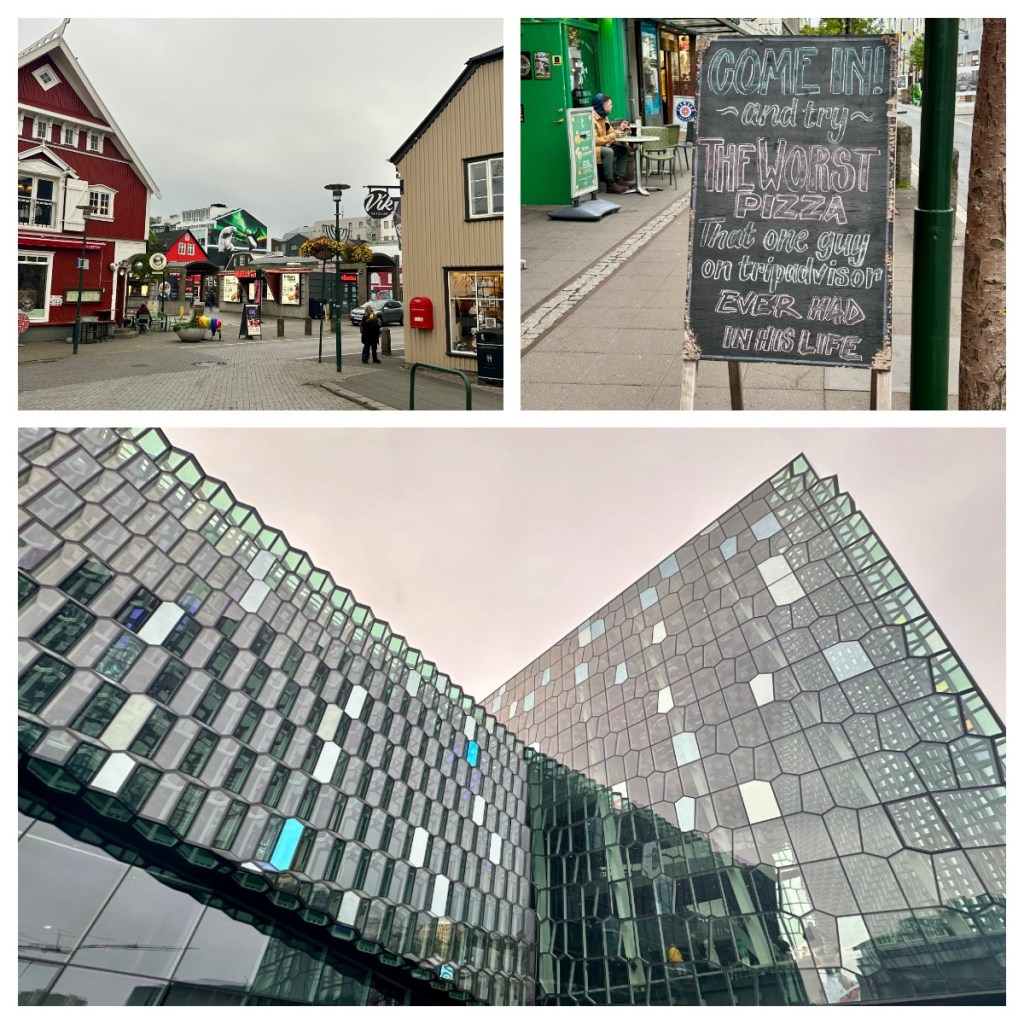
I continued along the sea front to the next architectural marvel – the Harpa, Reykjavik’s concert hall which is home to the Iceland Symphony Orchestra and the Icelandic Opera.  Completed in 2011, the glass façade of the building is made up of geometric shapes that represent the natural basalt columns you can see around the country, and the colour of these panels change with the light of the day. 

I wandered around the harbour, into the small Ingólfur Square and around to the City Pond – a rather large ‘pond’ near the city centre.  I walked through an area filled with tourist shops, tourist bars – English and Irish pubs etc. 🤦🏻‍♀️and a pizzeria thats marketing was based on getting a terrible review on TripAdvisor lol.

As I had a long day trip planned for the next day I tried to have an early night, but the down side of having some a central location is that it was very noisy with traffic and nearby bars and clubs!  So, after a terrible nights sleep, a terrible coffee from a local convenience store (no coffee shops open early enough) and a shower in sulphur smelling hot water I was ready for the day lol. 🥴 (Apparently the water in Iceland is so pure it can go through taps without processing – I am not so sure as it also had a slight sulphur taste to it!)

The pick up point for the tour (and as it appeared every other tour in the country) was right outside my door, and I was glad that the guide had sent through the vehicle details so I did not have to rush up to each vehicle that arrived and we were soon on our way out of the city.  I had been to Iceland before, many years ago, so choose to avoid the main touristy sites (which I had seen on my first trip) and the large bus tours and do a full day, small bus, south coast trip.  Its worth noting that this choice was influenced by a google screen saver for an Icelandic waterfall I saw a couple of weeks before my trip  lol.   I had really wanted to see puffins but unfortuantely they had already left for the  winter 😢, there is always next trip 🤣🤣.

Out Icelandic guide was called “Al” – kindly, Icelandic people always seem to anglize their names so of us who are linguistically challenged don’t have to try and butcher their actual name!  Al was great, and full of interesting information, starting with some general facts. 

Reykjavik, in the early 1900’s, was a small town focused on farming and fishing, but this all changed with WWII when the British built an airport (now the domestic airport, pretty much in the centre of the city) and then the Americans came bring more infrastructure and jobs.  After the war, the airport was ‘given’ back to the country and Reykjavik soon became the thriving metropolis we see today.

We headed out of the city on the ring road, which – not surprisingly, you can drive all the way around the country on it (if you have 6-7 days) and we learnt about the volcanic nature of the country.  Now everyone knows that Iceland is full of volcanoes and of course eruptions in Iceland have caused flights disruptions, not only in Iceland but around the world!  What I did not know was that they pump the hot geothermal water straight in to houses for hot water and heating – that will explain the sulphur smell in the shower!
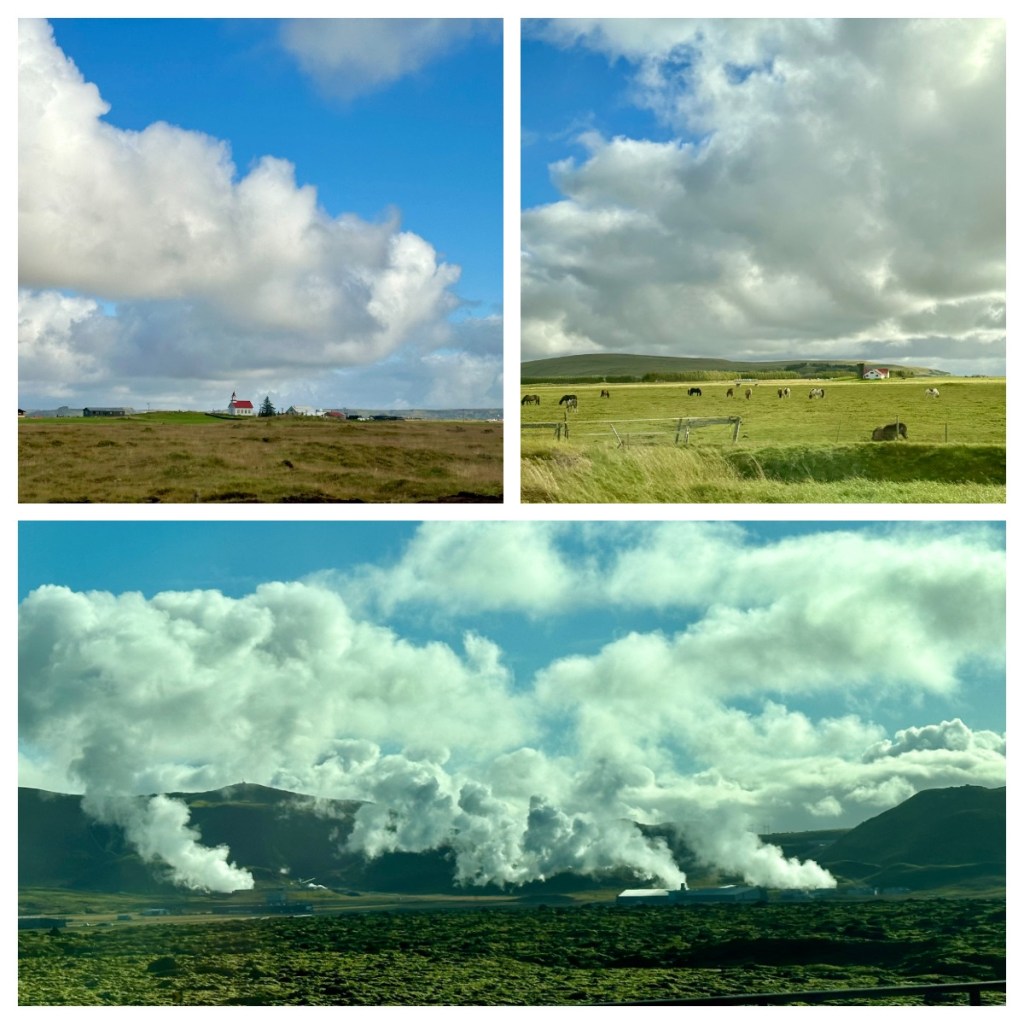
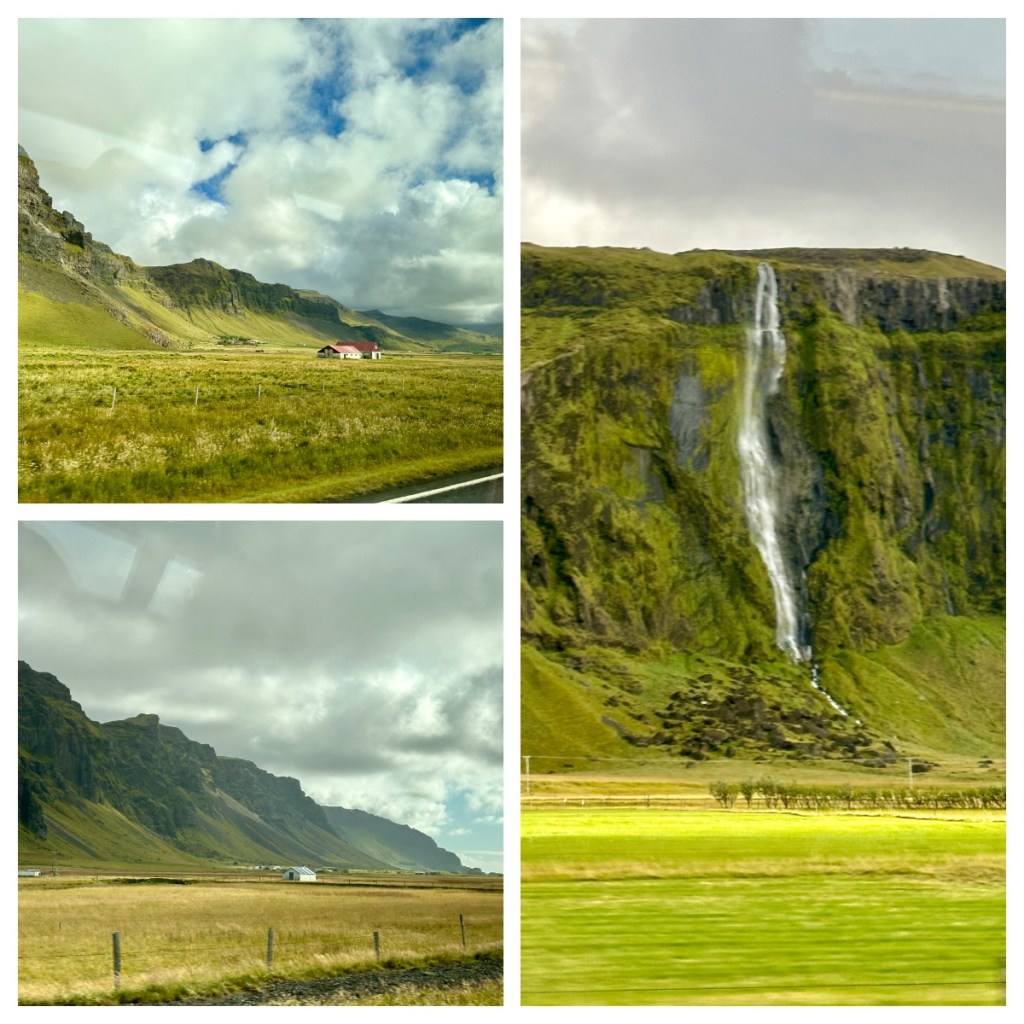
Apparently the weather this summer has not been great and we were blessed with an almost perfect day for this little outing and the landscapes we passed through were beautiful, ranging from volcanos, remains of old eruptions and beautiful volcanic cliffs lined with waterfalls to lots of beautiful green fields with horses (the famous Icelandic horses) and very shaggy sheep.

A couple of fun factors about Iceland according to Al:

·       It’s unofficial motto is ‘it could be worse’ lol

·       Beer was illegal until 1989!  You also can’t by alcohol in the supermarket (so it is not too easily accessible), BUT you can get it on line and it will be delivered within the hour lol.

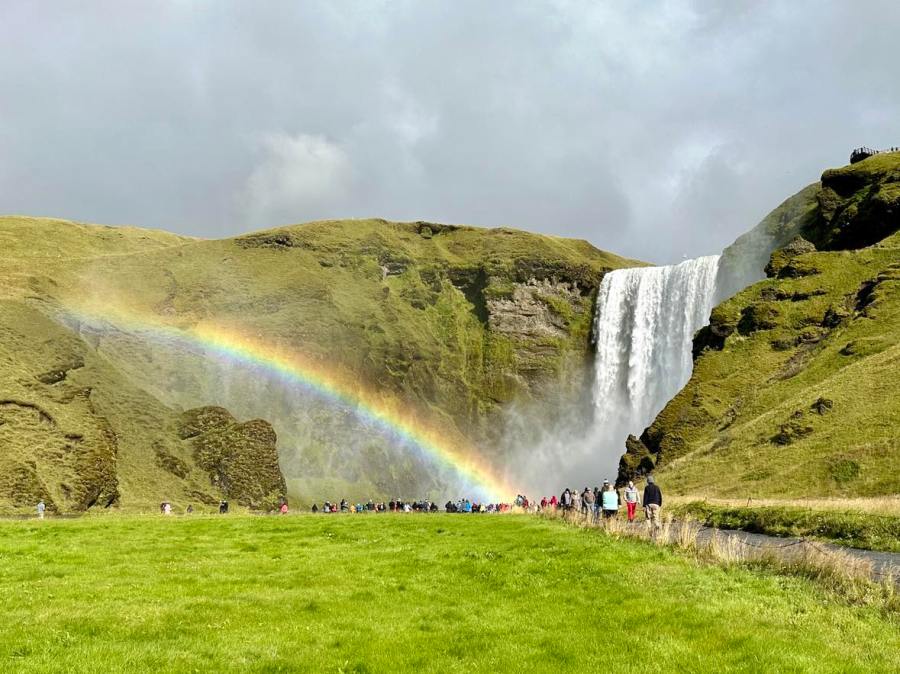
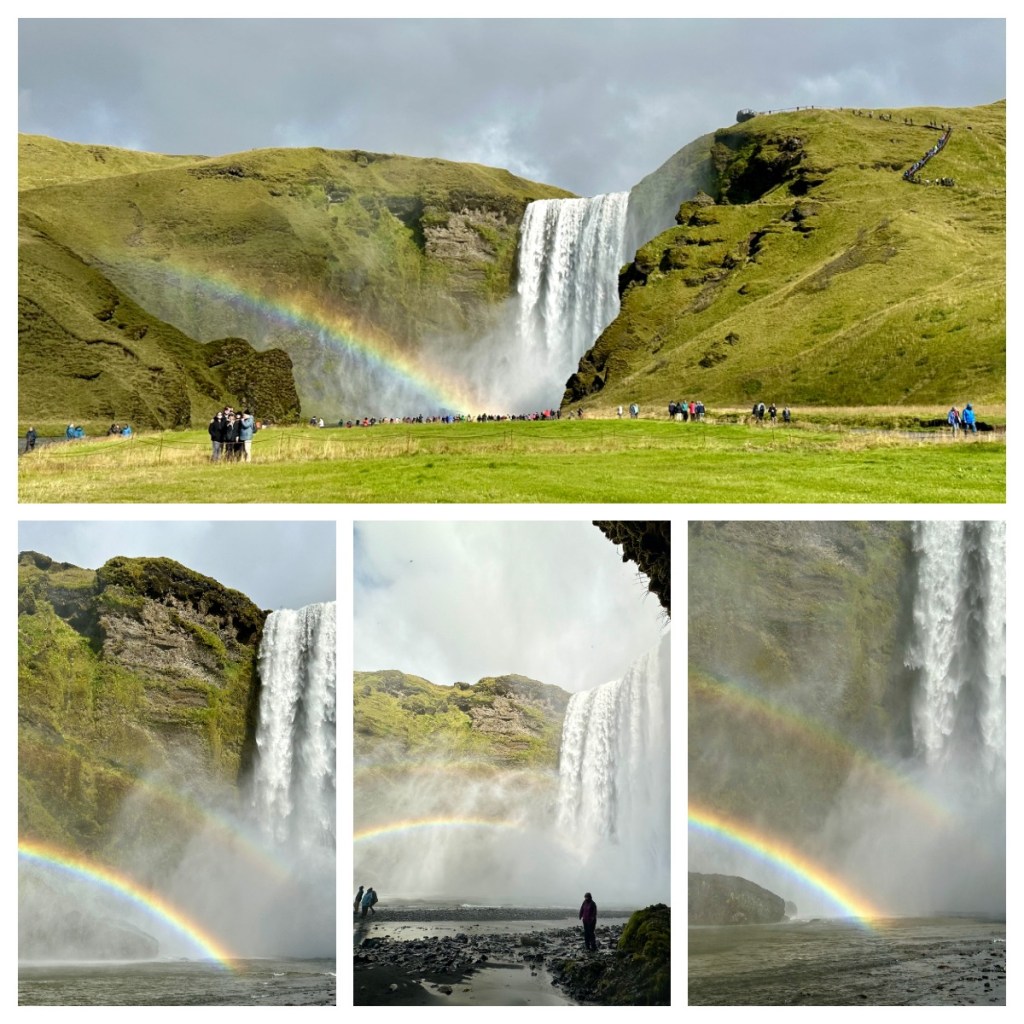
On the way to our first stop we passed the unimposing but infamous Eyjafjallajökull volcano, that caused all the travel issues back in 2010.  It was know as E15 in the international press as no one could pronounce the proper name 😝.  And finally our first stop, the google screensaver waterfall – Skógafoss.  With a drop of around 60m and a width of 25m, it is one of the largest waterfalls in Iceland and today we were so lucky to have perfect conditions for the waterfall spray to create a double rainbow.  I could have walked to the top, but by the time I finished taking photos from the bottom I didn’t have time 🤣.  It was stunning.
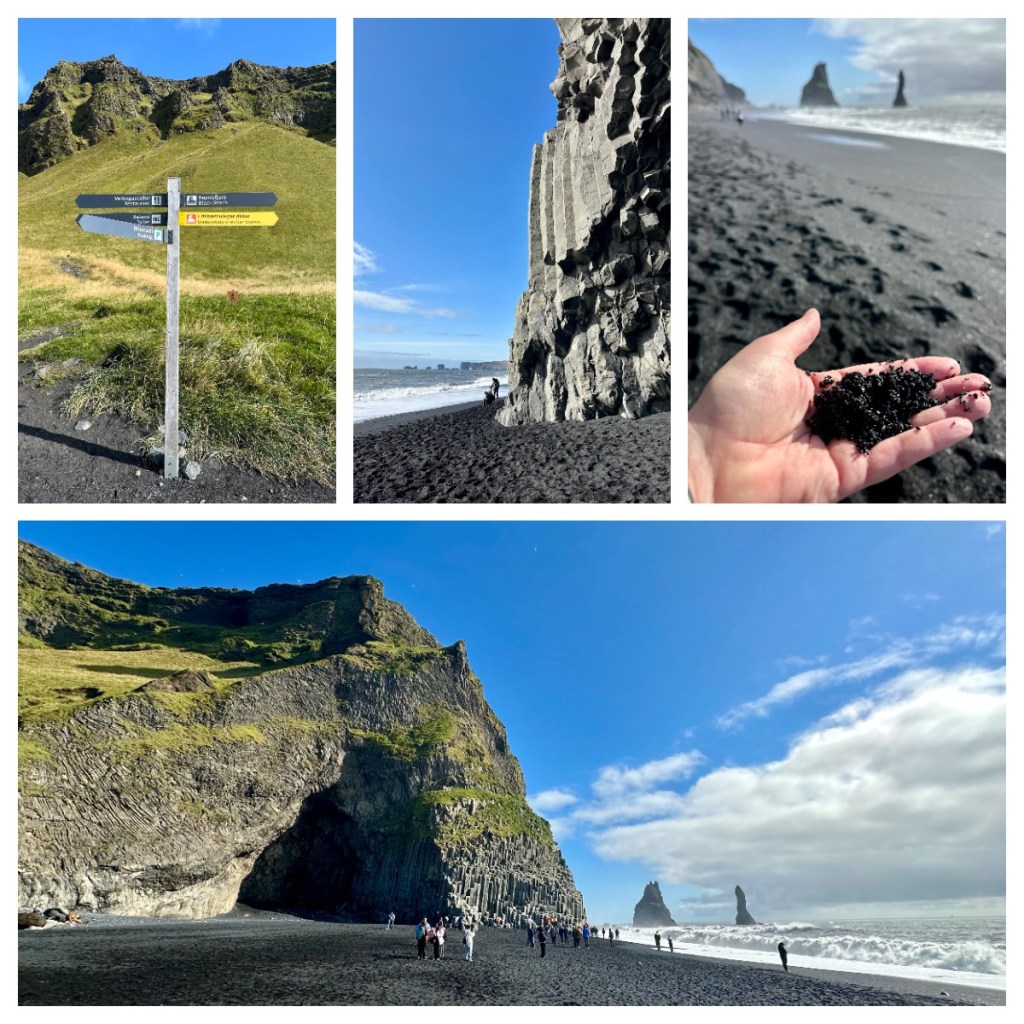
As we continued along the the south coast, we  passed more stunning landscapes of glaciers, towering cliffs and waterfalls until we arrived at the famous black sand beach – Reynisfjara.  It is famous for not only it’s black volcanic sand, but also for it’s tower basalt columns. Science tells us that these were formed by cooling lava and if you prefer a good local legend, they are actually two trolls turned in to stone as a curse.

As I previously mentioned, the puffins that nest here are already gone for the season but there were lots of Fulmars and gulls still hanging out on the cliffs surrounding the beach. 

The beach is also famous for “sneaker waves” and there are warnings posted everywhere to watch out of these deceptively powerful waves that surge up the beach from calm looking seas. 
Next we had a quick stop in the southernmost town in Iceland – Vik í Myrdal (more commonly know as Vik) to see the 1877 white, wooden church.  Interesting the church seats around 450 people, and there is only around 600 living in the town.

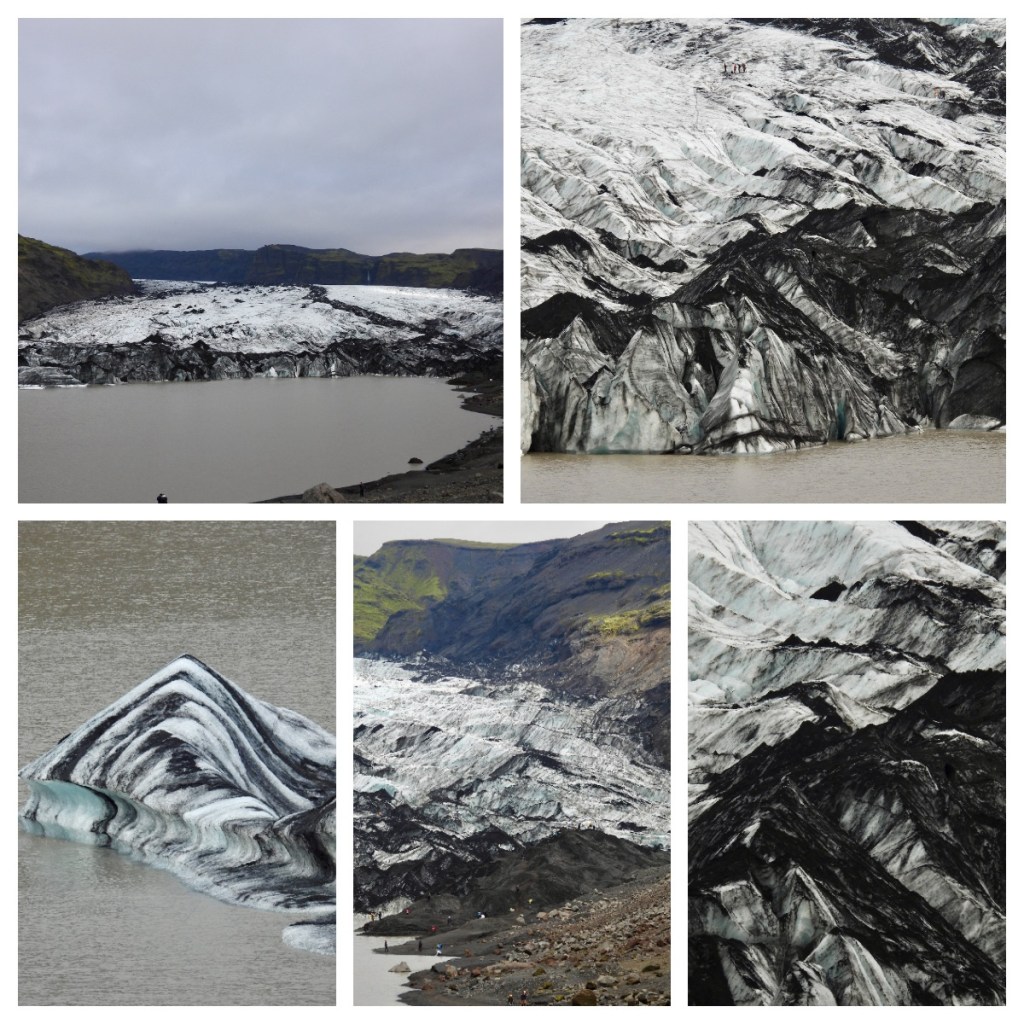
This was our turn around point and we headed back towards Rejavik but not without a couple of other stops.  First at the most unique glacier I have ever seen – Sólheimajökull.  The glacier and the icebergs in the glacier lake are actually striped, with layers of black volcanic ash through the ice!  As with glaciers around the world, the glacier has been receding at a fairly fast rate and the lake we see today at the foot of the glacier has only been created in the last 25 years.  That said, this glacier extends back around 14 km to the ice cap.

Our final stop for the trip was Seljalandsfoss, another iconic waterfall and this one we walk behind. Another 60m high waterfall but this one we could walk behind which was a little damp but fun.  By now the clouds had rolled in  now and the waterfall spray masked the rain that started to fall 😂 .  It was a long day but great way to spend my one day in Iceland.  I rounded it off my shouting myself Hard Rock Cafe for last dinner of the trip – not Icelandic but who I am going to kid thinking I am going to enjoy Icelandic fish – not me that’s for sure 🤣🤦🏻‍♀️.

I had called early in the day to book my pick up for the airport bus to be told my pick up would be at 3am 🥴 and I was so glad the stop is right outside the hotel!  The early bus meant I arrived at the airport at 4.20am and after using the self check in, I easily made my way through the airport until I was ‘detained’ my the immigration guy as he told me a long winded story about some random guy in the 1800s who moved to Hobart – not sure if he thought Hobart was part of NZ or that NZ was part of Australia 🤔. Thankfully, there was not a long queue behind me! It was nice to have another stamp in my passport as I haven’t officially  left Denmark, Canada or Greenland 🤣

As I boarded my first flight on the long trip home I was amused to hear Icelandic Air playing a Björk song as we boarded – classic 🤣. So that is it for my big trip for another year, now on to booking my big trip for 2025.  Something for all readers to look forward to 😜.

East Cape Part 5 – Te Araroa to Tolaga Bay

November 2021

You have to be pretty dedicated to see sunrise in New Zealand in the summer and I am!

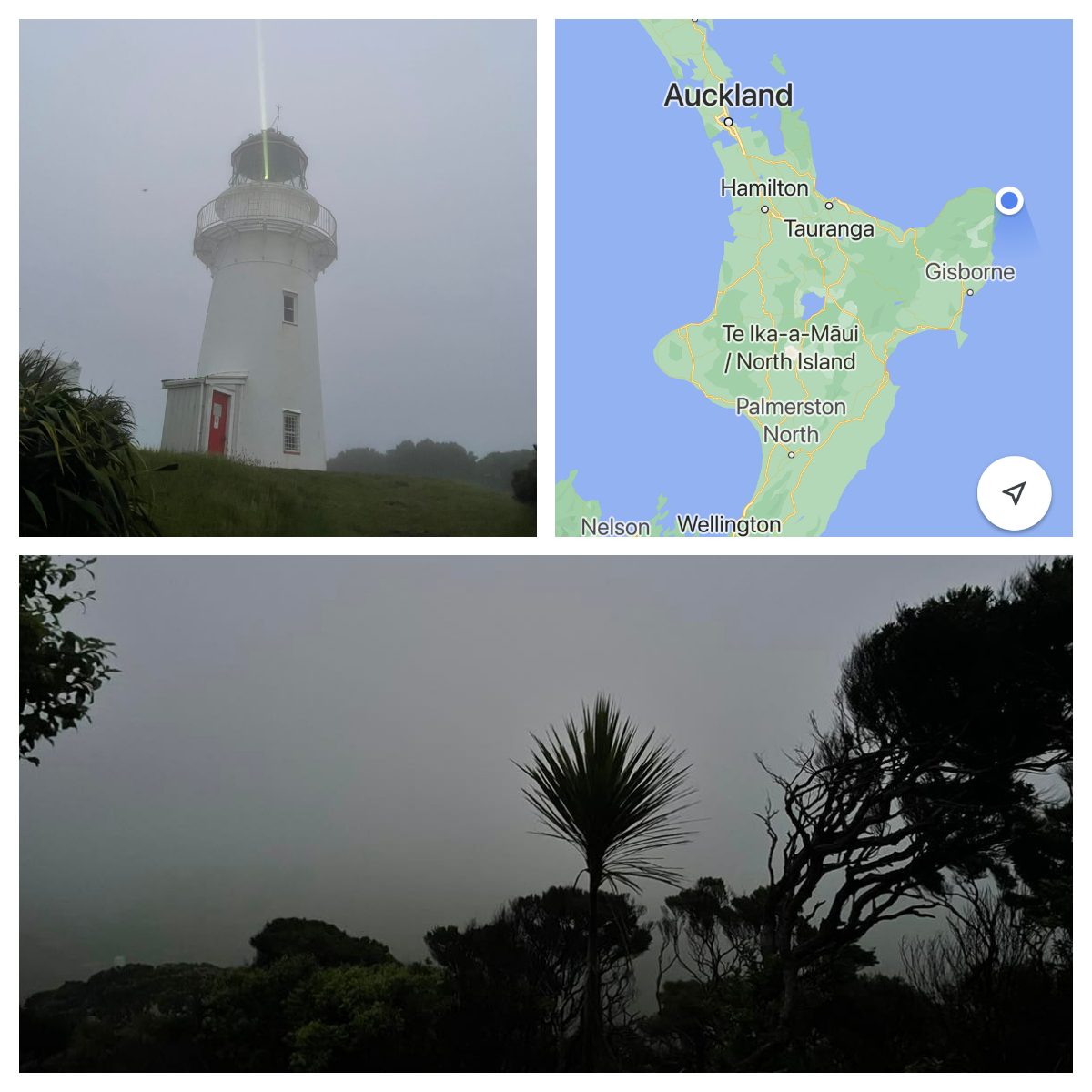
When you search the internet for things to see and do on an East Cape Road trip, one thing that always comes up is a visit to the East Cape lighthouse at sunrise.   It is one of the first places in the world to see the sun each day (did you know people flew by Concorde to see the sunrise on Jan 1, 2000!) and the sunrise is supposed to be amazing. 

So as dedicated as I am, I was up at 4.30am to a beautiful clear sky full of stars for the 35 minute drive along some less than ideal narrow gravel roads in the dark. Thankfully I only passed a couple of other people going the other way, one being a huge logging truck I had to pull off the road for! 

The forecast was looking good the night before, but during the last 10 minutes of the drive, the drizzly mist set in … and it was here to stay 🥲. I climbed the 800 steps to the top of the hill, and the base of the lighthouse and I could not even see the sea right in front of me 🤦🏻‍♀️. To top it off, I had forgotten to bring the coffee I had made up in my travel mug to bring for the top! 

Thankfully I did have my raincoat so I could sit on the wet bench and enjoy the serenity of the moment – the bird dawn chorus and the sea crashing on rocks somewhere below.

Built in 1922, the East Cape lighthouse is situated on the eastern most point of New Zealand.  It was originally lit with a paraffin oil burning lamp which was replaced to diesel generated electricity in 1954.  In 1971 the lighthouse was connected to the mains power before being fully automated in 1985.  It is hard to image that at one time, this was originally a three keeper station as there is little left to indicate there was once housing on the site. 

I was so engrossed in the serenity of the moment, I didn’t realise I was getting bitten until it was too late 🤦🏻‍♀️ why on earth was I wearing shorts? I NEVER wear shorts 🥴😂 Despite the biting insects and cloud I stayed for around 30 minutes hoping for a break in the cloud, but it was not to be. Thankfully I have a couple more sunrise opportunities (none at a lighthouse on the eastern most point though) so fingers crossed I will get one worth the early morning for.

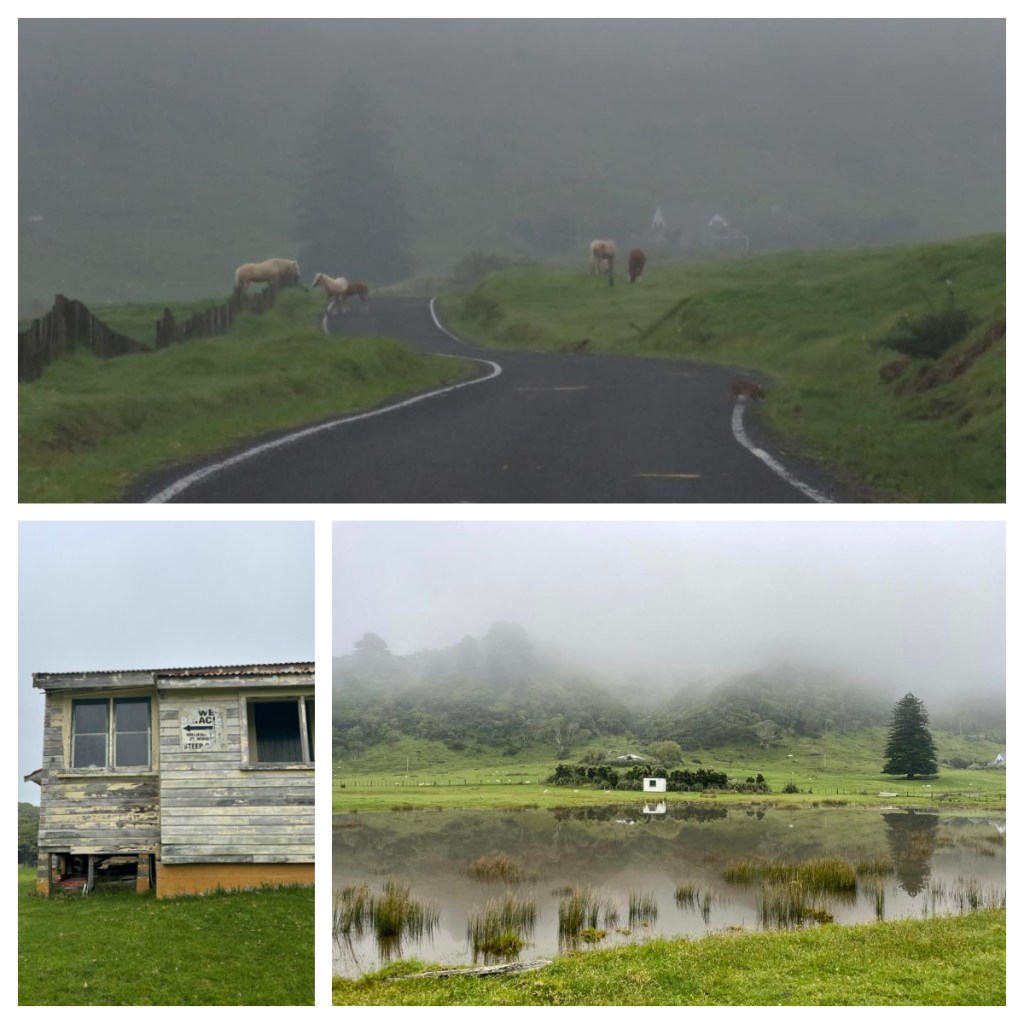
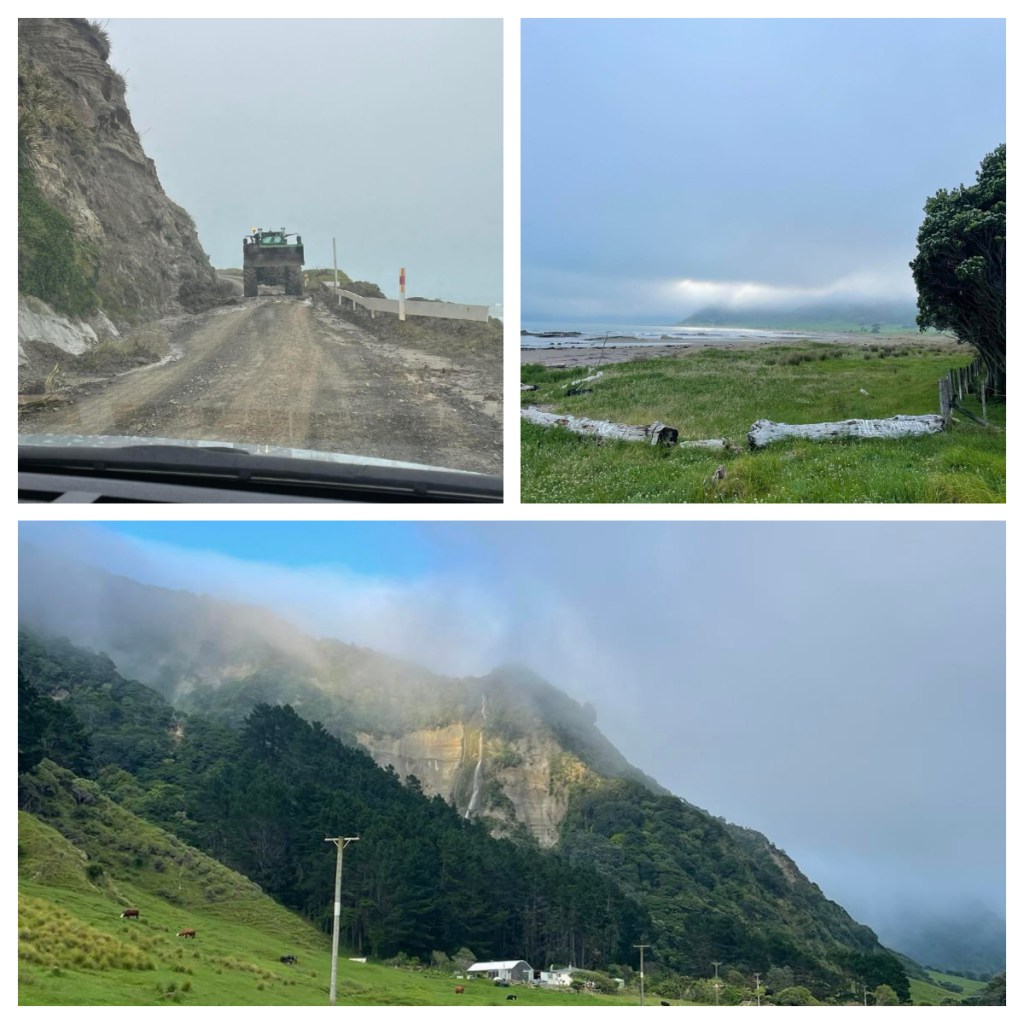
It was nice to be able to see the road and surrounding scenery on the way back though I still had to drive fairly slowly.  Firstly, due to animals on the road (horses and hares lol).  Secondly due to some damaged parts of the road due to storms the previous week (it was good to see that the repairs were already underway).  Lastly due to the stunning scenery – towering cliffs, waterfalls and a beautiful, rugged coastline.

Back in Te Araroa, it was still very early but thankfully the Four Square was opening (for anyone reading not familiar with New Zealand, Four Square’s are a small town supermarket chain) so I managed to pick up a breakfast fit for a Queen – a can of cold coffee and a Ruatoria steak and cheese pie!  I had certainly earnt it.  I also took the opportunity to top up the car with fuel – seemed to be small town prices at $2.48 a litre, significantly higher than in larger towns!  I was grateful that my rental car was a hybrid so was not using too much petrol. 

While planning this trip I discovered Te Araroa’s claim to fame it that it is the birthplace of Sir Āpirana Ngata.  Born in 1874, he was the first Māori to complete a degree at a New Zealand university, graduating with a MA and a law degree. 

Upon completion of his education, he returned to the East Cape and made a great contribution to Māori cultural and economic revival in the area and around the country for which he received a knighthood in 1927.  To honour Sir Āpirana’s legacy his face is now proudly printed on New Zealand’s $50 note. 

After a quick stop back at my hotel to shower and finish packing, I started on the day’s leg of my journey – from Hicks Bay to Tolaga Bay.  Approximately 125km or 2 hours.  Again, I had a list of sights and stops on the way and again, not all were 100% successful lol.

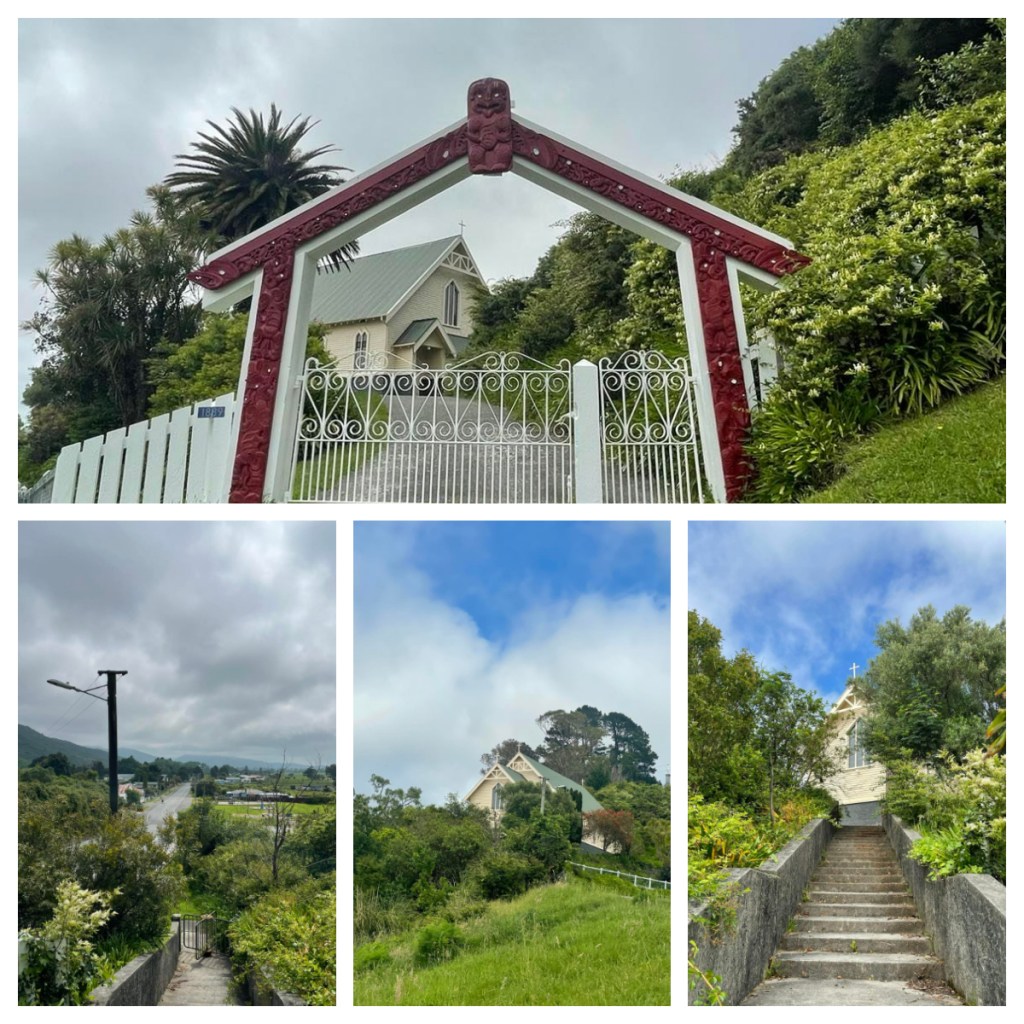
My first stop was in the small town of Tikitiki to see “Tikitiki’s jewel” – St Mary’s church.  It was built between 1924 and 1926 under the guidance of Sir Āpirana (from Te Araroa).  It is a non-denominational church and thanks to Sir Āpirana, it integrates Māori architecture into its design and windows. Today it’s considered a Category 1 Historic Place.   Unfortunately, the church was closed and there was no one around so had a look around the outside (which was still nice) before moving on

Some observations about this part of rural New Zealand – horses are a common form of transport for school children (I am all for this – in fact I would happily ride a horse if that was an acceptable form of transport … and if I had a horse).  I was also puzzled by the number of derelict houses in these small towns.  Perhaps a sign of times with people having to move to the cities for work.

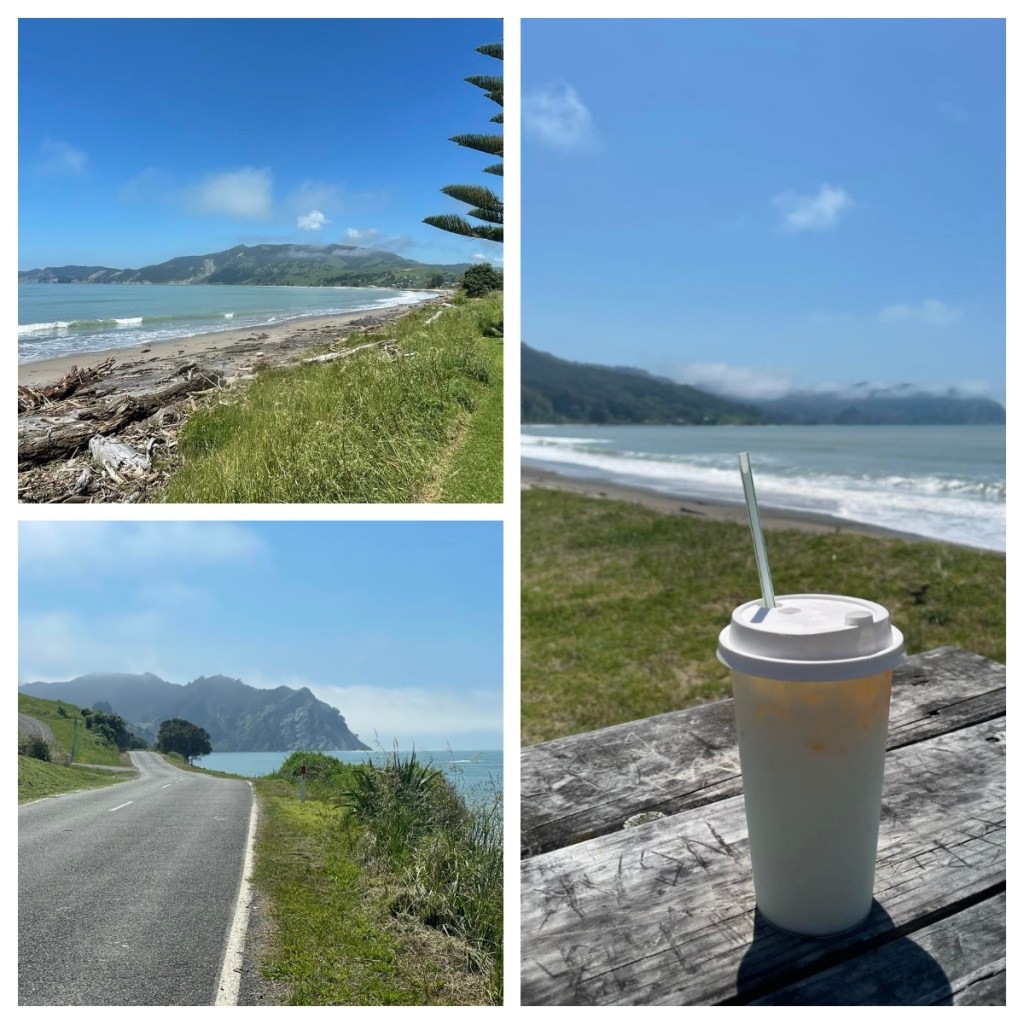
Next up was a stop at Tokomarau Bay, where I had planned to have lunch at the tavern.  It was an amazing spot, reminding me of Hawaii with towering cliffs in background.  Unfortunately, the tavern, although open, was not serving food.  Maybe because it is too quiet or maybe because it is for sale?  Either way the only other option was the fish and chip shop!

It’s not surprising there is an obesity problem in some of our rural communities – fried food and pies appear to be the most accessible food!!  (Full disclosure, there was a small supermarket, but I didn’t go there 🥴).  Fried food in hand, I headed down to the shore to have lunch with a view.  It was a beautiful bay and beautiful day, now I had escaped the cloud of the morning.  And of course, I am still a week or two early for the pohutakawa to be in flower😂.

Tolaga bay was my destination for the day and upon arrival I went straight to the main attraction – the wharf.  Not just any wharf, a 660m long wharf that is believed to be one of the longest concrete wharfs in the Southern Hemisphere.  It was built in 1929 to allow large coastal trading ships to off and onload goods to the area before the more modern sealed roads were built.  (Apparently there was also one at Hicks Bay and Tokomaru Bay but there is little left of these ones.)  Ironically, much of the cargo that was offloaded on the wharf was road building equipment that helped construct the road through to Gisborne, leaving the wharf redundant.

As in Te Araroa, I had struggled to get accommodation in Tolaga Bay. Who knows why – perhaps a combination of there not being much and some places being closed? I ended up at an Airbnb just out of the town on a horse training farm (Uawa Equine on AirBnB)- it was simple but beautiful and peaceful.

Had a relaxing afternoon/evening at my accommodation making friends with the locals – 3 dogs who seemed to take turns at coming over to hang out (although there were probably around 6-7 dogs in total), but my favourites were a little black cat (who was very needy) and a pet lamb.

I attempted to find something for dinner in town but gave up.  There was a place calling itself a supermarket, but it was barely a dairy 🤦🏻‍♀️ and the only other option was fried food again!  Instead, I fell back on some good old pot noodles I had stocked up on for just this kind of occasion.

I truly had a great night’s sleep in the peace.

East Cape Escape – Part 1: Volcanic Valleys (Rotorua)

October 2021

As my last trip ended up with a hospital stay – this one started with one. After a late night dash to take my father in – he was admitted around 3am and so I managed to get home for a few hours’ sleep before I had to get up for a morning of work before I headed off.  FYI he is now recovering well and insisted I still go on my trip, as my brother also lives in Christchurch and would be around for him.

So, I was completely exhausted when I got to the airport!  With the resurgence of covid in New Zealand and 2 trips north and a trip to Australia already cancelled I had been on tender hooks whether this trip would ever happen, but I was finally on my way. I had spent a fair amount of time planning this trip, and I had an action packed itinerary written up (matched against a costing spreadsheet 😂🥴) so I hoped I would get it all done. 

The Air New Zealand Koru lounge is a bit different in our covid world, no more helping yourself to food or drinks (someone has to serve you) – first world problems I know. Thankfully Air New Zealand have yet again extended status tiers for another year, so I get another year of the luxury of the lounge before travelling so definitely need to make the most of it 👍🏻🥴

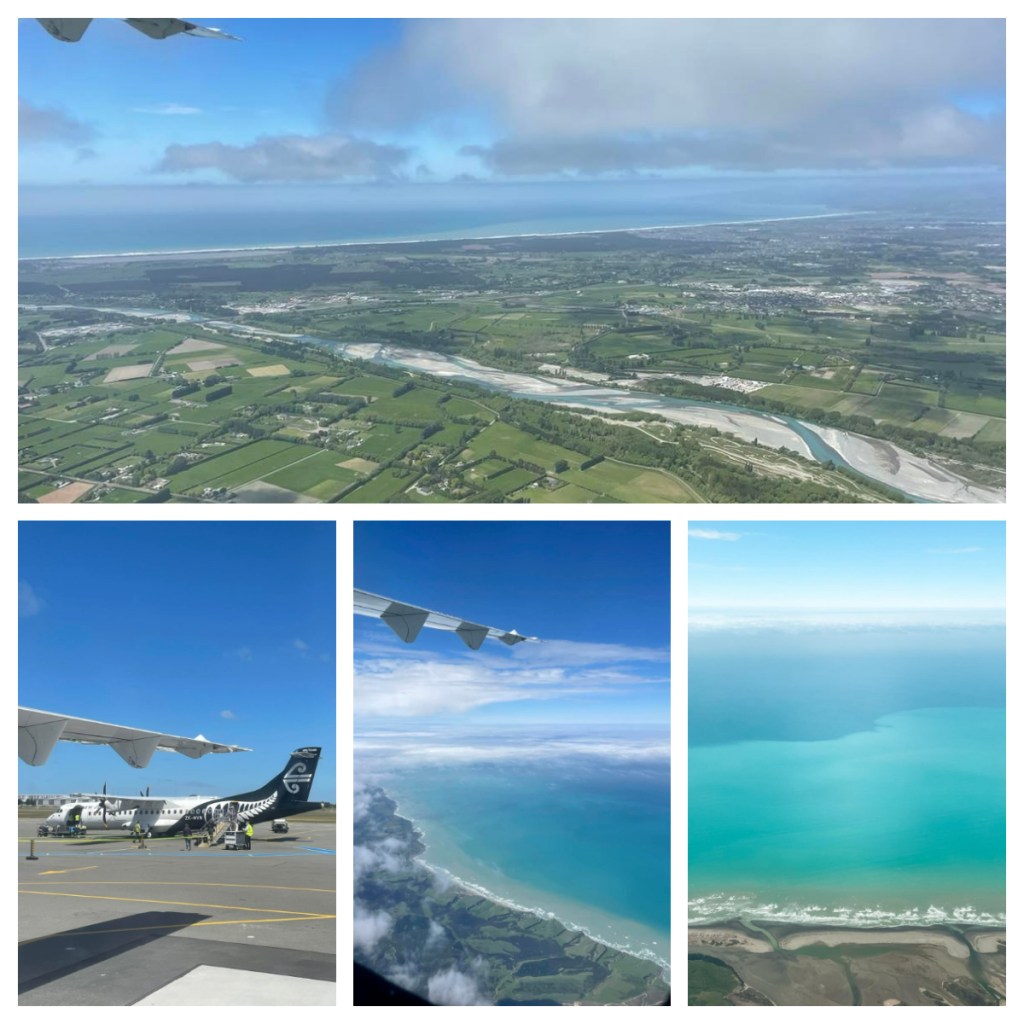
After beautiful views taking off, there was cloud cover most of the way so I could catch a few minutes sleep on the 90 minute flight (small plane = longer flight time) without feeling like I was missing out on the views 🥴, and we arrived in Rotorua to low cloud and a little rain.

It was quick and easy to pick up my rental car from Rad cars and soon I was on my way to the city. After about 10 minutes, I started to smell an odd smell and thought it might be something to do with the car (it was my first time driving a hybrid so wasn’t sure what was normal) … but then I remembered where I was … Rotorua – the hub of geothermal activity and a city that permanently smells of sulphur i.e., rotten eggs!  The city is part of the Taupo Volcanic Zone that extends from Whakaari/White Island off the east coast of the Bay of Plenty, to Mt Ruapehu in the south (both active volcanos).  The steaming vents, bubbling mud pools and spouting geysers are all around the city and have been drawing visitors from around the world since the early 1800s.

I made my way into the city (only a 15 minutes’ drive) and checked in to my accommodation -Rock Solid Backpackers.  Back in backpackers again, but at least this time I had my own ensuite room so it actually was not that cheap but after the sleepless night of the day before I was struggling to stay away so I would have slept anyway!

I took a quick walk to a nearby supermarket and a nostalgic dinner at Cobb & Co I was soon back in my room and ready to sleep.  (Cobb & Co is named after the Cobb & Co stagecoaches of the 1860s. The restaurants opened in the 1970s and where definitely a treat during my childhood.  Most seemed to have closed but I am pleased to see they are having a revival and I have just discovered that one has just opened in Christchurch – you know where I will be lol)

On the first morning of my holiday I woke to rain – It was forecast so I was ready for it.  As always, I was awake early so decided to take a morning stroll down to lake front and the rain stopped just as I stepped outside so that was a win. 

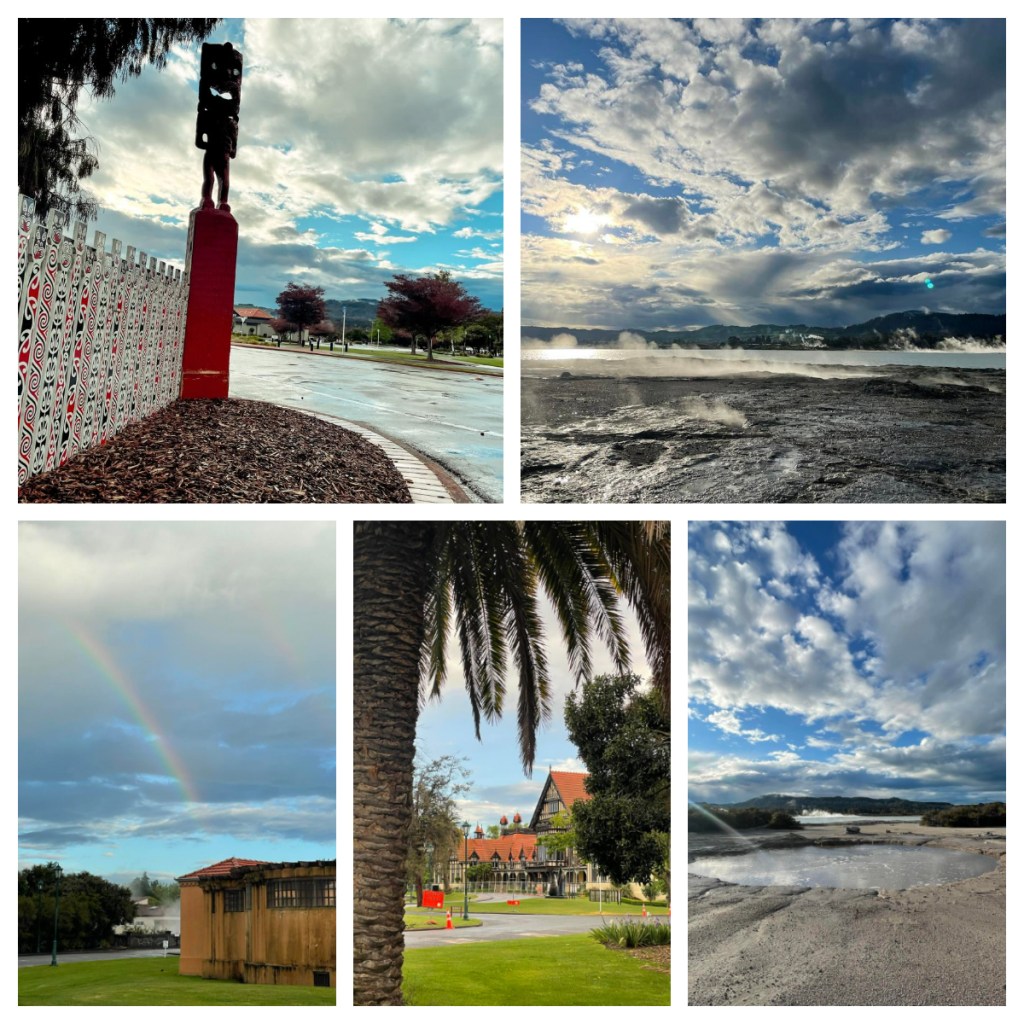
I had a route worked out but was stumped at every turn due to track and road closures. So, I kept wandering towards the lake, taking any road/track I could through the Government Gardens and passed the beautiful Tudor style museum building (which was closed for earthquake damage repairs).   My wandering was helped by a beautiful rainbow over the city.

My wandering paid off and I found a way to the lake but had missed the lookout point at sulphur point noted on google maps, so I back tracked a little and I found the track I wanted (I actually think it was linked to where I saw the track closed sign – whoops).  Finally, I got the views I had been looking for.   The sulphur smell was strong first thing after the rain.  The sound of boiling water/mud and seagulls, the steam, the smell and the sun rising across the lake hit all the senses. 

I wish photos or videos had smell so you could truly experience it with me 😂 According to the sign “the smells of Sulphur Bay and Lake Rotorua are from sulphurous gases belched from the depths of the earth.  The sounds are of gases and steam bubbling and roaring to the surface through narrow vents and pools.”

I was intrigued by a pool named “Cameron’s Laughing Gas Pool”.  Apparently, the mix of hydrogen sulphide and carbon dioxide rising from the pools have the same effect as laughing gas.  It was an early public bathing sight and apparently some bathers would end up laughing uncontrollably, others would pass out!!  It is probably not a bad thing that you cannot get that close anymore.

The site actually holds a lot of history – the site of a large battle between warring iwi (Ngati Tangaroamihi and Ngati Tama) and when gifted to the Crown by the Te Arawa Iwi in 1880, an area for sanatoriums, railways, hospitals, basically the establishment of a town.  They also used to mine the sulphur and in 1916, a ton of sulphur was worth GBP28 on the London market!

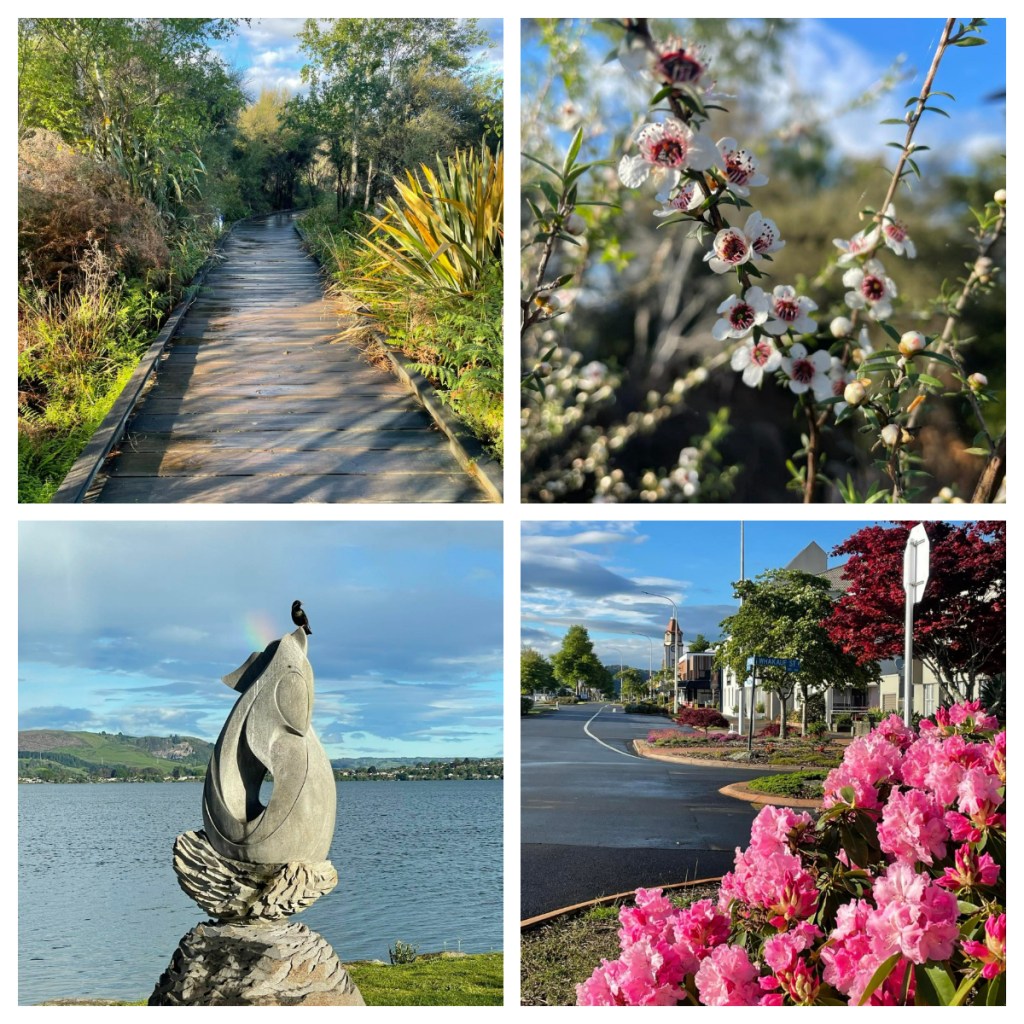
By this point I needed my sunglasses and not a raincoat and umbrella I had with me, but I decided to continue around the lake track as it was still not even 7.30 (and I had already taken so many photos and I had not even left the centre of town 🥴).  It was definitely the right decision as it was lovely track around the lake and back through wetlands with a boardwalk through beautiful flowering Kanuka and Manuka.

PSA – don’t forget insect repellent! I have thought about putting it on but when I left my room, but I was only going for a short walk in the rain!   Lesson learnt – always be prepared 😂. Oh, and I also forgot my mask and wallet – thank goodness for payWave and hoodies that you can zip up you’re your mouth and nose so I could get coffee on my way back to my room.

There is so much to do and see in and around Rotorua, but as I only had one day, I had chosen to visit a couple of geothermal regions just out of town.  First up was the Waimangu Volcanic Valley. Just 20 minutes’ drive from the city through some beautiful rolling farmland and punga lined country roads

In 1886, Mt Tarawera erupted, ripping a 17km rift in the earth, creating what is now the Waimangu Volcanic Valley.  The eruption was heard as far south as Christchurch and as far north as Northland! The area was given its name when in the early 1900s a huge geyser erupted in valley, throwing black water, steam and rocks up to 450m in the air – Waimangu is translated from Māori to Black Water.  Further steam blasts in 1917 again reshaped the valley, re-excavating Echo Crater and destroying a nearby hotel. 

The first part of the visit a 4km walk down through the rift valley.  Today it is so beautiful and peaceful, filled with birdsong, I can only image the eruptions of the passes that created what we see today (though the steam vents help with fill in that picture lol).

I had 2 hours to walk through the area and I thought that would be way longer than needed for the 4km walk, but there was so much to see, and such great information provided via the leaflet they give and the great interactive app that provides more information and interactive images showing how the area looked pre eruptions.

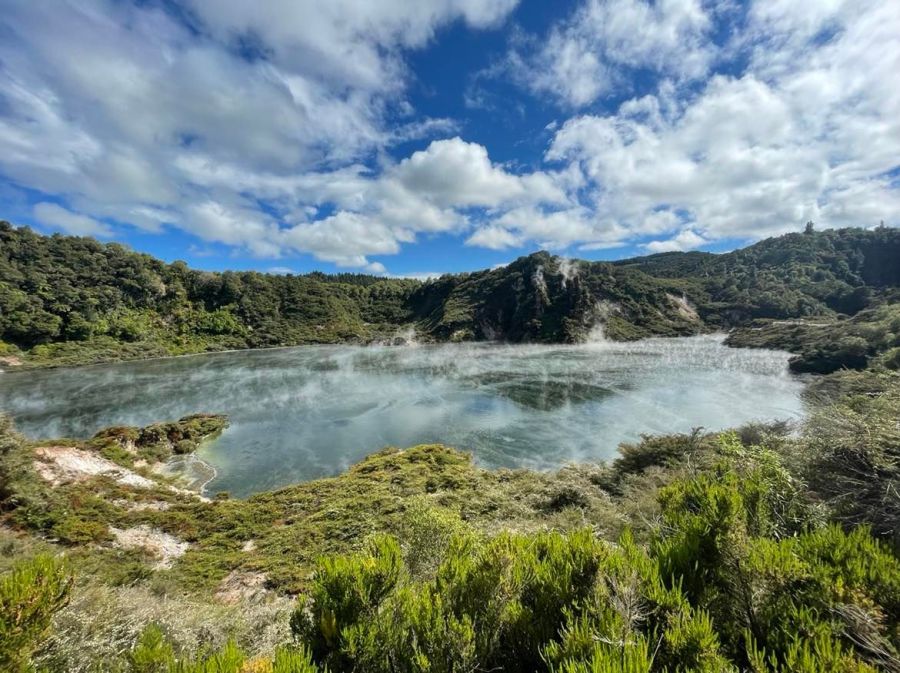
The most recent eruption happened in Frying Pan Lake in the Echo Crater and was called the Trinity Terrace Eruption.  In February 1973, a small eruption sprayed mud over 100m in the air.  Thankfully it took place in the middle of the night, and only lasted 15 minutes.

I should probably note that before the 1917 Frying Pan Flat eruption, people could walk over the area that is now Frying Pan Lake!  I was very interested to learn that the bubbling water is not actually boiling – which I always thought was the case.  It is actually carbon dioxide and Hydrogen sulphide gas bubbling up through the acidic lake water that makes it look like it is boiling.

The second part of the experience was a boat trip across Lake Rotomahana – there was only 4 of us so plenty of room to spread out and enjoy the trip mask free.  Prior to the 1886 Tarawera eruption, the area that now forms Lake Rotomahana had been home to two smaller lakes – Lake Rotomahana and Lake Rotomakariri and was the birthplace of New Zealand tourism. 

Pre 1886 Lake Rotomahana was home to the world famous Pink and White Terraces, once considered the 8th wonder of the world.  Tourists from around the world made the long journey to enjoy the natural hot pools in the silica terraces.  Using the interactive app, you could see an image of the terraces as we sailed over their former site.  I imagine they were similar to the silica terraces I visited in Pamukkale in Turkey many years ago.

The lake is also now a bird wildlife sanctuary so there were lots of birds including ducklings and cygnets. 

If you notice the golden colour around some of the vents, it is a phenomenon where blue green algae turn gold to protect itself from the UV in the sunlight, oddly nothing to do with heat or gases in the geothermal steam or water!

Back on dry land, we were shuttled back to the beginning on a bus (which you could hop on at 3 places through the walk).  It was definitely worth the visit and their app was cool, but they should definitely advertise it more and warn people it uses lot of battery, especially if you are using your phone as camera too.

It was a great morning, but I had no time to sit still, I had to quickly be on the move to my next activity ….