Unseen Fiorland and Stewart Island (Part 4) – The final chapter

We had a calm night, and we woke to a beautiful morning surrounded by mountains, bush and bird sound from the shores of nearby Anchor Island.   Nothing like Ulva but more than anywhere else, yet another perfect morning as it has been every day for my morning coffee.  It was made even more perfect by a couple of dolphins swimming around the boat and some little blue penguins in the distance – what more could you ask for.  After such a beautiful start, I popped outside after breakfast and it was raining ☔️ah, Fiordland. 

Our outing this morning was going to take us to around Luncheon Cove and on to Anchor Island.  Anchor Island is highly protected which means the numbers of people on shore at one time are limited and the logistics of this seemed far more difficult than it should have been 🤦🏻‍♀️ lol. I was in the last group to depart the ship.  On the downside this mean a lot of waiting around as we did not get off until almost 10am, on the upside by this time it had stopped raining!

We spent some time looking at the fur seals lounging around on the rocks and relaxing in the water before it was our turn to land on Anchor Island at Luncheon Cove (apparently Captain Cook had lunch here one day, hence the name!).  In 1792, 14 men (though some accounts say 11 men were left) were dropped off at this same spot by the Sealer ship Britannia with the intent of spending a few months catching the abundant fur seals in the area.  They were left with building materials to build not only a house to live in, but another boat, in case the Britannia could not come back to collect them. 

The house and boat they built here are considered the first European house/settlement and boat built in New Zealand.  Despite their boat building success, the Britannia did come back to pick them (and their 4,500 seal skins – of course that translates to 4,500 less fur seals!!) 10 months later so the nearly completed 52 ft long boat was left in the small creek on Anchor Island.

So, when the men were not busy building (and making beer out of Rimu leaves), they were sealing and killed 100s and 1000s of the local fur seal population.  Seals were greatly prized and Captain Cook even made the following entry in his diary in 1773“ Thursday 22nd.  In the PM I went with a party a Seal hunting, the surf was so high that we could only land in one place where we killed Ten, these animals serve us for three purposes, the skins we use for our rigging, the fatt makes oyle for our lamps and the flesh we eat, their harslets (heart and liver) are equal to that of a hog and the flesh of some of them eats little inferior to beef steakes, nay I believe we should think it superior could we get the better of prejudice.”

(The journals of Captain James Cook: the voyage of the Resolution and Adventure, 1772–1775, edited by J. C. Beaglehole. Cambridge: Hakluyt Society, 1961, p. 126)

Sealing in the area carried on until 1946, but thankfully the population of seals has built back up today and we saw many in the area, including one who had a bit of a stand off with one of my boat mates!

But the story of the boat did not end when the original group of sealers were picked up.  Two years later another ship, the Endeavour, came to the area and the crew finished the build.  They named their ‘new’ boat the Providence and sailed it to Norfolk Island.
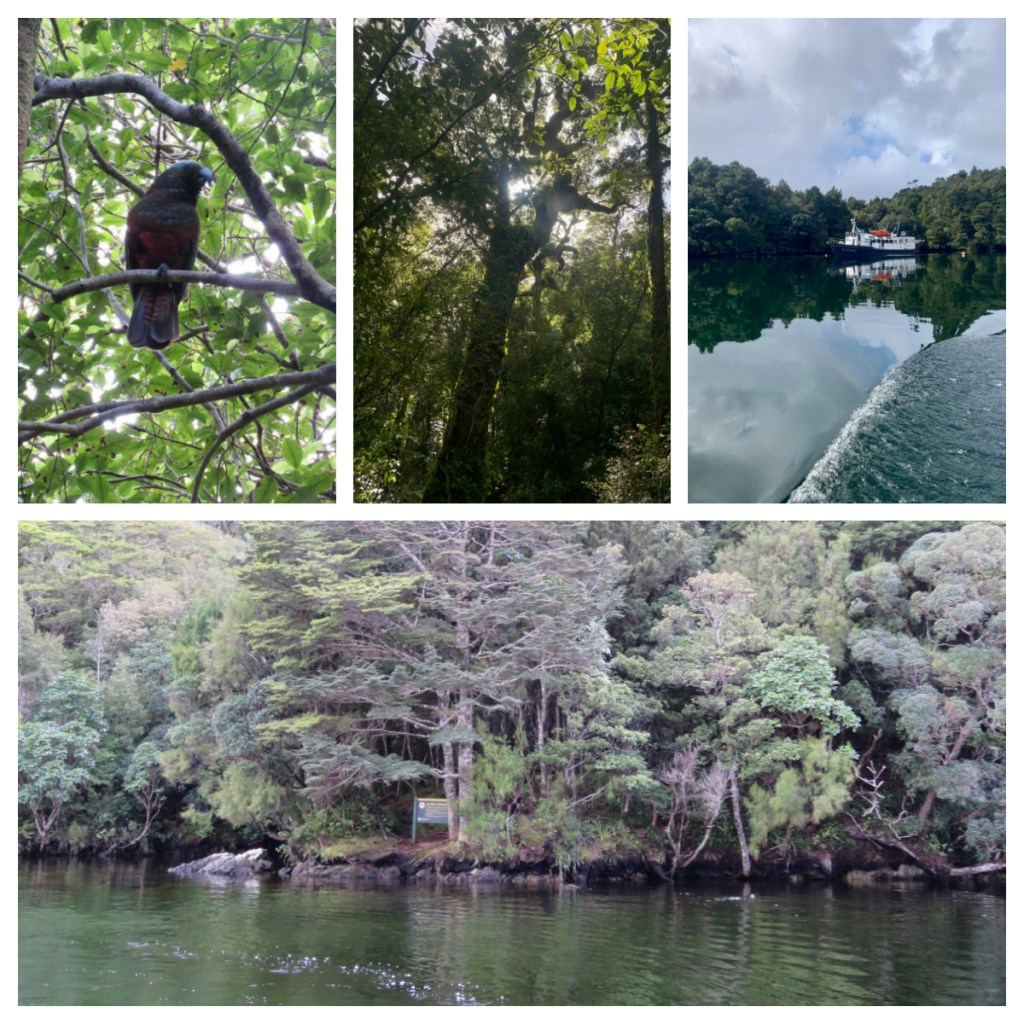
Today, Anchor Island is particularly important to the conservation efforts of endangered species.  In particular the Kakapo which were introduced to the island in 2006, having been cleared of the last of the predators in 2005 (all the deer were removed in 2007).  In the 2015 breeding season they had 38 chicks on Anchor Island and today there is a population of 80 young Kakapo on the island.   Unfortunately, they are nocturnal so there was little to no chance of seeing one whilst on the island.  Apparently there use to be one who came out to ‘greet’ visitors to the island, but they removed it to an island that is not open to the public as they were worried someone would ‘steal’ it!

We had a short walk on the island but to be honest I would have preferred just to sit some quietly and listen and watch the birds rather than go on the walk-through mud and learn and see nothing special.   It was also hot going, dressed for zodiacs and then hiking, but I shouldn’t complain, it was beautiful, and I am so fortunate to be able to visit such important places.
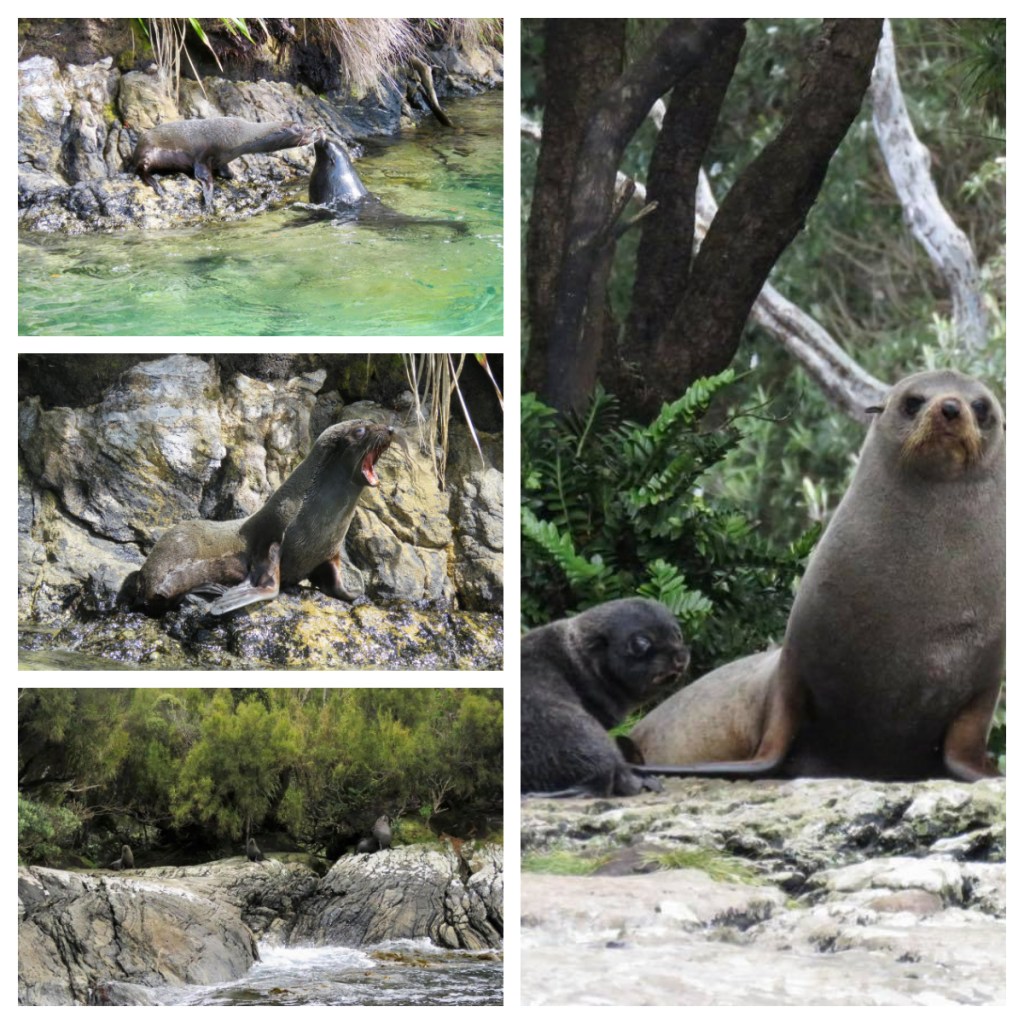
When our time on shore was over, we jumped back in the Zodiac for another trip around the islands, this time there were a lot of fur seals, including some pups and also Fiordland Crested penguins swimming around in the water. We also past a number of crayfish launches (similar to the one the chef had sourced the crayfish for dinner) – they often have helipads on top of their pontoons, so their fresh catch can be taken to Te Anau by helicopter!
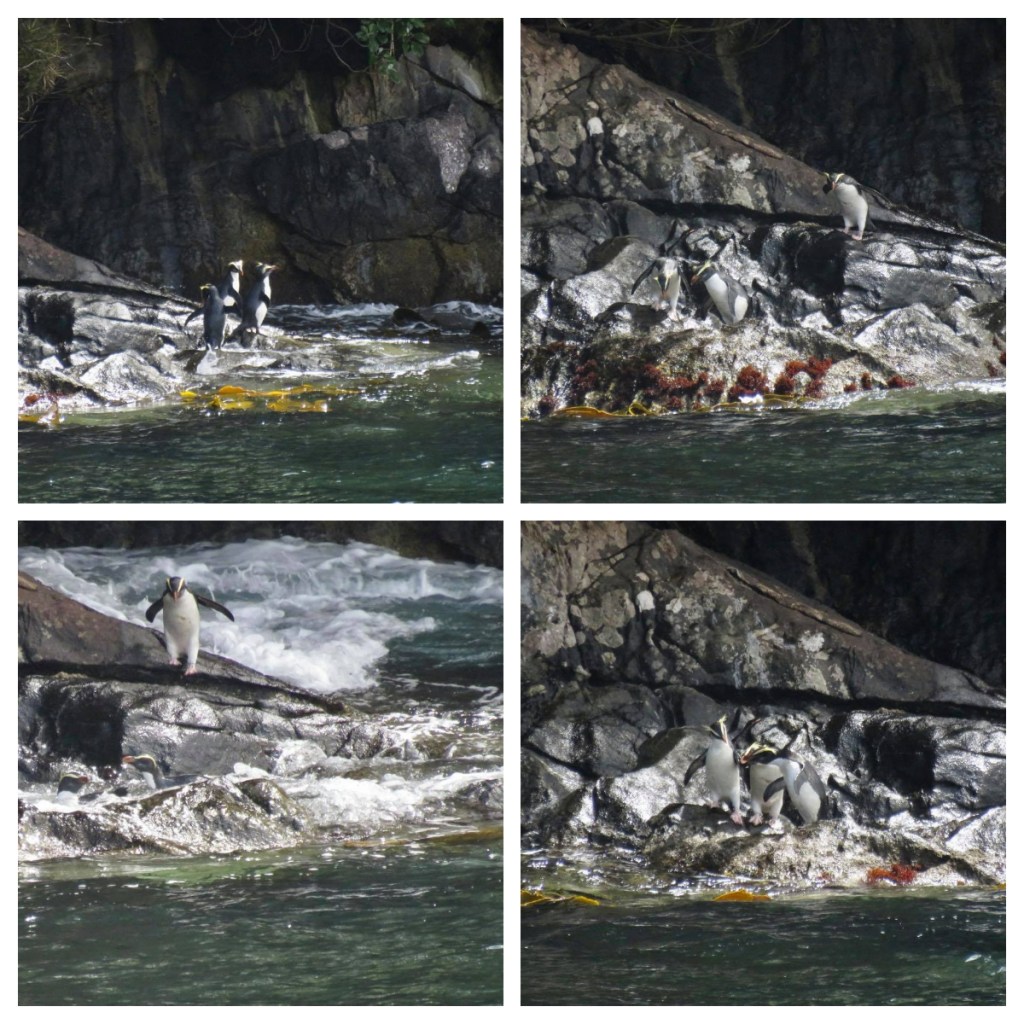
Back on board and there were a group of 3 penguins on the rocks, near the ship but a little too far for decent photos.  They were so cute jumping around trying to decide whether to go in the water or not 😂 (well, that’s what it looked like to me)!

During lunch the ship moved again – stepping out of the ship every time after we move is like stepping out into a new world – this time we were anchored off Pigeon Island, truly the birthplace of conservation in New Zealand.  Pigeon Island is where Richard Henry set up home when working on his conservation efforts on Resolution Island. 

Richard Henry was an Irishman who came to New Zealand in the late 1870’s and got a job as a rabbit shooter on a sheep farm.  When he saw the damage stoats, ferrets and weasels were doing to the native bird population, he predicted that they could wipe out the entire population.  He believed the birds would be safer on offshore islands, and although his ideas formed the basis for much of today’s conservation efforts of native species, his efforts to keep the predators at bay, were futile.

In 1894, Richard Henry was appointed custodian and caretaker of Resolution Island in Fiordland which became New Zealand’s first island reserve for native wildlife.  He set up home on Pigeon Island and built a house and a Kakapo pen, the remains of which we can see today.  He left Fiordland in 1908 and became caretaker of a new reserve on Kapiti Island – both Kapiti and Resolution remain key to New Zealand’s conservation efforts today.

Pigeon Island is another restricted island, this time, only 12 people were allowed on shore at one time, so we had limited time to explore this beautiful little island.  We were joined by a chirpy saddleback (saddlebacks were only introduced a couple of years ago and appear to be doing well.)  It is definitely clear to see how much more birdlife there is on the pest free islands and Pigeon Island was no exception.  Sadly, there were also many sand flies whilst waiting for to leave the beach 😫!

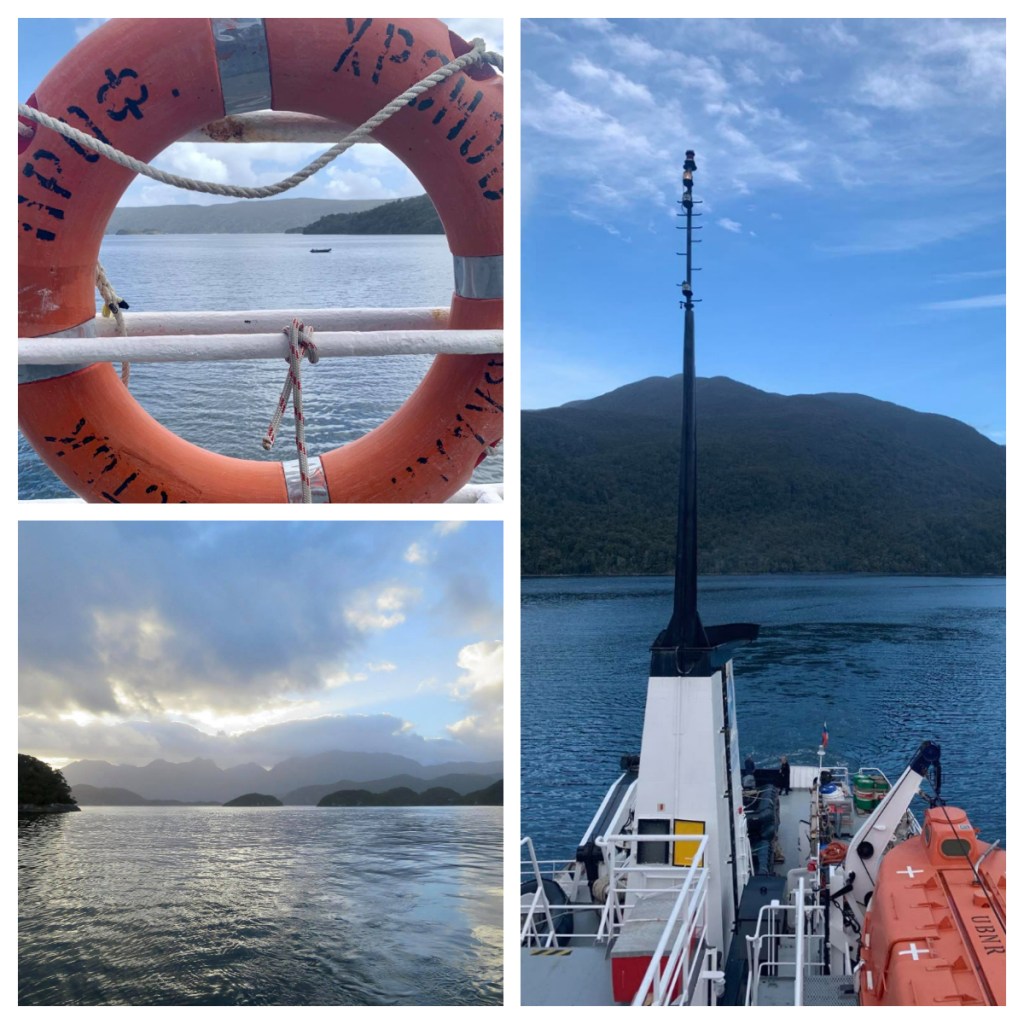
Back on the ship and it was already time to start packing, and a celebratory Kir Royale and cheese board on the bow to toast to the last night of the trip.  It was beautiful weather … sunny and warm, just like the first evening we celebrated on the bow, just a short 6 days before.  It was so warm, some people jumped in the water, including the captain of the ship and the naked chef – literally   🥴!!  I did not join them as I am a complete wuss when it comes to cold water!

Before dinner we had one final evening recap of the day and the trip as a whole.  It was amazing to be reminded of all the amazing places we had been in the short 6 days on the ship.  Apparently, adversity and revelation weld a group together, thankfully we had had not much adversity but lots of revelation.

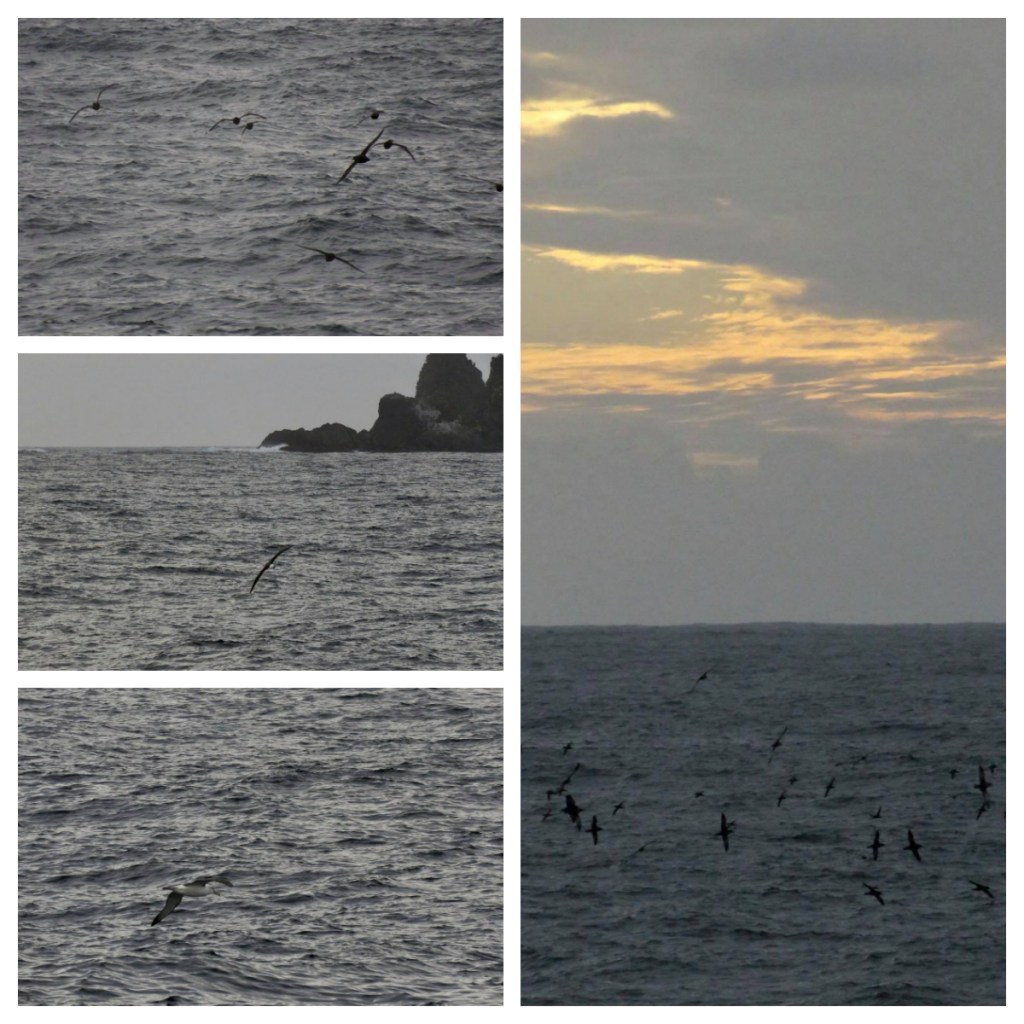
After our final dinner, most of us headed back up to deck to enjoy the journey out of the Sounds into Foveaux Strait.  We started the day with dolphins, and we ended the day with dolphins, a flock of sooty shearwaters and the odd albatross soaring around the boat.  It was beautiful but, not surprisingly it started to get rough as we made our way around the infamous Puysegur Point and that was my cue to head to bed!!
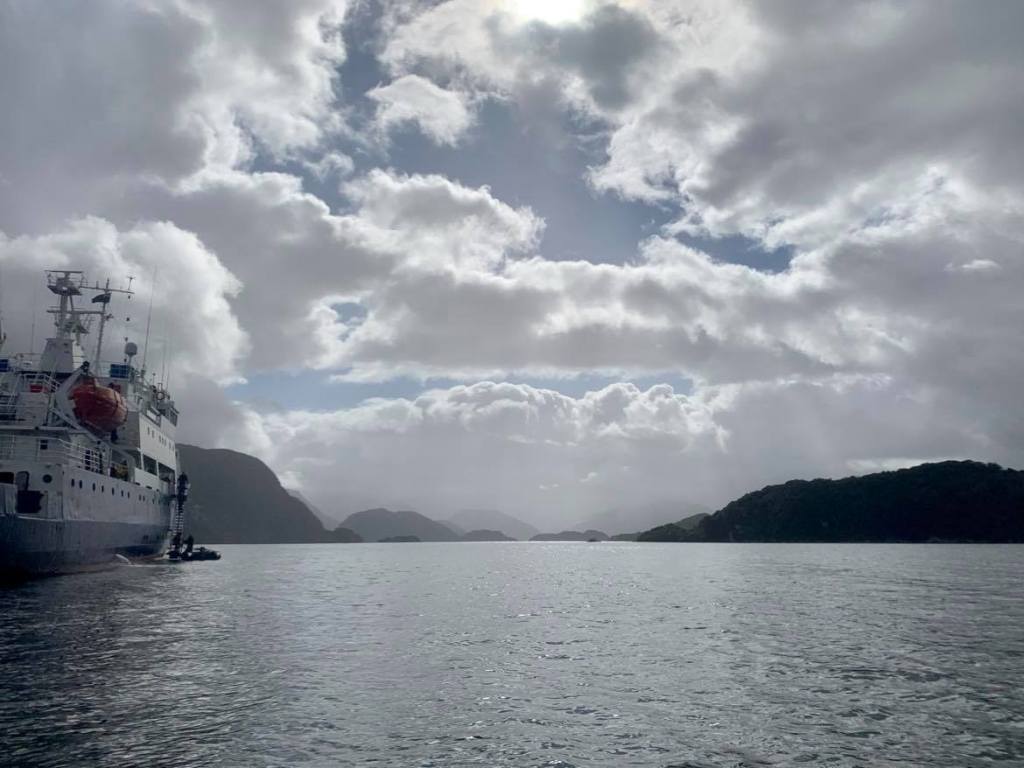
Most of the night was relatively calm despite the 3 hours rocking and rolling to start … and we were very soon heading in to port at Bluff (after we passed a couple of albatrosses waving goodbye) for a 7.30 landing.  We had had a pilot on board for the whole trip (a requirement for a ship this size) so we did not have to wait for one when we arrive in port and could just sail straight in.

It has been a great trip and I think we had been particularly lucky with the weather.  Apparently, we 3-4 metre swells at worst, sounds terrible to me but apparently it is nothing to the seasoned seafarers!

Phone reception had come back over night and everyone was back on their phones – me to change my flight from 4pm to 11am given that we were be in port so early.  It is always so refreshing to have a break from the internet.

Shortly after breakfast we were ready to depart and was waved off by the crew who lined up on the wharf to say their farewells.  They trip was short, but incredibly sweet and I have already got my eye on some future journeys with Heritage Expeditions. 

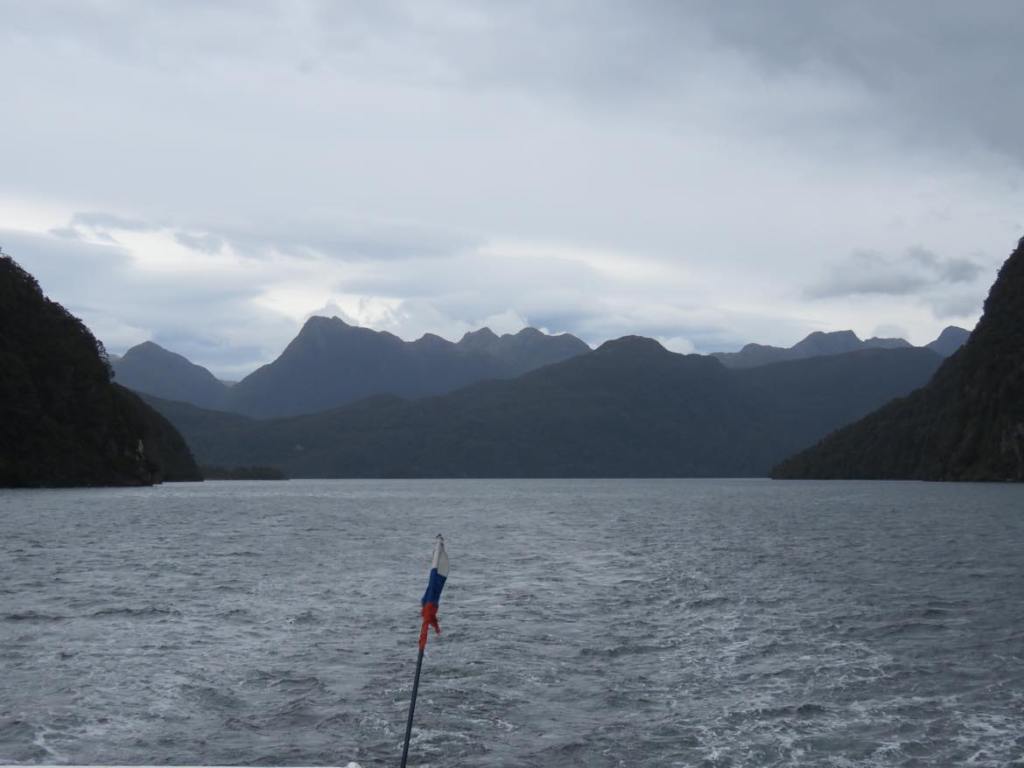
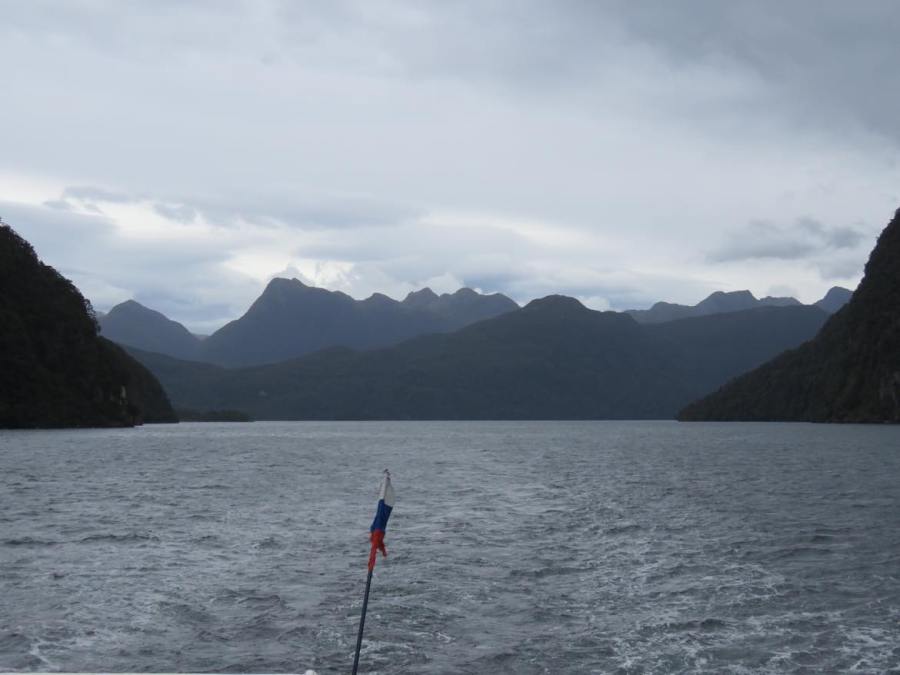
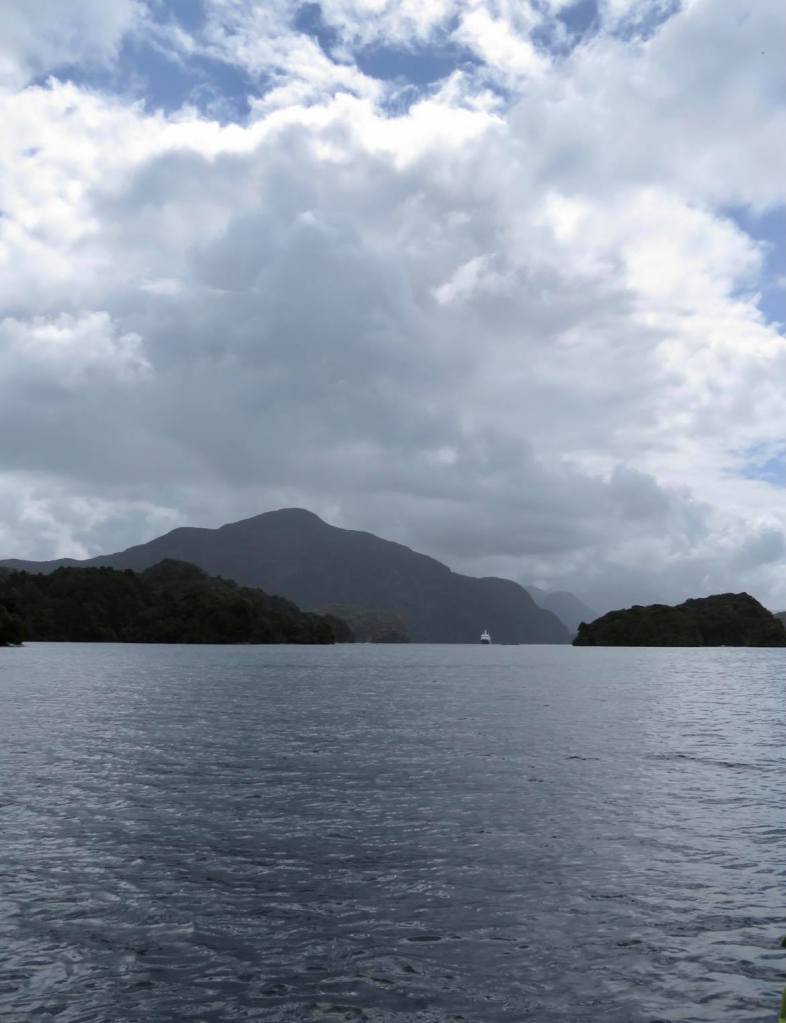
NB: Photos really don’t do this area justice – no photo can really depict the grandeur of the lush green forest covered mountains and the deep green colour of the water. Yet another place I would love to spend more time.

Rakiura … the land of glowing skies

October 2020

Somehow, I had not been to Stewart Island before, despite it being New Zealand’s 3rd largest island – and then I manage to go twice in one year lol.  There will be more about my second trip in another blog post (something to look forward to lol). I had also intended this to be one post, but after writing it, it seems better suited to two – I don’t want to bore you more than necessary lol.

For the first time since I returned to New Zealand in February as the world shut down, I was back at the airport and on a plane (I must admit I missed it) and it was a beautiful day for flying. Firstly a flight from Christchurch to Invercargill (around 1 hour 20 minutes), New Zealand’s most southerly city, and then the short hop from Invercargill to Oban, the only town on Rakiura (only 10-20 minutes depending on the wind).  The beautiful day lead to some lovely areial photos (I must always have the window seat for this reason!)

Invercargill is truly a small city airport and Stewart Island Flights is most definitely a small town airline.  They fly only between Stewart Island and Invercargill on their two Britten Norman Islanders which take just 10 passengers (including the pilot) – they also have a Piper Cherokee which is even smaller.  The pilots end up doing much of the work, including taking the passengers to the plane (we had to walk through the baggage area to get to the plane 😂), loading the baggage and of course do the inflight safety briefing. 

The flight was a little bumpy and we did not seem to be very high above the ocean …. but why would you go high when you are landing in 15 minutes!  It took us out over the small town of Bluff as we said  goodbye to the mainland (as we South Islanders like to call the South Island) and across Foveaux Strait on to the first amazing views of Stewart Island with its bush covered hills, perfect half- moon bays with clear  turquoise water.

We landed on the airstrip just outside of Oban and the plane was quickly unloaded (and reloaded for its quick turnaround and flight back to Invercargill) and we were bused in to the depot, a short walk from the South Sea Hotel where we were staying.   If you get the opportunity to travel to Stewart Island, I would highly recommend the flight – not only is it quick, you get amazing views and avoid having to travel to Bluff and then ferry (a far longer journey).

Stewart Island or Rakiura (meaning ‘glowing skies’ after the Aurora Australis you can sometimes see from the island) has a long history of Māori habitation (around the 13th century) and was then settled by European sealers and whalers from around 1800 and subsequently loggers who set up a number of large timber mills on the island.  It got its name Stewart Island from William Stewart, the first mate on one of the early sealer ships.  Thankfully in the 1890’s a large part of the island was protected from milling or development which leaves us with the beautiful bush covered island we see today.

Oban itself, is named after Oban in Scotland (which means little bay) and is based around Halfmoon Bay and has around 380 permanent inhabitants and as we wandered around the town (it does not take long) it was filled with bird song.  Although it was a beautiful sunny day, this gave an impression of a much warmer day than it was, and the wind was bitterly cold.  Despite this, the local children from the school (just across the road from the waterfront) were wearing shorts and t-shirts and playing in the water!! 

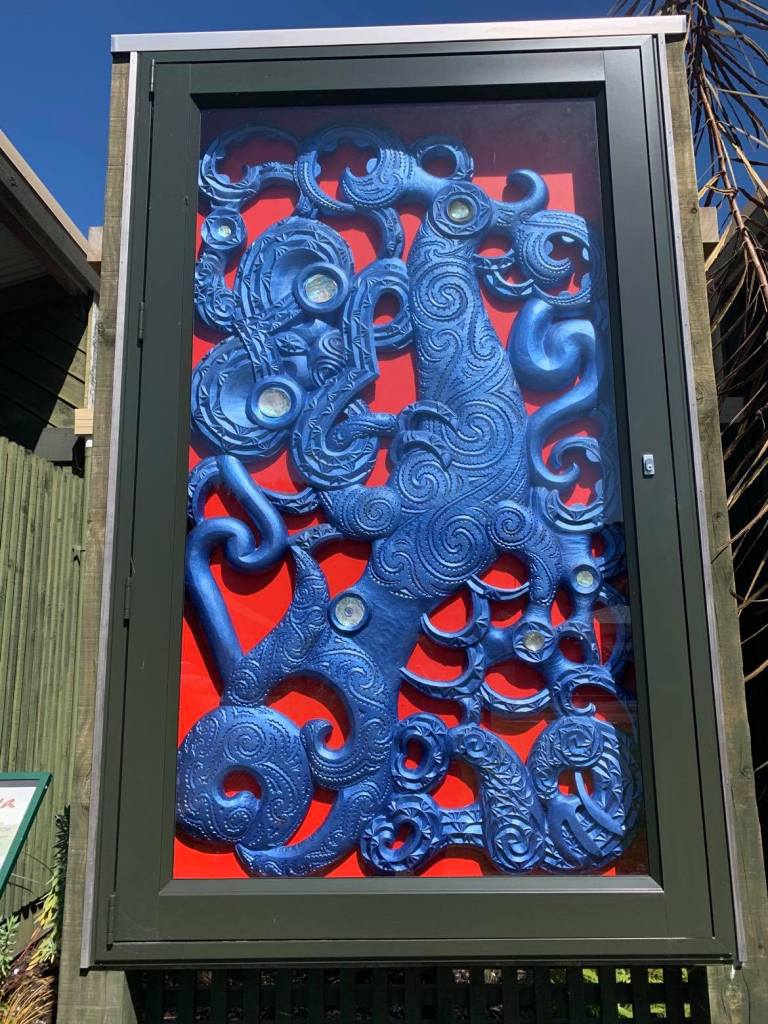
We stopped by the Department of Conservation (DoC) office to check out the local walking tracks and I was drawn to the beautiful carving they have outside.  It tells the tale of Kewa, a great whale who chewed through the South Island, separating Stewart Island/Rakiura and creating Te Ara a Kewa or the pathway of Kewa, also known as Foveaux Strait.

We had overheard an a conversation in a shop (there aren’t many of them) where a couple of the locals discussed how lovely the day was and that it didn’t happen very often! Upon hearing that, we were determined to make the most of it and headed out on a couple of the short walks around the town.  They were lovely walks and I was amazed with the amount of tuis were saw.  As usually, I spent far too long taking photos in the hope of that perfect shot.  I think I did ok lol

For dinner we headed to the local pub, one of the few places there is to eat outside of peak season (although there are not many more options in high season), and it was very busy.  We were lucky to get a table (as we had not booked) but managed to enjoy a good meal.   Not only was a good meal but it was a big one and we struggled with our full bellies up the hill behind the town to Observation Point to see the sunset over Paterson Inlet.   It was so beautiful and peaceful (except for the occasional tui or kereru) and well worth the struggle.  By this time, the wind has also dropped so it was significantly warmer.

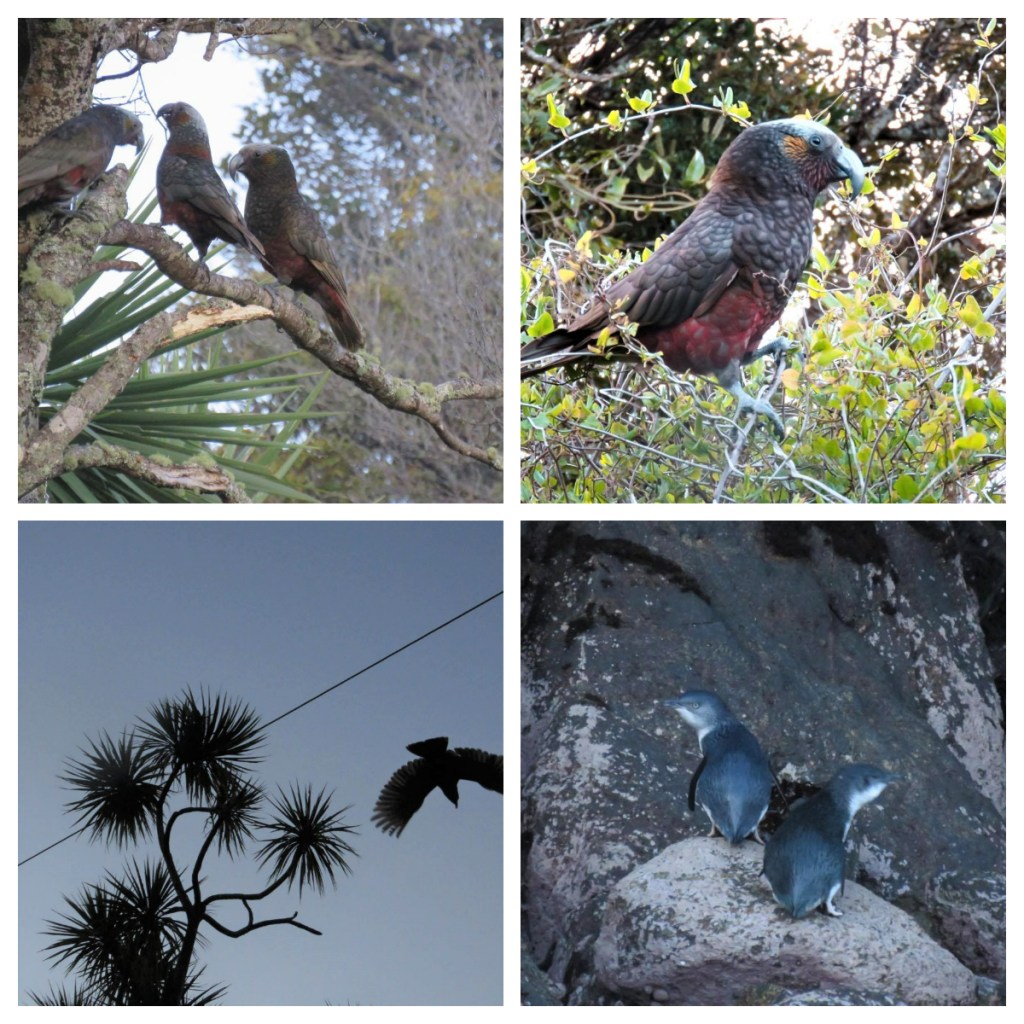
On the way back to town it was clear the South Island Kaka (one of New Zealand’s native parrots) were out living it up for the evening.  1,2,3,4 on the trees … and lots flying around.  It was amazing to see.  And to round off the day – we headed to the wharf to spot a few little blue penguins coming in for the night.  Sadly, it was too dark for decent photos, but it was great to see them.

We were actually staying in the accommodation attached to the hotel (just across the road from the wharf) – we were in a motel style room out the back, but there are also options to stay in the pub building itself which might be a little noisy if you were not planning on joining the drinking in the pub just below you – that said, you would get to enjoy the sea view.

Our first morning on the island and we up to what looked like some amazing light.  Never one to miss out on a photo opportunity, I threw on my shoes and coat over my Pajamas and quickly walked the short walk to the water front and it was well worth it, the sunrise was beautiful – so moody and colourful.  The forecast was for rain and it looked like it might be coming later in the day but not yet, so we definitely wanted to get out early.  

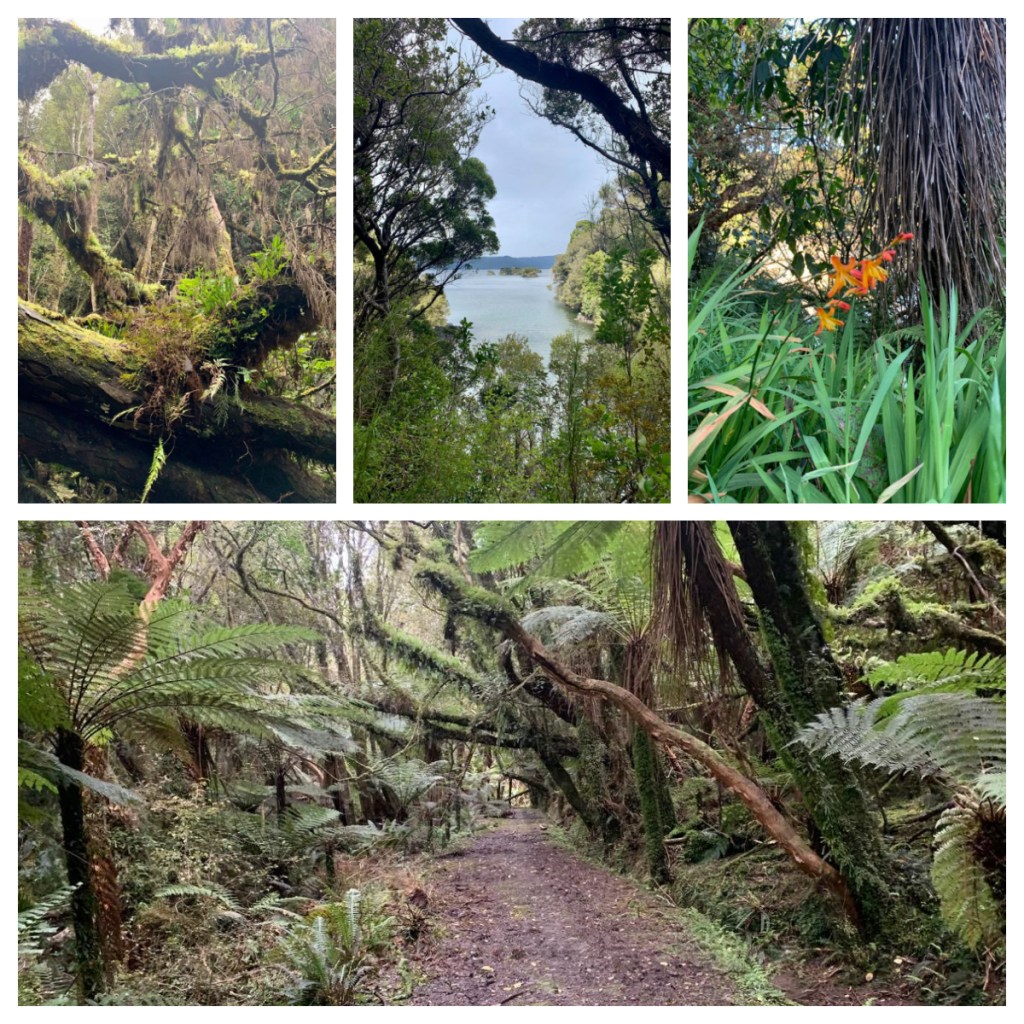
We did two 2 walks – Fern Gully and Ryan’s Creek.  Both walks you can do from Oban and about 10 km in total.  The tracks were good with just a few small some muddy areas, thankfully nowhere near as bad as it was for some friends who had been here just a couple weeks before.  There were not so many birds on these walks, but we did spot a bellbird and some oyster catchers when we made it down to the sea… 

At one point it appeared to be raining bark on the track, we looked up to see a Kaka ripping apart a branch and throwing the discarded bits to the ground. Typical Kaka (and their cousin Kea) behavior and they are well known for their destructive nature!  Again, it was a bit dark for any decent photos but amazing to stand and watch for a while. 

Back in town and we had lunch at the small café – as I mentioned before, at this time of year there are only 3 places to ‘dine out’ and the small supermarket where you can buy sandwiches and groceries etc.  We were sure to spend money at each of them. 

We had been lucky to avoid rain so far (although the photo taken just after lunch certainly looks like the calm before the storm) but our luck ran out when we decided to check out the small souvenir shop – just as we got there, the rain started and it got heavier and heavier so we decided to make a run for it and get back to the room😂.  I won’t lie, the rain was a good excuse to relax for the afternoon.

Thankfully the rain cleared in time for our evening Kiwi spotting tour.  I know a few people who have been lucky to see a kiwi walking around the roads just out of town, but as we did not have a car and wanted to have a higher change of spotting the elusive national bird of New Zealand we booked a tour with Ulva’s Guided Walks.  We did not regret it.

As you may know, Kiwis are nocturnal and so our tour started at 9pm (of course the time varies depending on the time of the sunset throughout the year).   It’s worth noting that despite being nocturnal, it is actually possible to have a kiwi encounter in broad daylight, if you are incredibly lucky.  Some say this is because there are fewer predators here, but it may also be due to the fact that in mid-summer (their breeding season), there are very few hours of darkness this far south so they need to feed during the day as well.

There is a population of around 13,000 Stewart Island kiwi (a sub species of Tokoeka, one of the five species of Kiwi), found only on Stewart Island and are considered a threatened species.  Thankfully the island is currently free from possums, stoats and ferrets which is vital to the health of the population.

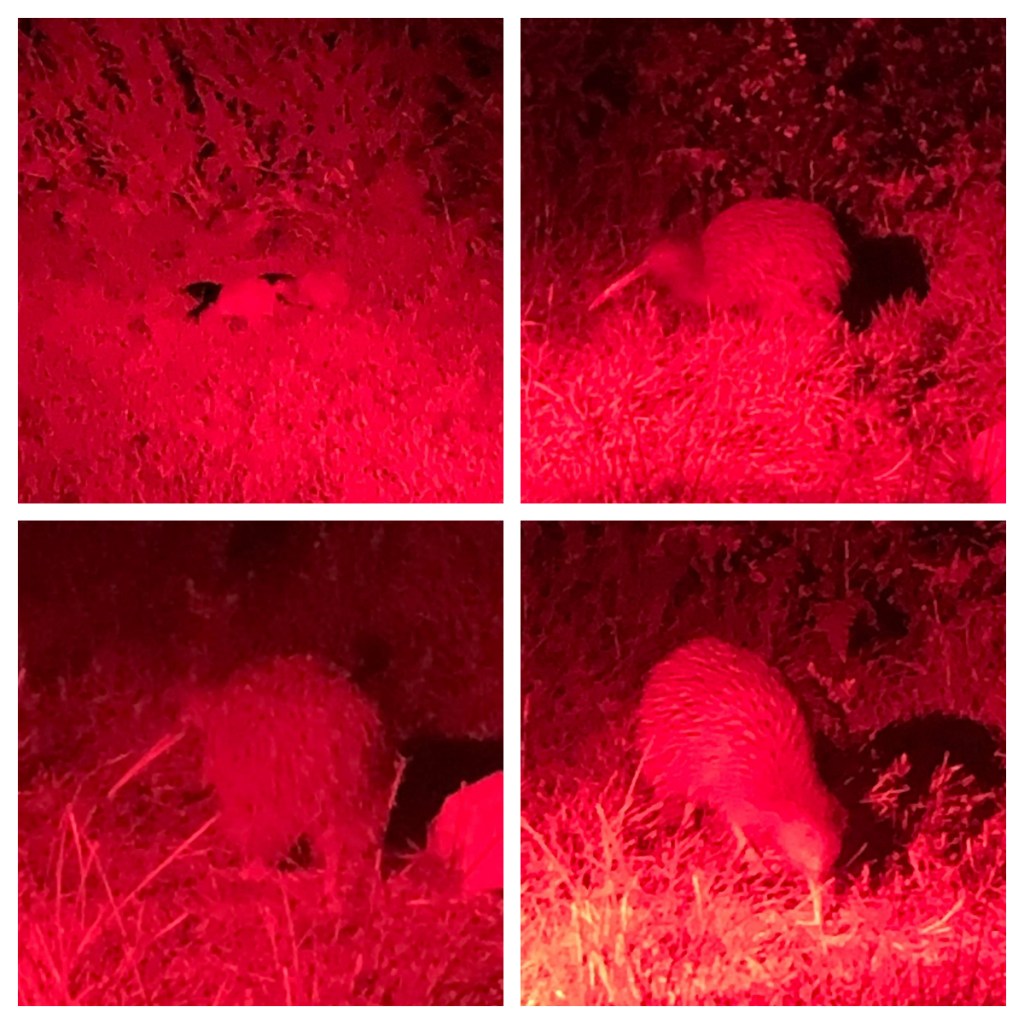
We met up with our guide and where driven only a short distance out of town, where we parked up and walked into a grassy area, just off the road.  Not far away we came across our first pair of kiwi (kiwis are generally monogamous and pair for long lengths of time).  We had red light torches to light the way – interesting it is the same technical we had used in Zimbabwe when hunting with lions, as the red light does not startle the game (and in this case the kiwi) like white light does.  And with this light we had a great view of the kiwi who do not seem particularly by our presence as they when on their way feeding, as some point coming quite close to us.

After this first encounter, we headed inside a predator proof fence (oddly set up the US based Dancing Star Foundation – Dancing Star Foundation – Biodiversity Conservation – Translocations) were we came across another pair of kiwi.  Interesting, the kiwi inside the fence where more skittish than the ones outside.  Apparently because they have less predators … and visitors in general and are therefore less habituated. 

It was a beautiful evening, after the afternoon rain.  The sky was full of stars (including shooting stars) and the calls of morepork and kiwi filled the air.  I cannot recommend the experience enough, and the chance to see our elusive national bird is one not to be missed.

Stay tuned for Part 2 …coming soon.