
November 2020
After a good night’s sleep moored in the very calm Paterson’s Inlet, I woke up to a beautiful view of Ulva island (I didn’t make it for sunrise which is now around 5am 🥴). The air was also full of bird song from the island. Fun fact, Paterson Inlet is the inlet with the most shoreline in the Southern Hemisphere!
After a big buffet breakfast we got ready for our first on shore expedition to Ulva Island and being the first day everyone was ready early for our 8am departure – raring to go.
Initial comparisons of small vs big expedition ships (the bigger ship being the one I went to Antarctica on in 2014/15) – the bigger ship had a dedicated muck room for getting dressed in your outside gear rather than 3 people trying to do that in our small room (it’s not that bad but difficult if we are all trying to get ready at the same time (which we inevitably were). Secondly on the big ship we typically exited the ship at sea level straight into the zodiacs … on this ship there we steep stairs to decent. Nothing that I could not deal with though.
Now, if you are a regular reader, you will know I had been to Ulva Island just a few short weeks previous but it is definitely the kind of place that I could return to multiple times and, as with nature, every time would be different. All 50 of us disembarked the zodiacs on to the small wharf at Post Office Cove and we were able to choose which group we wanted to join – fast walkers, moderate walkers and potterers.

All the guides were provided by Ulva’s Guided Walks (who I had used the last time I was there) and I recognised one of the guides as Ulva herself and immediately decided I would join her group regardless of which one it was! Ulva Goodwille is well known on Stewart Island (she is named after Ulva Island) and she has even written a book about Ulva Island (which I was lucky enough to get a signed copy when I visited the last time). She is a direct descendant of the first Maori people of Stewart Island and is clearly very passionate about the island and it’s inhabitants.
It turned out, Ulva was leading the potterers group which was fine by me and it was even better because there was only 5 people in the group as opposed to the other groups that had 20 or so. We did not have to potterer far to come across two Red Crowned Kakariki feeding chicks in a hole in the tree – we could not see the chicks but they were definitely keeping their parents busy.


The whole island was filled with amazing bellbird song, occasionally interrupted by three saddlebacks, who, according to Ulva (who clearly speaks Saddleback lol) were all very angry!! We saw kereru, bellbirds and tuis doing ‘zoomies’ through the trees. We tasted some of the sooty mould (odd I know 😂) which tasted very sweet and learnt about the 73 species of endemic coprosma (only found in New Zealand) which can be identified by the dots up the centre of the leaf (see the photo).
In hindsight perhaps it was a little too ‘pottery’ for me but I loved all the stories Ulva was sharing with us. One of my favourites was the story of the Kaka, who used to have a red head, but the Kakariki stole the red feathers, so now Kaka have white feathers on their head and why the Kakariki are always “laughing” 😂.


Slightly more factual stories included her theory that saddlebacks could be flightless in 1000 years as they hate to fly and will avoid it if they can! They nest on the ground and ‘run’ up branches rather than fly. Of course, the existence of predator free islands like Ulva are the only place they can truly live this way and survive.
We learnt about the Robin’s who at this time of the year have ‘brooder patches’, where they pull out some breast feathers so their skin is closer to their eggs. It was clear that most are sitting on eggs currently.
We passed massive 500 year old Rimu trees and tiny orchids, so tiny they were easy to miss. There were almost no orchids in bloom when I was on the island before, but this time there were a few more including tiny green hooded orchids and bamboo orchids.


As we were admiring a morepork, who was comfortable tuck up in the incredible root system of a large South Rata tree (morepork are owls and therefore predominately nocturnal), a tui swooped in and dive bombed it! The morepork are predators and the tui must have eggs or chicks nearby that it was protecting. We didn’t see where the morepork went and never saw it again.
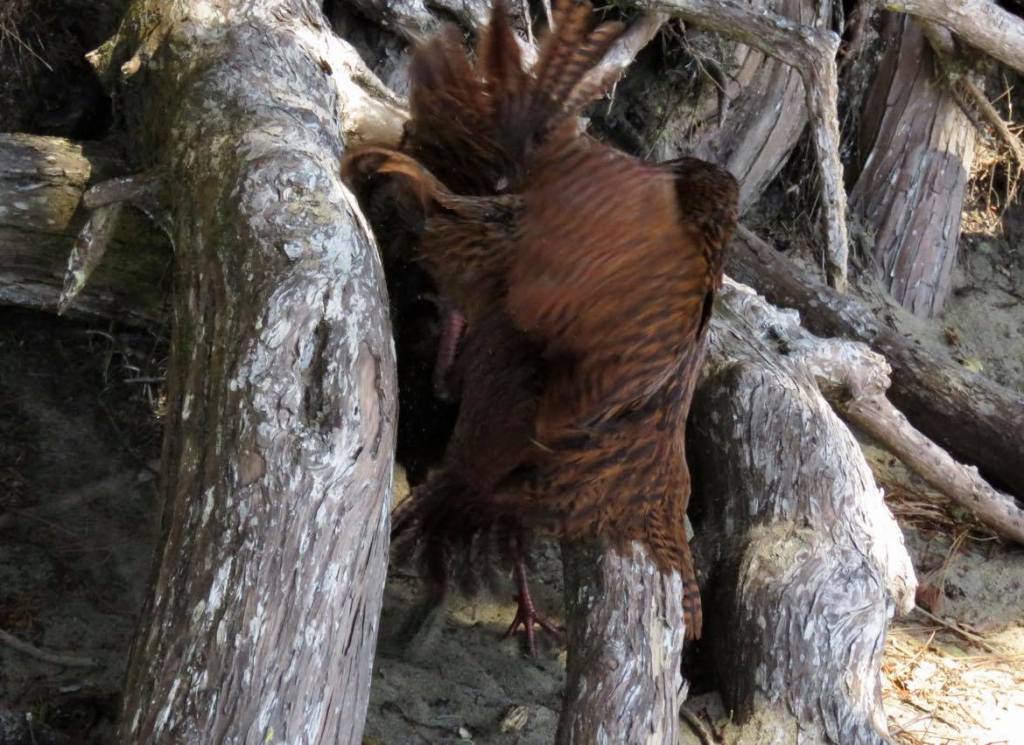
Back down near the beach we came across a Rifleman’s nest (New Zealand’s smallest bird). There was a tiny feather near the entrance but sadly we did not see the bird themselves … instead we got to watch some battling weka! The weka wars went on for some time before one of them gave up and wandered off lol.
It was a beautiful morning on Ulva Island but too soon it was time to head back to the ship and as we had lunch, the ship moved around to Kaipipi Bay, one of the many small bays that line Paterson’s Inlet. From here we headed back on to land for a walk back to Oban. We ended up walking along the last stretch of the Rakiura 3 day track down into town along with those who had actually done the 3 day walk 😂. They look exhausted but happy and we bumped into them again cooling off their tired feet in the ocean.
It was a warm sunny day and Oban, and the town was very busy (as was the bar) so I just decided to chill a little by the beach, fascinated by the amazing colours and patterns in the sand and it was not long before it was time to get the zodiac back to the ship which was now anchored in the harbour just offshore.


Settling into our onboard routine, we had a recap of the day in the bar before another great dinner. One of the staff had been asking around about the jellyfish from the previous night. Apparently, they were speckled jellyfish and at this time of year there are many of them due to additional nutrients in the water.
During the early hours of the morning, we moved again, this time around to the eastern coast of Stewart Island at Port Adventure (the movement made a nice little swell to rock me to sleep lol) and we work to another beautiful morning which I started with coffee on the deck before breakfast. It also helped that breakfast was not until 7.30 (rather than 6.45 the day before though we are clearly getting into the routine of boat life).


Weirdly, by morning, my phone was saying the time was 4.30am rather than 7.30am 🤔🤔 but when I went in to the world time it had the right time for Wellington – had we changed times zones over night?? No… apparently the ship (from Vladivostok) has some technology that phones are picking up … so it is showing the time in Vladivostok 🥴 or are we on the way to Vladivostok – technology is wonderful but weird … even my offline maps thought we were in Russia and all my photos show they were taken in Vladivostok?!? Thank goodness I was not relying on the alarm to wake up!!
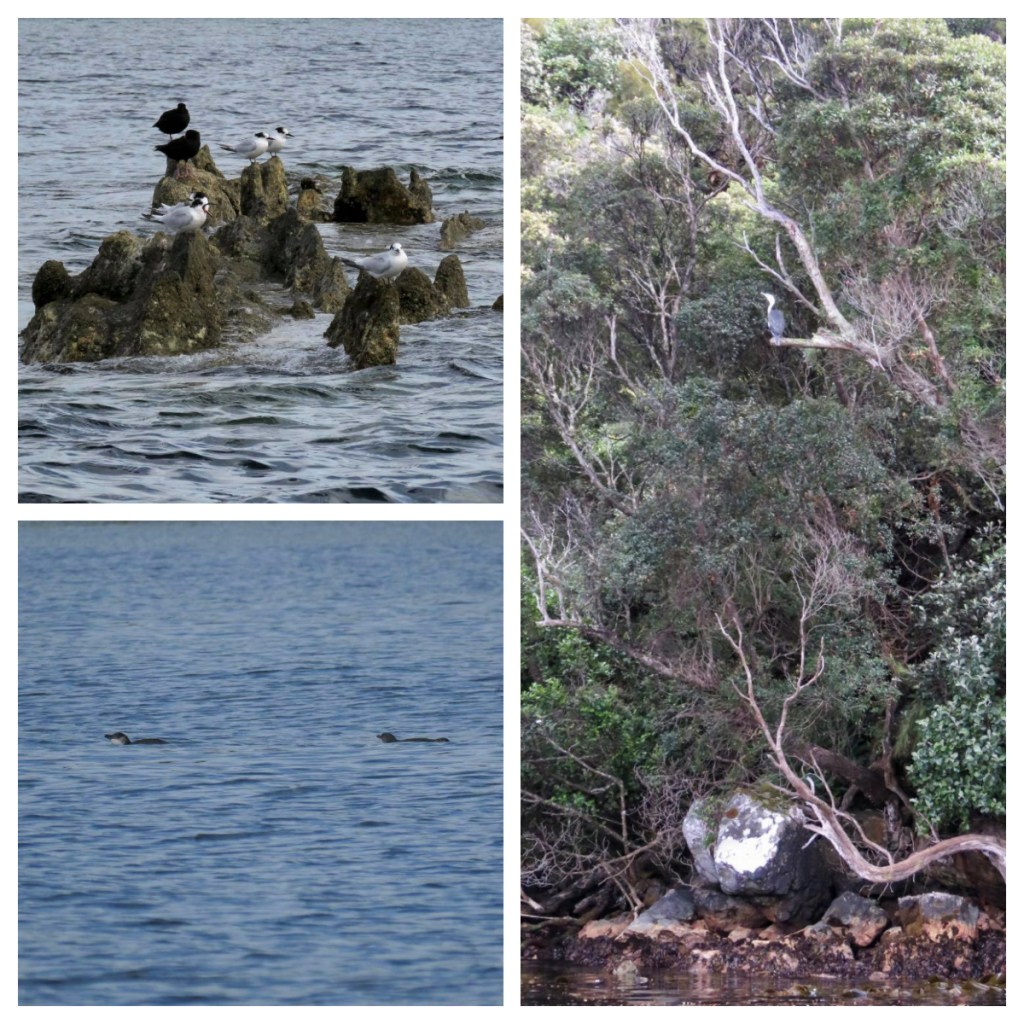
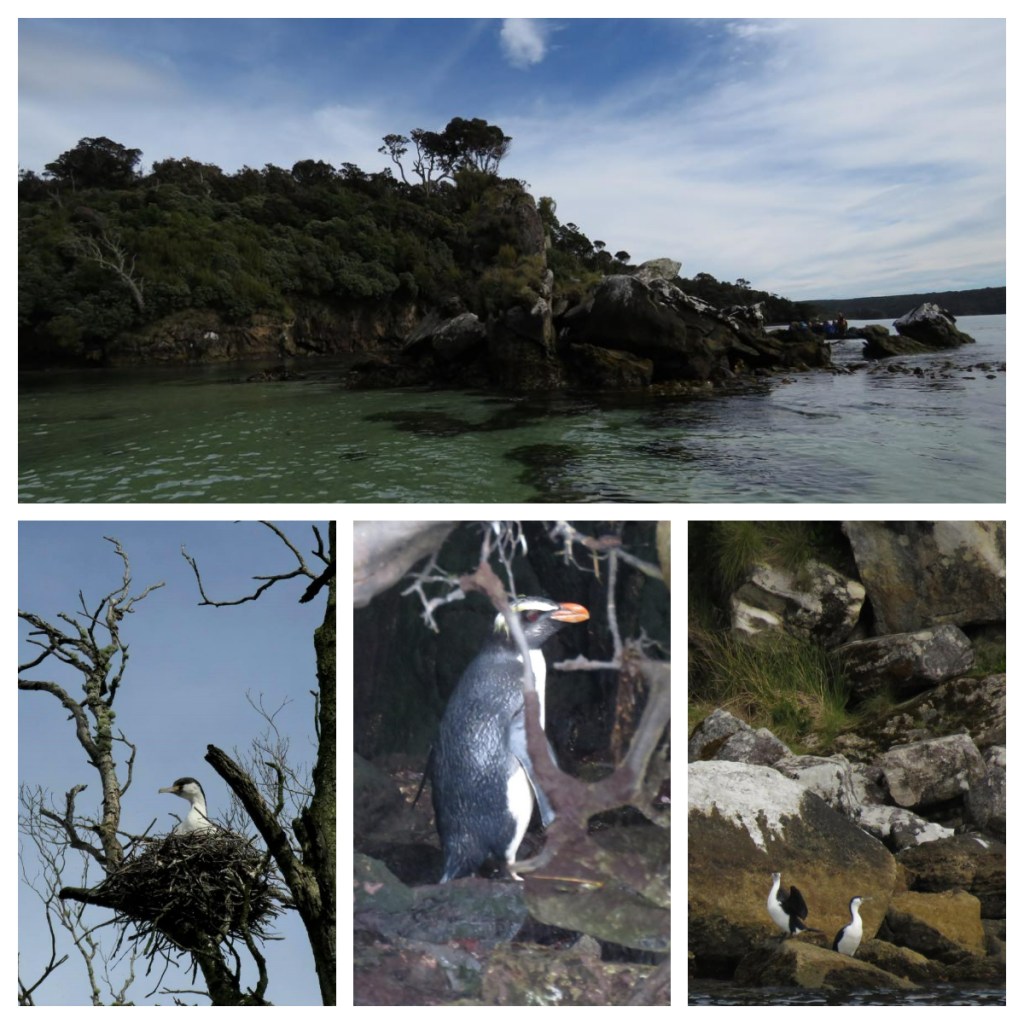
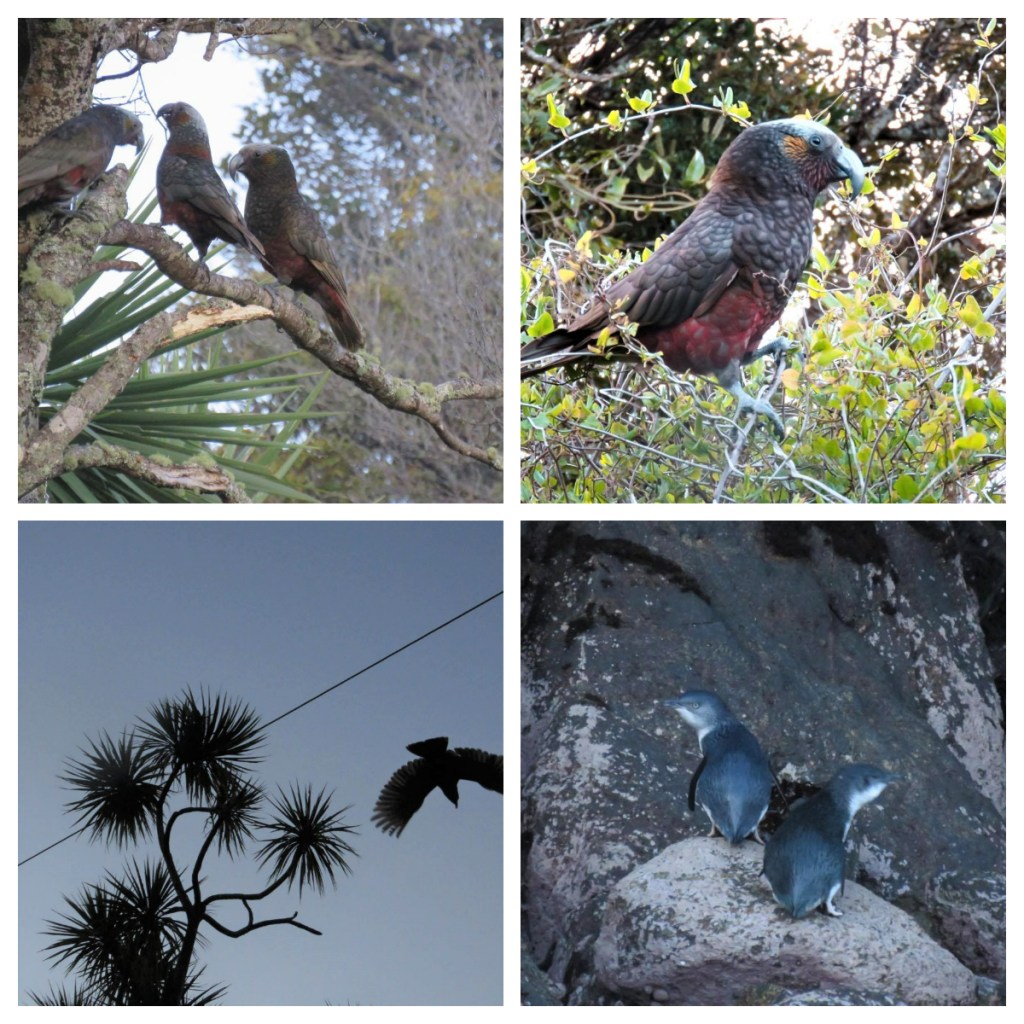
By 8.45 (New Zealand time) we were out on the water in the zodiacs (there are enough zodiacs for everyone onboard to be out on the water at the same time) and started cruising around some of the bays, passing a few Little Blue penguins in the water and some Foveaux Shags chilling out in the trees. Apparently, they can be black or black and white!
As we cruised along the southern arm of the bay, we spotted our first Fiordland Crested penguin, hiding out under a branch on the side of the water and spotted kaka flying overhead. We admired white fronted terns and variable oyster catchers, all posed on a small group of rocks. It was so peaceful and calm when we turned the engines off … it was also warm – too warm for all the clothes I was wearing when we were going slow, but I was grateful for them when we picked up some speed!
We had a brief land stop at the Port Adventure Hunters hut (to give the crew time for a quick outboard motor repair) and I spent the time admiring the beach with its beautiful mixture of coloured shells, rocks and seaweed.
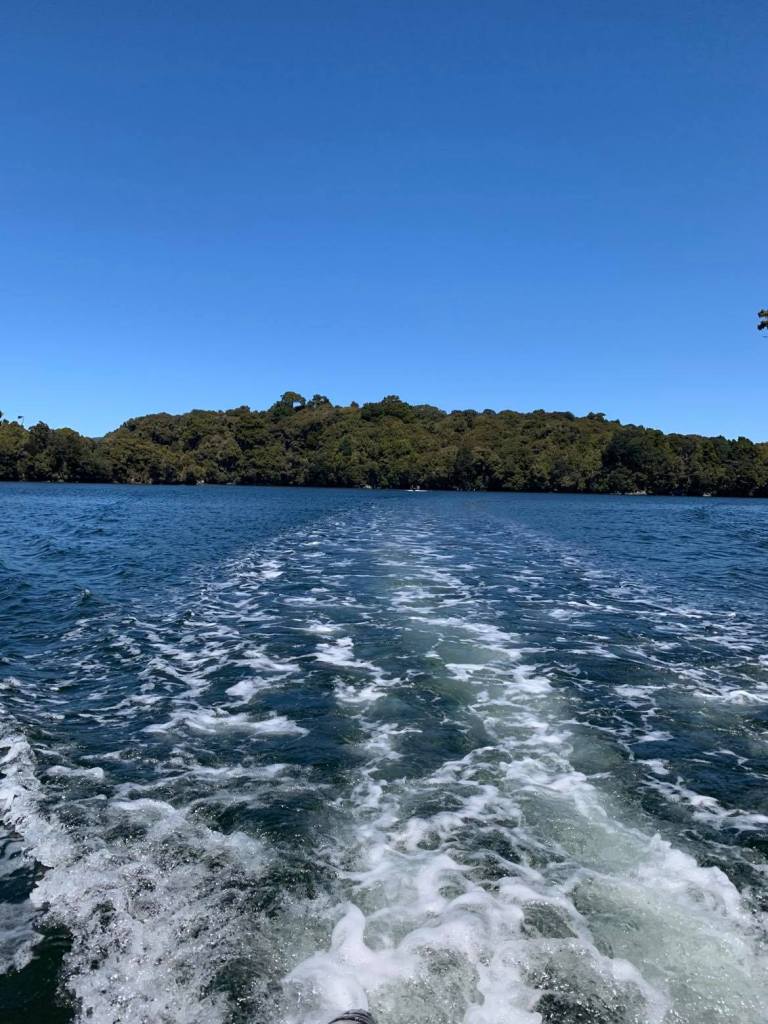
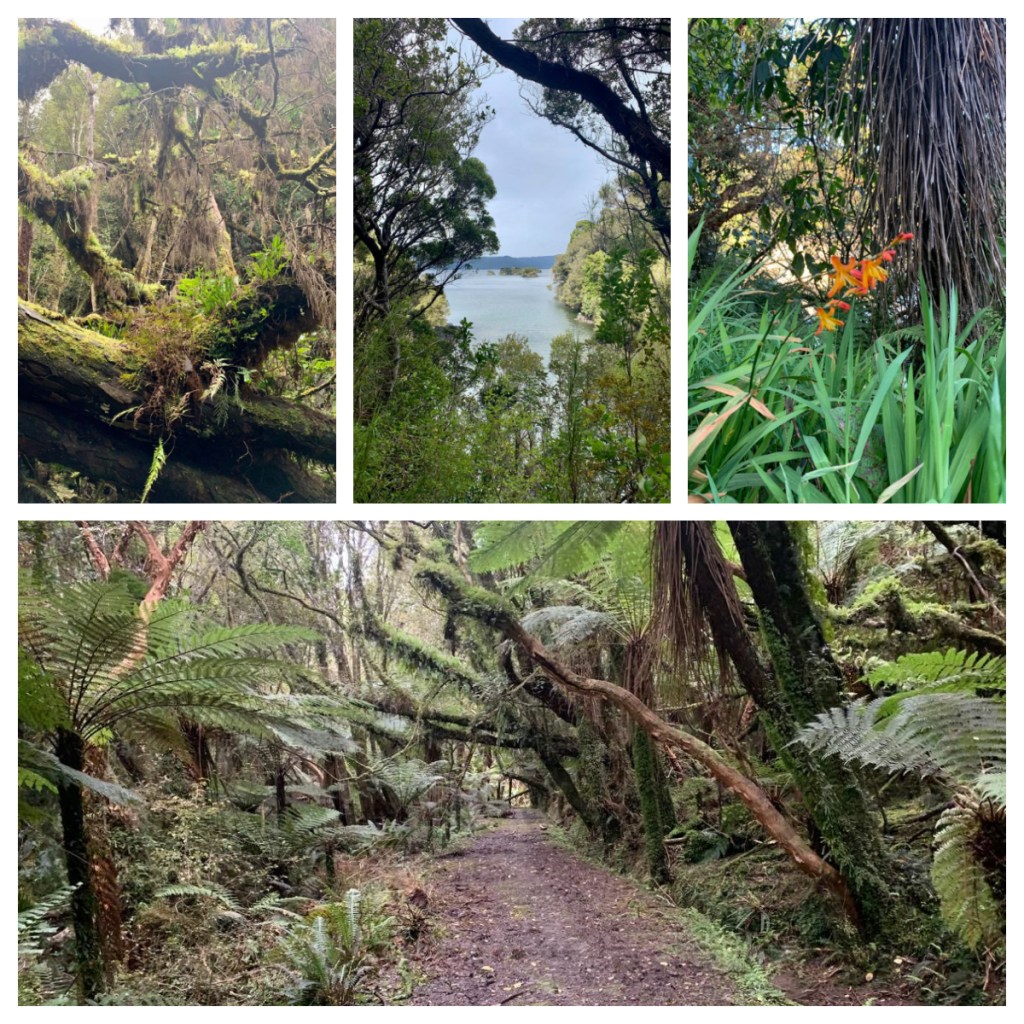
With all the zodiacs back in working order, we headed down beautiful Heron River – it had a real central/ South American vibe to it, with jungle on both sides of the dark river – I almost expect to see alligators in the water, or monkeys in the trees.


As the river narrowed and shallowed, I ended up helping Heidi our guide row the zodiac (as it was too shallow to use the outboards) – but at least I avoided having to get in to push us over rocks in the really shallow parts 👍🏻 lol. Apparently, the plan had been to try and get as far down the river to see a waterfall … we did, and it was about 10 cm high 😂😂
Back on the ship and we quickly lifted the anchor and set sail as we sat down for lunch. After all the paddling efforts of the morning I was ravenously hungry and I was surprised when my phone pinged during lunch, meaning I had reception (which we don’t have for much of the trip). It seems we had abandoned the route we were supposed to take around the south of Stewart island and instead went back past Oban (hence the phone reception) and along the north coast. I understand that sometimes things have to change, particularly on trips like this, but it was disappointing they we could not do the plan but also that they really did not tell us about it …
We spent the afternoon at sea in somewhat choppy water so had a couple of lectures – I missed the first one of Maori settlement of Auckland Islands (we are not going there, and I was exhausted after my paddling exploits of the morning), the second was on the Southern Ocean which we were experiencing so I did go to that one – key takeaway for me is that the southern ocean is the biggest ‘continuous’ ocean in the world. It was certainly continuously moving at this time!
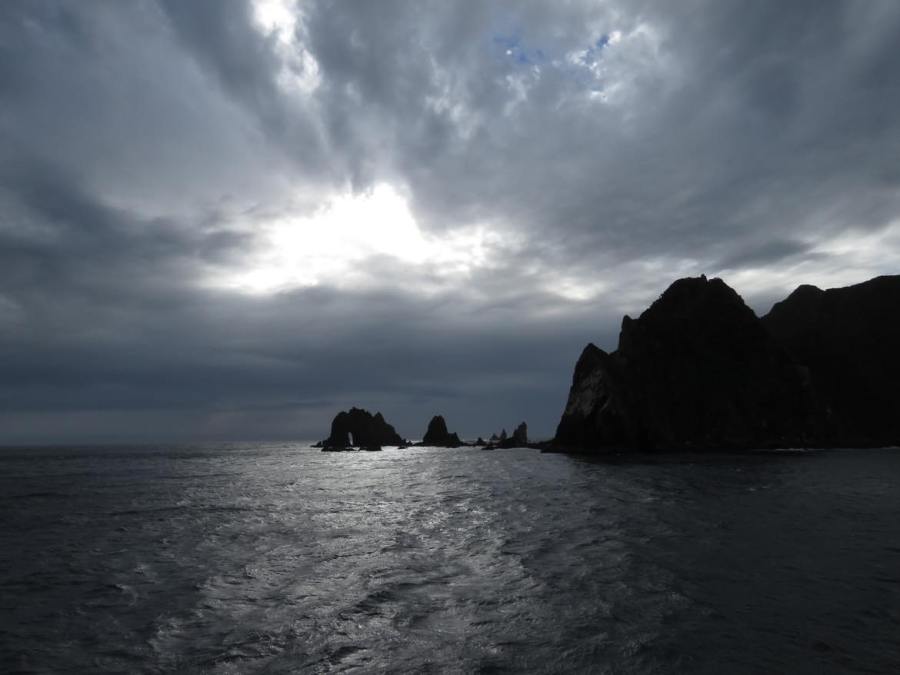
We did a drive by of the Solander Islands, a group of 3 rocky islands that are the tips of an extinct volcano that is believed to have last erupted between 150,000 and 400,000 years ago. It is believed that it is the size of Mt Taranaki, the rest of which is submerged. It was named after one of Cooks botanists – clearly Solander was not as popular as Banks who got a large peninsular (was thought to be an island at the time), Solander basically got a lump of granite in a remote part of the ocean!


It was beautiful sight with the dramatic skies – albatross and giant petrel soaring around the ship and sealions frolicking in the sea around us. It was truly beautiful and remote part of our wonderful big backyard that not many people get to see.
We then set sail across to the mainland (the South Island that is😂). I decided to forego dinner (though I was disappointed to be missing out on rib eye steak) but it was pretty rough by my standards and getting around the ship was tough. It was definitely the roughest seas I had had in my limited sailing career (although many onboard had seen much worse). Apparently, the crew and staff enjoyed a rather large dinner as many people did not eat!!








 Cockneykiwi takes flight