
Ireland
December 2023
After another great night’s sleep, I left Belfast and drove south, back across the invisible border to the Republic of Ireland – there was not sign indicating the border on this road either!
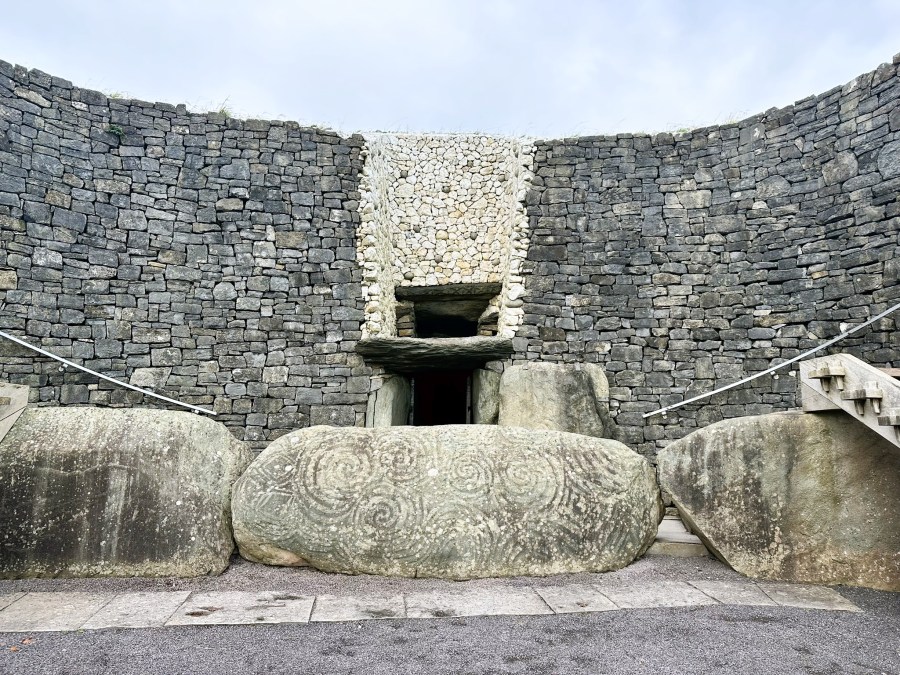
My destination the Boyne Valley in County Meath and the World Heritage Site of Brú na Bóinne. Until I started researching for this trip, I was completely unaware of the Neolithic history of Ireland and that there are various stone age sites that you can visit – Newgrange being touted as “the jewel in the crown of Ireland’s Ancient East”. Created around 5,200 years ago (3,200BC), it is older than Stonehenge, the Egyptian Pyramids at Giza and even the ancient city of Petra in Jordan!! This blows my mind!

To visit Newgrange, the most well know of the passage tombs in the complex, you must start at the Brú na Bóinne Visitor Centre. It was a cold day and the visitor’s centre was fairly quiet but given the staffing levels I assume they have much busier days/moments – there were 3 people within about 10 metres of each other, first to check my booking, the second to give me my ticket, and a third to check the ticket I was just given (in front of them) 🤔😂. I have not seen such a great job creation scheme since the small shops in Japan!
Your visit to the site includes a bus from the visitor’s centre to the site itself and as you enter you are allocated to a specific bus time. I had around 30 minutes to explore the really interesting exhibits and information. Apparently, the Boyne area has many Neolithic sites which date back to the “new stone age” era when humans started farming and living in settled groups. For them, Brú na Bóinne was a sacred place.
From the visitors centre, it was around a 5 minute walk across the River Boyne to the bus stop where I joined a group of people on the bus to the site itself. A short ride down narrow country lanes and we got our first glimpse of the passage tomb of Newgrange.
It is understood that passage tombs were used to contain the remains of the dead and it is likely that they were actually built over the bodies, rather than the bodies placed in afterwards. However, Newgrange is considered to be more than just a passage tomb and is considered more likely an Ancient Temple with astrological, spiritual and ceremonial importance. In fact, this site has amazing examples of megalithic art on a scale not found anywhere else in the world!


We had time to wander around the mound, around 85m in diameter and 13m high (covering a total of around 1 acre) before meeting the guide for our time inside the tomb. Unfortunately you could not take photos inside the tomb, which is a shame as the engineering that went in to the building of the tomb was amazing, as were the unique artworks.
One of the most special things about the site, is that on the winter solstice, the passage and burial chamber are lit with the sun as it rises. As we stood in the passage, which these days is lit with electrical lights, the guide turned off the lights and recreated the moment of the sun rising on the winter solstice. As with other ancient wonders like the pryamids of Giza and those in the South American Mayan world, the astronomical knowledge of the architects, engineers and astronomers who built them is incredible.
It was a really interesting visit and the countryside was beautiful despite the freezing weather, I was just grateful it wasn’t raining.
From Brú na Bóinne it was only a short drive (down more narrow country lanes) to Slane where I was to spend the night. I was a little early to check in to my accommodation so headed first to the Hill of Slane.
Legend has it, in 433, St Patrick lit a fire on the hill, in defiance of the law of pagan High King Laoire, who forbade the lighting of any fire before his fire, on the nearby Hill Of Tara, was lit on the spring equinox. Despite being angry, the King was impressed by St Patrick’s devotion, he allowed him to continue his missionary work which brought Christianity to Ireland (basically putting the putting King out of a job)!
The hill is only 158m high and from the carpark it was just a short walk to the top which today houses the ruins of a Franciscan Monastery dating back to 1512 as well as those of a college built to house four priests. From the ruins, there were also beautiful views out over the countryside.


From the hill I headed back in to the small village of Slane (population around 1,500) for lunch at the Village Inn and a quick visit to the nearby 18th century castle. It was unfortunately closed so could only admire it from the outside, but I did pop in to it’s neighbouring whiskey distillery to do a little souvenir shopping before I made my way to my AirBnB.
I had thought about heading to the pub later for some dinner but it was so cold and the Airbnb was so cozy I just stayed in!

When I headed out at 8am the next morning it was dark and raining but I had to set off to the airport to drop off my rental car. I had been fortunate so far in avoiding the worst of the rain but not so this morning.
From the airport I took the bus back to city and headed back to the same hostel I had been in before Christmas. The hostel was ok and conveniently located and I had decided it was easier to go with the familiar rather than have to find my way to another place. This time I had splashed out and booked myself a single, private room and luckily enough it was ready for me to check in to early. Please note – a private room in a hostel = a room about the size of a shoe box but at least it was clean and I had my own bathroom.

With no time to rest, I dropped my bags and headed straight out. First to see the Jameson distillery. Not being a whiskey drinker myself, I didn’t go in, but wanted to see it and make a few small purchases for gifts .. and it was kind of on my way … to the Guinness storehouse. I am also not a big Guinness drinker but I like it more than whiskey so thought I should visit!
The Guiness store house is a huge imposing building taking up a whole block and let’s be honest, you must be living under a rock if you were not familiar with the iconic Irish beer which can be found all over the world.
Arthur Guinness started brewing on this site over 250 years and in 1759, he had the foresight to sign a 9,000 year lease on this St James’s Gate Brewery! Now that shows true commitment to his product! The Guinness family today continue not only the brewing legacy but also the philanthropic one, supporting and donating to various charities, historic building restorations and underprivileged communities and as well as maintaining a high level of employee welfare.
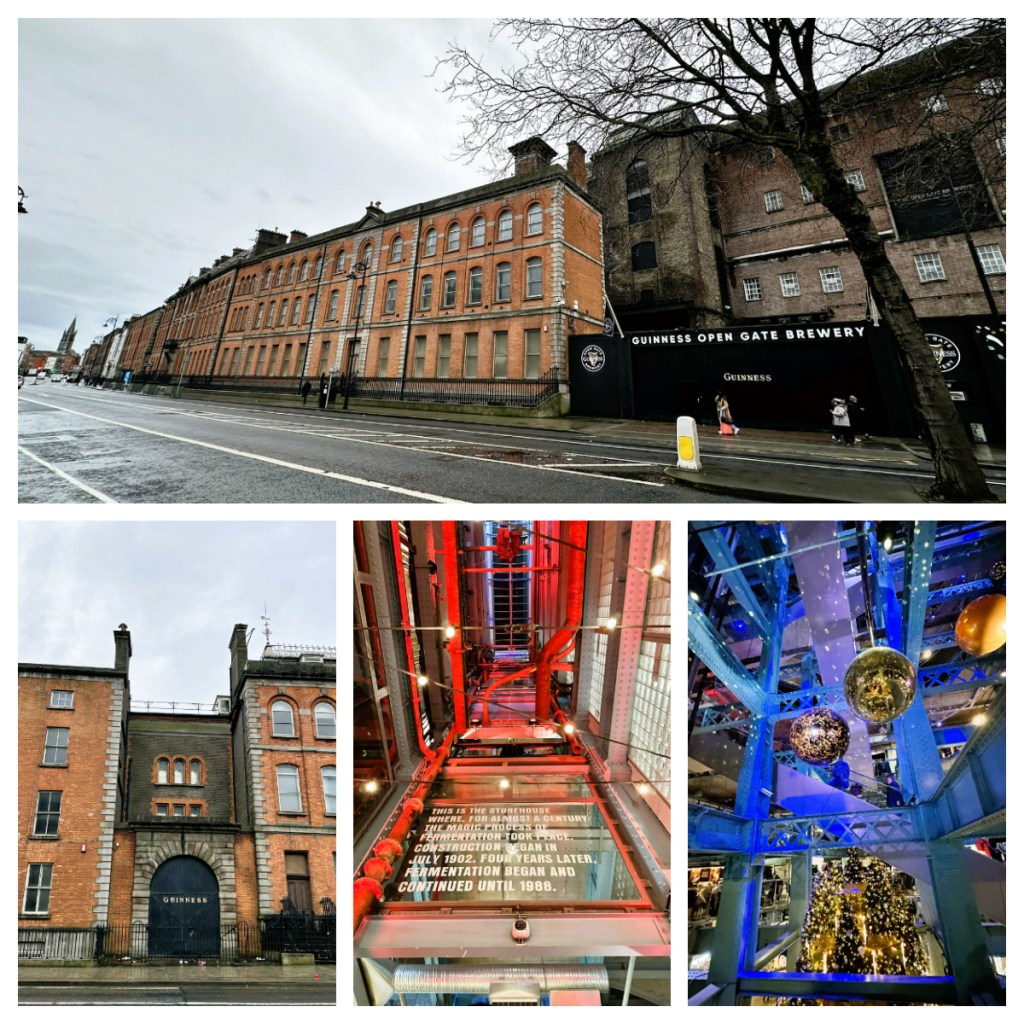

As you worked your way up the levels (7 levels in total), you explored the history of Guinness and how they make it – from grain to glass. To be honest, although it was interesting, there were a few too many people in some areas so I did not spend much time waiting around to read all the information panels and wasn’t that fussed with the place … until I reached the sterile “tasting room”. It was completely white and sterile and when the room was full, they closed the door! It had areas where you could enjoy the aromas of different parts of the beer and were each given a shot of Guiness. I now actually started to feel like I was in the beer version of Willy Wonka’s chocolate factory – so many different floors and rooms!
From here we moved I to the Velvet room (I think that was its name) for a brief talk about how to drink Guiness. This room was filled with paintings of Guinness’s past and information about their contributions. Instructions were given … “Pause and smell the aromas before taking a big slug lol. Don’t sip just the creamy white head as that is for texture rather than taste”. I must admit – I actually enjoyed it. Perhaps I have always been drinking it wrong.
The final stop was for a free pint of Guinness (well, it is included in the entrance price) in the circular Gravity bar, one of Dublin’s most unique roof top bar, with a great view over the city. I was very lucky to get a seat after only a short time so could properly enjoy the view and my pint.

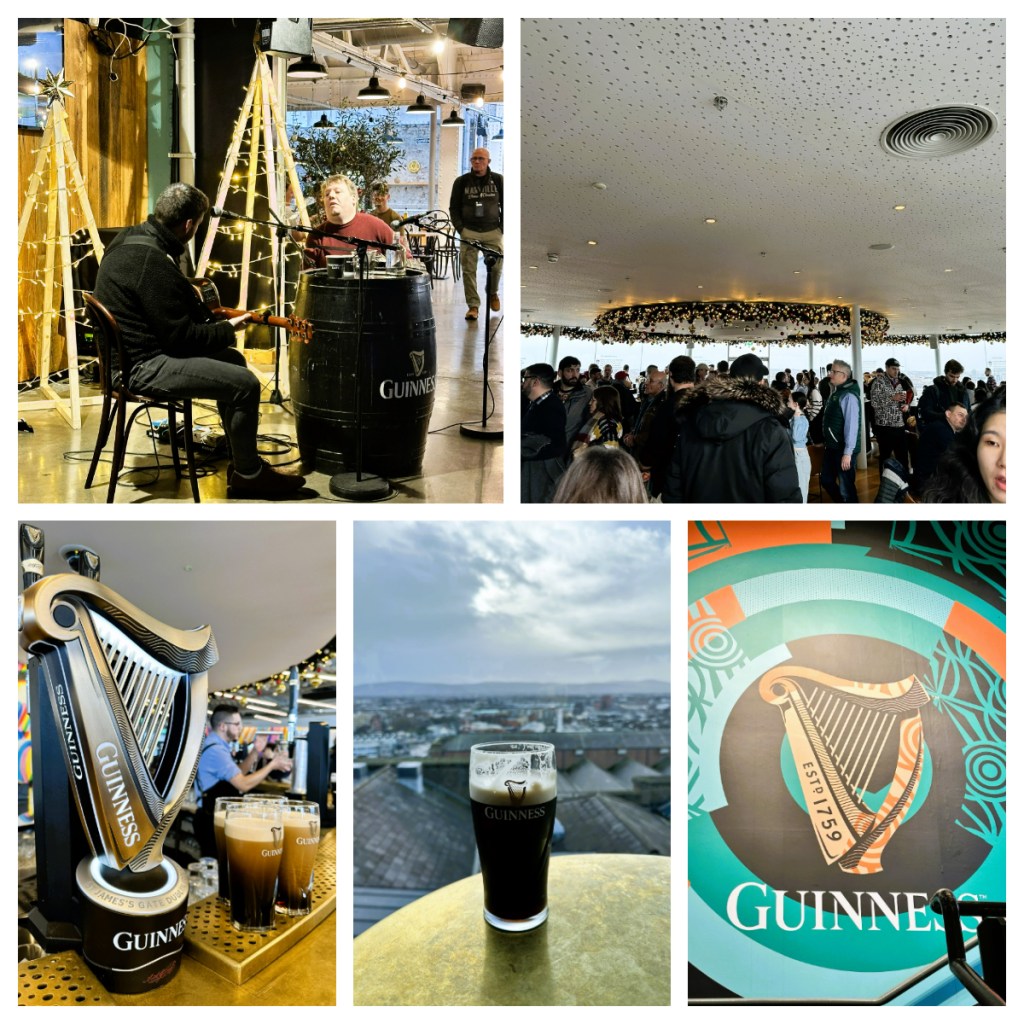
I then headed down a couple of levels to one of the numerous restaurants for a Steak and Guinness pie (it had to be done) and to enjoy the magically Christmas decorations around the 7 story central core and the traditional music and dancing on show. It was a perfect end to my visit.
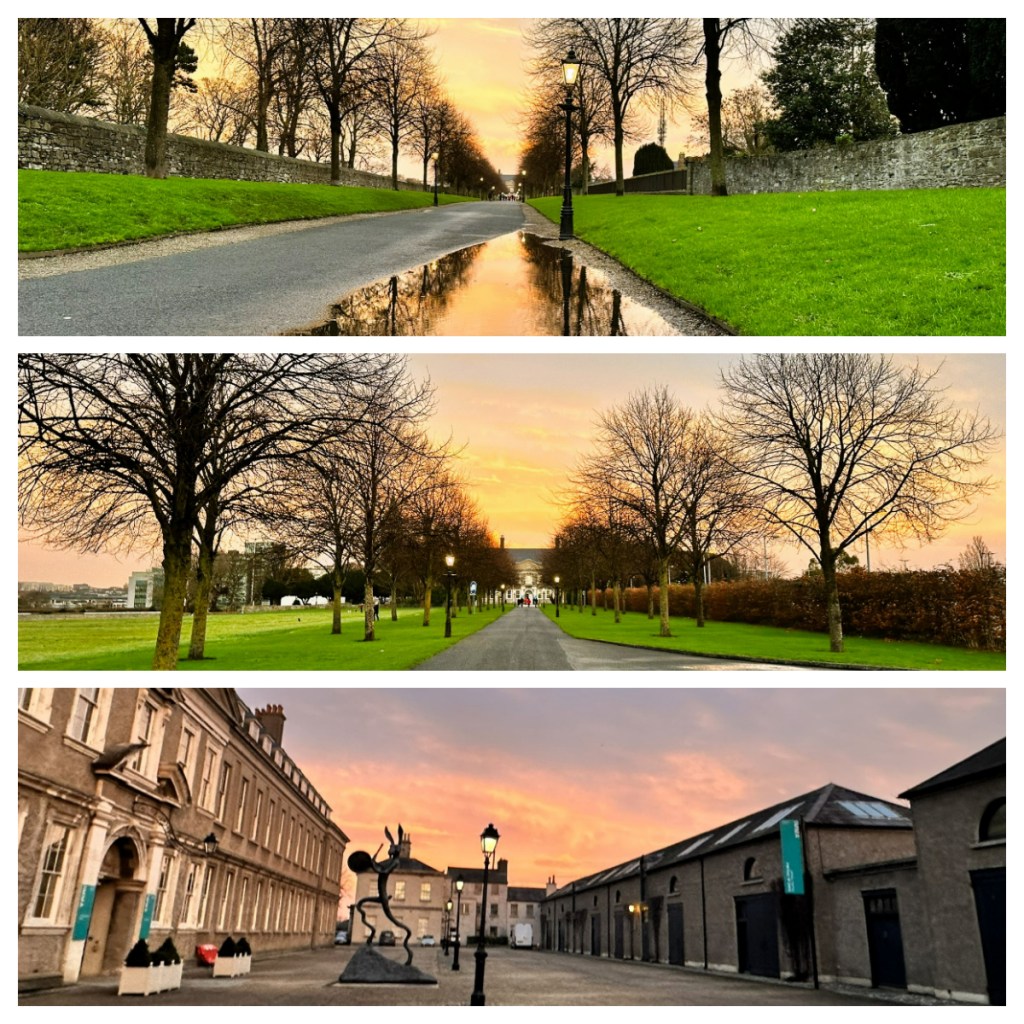
After an enjoyable couple of hours, I headed back out in to the cold for a 30 minute walk through a more gritty suburban part of the city. (Turns out I could have walked through the lovely gardens of the museum of modern art, rather than the grungy back streets but thanks to google maps for keeping it real 🥴😂.)

My friends had told me that Kilmainham Gaol as a must see in Dublin and that bookings were hard to come by so I had scheduled a reminder to book as soon as they began available (a month before the visit date) to make sure I got a ticket.
Since it was opened in 1796 as the Dublin County Gaol, until it was closed in 1924, thousands of men, women and children were held Kilmainham Gaol for offences that ranged from owing money or begging to political prisoners involved in the many Irish uprisings – from the 1798 rebellion, the 1916 Easter Rising, the Anglo-Irish war of 1919-1921 and the Irish Civil War in 1922/23. When the prison closed, the initial consensus was to tear it down as it held many bad memories, but in the 1960’s, a group of revolutionary veterans decided to preserve it as a national monument rather than tear it down so they can share the stories that are a huge part of Ireland’s history.
As if closing the loop, in 1966 the new museum was opened by the President of the day, Éamon de Valera. He had been one of the last prisoners released in 1924!
Our guide took us from the Court House, through what was a catholic chapel before we moved in to the earliest part of the prison – cells built for reform, based on the concept of “silence, supervision and separation” however the in the early days, the overcrowded prison did not allow for any reform or separation, with men, women and children all crammed in together in small cells with no heating (gas heating was not installed until 1890s.

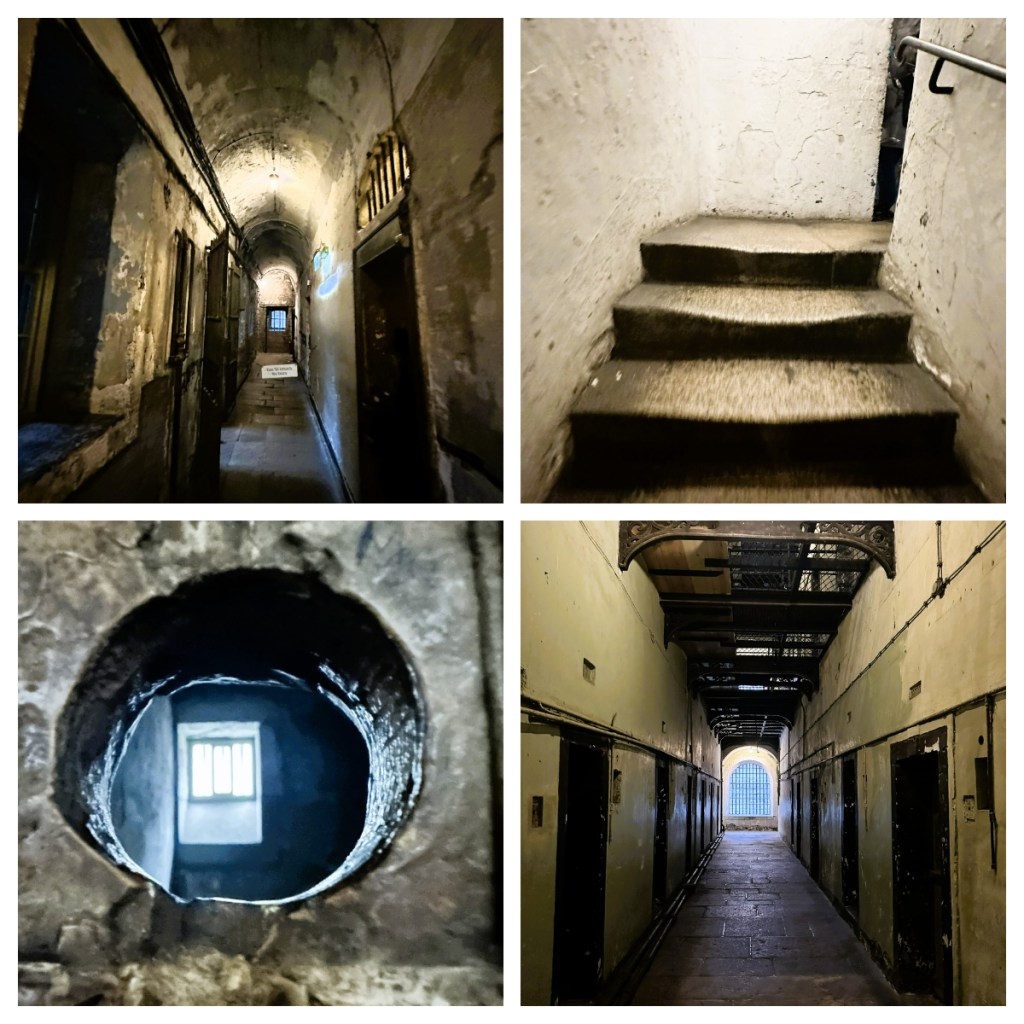
There was supposed to be 1 person per cell and in the holding cells for those going to Australia, there could be up to 3 per cell … and their waiting time did not count as part of their sentence. Some inmates were as young as 10 or 11. In fact, the youngest prisoner was 3 year old Thomas Roberts who in 1856 he was imprisoned for begging. Sadly there is no record as to what happened to him when he left. During the famine there were up to 5 per cell as people were trying to get in to prison to get food!
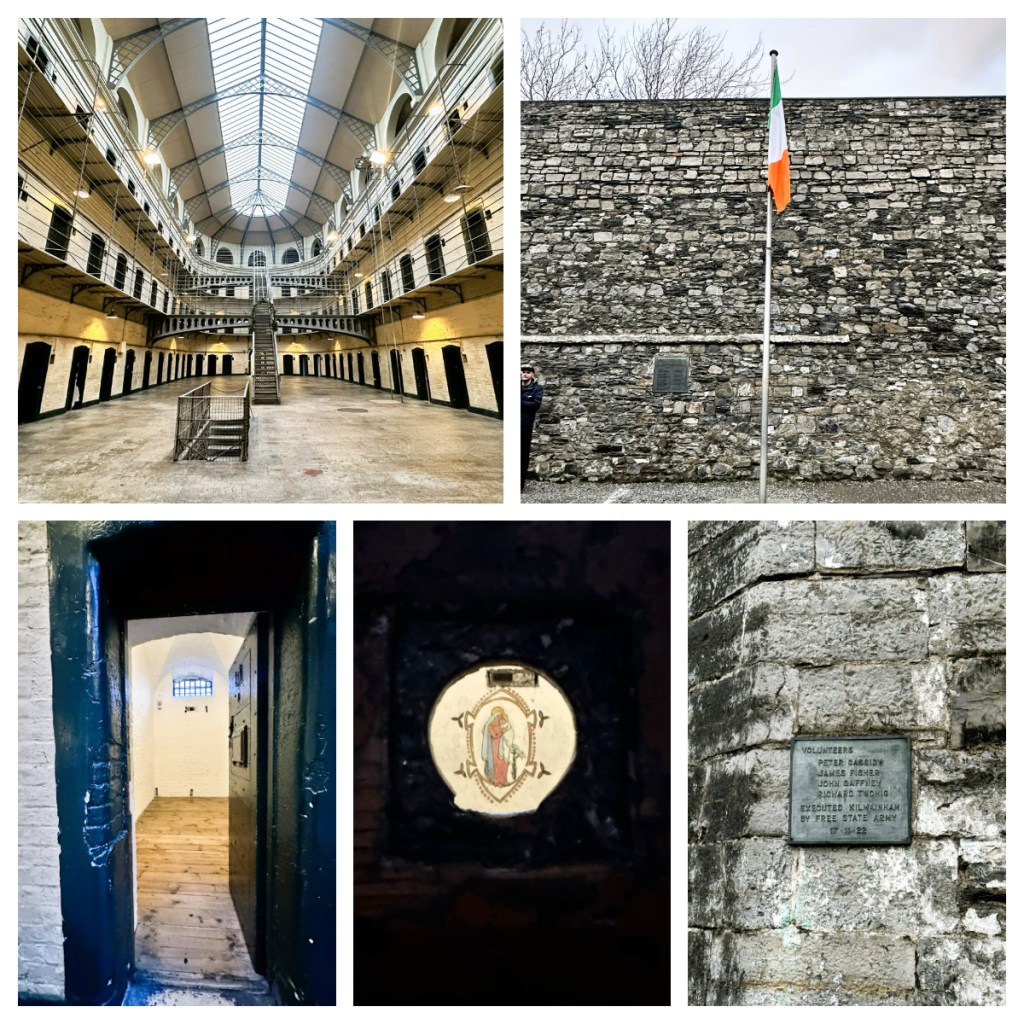
As we moved through the prison, from the oldest sections to newer areas, some of the cells showed the names of men and women who were help in them. Many of the leaders of the unsuccessful rebellions against the British were held here – some were even executed on the grounds whilst others were released and went on to be part of future governments. Most of these leaders were not military men (and in some cases women), they were teachers, artists and poets.
The most recent wing of the prison was much improved from those earlier areas. Built in 1861 in the panoctogan style, known as the all seeing eye – a guard can stand on the central platform and see everything. It also considers that light is key for reformation and the glass room givens plenty of light.
The tour ended in the execution yard, perhaps one of the most important sites in Irish history. The site of a number of brutal executions, including public hangings. The British started to lose support from many of the Irish citizens due these executions of politic prisoners and the treatment of the bodies after execution – in some instances they refused to give the bodies back to the families. Who knows what they were hiding.
It’s new life as a national monument also finds it popular as a location for movies, appearing in films such as the Italian Job, Michael Collins, In the name of the Father and even Paddington 2.
As I exited the prisoner I spotted the start of a beautiful sunset and I couldn’t resist taking a walk through the gardens of the museum of modern art before finding a bus back to my hostel, just in time to freshen up and change before fun night around Temple Bar with my friend Ania.
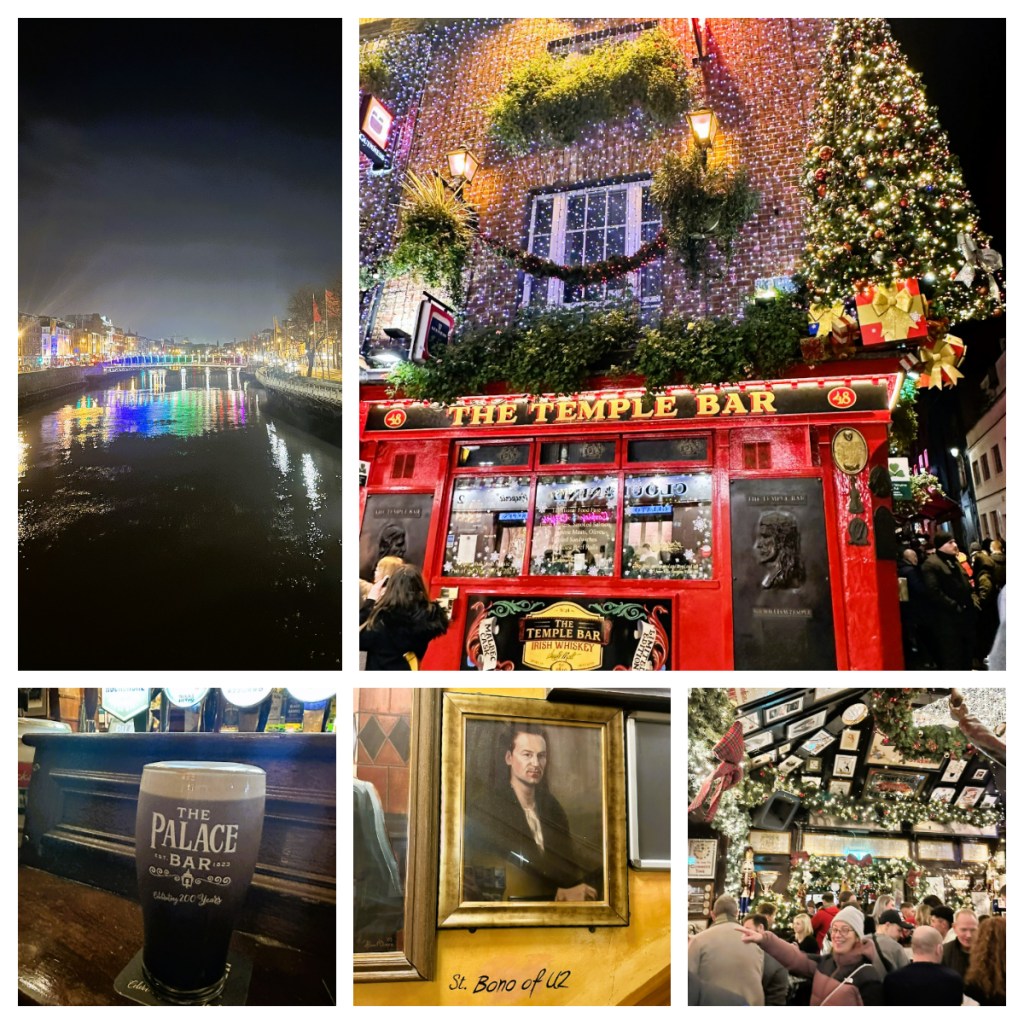
It was really busy and lots of tourists but fun never the less. I had been warned that the bars in Temple Bar are costly and they were not kidding!! A pint of Heineken and a gin and tonic cost euro 26 – $45 – I am not sure where in NZ you would pay that much! Let’s consider the budget well and truly blown 🥴 That said, it was a perfect day to finish off my time in Dublin.
 Cockneykiwi takes flight