Whale Sharks & Welcomes

Indonesia, July 2026

Today we stopped off the coast of the town of Gorontalo, further south on the island of Sulawesi.  It is famous for scuba diving, and more importantly, whale shark encounters.  This was the reason we were here and it is clear it is a big source of income for the town.

I had signed up for the first zodiac of the day, so it was a very early start and we were in the water a little after 6am!  As with my experience in Cenderawasih Bay in Western Papua 4 years ago, they were feeding the sharks and to be honest I was not 100% certain it was an experience I wanted to do again (but of course I did – and lived to regret it… read on).  This time the feeding was from small boats, in much shallower water, as we were less than 100m from the shore.

Initially, there were way less people in the water (20 in total) and 3 juvenile sharks around 4.5-5.5m long.  From experience, I decided to hang back and enjoy seeing them as they circled around the area.  You really had to keep an eye out in every direction, as you never knew where they might appear from and did not seem to care if we were in the way!  Despite their size, they were thankfully very calm and graceful so did not induce any fear in me.

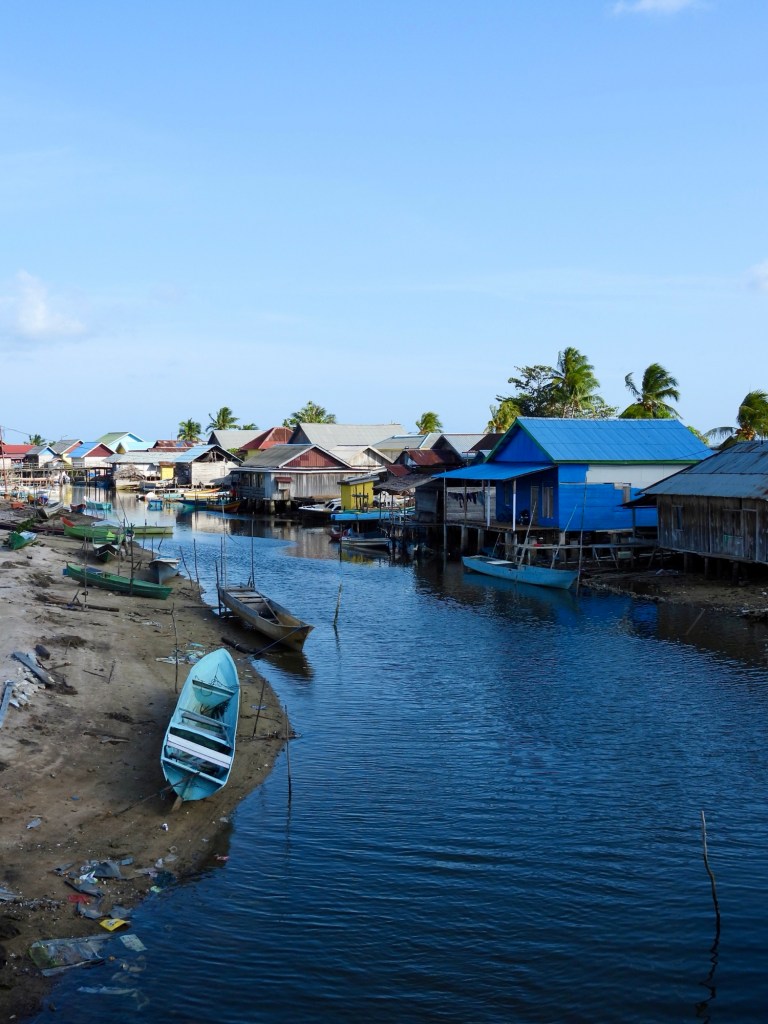
When our 12 minutes was over, we swim the short distance to the shore, where we could relax until it was time for our second swim (if we wanted to do one).  I took the opportunity to wander around this part of the town.  Clearly the waterfront was set up for the Whale Shark tourists, with small shops and cafes (most of which were not open as it was still only 6.30am)!

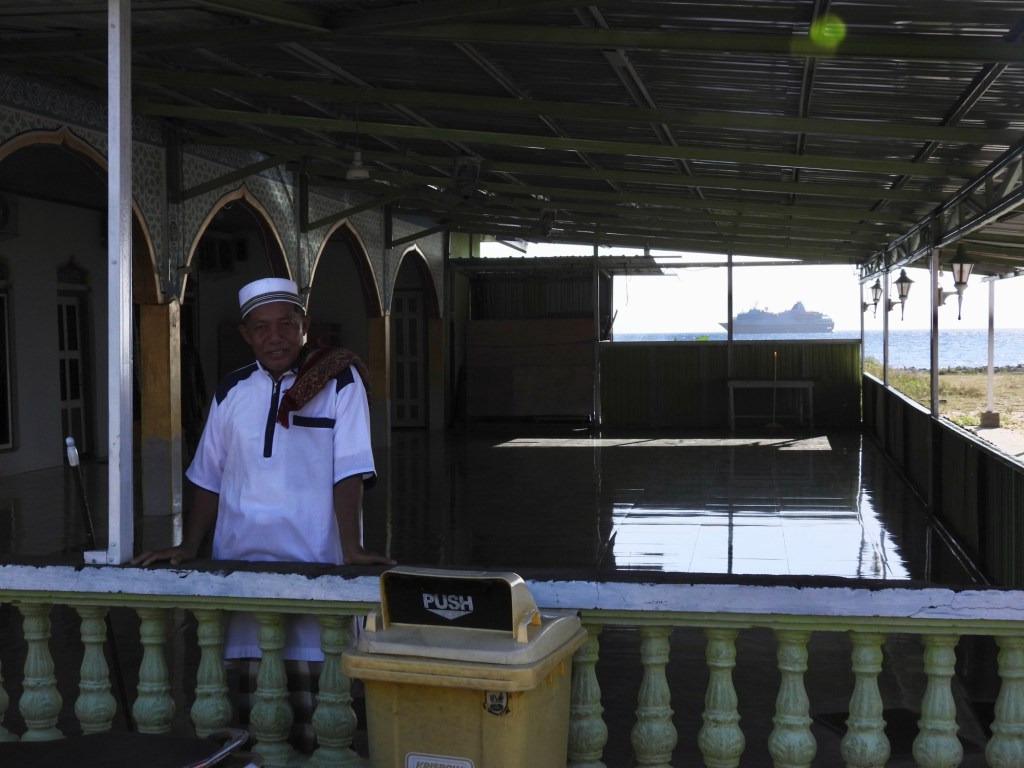
But just one street back from the waterfront, normal life appeared.  We are now in a predominately Muslim area and that was apparent within the architecture and clothing of those people we saw.  We had also been advised go cover shoulders and knees when going ashore to be respectful of the culture.

Back in the water for my second session and this time there were less but, but only 2 sharks. Again I hung back and enjoyed seeing them swim around me and to be honest, I was pretty happy with the experience, until ….

I was swimming back to shore when I saw that they basically had people riding the sharks! Someone (my guess was a local tourist who perhaps could not swim) sat in a clear kayak which a ‘guide’ pulled along whilst throwing food directly in to the sharks mouth to keep them at the surface so the kayak is basically on their backs!!  What a circus – I was fuming and sadly it tainted my whole experience.  Apparently it is a social media crazy to get photos of this from drones (and yes there were lots flying around)!

It as such a shame as it is amazing to see these beautiful animals in their own habit but then to see them being treated like circus animals was so sad.  Fair to say I will not be participating in any similar events in the future!

As we had started at 6am we were back on board  by 8.30am and we had an interesting presentation on the conflict between conservation and over tourism (apt after the morning’s experience).   This was given by Abam, our Indonesian guide, who is one of the founders of the Elasmobranch Insitute Indonesia, an NGO focusing on shark and ray conservation.  He acknowledged this mornings events and noted that changes in mindset around wildlife takes time and is one of their biggest challenges.

As we continued to sail south, we crossed the equator, which of course meant an initiation ceremony for those pollywogs amongst us i.e those who have never crossed the equator at sea.  The crew always put on a fun event, where those being initiated must kiss a fish to appease Neptune.  I enjoyed the spectical (and the rum punch that accompanied it lol).

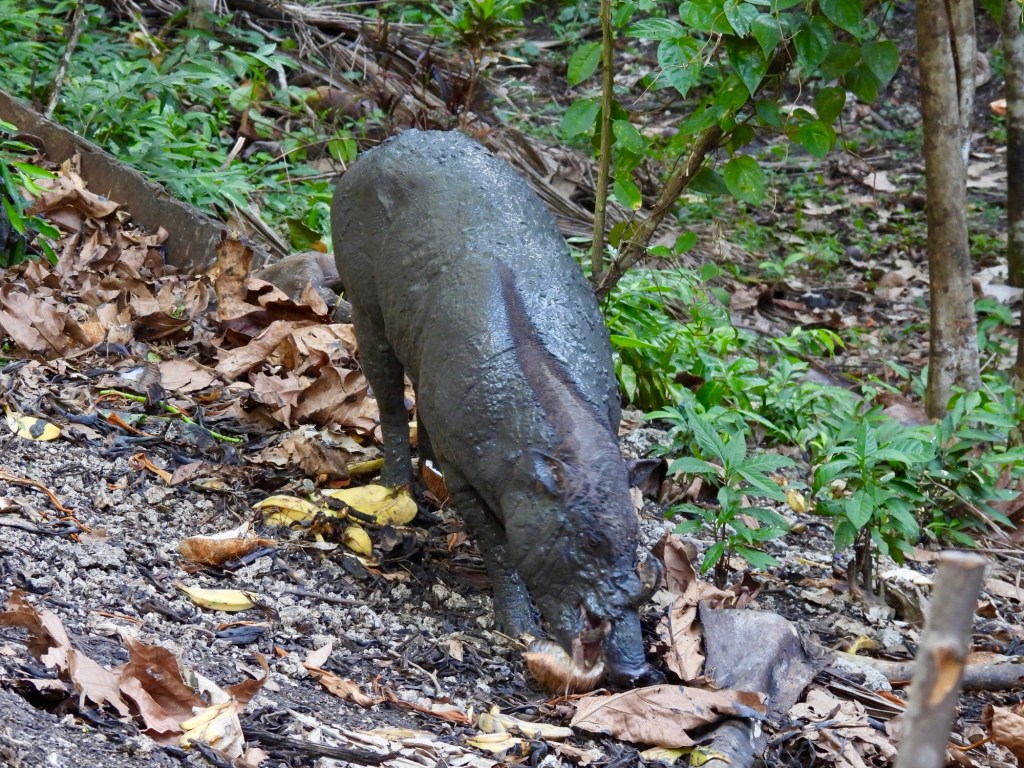
We stopped off at Malenge, in the Togean Islands (and part of Kepulauan Togean National Park) in the afternoon in the hope of spotting yet another animal I had never heard of – the Barbirusa deer-pig!  They are members of the swine family, found only in a handful of Indonesian islands.  There are species (unique to individual islands) and all are listed as threatened.  They are sometimes referred to as ‘prehistoric pigs’ as they can be seen in cave drawings 35,000 years old!

They are most notable for their long upper canines (in males) which can sometime grow around and penetrate the pig’s skull! Females only have the lower canines.

 We landed in yet another picture perfect resort where they put out food for them (it seems to be a day for feeding wildlife), but as they are wild they don’t always come to eat and unfortunately today was one of those days.  However, there was a smaller spot in the next bay where one was, so we jumped back in the Zodiac and headed around.

The one here appeared to be more like a pet and was very tame, but at least I got to see one.  It was more of a photo opportunity then a true wildlife experience – conservation may not have won today!

Dinner tonight was a BBQ on the deck as the sunset.  A perfect end to an another day of exploration.

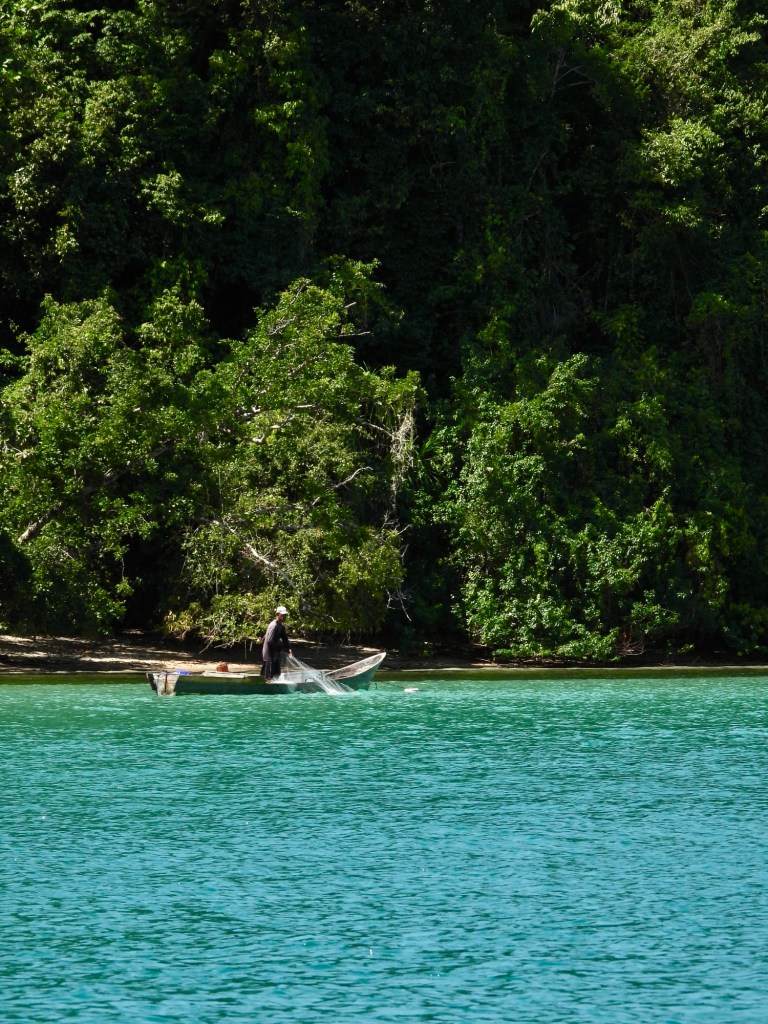
After such an early start the day before, the next day was a bit more relaxed as we did not arrive at our destination for the day until around 10am, which was of course followed by the usual formalities before we could start our day with a zodiac cruise around the beautiful Seho Island.  As with previous days, the water was an incredible turquoise blue, and the lush, dense green forest cascaded down the cliffs to the water.  Not too much to see in the way of wildlife but we did watch some local fisherman for a while, checking out what they had caught in their nets.

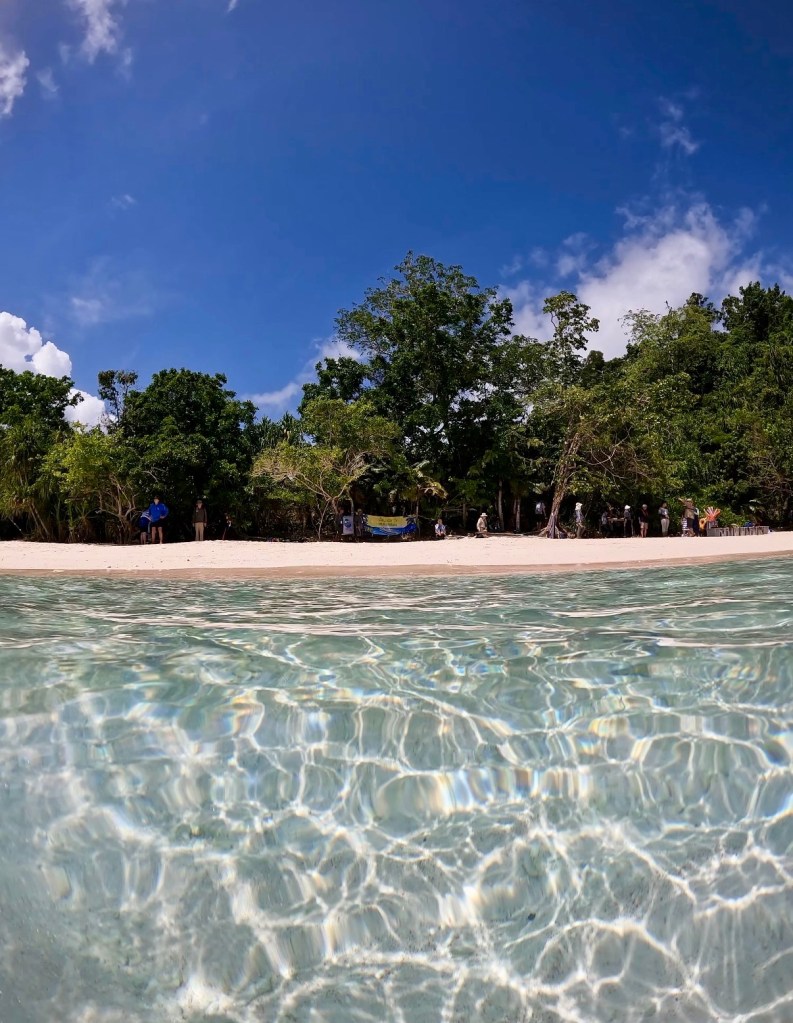
Our morning ended with a stunning snorkel.   It was a little shallow and the tide going out so you had to take real care when swimming over the coral, so didn’t stay long but it was lovely.  As was the beach which had a pink tinge to it, due to the crushed coral and it was beautiful.


The local tourism board had arranged for people on the beach to provide fresh coconuts.  This time they even had t-shirts made specially for the occasion.

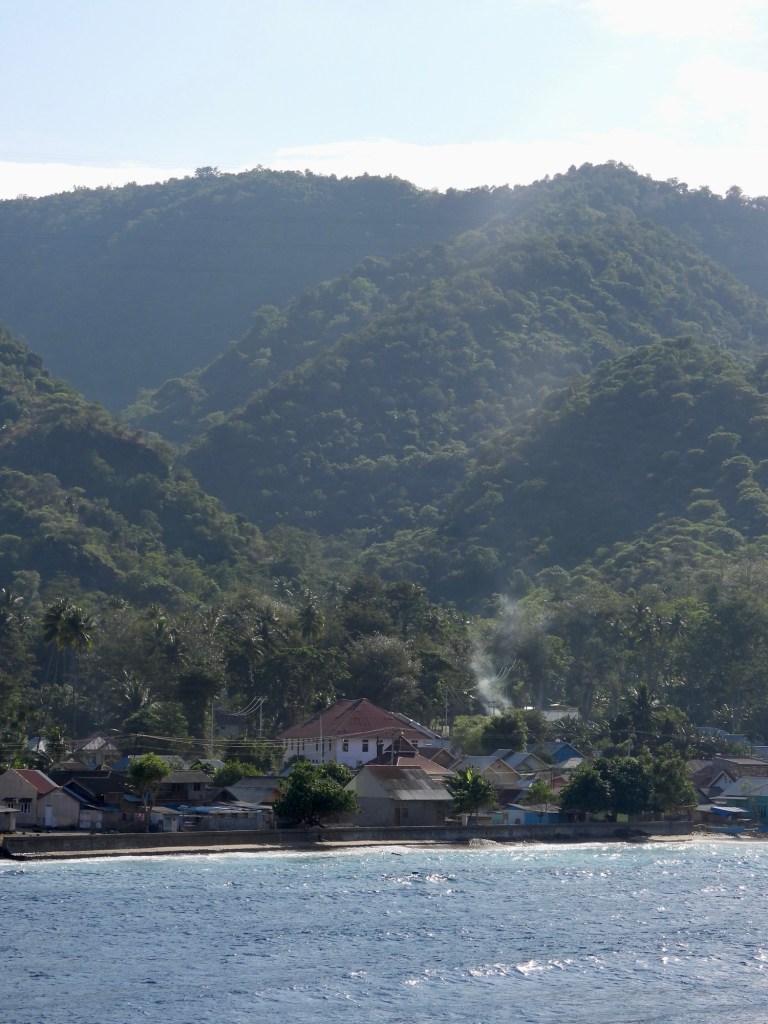
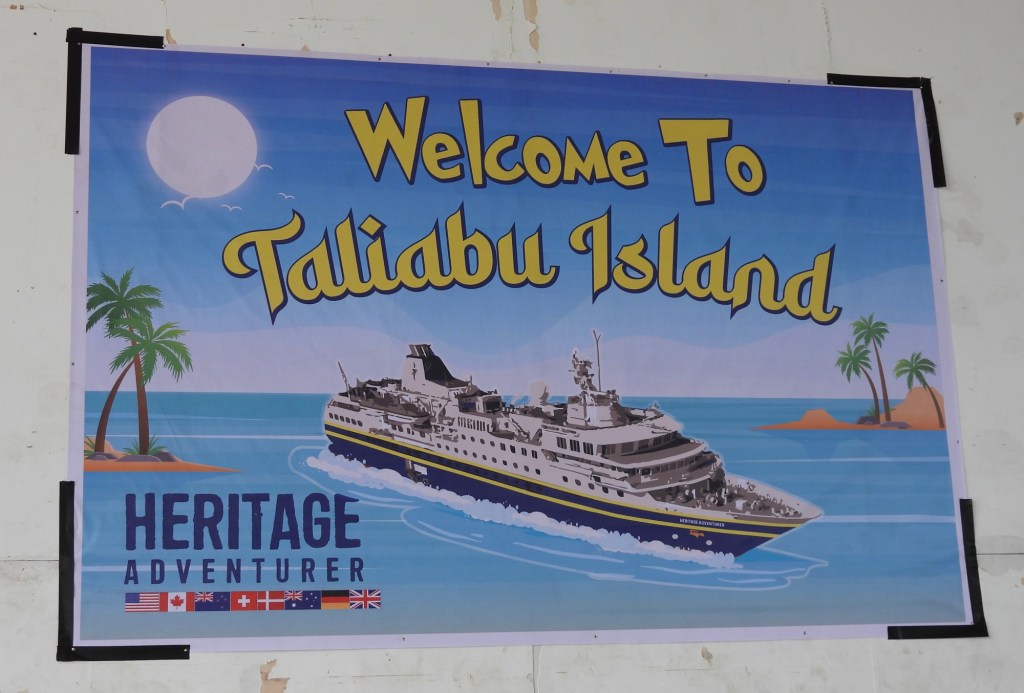
We repositioned over lunch to a mooring just off the coast from Taliabu Island and the town of Bobong, where we were basically welcomed by the whole town and a lot of welcome formalities!

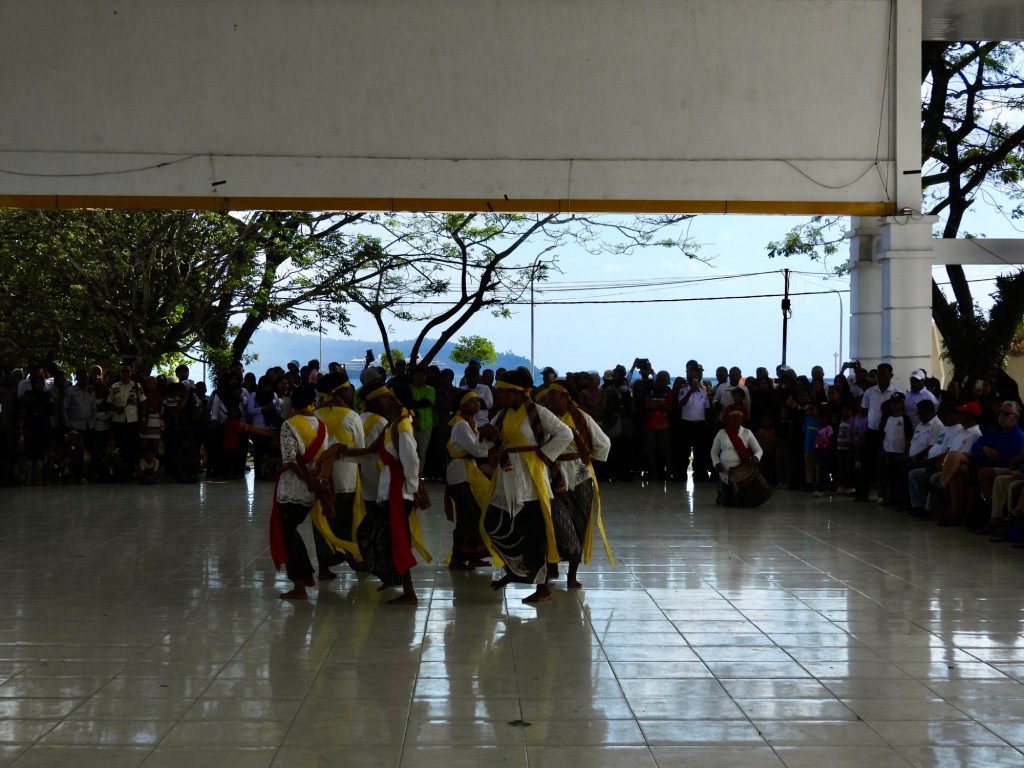
The welcome ceremony started with Elaine (Elaine #2 that is) and Peter on shore where there feet were washed with the water of a young coconut and then they were beaten with some sort of foliage!  We then walked a short distance down the road to the town hall for a formal welcome. Again it seems much of the town was there.

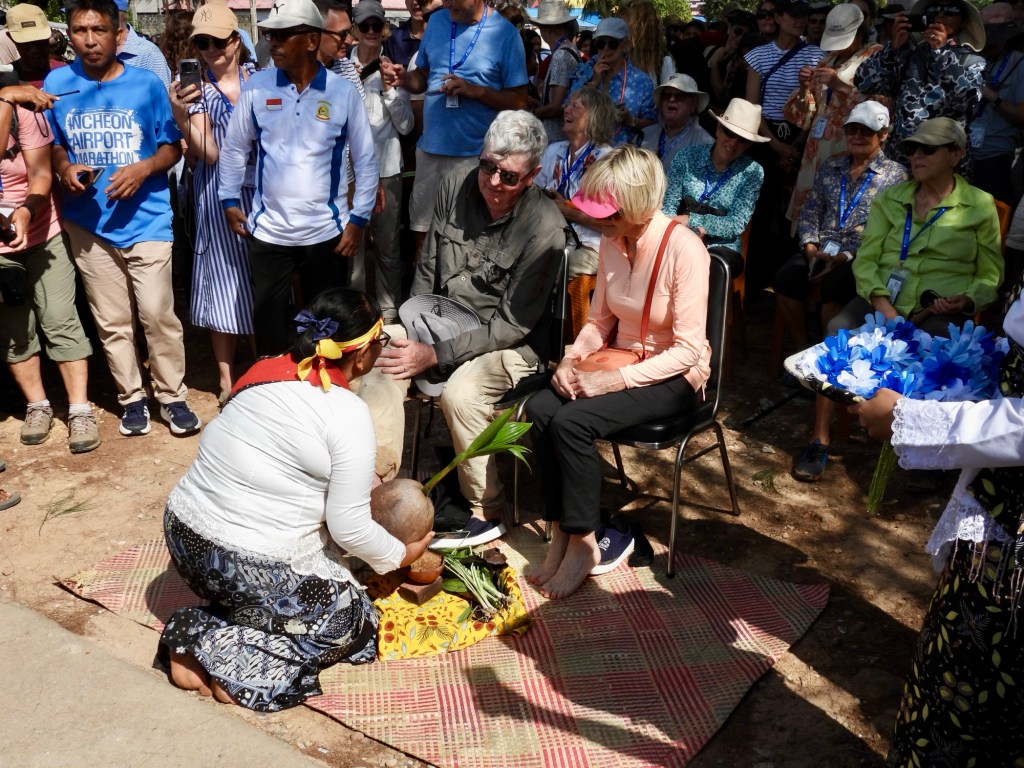
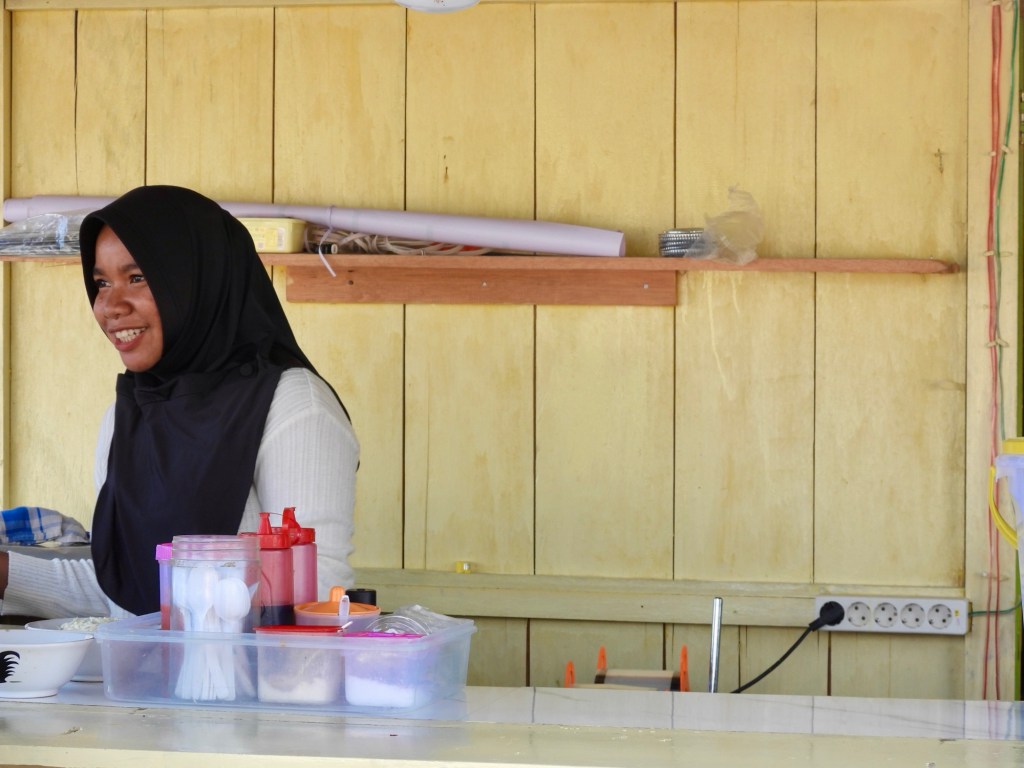
Fire, ambulance, police, army, children, adults  … everyone was there and most wanted selfies either with themselves or with their children!  We were definitely made to feel like celebrities for the day.

After welcome speeches and more dancing, we were divided into small groups with local guides for a walk around the town which was madness – everywhere we went people were pushing their children on us to have photos – it’s really was an event as we walked around the town. 
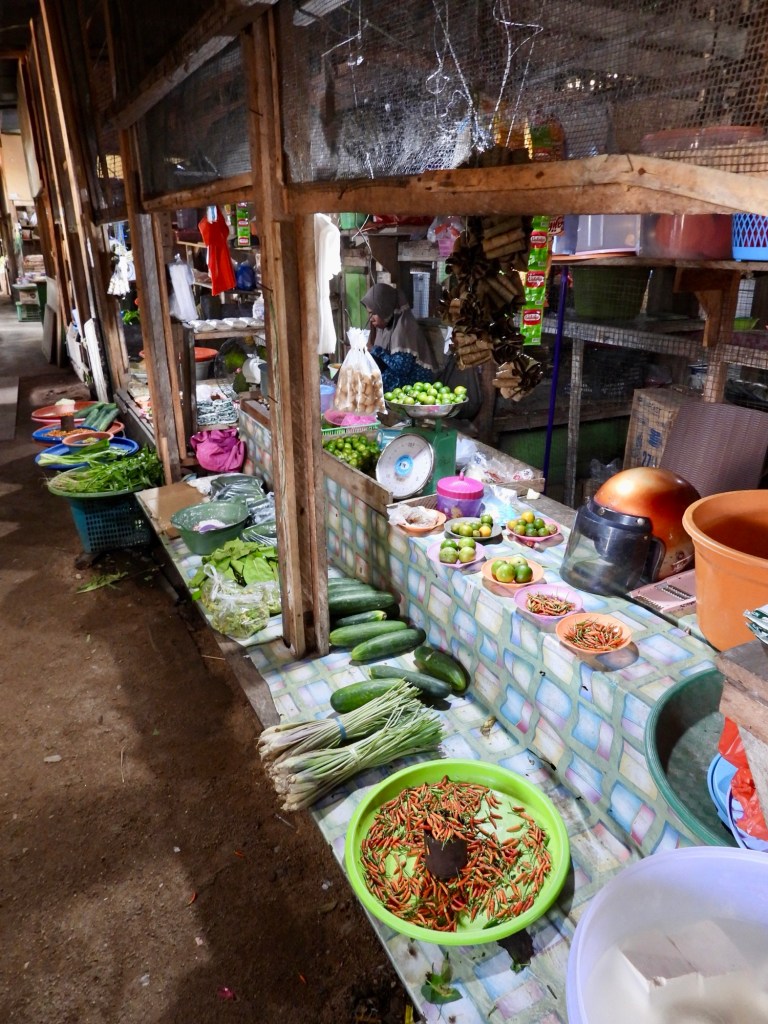
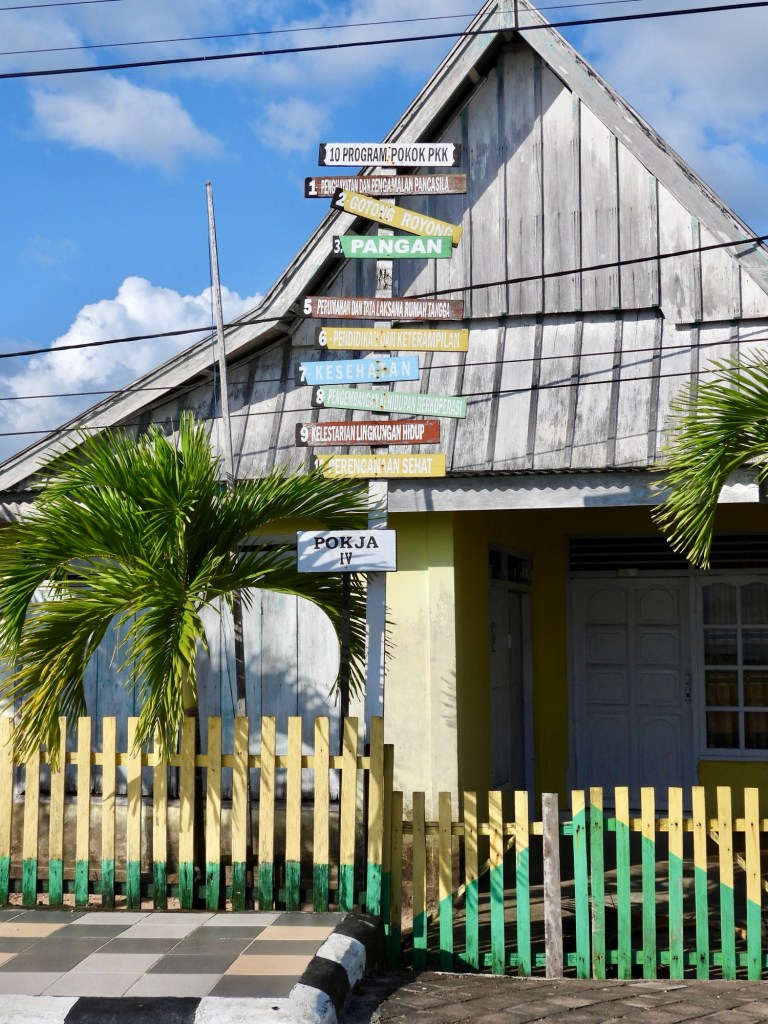
We passed the government buildings, a new hospital and then through the market and back around to the water front.  I took some time to wander around on my own (trying to get out the crowds that followed us everywhere).
Back on the ship for dinner and I got thoroughly embarrassed at dinner by a birthday cake and a very very long song from all the staff (yes, it was my birthday)!  I then got back to my room to find it full of balloons, a big birthday banner, a towel cake and a hand written card, signed by the expedition crew. It was all very sweet. ❤️ 


A Kiwi bird nerd weekend

Tiritiri Matangi, Oct 2025

Tiritiri Matangi (“Buffeted by the Wind”) is a 220 hectare island in the Hauraki Gulf (about 1.5 hours from central Auckland).  Today it is one of New Zealand’s most important wildlife and conversation sanctuaries.  It is an ‘open sanctuary’, where the public are welcome to visit and enjoy seeing the wonderful endemic birds (many of which are endangered) in their natural habitats. 

Initially home to various Māori Iwi, the island was purchased by the Crown in 1841 to become a lighthouse reserve on the southern end of the island to guide ships through the Hauraki Gulf, whilst the remainder of the island was cleared of bush and leased as farmland.  Farming continued until 1971, when the lease was not renewed.  The island became a recreational reserve and replanting of the native bush began.  It is hard to image that the beautiful bush covered island, filled with birdsong was barren pastures just 50 years ago. 

Visiting the island was something I have wanted to do for a long time, and to make it worth the trip north I wanted to stay the night.  One of the old lighthouse keeper houses has been turned into a bunkhouse for island volunteers and visitors.  The 15 beds for guests fill up quickly so I was lucky to get a bed for a Saturday night.

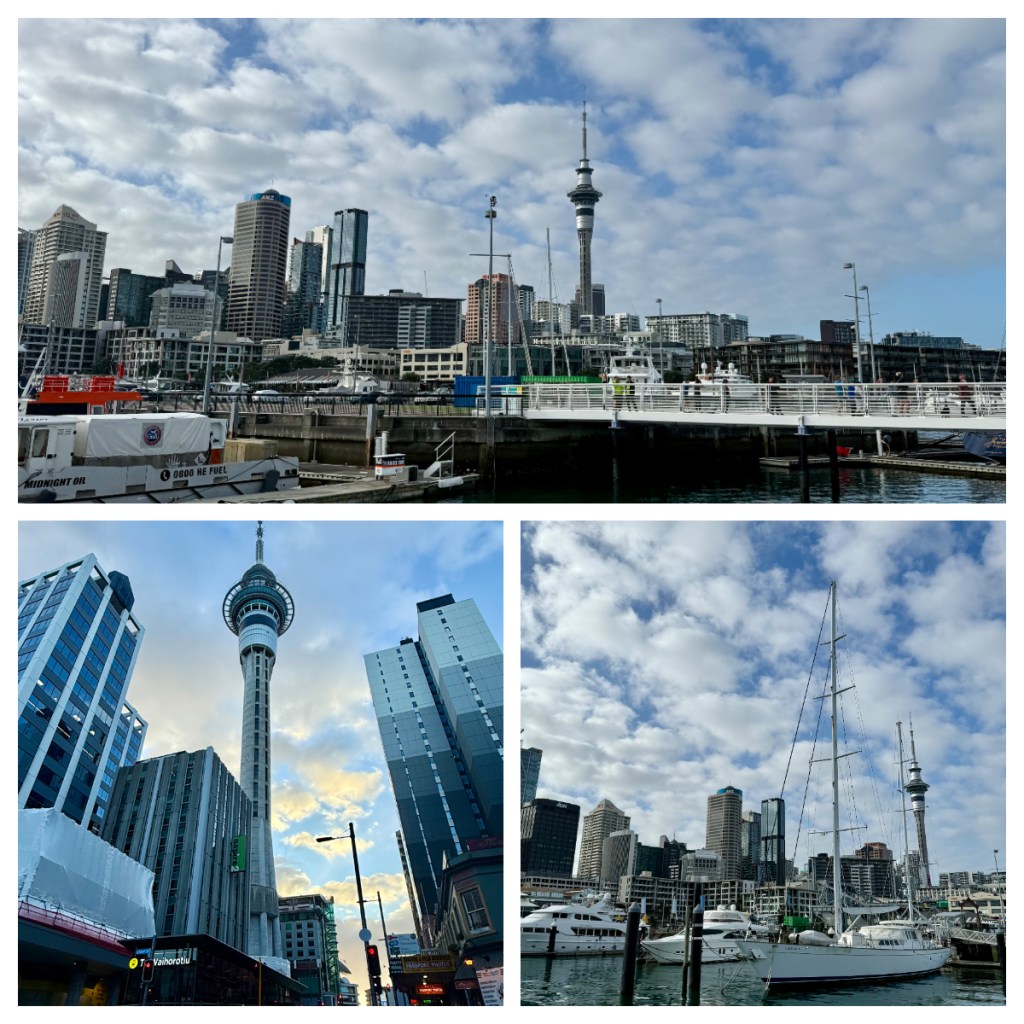
Ferries to the island only run once a day, and the 8.30am departure from the Auckland viaduct wharf, meant I had to travel up to Auckland on Friday afternoon, to ensure there was no stress on Saturday morning, and what a beautiful morning it was. 

As the island is pest free, biosecurity is an important part of the pre-boarding process.  I had already received details about ensuring there was nothing in your bag before packing, including checking any Velcro for small seeds, cleaning footwear and ensuring food is in sealed containers.  On the wharf, we also had a preboarding briefing and a final shoe clean before finally being able to board the book. 

For other islands, I have actually had my bag checked, but I think the numbers going to Tiri are much larger, particularly for day trips that is probably not feasible.  People can also go to the island on their own boats so there is really no way to police it, rather than informing people of the importance of not bringing unwanted pests to the island.

The ferry left Auckland Viaduct and headed down through the Waitematā Harbour – this translates to sparkling waters and the waters of the harbour were really sparkling as we travelled and dodged the many kayakers out enjoy the morning. 

After an hour, we stopped at Gulf Harbour to pick up a few more passengers, before travelling the final 30 minute to the island where we were immediately welcomed by birdsong song and I was excited to be there.

There was a little organised chaos getting off the boat. I had to find the place to leave my overnight bag (which would conveniently be taking up to the bunk house for me), and then having a briefing about staying overnight at the same time as getting a briefing for my guided walk!  There were two large groups and I felt for the poor volunteers who were ‘herding cats’- not literally of course as it’s a bird sanctuary so no cats – but figuratively.

All guests to the island have an option to book a guided walk (for the small price of $10) with a volunteer from the Supporters of Tiritiri Matangi organisation and I had decided to do one as I have plenty of time to wander on my own.  Before heading out on my walk, one of the volunteers said, “give the old trees a chance to talk to you as you walk past – they have great memories”. I love this and is a good reminder that this should be a slow purposeful walk, not the march I normally do!  It is always the best way to spot and hear the birds, and the trees too so it seems!

I was lucky enough to be in a group with only 2 other guests and a lovely guide, but there were a lot of large groups on the same track so we were often passing and/or being passed.  I was glad to have taken the guided walk as I must admit, there were a couple of birds that I probably would have missed had I been on my own – in particularly a Kōkako and a Titipounamu (Rifleman).  Both birds I had never seen before and was very excited to spot.  Particularly the rifleman, New Zealand’s smallest bird (less than 10cm long and weighing in at only 6g) so notoriously hard to spot.

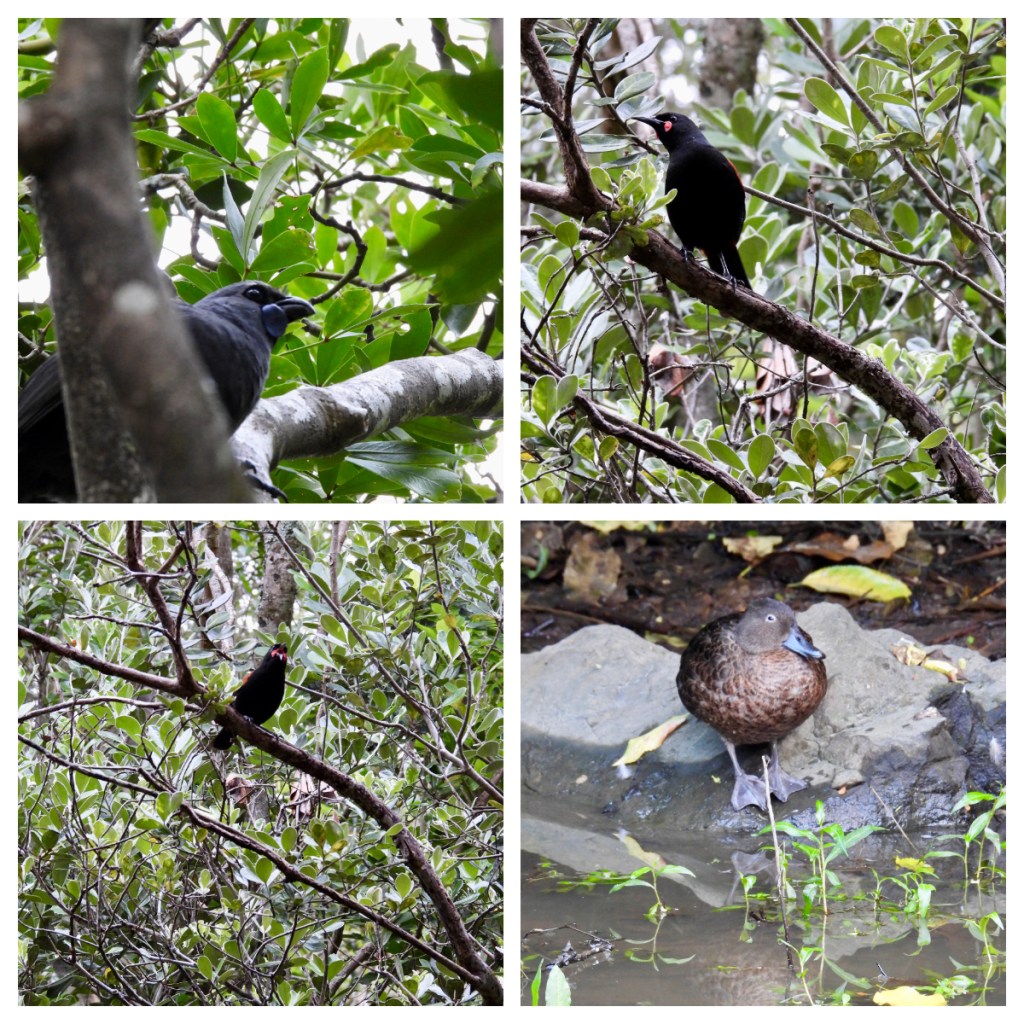
Birds spotted on the walk included Korimako (Bellbird), Tūī, Kereru (NZ Wood Pigeon), Kākāriki (Parakeet – Red Crowned in this instance), Hihi (Stitchbird), Kokako and Titipounamu (Rifleman). 

Many of New Zealand’s endemic species are rare/vulnerable so it is amazing to have the opportunity to see them here, and to see them thrive in this pest free environment.  Unfortunately, in the shade of the bush it was not easy to get photos of some of the birds, but I was just excited to see them!

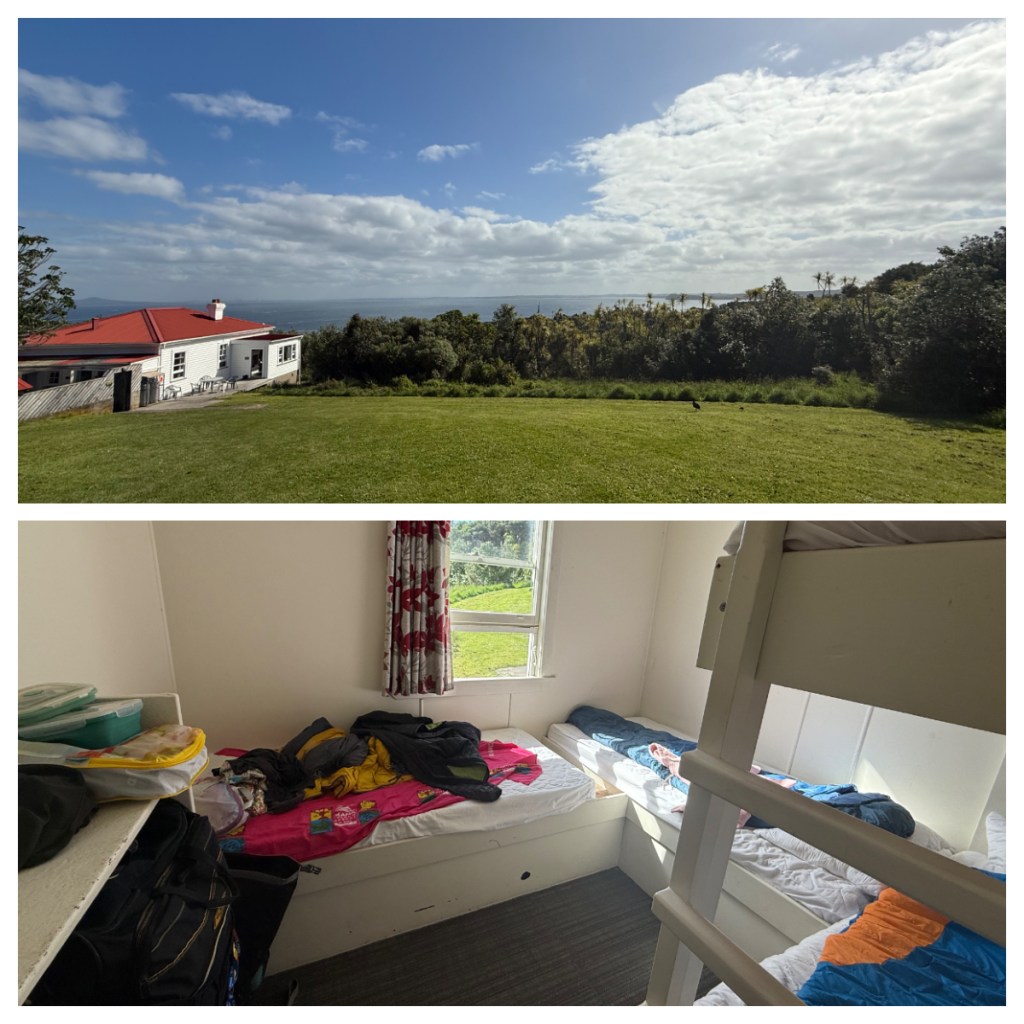
I got back to the bunk house for a quick briefing on how everything works.  It is pretty well kitted out with microwave, cookers, all the kitchen utensils and crockery you could need …. And hot showers – all pretty fancy by DoC (Department of Conservation) hut standards!  I was in a room of 4 bunks, but as I had done a guided walk, I was the last one in.  I was grateful to have been left a bottom bunk!

After lunch and bed set up, I headed out again to explore a different part of the island.  First stop to admire a Takahe family with a chick.  Takahe are flightless, and the largest member of the Rail family and have an amazing conservation story in New Zealand.  Thought to be extinct until 1948, when a small population was discovered in the mountains of the South Island.  Various captive breeding programmes over the years have brought the population up to around 500 individuals and they have been successfully introduced to predator free islands and even to a couple of areas on the mainland. 

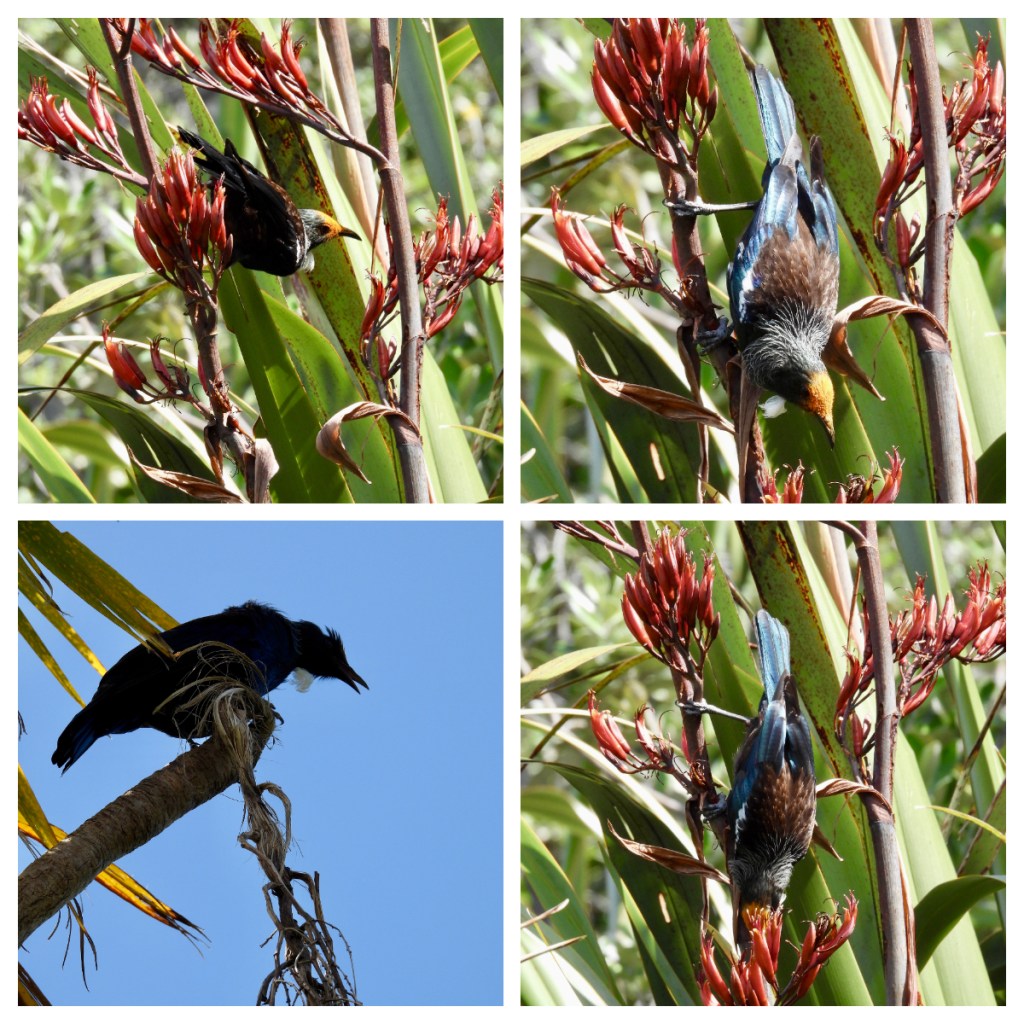
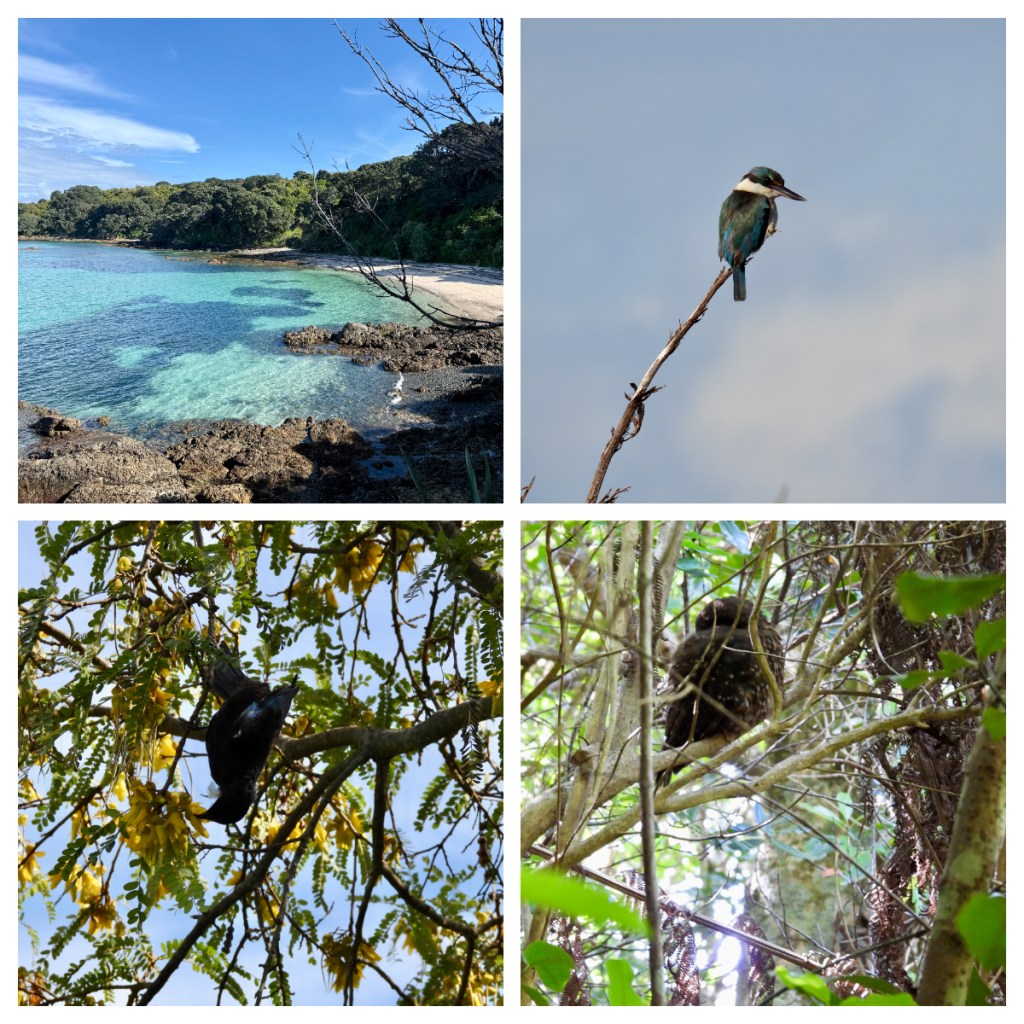
Continuing on spotted tīeke (saddleback), Pōpokotea (whitehead) and so many Tūī. I ended up plonking myself down in the middle of a path as they played, fought and feed around me.  There is nothing more icon than Tūī in the sunshine with their pollen covered head stuck on a Harakeke (Flax) flower 💚 In most lights they look black, but in the sunshine their true colours shine iridescent blues and greens.

I should note that you cannot expect to surprise anything in the NZ bush when there are tīeke around.  They loudly announce your presence with their “ti-e-ke-ke-ke-ke” call that gave them their Māori name.  One starts, and the rest continue it throughout the bush!

No kiwis were spotted at night (by me anyway) but I was up just after 5.30am to get out for the sunrise and to immerse myself in the dawn chorus.  The air was filled with the calls of the tīeke, Robin, Hihi, Pōpokotea and Tūī trying to boss everyone else around.  I spent a lot of time sitting and listening and it paid off – I spotted a pair of Kōkako, feeding at the top of the tree above me so just laid down and watched them.

I passed a little Pāteke (Brown Teal) family,  dabbling through the bush before I headed back up to the bunk house to pack up my things and have some breakfast. 

My next mission was to walk down to the northern end of the island.  I walked back along the track I had done on the guided walk on the day before, ensuring I was heading out before the boat arrived full of day trippers.  This time the Korimako were dominating the airwaves, and I was lucky enough to spot a few Kōtare (Sacred Kingfisher) and a sleeping Ruru (Morepork) in a tree.

The northern end of the island gets different wind and weather conditions so the vegetation is a little different than the southern end.  Lots of harakeke in flower and even a few Kōwhai trees still in flower.  The one thing that is almost more icon than a Tūī in a Harakeke flower – it’s a Tūī in a Kōwhai tree lol.

This was a long walk, over 8kms, but I was rewarded near the end by another amazing Kōkako interaction. This time they were much lower down and watched them eat for ages. 

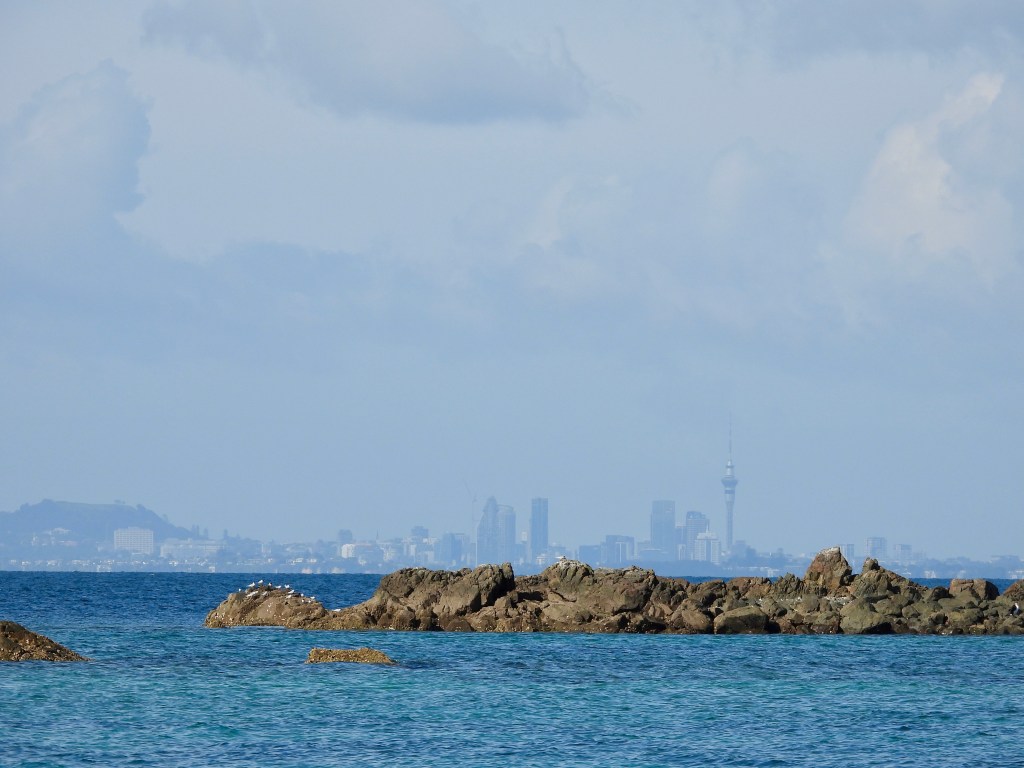
I relaxed for the rest of the day as I waited for the ferry (at 4pm) to take me back to Auckland.  It is amazing that you I can just look past the bunk house and see the  city – it feels like a world away on this little island paradise and a great weekend getaway for a bird nerd like myself.

Back to the mountains … more snow and traffic jams


Georgia, April 2025

Today Tazo picked us up in his 3rd car – a second landrover, this time with LPG!  Apparently, it is cheap to have cars so many people have more than one, or in Tazo’s case, more than two.

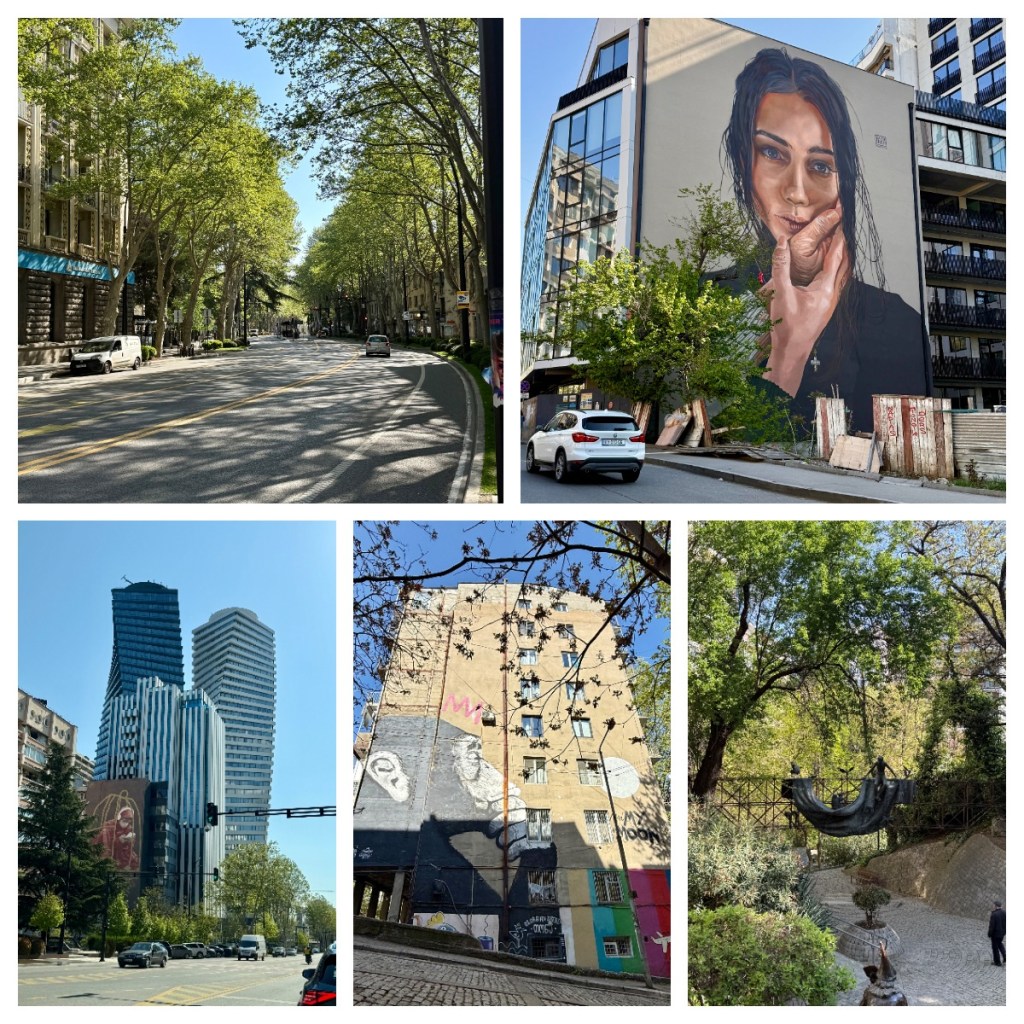
Unfortunately Ania was in more pain this morning so our first stop for the day was another emergency dentist.   Our search for a dentist took us to a beautiful part of the city with wide tree lined streets flanked by beautiful buildings, including universities, shops and apartments.  There was also some lovely street art.   At least we got to see a part of the city we would not normally! 

It took a while but we found a dentist that was open and they were so kind and did not charge her for their time.  They did give her a prescription for stronger antibiotics and stronger painkillers, but did recommend that she needed a tooth extraction which she was not keen on doing in Georgia (though I am sure it would be much cheap) so she just needed to get the pain and infection under control.

We finally left the city at 11am and not far out of the city we got caught in traffic!  Not sure where it was all going, but it was pretty slow for a period of time.  It is a crazy place when you just pass a random 6th century fortress on a hill as you drive down the road! 

Tazo got us more delicious roadside hot Georgian bread, today in the form of puri.  Puri is a savoury bread, baked in the same tone as the sweet bread we had the day before.  The bread was long and shaped like the curve of the tone and is actually called shotis puri.  It was steaming hot and really tasty.  Honestly, in my opinion, you cannot go wrong with a country that thrives on bread, cheese and wine!

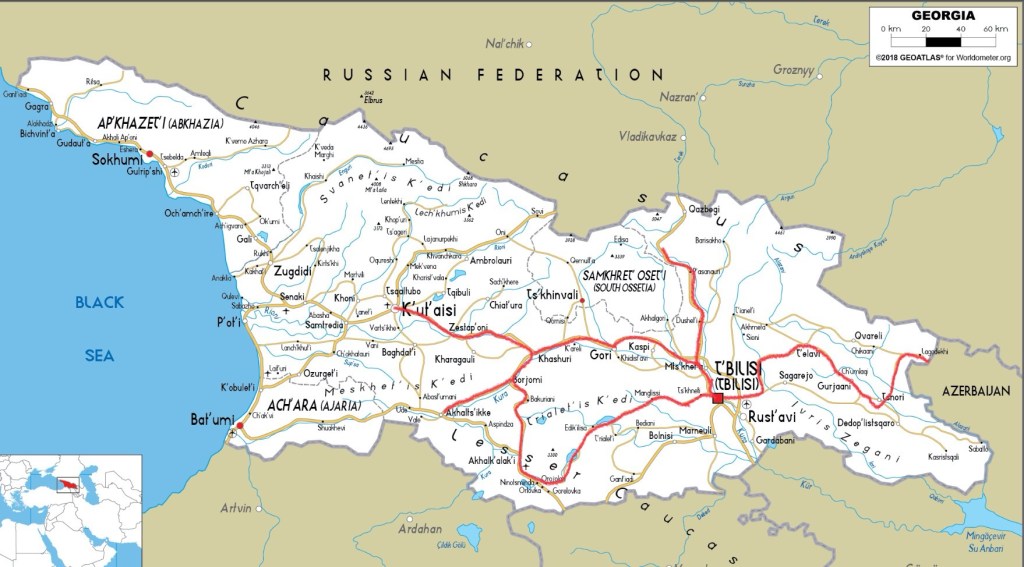
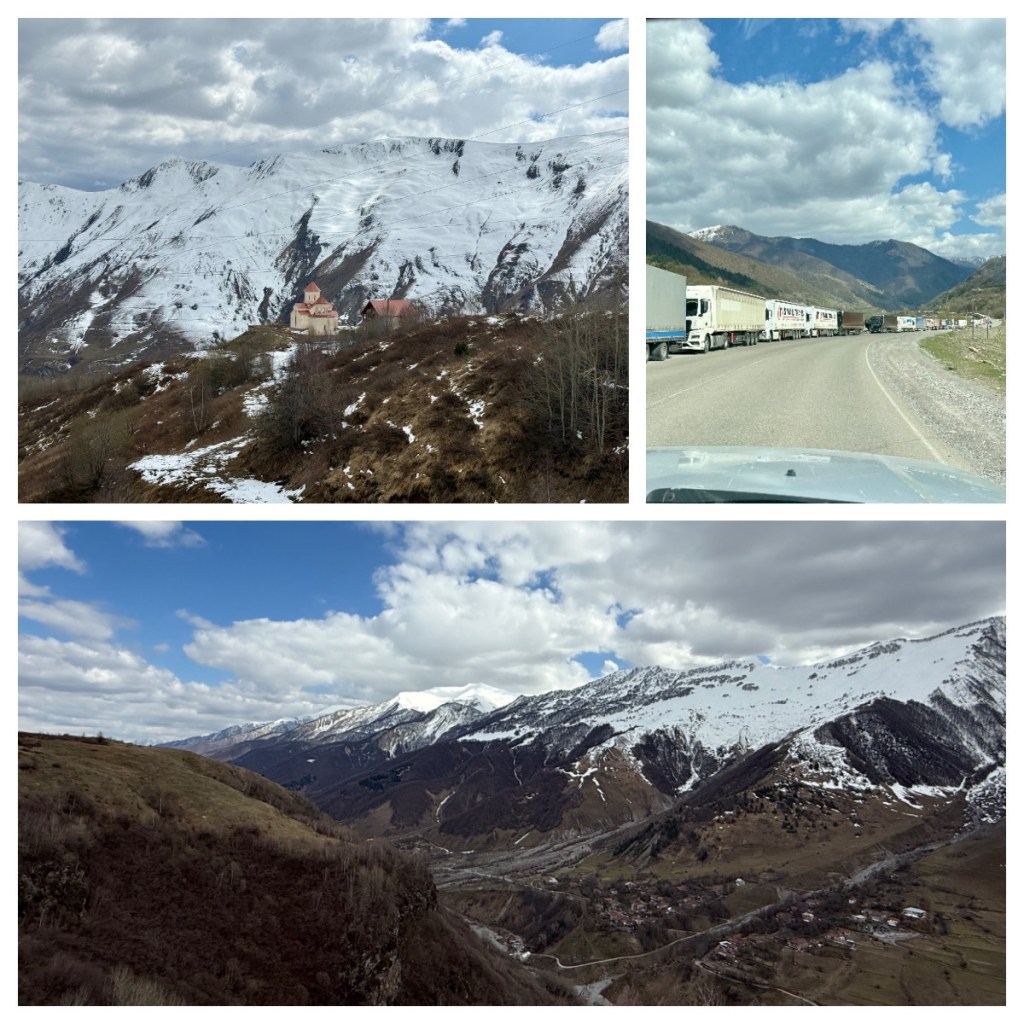
The road we were on today is called the Georgian Military Road and it runs 212 km from Tbilisi to Russia.  In fact, today it is the one and only remaining open land border with Russia.  This meant the road had an eclectic range of vehicles from all over the region, including Kazakhstan, Uzbekistan, Armenian, Russia ….  And there were trucks, oh so many trucks!  Despite still being 150km from the border we started passing trucks parked up on the side of the road, queuing for the border.  Apparently, the lines are controlled by police, who move them on to the next stop point all along the road.  Tazo mentioned that they let the trucks cross in one direction in the morning and the other direction in the afternoon and that we did not want to get stuck behind them!! 

Back in 1914 this road was described as one of the most beautiful mountain roads in the world but I am pretty sure that was before it was full of trucks!  Some of the trucks started moving and try as we may, for every truck we passed, there were another 10 in front of us making the journey much slower than it should be.

In our attempt to beat the trucks, we could only stop for a brief photo at the Zhinvali Reservoir.  An artificial lake created by a nearby hydroelectric dam which was built in 1985.  The lake itself provides much of the water used in Tbilisi.  With the surrounding mountains and forest covered slopes, it was quite beautiful. 

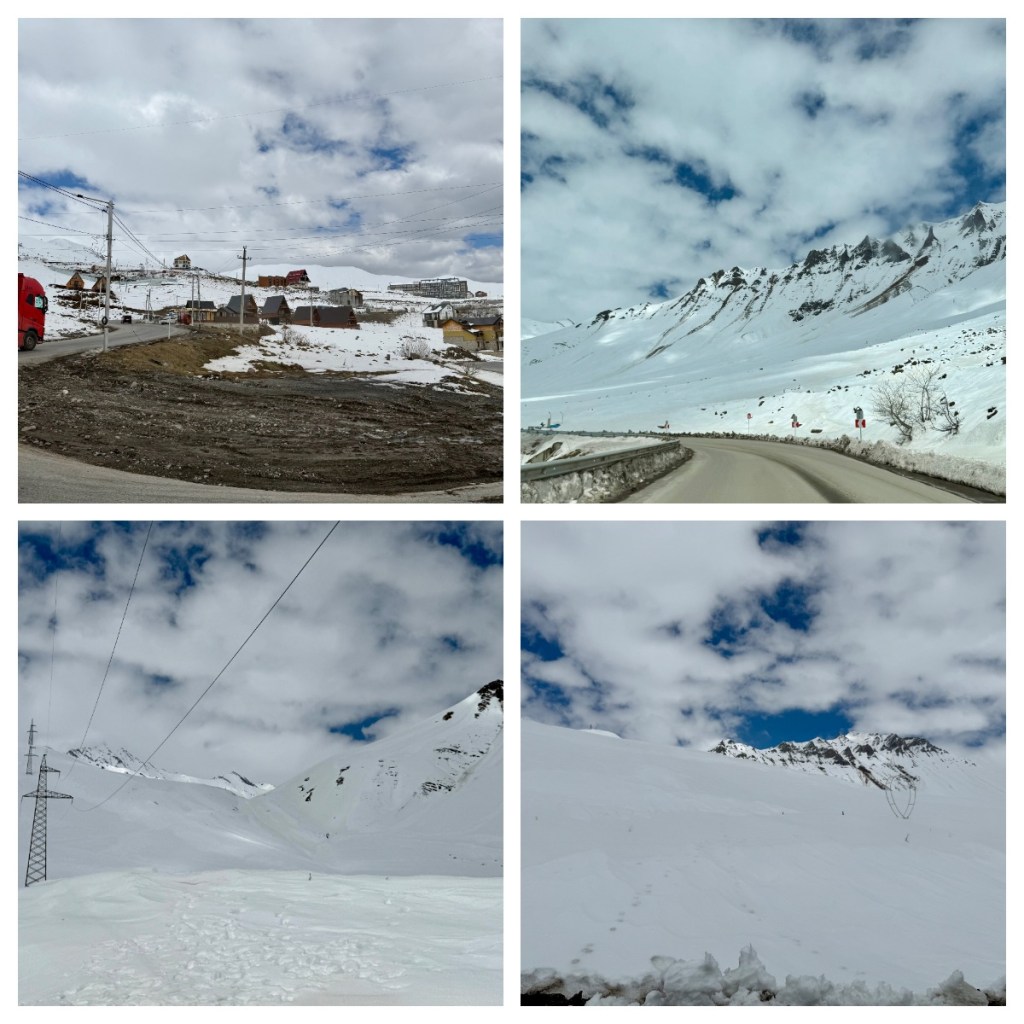
We wound our way up the mountain, with the road narrowing as we climbed, till we reached the popular ski resort of Gudauri, at an altitude of around 2220m above sea level.  Apparently, it is the most popular ski resort in Georgia and has over 70 km of ski runs and it is the highest settlement along this road.  Because of the warm March, much of the town was closed up as two weeks ago there was no snow, but today it was covered in snow again.   We thought we had some serious snow the other day, but they must have had a lot more here given what was left on the ground. 

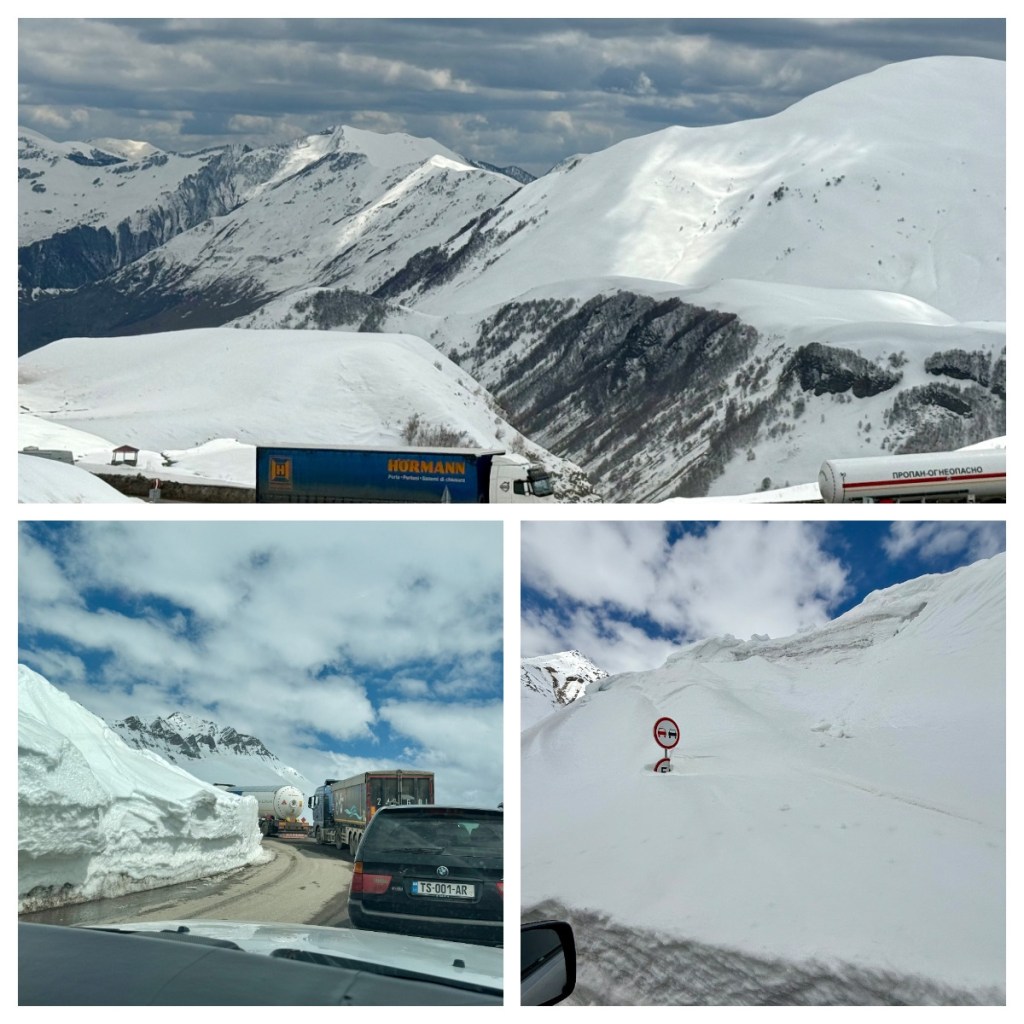
As we were still on a mission, we passed straight through town and only to be stuck in a traffic jam, mostly of trucks!  So picture this – we are now stuck on a narrow windy stretch of mountain road – with a 2-metre-high snow back on one side, and a drop of the mountain side on the other.  The traffic is at a standstill.    Apparently, some of the tunnels ahead can not fit two trucks side by side so traffic can only go through one way at a time causing these huge backups. 

Unfortunately as we had left Tbilisi a couple of hours later than planned, Tazo had to make the call that we just could not make it to our final destination of Kazbegi – he actually said that the traffic is so bad these days that he would never recommend trying to get there as a day trip, even without the snow! 

Of course this traffic has only been an issue since the Russia – Ukraine war started and all other countries closed their land borders.  Prior to that this was not the problem it is today.  They are currently in the process of building a new tunnel through the mountains to the border which should definitely solve part of the problem (although the route definitely won’t be so scenic)!

As disappointing as it was not to get to Kazbegi, the views from our traffic jam were absolutely breathtaking and I could get out of the car to take some photos before Tazo managed to make a crazy U turn in a tight space to head back down to Gudauri and the Russian-Georgia Friendship monument.

We parked in a small, snow filled car park and my slight deviation from the well walked tracked found me in knee deep snow – and of course, again I was not dressed for snow!!  At least this time I was using my sunglasses for the sun (and the glare from the snow)!

The Russian-Georgia Friendship monument was built in 1983 to mark the 200th anniversary of the Treaty of Georgievsk, which we learnt about when we met King Erekle II in Kakheti a few days early.  This was the treaty he signed with Catherine the Great to try and strengthen his kingdoms independence from Persia. 

The large round, structure overlooks the so-called Devil’s Valley and its mural depicts scenes from Georgian and Russian history and was designed by Georgian architect George Chakhava.   

The views were just stunning, but there may have been the most tourists we have seen in one place on the entire trip!  Throw in their buses and minibuses in the small car parks and narrow roads and now add snow, and it was all a bit chaotic! 

One more quick stop in town for more breathtaking views of the mountains and down the valleys, including a classic “Georgian church on a hill” before we continued back down the mountain and out of the snow. We continued to pass trucks, so many more trucks than we passed on the way up. With all the trucks on the side of the road, and another 500 sitting in a roadside truck park, they must have numbered in the thousands! 

By this time it was almost 4pm and most definitely time for lunch, Tazo knew just the place.  In fact, this food stop was one he had told us about on our first day with him as this area, called Pasanauri, is sometimes referred to as the ‘cradle of khinkali’ – that is, where they originated and where you get the best ones!   

Not being an expert, all I can say is that were definitely the best we have had, and this time we paired it with a Mkhlovana (I think), basically a Khachapuri with cheese and herbs inside which is a speciality of the east Georgian mountain regions.  It was probably also my favourite of the Khachapuris! 

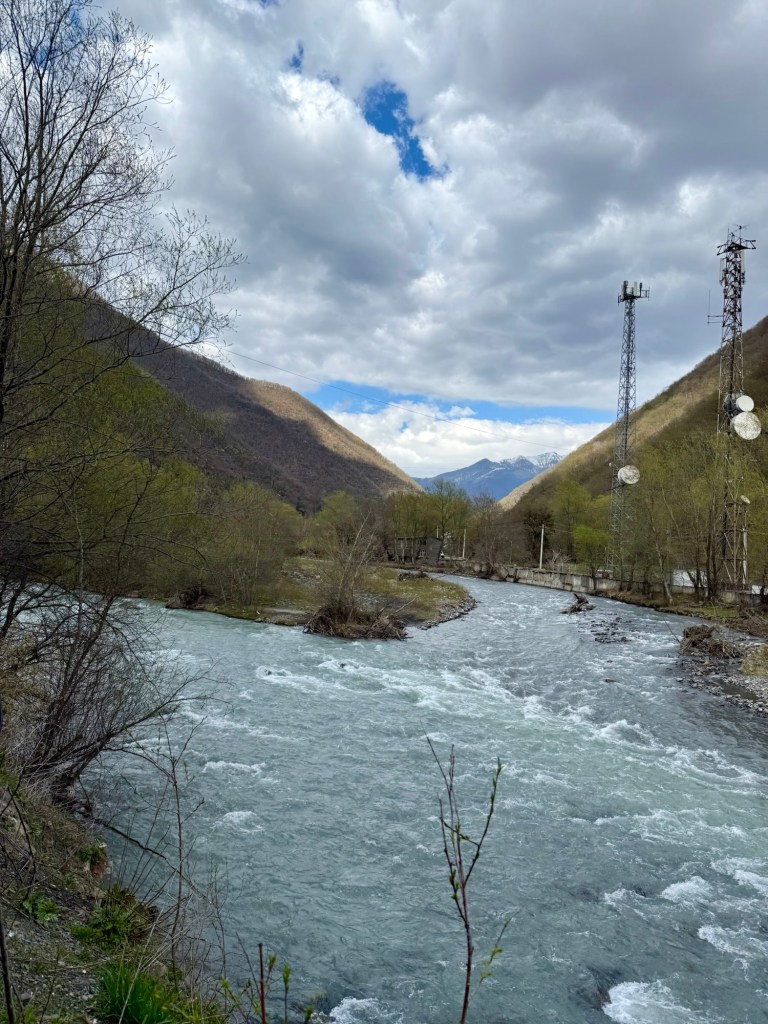
Back on the road and in less of a hurry we could do a couple of stops.  The first was at the convergence of two rivers – helpfully known as the Black Aragvi and the White Aragvi lol.  The white is due to sediment rich in limestone and the black from organic material and silt.

Now I have seen amazing images of the two rivers meeting and the different colours flowing side by side but as you can see from my photo that was not our experience!  You can almost make out a slightly different colour but it definitely was not amazing, possibly due to the river being fairly full and fast flowing. 

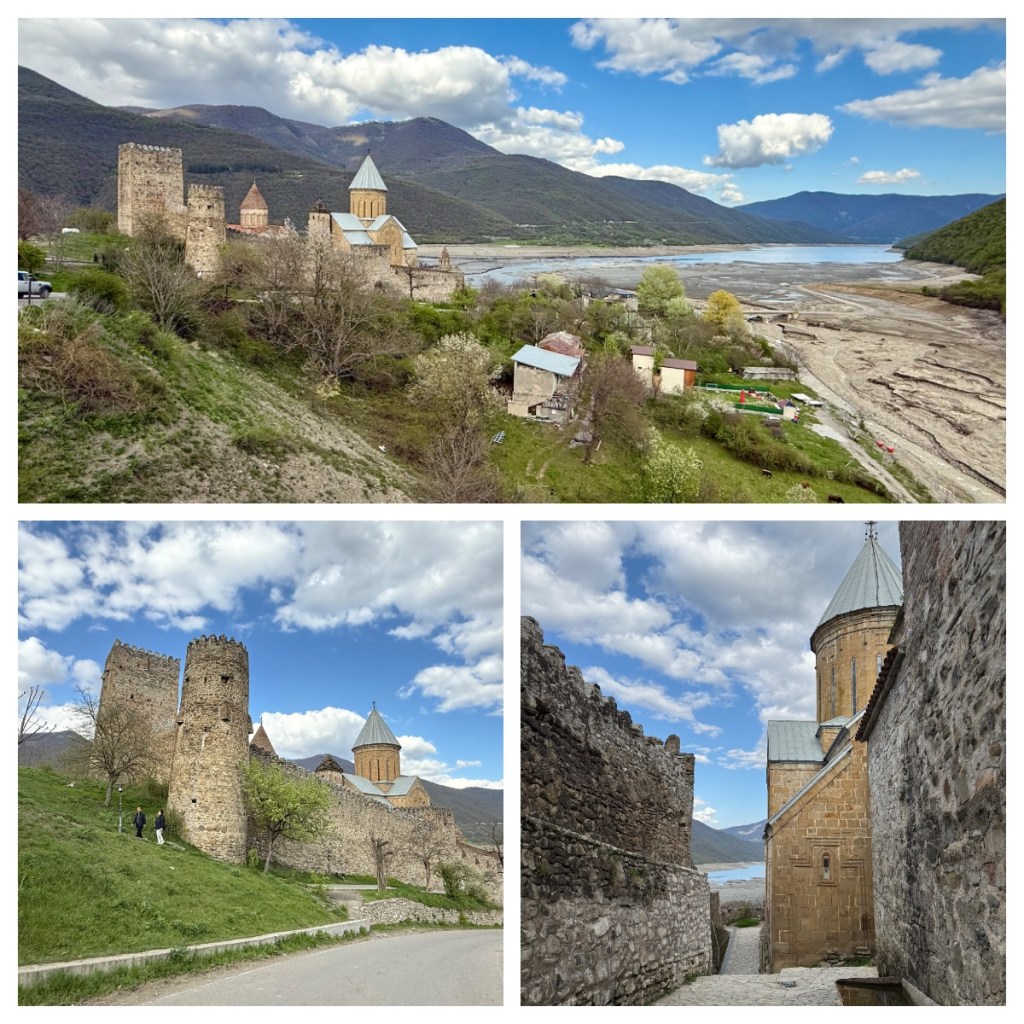
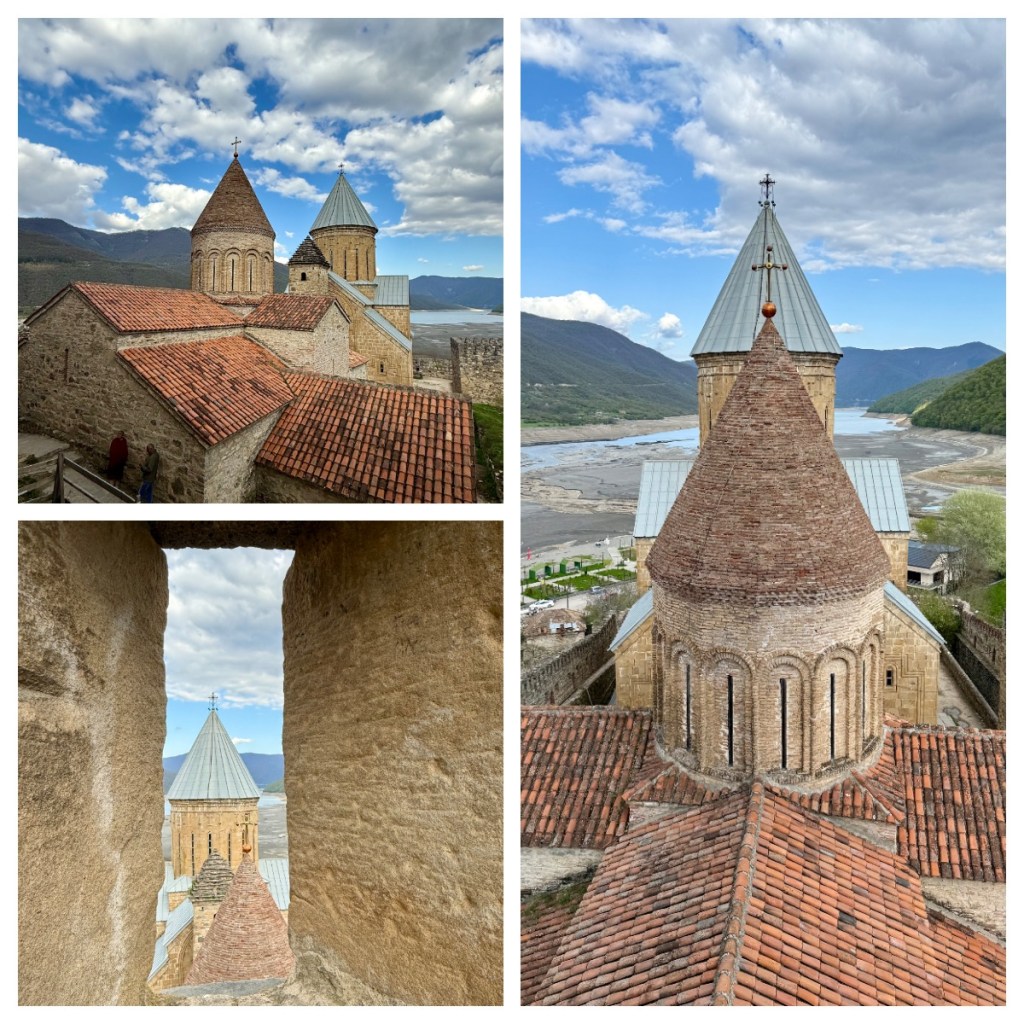
We also had time to have a quick stop at the medieval Ananuri fortress, on the shores of Zhinvali reservoir.   Original built in the 16-17th centuries, the fortress includes an Orthodox monastery, bell tower and three churches. It was apparently still in use until the beginning of the 19th century and as with other fortresses we have seen, there are secret passages down to the water to allow people under siege inside to get water and food.

Despite damage from battles and fires during the year, the fortress still retains beautifully carved facades.

I am not sure I have mentioned previously, Tazo’s driving music is an eclectic mix of old school music ranging from jazz and swing to soul.  On today’s playlist we were listen to “Georgia on my mind” by Ray Charles.  Obviously, it was written about a different Georgia (the state in USA) but  Georgia (the country) was definitely in my mind ❤️.

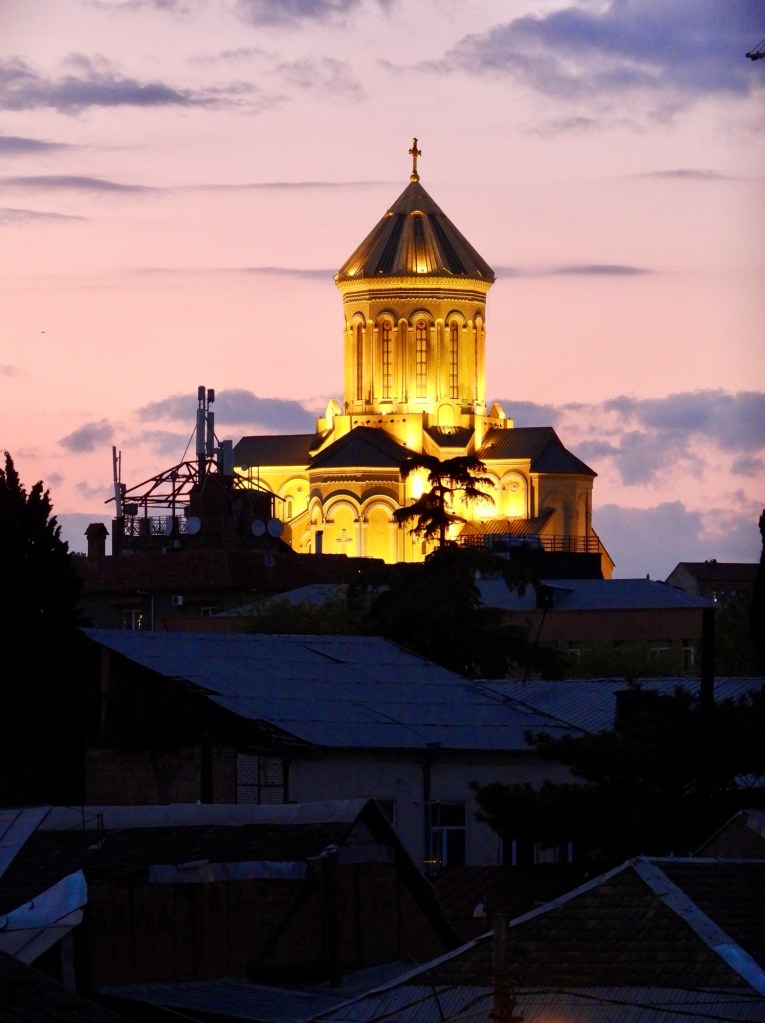
Given we had had lunch so late, I did not go out for dinner, but I did have a lovely view out to the cathedral from my room and was very happy with the photos I took just out of my window as the sun set!