Monasteries and myths

Georgia, April 2025

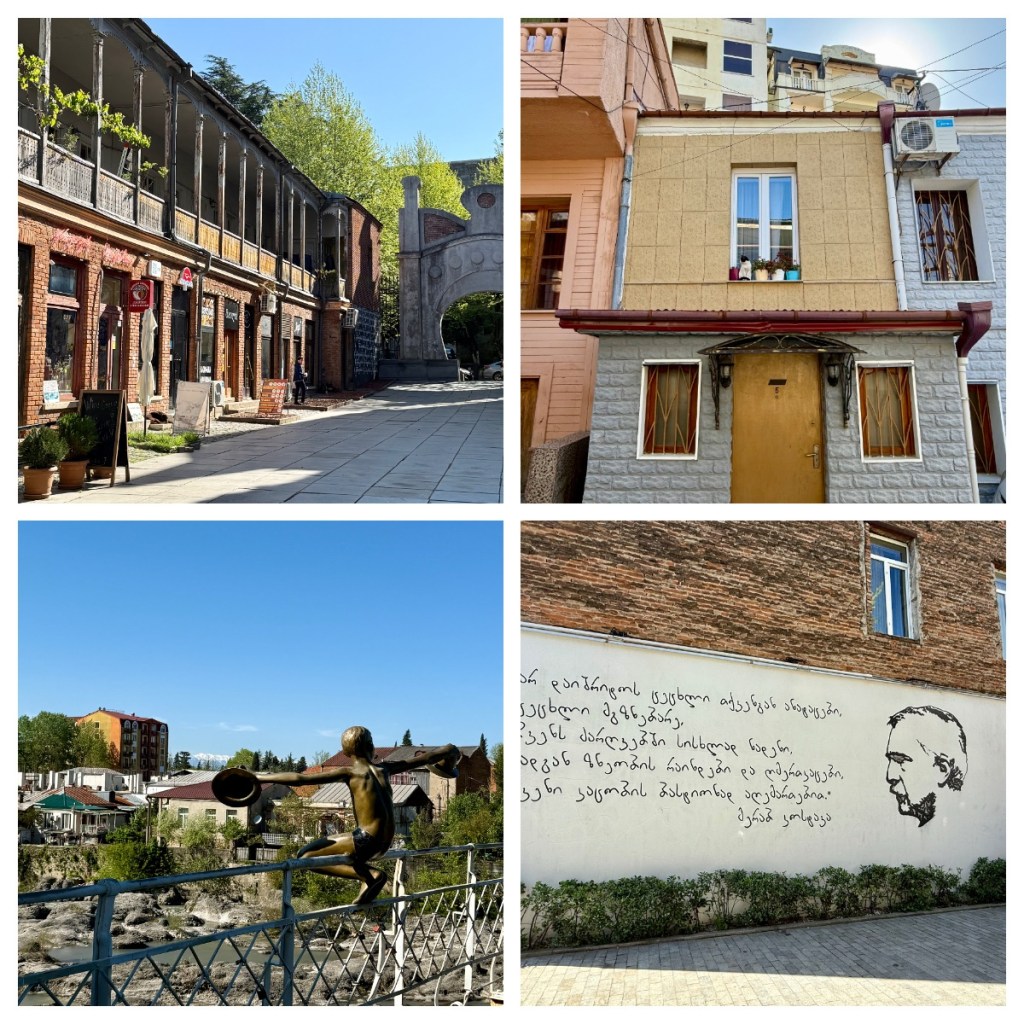
Today was Red Friday (as I explained in my previous blog) and Tazo’s family were near by, so he spent the morning with them, and we had some free time to explore the town of Kutaisi, one of oldest cities in the world having been continuously inhabited since 1,400BC.

With a population of around 135,000, Kutaisi is Georgia’s 4th largest city, and it was an important political centre in the Middle Ages and the capital of Georgia from the 8th century BCE to the 11th century. Not only that, it was actually the seat of the Parliament of Georgia from October 2012 to December 2018 in an effort to decentralise the Georgian government. The move was not particularly popular and in January 2019, it was moved back to Tbilisi.
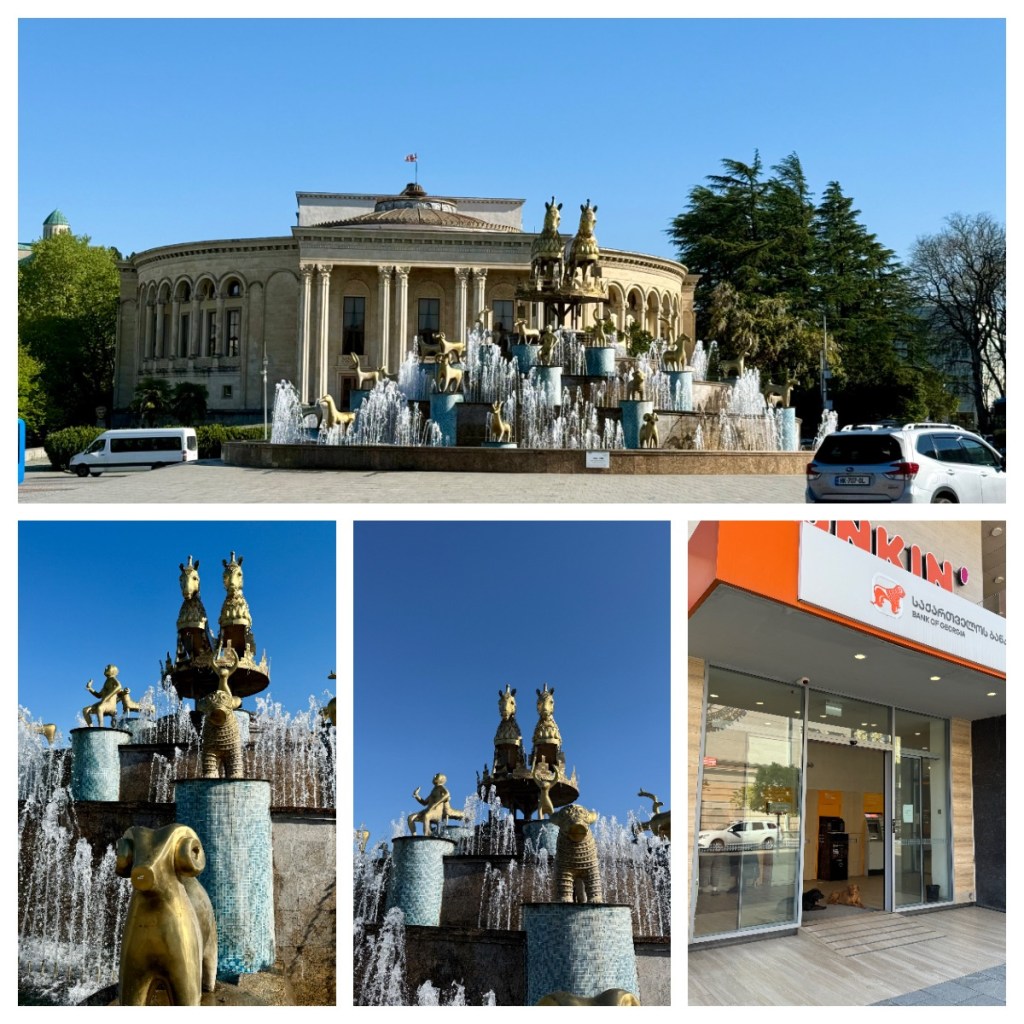
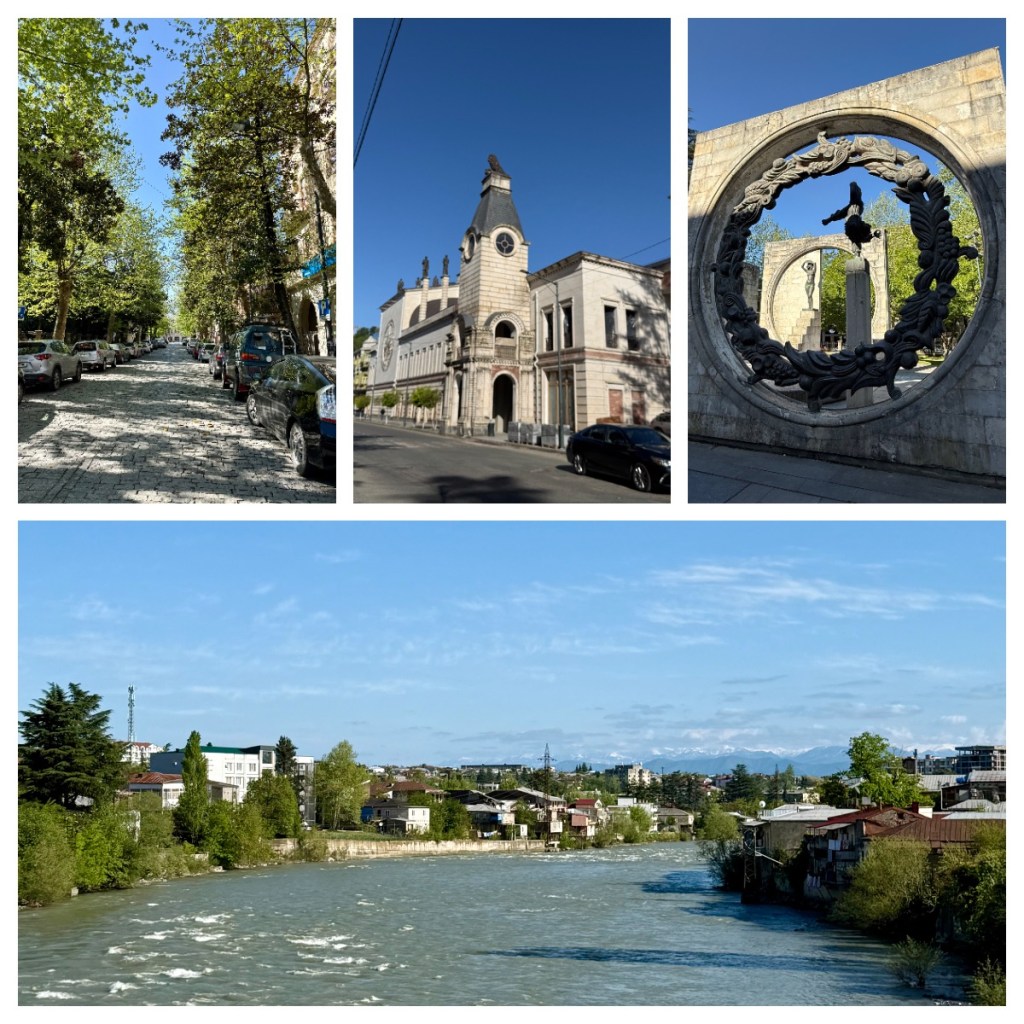
One of the main sites of the city is the Colchis fountain, so that was our first stop.  It is basically on a roundabout, in amongst the business city traffic so it was good to go early when we could easily cross the road to get to it! 

The fountain itself celebrates the ancient Kingdom of Colchis and has 30 large copies of famous gold jewellery, discovered at nearby Vani archaeological site. The figures include animals and ancient Georgian figures, including the lion that features on the Bank of Georgia logo and Tamada.  Tamada is thought to be representative of the Georgian toastmaster tradition and the original little bronze statue dates back to the 7th century BC. 

According to Greek mythology, Jason and his Argonauts visited the city, sailing down the Rioni river from the Black Sea to claim the Golden Fleece – today the river certainly does not look like a large ship could sail down it!  As well as leaving with the gold, he also left with the King’s daughter Medea who became his wife!

From the fountain we wandered passed the Opera House and Theatre, down some of the beautiful tree lined boulevards and across one of the bridges to admire the view out to the snow-capped mountains.  The old part of town was lovely and it was nice to have some free time just to wander. 
Unfortunately our time was cut short as Ania, my travel companion, had a toothache and we needed to find a dentist for her.  Despite being a public holiday, we found a 24 hour dentist just around the corner form our hotel and she could just walk in and see someone (although she did have to call Tazo for some translation services lol).  Armed with some antibiotics and pain killers we went back to the hotel to check out and meet Tazo to continue our journey.

Before leaving Kutaisi, we visited a couple of local sites, just outside the city, the first being the Bagrati Cathedral.  Originally built in 1003 by King Bagrat III, it is a symbol of a united Georgia and of the city itself.  It was on the UNESCO World Heritage site list, but then removed as reconstruction work over the years did not meet with UNESCO standards to maintain the integrity of the original structure, most of which had been destroyed through battles and subsequent decay. 

It is still an active church today, and so we could not take any photos inside but the main thing of note was some priests doing some DIY and some relics, including a human skull!  Outside there was a beautiful view across the city and out to the mountains beyond.

I am also back on Lada watch, with some great examples of their longevity and sturdiness being seen around the city!!

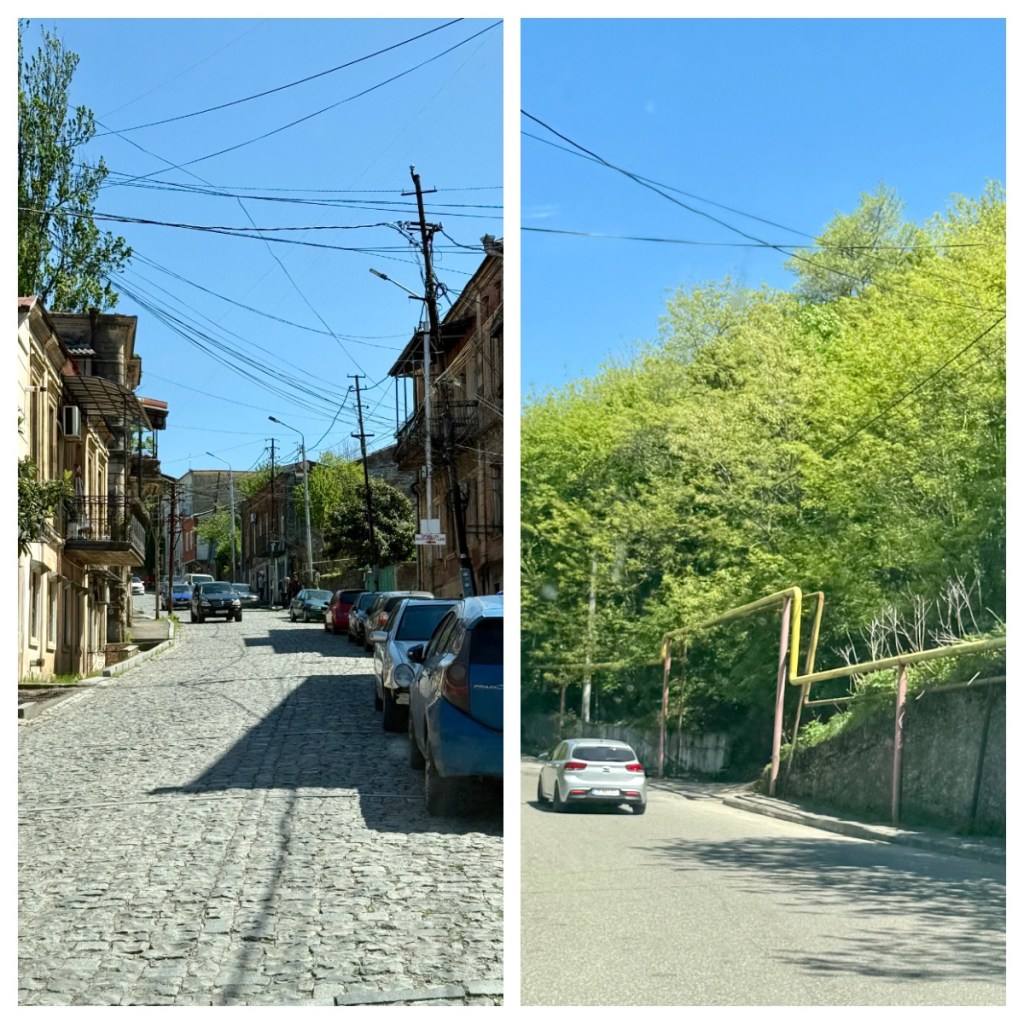
As we drove along narrow, cobbled streets to our next destination, I noticed the above ground gas pipes, as previously seen in Kazakhstan.  In some places they run about 30 centimetres of the ground but then go up to around 2-3 metres to allow for vehicles to pass under them.  Most were installed during Soviet times, so not surprise you see them in other ex-Soviet countries.
The 8th century Motsameta monastery is not only beautiful, perched on a cliff overlooking the Tskaltsitela river, but it is also where Tazo was baptised so he was excited to show it to us.    The name means the “Place of Martyrs” which relates to two brothers of a noble family who organised a rebellion against the occupying Arabs.  When their rebellion failed, and they refused to convert to Islam, they were tortured, killed and their bodies thrown in the river.    Subsequently they were recognised as saints and their remnants are kept in the nearby Gelati monastery.

Apparently, there is a secret (or perhaps not so secret) tunnel between Gelati and Motsameta monasteries used during wars and the crypts of both are said to hold relics such as bones of saints, including the brothers.

The monastery was beautiful inside and out, with purple flowers growing out of the rocks outside and lovely murals on the inside.

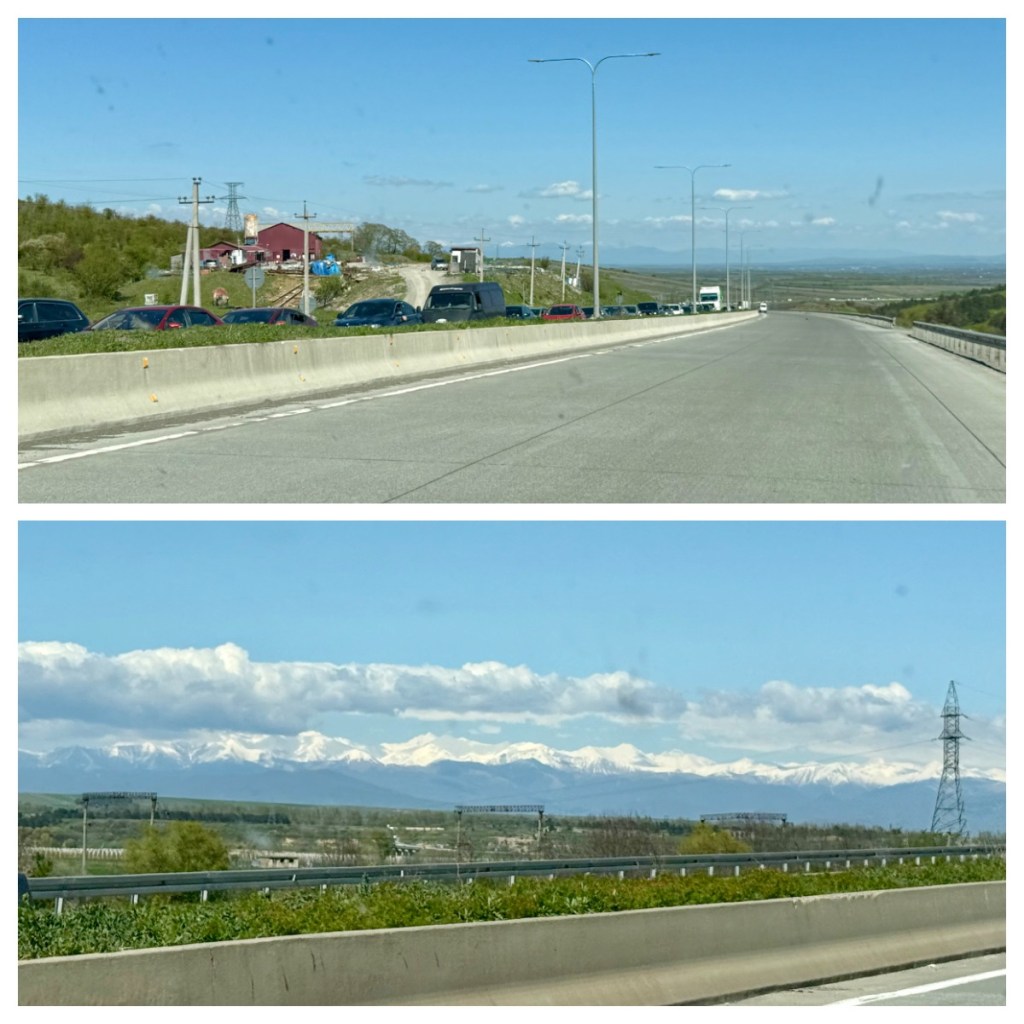
We were then back on the road to travel the 220km back to Tbilisi, and for a while we did not see the Easter holiday traffic that Tazo had predicted – but then we did!  Thankfully it was all on the other side of the road, travelling away from Tbilisi and for some time it was at a complete stand still.  Thankfully there was hardly anyone travelling towards the city so we were grateful to be going that way!

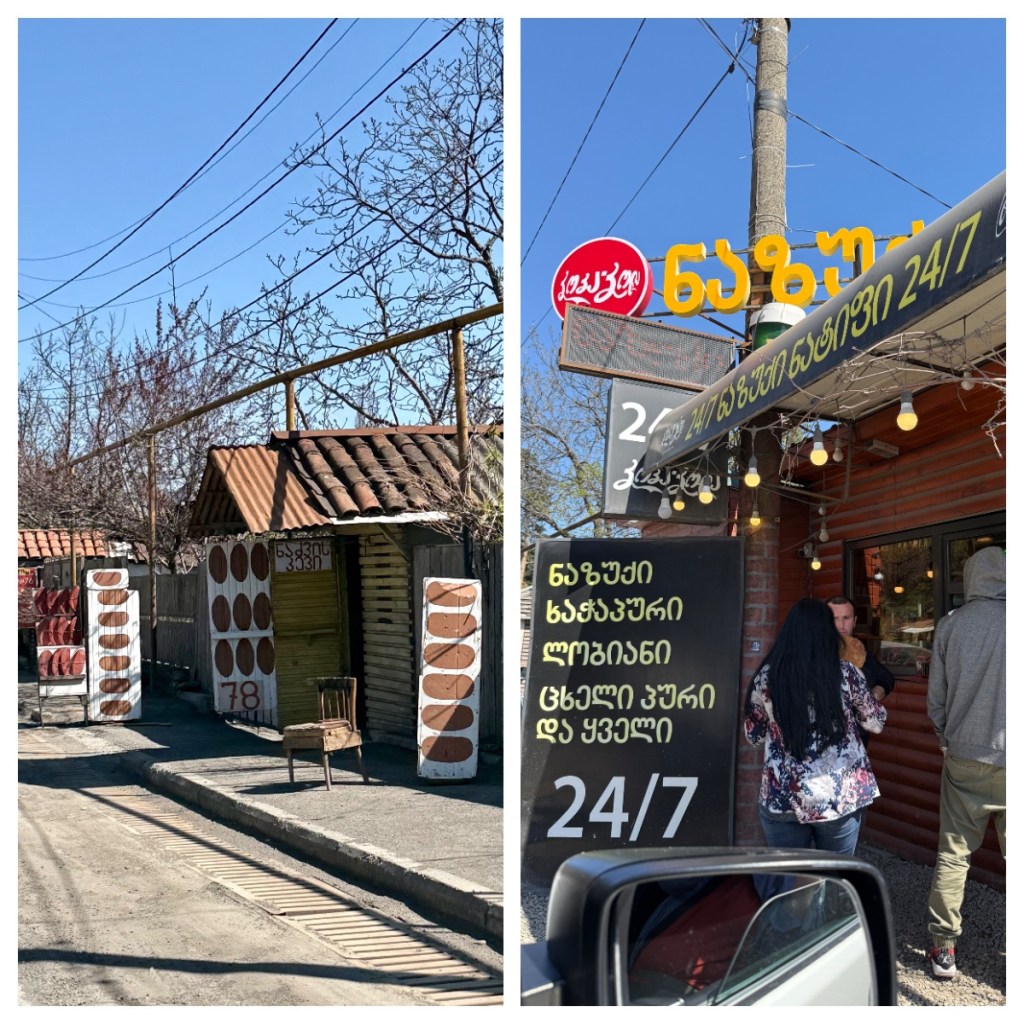
As it had been a busy day (since Tazo had picked us up) we had not had time for lunch, so we stopped on the road side to buy some Nazuki, a delicious, warm spicy sweet bread – there were lots of road side stalls selling it, advertising it with signs of brown oval blobs!  The bread was not brown, but I guess it was oval shaped and it was definitely tasty! 

Nazuki dates back centuries and its name translates from Persian as “exquisite”.  Traditionally they are cooked in a tone oven (a clay tandoor oven where the bread is stuck to the side) and in this particular area (called Surami), is called Nazukebi, a 1 Km stretch of Nazuki sellers.  Apparently a lot of these were set up during period of great economic struggles, allowing people to support their families by baking and selling nazuki. 
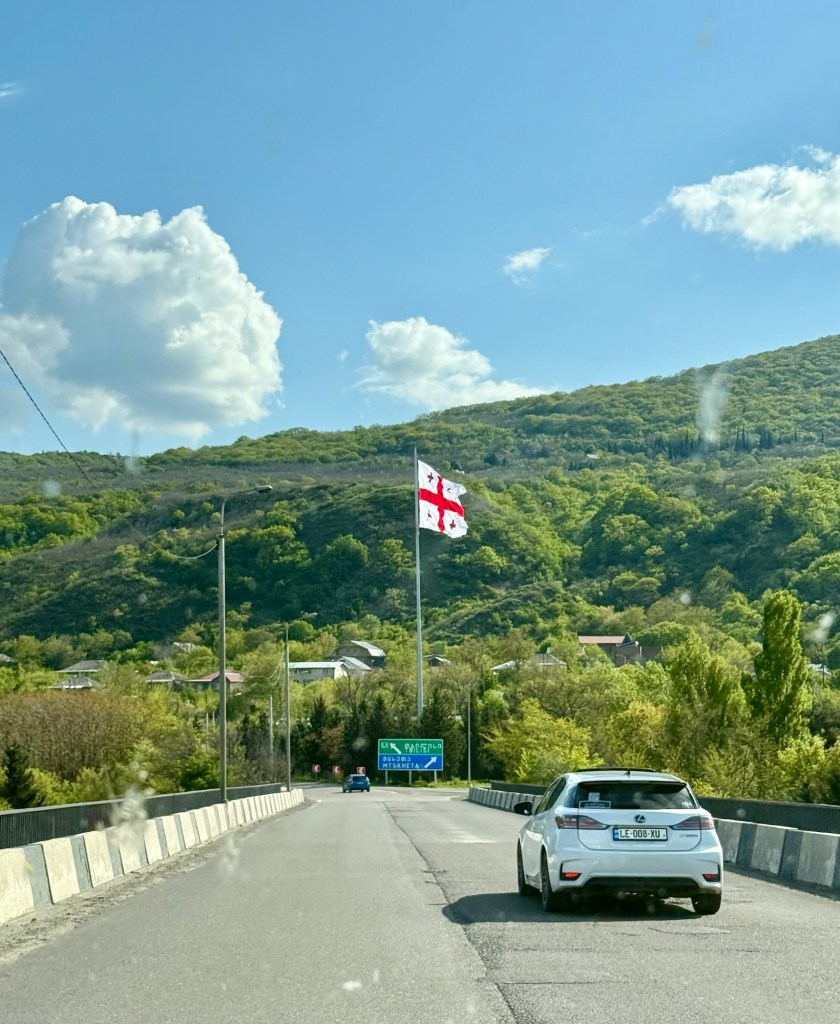
Also along this stretch of motorway, we passed very close to the Russian occupied state of South Ossetia, and I mean really close.  Tazo pointed to a village not far aware and noted that it was occupied by Russians!  It is crazy to think that life goes on so close to the contentious “border”.
We arrived back in Tbilisi and Tazo dropped us back at our hotel just after 5pm and thankfully I had much nicer rooms than we did for our one night stay – I even had a little enclosed balcony.  This time we are here for 3 nights so it was time to do some washing and realign the packing.  As we have been constantly on the move, I tend to alternate the same two outfits (rather than unpack my bag) so it was good to remind myself what else I had packed and get those out to wear.

Ania was not feeling great so I went on the hunt for somewhere to have dinner and came across a lovely Italian restaurant.  I felt a little guilty having Italian food in Georgia but made up for it by having a glass of Georgian wine.🍷

Fortresses and dinosaurs

Georgia, April 2025

Our hotel in Akhaltsikhe was ok, definitely not as nice as some of the others we had had.  Unfortunately I could not get the water hot enough to wash my hair and breakfast spread was not as vast as other places – serious first world problems and nothing I could not cope with (especially for only 1 night). 

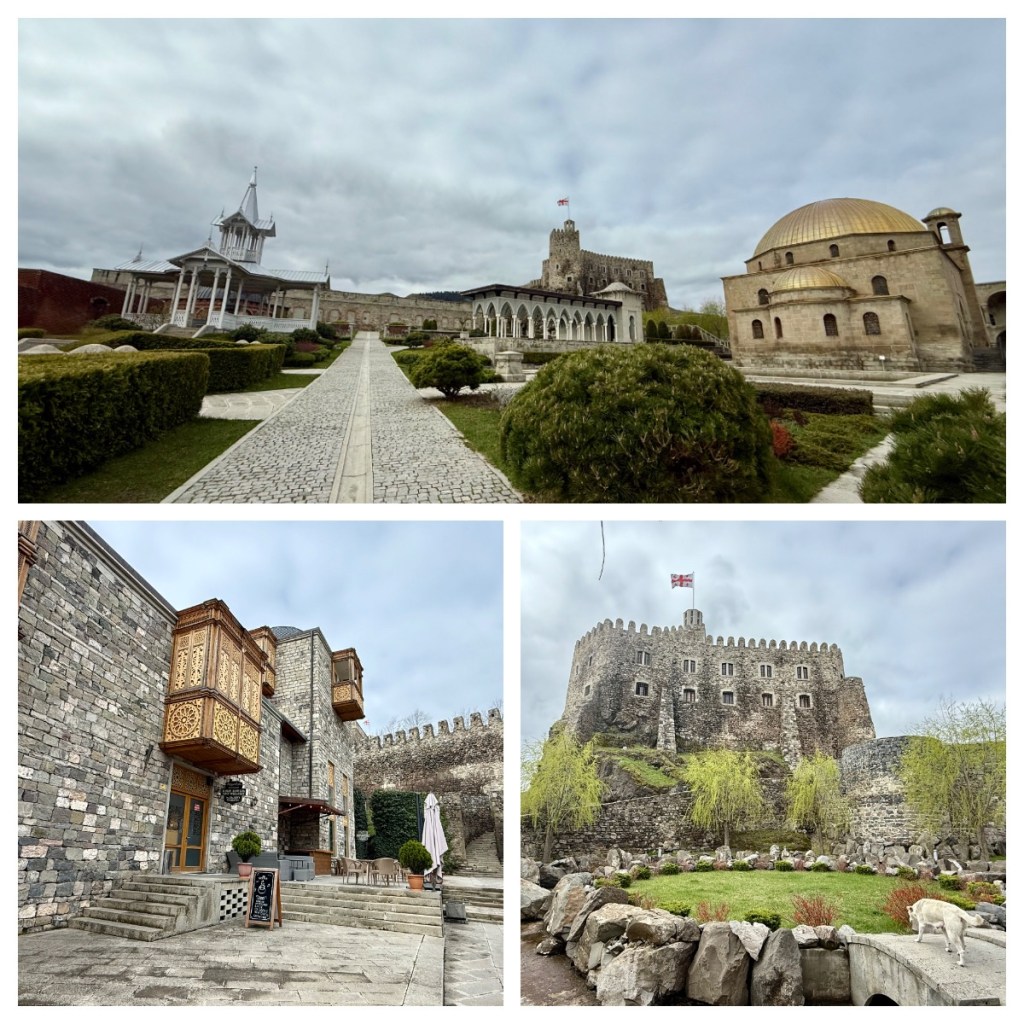
Akhaltsikhe is a small town with a population of only 18,000 and sitting at 1000m above sea level and before leaving we visited Rabat Castle, which dominates the town.  It is medieval fortress, initially built in the 9th century which has been called Lomsia (Lion), Akhal-tsikhe (New Fortress) and Rabat or Rabati (meaning fortress in Arabic)! 

We had to wait a few minutes for our English guide and acquainted ourselves with a couple of the local stray dogs.  There are stray dogs everywhere in Georgia but despite being stray, they seem well feed and looked after and they are not aggressive with us or each other.  In fact they are all very friendly.  That said, it seems our ‘guide’ dog was not a fan of our actual guide and did her best to keep in between us and him and barked at him if he got too close lol.

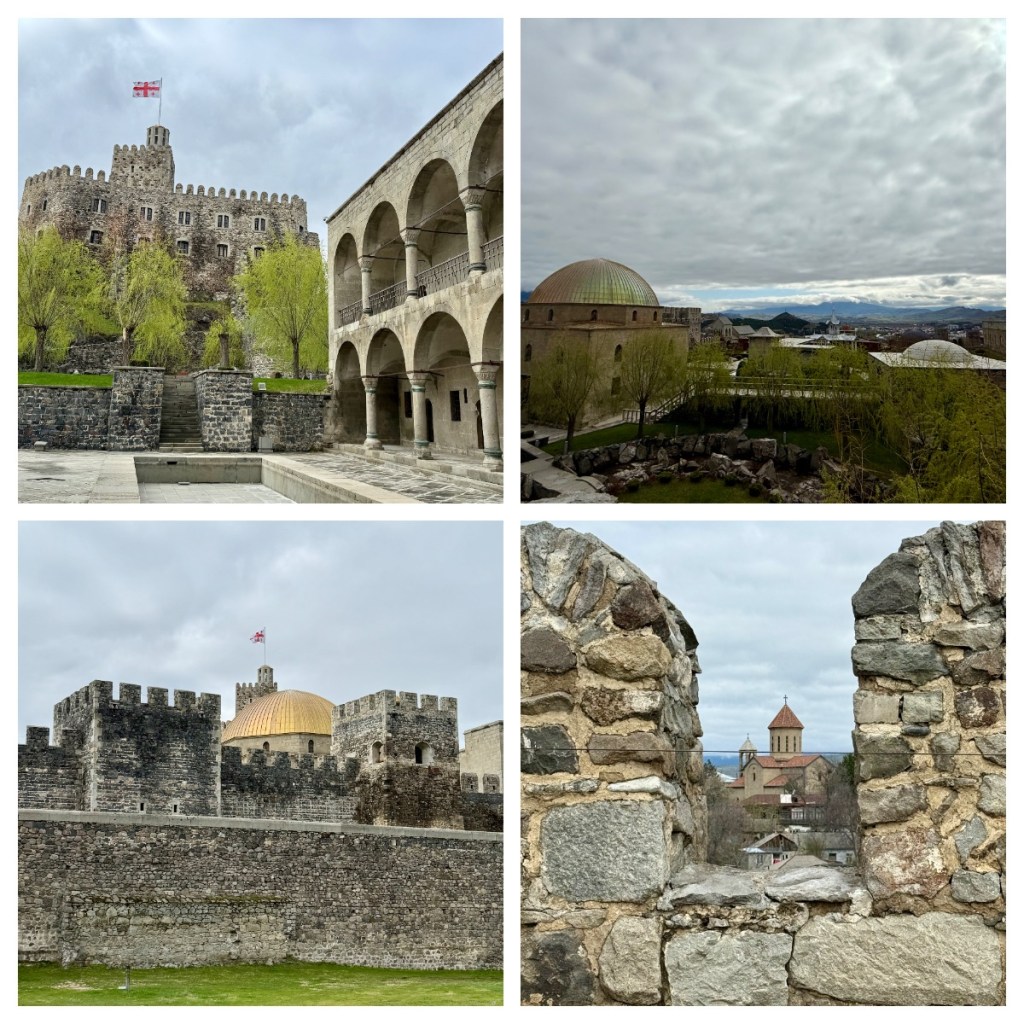
The oldest part of the complex was built in the 9th century, with subsequent additions, including the high walls, entrance gates and watch towers being added in the 12th century.  The varying architectures of the different eras and religions is clear here and it was interesting to learn that the “church” has functioned as a church and a mosque over the years – depending on who won the most recent battle.  From the covered balcony’s (for Muslim women to enjoy fresh air without being seen) to the mosque/church which was actually designed by an Italian Catholic), a Muslim madras (or school) and a ‘secret’ opium room.  What we see today has been through extensive reconstruction and renovation in more recent years. 

Apparently, Tamerlane and his Turco-Mongol army attacked in the late 1300’s on his rampage across the continent– if you had been reading my blogs for a while your may remember I met Tamerlane (or Timur) in Uzbekistan in 2019.  In this instance, Rabati Fortress withstood his attack.  

The fortress continued to be a site of battles as the area saw constant struggles between Iran and Turkey, and the region was in fact part of Turkey, and predominately Muslim until the invasion of the Russian Empire in the early 1800s.  The region briefly returned to Turkish control after WWI in 1918, falling back to Russia and the USSR in 1921.

Over the years, this multi-faceted complex has also been a military prison and a hospital!  And of course, the citadel which was used as a signal point to send messages by lighting fires which could be send 10kms away.  All the fortresses would be used in this way, passing messages for 100’s of miles through multiple fortresses and castle citadels.

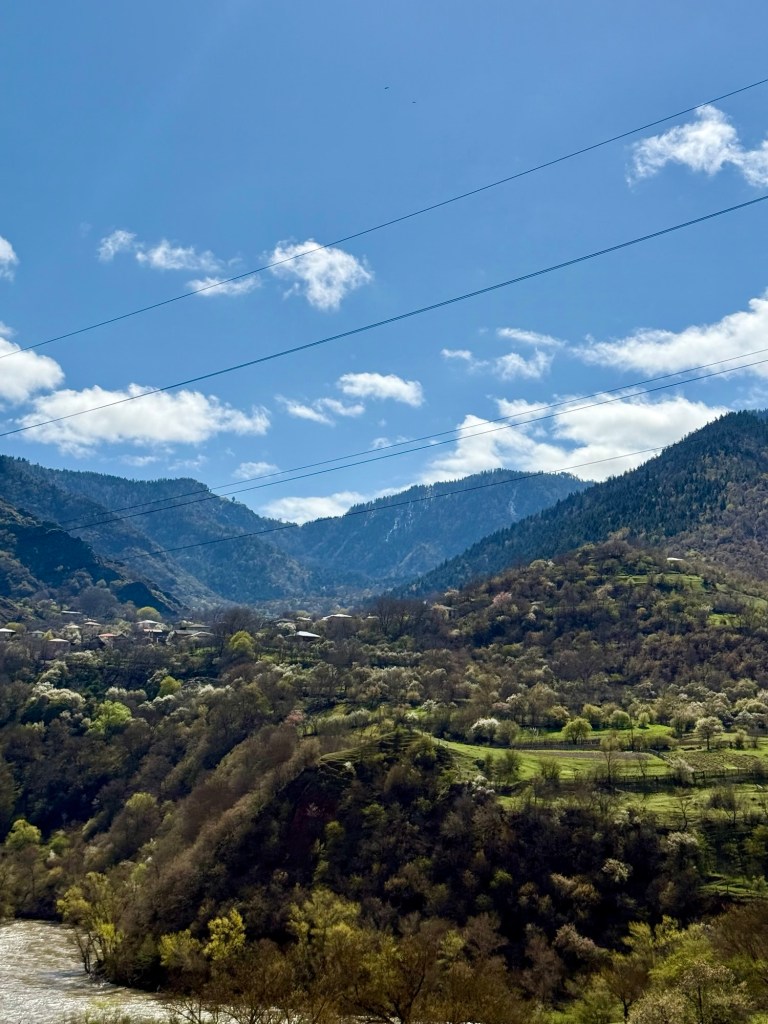
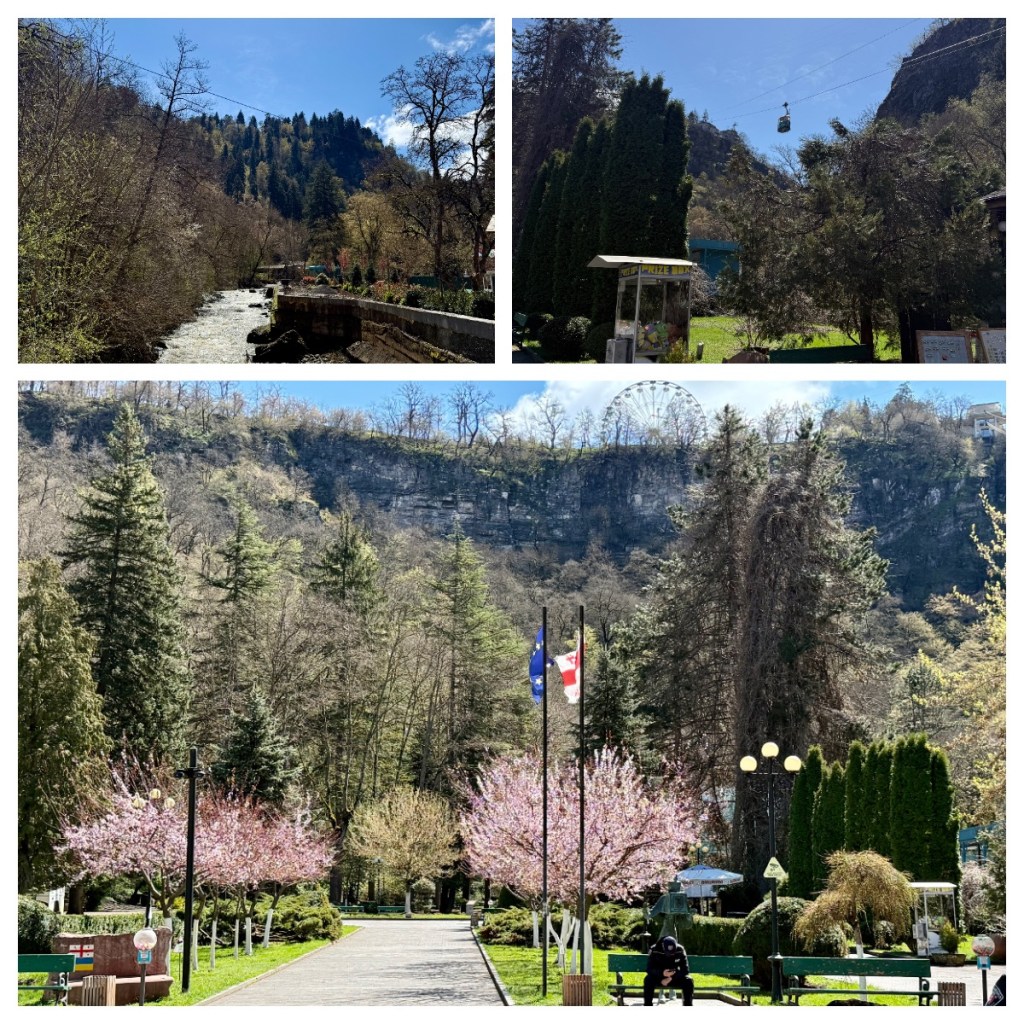
Leaving town and heading towards our next destination, we passed through beautiful landscapes spotting fortresses on hilltops (part of the message sending chain I mentioned above).  We stopped for a brief walk in the beautiful town of Borjomi, who’s name is famous as a brand of naturally carbonated water that originates in the springs here.

Borjomi is a resort town, with a population of just over 11,000 which sits in the Borjomi Gorge.   As well as its mineral water fame, today it is known as a hub for adventure activities including 4WD trips, hiking, rafting, horse riding etc. and is continuing to grow in popularity. In the past, it was the home to the nearby Romanov summer palace and the gardens here started life as a park solely for the Russian royal family and other aristocrats and the town was used frequently by the Russian military for convalescence and to partake in the healing powers of the local mineral water.  It was once known as “the pearl of Caucasus”.

During the period of the USSR, all the aristocratic mansions were seized by the state and turned into sanatoriums for Communist party elite (so the same thing, just for different ‘aristocrats’).

On the day of our visit, the town was pretty quiet and lots of people were trying to sell their activities and wares.  Apparently, some of the guys were telling Tazo that they were give him a cut if he convinced us to do something with them!  We did stop and have a stilted but interesting conversation with an older lady selling ‘medicinal’ products made out of pine trees (needles, sap, bark etc) found in the local forests.  Not really sure of the medicinal part of it but it was interesting to learn about their beliefs in the natural products.

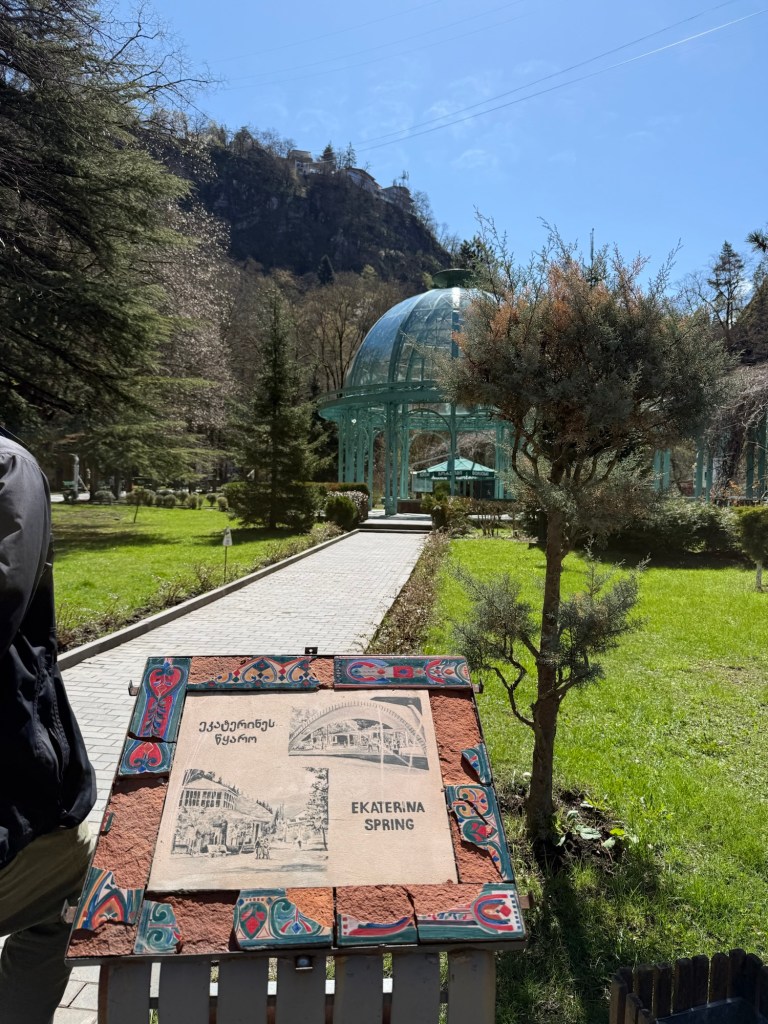
The park was beautiful and it was lovely to have a brief stroll in the sunshine and sample the so-called therapeutic waters from the Ekaterina Spring.  There is a fountain that you can fill your bottles from or drink straight from the tap …. It was not good lol.  If you did not breathe you could escape the sulphur smell, but you could not escape the metallic taste.  After a small sip, I did not go back for seconds!

We were soon back on the motorway and this section of the road has over 40 tunnels cutting through the hills, and big roadside rest stops featuring small supermarkets and American chain fast food restaurants Wendy’s, Subway and Dunkin Donuts.  More importantly they had clean toilets – most toilets come at a cost here, 1 Lari a visit, so we often found Tazo sponsoring out toilet visits lol.

Car chats with Tazo today covered the following:

  • It was the long Easter weekend and most in the country are Georgian Orthodox, so Easter is taken pretty seriously.  What we call Good Friday; they call Red Friday and families dye eggs red to represent the blood of Christ shed on the day of the crucifixion. Now we did not discuss ‘Easter Grass’ but I did see it being sold – they either grow or purchase this (basically 10cm high wheatgrass) which is used as decoration along with the red eggs to symbolise new life after the resurrection.

On Easter Monday, in a few days’ time, families gather for picnics at cemeteries to commemorate their loved ones, sometimes pouring wine on top of the graves.

  • The Georgian philosophy “Everything to my country, I get what my country can give back” reflects the strong sense of national dedication and loyalty.
  • After the collapse of the USSR, the years 1991 to 2003 are referred to as “12 years of suffering”.  There was turmoil internally and with neighbours and political and economic instability.  In 2003, the so-called Rose Revolution saw a non-violent uprising bringing on a change of government and subsequently stability.  They introduced a Zero tolerance policy and within 5 years they become one of the safety countries in the world.

We arrived in the city of Kutaisi, but before stopping in the city, we drove through and out to the Sataplia Nature Reserve, 10km out of town.  The park was created in 1935, after the discovery of the cave complex and the dinosaur footprints.    The name Sataplia translates to “honey place” as bees used to live in small holes in the cliffs.  Most are gone today but you can still see the evidence of their previous existence.

We had to wait around 45 minutes for an English guide (which was mandatory) but to be honest they really were not worth the wait as they did not really tell us anything.  They just directed us places, first into a small building that covers the dinosaur footprints.  There are 150 footprints, thought to be from 30 different individuals from 5-6 different dinosaur species, including one new genus called the Satapliasaurus. Generally they appear to be both raptors and grass eating dinosaurs from the Jurassic period.

From the dinosaur footprints we moved on to the incredible cave system – a karst cave system carved out by the Oghaskura River over 30 million of years its 300m length is filled with stalactites and stalagmites.  There is a boardwalk type walkway through the cave and the cave was filled with music and lights. It is also always a constant 14 degrees inside – to be honest it felt a little more like a disco than a cave complex lol.   The cave’s main attraction was a heart shaped formation where people make wishes. 

Once out of the cave we had free time to explore some of the 350 ha of forest, part of which has dinosaur figures that come to life as you walk near them and then the piece de resistance – the glass panoramic viewpoint overlooking the area.  It was rather a unique experience but it was lovely to have a walk through the forest and enjoy the nature.

Back in town, we decided to find somewhere to have a quick drink before Tazo dropped us at our hotel and we found a small café in the old town and we enjoyed a home-made semi sweet rose in the sun.  I think I have mentioned that everyone in Georgia make their own wine and although it was rather yeasty, it was still tasty.

Our hotel here was lovely (most have been pretty good) and we went to a restaurant called Agerari, recommended my Tazo, for a delicious dinner and a local beer. We had so much food, we almost had to roll back to the hotel lol.