Greenland – final days

Itilleq and Kangerlusaaq

September 2024

Our final full day in Greenland was spent sailing south whilst we had couple of talks.  Firstly we were given a briefing about the disembarkation process for the following day and house keeping that needed to take place e.g. return boots, pay bills etc, followed by a talk on the Geology of Greenland.  This was followed by a session with Julien, the incredibly accomplished guide I have previously written about.  It was basically a Q&A entitled “everything you need to know about Greenland and more”.

He covered topics from the development of Greenland (mainly fishing in the north and farming in the south), I quote “no one is living in igloos wearing polar bear pants”🤣 He went on to say that education is a problem – most people just fish or have technical education and that boys work with their father or uncles so don’t see point of higher education. 

Most high school teachers are from Denmark and many children don’t speak Danish these days, as more and more are speaking  English.  For this, amongst other reasons, many fail at school and give up.  Most educated people in the country are women who stick it out at school longer than the boys.

We pulled into our last stop during lunch and I spotted the chef fishing for dinner 🤔 off the ship lol.

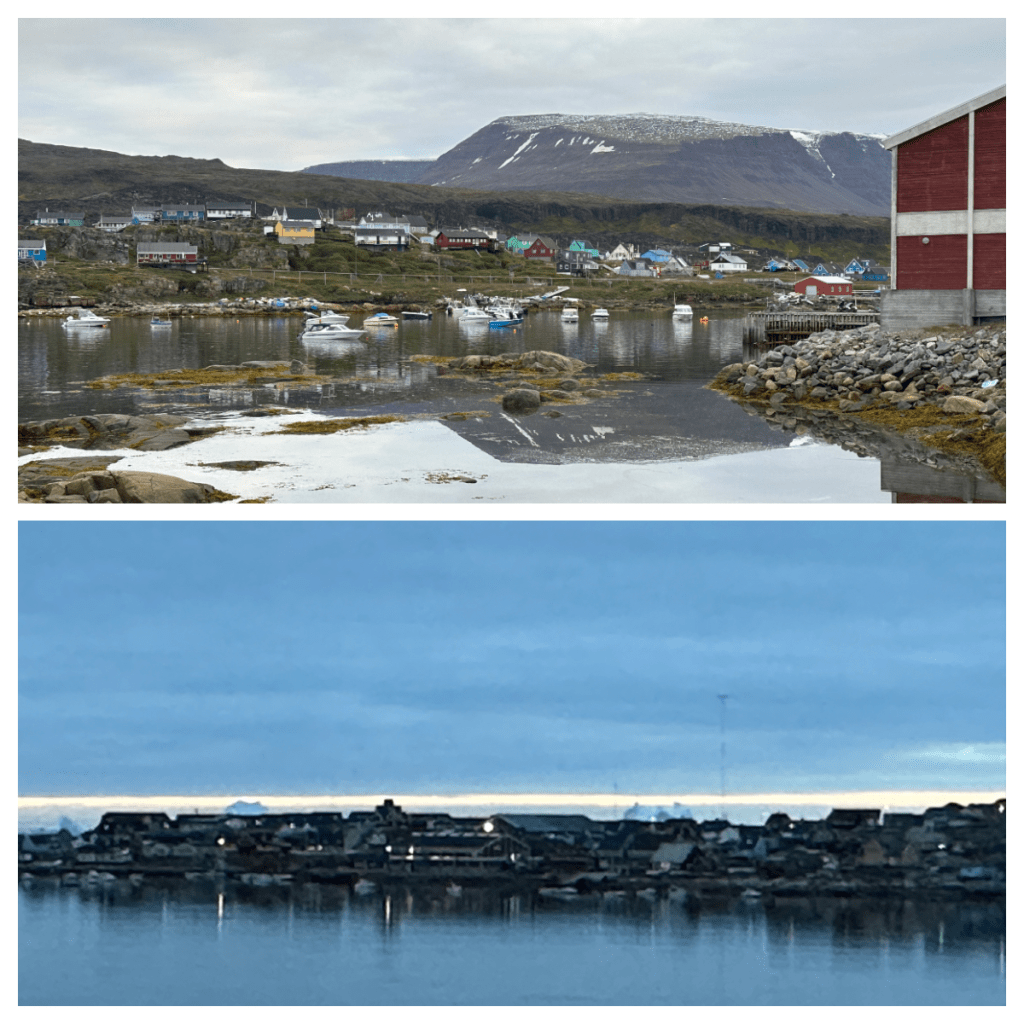
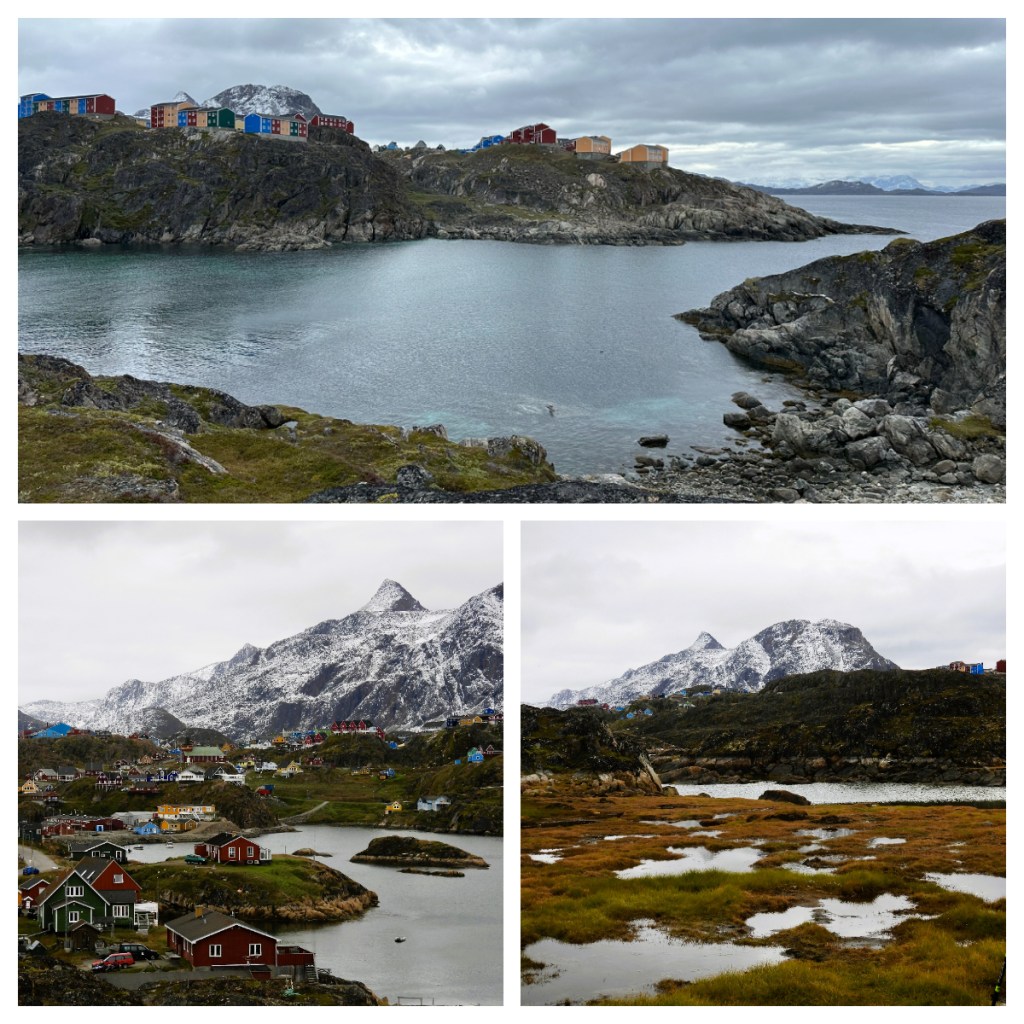
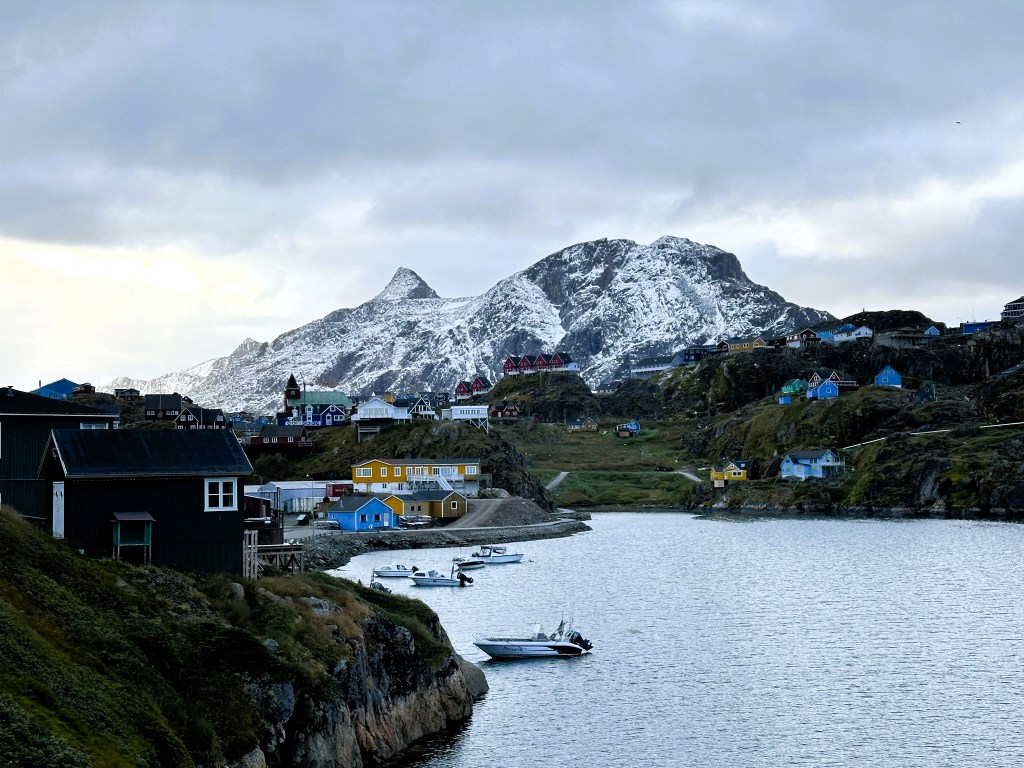
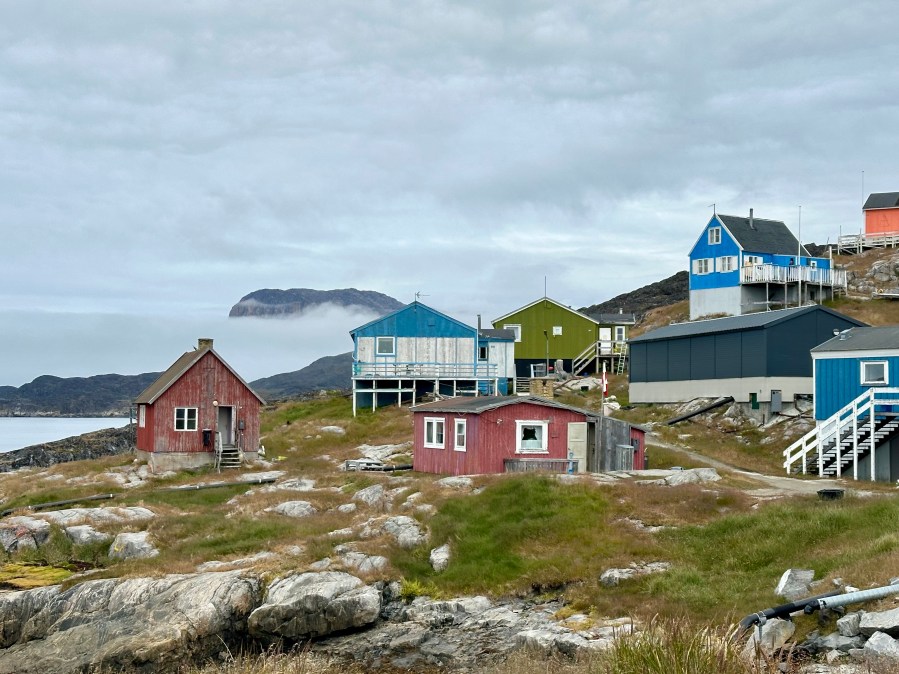
The afternoon was spent in the small town of Itilleq, located on a small island just of the coast of the mainland  –  population around 100!   The island has no fresh water, so they have a facility for desalination of the sea water and as with all Greenlandic towns, there are no roads to get here, and in fact the closest airfield (for planes) is in Sisimiut, 45 km away across the sea.  The town does however have a helipad for on-demand air services and emergencies.

The main trade in the settlement is fishing and hunting, with a fish factory being the main employer in the settlement. There is one store in the town – the local Pilersuisoq store.

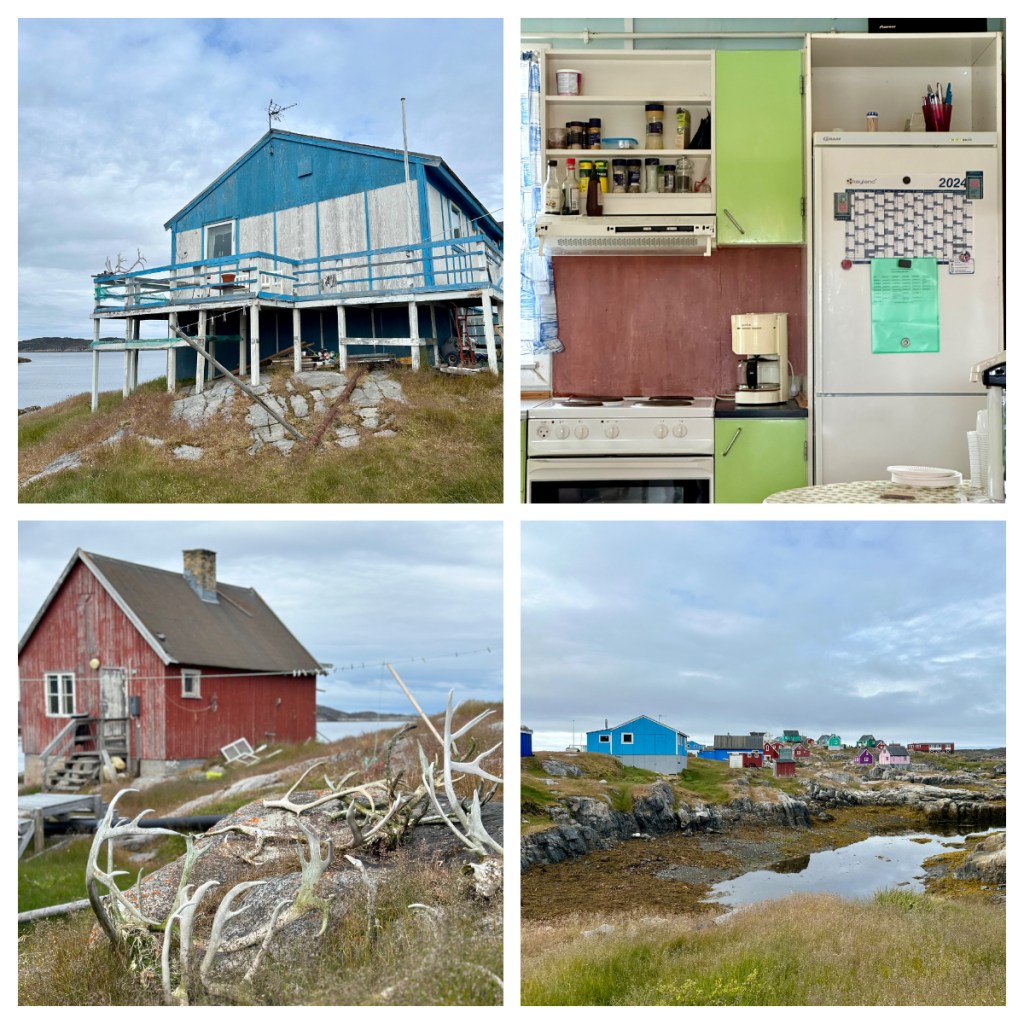
It was a quaint town surrounded by beautiful mountains and after some time to wandered around we had an opportunity to go into one of the locals house’s for tea.  The house had a 70s vibe decor and it was not dissimilar to houses in Fiji with colours, décor and religious icons.

Our hosts did not speak English well, but we had one of our guides with us who had lived in Greenland as a child.  She explained that after World War II, the Danish government started 5 companies including Royal Greenland (the fishing company), Royal Artic Line (shipping), Air Greenland (transportation) and Pilersuisoq (a chain of general stores).  Apparently, these companies must operate in all towns, even if they run at a loss.  By law, Air Greenland must operate flights, even if the planes are empty.  If this is the support currently given by the Danish government, I am not sure if Greenland will ever want, or be able to sustain true independence?

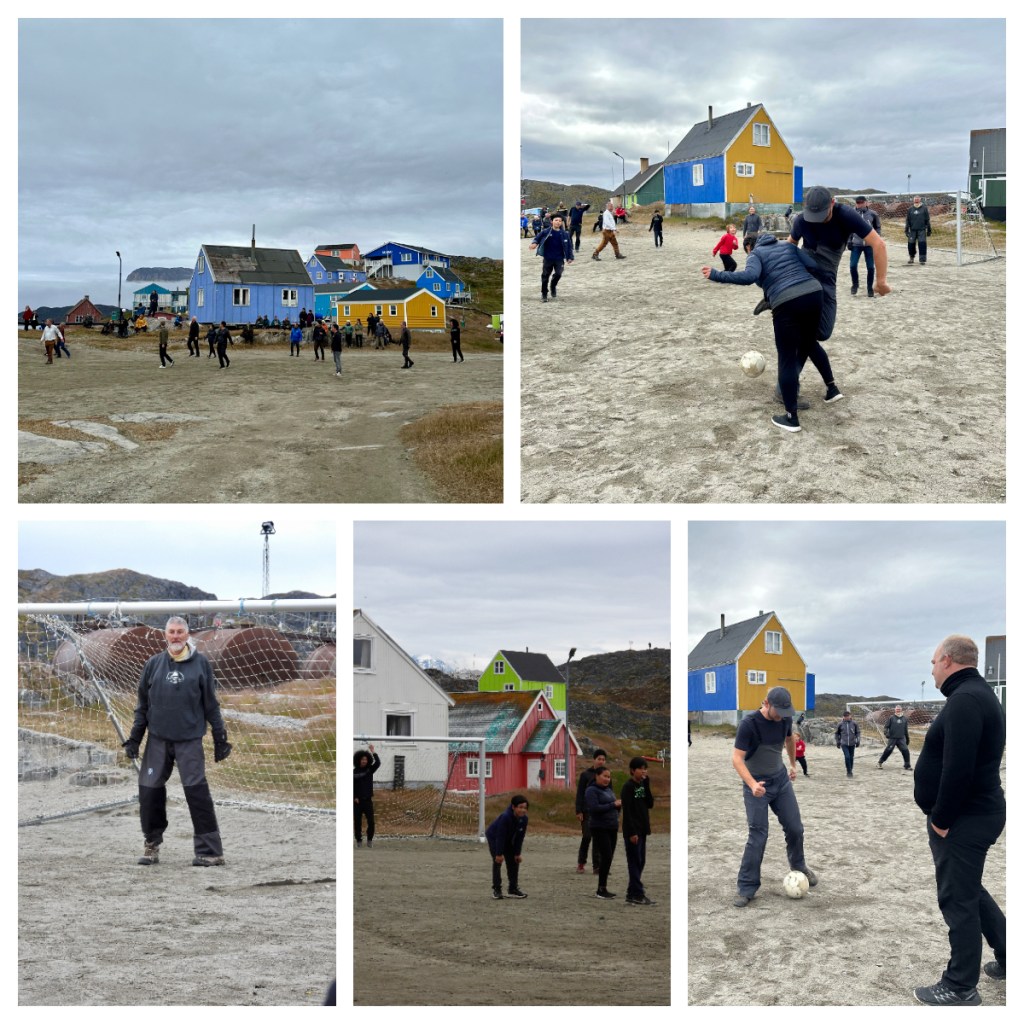
As all the village kids played in the Jacuzzi on the ship, ‘crowds’ gathered on shore for the all important football game between the town and the ship.  Even the local fish factory closed early so the workers could play!  All players welcome, any age, any size and any number of people were on each team lol!  It was a lot of fun and a great way to end the day and the trip.

After our final dinner, it was time to finish up packing as our large bags had to be left outside our room before 11pm.  As annoying as that was, it meant that it was taken up to the lecture room for the morning where we would be joined by check in staff from the airport who would then whisk our bags away to the airplane later the next morning. 

I must admit I felt a little like a fish out of water on this trip with 95% of passengers not having English as a first language, hardly any other solo travellers – in fact I think there was actually only 1 other travelling on their own, and 4 travelling with a parent. Anywhere I sat for dinner threw out the dynamics of any of the tables as they were all set for 2,4, 6 or 8.  That said, it did work in my favour a lot as it meant I got my own room when I had paid to share.

On top of that, most of the other passengers were Danish couples in their 60-70-80s (clearly a marketing thing) so it was not easy to get involved in conversations!  Despite all of that, I met some lovely people and the ship and trip has been amazing.  And lets be honest, if I was not comfortable with my own company, I would not travel solo!   Next time, however, my next expedition cruise will be more wildlife focused 🥴

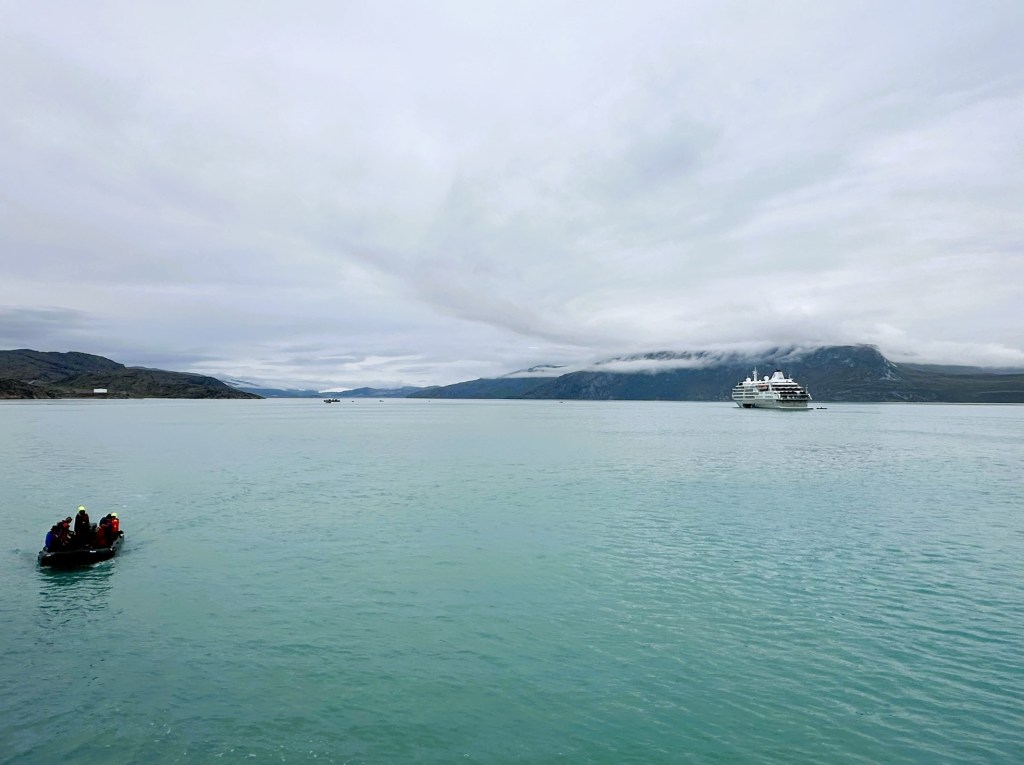
Our last evening saw us sailing south in to the mist, just how we had set off a couple of weeks earlier when we arrived and the final morning was bitter sweet.  As I mentioned above, our flight check in was done on the ship and it was then time to jump into the zodiacs and leave the ship for the last time.  Can I just say I won’t miss my waterproof pants 🤣!

Back in Kangerlussaq, I had booked to do a tour of the ‘city’ (I had booked all the extras in advance, not wanting to miss anything lol).  I am not sure if I would have booked this tour now,  but there is nothing else much to do there while waiting for the plane so I was happy to have something to do.    

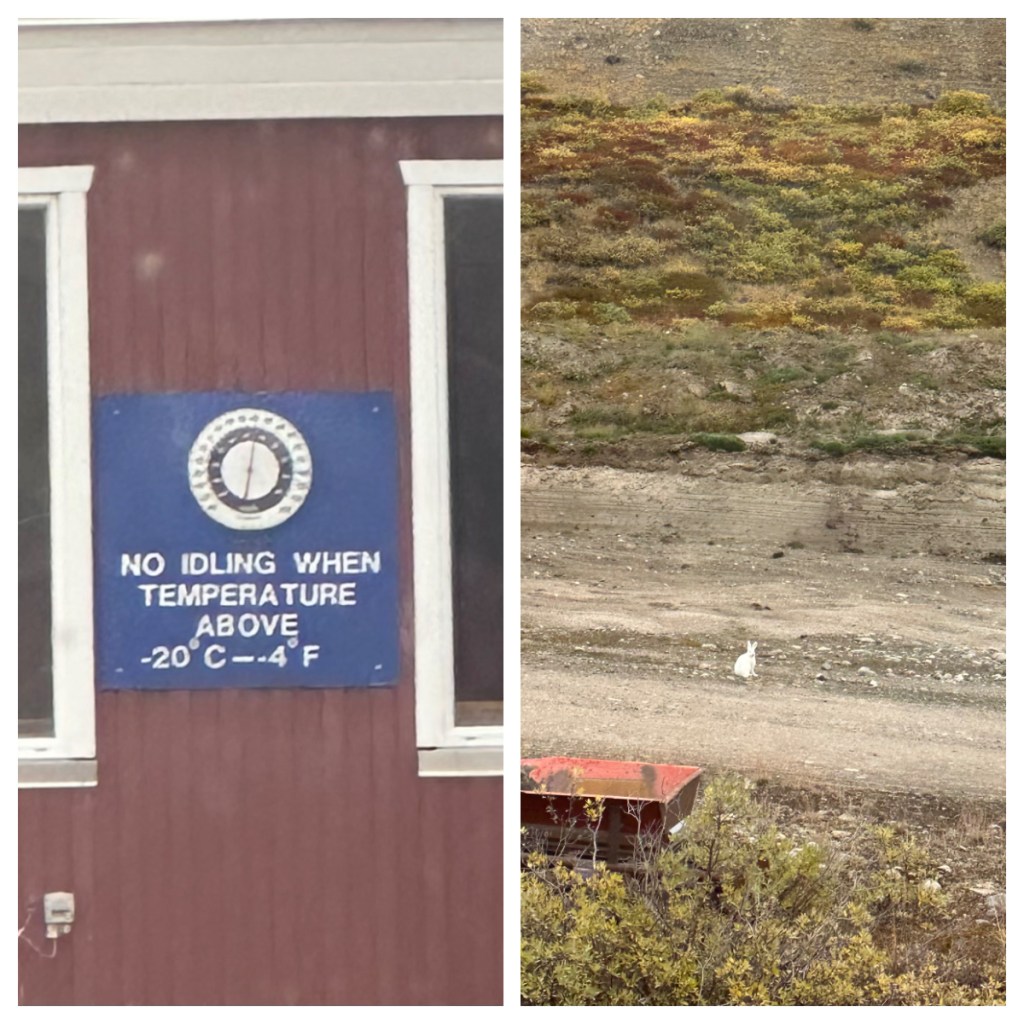
We jumped in to a big bus and headed out of town on Greenland’s longest road which starts at the harbour where we got out of the zodiacs.  This is actually 14 km from the ‘town’ as the silt build up from the melting glaciers means this is as far as the large ships can get to town.  At low tide, a small channel needs to be dredged to allow the zodiacs to get to shore!

From the town, it is a further 36km to the ice cap (which we had driven on our first day) making the road 50km in total.  Apparently, part of the gravel road was built by Volkswagen in the late 90’s as a venue for car endurance testing.  They had planned to extend the road on to the icesheet itself, but the plans were abandoned in 2005 and it is now mainly used for tourism.

We did see a couple of Artic hares on side of road (👍🏻👍🏻 yay for some wildlife) but I did not have my camera on this trip so no great photo 🥴,  but I saw it and I was happy!

We drove back through the town towards the airport and to be honest we didn’t learn too much more as the driver was from Denmark and had only been here for 2 months!  Anyway, the little excursion killed some time and we were dropped back at the airport for our plane.  
The trip had some ups and downs but overall it was amazing and it is no surprise that I would love to come back to explore other parts of the country or experience it at a different time of year. 

I had visited this year as I had suspected that the new airport being built in Nuuk would result in direct flights from American – making these remote places more accessible is great I am sure for the country itself, however it makes it a little less adventurous for me, not to mention it being overrun with Americans who are only there because it is ‘easy”!  My suspicions came true this week when direct flights were announced for Summer next year!  Greenland will never be quite the same again.

Greenland – you saved the best till almost last

Disko Bay & Ilulissat

September 2024

Our next stop was at Disko Bay, a large bay sitting above the Artic circle and we started on the island of Qeqertarsuaq (“Big Island”), also know as Disko Island.  The island is the largest island in Greenland, and has a population of around 850 people.  Once known as Godhavn or Good Harbour, it served as the political and economic capital of Northern Greenland, it’s economy being based around the whaling industry.  As the whaling industry collapsed, so did Qeqertarsuaq’s importance and the government functions were all moved to Nuuk.

This part of the country is now sea ice free all year round, this line used to be much further south, around Sisimiut.

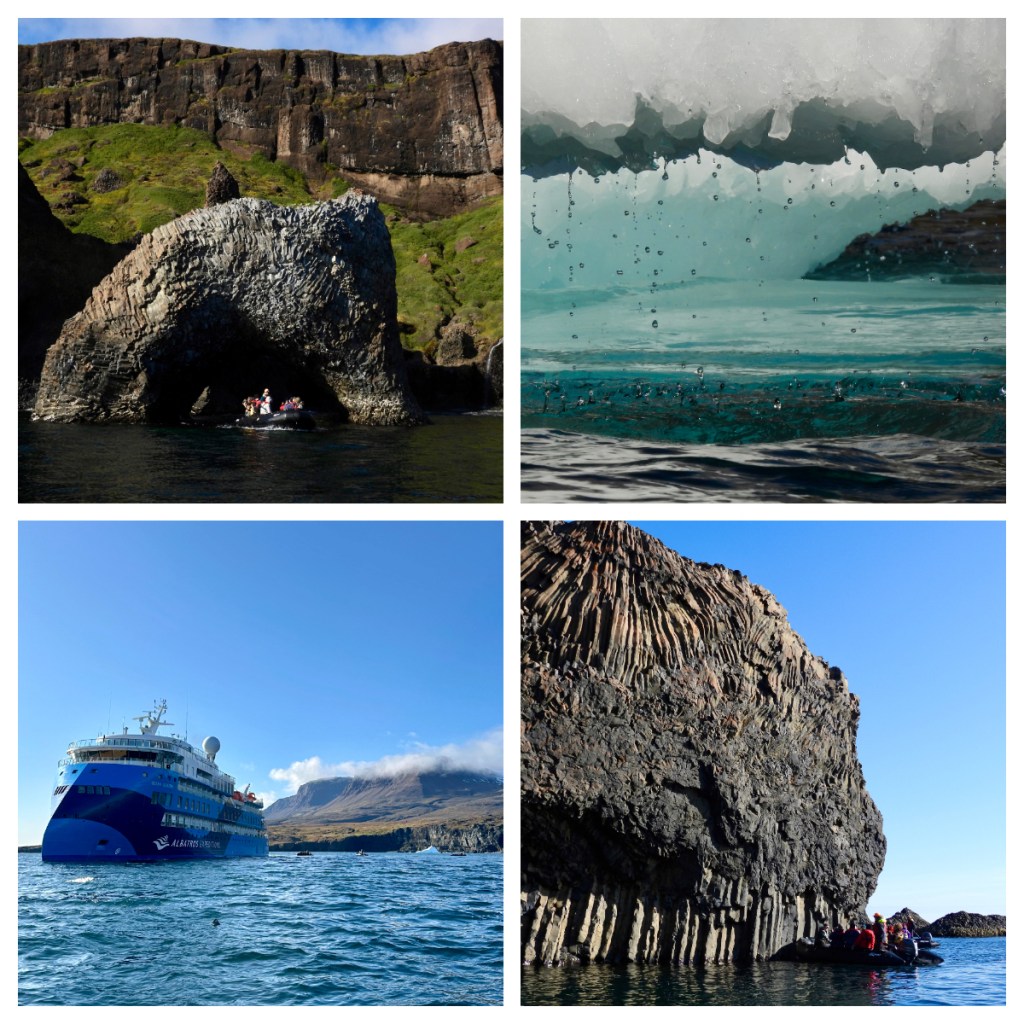
Unlike the Greendland mainland, Qeqertarsuaq consists of volcanic rocks, mainly basalt which means the soil is much more furtile leading to the island being much more green and lush than the rest of the country.  It also provides some spectacular rock formations.

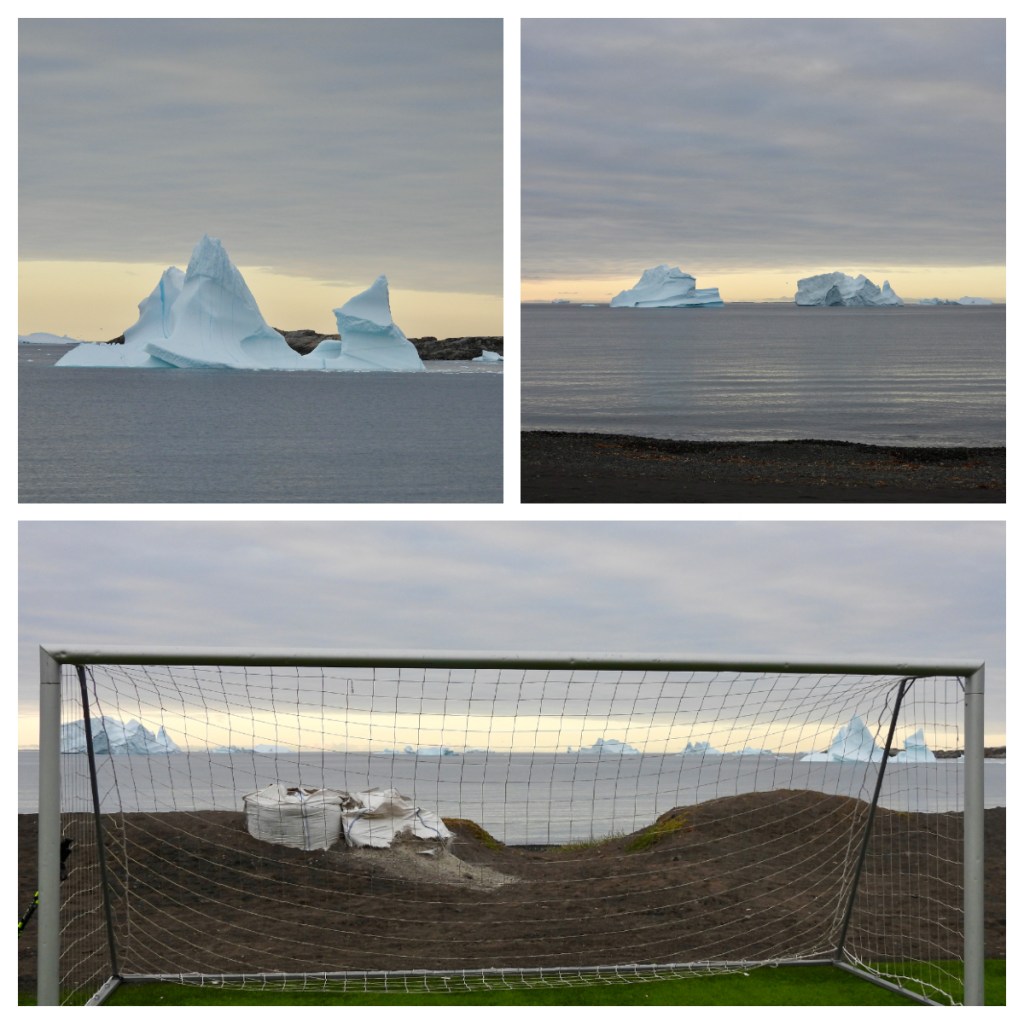
As we pulled in to the harbour of the small town I saw what I thought was hills/mountains in the background.  It was in fact icebergs, floating on the other side of the land 🤯.  So cool.

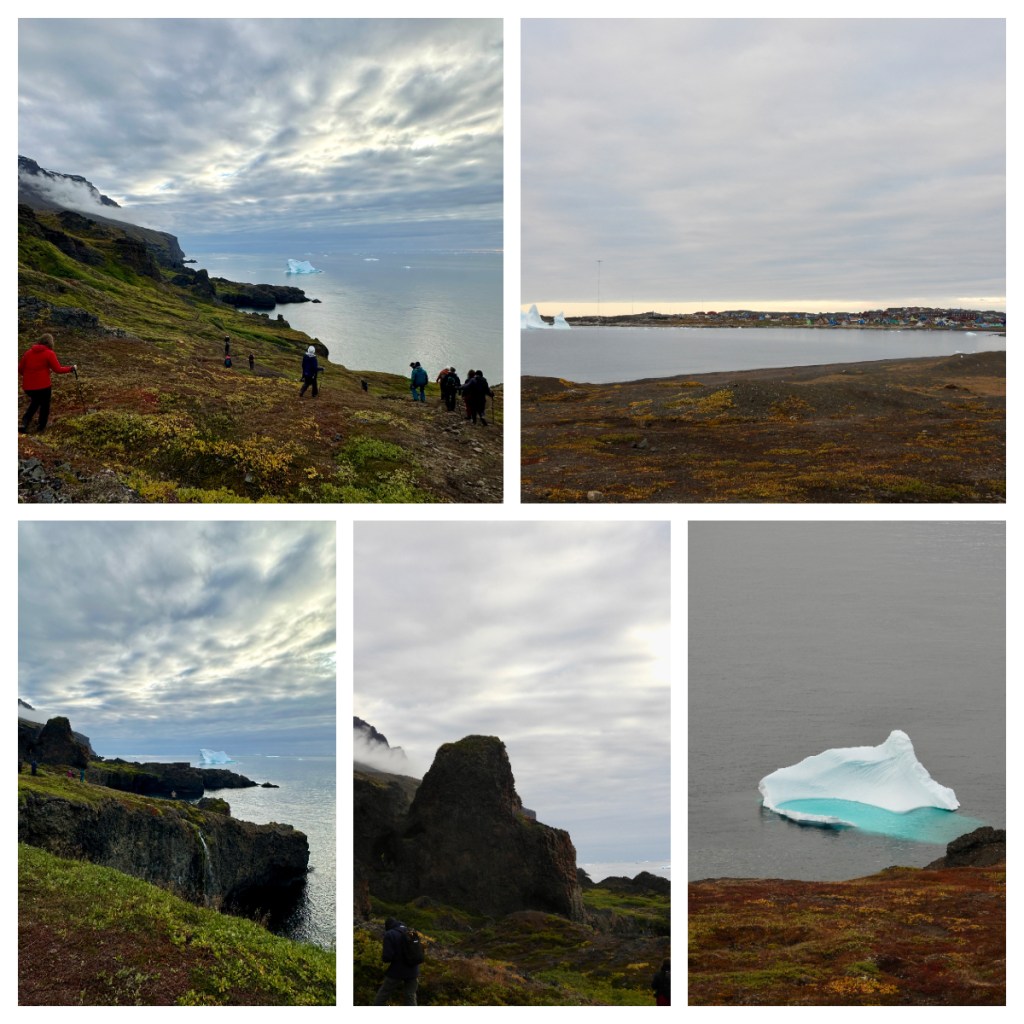
I had chosen to go on the long walk today, and for a change, it was fairly long.  We started by strolling through the small picturesque town and then out the other side, passed what can only be described as one of the coolest, if not the coolest football fields in the world.  Where else could you play a game of football and watch huge icebergs float by, just off the shore.

We then walked across a beautiful plateau and up in amongst the rock formations.  There was only one really steep part, and the rest was relatively easy, but WOW, what views.  From the high balsalt cliffs on one side, to the ocean and large icebergs on the other.  The landscape just blew me away I wished I could have more time.  As it was, I stayed out so long, I did not have time to look around the town and was actually in the last zodiac back to ship.  I must admit, the photos really do not do this place justice!

I decided to have lunch on Deck 8 today so I could enjoy the views of the icebergs as we sailed out of the harbour.  Finally a day where I felt like I earnt my lunch with a 10km walk!  The short journey took us around the side of the island to the area of Kuannit, where we had walked along in the morning. 

I had to wait until 3pm for my turn on the zodiacs this afternoon but it was worth the wait.  The landscape was spectacular as we zipped up the coastline and around (and in one case through) the icebergs.

As mentioned previously, Disko Island was formed differently, geologically speaking, than the rest of the country.   While the rest of Greenland is made up of really ancient rocks (billions of years old), Disko Island is relatively young, at only 60 million years old.  It was formed as the mainland was splitting apart from North America and is more similar to the volcanic rocks of Iceland.

There are lots of visible rock layers, including some red bands that are from lava flows which have become iron filled soil.  Where rock has eroded, basalt columns have been formed and the next lava flows fill in the gaps and cools to form the swirling patterns in the rock we see today.

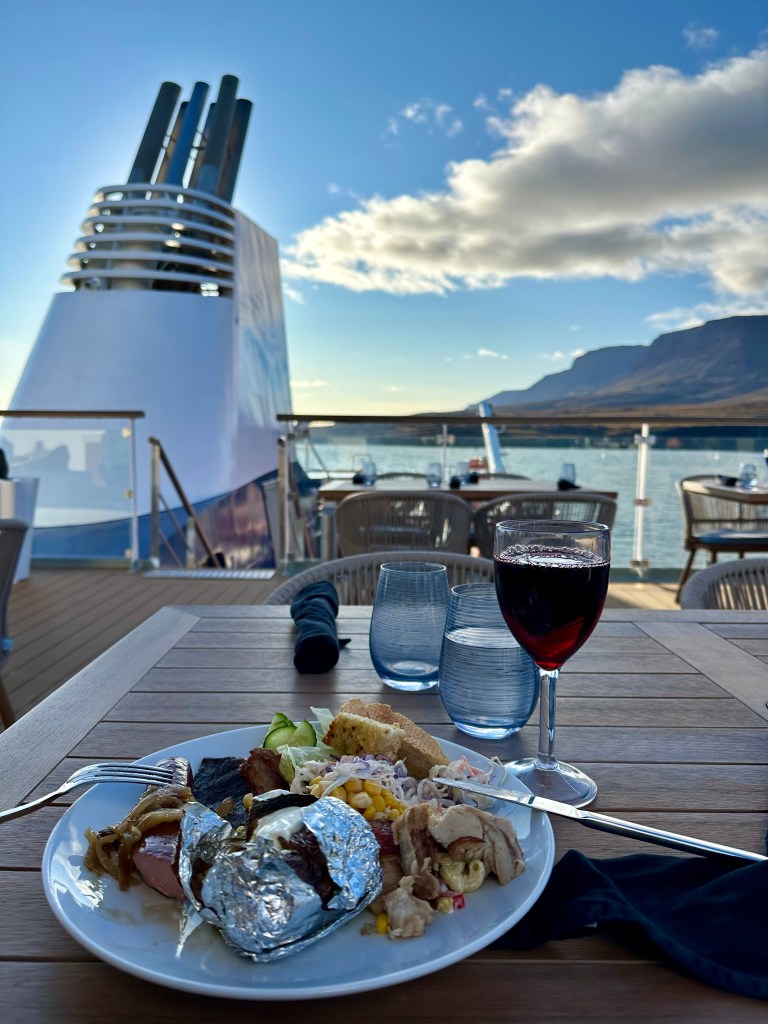
Back on the ship and I wish everyday was like today. To top it off, we had a BBQ dinner with mulled wine on the deck💚.  Greenland was definitely saving its best till last!  But wait, if I thought our day on Disko Island was amazing, the next day was possibly even better!

The next day saw us arrive offshore of Illulissat, 250km north of the Artic Circle, population around 4,500 and known as the Iceberg Capital of the World. In fact Illulissat is the Kalaallisut word for Icebergs!   The Illulissat Icefjord is the source of most icebergs in the North Atlantic and the most likely source of the iceberg that sunk the Titanic!

The Illulissat Icefjord is one of the few places the Greenlandic ice cap reaches the sea and has been on the UNESCO World Heritage List since 2004.   My plan for the day was to see it from the air, land and sea.

The Zodiac to shore was an assault on the senses as we arrived in to the harbour to the aroma of  fish and fat filling the air 🥴.  I am not a fan of the smells from the fish processing plant, but it has been the key industry here for 100’s of years.  Today, Tourism is catching up.

First up on my agenda for the day was a scenic flight over the icefjord and I was picked up, along with my 4 flight companions from the pier and taken out to the airport for our preflight briefing.  I must admit I was kicking myself for not coming out early for a walk around the town before my flight  … I think 10 days on the ship have made me lazy! 

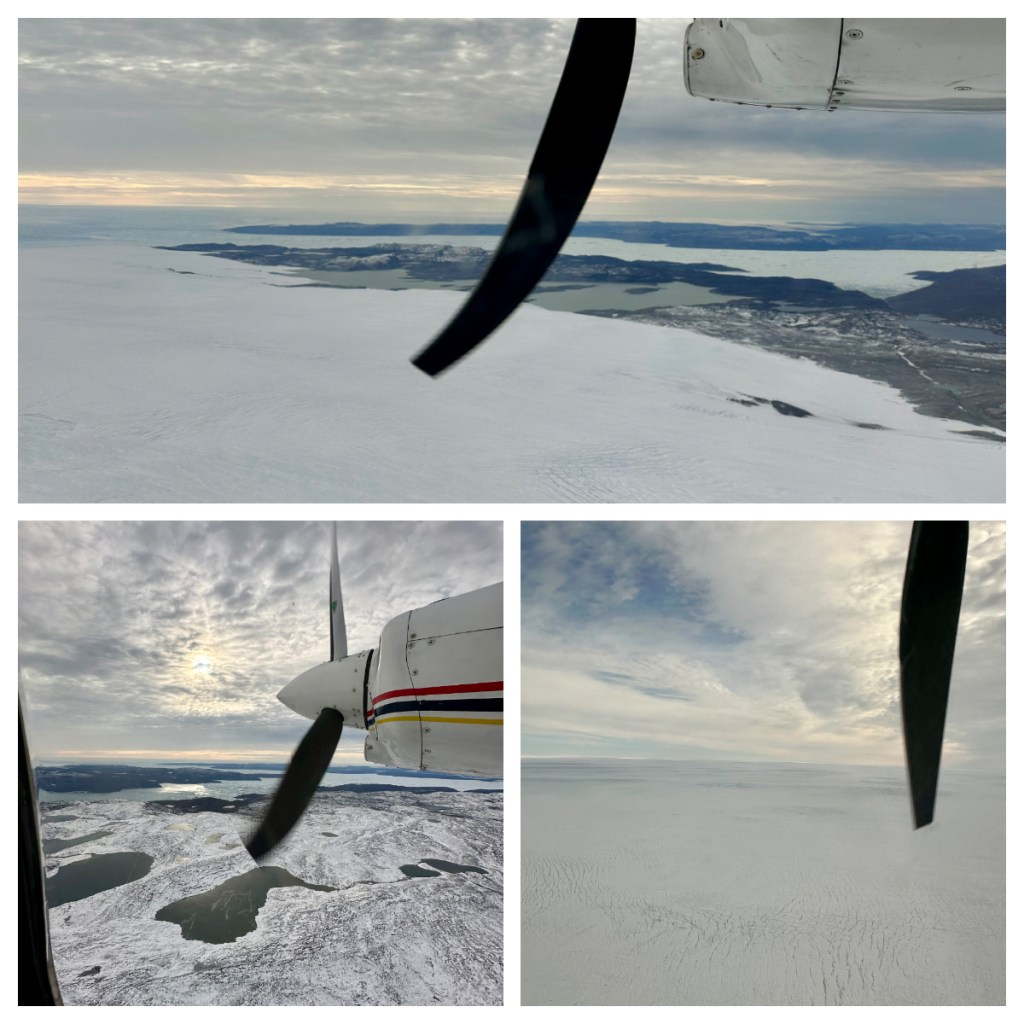
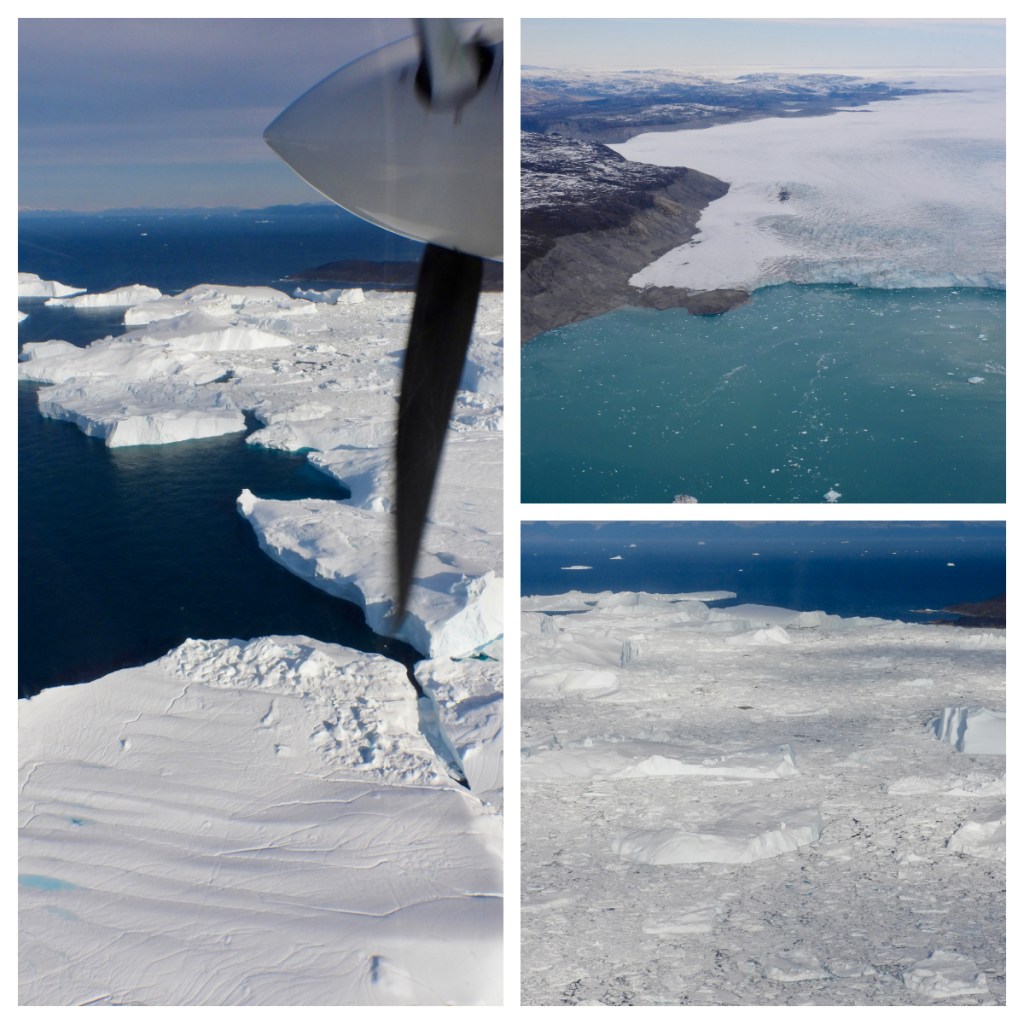
We took off in our AirZafari Vulcanair Partenavia P68 airplane, with only 6 seats (including the pilot), everyone got a window seat, although my view was a little obscured by the propellor which appears in many of my photos lol.  The conditions were great, a little bumpy in the take off but smooth once we got in to the air. 

As we flew out of the airport and over the glaciers, our pilot gave us a few facts:

  • The Icefjord is 75km long from glacier wall to sea
  • It is 17km wide and the most productive glacier in the world

I could not stop taking photos – every time the light changed it was a different kind of beautiful 💚.   The flight was not cheap but it was an amazing way to see the glaciers and fjord full of ice and I have no regrets about splashing out on this.

After our short flight, we were dropped back in to town and I shared a taxi with a couple of my fellow fliers to the Icefjord Centre a short distance out of town.   I had to be back on the ship for 2pm for a boat trip so was a little concerned about being short of time to walk both ways. 

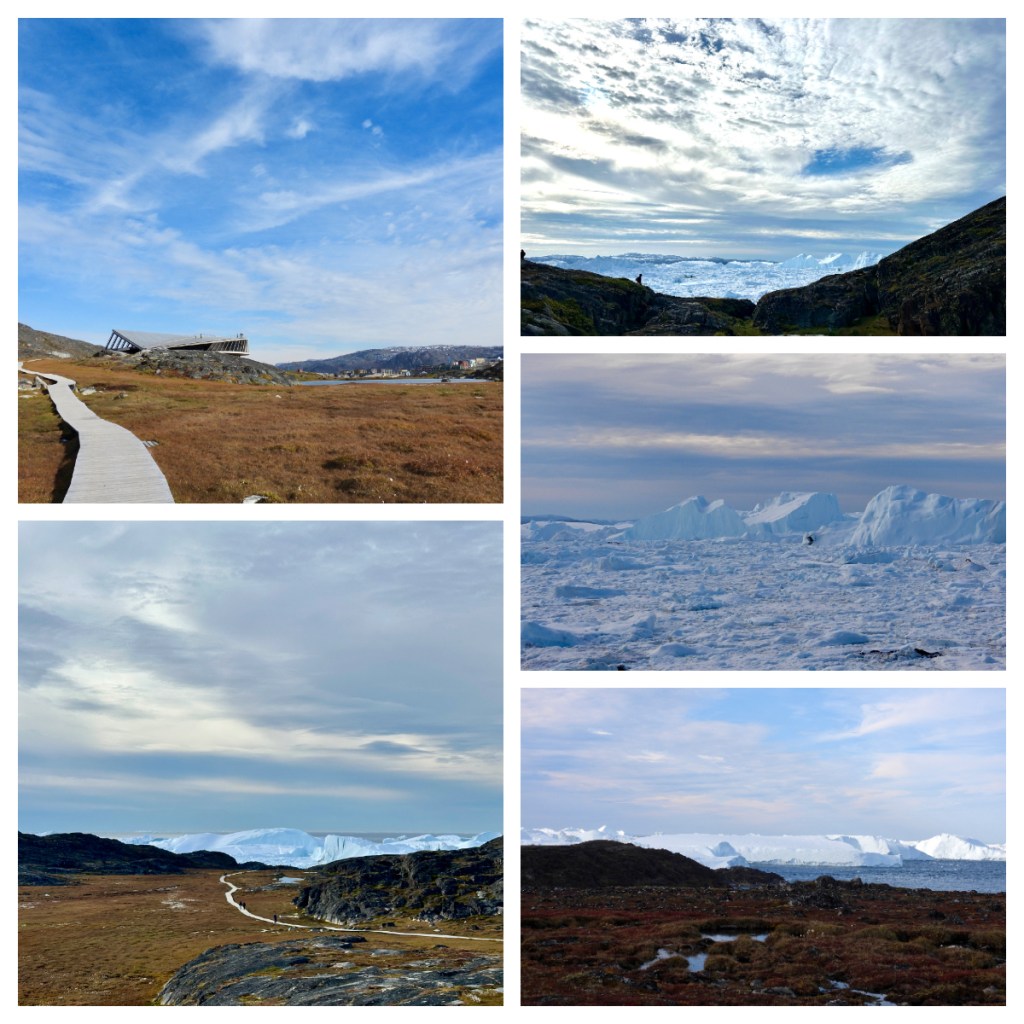
The Icefjord Centre is a stunning building, apparently shaped like a “twisted structure miming the wingspan of a snow owl”.  I am not sure I got that, but it certainly fitted in to the landscape that surrounded it.  Inside, houses an exhibition of the “tale of ice” but as I was limited for time I had to keep on the move. 

A boardwalk weaves it way down towards the sea and the stunning icefjord beyond.  Even from the centre, you can start to see the icebergs floating by, and every step closer just brings more spectacular views. 

As with the flight, I took so many photos as every step gave me a different and equally impressive view.  The whole area was so well managed to protect the local flora while still providing the most amazing viewing opportunities of the towering icebergs.  Here we are seeing the icefjord at the point where it meets the sea and the pilot on the flight this morning had told us that the largest icebergs are so big they get stuck at the mouth of the fjord where it is shallower, and they sit there until they melt a little and can float free.  For this reason, some of the icebergs here are huge!

Unfortunately, as I was still rushing to get back in time for my boat trip, I could not loiter but I was pleased I go as far as I did and I still had a little time to walk down through town back to the pier.

I passed the dog kennels on the outskirts of town.  As with Canada, the working dogs are all kept together in an area outside of town, and it is also a way to keep them away from other breeds of dogs so not to contaminate their bloodline. Given that they are not far from the Icefjord centre, they could be heard load and clear!

Unfortunately, my trifecta of activities failed as I arrived back at the pier to hear that my boat ride had been cancelled due to the wave conditions. A real shame, but I was still thrilled to have seen the icefjord from air and foot.  After to speaking to someone who had been on one of the boat trips that did go out, I was grateful not to go as he told me it was so rough that they could not go outside the small cabin on the boat and people were throwing up!  Back on our stable ship, you would not have guessed it was that bad!

Another amazing day, and as we set sail south our evening briefing was interrupted as we passed the amazing icebergs – no one wanted to sit inside and listen when the views outside were so amazing!  💚

Back to Greenland

Davis Strait and Sisimiut, Greenland

August/September 2024

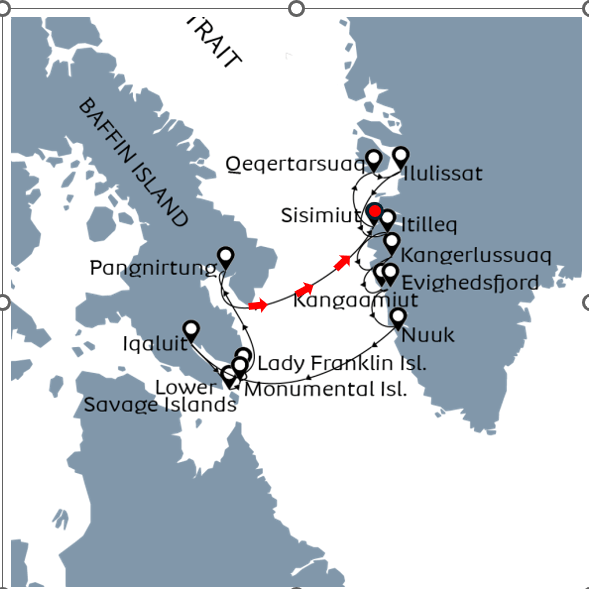
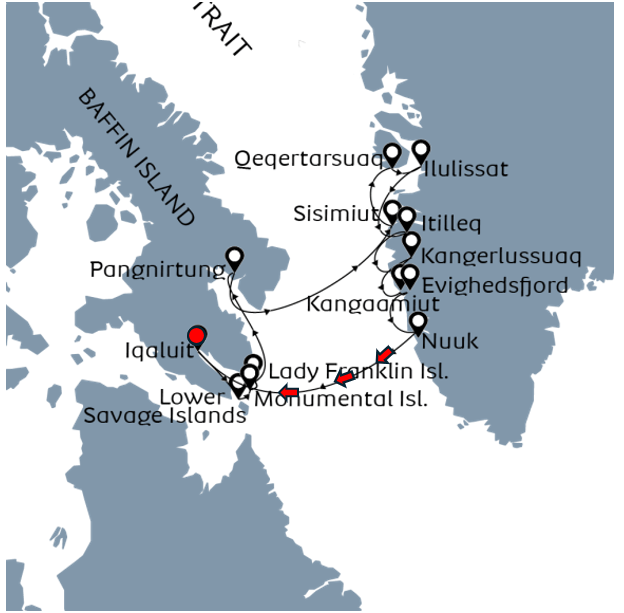
After our day in Pangnirtung, we started our trip back across the sea to Greenland which of course meant time changes again – 1 hour the first night and 2 hours the second.  As there was not much to do on the sea day (thankfully there are only 2 full days at sea on this trip, one of the reasons I chose it) I thought I would do a little ship tour as I watch the icebergs float by in the distance. 

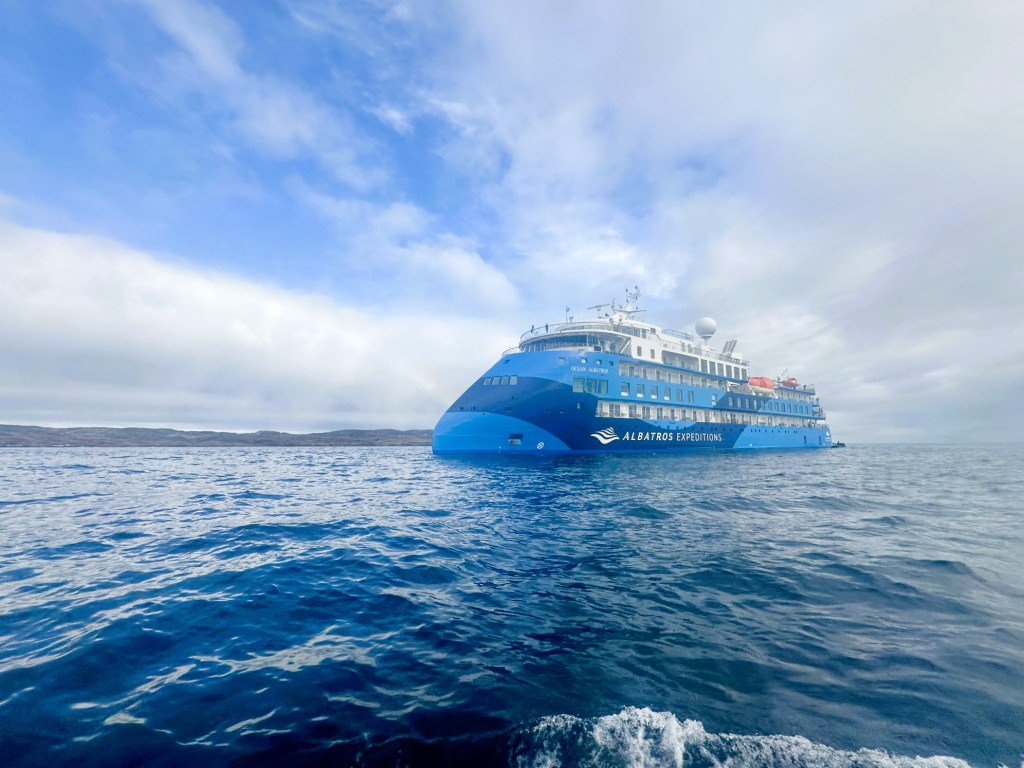
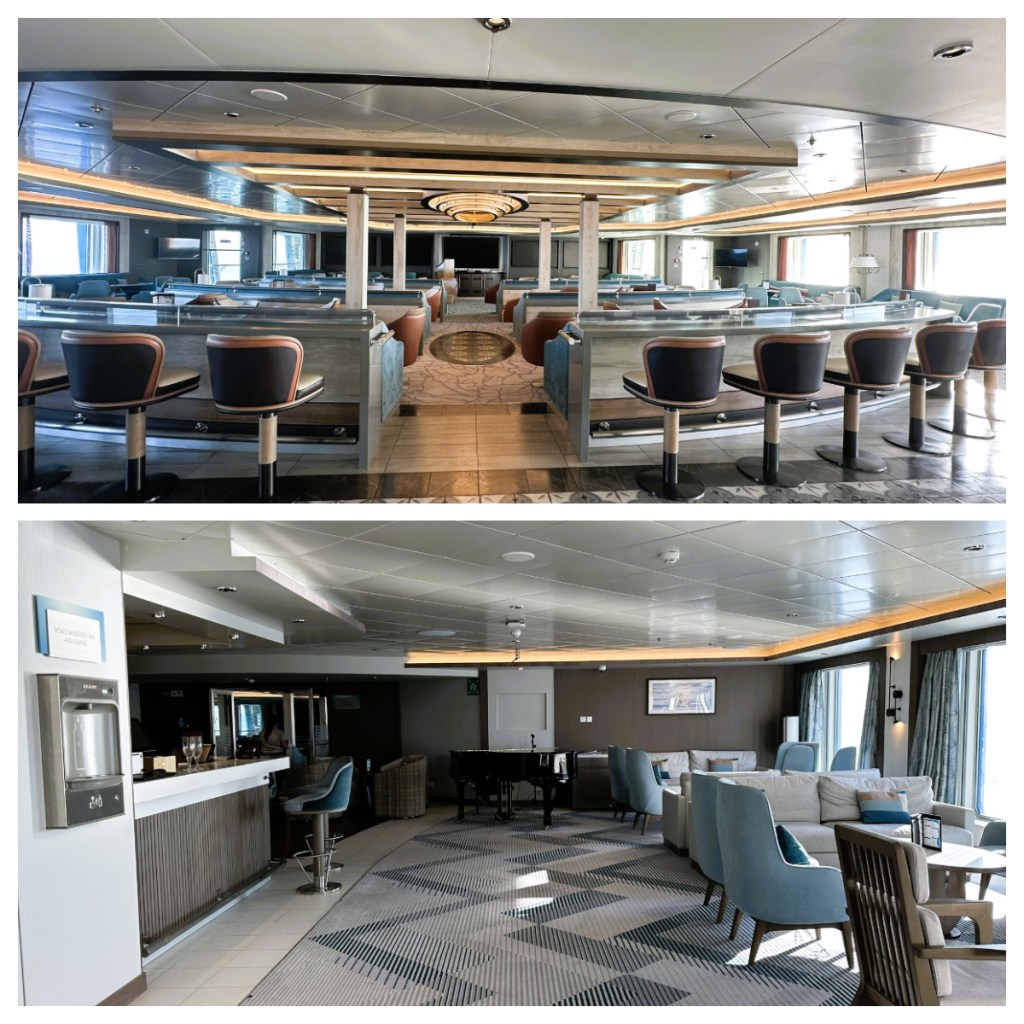
The Ocean Albatros is just over one year old and definitely the nicest expedition ship I have been on.  She is Polar code 6 and Ice class 1A rated ship, with an x-bow Infinity class which apparently provides high stability – I can certain say that although the weather was never particularly bad, sailing was generally very smooth.  She also uses dynamic positioning which means they don’t often need to use an anchor to stay in place, and, she is powered by low energy consumption engines which are designed to reduce emissions. 

My room (one of 94) is great (better than some hotel rooms I have had) and having it to myself is a dream.  I am on level 4 of the 8 story ship.  The mud room is on level 3 – the area where we put on our waterproof gear and life jacket and get in the zodiacs.

Level 5 is the main congregation space with the lecture room, bar, small library, main reception and the restaurant.  A great thing about this ship is that the lectures are broadcast on the TV in the rooms, so if I don’t feel like going to the lecture room, I can still watch them.

Breakfast and lunch are buffets and dinner is ala carte with free wine or beer.  The wait staff are very attentive when it comes to filling up our wine glasses but it is often difficult to get a water refill 🥴.

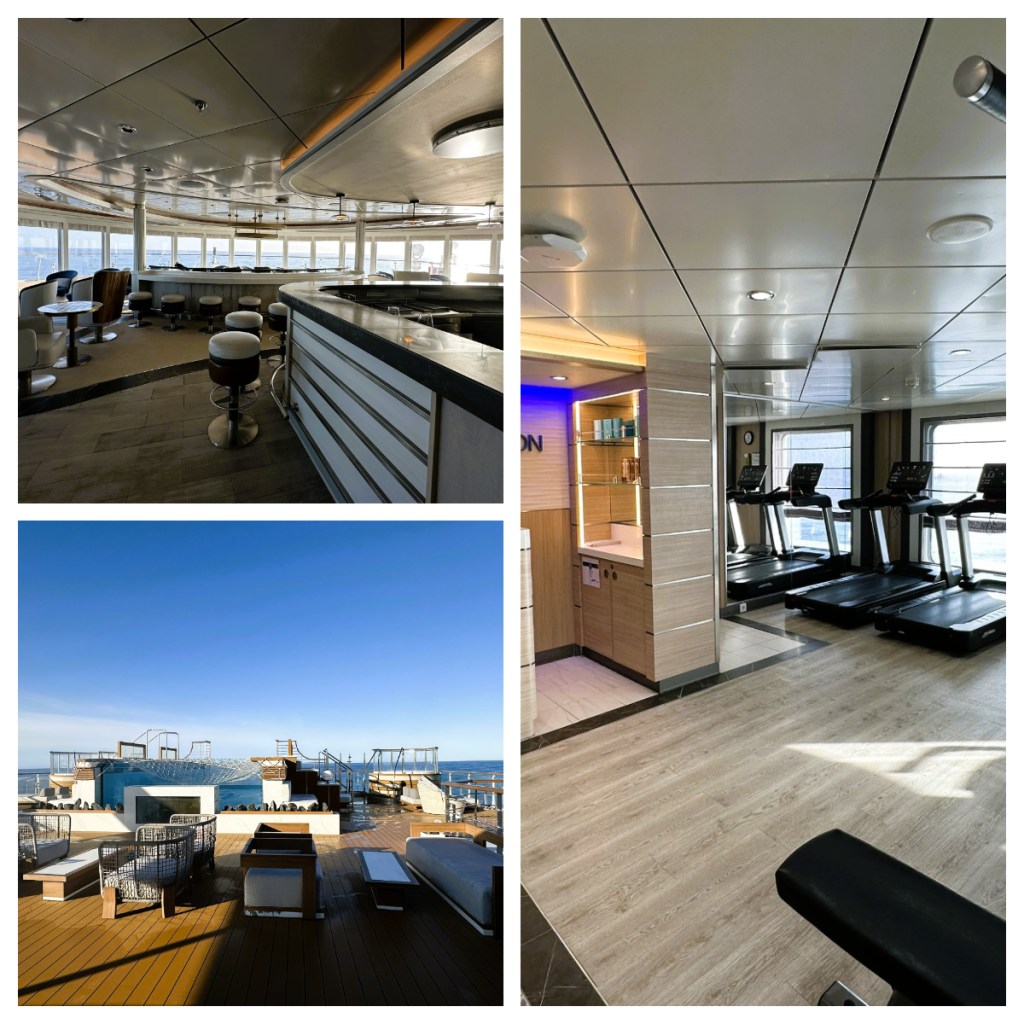
Level 7 has the main outside area, including lots of nice chairs (which are often too wet to sit on lol), a small pool (which has been empty on this trip) and 2 small hot tubs which seem to get used a lot!  This level also has a small gym and a spa – neither of which have used 🤪.

Level 8 has another small restaurant which serves the same buffet breakfast and lunch but without the queue, the observation lounge which is a great place to relax with a view and some more outside deck area.

During today’s voyage we had talks on Whales and Greenlandic hunting.   All of the expedition staff have varied and interesting backgrounds, but one is truly exceptional.  A French man who was a professional action sports athlete (including BASE jumping, ice climbing, paragliding etc) as well as being a commercial helicopter pilot, and then settled in a small Northern Greenlandic village with a Greenlandic wife and for the last 17 years has lived the life of a traditional hunter and fisherman, leading expeditions on the ice cap in his free time.

I learnt that basically, Inuit can hunt anything, including whales and dolphins, polar bear, seal and things that hunting for most in the world is banned.  They use everything, food for humans and dogs, skins used for clothing etc.  All things have quotas etc to manage the populations and much of the hunting must be done traditionally e.g. narwhal can only be killed from a kayak with a harpoon, and it is forbidden or use speedboat. 

For some things like musk ox, there is a lottery to see if you can hunt them that year and the Ministry of Hunting and Fishing set quotas and provide licenses.  Commercial hunters need to complete forms confirming their hunts the previous year to get their license for the next season.   Mostly all hunters respect the rules.

Now I know most of the other people don’t speak the same language as me (pun intended) when they all cheered that we don’t need to go to shore in zodiacs tomorrow – that is my favourite part 🥴!

Back in Greenland, our first stop was the town of Sisimiut, meaning “the people living in a place where there are fox dens”.  With a population of around 5,500, it is the second largest town in Greenland, after Nuuk. 

The area was initial settled around 4,500 years ago, and like much of Greenland, it has seen settlements by the Saqqaq culture, Dorset culture and the Thule people, whom much of today’s people descend from.  As it is Greenland’s northernmost year round ice free port, it is one of the main shipping based for western Greenland. 

I opted to do another walk today and the walk took us to Tele Hill, not surprisingly the site of the telecommunication towers for the town.  (I must admit I did take a couple of photos of the towers to bring back to my colleagues who are currently designing and working on site builds for similar towers in New Zealand lol.)

It was a fairly easy walk and the views back to town were stunning, the water beautifully clear and the route was dotted with historic ruins of house and other buildings, dating back to the 1600’s.  I must admit you did have to use some imagination to see the footprints of some of them. 🥴 Thankfully there were good interpretation panels dotted around the sites, helping with the identification.

Near the telecom towers, the visible rock piles are unexamined graves – because they are unexamined, it is impossible to know just how old they are, but they are considered to be later than the likely Saqqaq culture settlement that dates back to 2300-1200BC which was also on the site.   

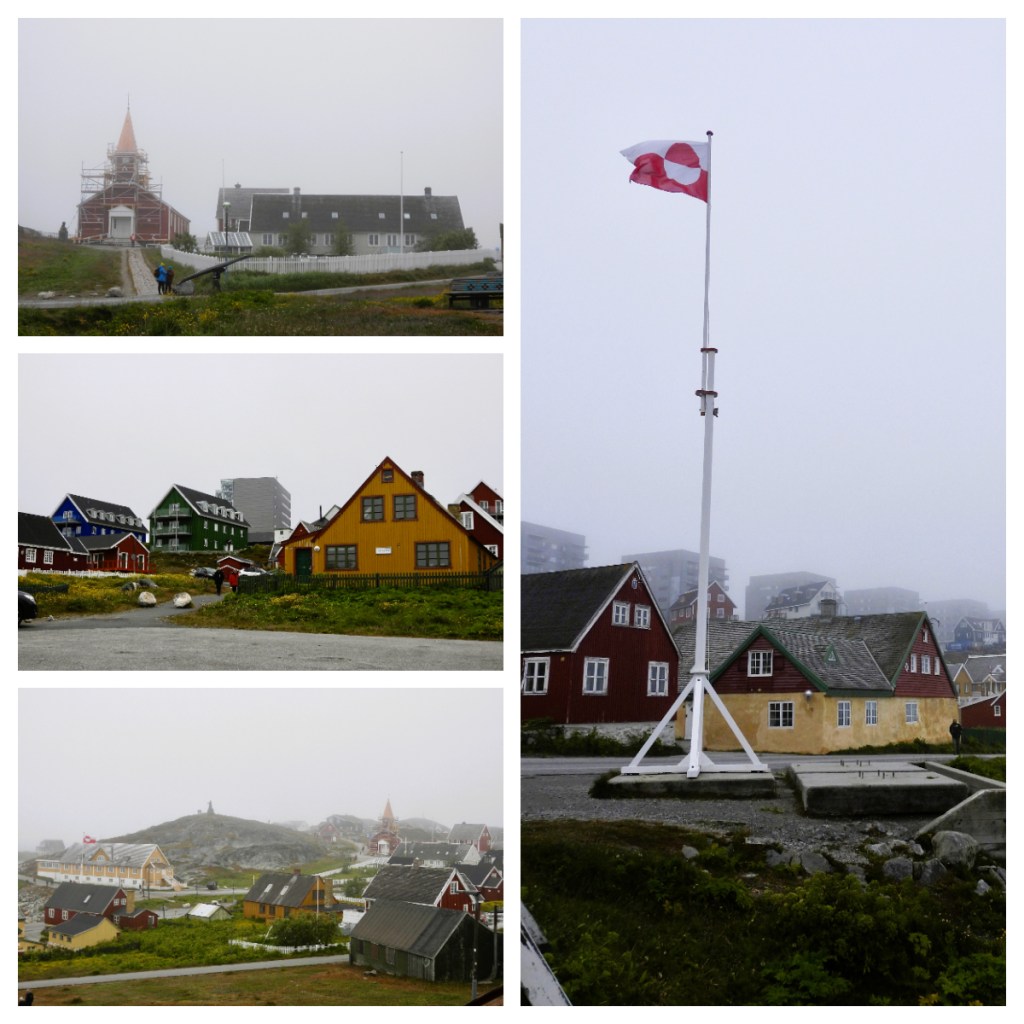
As we wandered back towards town, we learnt about the historic use of colours that are part of the traditional Greenlandic towns. Yellow indicated a doctor’s house or a hospital.  Red is reserved for big churches, museums, schools and other cultural centres.  Blue was for fisherman and black for prisons and police stations.  These are not so strictly adhered to today and sometimes houses are painted in the colour of paint that came on the last ship!

Despite saying above that church’s are red, Sisimiut has a blue church (although it does have a red roof) – the Bethel Church.  Built in 1775, it is built on rock so as not to sink into the permafrost (a never ending problem) and is the oldest church in the country. 

After a lovely morning walk, I headed back to the ship for lunch before heading out again, this time to the town where I found a lovely little café with good internet.  I enjoyed a half decent coffee whilst catching up from news from around the world, but I passed on the minke whale in soy sauce the café also sold! 🥴

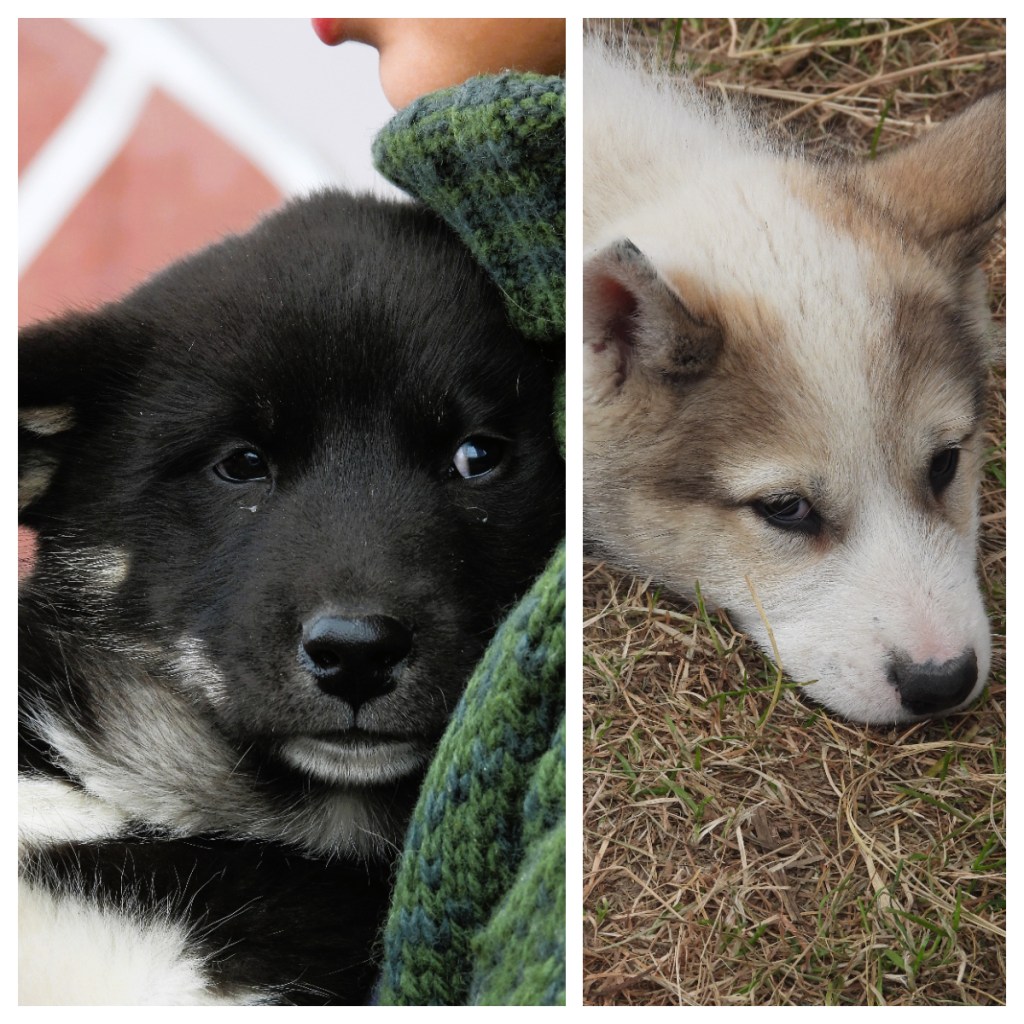
It was then my groups turn to enjoy some of the activities the town had put on for us.  One of the most popular was the Greenlandic sled dog puppies or Kalaallit Qimmia. A large breed of huskie that is a national icon and important part of the Greenland identity.  The breed are descendants of dogs brought to Greenland by the immigrating Inuits and even today, provide an important role in the life of Greenlanders.  And let’s be honest, all puppies are adorable!

Couple of fun facts about Greenlandic Sled dogs …  Firstly, they have a double coat which consists of a dense undercoat and a rough outer coat which provides the insulation needed to live in the Artic (where temperatures can drop to below -50C).  And secondly, they are known for their stamina and strength and they can travel for long distances without tiring.  Apparently, they are the only animal that outrun humans over long distances because of they way they burn protein without glycogen/carbs!

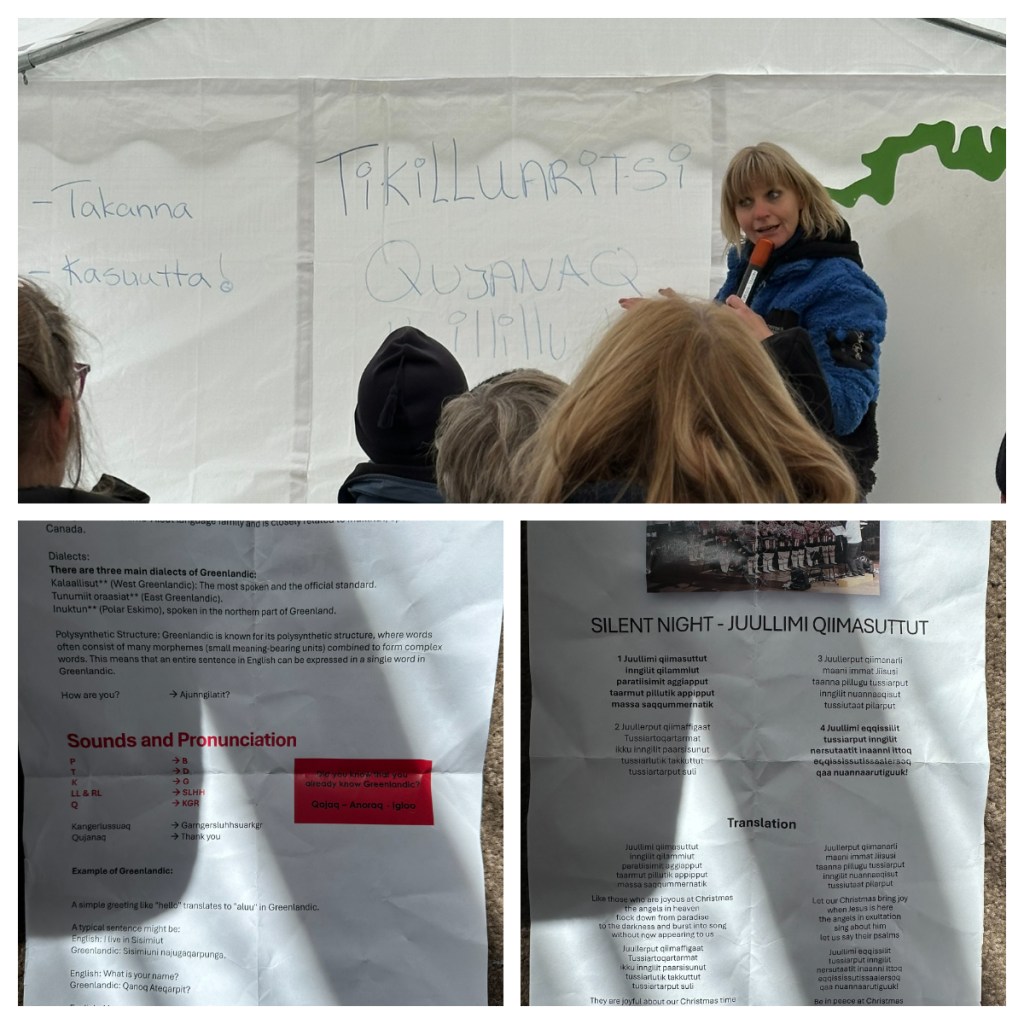
Next was an introduction to the Greenlandic language – which proved to be a major challenge for me but it was really interesting and the ‘teacher’ made it fun.  Greenlandic is similar to all Artic and Inuit languages and for a long time it was only an oral language until missionaries wrote it down (in particularly for bible translations). 

Some Greenlandic words are very long, and one word actually forms an entire sentence e.g the Greenlandic word for harbour, literally translates to “place where the skin boats are”.  Did you know we used some Greenlandic words (perhaps the same in other Inuit languages) in English.  Kayak, Igloo and Anorak are three that have Greenlandic origins.

A few of the other challenging ‘basics’ of the language are; all t’s are pronounced d’s, k = g and rl and ll have a sound I can not say or spell 🤣🥴.  To round off our lesson we have to sing a song (it was to the tune of Silent Night) in Greenlandic – no sure we were particularly successful lol but it was fun.

Next up was authentic local food tasting and not surprisingly I did not try much. Unadventurous maybe, but I don’t like fish at the best of times so I can’t see that raw whale is going to work for me (I know not technical fish).  Delights included Cod (dried and flaked), mattak (raw whale skin and blubber), raw seal, Capelin (a local fish that looks like a little sardine served whole), dried whale and the famous Greenlandic shrimp (a deep-sea shrimp, or prawn depending on who you talk to, is a huge export via Royal Greenland).  I did succumb and tried the dry whale, it tasted like a very fatty biltong.  The kind of fat that you just can not get out of your mouth 🥴.

Back on the ship, we were treated to a demonstration of kayaking by a Greenlandic kayak champion.  He was rolling under water and paddling upside down🤣.  He must have been freezing but I guess he is used to it as these are the skills kids learn to keep them safe when hunting and fishing from kayaks.

Today I chatted to some new people on the hike.  I noticed an Australian accent for the first time –  turns out he has been living in Sweden for 50 years so it is probably just the first time I have heard him speak English.  I also chatted with a lovely Danish lady named Greta.  He husband apparently has Covid and they have both been isolating in their cabin.  She has now been allowed out but her husband is still unwell and confined 🥴! It was a win for me as I really enjoyed our conversation.

Across the Davis Strait to Canada & a day in Iqaluit

Canada, August 2024

We all know how much I love a sunrise so I was pleased to be up just in time for it this morning. The time difference across the sea is 3 hours. So, to even that out, we put the on-ship clocks back two hour last night and a further one hour tonight. 

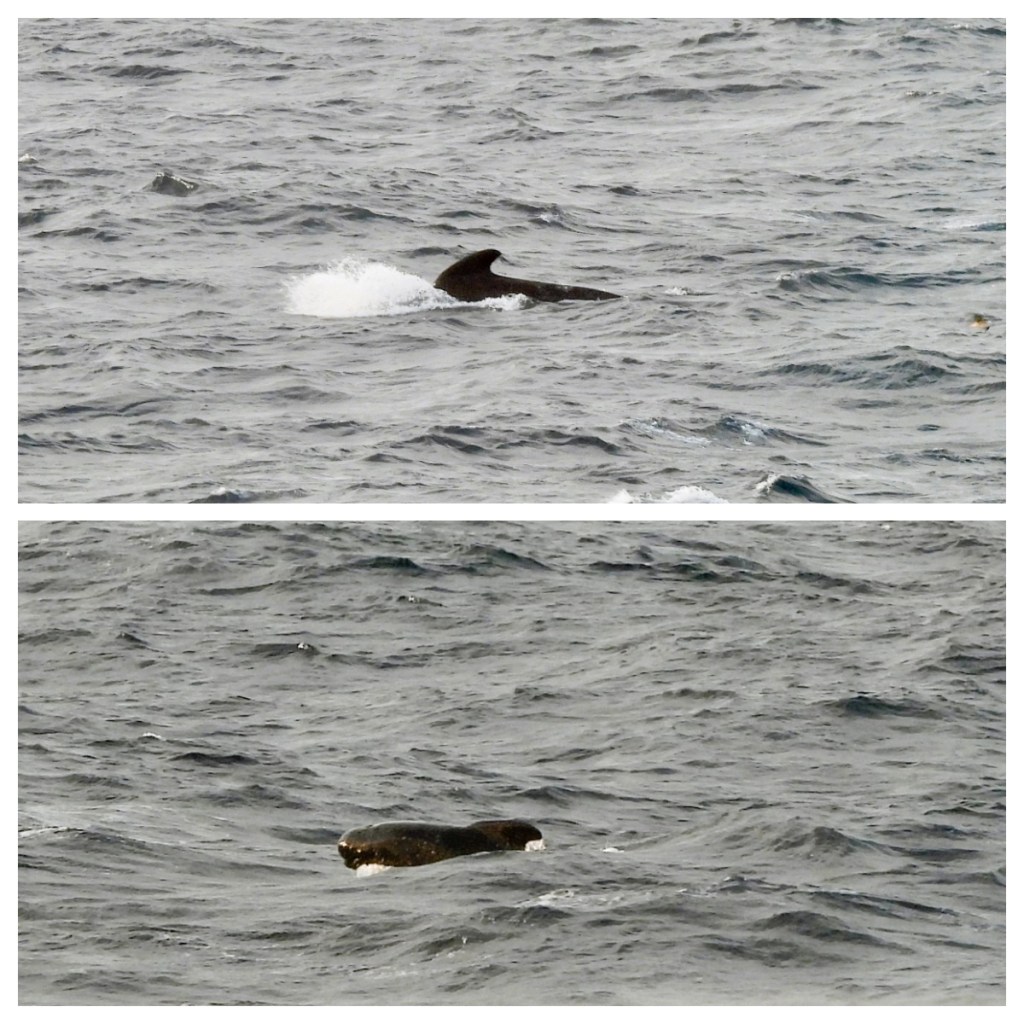
Clearly, last night was not the right time to skip dinner (which I had done because I had eaten so much during the day lol), as I was wide awake and starving early and there is no food to be had until what my body thinks is 9.30am 🥴 not even a biscuit in sight.   Thankfully a pod of long finned pilot whales swam by to distract me a little 👍🏻.  Whale sightings are always a great way to start the day. 

As we crossed into Canadian waters we have a talk about seabirds.  I must admit I was surprised by the lack of bird life so far.  I am sure I remember in the Sothern Ocean, always being surrounded by large flocks of sea birds but here not so much.  Despite that, I did spend some time on deck trying to take some bird photos and surprisingly got a photo of another whale. 😂.  Not a good photo and it was hard to get an ID but possibly a Sei whale.   I did also get a couple of half decent shots of the Northern Fulmars, who seem to be the most common birds we are seeing around the ship.

Being at sea meant a pretty relaxed day, and I think the jet lag was finally catching up with me so I took the opportunity to get some extra sleep but as the day wore on I had to head back up to the top deck to watch the big iceberg’s floating by on the generally calm seas.  One of the icebergs had a large flock on kittywakes (I think) roosting on it which helped to give some perspective to just how large these icebergs are!

In the afternoon we had a talk on human migration in the region.  An incredibly complex topic and one which I am not sure I fully understand, or could give any justice to here, but in a nutshell … many different Inuit people arrived at different times over the last 4,500 years and from different directions.  They had various levels of success, the most successful seemed to be the Thule people who had bows and arrows for hunting, and were already using kayaks and dog sleds. They also used iron, some of which was sources from a meteorite which was found in the north of the Greenland.

Then came the Norse (basically Vikings) lead by Eric the Red in 982AD, a convicted murderer who had been banished from Iceland.  Apparently, he is responsible for the name Greenland, thinking it would attract people to move from Iceland.  They established two settlements and stayed around until the 1500s when another ice age meant they could no longer farm so had to move on.

The Dane’s arrived in south western Greenland in 1721, setting up seasonal trading posts and churches to convert the local Inuits.  Today, despite being the ‘ruling’ country, Danes only make up 11% of the population, and only a similar amount speak Danish as a first or only language.  Most of the Dane’s are in administration roles or are teachers/professors or skilled tradesmen.

I rounded off the day with some very cool icebergs and, just to top it off, a sperm whale 🐋.  I must admit I was pretty pleased with my whale count for the day 👍🏻.

Despite arriving in Canadian waters yesterday morning, it was this morning we had to do the formalities once we arrived near Iqaluit (means Place of Many Fish) – a community in Nunavut, in the Canadian arctic.

We had had another hour time change the night before so of course I was wide awake way to early again. I did get to enjoy an impressive thunder storm as we sailed towards the town, though we had little to no visibility due to the persistent rain and low cloud.
Nunavut (means Our Land), is Canada’s newest and largest territory, covering more the 1/5th of Canada’s land mass.  It is made up of lots of islands and has a population of only 37,000 people.  Apparently, there are 25 x more Caribou than there are people in the territory 😂 which is mostly ice cap and arctic tundra.  And the area has very little rainfall so it seems that joke is on us, as my hike that had been planned for the day had to be cancelled due to the rain!

85% of the area’s population are indigenous (mostly Inuit) and there are four official languages – English, French, Inuktitut, and Inuinnaqtun.  All signs have 4 languages on them and all officials have to speak all four!  Interesting the written language for Inuktitut was developed by a missionary for the Cree language and it was adopted by the Inuit’s for the Canadian Inuktitut language.

We were not allowed to take any food off the boat, and, we had been advised not to buy things in the shops here as stocks in the town are very limited, so before departing the ship, we had 2 breakfasts!  The first at 6.30am and the second at 9.30am!  Unfortunately, it was closer to midday when Canadian entry requirements were finished and we were finally allowed off the ship.

Fun facts, Baffin Island is the 5th largest island in the world, and … Iqaluit has the second highest tide in the world (technically related to the highest tide variation in the world in the Bay of Fundy).  A variation from low to high tide of 12 metres!!

The sea was relatively calm for our 3km zodiac ride to the shore but it was raining so we were fully kitted up in wet weather gear including gum boots for the first time.  On the shore, we had a wet landing (meaning we had to get off the zodiac into the sea and then wade up) and we then boarded the old Canadian school buses for the tour.

Instead of the hike, I went on a so-called ‘cultural’ tour and the guide on my bus was a French Canadian called Benoit, who has lived in the town for 10 years.   He seemed very connected with the area and it’s people despite being a Kablunaat (or foreigner). Now I am going to preface the rest of what I write on this visit to say that Benoit was FULL of stories.  Stories that jumped from polar bears swimming to Greenland, to stories of things he has done e.g. cycling through Russia in the winter, teaching local children to ski, building a hut, working as polar bear protection on radar stations etc.  I think many of these stories needed to be taken with a little scepticism. True or not, he was incredibly excited and enthusiastic about everything he told us. 

Inuits have lived in this area for over 4,000 years, but the town of Iqaluit started life as a base for the Hudson Bay Trading Company called Frobisher Bay before being expanded by the US during the Second World War as a refuelling station of their planes.  It was renamed as Iqaluit in 1987 and despite it being a somewhat modern ‘city’ it doesn’t work!  Important infrastructure like roads, water and sewage all break in the weather conditions and permafrost.  I can certainly voucher for the quality, or lack there of, of the roads! 

Not only does not much work, but it is also very expensive to live here.  It costs around C$5,000 a month to rent an apartment so many apartments have multiple families living in them. And not surprisingly, day to day items are 2 or 3 times the price they would be in the rest of the country.

After the war, the Hudson Bay Company moved in to the neighbouring valley of Apex.  They were Canada’s biggest company and at that time, they ‘owned’ 75% of the territory.  The company was incorporated in England in 1670, and were soon a leading company in the fur trade and this continued for over two centuries.  Even in the 20th century they remained one of the largest fur trading and fur merchandising companies in the world and they did not drop out until 1991!. Today, the company still exists as a large conglomerate involved in real estate, merchandising, owners of large department stores and natural resources.

This commerce and development drew the local Inuits, who moved to the town for services such as hospitals, education and of course the hope of work.  The population today is around 8,000, and according to Benoit, there are 5 types of people living here:  Misinformed, Missionaries, Mercenaries, Misfits and Manhunters 😯.  In reality, the Inuits are the more permanent residents, with the rest only normally stay for a few years.

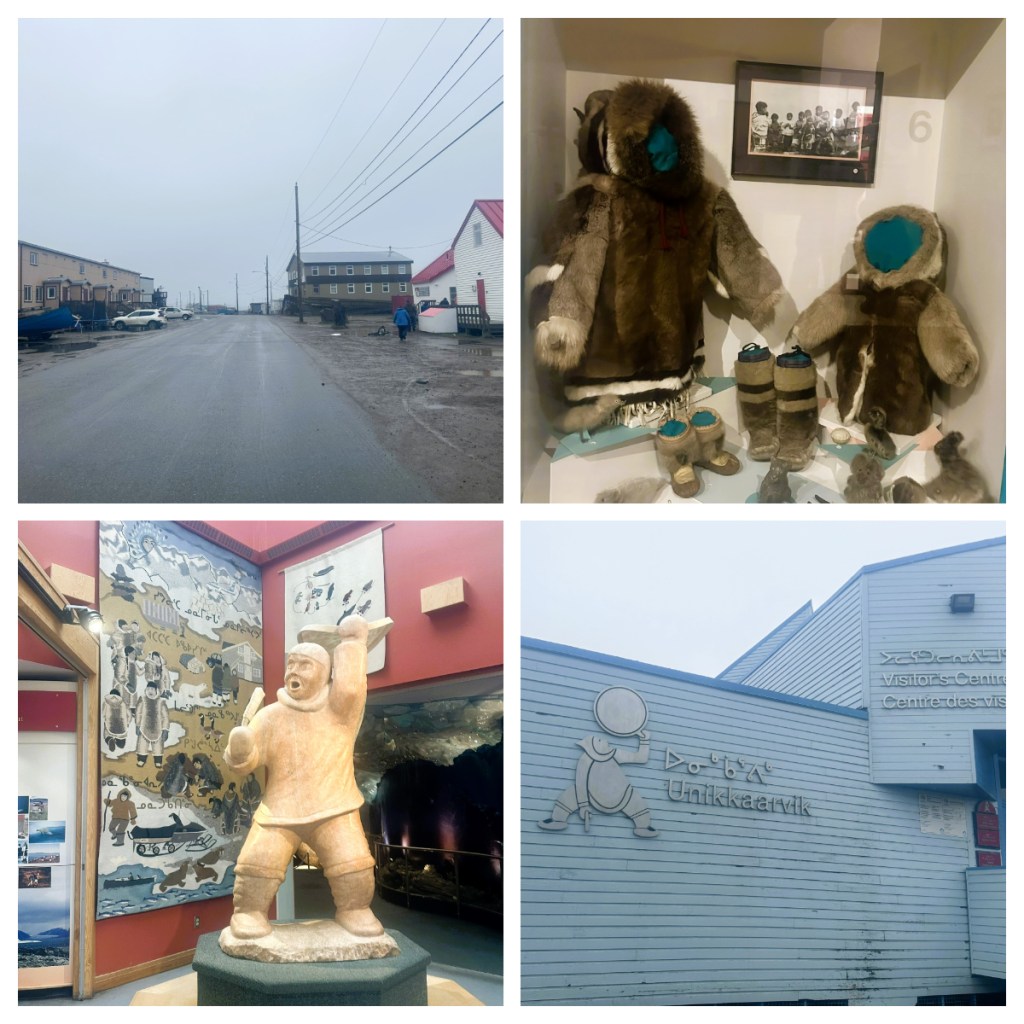
We started our ‘cultural’ tour with a short time to look around the museum and visitors centre.  The guys working in the visitors centre were so excited that I was visiting from New Zealand 😀 but unfortunate there is not much I can buy in the way of souvenirs so far as most things are made out of seal fur or reindeer antler which could be problematic when it comes to going home.

The low cloud and constant rain probably did not help with my view of the town, but it was really depressing!  Muddy, potholed roads, lots of rubbish in the streets.  Apparently, much of the rubbish is brought in by the construction companies, which is then just left behind when they leave!  The mayor has started an initiative this year to make the city more beautiful and I do hope they are successful. 

It was hard to see much as we drove around the town in the bus as it was still raining and now the bus windows were fogging up due to all the moisture inside (that moisture being us 😂).  We did manage to spot St Jude’s Cathedral, built in 1972 and often just referred to as “the Igloo” (due to it’s giant igloo shaped dome) and an Elementary school that looks like a two story ice block!. 

We drove out of the town and up to a view point, of course with no view.  The site was an old military base, much of which has been removed now and an existing long range radar, one of many that are around the country. The Artic tundra is barren – oh so barren.   But, when you took a minute to look at the ground in more detail the small plants and mosses are actually quite colourful.

Back down through the town to a beach, we passed an old Hudson Bay building in what appears now to be the ‘suburb’ of Apex.  From here we had to stop at the first traffic light in the Artic to get across a one lane bridge before making our way to Sylvia Grinnell National Park, were we were supposed to have our walk (the rain really had not stopped so probably not a bad thing not to be walking!).  We quickly walked up to the viewpoint over the river where a couple of locals were fishing for Char, the main local catch, apparently it is like Salmon but better!

Our final stop was to see the Baffin huskies.  Being working dogs, they are not kept in people’s houses, but are all keep in one area on the outskirts of town. Apparently, this breed of dog are strong and not particularly fast but they work well together to pull sleds in the winter.

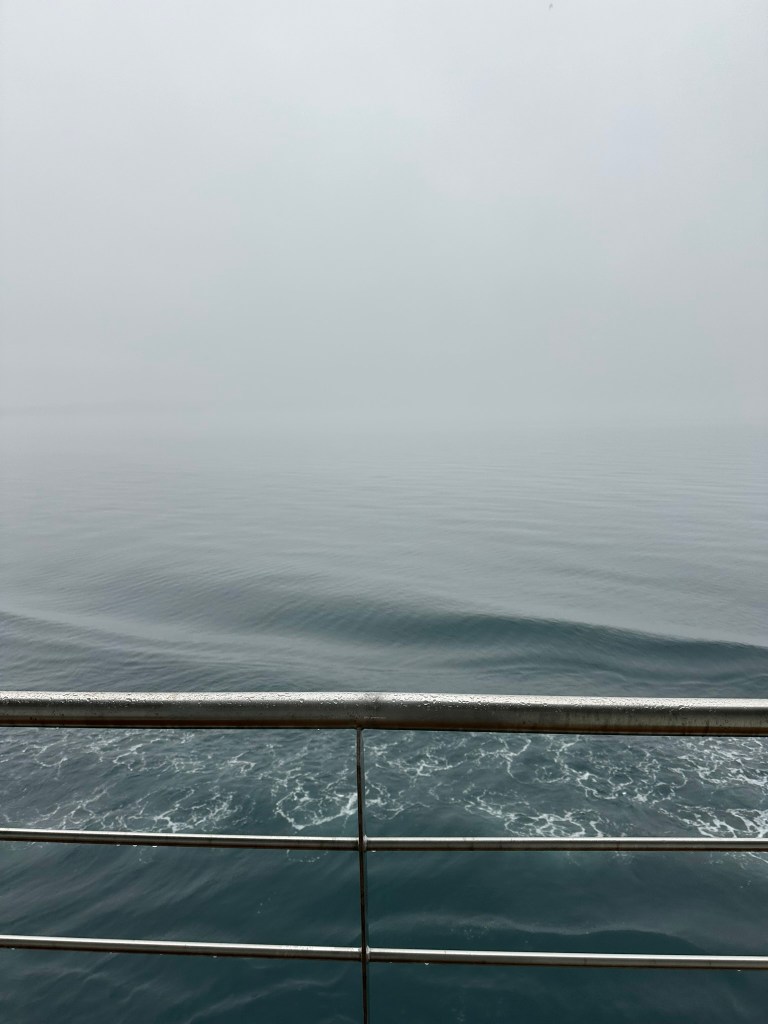
We headed back to the ship in the mist, just in time to have some afternoon tea.  The tour was not my first choice of activities for the day and it was unexpectedly bazaar, but rather wonderful in its oddness 😂.  They weather really did not clear all day but the ocean was so calm and looked beautiful through the mist.

Nuuk ( the Greenlandic capital) and Kangaamiut

August 2024

Greenland

We had set off sailing whilst having our briefing last night to travel over 300Km south to Nuuk and I managed to have a decent nights sleep in my comfortable room, lulled by the gentle rocking of the ship.

As always on these trips, the food is pretty good and the buffet breakfast in this case did not disappoint.  I ended up sitting with a number of the expedition crew who all seemed very nice – it was cute to see how excited they all were that there were strawberries at the buffet!

Today’s schedule started with ship admin – briefings about zodiacs, gumboot fitting in the mudroom and meeting some of the ship staff and expedition crew.  Apparently, there are 174 passengers and almost 100 staff (not including the sailors) so not a bad ratio! They were also from all over the world including the Philippines, Jamaica, Nicaragua, Argentina, Columbia, Mauritius, Spain, Luxembourg, Germany ….

There was a very low cloud as we sailed into Nuuk so we could hardly see any of the approach and a balmy 6 C on shore for our visit.  Thankfully the cloud lifted a little during our visit so I did manage to get a few decent photos. 

Nuuk is the capital of Greenland, the world’s most northerly capital, and has a population of 19,000.  There is evidence of Inuit cultures living in the area since at least 2200BC, and in around 980,, Norse colonists from Iceland settled in what they called the Western Settlement. They thrived here for a few hundred years before disappearing into history before Danish missionaries ‘re-discovered’ the country in the 1700’s.   It is still clearly growing, as there is a lot of construction going on, much of this is in anticipation of the new airport opening later in the year.

Being the capital, we docked in the small port and were able to walk off the ship (this is not a very common occurrence in expedition cruising).  We then jumped on a bus where we were taken up the hill and dropped on in the centre of town.  From here we could explore at our leisure and either wait for the bus to return at 5.30pm, or make our own way back to the ship.

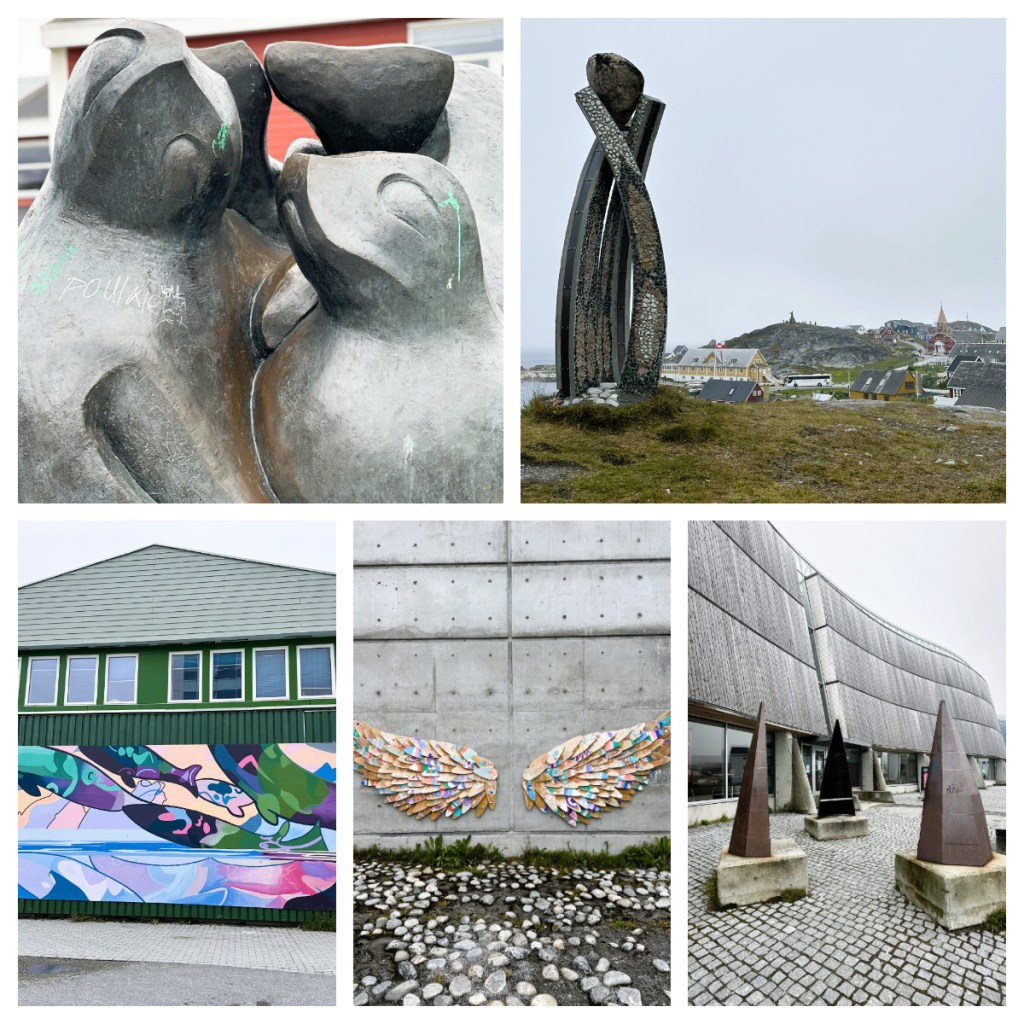
Not having done much research on things to see in Nuuk, I set off to wander aimlessly around town.  I spotted some of the street art and wandered down the hill to find the ‘famous’ red church – which was covered in scaffolding.  I then walked along to a view point but with the low cloud there was no view, and I then found the statue of the “mother of the sea” but as it was high tide, she was half underwater 😂.  I am definitely making this all sound far worse that it actually was!

Let me take you back a little.  The ‘red church’ is actually Nuuk Cathedral – .  A wooden Lutheran church  built in 1849 and it became the Cathedral of Greenland in 1993.  It is one of the main landmarks of the city which is overlooked by a monument of Hans Egede, the Danish-Norwegians missionary who ‘founded’ the city (after Inuits had lived there for 2000 years)!

The ‘Mother of the Sea’ statue is based on the famous Greenlandic legend of the same name and sits just off the shore of the city.  As the legend goes, the Mother of the Sea was bothered by the Inuits’ evil deeds at the settlement and as a punishment gathered all the animals the Inuits used to hunt in her fiery hair at the bottom of the sea.

A blind man combed her hair and tidied up until the animals came back to life!  The moral of the story being is that people shouldn’t be greedy and so obey societies customs.

The cloud finally lifted a little and I got some nice views of the colourful houses around the city, contrasted with the newer apartment block style houses.  

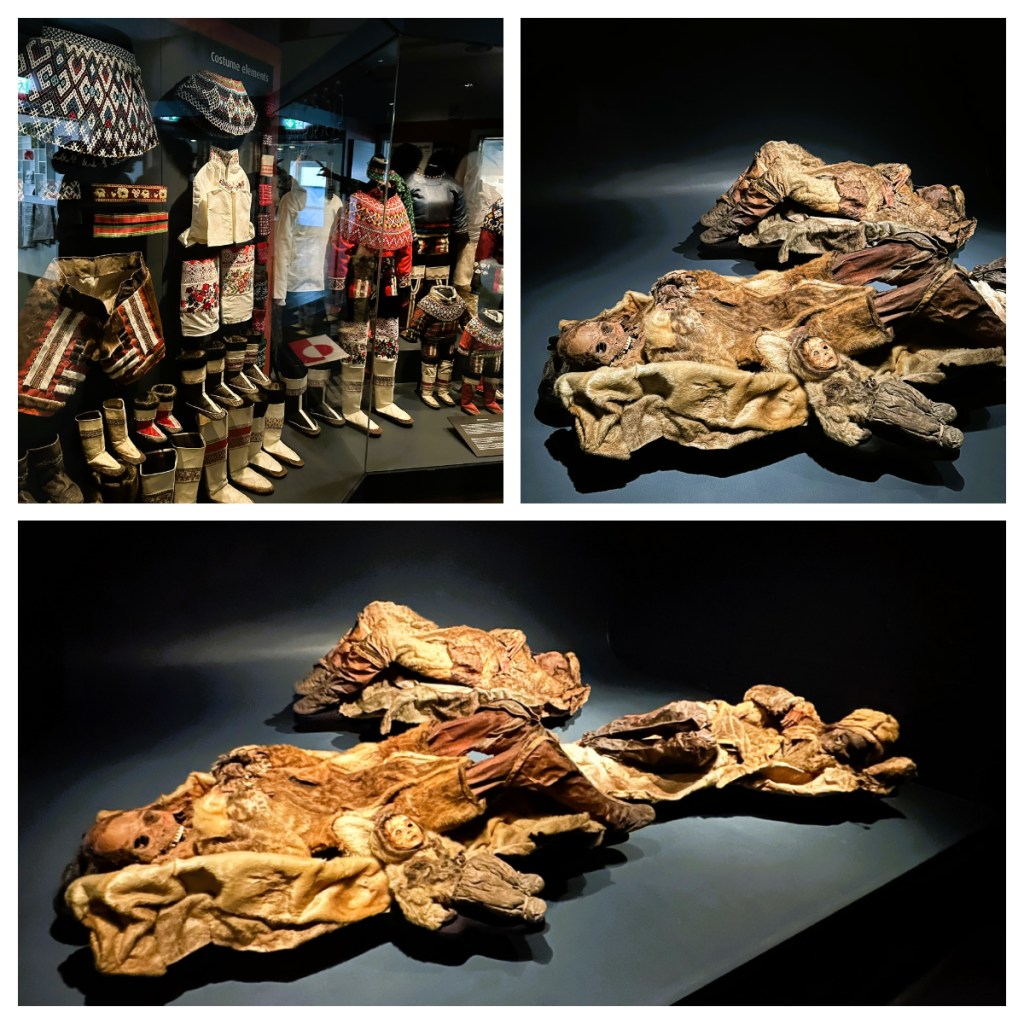
The Greenland National Museum in Nuuk is a must see.  It has been part of a repatriation programme, returning 1000’s of items that Danish explorers have taken over the years. It has some great displays on the history and cultures of Greenland and their most important display is the freeze dried Qilakitsoq Mummies.  They were thought to have been buried around 1475 and the 8 people buried showed strong familial ties.  Little is known about what they died of but it is assumed they all died at the same time.  That said, the bodies are so well preserved, they could identify tattoos on their skin and what their last meal consisted of!

As I wandered around the city, it seemed somewhat devoid of locals.  Perhaps because it was Saturday?  Perhaps because the weather was not great?  Perhaps because they were all at home being ‘hygee’? 😝 A brief internet search informed me that I must enjoy a decadent drink at a café called Pascucci – I chose a hot chocolate, and the decadence did not disappoint.

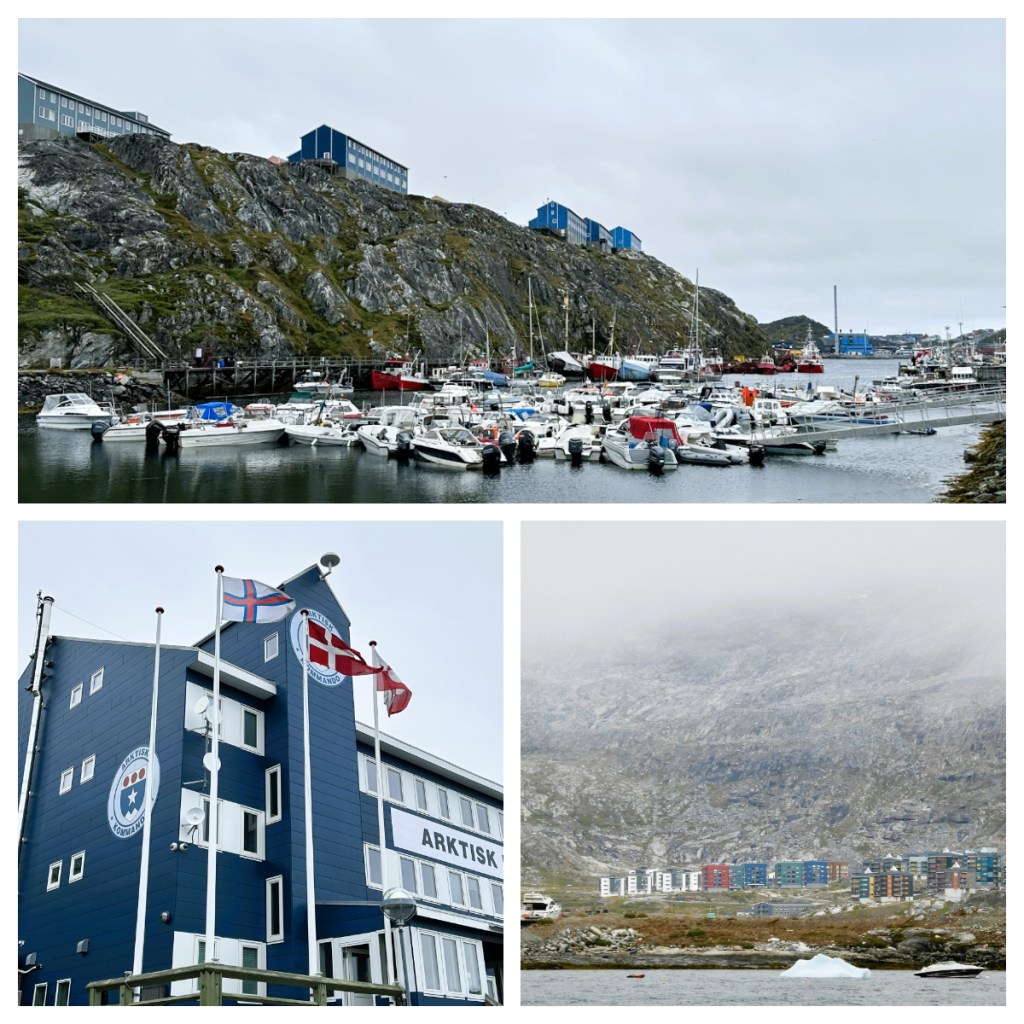
Rather than wait for the buses, I decided to walk back to the ship, taking in the sights (and smells) around the small harbour.  The cloud had risen further and I enjoyed the view across the harbour which was dotted with a few small icebergs.  As we set sail around 6.30pm back into the mist, we fell into ship life routine of a recap of the day, briefing on the next day and an ala carte dinner with wine (and small icebergs floating by).  As always on these kind of trips, there will be far too much food consumed.🥴

Sleep came easy with the gentle rocking of the ship and I was pleased to wake (as always way to early) to see that we actually had a view!  I got up and headed up to the top deck to enjoy the beautiful dawn skies and dramatic landscapes as we nearer Kangaamuit, our destination for the morning. 

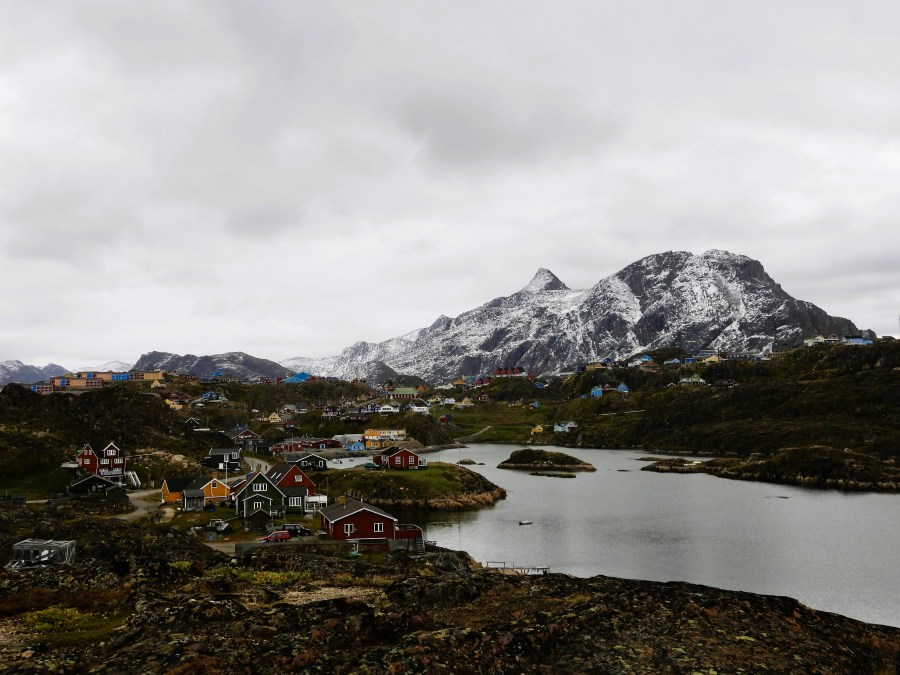
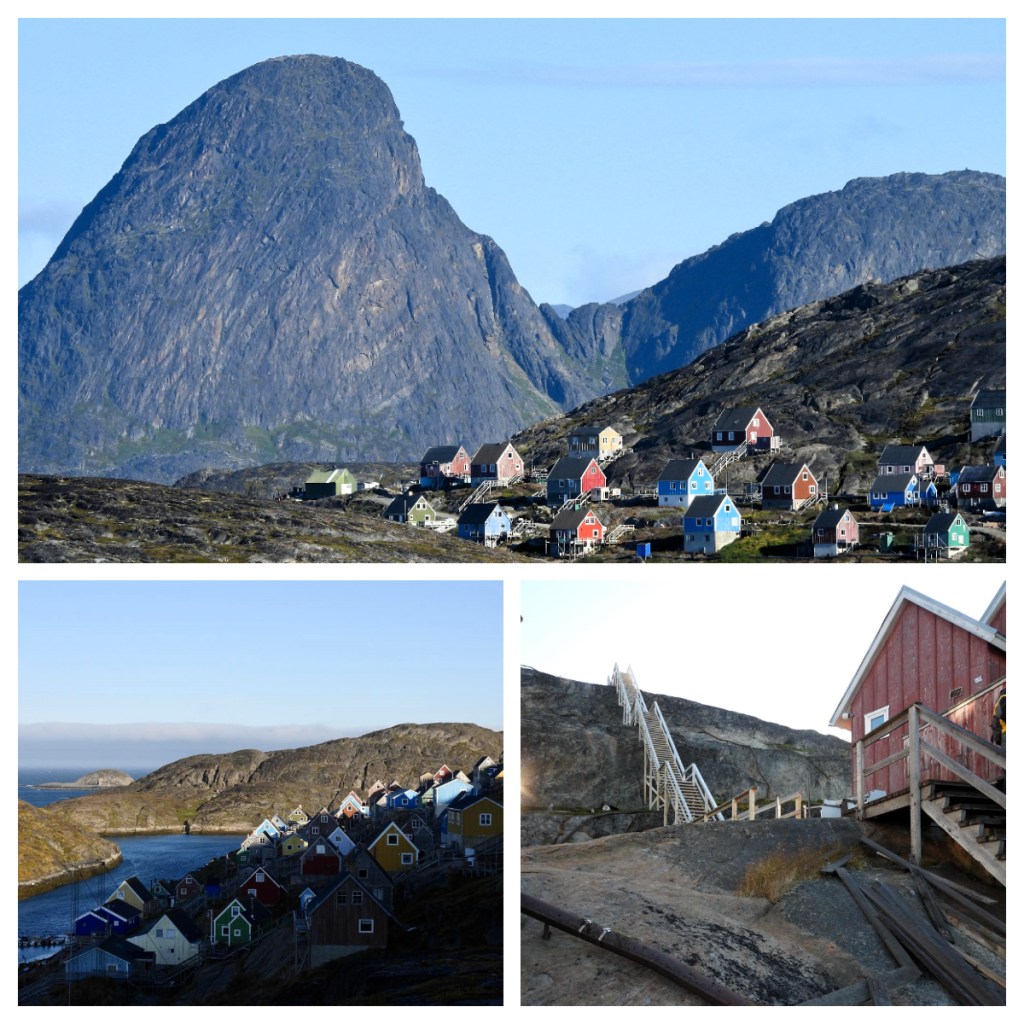
Kangaamiut has a population of only 300 and live a fairly traditional life of hunting and fishing.  Apparently, it is currently peak reindeer hunting season so many of the town’s men are away hunting.  It is a beautiful town, with colourful, traditional houses perched on rock and overshadowed by large, odd shaped peaks.

Not surprisingly, our first zodiac departure from the ship was a mess!  Half the people could not work out how to put on their life jackets and some struggled getting in and out of the zodiacs (the swells did not help).  It ended up taking over 1.5 hours to get everyone to shore!  I was in the last group to depart and sadly found myself in a boat full of Danish speakers.  It was only a short journey so it should not have been a major problem, except for the fact that the zodiac driver was also a Danish speaker and she only gave instructions in Danish!  Being THAT passenger, I had to keep asking for her to repeat it in English, particularly because she was giving safety information!

Traditional life started as soon as we got off the zodiac and saw seal hides brining in the salt water off the little pier!  As I wandered around the small town, I did wonder if they often had accidents as the rickety old wooden staircases that join the houses as you walk up the hill look like they are about to collapse under me!  Unfortunately, I didn’t have time to go up to the view point but I still managed to get some beautiful views of the picturesque town and the Eternity Fjord beyond. 

It was then time to head to the church for a performance by the local choir, who are apparently famous in the area.  They sang lovely local songs about how much they like singing, spring time and flowers that are blooming, life in the village and honouring their ancestors.  Despite them being local songs, the music was very much like European hymns.  I guess it should not be a surprise as we were sitting in a Christian church and thanks to Danish missionaries, almost 100% of the population of Greenland are Christian, 95% of those being Lutheran. 

From the Church we moved down to one of the houses for some Greenlandic cake (more like a fruit bread but tasty never the less) and some more local entertainment.  The first was a mask dance – a traditional dance dating back 4,000 years.  These dances were forbidden by Christianity but were maintained in secret in the far north and west of the island.  The dancer (or dancers) paint a ‘mask’ on their face and often put something in their mouth to make them ‘unrecognisable’.  The colours of the mask represent numerous things including spirits of forefathers or animals, blood, love, purity ….

The dancer makes their way around the audience, making funny movements with their bodies and making animal like noises. Depending on the dance it can be used to invoke humour, fear or courtship.  It was all rather odd!

Next was the Drum dance, another ancient tradition that can have social, religious or cultural significant.  They use a qilaat or frame drum and sing and dance to tell stories about animals and people. This was also considered a heathen practice by the early missionaries, so we are fortunate to see that these practices have survived.

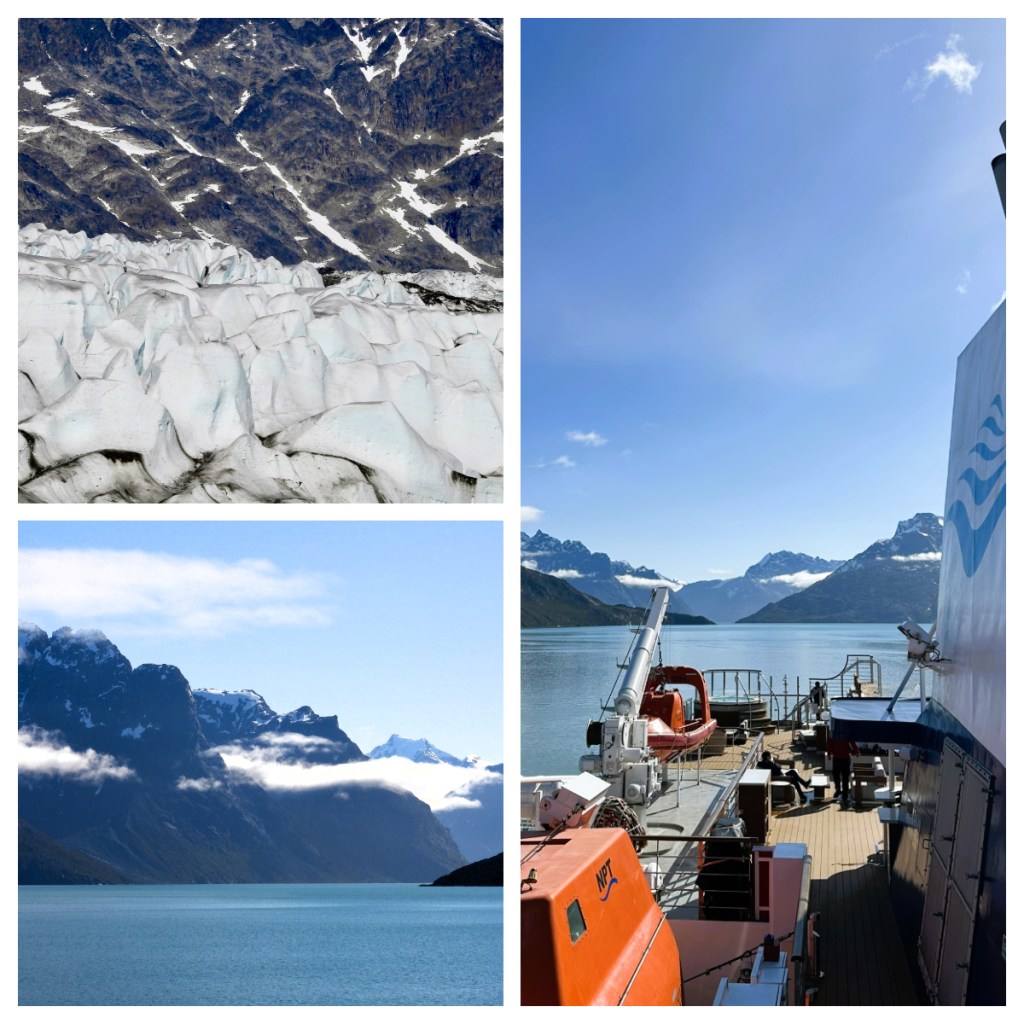
It was time to say goodbye to the village and back on the ship we set sail along the Kangerlussuatsiaq or Evighedsfjorden, Eternity Fjord in English.  It’s name relates to the vast size of the Fjord – the Greenlandic name literally means ‘The rather large Fjord’ 😂 .  It’s about 100 km long, surrounded by towering mountains and at the end, we spent some time exploring the huge glacier (one of two or three we could see). 

It was cold but sunny and after some time on deck, I enjoyed being able to sit on my balcony and enjoy the view 💚.    Did I get carried away taking close up photos of the ice?  Absolutely lol.

After our briefing for the next day, we had a really interesting talk from one of our guides who grew up in Greenland and the Captain introduced himself and his crew. 

We set off this evening for our crossing to Baffin Island in Canada, across the Davis the sea. Should I be worried that they had brought the balcony furniture inside before our ocean crossing … time will tell 🥴?

Journey to Greenland

Kangerlussaug, Greenland

August 2024

Having exhausted myself yesterday, I had a pretty good sleep for an early start for the first day of my expedition cruise.   It started with a walk to the Metro station, Metro to the airport and then joining a very long line to check in the charter flight to Kangerlussauq in Greenland.  Thankfully, I managed to find a Rep for the company running the trip to confirm I was in the right line!  Apparently, the majority of the people on the trip are Danish and I did not hear anyone around me speaking in English – I did second guess myself for a minute and had to double check that I had booked an English speaking trip … thankfully I had!

The ease of my arrival the day before had lulled me into a false sense of security.  It took almost 1.5 hours to check in and check in only opened 2 hours before departure!  There was then a huge queue for security. Thankfully, as it was a charter flight and the fact that I knew there were others still in the queue behind me, I didn’t panic too much – I was just hoping for time to go to the toilet and get something to eat!  Still, I had to run to the gate which was already saying closed (though I did manage to get a cold coffee from a vending machine) before boarding the plane.

I also didn’t need to worry so much about hand luggage weight (the predeparture paperwork said you could only take 5kg for hand luggage) as they did not even weigh it!  Once I got on the plane and saw how much hand luggage some others had, I really had nothing to worry about! If they had weighed them, we would never have got off the ground 🤣.  As it was, we were only 45 minutes late taking off.

Boarding the plane also just confirmed my initial view that everyone on this trip are OLD!  Does that mean I am old 🤔 I don’t think so 🤪.   In fact, I think I drag the average age down by at least 10 years!  I later found out that the company had run a big marketing campaign in a newsletter for an old peoples society in Denmark – it clearly was effective as I would say probably 85% of passengers were Danish people over 65!

To me, Greenland has always been a mythical place. When I made my first trip to England at the age of 8, my mum woke me on the flight between the UK and the USA to see the wonderful sight of the vast, ice covered island.  It became a place you fly over and admired from 38,000 feet above if the weather is in your favour.  So I was excited to get my first glimpse of Greenland – icebergs in the ocean, glaciers flowing down and snow/ice as far at the eye can see.  Just 🤩.

The cloud cover them rolled in until we came out on the western side of the country, now with the view of braided rivers and bright blue glacial lakes – just like home 🤣. I hadn’t even got off the plane and the unique beauty of the landscape was blowing my mind.

Before I get too far in to the trip, let me regal you with a few facts about Greenland.  Greenland is the world’s largest island at just over 2 million km2 and with a population of just over 56,000 makes it the least densely populated country in the world, although probably not technically a country as it is a self-governing autonomous territory of the King of Denmark.  80% of the island is covered in the Greenland ice sheet and what remains is pristine Artic tundra , where the subsoil is permafrost (i.e. permanently frozen) which causes challenges in many ways which I am sure I will touch on in future blogs.

There are only 20 towns in Greenland, 7 of which have populations of less than 1,000 and as there are no roads between towns, you can only travel between them by boat, airplane or helicopter, depending on where you want to go!

We touched down in Kangerlussuaq in the west of Greenland and despite this currently being the main airport in Greenland there were no arrival formalities.  The airport appears to be home to a couple of Hercules and an odd NASA plane called POLAR 6, that has equipment to take photos through the ice cap.  We went straight from the plane to a bus for a pre-booked excursion which I had complete forgotten about, I couldn’t even remember what it was 🤣.

Kangerlussuaq is the current gateway to Greenland and the airport and town was built by the Americans as a stopover point for the American Airforce during the Second World War due to the stable weather in the area. At that time, the town had a population of thousands (mostly American).  In the 1970’s, the town was sold to the Danish Government for US$1, as is where is, and today the town has a population of around 550 people most of whom are involved in work at the airport.  There is currently a new airport being built in Nuuk (the capital) and once that opens, the future of Kangerlussuaq is uncertain. 

Despite being advertised as an English cruise, it seems my fears of all the Danes at check in was coming true as the initial commentary in our bus was in Danish.  Thankfully there were some German’s on my bus who spoke up and asked that they also speak in English.  We had to remind the again when we reached the BBQ spot as all the information was given in Danish!  I hope this is not a ongoing issue!

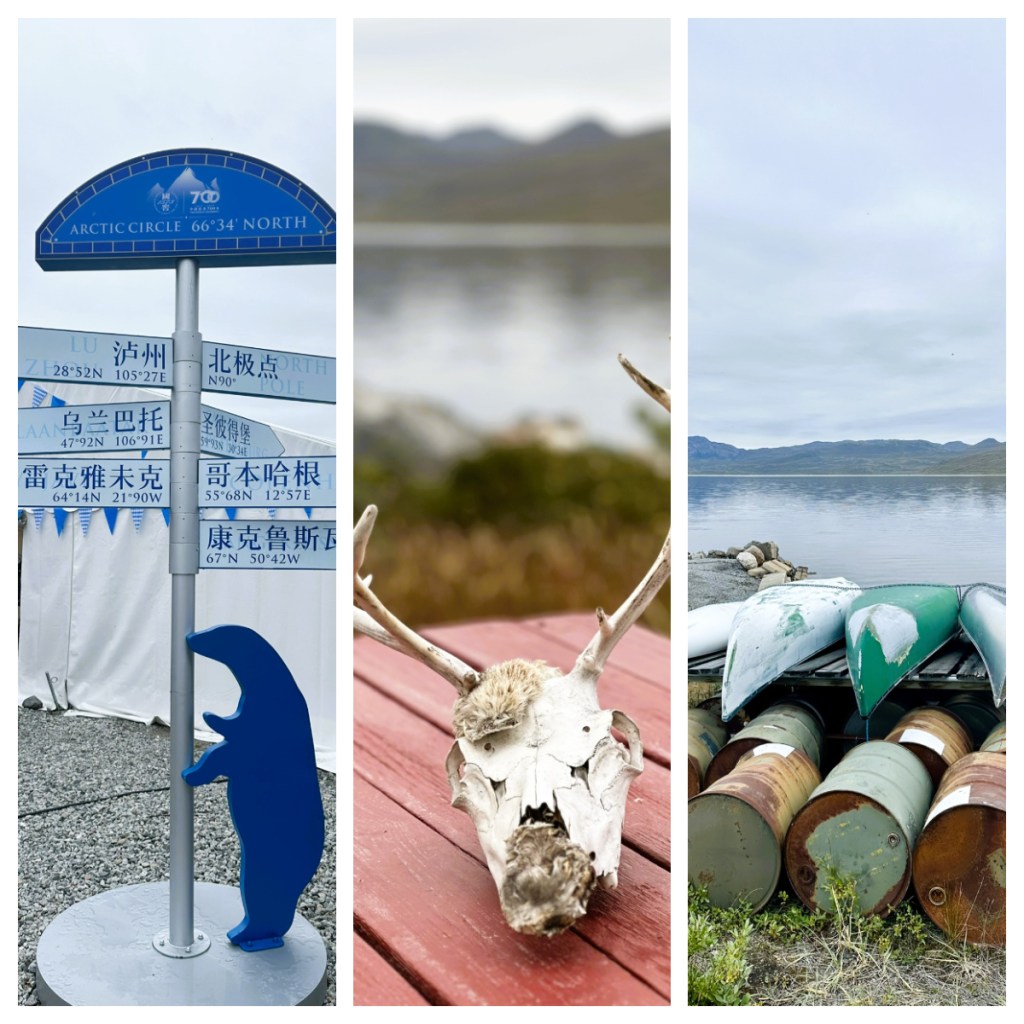
The BBQ spot was on the shore of Lake Ferguson, where the town gets its fresh water and it was clearly the only place that caters for all the cruises that pass through to pick up passengers as there was a group waiting for pick up when we arrived and another group dropped off as we were finished.  That said, they are good at what they do and the BBQ lunch was tasty and consisted of lots of meats and salads, including musk ox (tastes like beef) and reindeer sausages (which tasted like sausages 😝).

This was also my first taste of the Greenlandic mosquitos or maybe they were midgets or whatever the little bitey buggers they were.  Of course, all my anti mosquito stuff was in my backpack on its way to the ship!

After a discussion with a couple of the Germans, I suggested to one of the guides that they make one of the buses English speaking so we don’t miss out like some did on the way up.  I am not sure why I need to be making these suggestions as I would have thought they could have worked that out for themselves and yes, it seems like I am going to be THAT passenger 😂 as I am not prepared to miss out on information.  As it turns out, they probably didn’t think about having one bus in English as they were too busy working out why a group that came up in 3 buses could now not fit in the 2 buses they had 🤔 .  Finally, a 3rd bus turned up and we drove back through the town, into the low cloud and rain.  Thankfully it was a balmy 9C – apparently it had been a fairly cool summer this year!
For this part of the trip our driver was a Greenlandic guy called Adam.  Whilst driving the large, all terrain bus on the narrow, windy dirt roads with one hand, he held a microphone with the other hand and gave us commentary.   Although it was in English, I really only managed to catch snippets of what he said.  Some of what I did pick up (I think) is detailed below.

Naturally, Artic tundra tends to be treeless due to the underlying permafrost, but in this area they have been experimenting with planting trees from other countries in the area, including New Zealand. I must admit, some of the area was reminiscent of our sub Alpine and Alpine areas in New Zealand.

Musk Ox were introduced here from the eastern side of the country.  They have thrived here as they are much better suited to the less snowy conditions of this area as they cannot walk in deep snow. The current musk ox population of over 30,000 all come from 27 introduced animals.  Reindeer on the other hand thrive everywhere and have hooves designed to spread out like snow shoes.  Both are hunted and often the hunters bury the bodies in the permafrost to keep until they need them.

As I mentioned above, there are no roads between towns and cities, and so, the road we were driving on is the longest road in Greenland at a staggering 50kms long!  It’s dirt and basically only 1 lane!  It took us through the almost ‘green’ landscapes to the UNESCO World Heritage area of Aasivissuit-Nipisat, a cultural landscape that is the traditional hunting ground of the local Inuit. 

From here we could see across to what remains of the retreating Reindeer Glacier (no reindeers in sight).  The landscapes on the drive were amazing, but please do excuse the crappy photos taken through the rain streaked windows of the bus!  Apparently from next year, this area will become a National Park.

The Glacier was impressive despite the rain but we only had around 15 minutes there as it was already 4pm and we had to head back down the longest road in the country, in to a zodiac and out to the ship, moored in the fjord, just beyond the town. 

Now, things got really good … Firstly, I recognised one of the guides from my Indonesian trip a couple of years ago and it was nice to see some I knew in the sea of non-English speaking faces.  Secondly, my old waterproof pants passed the waterproof test after a rogue wave swept over the side of the zodiac on the way out to the ship and last but not least, I had my room to myself!  When booking, I had the option to a have small single room with a window, or for the same price, share a larger room with a balcony.   I had gone with the later, but as it turns out I got this amazing room all to myself – this really made my day and you can look forward to many balcony view photos 😂. This is by far the nicest expedition cruise ship I have been on!
We only had time for a short briefing and emergency drill before a buffet dinner and bed as we set sail into the mist.