
Georgia & Armenia, April 2025
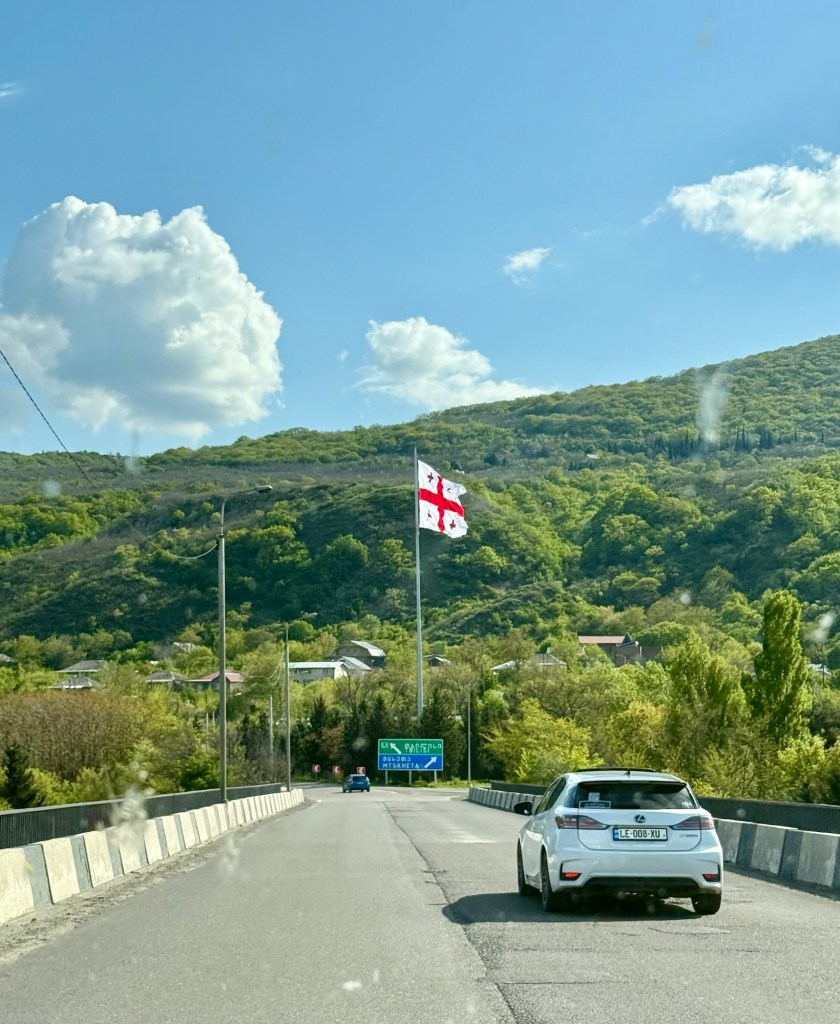
Georgia was amazing. Tazo, our guide was amazing and finally, it was amazing having 3 nights in the same hotel and not packing every day!
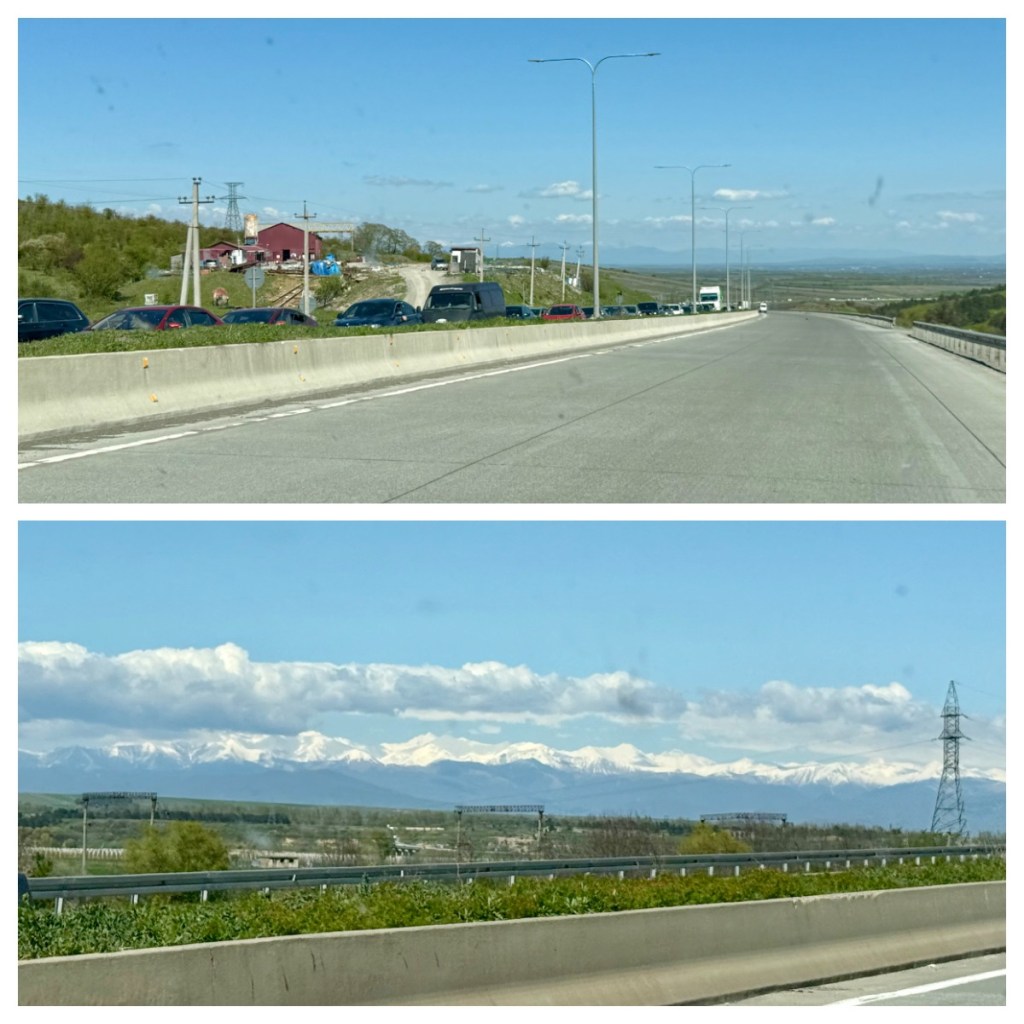
Tazo picked us up at 9.20 for our 1 hour drive to the border with Armenia. On this short drive we finally started to see some wild poppies blooming. The image I had in my head of spring in the Caucasus mountains was snowcapped mountains and fields of wildflowers below 🥴 it seems funny now we have spent time trudging through snow ❤️. Tazo explained that they thought to be “growing from the blood of warriors”.


Before arriving at the border, we passed a large military base with visible missile launchers and jet fighters poking out of their camouflaged hangers (took a sneaky picture or two as we passed and try and spot the base) and far too quickly we had arrived at the board and it was time to say our goodbyes to Tazo and Georgia.

The border crossing was not too busy and it took us around 10 minutes to exit Georgia, before walking the 500m across no man’s land (with the river as a natural border). It seemed we were the only people walking the distance and most groups of tourists had buses waiting for them to take them across the bridge!
It did mean we could jump in front of some of the buses to get through the Armenia side (where the queues were a little longer) and before long we were in Armenia and out looking for our new guide, Levon.
So, welcome to Armenia. Currency here is the Armenia dram and $NZ1 = 230 dram. We were quick to dive into some general information about our new country.
Like Georgia, Armenia has a unique alphabet and language and in fact the language used today dates back to the year 450. Unlike Georgia, Armenia is not part of the Caucasus’s but is in fact the Armenian Highlands. I was surprised to learn that much of the country sits on plateaus over 1000m above sea level, with half sitting over 2000m and only 3% lower than 650m! This gives an average elevation of 1,800m above sea level!
There is often a lot of comparison with Georgia and there is definitely a friendly rivalry between the two, particularly when it comes to who became Christian first, and possibly more importantly, who has the best wine. 😂 Apparently, Georgian’s joke that Armenian’s adopted Christianity before Jesus was born, as they are always bragging about being the ‘first’ lol.
My first impression is that Armenia is more beautiful than I could have imagined and our first stop, at the Haghpat Monastery, helped to confirm that. As this was our first introduction to Armenian architecture, we learnt a bit about the basics of what we will see in future sites as well. Situated at 2,500m above sea level, it was also an introduction to the incredible views of mountains and valleys that we can expect from the country.
This monastery is part of a fortified church complex, the earliest parts of which were built during the Kiurikian dynasty between 966 and 991 AD. Further construction took place in the 12th and 13th centuries when it was an important religious centre that housed 100s of monks.


The complex and its fortifications (the name actually means “huge wall”) have survived earthquakes and invasions and is a great example of medieval Armenian architecture. It was in fact Armenia’s first UNESCO World Heritage site!
Highlights and learnings from this visit:
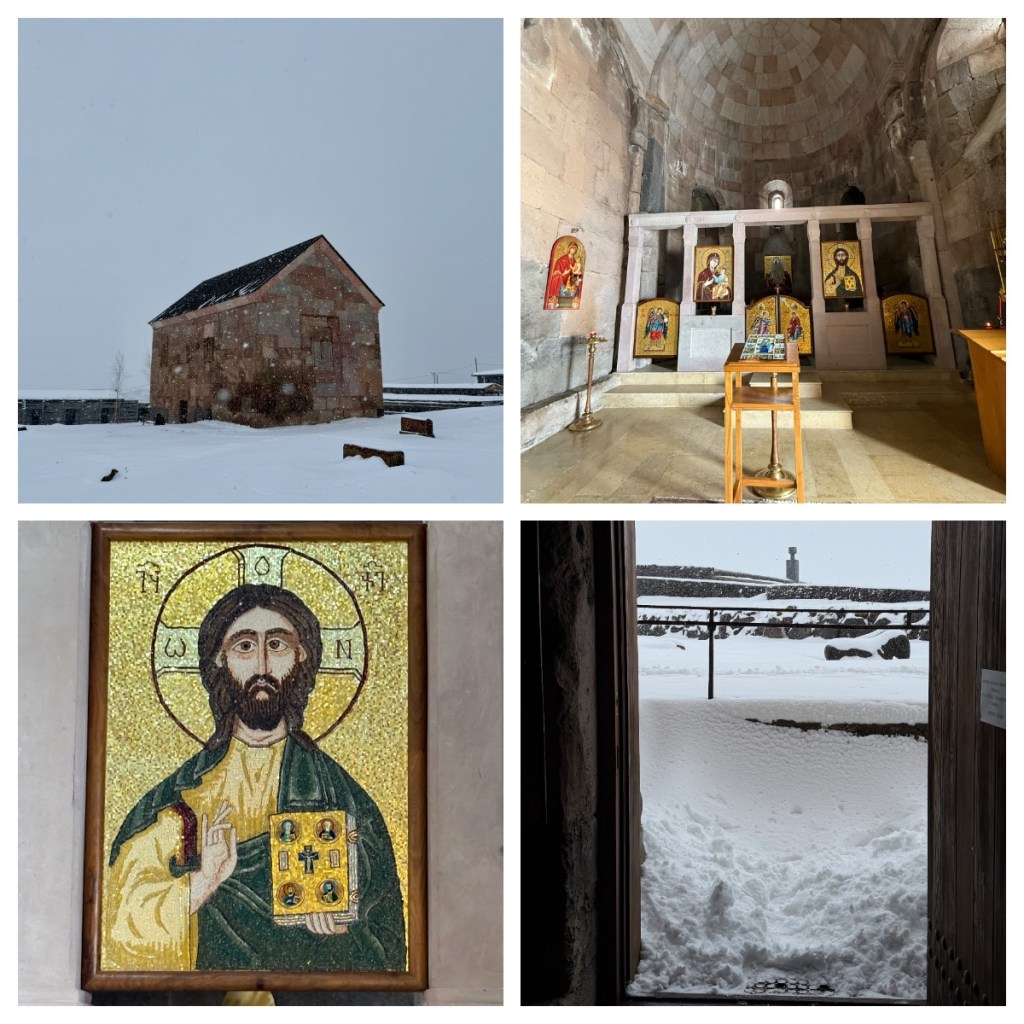
The church has a fresco of two kings holding a model of the church. We actually see this in a few places and in fact has helped with reconstructions.
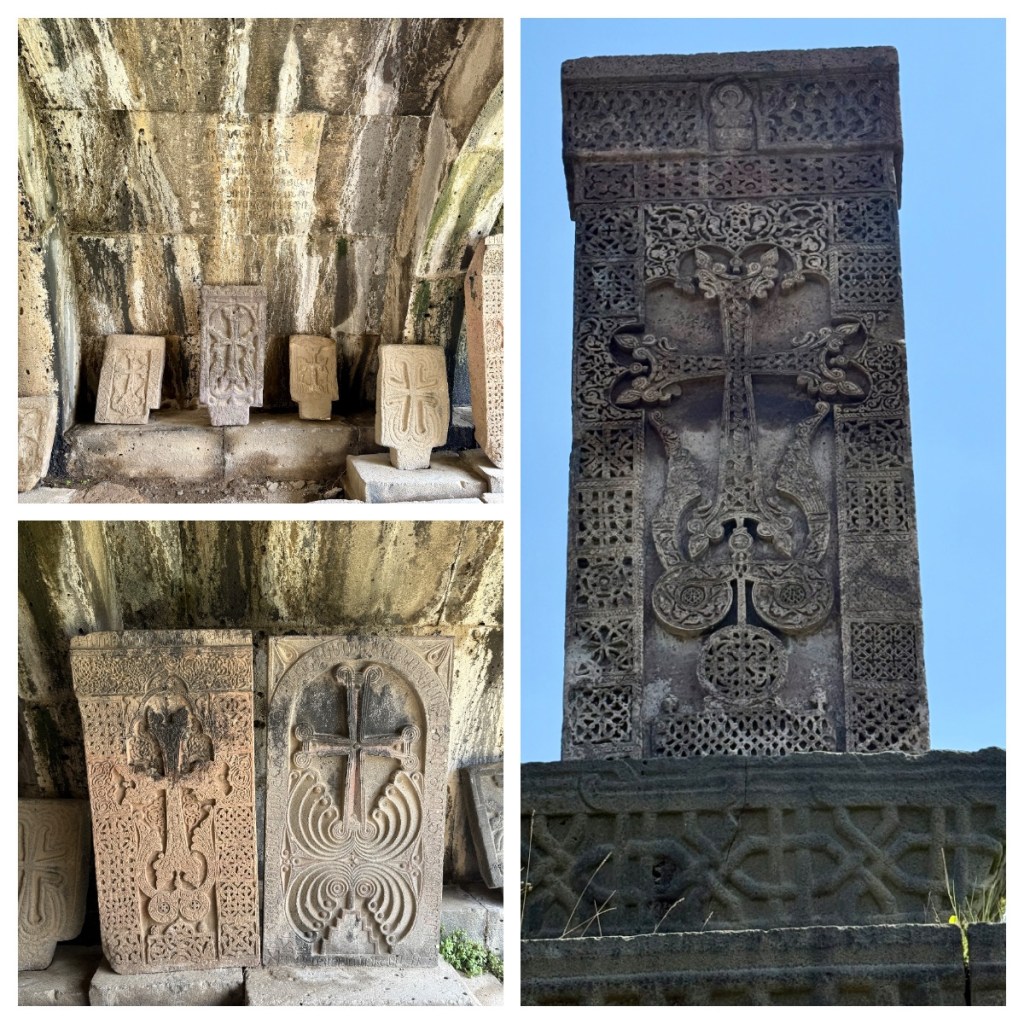
We saw our first Khachkars or Cross stones, some at this site date back to the 13th century. Khachkars are unique to the Armenian Apostolic Church and are intricately carved stones with crosses and other carvings – often rosettes and botanical motifs including leaves and pomegranates.
Some actually looked quite Celtic in design. There are only four that have imagines of Christ on them and one is here at the Haghpat Monastery and the Holy Redeemer khachkar we see here (carved in 1273) is considered one of the most highly regarded cross stones.

The art of carving Khachkars was first seen in the 9th century and today, the symbolism and craftsmanship of Khachkars is on the UNESCO list of Intangible Cultural Heritage.
Original khachkars were almost liked headstones, to depict the story of a life and are normally found in graveyards or around churches. The ornamental side of the stone always faces west, as do the churches.
Many khachkars have been destroyed over the years, many by conflict with neighbours, in particularly Turkey and Azerbaijan. In fact the current conflict with Azerbaijan is really only a stones through away from where we are. Between 1998 and 2005, the Azerbaijani government destroyed an entire medieval Armenian cemetery along with over 2,500 khachkars in Nakhichevan and this is considered a “cultural genocide”.

Another feature of Armenia church architecture is the Gavit, a large entrance hall with arches and columns. Although it can be used for gatherings, it is also often used as a burial site for rich and/or important people and it seemed very odd walking over their graves. The gavit at the Haghpat Monastery was built in the 11th century whilst the main part of the church was built in the 9th century. The gavit also had amazing acoustics, which was demonstrated by another tour guide singing – Levon declined to join him despite our encouragement.
We stopped for lunch at a restaurant that was clearly set up to cater for very large groups and there were one or two there (we were very glad not to be on one of them)! The restaurant did have a beautiful view though it was a little unnerving hearing the thunder off in the distance.
Lunch consisted of a few Armenia delicacies including kebab (here the meat is served wrapped up in lavash – a simple flat bread), dolma (Ania loves these so they have been a part of most of our meals) and a few other things I did not make a note of lol. Perhaps I was just too keen to get eating lol.

Over lunch we learnt about the “dark and cold years” between 1990-1994. After a large earthquake in 1988, the government decided to shut down their nuclear power plants and then the collapse of the USSR, meant Azerbaijan blocked the gas pipeline line (from Turkmenistan) leaving Armenia with a massive energy crisis. Levon recalls burning books to make fire to keep warm.
We also discussed some of Armenia’s struggles over the years. Armenia used to be a vast land, stretching from the Black Sea to the Mediterranean but today it is only a fraction of that at 30,000km2 with a population of around 3 million. Of the 3 million, more than 1 million live in the capital, Yerevan. There are actually around 1 million ethnic Armenia’s living in California, 2 million in Russia and 0.5 million in Argentina.
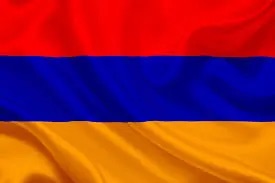
And finally the Armenian flag – which is horizontal lines of red, blue and apricot. Yes, apricot – did you know that the apricot is the national fruit of Armenia and the latin name of the apricot is actually Prunus Armeniaca!
Our second site for the day was the Sanahin Monastery, founded in the 10th century. Apparently, the translation of Sanahin is “this one is older than that one”, referring to the Haghpat Monastery we had visited before lunch 😂 .
Initial construction actually started in the 4th century, but most of what we see today was built in the 12th and 13th centuries. The site has five churches a school, an active library and fortress walls surrounding them all.


One of the churches is the temple of St Gregory the Illuminator, the founder and official head of the Armenian Apostolic Church (I will tell you more about him in a later blog) and some of the ancient graves are of important statesmen and royalty.
I was thrilled to see some good old Lada’s on the roads. Apparently, they are great for villages as “nothing can break them”. Also loving the buses here!

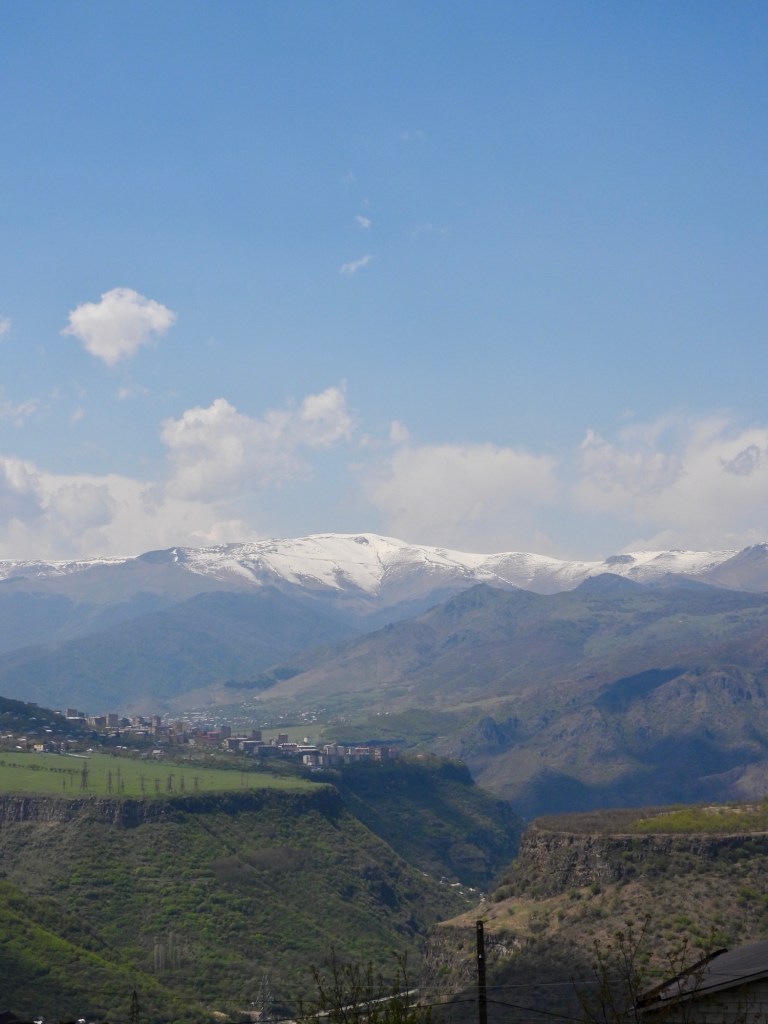
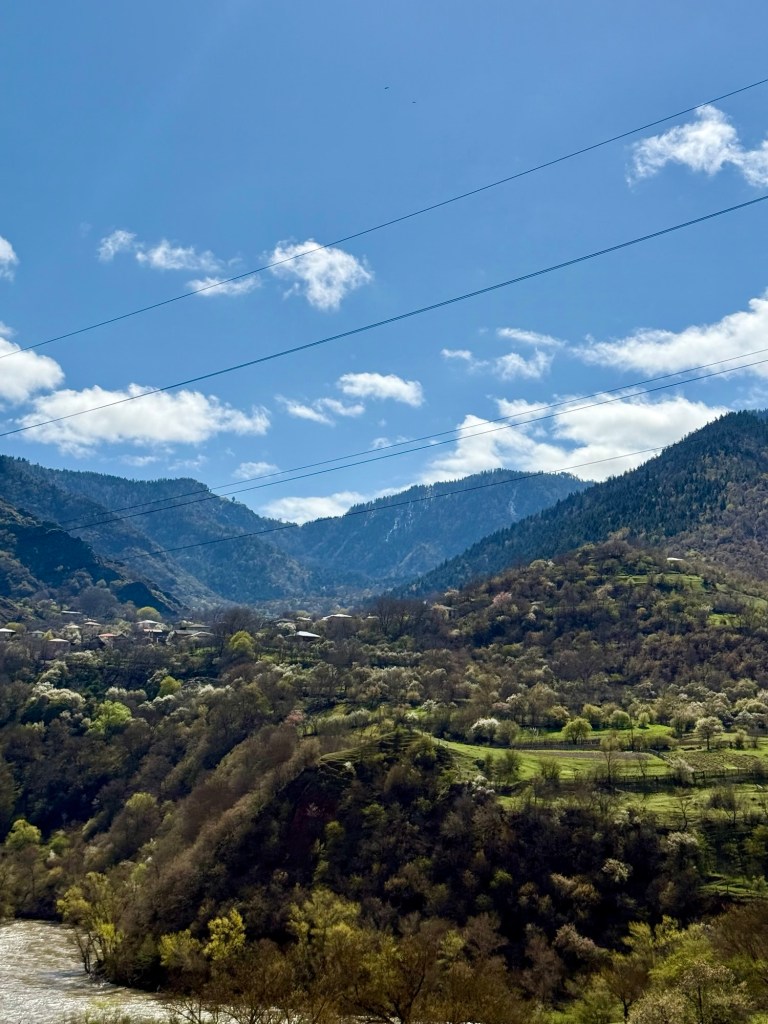
Back on the road, we continued through the mountains and valleys (more like a huge canyon that looks like a crack in the earth) an as we went around a corner we came across the most breathtaking view – I mean it literally almost took my breathe away. I had no idea Armenia would be so beautiful.
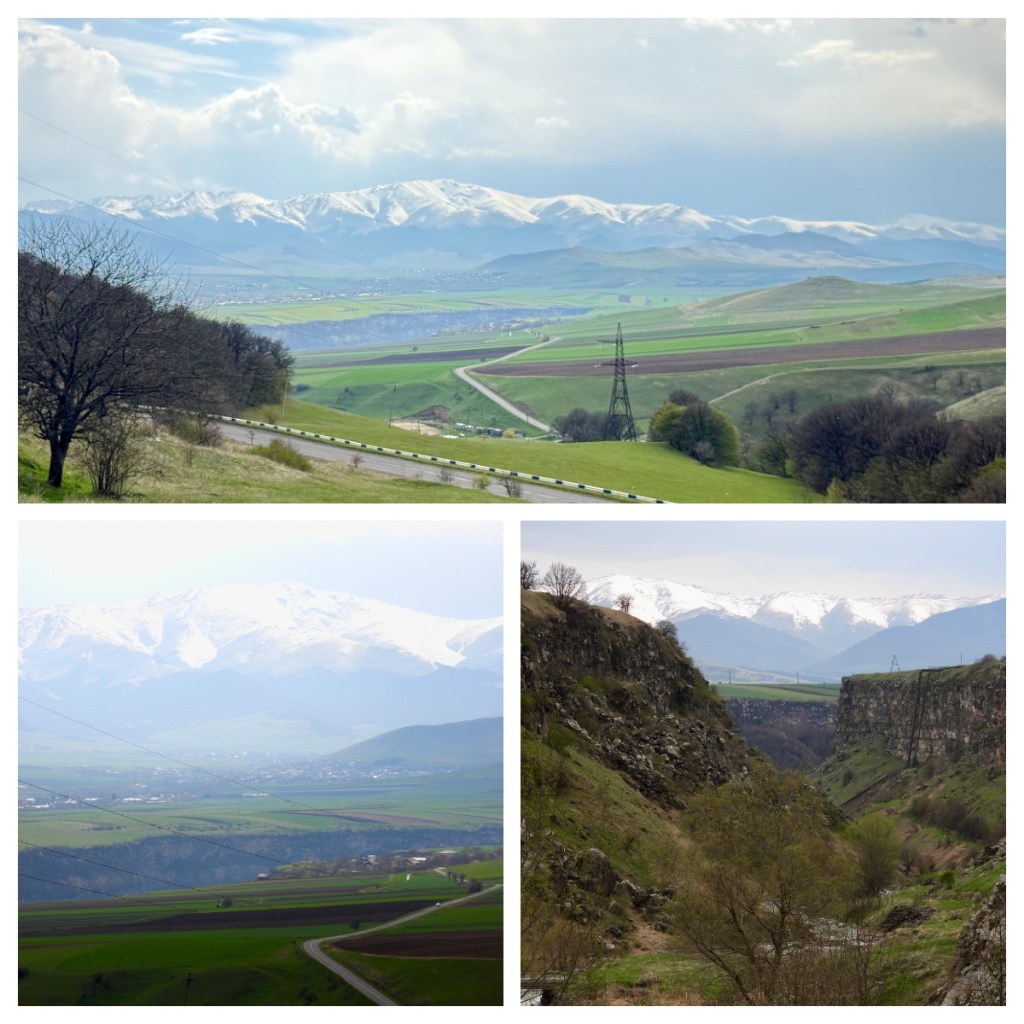
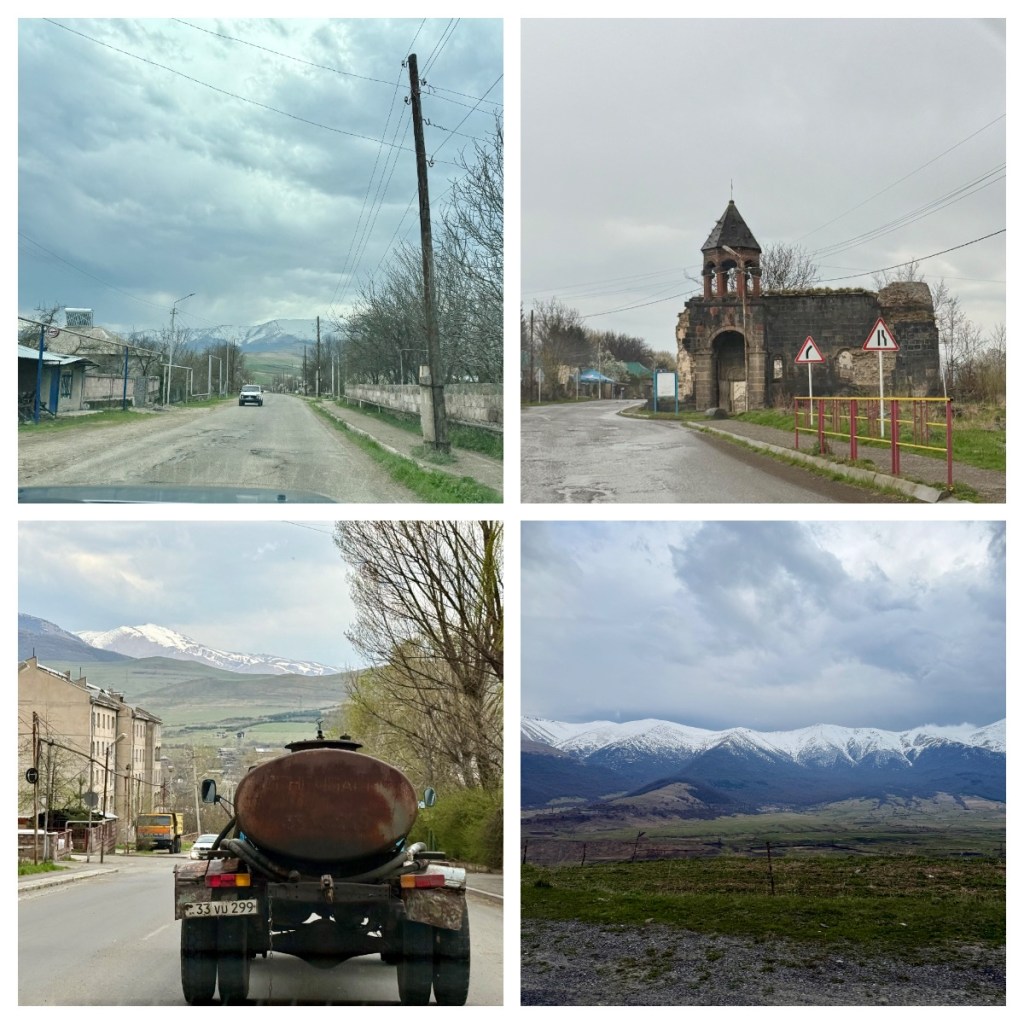
Our final activity for the day was a walk in a park but by the time we arrived it was pouring with rain so we decided to abandon that and continued on through the beautiful landscapes and small towns. Many of the small towns appear to have a lot of deserted and unfinished houses. Apparently, many people have just given up on rural life and moved to the city.
A few other random facts we discussed (now in “Car chats with Levon”):
- There is no social security or unemployment benefits in Armenia
- There are mandatory chess lessons in school
- In a prior life, our guide, Levon, was an economist in a bank before giving that up to be a Bartender (which earnt him a lot more money! Of course he is now one of the best guides in Armenia!
Our hotel for the night was in the scenic mountain town of Dilijan. It only has a population of around 15,000 people, but despite its small size, it is an international education centre for locals and foreigners, with the international school being here. This means some expats live and work in Yerevan, whilst their families live here and their children attend the international school.
I enjoyed a dinner of cheese, bread and wine in the hotel restaurant and whilst we were eating, our host received a video call from her son on the Azerbaijan border, in full battle fatigues and helmet. He is doing his mandatory 2-year military service and this makes the conflict all the more real.
And so ends day one in Armenia, and I was excited to see more.































 Cockneykiwi takes flight