Goodbye Georgia, hello Armenia

Georgia & Armenia, April 2025
Georgia was amazing.  Tazo, our guide was amazing and finally, it was amazing having 3 nights in the same hotel and not packing every day!

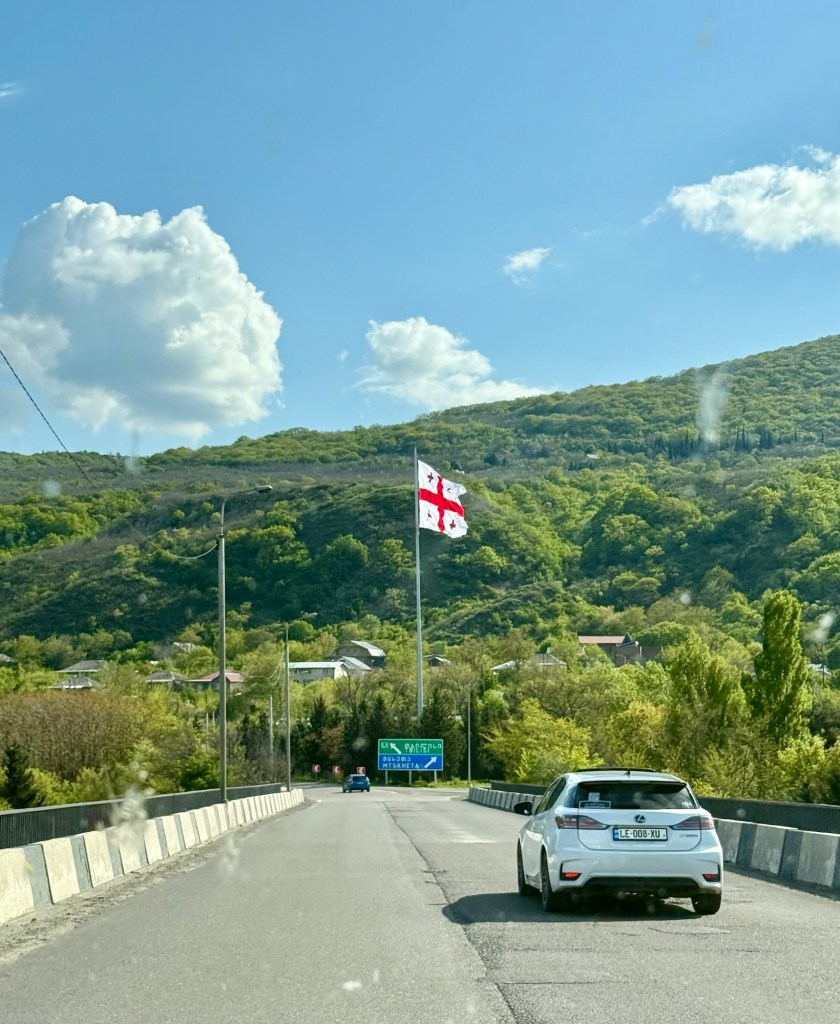
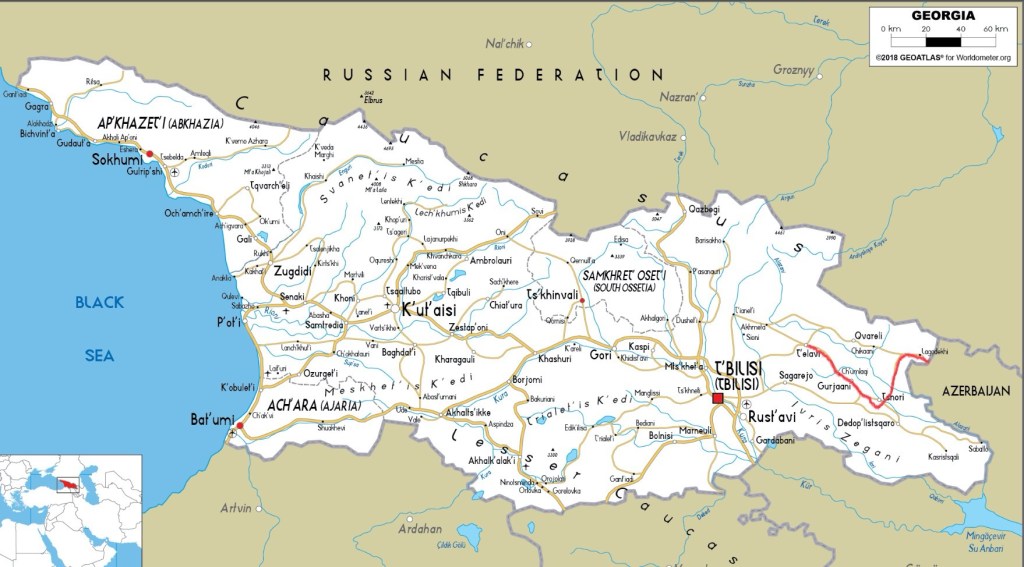
Tazo picked us up at 9.20 for our 1 hour drive to the border with Armenia.  On this short drive we finally started to see some wild poppies blooming.   The image I had in my head of spring in the Caucasus mountains was snowcapped mountains and fields of wildflowers below 🥴 it seems funny now we have spent time trudging through snow ❤️. Tazo explained that they thought to be “growing from the blood of warriors”.

Before arriving at the border, we passed a large military base with visible missile launchers and jet fighters poking out of their camouflaged hangers (took a sneaky picture or two as we passed and try and spot the base) and far too quickly we had arrived at the board and it was time to say our goodbyes to Tazo and Georgia.

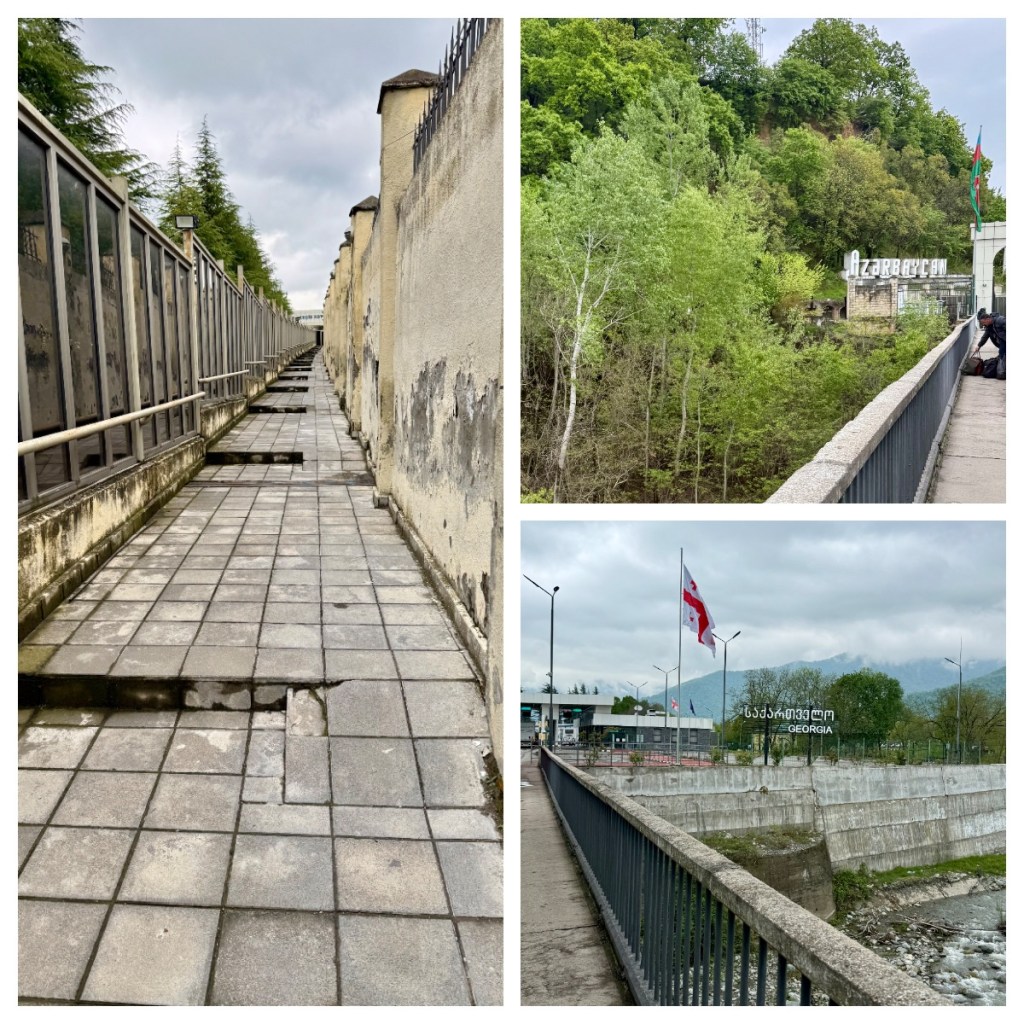
The border crossing was not too busy and it took us around 10 minutes to exit Georgia, before walking the 500m across no man’s land (with the river as a natural border).  It seemed we were the only people walking the distance and most groups of tourists had buses waiting for them to take them across the bridge! 

It did mean we could jump in front of some of the buses to get through the Armenia side (where the queues were a little longer) and before long we were in Armenia and out looking for our new guide, Levon.

So, welcome to Armenia.  Currency here is the Armenia dram and $NZ1 = 230 dram. We were quick to dive into some general information about our new country. 

Like Georgia, Armenia has a unique alphabet and language and in fact the language used today dates back to the year 450.  Unlike Georgia, Armenia is not part of the Caucasus’s but is in fact the Armenian Highlands. I was surprised to learn that much of the country sits on plateaus over 1000m above sea level, with half sitting over 2000m and only 3% lower than 650m!  This gives an average elevation of 1,800m above sea level!

There is often a lot of comparison with Georgia and there is definitely a friendly rivalry between the two, particularly when it comes to who became Christian first, and possibly more importantly, who has the best wine.  😂    Apparently, Georgian’s joke that Armenian’s adopted Christianity before Jesus was born, as they are always bragging about being the ‘first’ lol.

My first impression is that Armenia is more beautiful than I could have imagined and our first stop, at the Haghpat Monastery, helped to confirm that.  As this was our first introduction to Armenian architecture, we learnt a bit about the basics of what we will see in future sites as well.  Situated at 2,500m above sea level, it was also an introduction to the incredible views of mountains and valleys that we can expect from the country.

This monastery is part of a fortified church complex, the earliest parts of which were built during the Kiurikian dynasty between 966 and 991 AD.  Further construction took place in the 12th and 13th centuries when it was an important religious centre that housed 100s of monks.

The complex and its fortifications (the name actually means “huge wall”) have survived earthquakes and invasions and is a great example of medieval Armenian architecture.  It was in fact Armenia’s first UNESCO World Heritage site!

Highlights and learnings from this visit:

The church has a fresco of two kings holding a model of the church. We actually see this in a few places and in fact has helped with reconstructions.
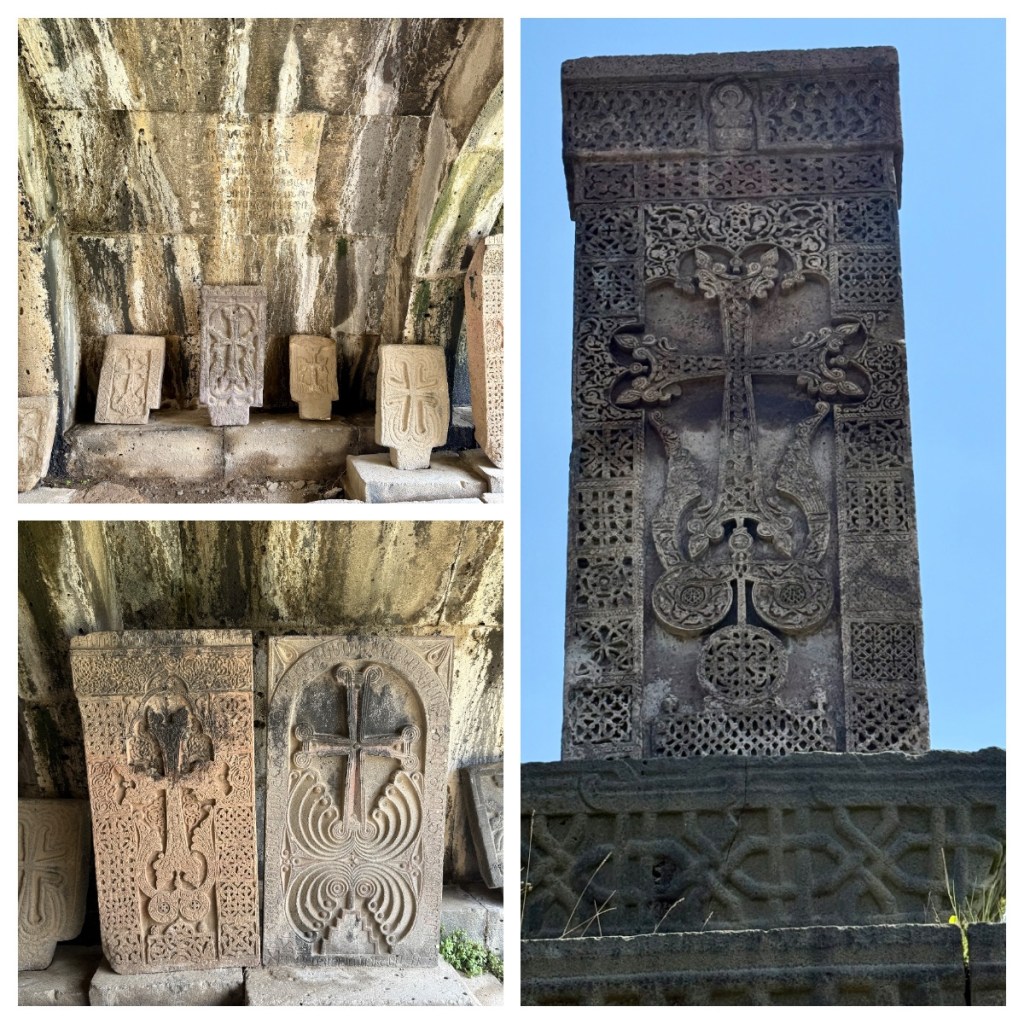
We saw our first Khachkars or Cross stones, some at this site date back to the 13th century.  Khachkars are unique to the Armenian Apostolic Church and are intricately carved stones with crosses and other carvings – often rosettes and botanical motifs including leaves and pomegranates. 

Some actually looked quite Celtic in design.  There are only four that have imagines of Christ on them and one is here at the Haghpat Monastery and the Holy Redeemer khachkar we see here (carved in 1273) is considered one of the most highly regarded cross stones.

The art of carving Khachkars was first seen in the 9th century and today, the symbolism and craftsmanship of Khachkars is on the UNESCO list of Intangible Cultural Heritage. 

Original khachkars were almost liked headstones, to depict the story of a life and are normally found in graveyards or around churches. The ornamental side of the stone always faces west, as do the churches.

Many khachkars have been destroyed over the years, many by conflict with neighbours, in particularly Turkey and Azerbaijan.  In fact the current conflict with Azerbaijan is really only a stones through away from where we are. Between 1998 and 2005, the Azerbaijani government destroyed an entire medieval Armenian cemetery along with over 2,500 khachkars in Nakhichevan and this is considered a “cultural genocide”.

Another feature of Armenia church architecture is the Gavit, a large entrance hall with arches and columns.  Although it can be used for gatherings, it is also often used as a burial site for rich and/or important people and it seemed very odd walking over their graves.  The gavit at the Haghpat Monastery was built in the 11th century whilst the main part of the church was built in the 9th century.  The gavit also had amazing acoustics, which was demonstrated by another tour guide singing – Levon declined to join him despite our encouragement.

We stopped for lunch at a restaurant that was clearly set up to cater for very large groups and there were one or two there (we were very glad not to be on one of them)!  The restaurant did have a beautiful view though it was a little unnerving hearing the thunder off in the distance. 

Lunch consisted of a few Armenia delicacies including kebab (here the meat is served wrapped up in lavash – a simple flat bread), dolma (Ania loves these so they have been a part of most of our meals) and a few other things I did not make a note of lol.  Perhaps I was just too keen to get eating lol.

Over lunch we learnt about the “dark and cold years” between 1990-1994.  After a large earthquake in 1988, the government decided to shut down their nuclear power plants and then the collapse of the USSR, meant Azerbaijan blocked the gas pipeline line (from Turkmenistan) leaving Armenia with a massive energy crisis.  Levon recalls burning books to make fire to keep warm.

We also discussed some of Armenia’s struggles over the years.  Armenia used to be a vast land, stretching from the Black Sea to the Mediterranean but today it is only a fraction of that at 30,000km2 with a population of around 3 million.  Of the 3 million, more than 1 million live in the capital, Yerevan.  There are actually around 1 million ethnic Armenia’s living in California, 2 million in Russia and 0.5 million in Argentina. 
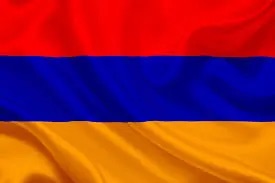
And finally the Armenian flag – which is horizontal lines of red, blue and apricot.  Yes, apricot – did you know that the apricot is the national fruit of Armenia and the latin name of the apricot is actually Prunus Armeniaca! 

Our second site for the day was the Sanahin Monastery, founded in the 10th century.  Apparently, the translation of Sanahin is “this one is older than that one”, referring to the Haghpat Monastery we had visited before lunch 😂 .

Initial construction actually started in the 4th century, but most of what we see today was built in the 12th and 13th centuries.  The site has five churches a school, an active library and fortress walls surrounding them all.

One of the churches is the temple of St Gregory the Illuminator, the founder and official head of the Armenian Apostolic Church (I will tell you more about him in a later blog) and some of the ancient graves are of important statesmen and royalty. 

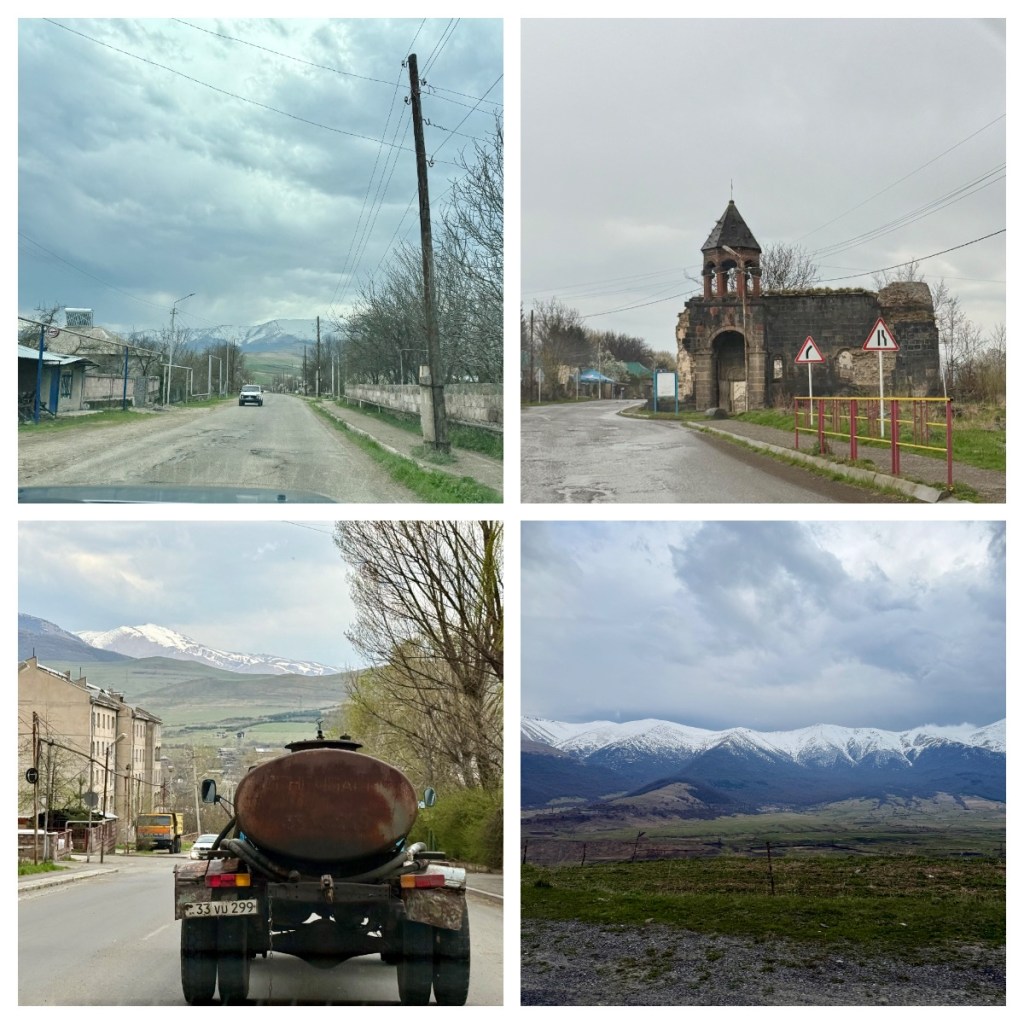
I was thrilled to see some good old Lada’s on the roads.  Apparently, they are great for villages as “nothing can break them”. Also loving the buses here!

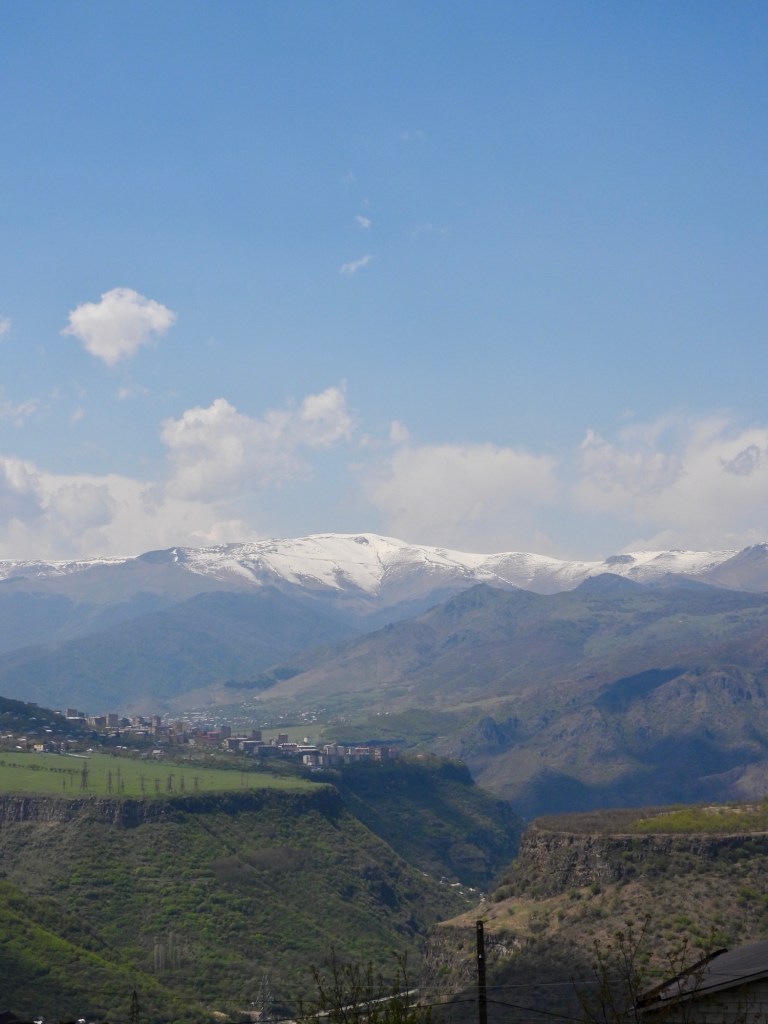
Back on the road, we continued through the mountains and valleys (more like a huge canyon that looks like a crack in the earth) an as we went around a corner we came across the most breathtaking view – I mean it literally almost took my breathe away.   I had no idea Armenia would be so beautiful.
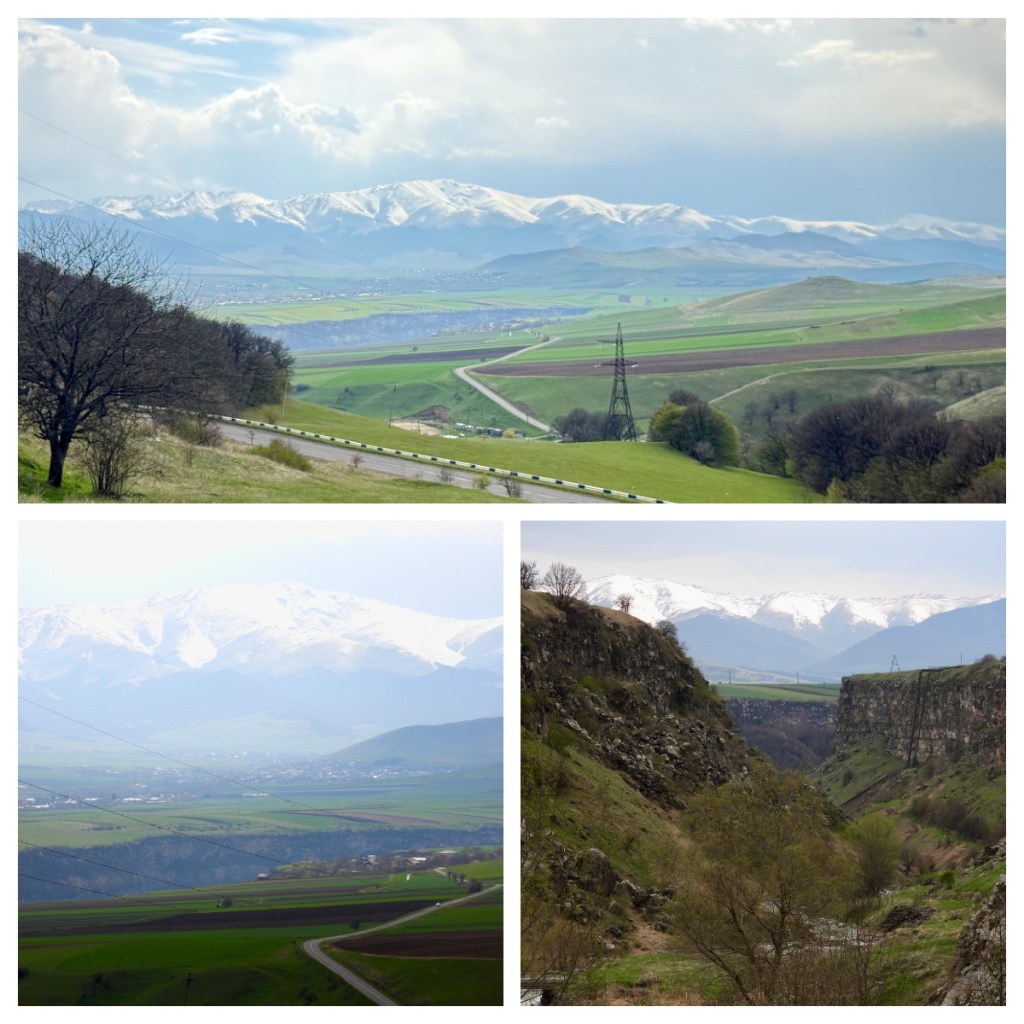
Our final activity for the day was a walk in a park but by the time we arrived it was pouring with rain so we decided to abandon that and continued on through the beautiful landscapes and small towns.  Many of the small towns appear to have a lot of deserted and unfinished houses.  Apparently, many people have just given up on rural life and moved to the city. 

A few other random facts we discussed (now in “Car chats with Levon”):

  • There is no social security or unemployment benefits in Armenia
  • There are mandatory chess lessons in school
  • In a prior life, our guide, Levon, was an economist in a bank before giving that up to be a Bartender (which earnt him a lot more money!  Of course he is now one of the best guides in Armenia!

Our hotel for the night was in the scenic mountain town of Dilijan.  It only has a population of around 15,000 people, but despite its small size, it is an international education centre for locals and foreigners, with the international school being here.  This means some expats live and work in Yerevan, whilst their families live here and their children attend the international school.

I enjoyed a dinner of cheese, bread and wine in the hotel restaurant and whilst we were eating, our host received a video call from her son on the Azerbaijan border, in full battle fatigues and helmet.  He is doing his mandatory 2-year military service and this makes the conflict all the more real.

And so ends day one in Armenia, and I was excited to see more.


Georgian capitals old and new

Georgia, April 2025

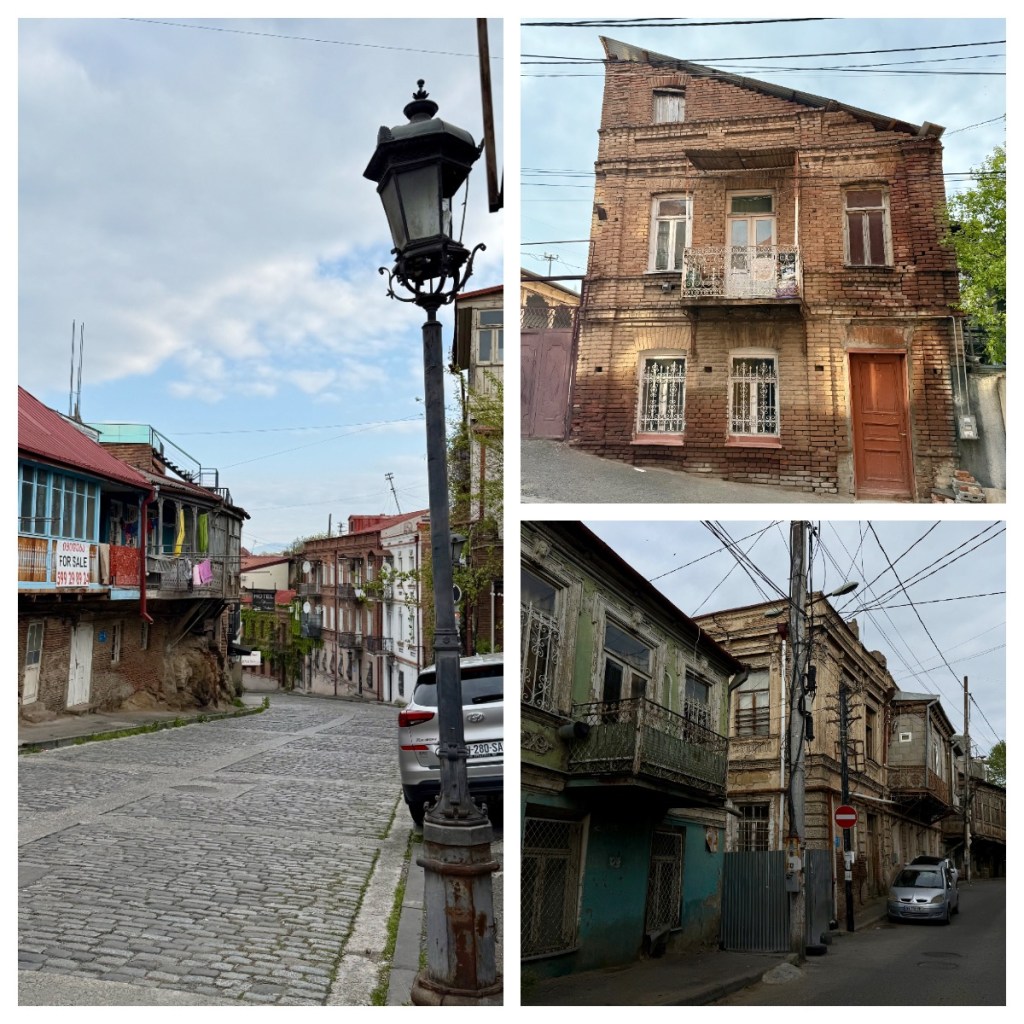
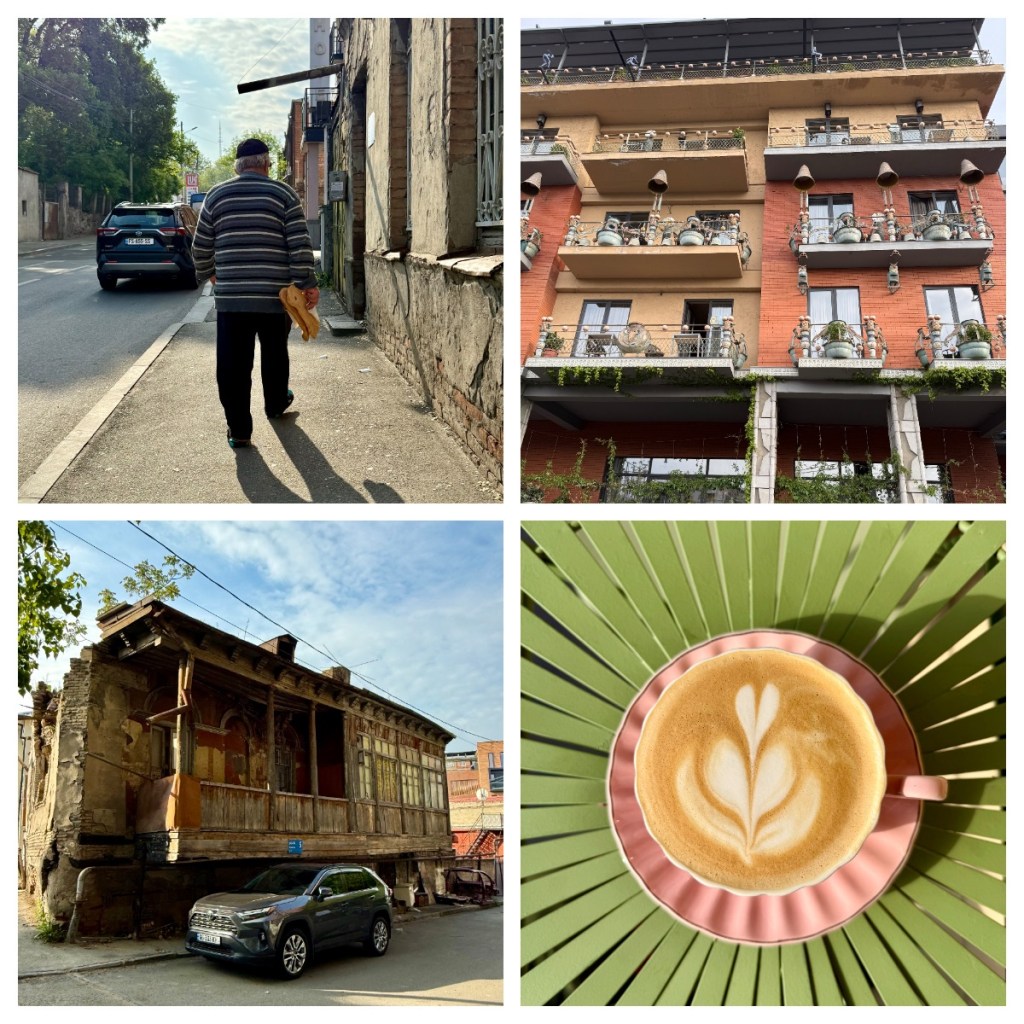
Today was Easter Sunday and I finally made it out for a morning walk through the now silent streets.   Our hotel is in a fairly residential area, with narrow potholed streets, lined by small ramshackled houses – in fact, many of the streets I walked were like this.

What I didn’t notice until I looked back at my photos that I could fulfil all my gun needs just down the road from my hotel lol.

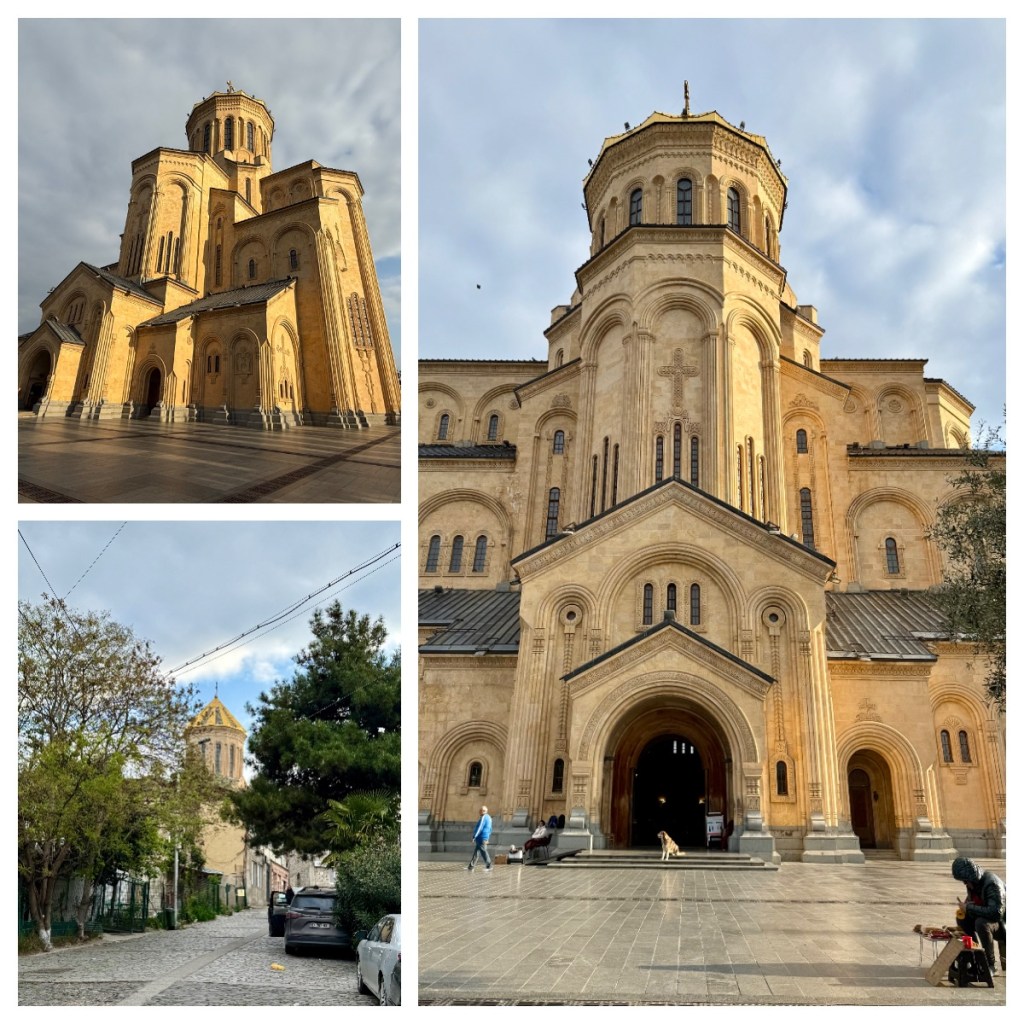
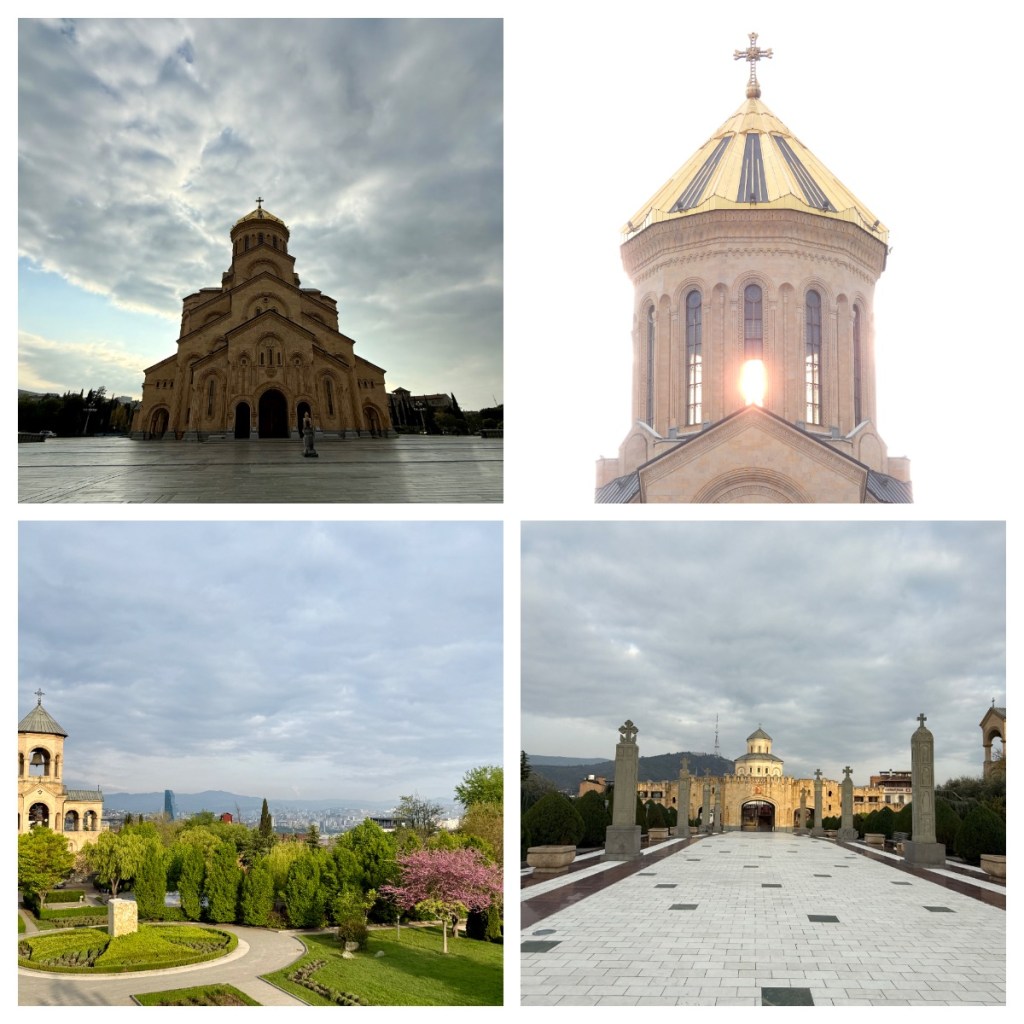
Being so pleased with the photos I had taken from my hotel room the night before, my destination was the Holy Trinity Cathedral of Tbilisi, the head church for the Georgian Orthodox religion.  Given it was Easter Sunday, I was conscious of having a look around and being on by way before the Easter rush began.  I did not even attempt to enter the church, as although it was open, I was definitely not dressed for it!

Despite the early hour, there were already vendors out selling candles and icons and of course, the standard stray dog guarding the doorstep lol. 

The cathedral, finished in 2004, is the tallest church in the country (at 101m high) and its golden dome dominates the Tbilisi skyline on this side of the Kura River.  Although it was finished in 2004, construction actually started in 1995 and the first service was in 2004 and it was somewhat controversial as this was during the “12 years of suffering”, when most of the population was struggling to survive.  

It is definitely an imposing structure and I managed to perfectly align the sun, rising behind the cathedral to take what is perhaps one of my favourite photos.  This was actually only the second time I had taken my actual camera out with me and I was regretting not having got it out earlier!  Although I am normally happy with the quality of my phone photos, the quality of those taken on the camera is another level. Why did I wait? 

As I wandered back down through the streets I was shocked by the contrast from one street to the next.  One street is full of run down and ramshackled buildings (with the cathedral towering over the neglected houses) and then the next is full new builds.  The old buildings have real character so I do hope they chose to refurbish some, rather than just demolish them to make way for modern tower blocks. 

It seems that not much opens before 9am here, even hotel coffee shops did not appear to be open, but I did finally manage to stumble across a cute little café which was open.  Even better, the aesthetics were almost as good as the coffee ❤️.

Tazo picked us up at 11am and we joined the traffic again heading out of town – apparently today many would be visiting cemeteries in the villages. 

Our first stop of the morning was the Jvari Monastery, a 6th century monastery sitting on the edge of a cliff, overlooking the ancient capital of the Kingdom of Iberia, Mtskheta.   The name translates to “the cross” and legend says that the cross of Saint Nino, who we met a few days earlier, was placed here (over a Zoroastrianism sanctuary) as she converted the people in the capital city below to Christianity. 

Subsequently a church was built on that site.  Although some of what we see today dates back to that original church, it has also been through a lot restoration work over the years – this has been a challenge given the state of the original building and the loss of the building records in a fire!

That said, it is still considered a site of great importance and one of the most sacred sites in the region. 

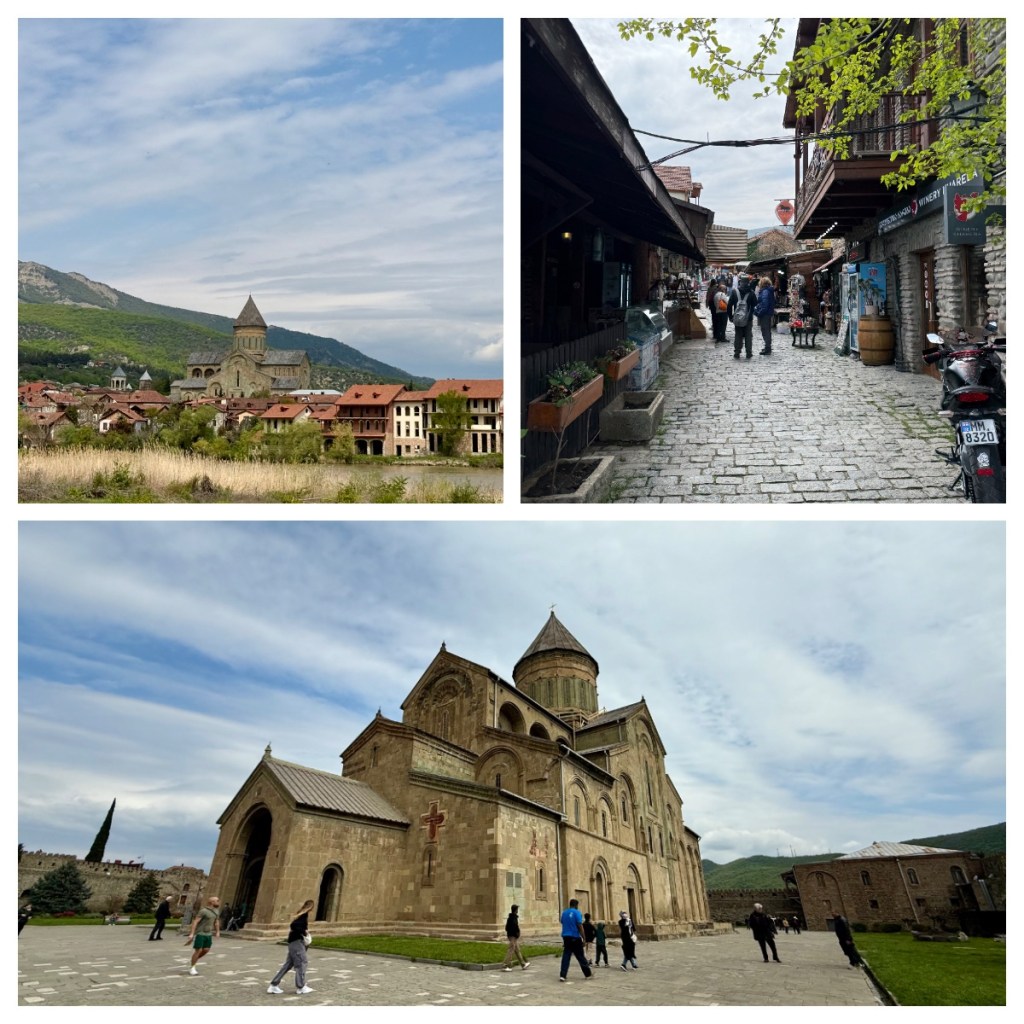
We then went down into Mtskheta, once a grand capital city, today more of a tourist capital and quite possibly one of the most touristy places we have been with many stalls selling souvenirs lining the narrow, cobble stone streets of the old town. 

Mtskheta is not only one of the oldest cities in Georgia, but also one of the oldest continuously inhabited cities in the world (along with Kutaisi) and it is believed that the original settlement was founded by the ancient Meschian tribes in the 5th century BC.  As I mentioned above, from the 3rd century BC to the 5th century AD, it was the capital of the Kingdom of Iberia.  It is also considered the birthplace of Christianity in Georgia.

The Svetitskhoveli Cathedral is the second largest church in Georgia, after the Holy Trinity Cathedral I had visited earlier in the morning, and what we see today was built around 1010 on the site of one built in the 4th century.  Unfortunately a lot of its frescoes were lost due to whitewashing by the Soviet imperial armies over the years.  

The town has been referred to as the second Jerusalem due to its status as a Holy city and is the burial place of Georgian Kings. Legend has it, it is the resting place of Jesus’s tunic, brought to the city by a Georgian Jew who had witnessed the crucifixion.  

Given its holy significance, it was no surprise that this church had a higher dress code than others we had visited and we were provided with scarves to cover our heads.

There is apparently a tunnel that connects Svetitskhoveli Cathedral to Jvari Monastery on the hill above, along with a spring and space for 1,000 people to hid in case of attack (which came frequently over the years). 

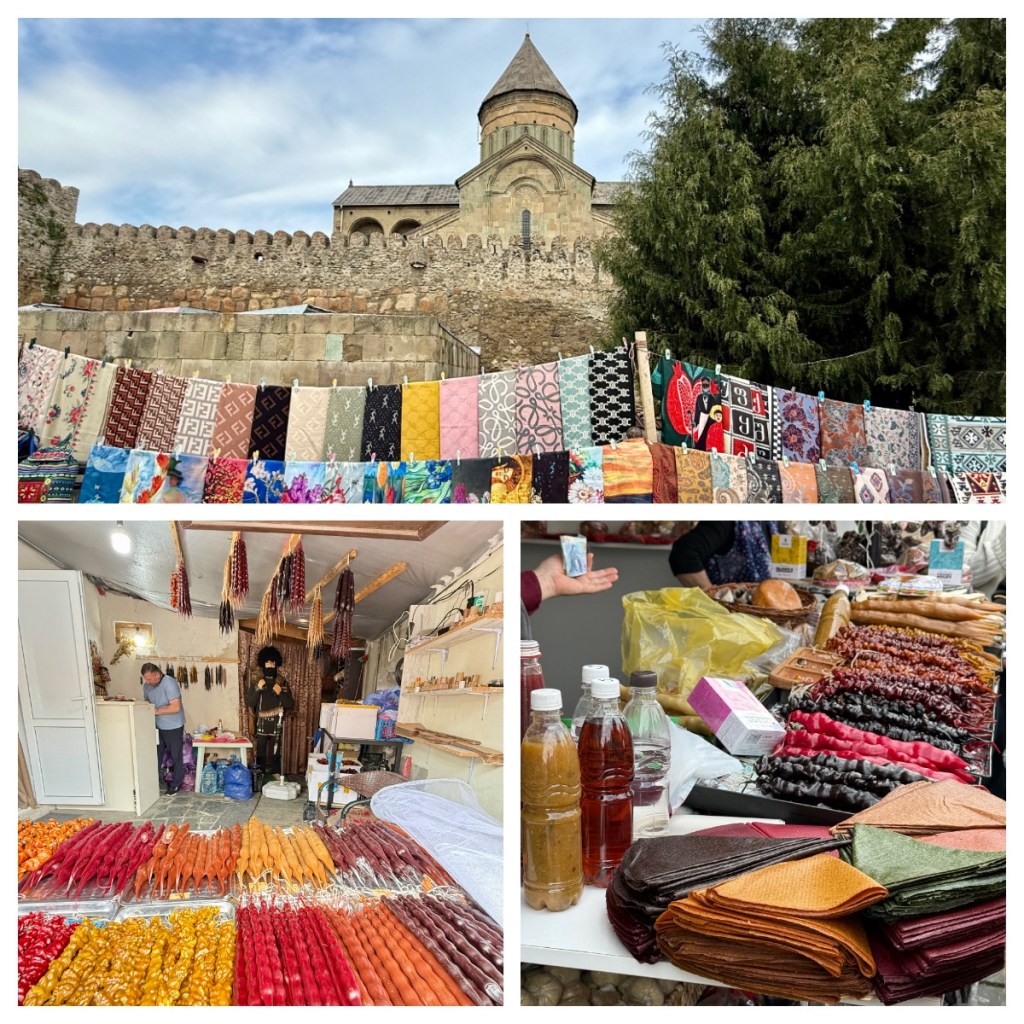
We walked back through the gauntlet of tourist shops and stopped to purchase some churchkhela – a sausage shaped sweet we had seen all over the place.  It is traditionally made of walnuts, surrounded by concentrated grape juice, but other varieties have different nuts and different fruit juices.   Apparently, Georgian soldiers used to carry them with them as they contained enough calories for one man of day!  That was not great as I had to eat what I bought before I left as I could not take them home with me.  

Apparently many that are sold these days are mass produced, but one seller here still makes them in the traditional way so we made sure to purchase from him.  I really liked them but they were very sweet.

As we drove back in to Tbilisi, we passed some small protests happening around parliament.  Apparently, there is some discontent with the last election held in October 2024 which re-elected the Georgian Dream party who have been in power since 2012.  A number of international organisations have noted problems with the election and so opposition parties and many of the Georgian people have refused to recognise the results and have taken to the streets daily in protest.

These intensified when the current Prime Minister announced he was suspending talks on Georgia’s bid to join the EU.  Currently Georgian’s have visa free access to EU countries and this could be impacted by this move.

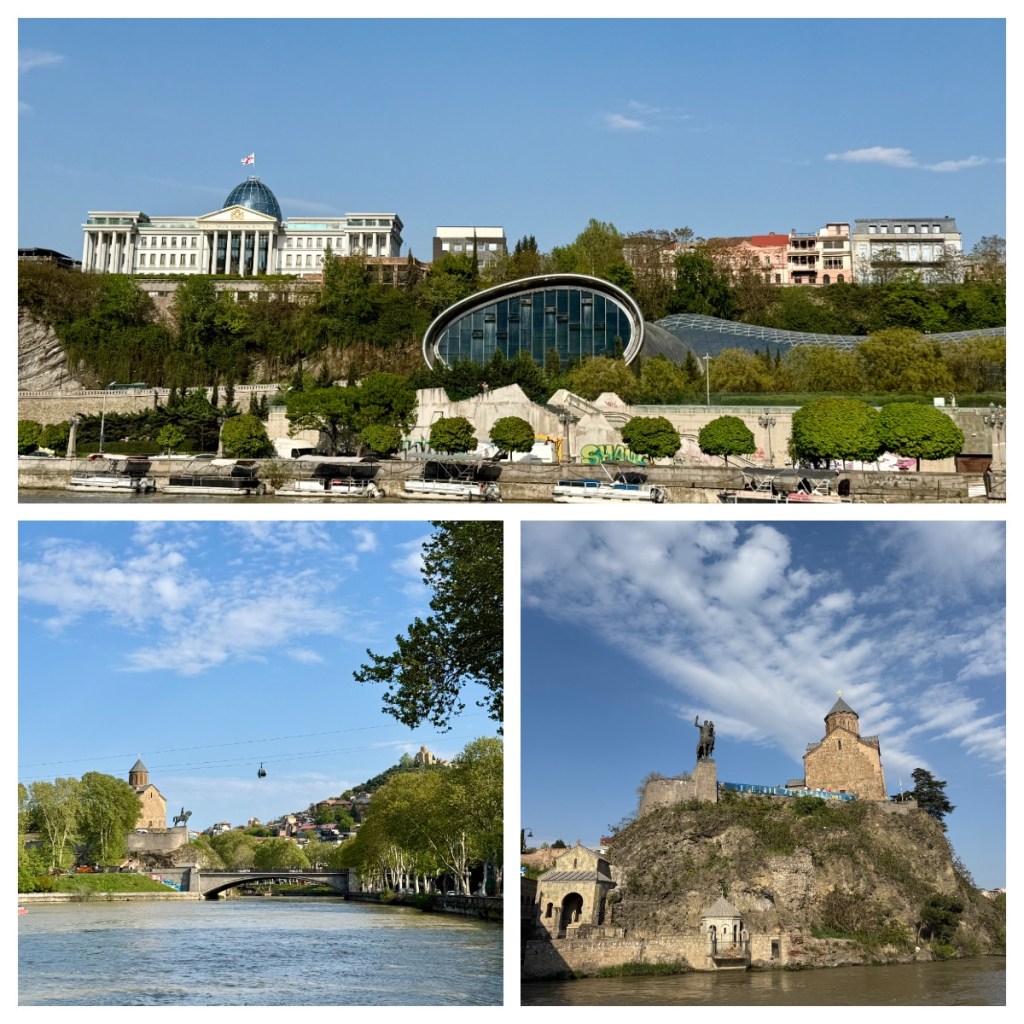
We continued on past a golden St George (on a very high plinth) before finding a parking space near the Metekhi church on the left side of the river.  It is one of the oldest churches in the city and a great viewpoint across the river to the old city. 

From here we walked down to the cable car station in Rike Park to travel 5 minutes over the river and old town and up to Narikala Fortress, perched on top of the hill, with great views of the city on the way.  The cable car is a very popular way to get around for locals and tourists alike.

There is a beautiful panoramic view from the top, including a close-up view of Kartlis Deda or Mother of Georgia.  Unfortunately the way she is situated you actually only get a close-up view of her behind!  The “Mother of” is actually a soviet concept and many ex-USSR countries have one.  The 20m Georgian monument was erected in 1958 and made of aluminium.  It depicts a Georgian woman in national dress, holding a bowl of wine in her left hand to greet people who come as friends, and a sword in her right had for those who come as enemies.  I am glad we got the wine lol

Instead of visiting the fortress (we have seen a fair few) we walked down through the National Botanical Gardens which lie in a gorge on the other side of the hill to the city.  They cover around 160 hectares and it was a beautiful day for a stroll passed the waterfalls and trees with their spring blossom and even more great views – this time back across to the Narikala Fortress.

We ended up in the Tbilisi’s old town and spent a little time exploring the narrow, cobbled streets.   Passed the famous painted houses with carved balconies, the very Islamic looking sulphur baths and views back across to the cathedral on the other side of the river.


We passed through the very tourist targeted area filled with bars, night clubs and cafes, before stopping to admire the Tamada statue.  We had seen a smaller version of him on the fountain in Kutaisi, but this time he is much larger and a cultural landmark of Tbilisi.  If you missed the Kutaisi blog, the Tamada is a toastmaster and is a symbol of Georgian hospitality.  He is responsible for leading feasts, offering toasts and is considered a person of wisdom, wit and respect.  A should also note, that the sculpture is based on an 7th century artifact found in Vani.

By this time it was almost 4 o’clock and we had not stopped so definitely time for some food.  We found a cute café, and tried a couple of Georgian dishes we had not yet had.  Pkhali, a dish of chopped up spinach leaves combined with ground walnuts and herbs (it tastes much better than it sounds) and another type of Khachapuri, this time Adjarian Khachapuri. 

Perhaps the most iconic of the Khachapuris, the Adjarian Khachapuri looks like a boat of dough filled with melted cheese, butter and an egg!   I was not really sure how to eat it but ended up using some of the dough to mix the egg and cheese together and then scope the filling.  You do have to be careful of where you take the bread pieces from at the beginning so you do not get a flow of cheesy goodness all over the place.  Again, I think it tasted way better than it sounds. Lol.

We washed this down with some wine for me, and a fresh tarragon lemonade for Ania (who is still on antibiotics).  The wine was good but the tarragon lemonade was amazing, sooooo much better than the sugary fizzy stuff in a bottle.

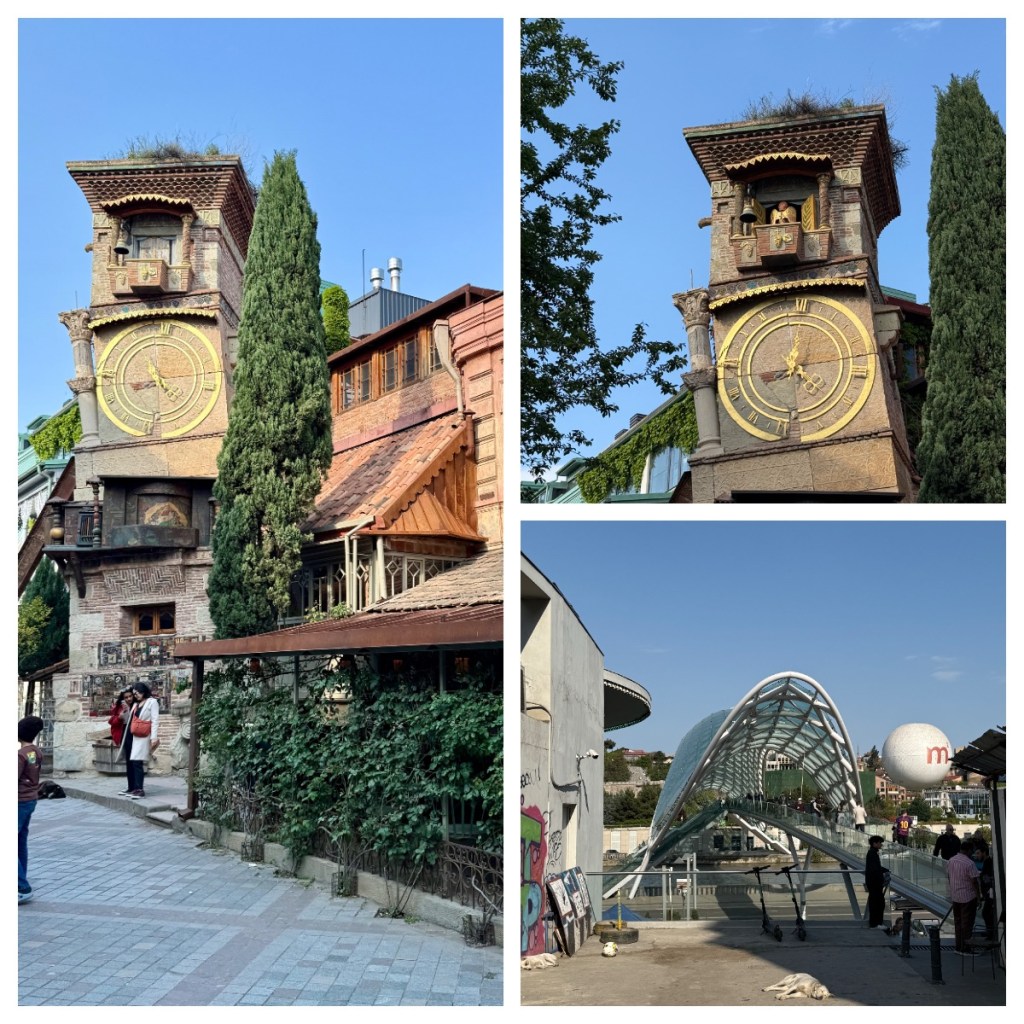
This part of the city felt with European and we continued on passed the Peace Bridge and ended up at the Gabriadze Clock Tower, more commonly know as the Leaning Clock Tower or Wonky Clock.  We happened to stumble across it just before 5pm so were just on time to see the angel comes out and strike the bell on the hour.  It is actually part of the puppet theatre building which was also created by Georgian director, screenwriter and artist Rezo Gabriadze.

We slowly made our way back to our hotel and over 20,000 steps later I was ready for a relaxing evening of packing and preparing for our next destination tomorrow.


Monasteries and myths

Georgia, April 2025

Today was Red Friday (as I explained in my previous blog) and Tazo’s family were near by, so he spent the morning with them, and we had some free time to explore the town of Kutaisi, one of oldest cities in the world having been continuously inhabited since 1,400BC.

With a population of around 135,000, Kutaisi is Georgia’s 4th largest city, and it was an important political centre in the Middle Ages and the capital of Georgia from the 8th century BCE to the 11th century. Not only that, it was actually the seat of the Parliament of Georgia from October 2012 to December 2018 in an effort to decentralise the Georgian government. The move was not particularly popular and in January 2019, it was moved back to Tbilisi.

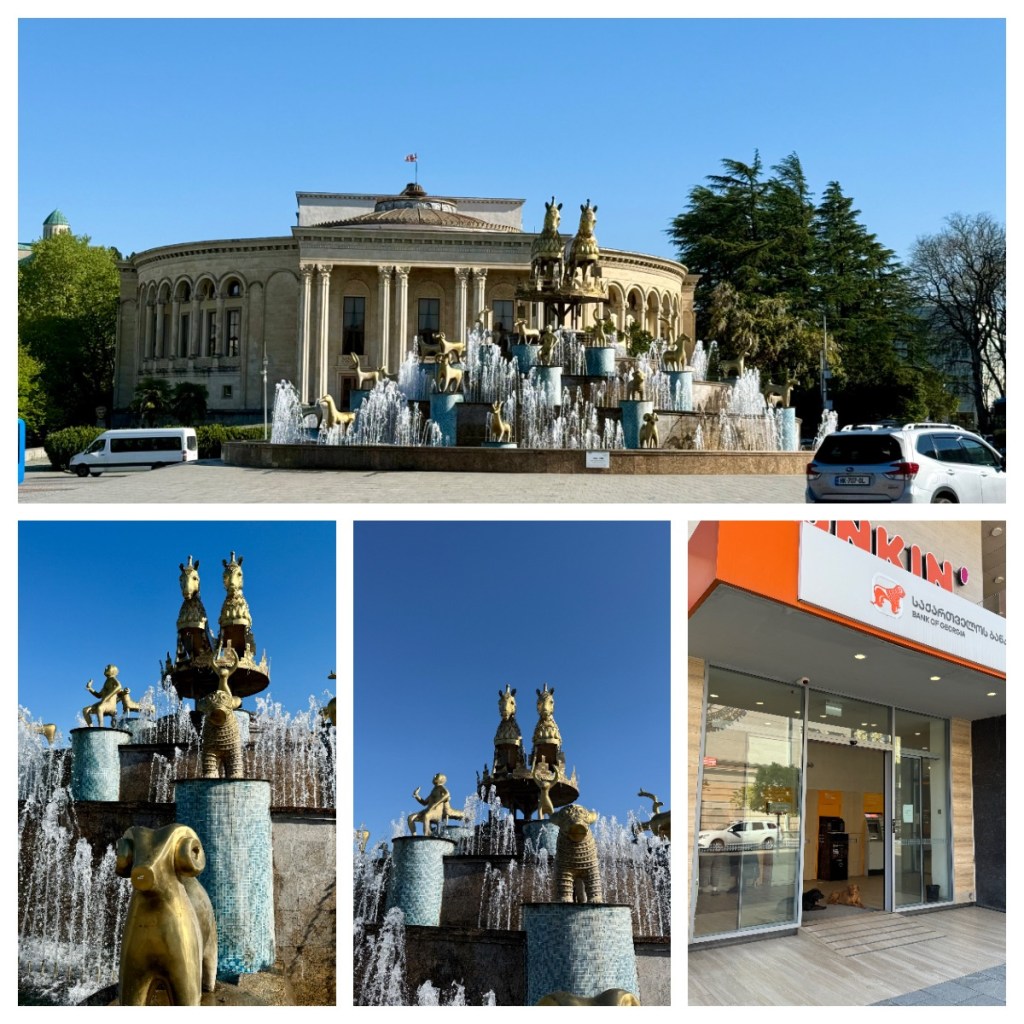
One of the main sites of the city is the Colchis fountain, so that was our first stop.  It is basically on a roundabout, in amongst the business city traffic so it was good to go early when we could easily cross the road to get to it! 

The fountain itself celebrates the ancient Kingdom of Colchis and has 30 large copies of famous gold jewellery, discovered at nearby Vani archaeological site. The figures include animals and ancient Georgian figures, including the lion that features on the Bank of Georgia logo and Tamada.  Tamada is thought to be representative of the Georgian toastmaster tradition and the original little bronze statue dates back to the 7th century BC. 

According to Greek mythology, Jason and his Argonauts visited the city, sailing down the Rioni river from the Black Sea to claim the Golden Fleece – today the river certainly does not look like a large ship could sail down it!  As well as leaving with the gold, he also left with the King’s daughter Medea who became his wife!

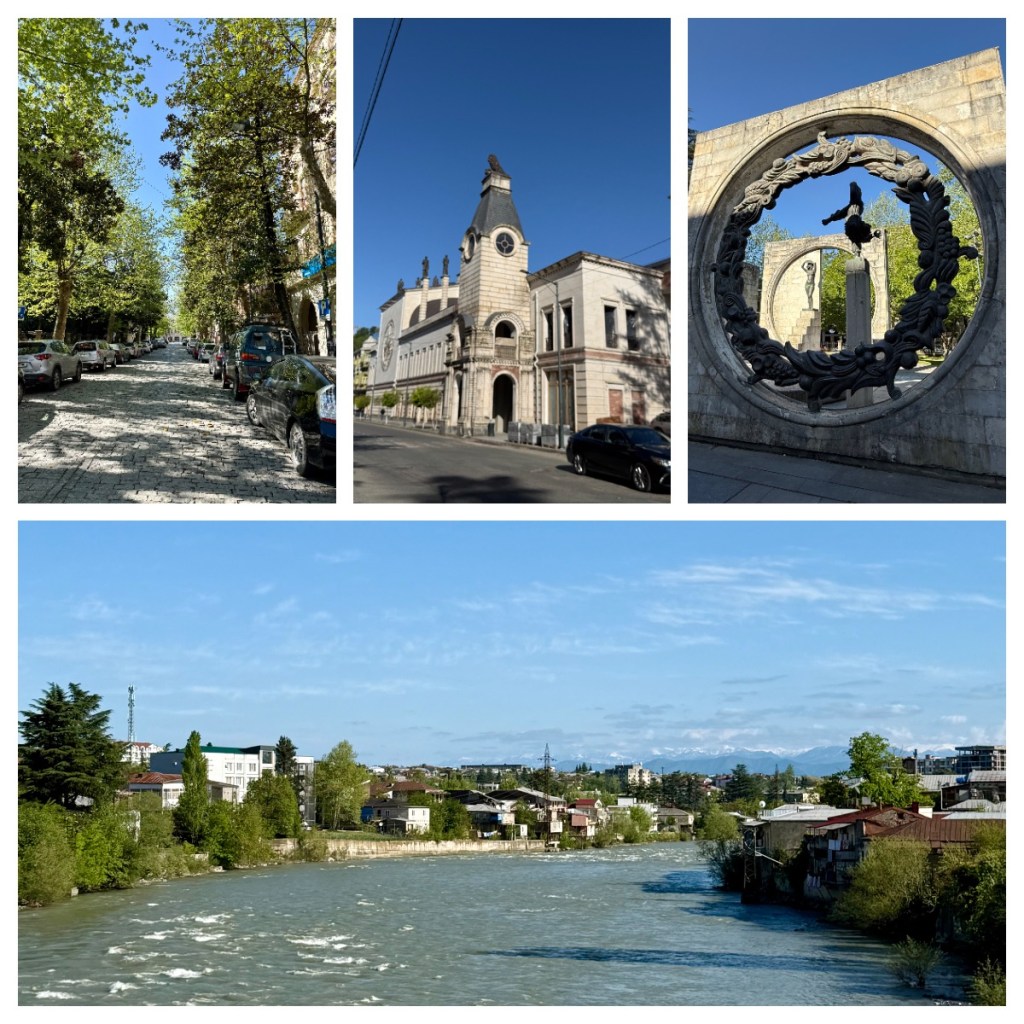
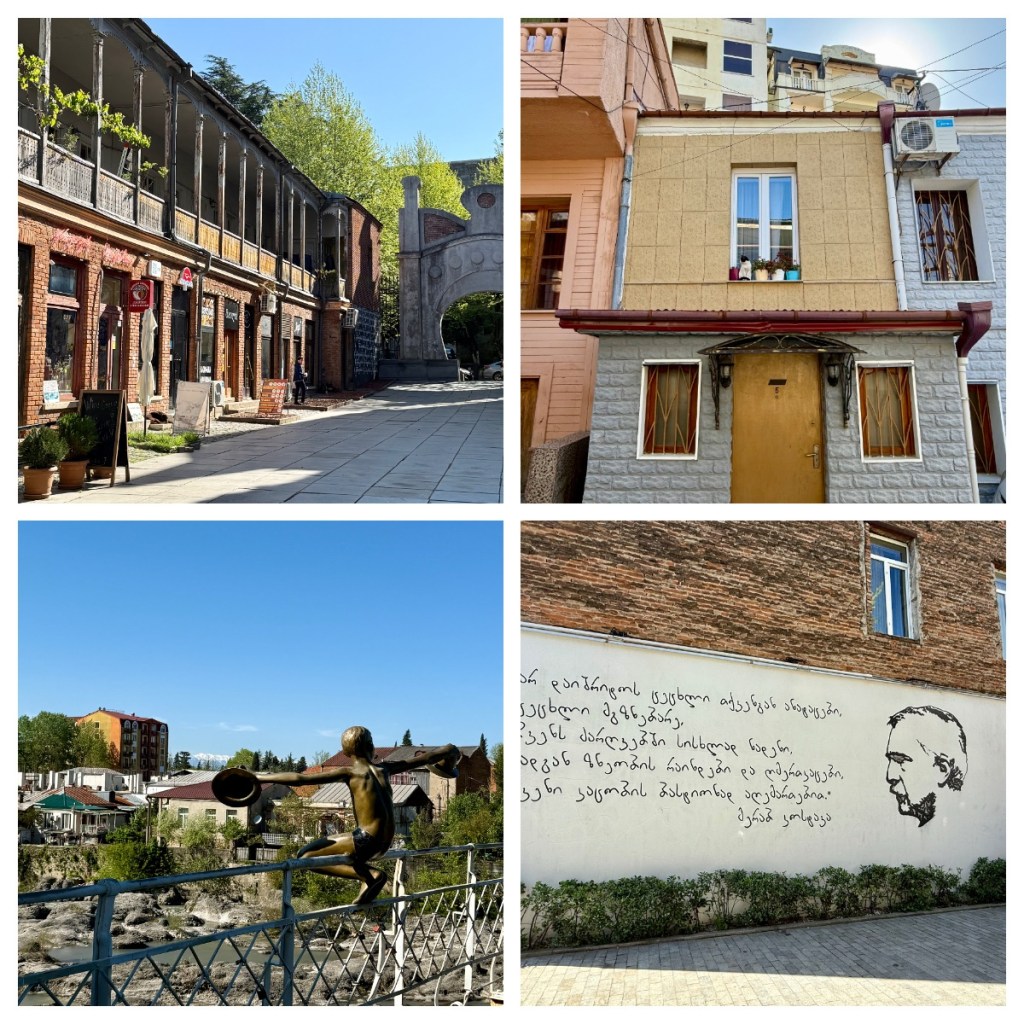
From the fountain we wandered passed the Opera House and Theatre, down some of the beautiful tree lined boulevards and across one of the bridges to admire the view out to the snow-capped mountains.  The old part of town was lovely and it was nice to have some free time just to wander. 

Unfortunately our time was cut short as Ania, my travel companion, had a toothache and we needed to find a dentist for her.  Despite being a public holiday, we found a 24 hour dentist just around the corner form our hotel and she could just walk in and see someone (although she did have to call Tazo for some translation services lol).  Armed with some antibiotics and pain killers we went back to the hotel to check out and meet Tazo to continue our journey.

Before leaving Kutaisi, we visited a couple of local sites, just outside the city, the first being the Bagrati Cathedral.  Originally built in 1003 by King Bagrat III, it is a symbol of a united Georgia and of the city itself.  It was on the UNESCO World Heritage site list, but then removed as reconstruction work over the years did not meet with UNESCO standards to maintain the integrity of the original structure, most of which had been destroyed through battles and subsequent decay. 

It is still an active church today, and so we could not take any photos inside but the main thing of note was some priests doing some DIY and some relics, including a human skull!  Outside there was a beautiful view across the city and out to the mountains beyond.

I am also back on Lada watch, with some great examples of their longevity and sturdiness being seen around the city!!

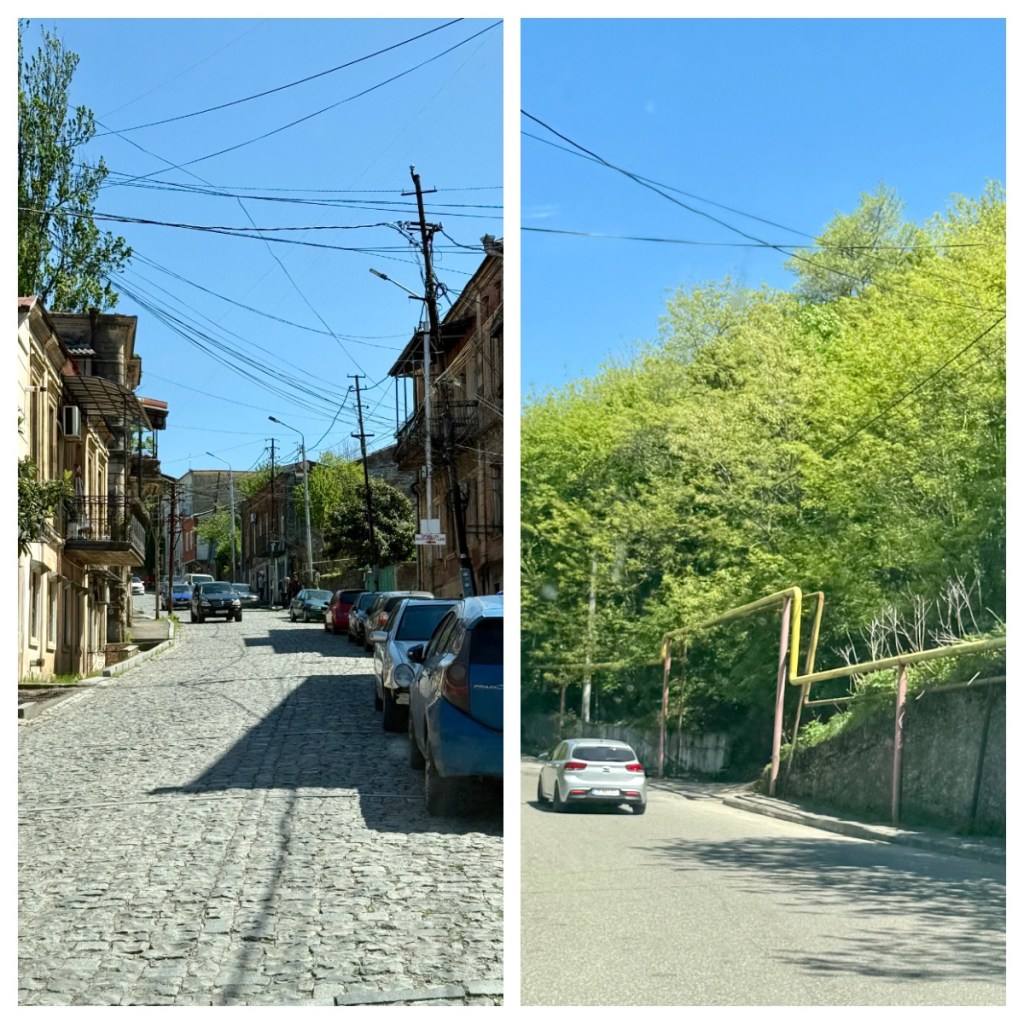
As we drove along narrow, cobbled streets to our next destination, I noticed the above ground gas pipes, as previously seen in Kazakhstan.  In some places they run about 30 centimetres of the ground but then go up to around 2-3 metres to allow for vehicles to pass under them.  Most were installed during Soviet times, so not surprise you see them in other ex-Soviet countries.

The 8th century Motsameta monastery is not only beautiful, perched on a cliff overlooking the Tskaltsitela river, but it is also where Tazo was baptised so he was excited to show it to us.    The name means the “Place of Martyrs” which relates to two brothers of a noble family who organised a rebellion against the occupying Arabs.  When their rebellion failed, and they refused to convert to Islam, they were tortured, killed and their bodies thrown in the river.    Subsequently they were recognised as saints and their remnants are kept in the nearby Gelati monastery.

Apparently, there is a secret (or perhaps not so secret) tunnel between Gelati and Motsameta monasteries used during wars and the crypts of both are said to hold relics such as bones of saints, including the brothers.

The monastery was beautiful inside and out, with purple flowers growing out of the rocks outside and lovely murals on the inside.

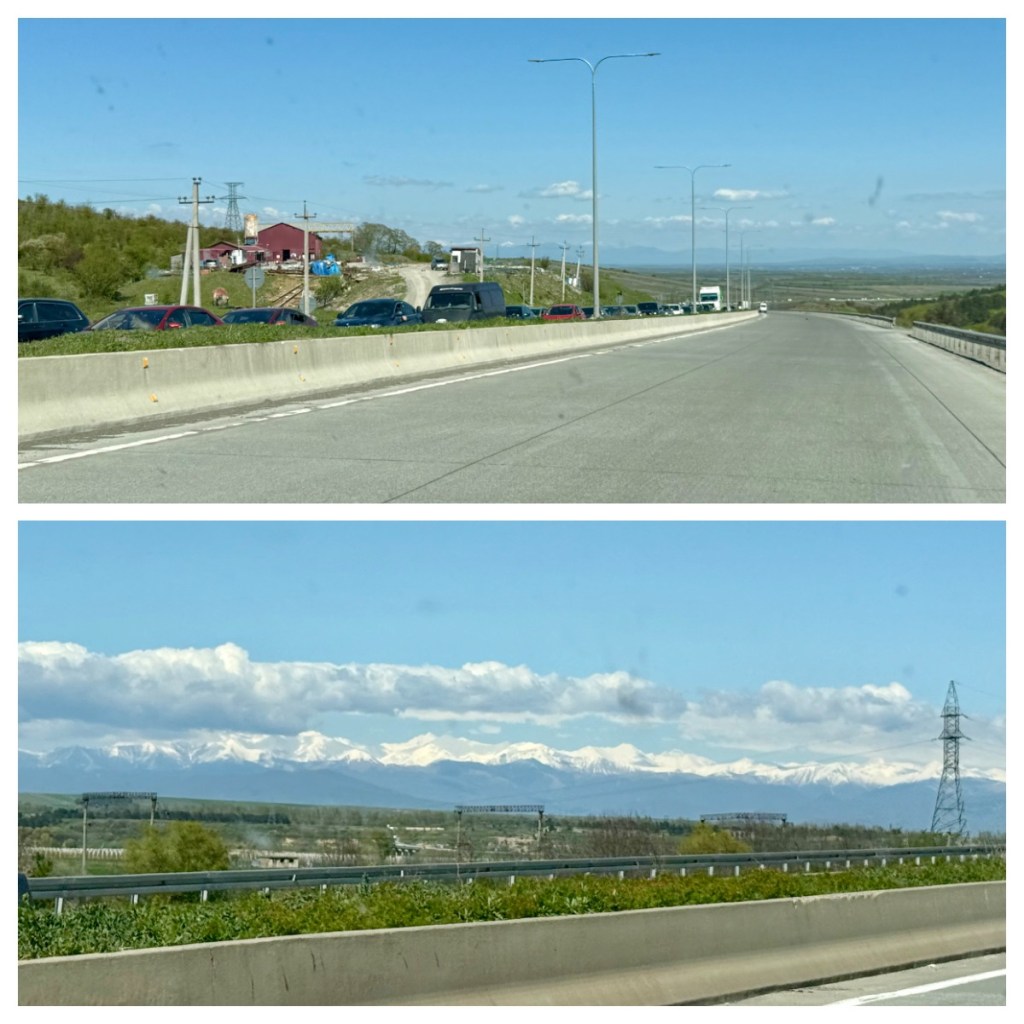
We were then back on the road to travel the 220km back to Tbilisi, and for a while we did not see the Easter holiday traffic that Tazo had predicted – but then we did!  Thankfully it was all on the other side of the road, travelling away from Tbilisi and for some time it was at a complete stand still.  Thankfully there was hardly anyone travelling towards the city so we were grateful to be going that way!

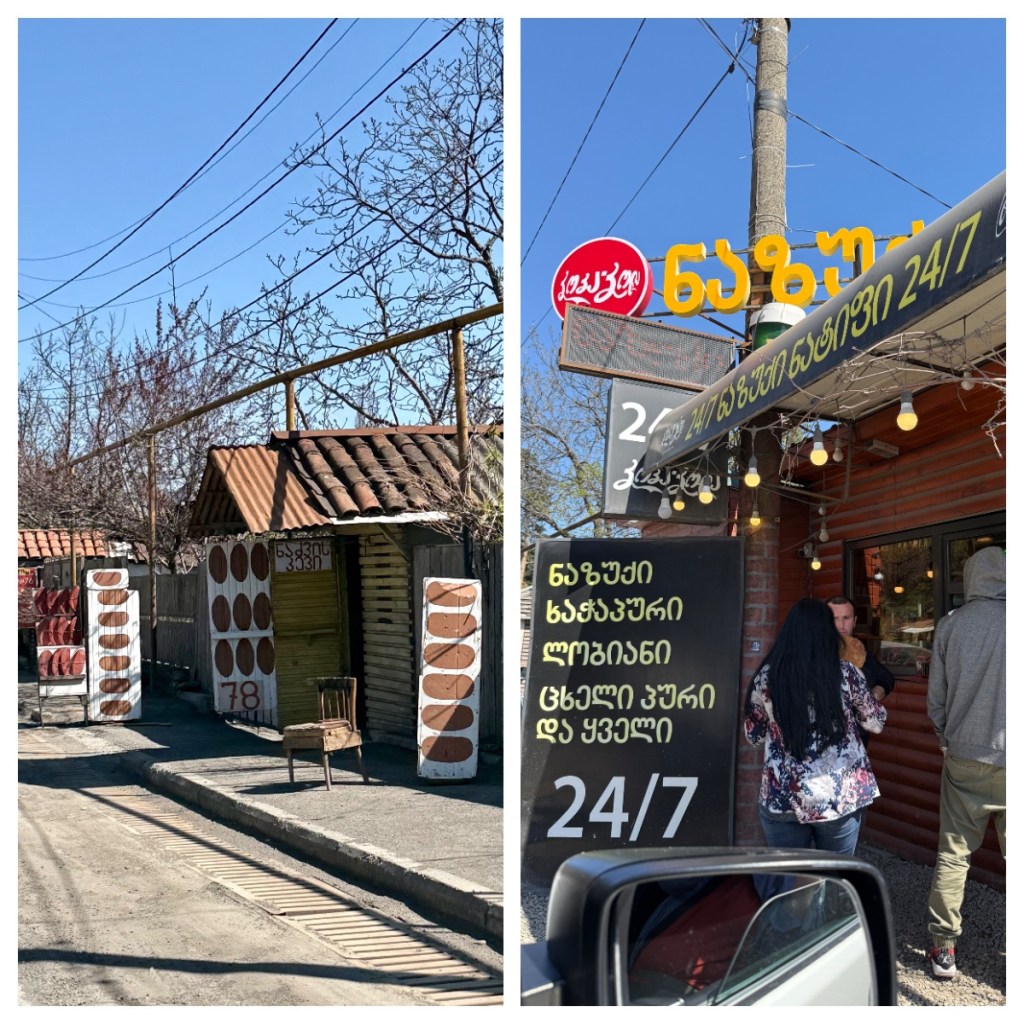
As it had been a busy day (since Tazo had picked us up) we had not had time for lunch, so we stopped on the road side to buy some Nazuki, a delicious, warm spicy sweet bread – there were lots of road side stalls selling it, advertising it with signs of brown oval blobs!  The bread was not brown, but I guess it was oval shaped and it was definitely tasty! 

Nazuki dates back centuries and its name translates from Persian as “exquisite”.  Traditionally they are cooked in a tone oven (a clay tandoor oven where the bread is stuck to the side) and in this particular area (called Surami), is called Nazukebi, a 1 Km stretch of Nazuki sellers.  Apparently a lot of these were set up during period of great economic struggles, allowing people to support their families by baking and selling nazuki. 

Also along this stretch of motorway, we passed very close to the Russian occupied state of South Ossetia, and I mean really close.  Tazo pointed to a village not far aware and noted that it was occupied by Russians!  It is crazy to think that life goes on so close to the contentious “border”.

We arrived back in Tbilisi and Tazo dropped us back at our hotel just after 5pm and thankfully I had much nicer rooms than we did for our one night stay – I even had a little enclosed balcony.  This time we are here for 3 nights so it was time to do some washing and realign the packing.  As we have been constantly on the move, I tend to alternate the same two outfits (rather than unpack my bag) so it was good to remind myself what else I had packed and get those out to wear.

Ania was not feeling great so I went on the hunt for somewhere to have dinner and came across a lovely Italian restaurant.  I felt a little guilty having Italian food in Georgia but made up for it by having a glass of Georgian wine.🍷

Mountains high, valleys low

Georgia, April 2025


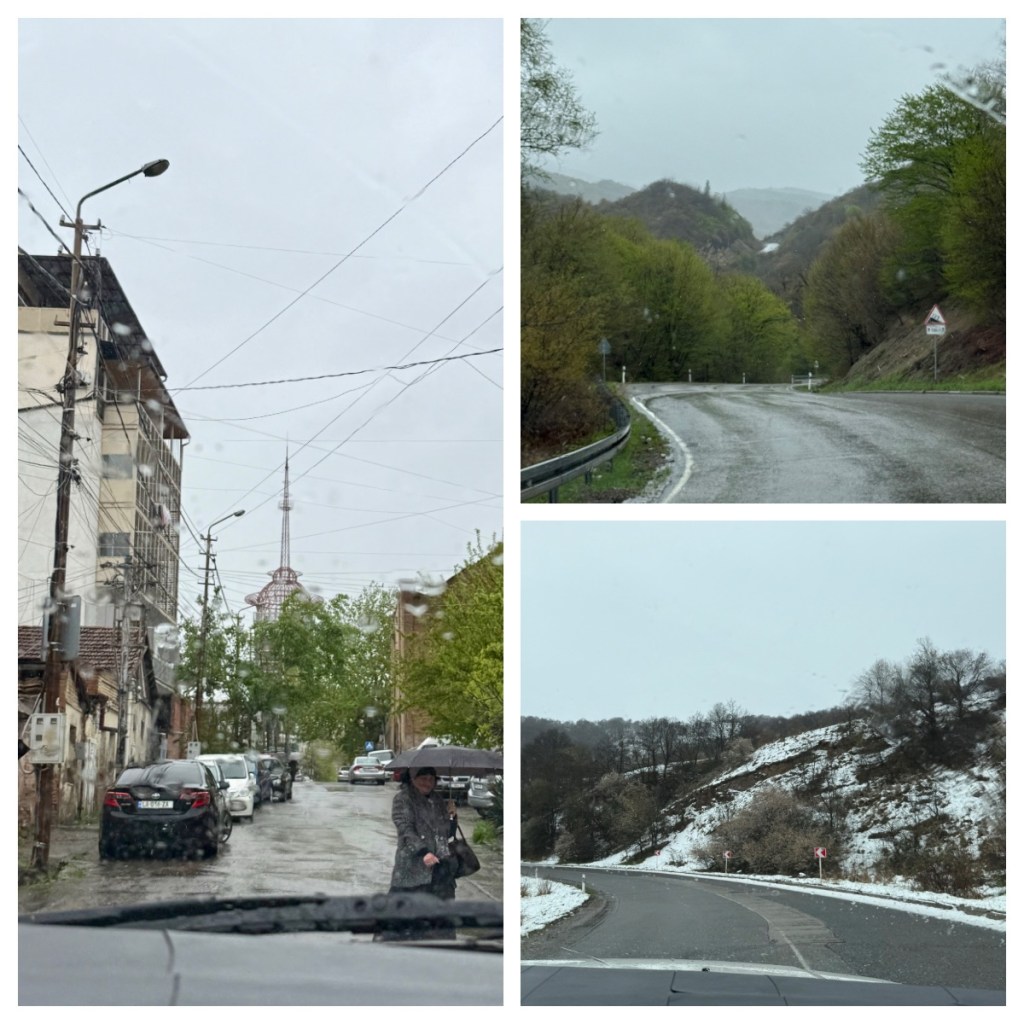
We woke to another day of cold rain, and due to the Easter holidays (where many things would be closed and traffic would be crazy), Tazo had managed to rearrange our itinerary, so instead of staying in Tbilisi for a few days, we were heading straight out again.

Today’s journey took us over the mountains of the Samtskhe-Javakheti region and we passed through beautiful mountain landscapes and small villages – neither were conducive to any good photos from a moving car …. in the rain!   But as we drove higher we started to started to see snow on cars coming from the direction we were going in!

In “Car Chats” today we talked about Georgia’s fight to retain its territory and independence.  Here, all men need to do 2 years military service and the last major skirmish, the Russo-Georgian war, was in 2008 when Russia took occupation of Abkhazia and South Ossetia.  Still today, Russia and 4 UN states recognise these areas as independent states, whilst Georgia and most other UN states recognise it was part of Georgia, and therefore the EU, and the UN now recognise the areas as “occupied territories”.  Despite that, Russian continues to build military bases in the regions, create borders along the boundaries of the disputed lands and refuse entry to any international monitoring missions.

Russia continues to claim that Abkhazia and South Ossetia are independent states and not occupied territories and citizens can have local passports (of Abkhazia and South Ossetia) but get Russian passports for international travel.   Still today, tensions still run high along these borders and a permanent and peaceful resolution does not appear close.

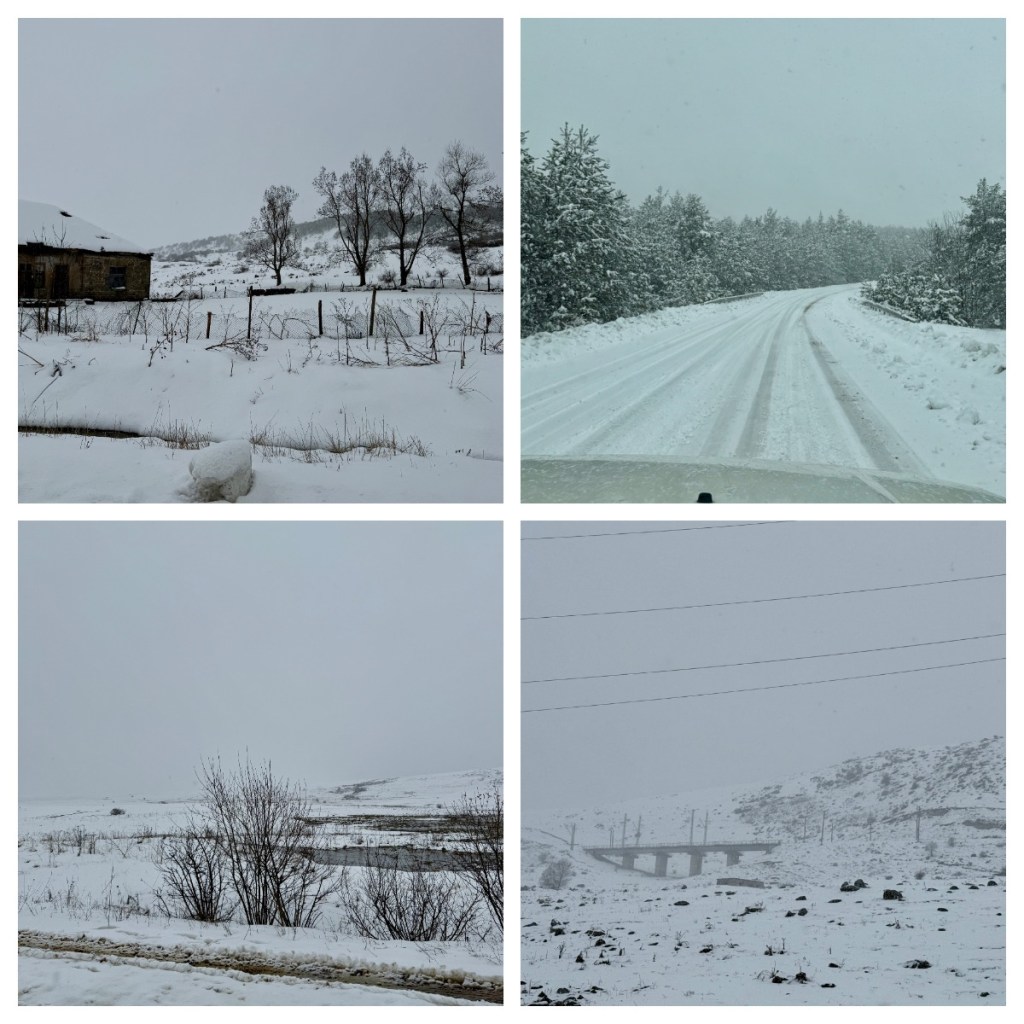
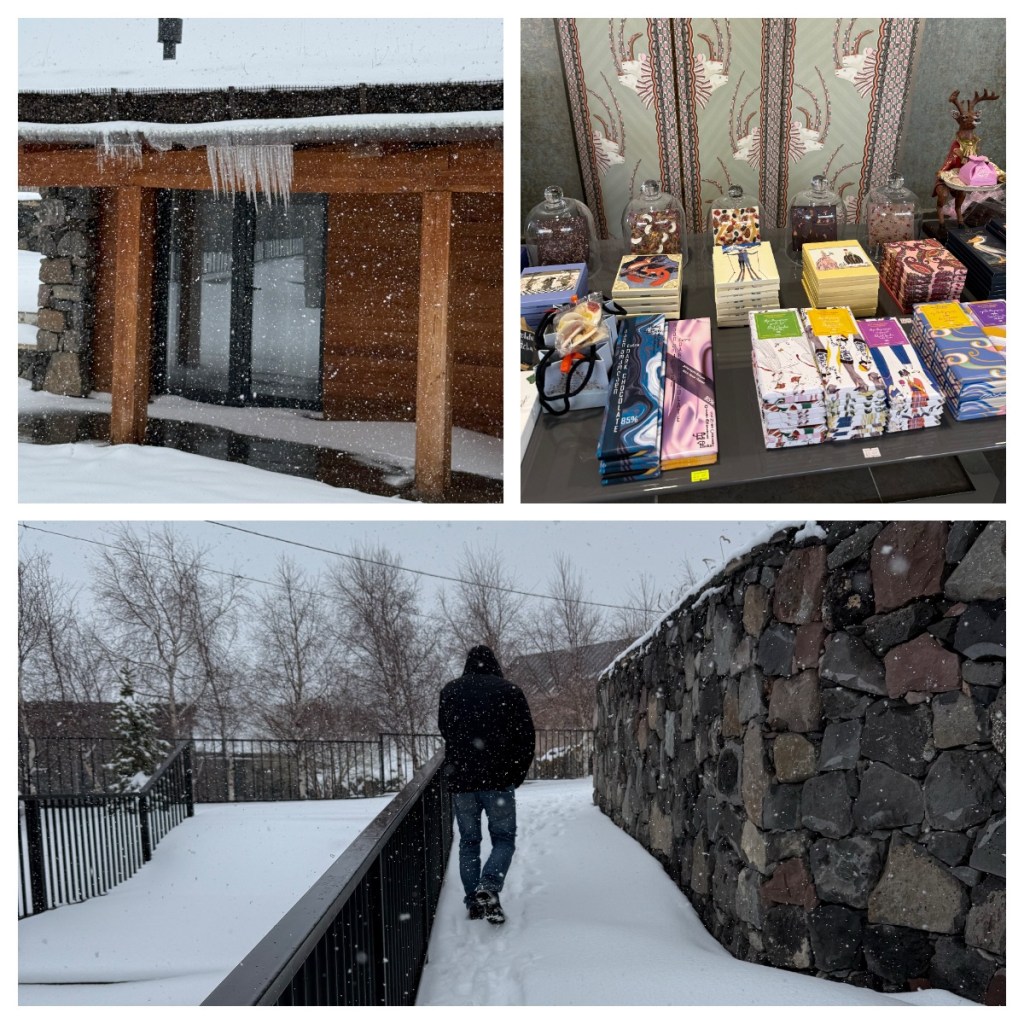
Up into the snow we drove and at almost 2000m above sea level it was actively snowing.  And it snowed and snowed, like serious snow!  Apparently, March had been a very warm month and most people had changed to their summer tires so this was not ideal and it was not long before we came upon a traffic jam.   Not sure if there had been an accident or if people had just decided they could not go any further, either way, the road was blocked!

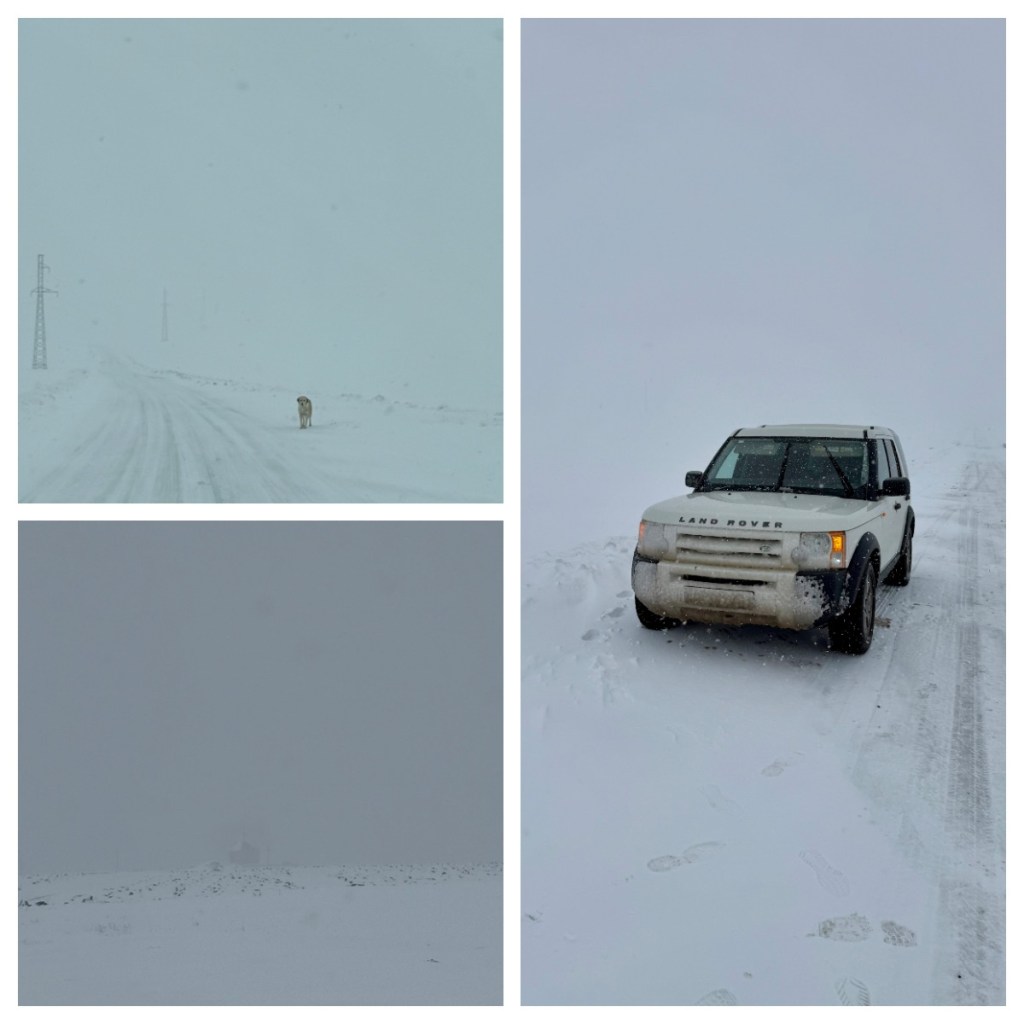
Thankfully, Tazo had picked us up this morning in his Landrover, so we went off road to get past the jam (I enjoyed this very much lol).  If we had not been able to do this, we would never have reached our destination for the day!

As we continued on, we got into almost a complete white out and the glare was insane!  Who knew the first time I would need my sunglasses would be for the snow!    We had now gone beyond the areas where the roads had been cleared and/or driven on by other cars and it was not always obvious where the road actually was!!   Tazo was also very excited by the snow as in the winter they plough immediately so he doesn’t often see snow like this on the roads!

We were supposed to have a stop at Paravani Lake, Georgia’s largest lake which is apparently quite beautiful.  Not only could we barely see the lake, but we could also not see the road that takes you down to the lake so a visit to the small chapel and wooden cross on the lake shore was not an option lol.  

Today we learnt about Saint Nino, considered the “enlightener of Georgia”.    Born in Cappadocia in around 296 to an Orthodox Christian family, and after studying the Holy Scriptures in Jerusalem, the Virgin Mary visited her during a dream.  She gave her a cross made from vine branches and told her to spread Christianity across the region. 

Saint Nino was joined by a number of other women her pilgrimage but they were captured by Tsar Trdat III who killed all the others.  Nino managed to escape death and continued on to the shores of Paravani Lake to rest.

The lake and its surrounding landscapes left a profound impression on Nino, who found solace in its peace and beauty. She spent several days by the water, where the local inhabitants offered her food and shelter, allowing her to regain her strength before she set off for the capital city of Mtskheta where she was complete her mission of the conversion of the people from Zoroastrianism to Christianity.    She is still one of the most revered Saints in the Georgian Orthodox Church and a grape vine cross is a symbol of Georgian Christianity. 

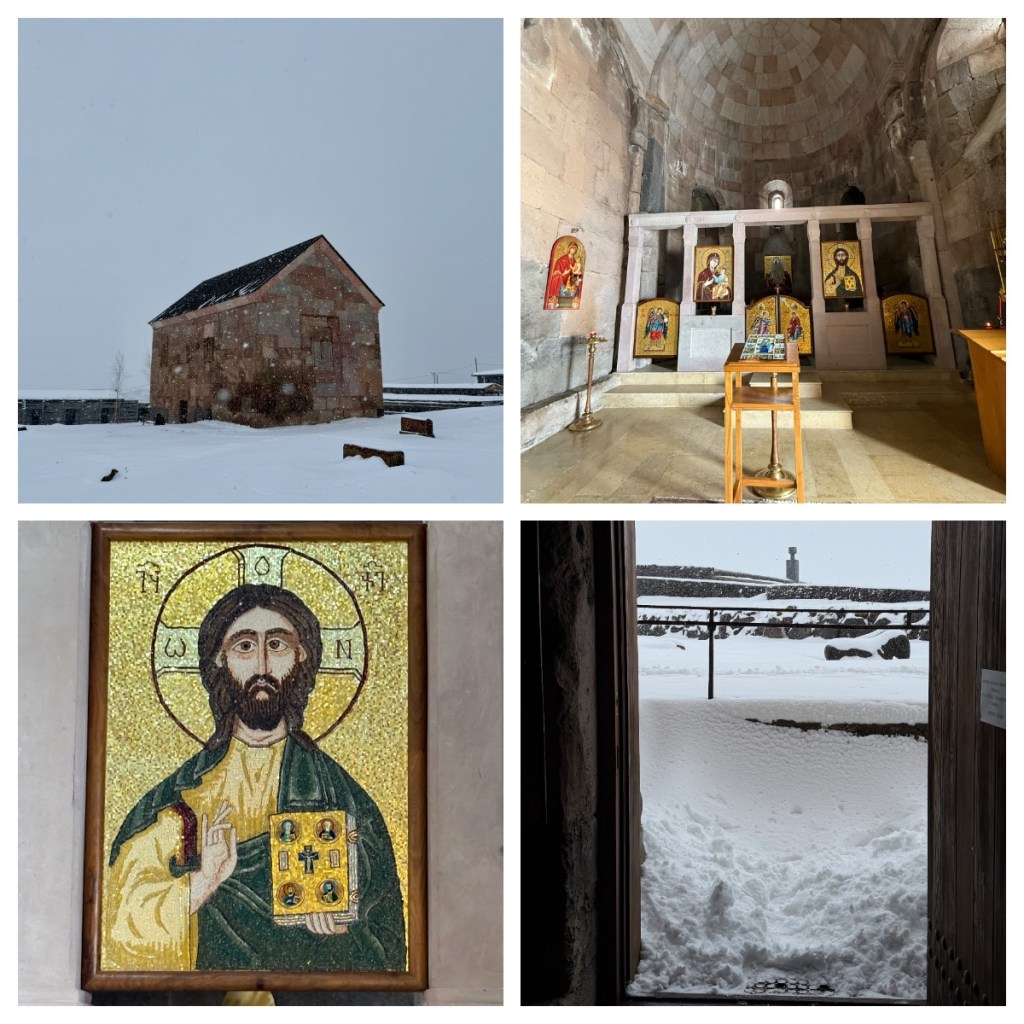
We continued on passed small, abandoned looking towns (apparently many only live here in the summer), until we reached the small village of Foka (I have also seen this written as Poka) and the St Nino Monastery.  Tazo went ahead to drag the nuns out in the snow to open their shop and the church for us to look around, as we trudged through the snow (now about 15cm deep)!   Again another moment I was grateful for my waterproof shoes but all in all I did not pack, and most definitely did not dress, for snow! 

The shop was selling a huge range of hand made products, including chocolates, biscuits, jams, oils, cheese, hats, ceramics and jewellery and given that they had been forced to come out in the snow we felt obliged to buy a few bits (mainly chocolate lol).

The Church here was built in the 11th century out of perfect cut square stone blocks and contains old carvings and fresco remnants as well as some beautiful icon imagery.

Back on the road through more deserted towns, we spotted whites storks nesting on the top of power poles.  I bet they wish they had held off their migration and nest builing for a few more weeks as they did not appear to be particularly happy! 

As we travelled down, we arrived back into the rain, but by the time we got down into the valley, we finally saw the sun!  It was hard to imagine that less than 2 hours before we were in the snow.


After a quick photo stop at the 4th century Khertvisi Fortress (we will return for a visit a little later), we followed the Kura River (that runs through Tiblisi and also through Azerbaijan out to the Caspian sea) down the valley.  During the stone age, most people lived near the rivers, hence the numbers of fortresses and watch towers in the valleys along the rivers.  Even Alexander the Great apparently travelled down this valley on his march towards India. 

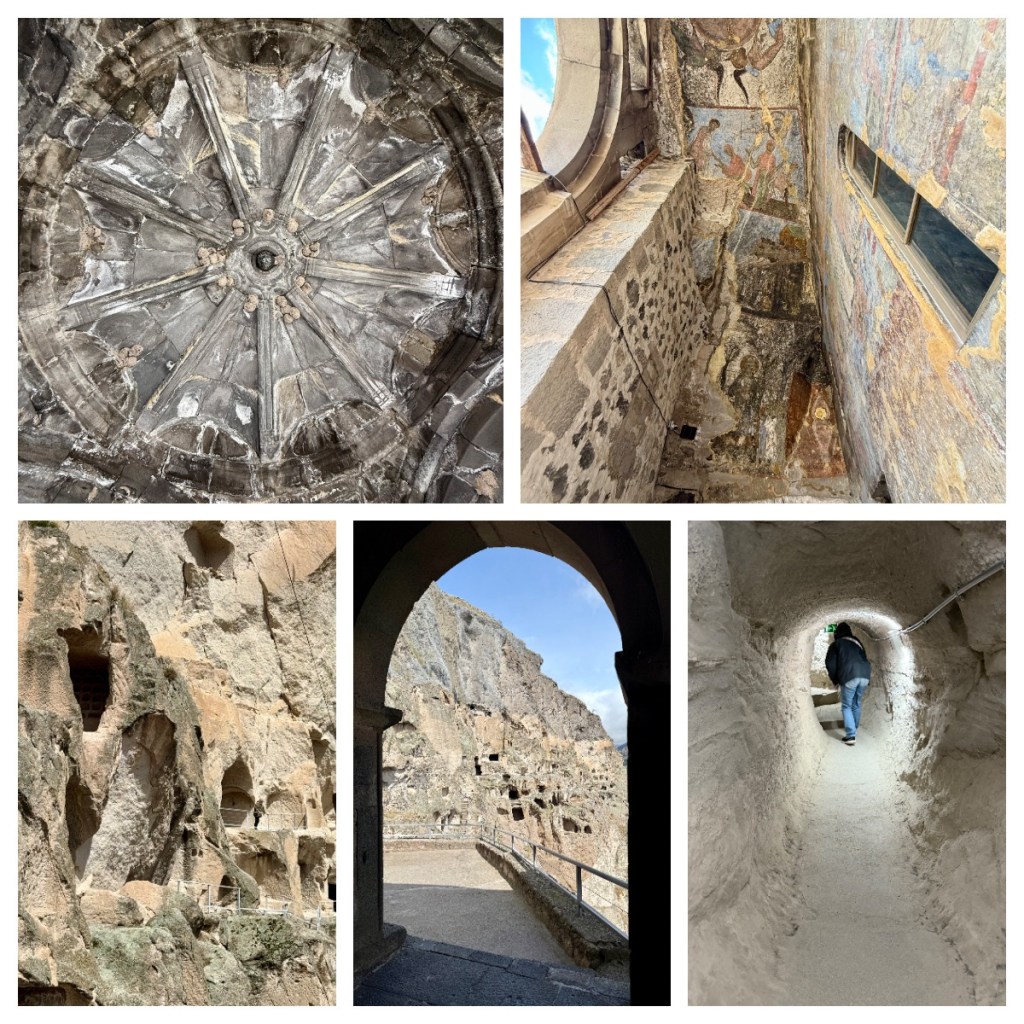
One of the sites we were most excited to visit in Georgia was the Vardzia Caves, one of a number of cave complexes in Georgia.  It is thought that the cave complex was built in a number of phases, starting in the second half of the 12th century, during the reign of King George III.

According to the legend, the King’s daughter, Tamara (who went on to become Queen Tamara) was playing in the caves as a child.  She lost sight of her Uncle and called out “Ak var dzia”  – “I am here uncle”.  The words var dzia echoed around the complex (which was under construction) and were heard by the King who decided it should be named this way. 

Before I move on, let’s take a moment to meet Queen Tamara, one of Georgia’s greatest medieval monarchs who ruled from 1184 to 1213 CE.  She was the first female ruler of Georgia and was referred to as the “King of Kings and Queen of Queens”.

Her father, King George III had no sons and was concerned about losing his power so named his daughter Tamara co-ruler at 18 years old in 1178.  By all accounts she was a badass who despite having to continually deal with resistance to her rule by clergy and noble men of the time, she went on to be responsible for Georgia’s greatest territorial expansion.

Back to Vardzia, the cave complex runs around 500m along the cliffs, is up to 19 tiers high and includes more than 250 rooms, 28 wine cellars and 3 churches.  There is also defences and irrigation systems including aqueducts and reserviors. After sustaining heavy damage in an earthquake in 1283, it was partially rebuilt before being mostly abandoned after the Ottoman invasion in the 16th century.

We took the free shuttle bus up to the first level of the caves and then had time to explore some of the caves, up and down stairs, some more like ladders.  I think we spent even more time admiring the beautiful views down the valleys and the blue skies which we had not seen for some time.

Back down at the car park we had some freshly squeezed pomegranate juice – it was very expensive (15 Gel or NZ$10 for a cup) and a little sour. I did enjoy it but would not rush to pay that price again.  That said it was probably tourist prices being a tourist site!  We also picked up some Georgian meat pies (I don’t seem to have made a note on the actual name) which were tasty and way better value than the juice!

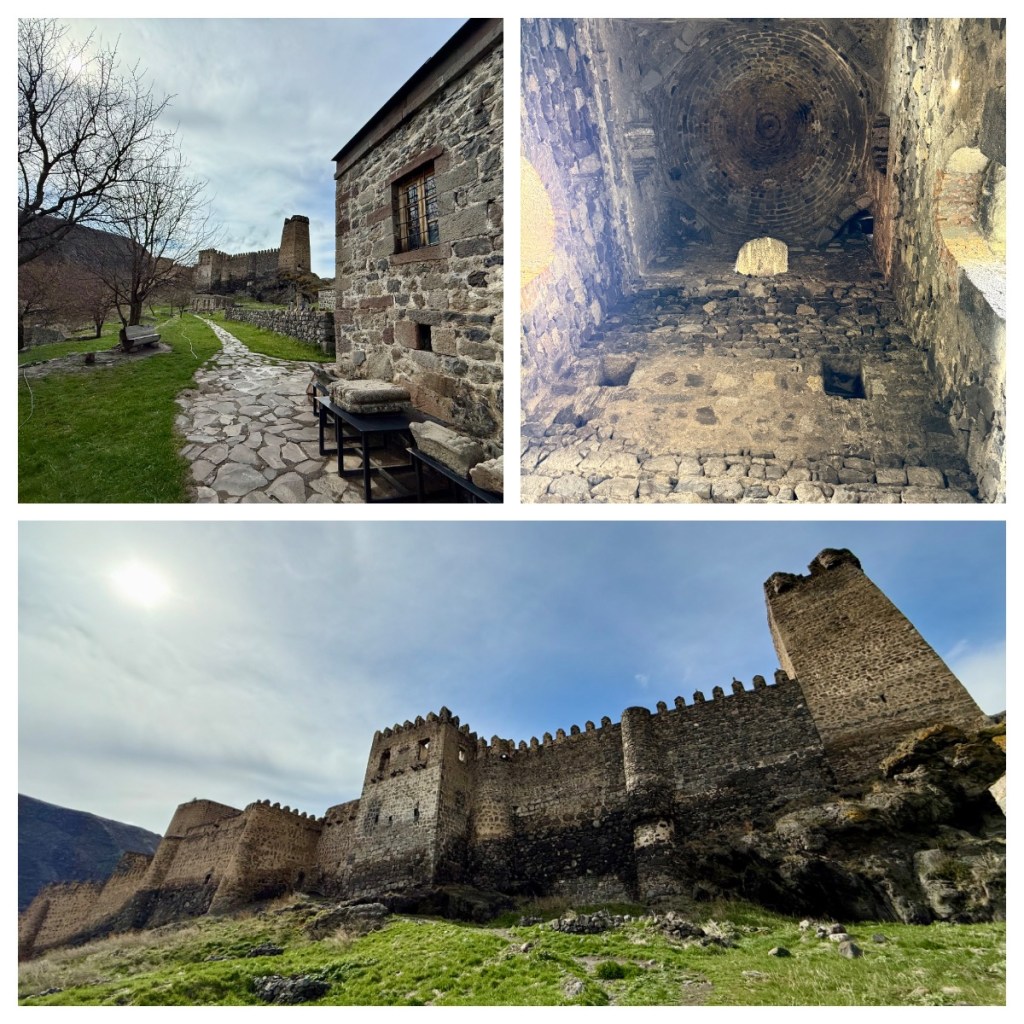
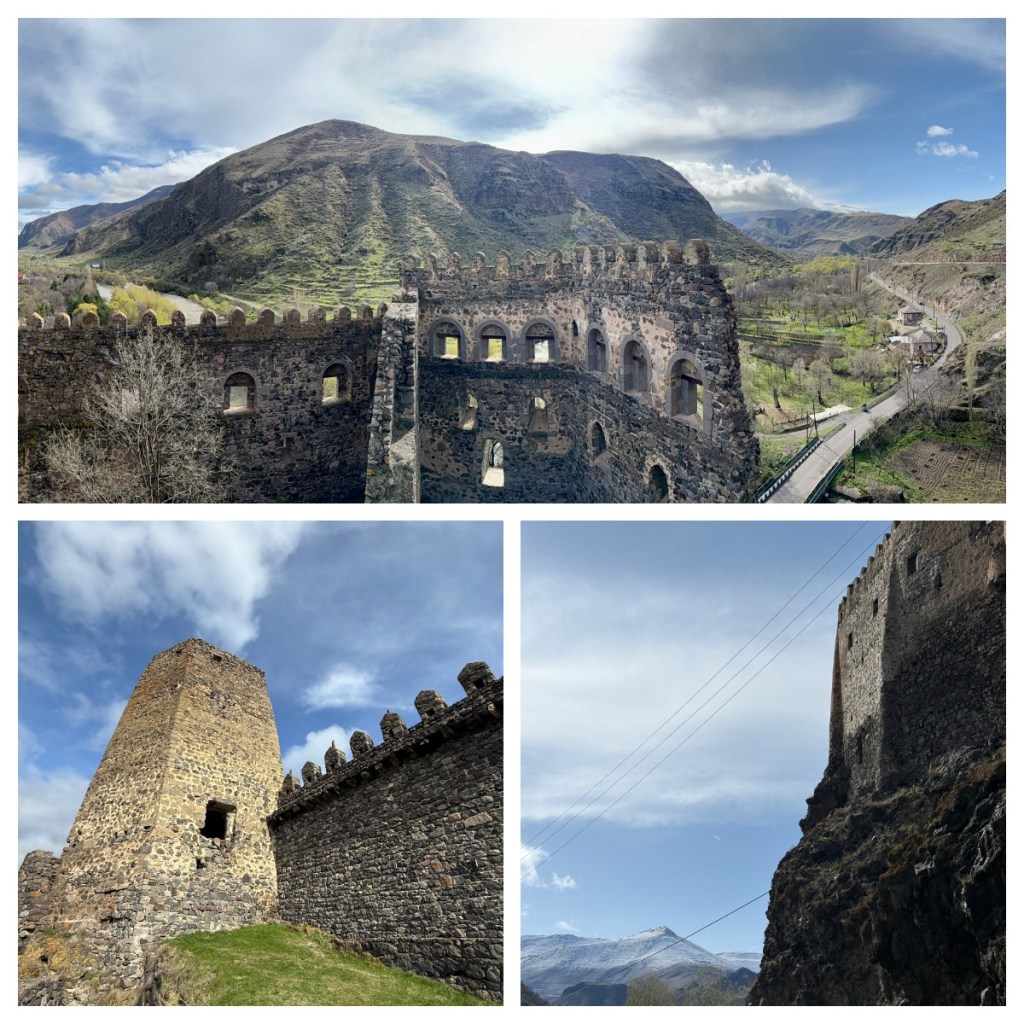
We then head back up the value and stopped at Khertvisi Fortress. One of the oldest and well preserved fortresses in Georgia, it has sat on this hill since the 10-11th centuries overlooking what was the Silk Road.  As with most fortresses in Georgia, there are many tunnels underneath – in this case they run down to the river to allow for water collection and also communications, not forgetting an escape route in times of siege.

Over the years as the town of Khertvisi was destroyed by Mongols, captured by Turks and then by the Russians, the fortress continued to dominate and its position as a military garrison was restored.

It was another full day and one full of surprises (mostly weather related lol) and we were exhausted by the time we arrived in Akhaltsikhe (our stop for the night). We could only muster the energy to pop to the local supermarket for some instant noddles for dinner before heading to bed! 


Goodbye Azerbaijan, hello Georgia

Azerbaijan & Georgia

April 2025

I was woken early by the Muslim call to prayer and to a misty morning. As I had now discovered the importance of the buildings just across the road from the hotel, I headed out for a quick walk and in search of coffee.

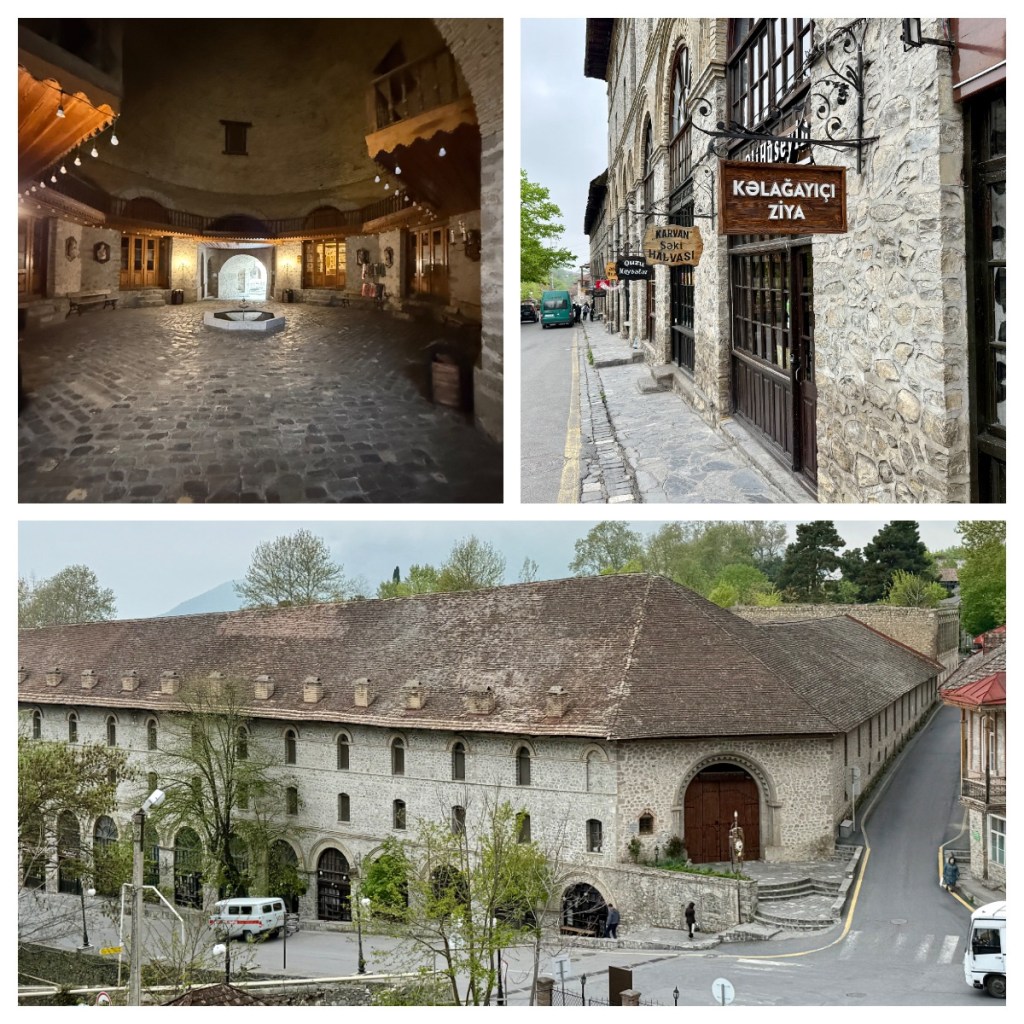
There are two caravanserais on the main road in old Sheki, the upper and the lower which both date back to the 18th-19th centuries.  They were built as fortified structures with just one gate, so they can be protected more easily. 

The Upper one is a tourist site, of course it was closed at 7.30am but I did manage to sneak in a small door (inset in to the big door) to have a quick look at the first courtyard.  As in time gone by, there are a lot of shops along the the outside and we had walked along them the night before.  Today they are mostly souvenirs and also some Halva shops, making a traditional local Halva (a sweet made from sesame paste and honey).


The Lower caravanserai is a hotel today, but more importantly for me (that sounds like a terrible thing to say 🤓), there was a lovely coffee shop just across the road … and it was open!  I enjoyed a coffee and watched the local Ladas go by – they definitely rule supreme in this part of the country and I love it.

As we headed towards the border, we passed yet another Albania church on a hill side – I should note that the Albanian churches I see on this trip are not related to the Albania of today, but of the ancient Caucasus Albania which sat in the south eastern part of the Greater Caucasus mountains (most of which sits in modern day Azerbaijan.  The mountain landscapes were filled with wild braided rivers, shepherds grazing their sheep and as we neared the border, trucks, lots of trucks.

We said our goodbyes to Rugiya (our Azerbaijani guide) and our driver and walked to the border crossing.  It took around 45 minutes to depart Azerbaijan (only because we got caught behind a tour bus) and then walked the short distance across no mans land and into Georgia.  The Immigration guy was so excited to see a New Zealand passport – his exact comment was “I did not expect this today” lol.


We found our Georgian guide, Tazo and hit the road on the next leg of our Caucasus’s tour. Let’s be clear, we are talking about Georgia the country, and NOT the state in American as many first assume!

The currency here is the Georgian Lari (GEL), NZ$1 = GEL1.6.

First, I little context. Georgia spans Eastern Europe and West Asia, bordering Russian, Turkey, Armenia and Azerbaijan.  It is a small country (only 69,000 km2 – compared to New Zealand’s 263,000 km2) with a population of around 3.7 million, 2 million of which live in the capital, Tbilisi.

As with most countries in this region, its history is complex and somewhat turbulent and even today, the geopolitics of the region continues to cause issues.  After adopting Christianity in the 4th centre, the Kingdom of Georgia remained strong until the 15th century when they succeeded to the Mongols, the Ottoman empire and Persia, before becoming part of the Russian Empire in 1801. 

After the fall of the Russian Empire, they had a couple of years as an independent republic before, once again, being invaded by the Red Army and becoming part of the USSR until 1991.  It was not until 2003 that they gained political stability and aligning themselves with the EU.   I will touch further on parts of this as we travel around and learn more.
The weather was less than ideal, but it was better than the forecast for the following day, so Tazo recommended that we visit the hilltop town of Sighnaghi today rather than tomorrow. A small town in the Kakheti region, Sighnaghi was built in the 18th century as a fortress but today it is referred to as Georgia’s “City of Love” (though I am not sure I know why)!

We drove up into the cloud to the town and we did have to imagine the charm of the town, and of course the view – which apparently is beautiful and our imagination continued as we wandered down through the cobble stone streets to our lunch stop.    

In just a few short hours, we were already impressed with Tazo and he ordered a great array of delicious Georgian food for our first meal.  It seems that walnuts, cheese and bread play an important part of Georgian meals and this meal incorporated all of the above – eggplant stuffed with walnut paste, khachapuri (a few different varieties but the basic one is bread with cheese), tomato salad, BBQ pork and Khinkali (broth and meat filled dumplings). 

All were delicious and I washed it down with my first glass of Georgian wine.   (I will warn you now, food photography is not my thing – most of time we would be half way through eating before we remembered to take the photos 😂.)

In just a few short hours we had already learnt some important information about Georgia and her people:

  • Georgian’s like food with flavour, and “food without salt is not food” lol.
  • Georgia is the home of wine making (more about that another day) and it is important for Georgian people.  Without wine, nothing happens and almost everyone makes their own.
  • Georgia’s main exports are copper and other minerals/ore.
  • The Georgian alphabet is unique and in fact, there are 3 versions of it.  One is widely used, the other two are predominately for religious texts and inscriptions. 
  • I was the first Kiwi guest that Tazo had had

The cloud lifted briefly to allow a quick and hazy view of the valley below, with the green pastures and fish farms (which seem a little random to me in the middle of fields lol).  Apparently there are also lots of minerals in the soil here which are great for grapes. 

While Tazo ran back up the hill to get the car, we took a short walk along part of the 4 km defensive wall to a watch tower flying a very tatty Georgian flag in one of the 28 watch towers along its length.  Again, we had to use our imagination on the view!


I have to admit, I was in a bit of a food coma on the next part of the drive but we had lots of good chat with Tazo on the journey to Telavi, the main administrative centre of the Kakheti region and our stop for the night. 

Dinner was not required but we bit have a snack and some homemade Green wine (they use the grape skins during fermentation) to finish of the day. 

But, before I finish this blog, I thought I would touch on the country’s name of Georgia and the infamous St George.  Georgians actually call the country Sakartvelo, and although it is not entirely clear where the English name of Georgia came from, there are a number of theories mostly based around St George.

St George, an early Christian martyr, was born in Cappadocia in the second half of the 3rd century. He is the patron saint of the country (and many others), a large number of churches in the country are built in his name, George (or Giorgi) is one of the most common male names and the country’s flag features his red cross on a white background!  What more do you need to convince you of is importance to the country and its people and perhaps the English name.

When he started fighting dragons, and became the patron saint of England is another story entirely lol.


Welcome to Baku

Republic of Azerbaijan

April 2025

Currency – Azerbaijani Manat

NZ$1 – 0.99 Manat

Welcome to Baku, the capital of Azerbaijan – the Land of Fire.

Firstly, settle in for a little background. Azerbaijan is a country in the South Caucasus area of Eurasia, bordering on Russia, Georgia, Armenian, and Iran.  Its capital, Baku sits on the shore of the Caspian Sea (which I think I have mentioned in a previous blog, is technically a lake).

Like Turkey, it straddles Asia and Europe and Baku really shows this blend of cultures, looking like the love child of Dubai and Vienna with wide European style boulevards, flanked by very European style buildings; towering, hypermodern, geometric glass buildings and historic Silk Road caravanserais.

The country has a population of approximate 10 million, 4 million of those living in the capital of Baku.  90% of the population are ethnic Azerbaijanis and most are Muslim (although it does not appear to be practiced strictly).

The country has an incredibly complex history and I am not sure I will even be able to scratch the surface in the short time I have in the country, but as always I will do my best to get in to it , and bring you along for the ride.

I had a pretty good nights sleep and enjoyed a decent breakfast at the hotel – an interesting range of cheeses, vegetables, cake, and a few things I didn’t know what they were 🤨. After breakfast, I meet up with my friend Ania, who had arrived from Dublin the night before, and we met up with our local guide, Rugiya, who would be with us for our time in Azerbaijan.
As we navigated the traffic of the city (yes, I can confirm traffic is bad!), Rugiya gave us a little background of the country and city (which I will try to explain over the next couple of blogs). 

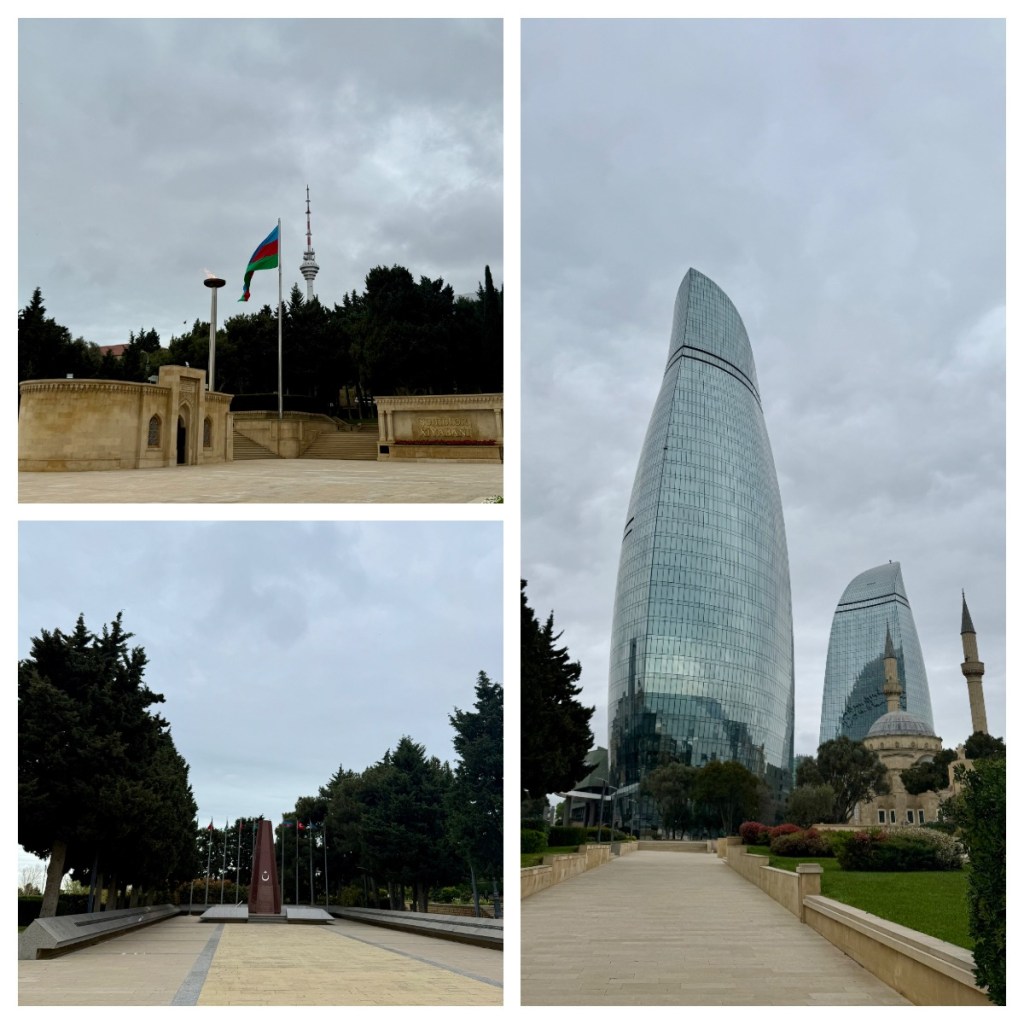
Our first stop for the day was at Highland Park, the highest point of Baku, giving a panaromica view across the across the city and the Caspian Sea.  The beautiful, peaceful park also houses a number of memorials to fallen soliders.  

The soil in the area is very salty and it’s impossible to grow anything (we will see more proof of this when we travel out of the city).  When wanting to beautify the city with green areas, soil had to be brought from other parts of the country. 

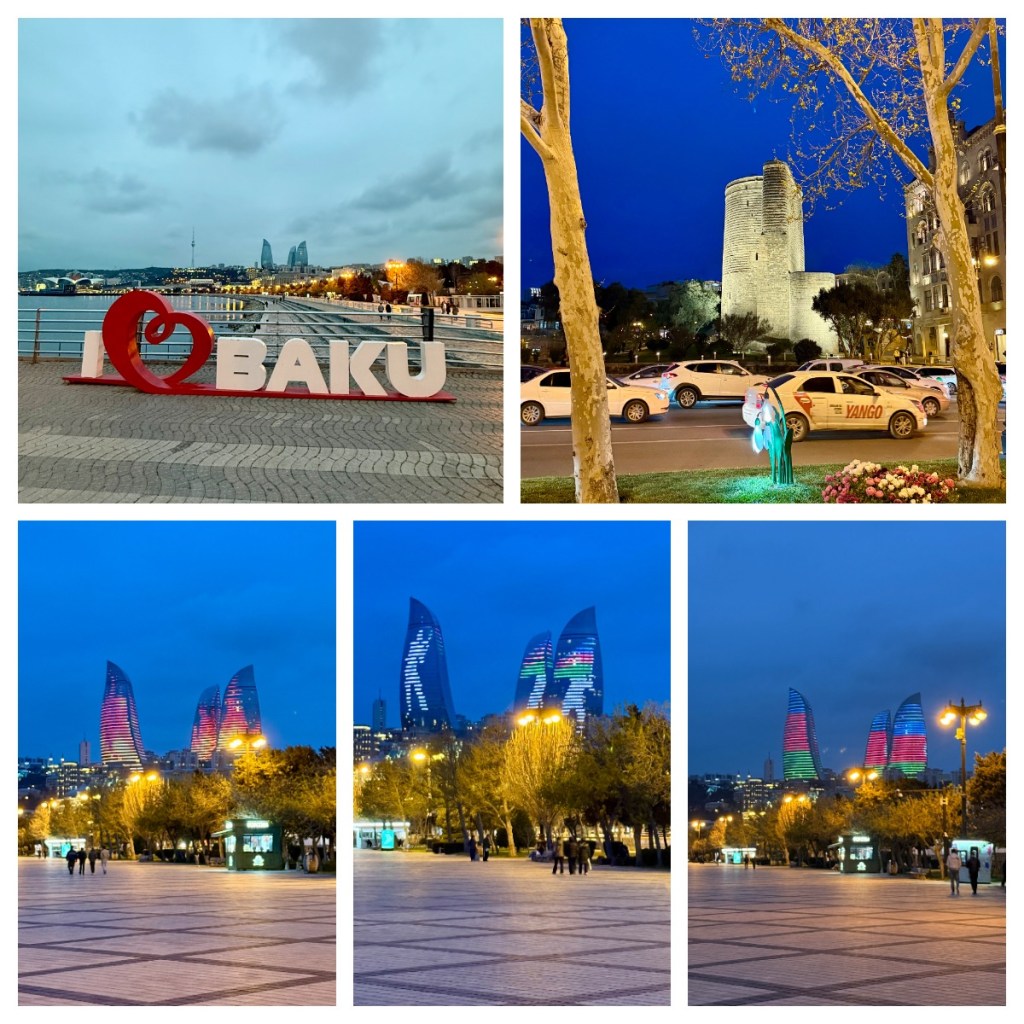
It is probably at this point I should mention Baku’s most iconic buildings – the Flame Towers, 3 flame shaped towers (the tallest being 182m tall) completed in 2012.  The flame shape symbolises the “Land of Fire” – from natural gas that comes up from the ground around the country, and the Zoroastrian religion that considers flames to be a symbol of the divine.  The buildings house apartments, a hotel and offices and dominate the city skyline by day, and by night (we will see more on that later in the day).  

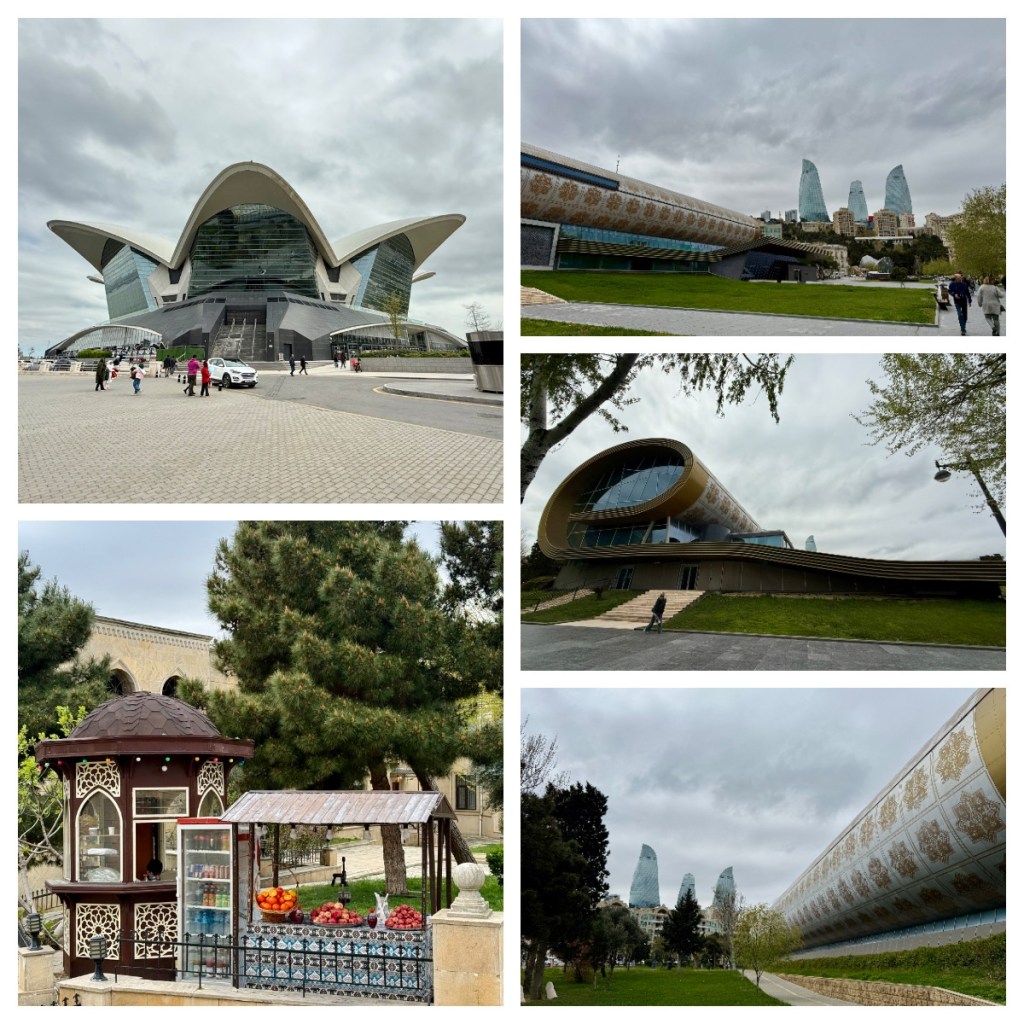
From the view point in the park, we could see down the coast, from the 2nd highest flag pole (it was the first until the one in Tajikistan was erected); the Cyrstal Hall, built for the Eurovision contest in 2012; the “Baku Eye”; and the Sydney Opera House like, Deniz Mall. We could also see down to the new Crescent building (that I had seen the day before). When open, it is apparently going to be a 7 star hotel.

From the park, we headed down to the the UNESCO World Heritage Old City, which is still surrounded by the reconstructed, 12th century fortified walls, passing through the double gates, featuring the coats of arms of the ancient city of Baku. There are various versions of its meaning. It features a Bull’s head (believed to be linked to cattle breeding, replacing growing crops which was impossible in the salty soil) and therefore a symbol of the ancient city.  There are also two lions, probably as a link to the city’s orient culture, or a symbol of the Safavids, who took the city from the Zoroastrian’s.   

It is widely believed that old city construction started in the 12th century, with various buildings ranging up until the 16th century. But buildings such as the Bukhara Caravanserai are believed to date back as far as the 8th century, when the location grew in importance due to it stragetic location on the Silk Road and the shores of the Caspian Sea. 

Many of the old buildings have been carefully restored and reconstructed (following the strict UNESCO rules to maintain authenticity) and the area is so clean … and full of very friendly and well looked after stray cats.  Unfortunately both the large Caravanserai’s were closed for recontruction.  (If you have read some of my Central Asia blogs, you may remember that a Caravanserai was an inn that provided lodging for Silk Road travelers, merchants and caravans of camels). It was interesting to learn that the door of the Caravanserai has two knockers, a large one for men and a small one for women.  This way the people inside knew who were outside and who should open the door (remember most were Muslim and therefore men and women did not mix.)

It was clear from many of the items in the souvenir shops, that Pomegrantes are important to Azerbaijani culture and tradition.  They are not only the national fruit, but they symbolise abundance, blessing and fertility.  We will go on to see them depicted in decoration of buildings, as well as being used in many local dishes and wine.

We climbed the 12th century Maiden Tower (Gyz Galasi in Azerbaijani), one of the icon symbols of the city.  It is 28m tall, but oddly, because the Caspium Sea is actually 28m below sea level, when standing on the top of the tower, you are at sea level.  When built, it was on a rocky ledge that jutted out in to the sea, but today it sits 200m from the waters edge.   I should probably note there is some dispute about when it was actually built – with views ranging from as early as the 5th century,  through to the 12th (and in some schools of thought, a combination of those).

The eight levels, reached by winding staircases, are now filled with information about the old city and the tower itself and from the top there are panoramic views over the city (though sadly today there is a perspex barrier between you and the view).  The walls are made of thick brick and it even has its own well.

As the year of construction is debated, so is the tower’s purpose.  Too small for it to be defensive, too many windows for warfare.  Perhaps a Zoroastrian temple and definitely a beacon for ships in the 18th and 19th century.  Or perhaps we will just stick with the legend of the king who was forcing his daughter to marry a man she did not love.  She asked her father to first build a tower for her, which she then committed sucide from, by jumping from the top of it!  Perhaps we will never know.

An oddity of the city is the Miniature Book Museum.  Apparently the only one in the world and hold a Guinness Book of World Records for the largest private collection of miniature books. 

The next stop on our whirlwind tour of the city is the Palace of Shirvanshahs.  Unfortunately the fast pace meant we did not have much time in the museum which was a shame.  We definitely would have liked longer, but such is our itinerary, time is not always on our side.

The Palace is thought to have been built in the 15th century and is descibed by UNESCO as “one of the pearls of Azerbaijan’s architecture”.  The complex consisted of the main palace building, the shah’s mosque, Seyid Yahya Bakuvi’s mausoleum and the remnants of a bath house.  Not forgetting the great view across to the Flame Towers, highlighting the cities complex relationship between the passed and the future,

Before we entered the Palace, we took pause in front of some bullet pock marks on the side of the building. A reminder of the 1918 Azerbaijani genocide, where it is said, Aremnian Dashnaks, supported by the Russian Bolshevik leader Lenin, started a mass extermination of Azerbaijanis.  During 3 days, they attacked and killed all Azerbaijanis they encounter and approximately 2 million people were killed.  The site we saw at the castle mentions a number of 12,000 but that was probably only in the old city.  I guess a little understanding of this history helps put the ongoing troubles on the border in perspective.  It will be interested to understand the other perspective of the conflict when we get to Armenia in a couple of weeks time. 

A couple of points of interest that I noted as we rushed through the museum was that women’s belts were an indication of age – the bigger the belt, the older the woman.  And second was the changes in the language over the years … the spoken language has remained the same, but the written language has changed from Arabic to Cryillic to Latin over the course of the centuries. 


We spent a few minutes around the Carpet Museum on the Seaside Boulevard, another of Baku’s iconic buildings – this time shaped as a rolled up carpet.  Carpet weaving was listed by UNESCO as an Intangible Cultural Hertiage of Humanity.  We did not have tickets (or time) to go in, but we would see some carpets in our next destination, yet another icon landmark of the city – the Heydar Aliyev Center.

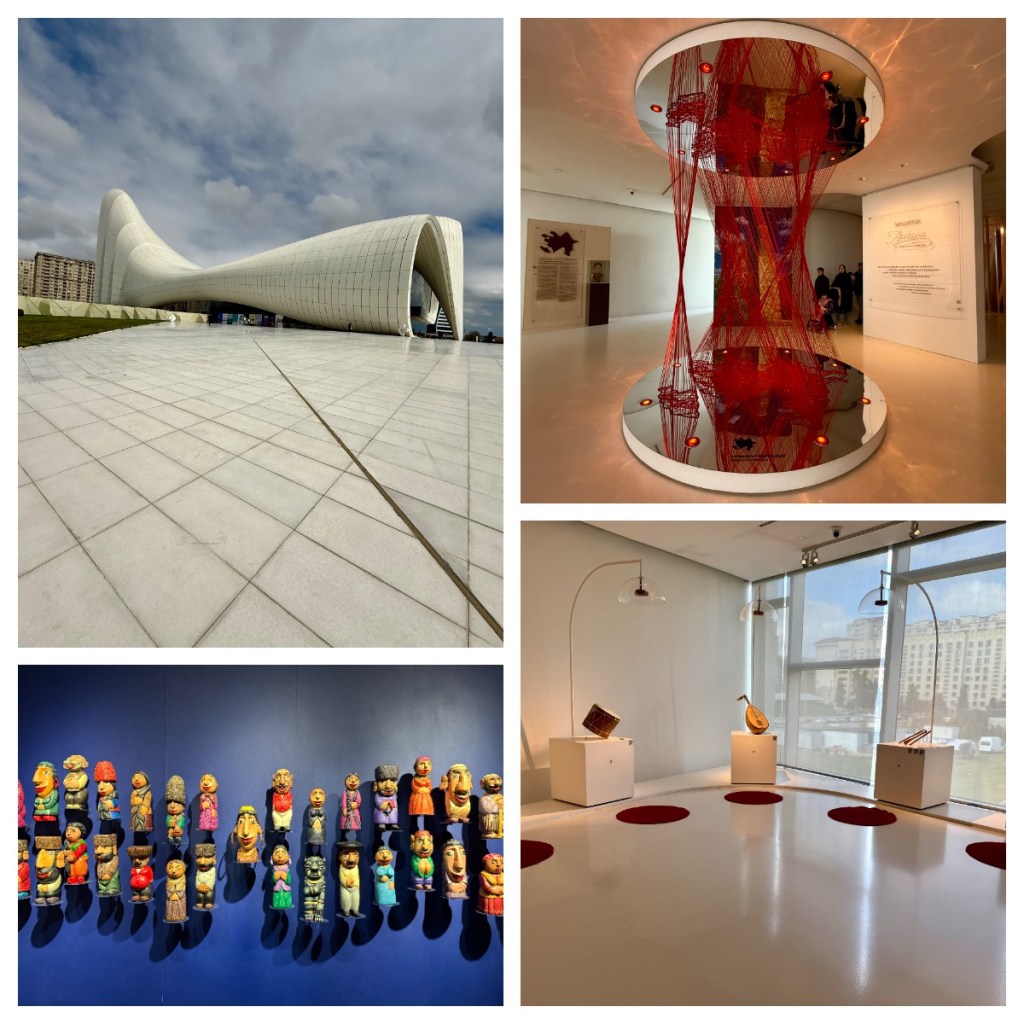
The Heydar Aliyev Centre was as unique on the inside as it is on the outside and housed an interesting range of international temporary exhibitions and permanent local ones on traditional clothing, musical instruments, dolls and carpets – some of the most beautiful carpets I have ever seen.  An finally an exhibition about Azerbaijan’s model of tolerance – excepting all people, race and regilion.

 After a short break back at the hotel, Ania and I headed out for an evening stroll along the boulevard.  The cold wind we had coped with throughout the day had died down, and it was a beautiful evening for a walk.  The Baku Boulevard was initially established in 1909, running parallel to the cities seafront and is over 5km in length.  Depisted being a Friday evening it was fairly quiet and peaceful.

The main reason for the walk was to see the buildings lit up, in particular the Flame towers and we were so excited when they came on, with images ranging from the flag, flames and people waving flags.

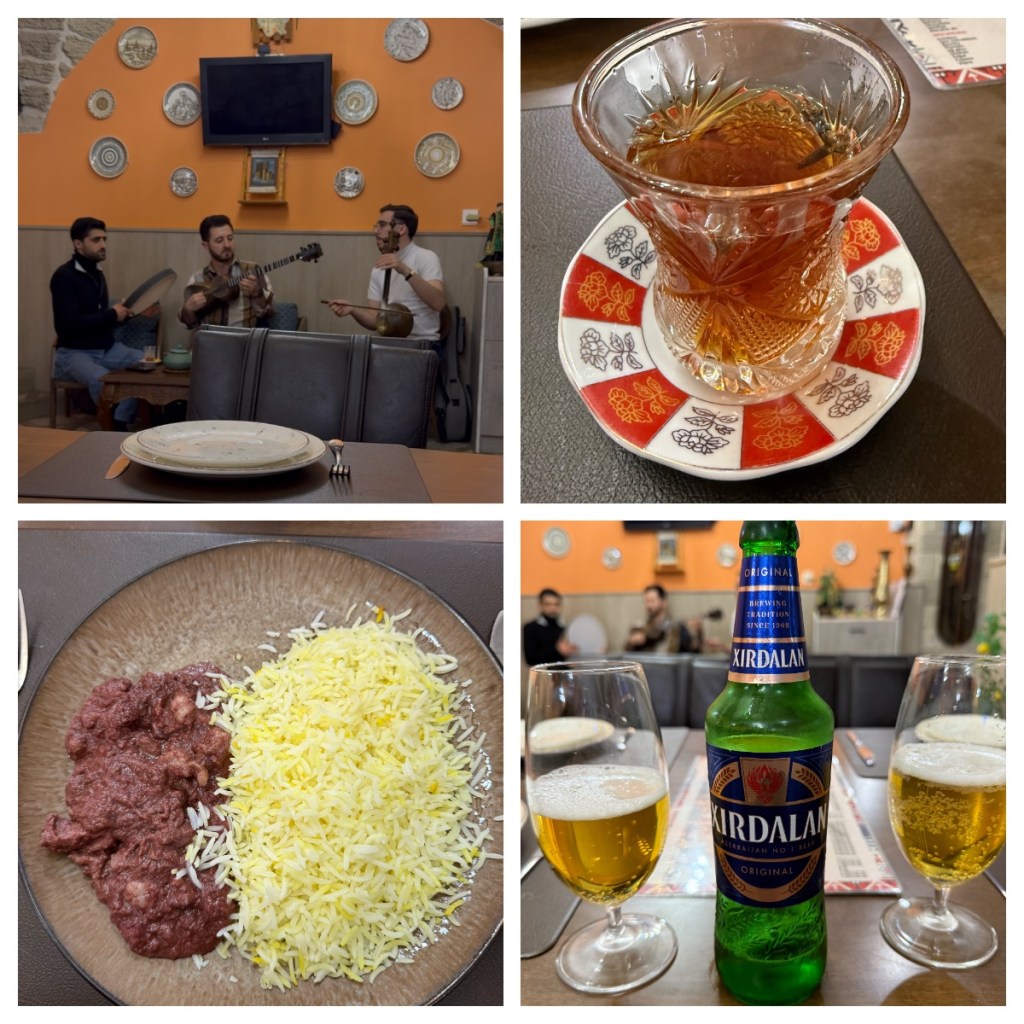
Even at almost 8pm in the evening, the traffic was insane, and there were very few places to safely cross the busy multi lane road (it seems driving in lanes is optional so there may be 4 lanes, or maybe there are 6 🤨 – who knows).  After backtracking a little, we finally made it across and headed up in to the old city to found our way to a random restaurant with local food and live traditional music.  Communication was a bit of a challenge but we ended up with pilaf (rice) with lamb and a cherry/pomegranate purée and a random drink made from Feijoa, local beer and tea.  It was not attractive or particularly cheap (around NZ$25), but it was tasty. 

We decided to be smart and use a bolt taxi to get back to our hotel (like uber) so we could just put in the destination into the app and not have to speak – epic fail!  The taxi did not show up, but the app said it was at the pick up point and then the driver starting calling but he did not speak English.   Not knowing where the driver was, and not being able to communicate, we had to cancel (but be still charged) and ended up getting a normal taxi at x3 the price with a driver who told us in broken English that all Bolt drivers are drunk or on drugs!   We were probably ripped off, but at least we made and it back and that would enough adventure for one day.  😝