
Georgia, April 2025

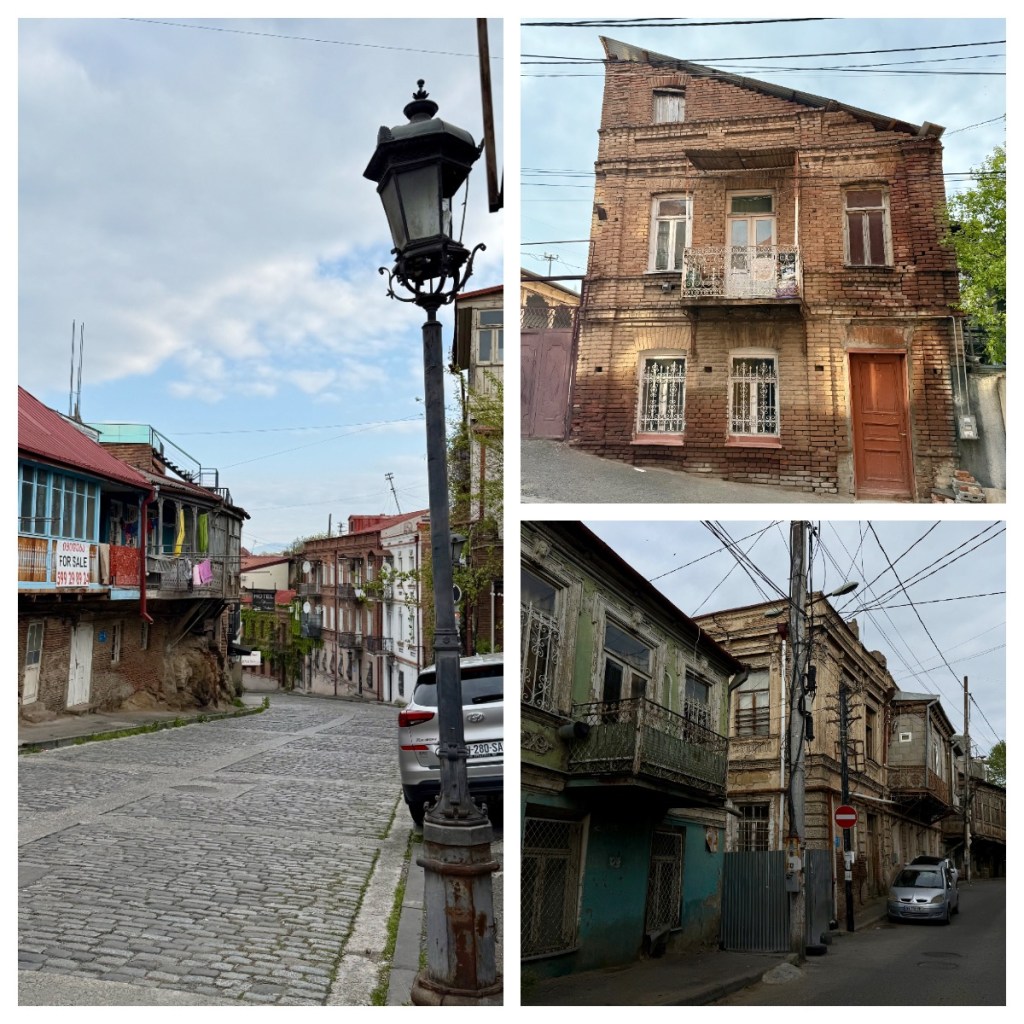
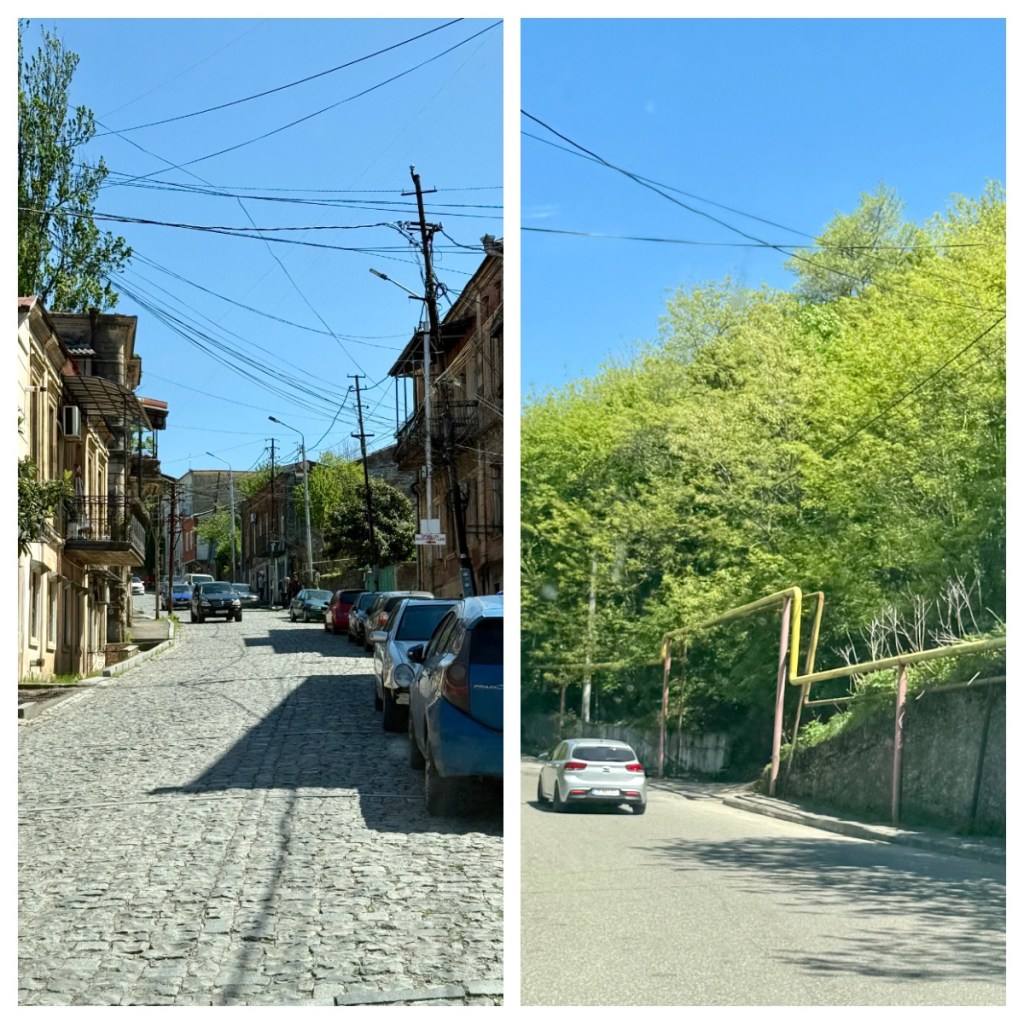
Today was Easter Sunday and I finally made it out for a morning walk through the now silent streets. Our hotel is in a fairly residential area, with narrow potholed streets, lined by small ramshackled houses – in fact, many of the streets I walked were like this.
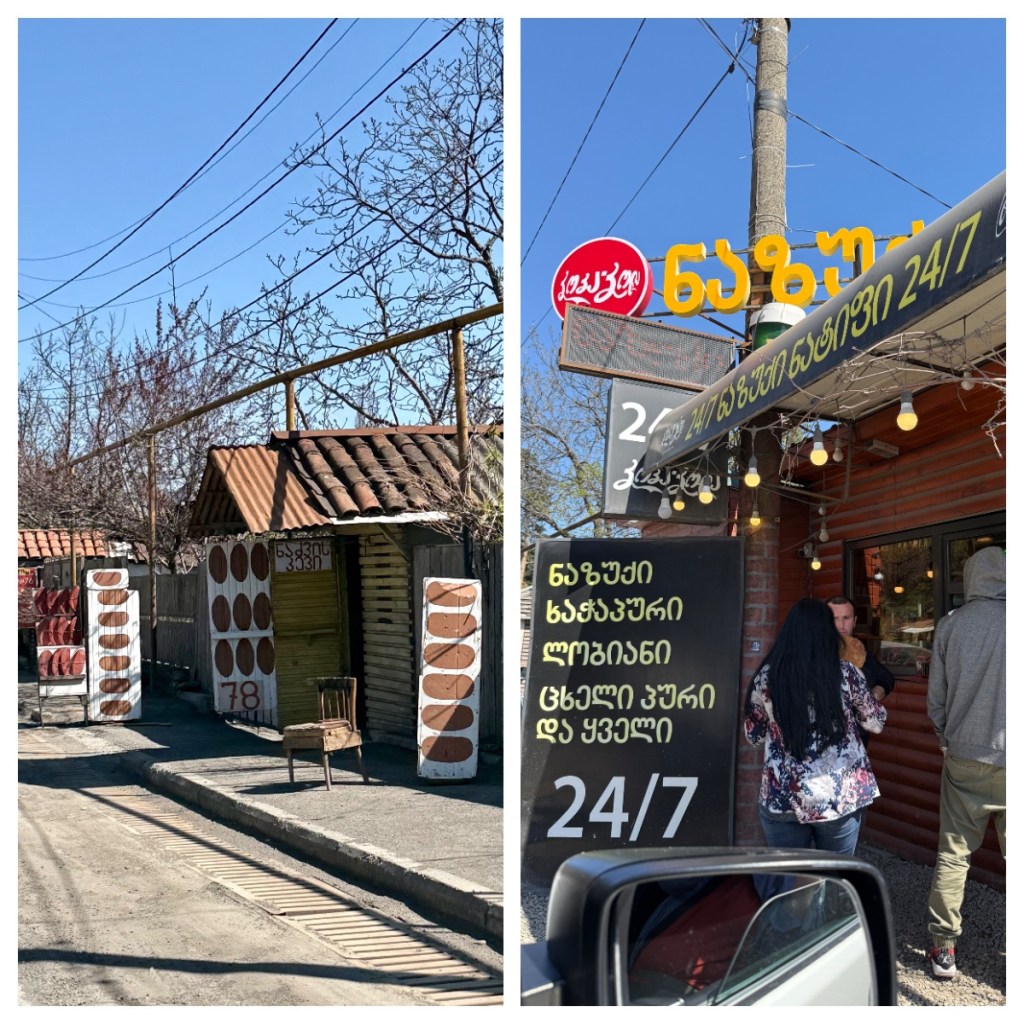
What I didn’t notice until I looked back at my photos that I could fulfil all my gun needs just down the road from my hotel lol.
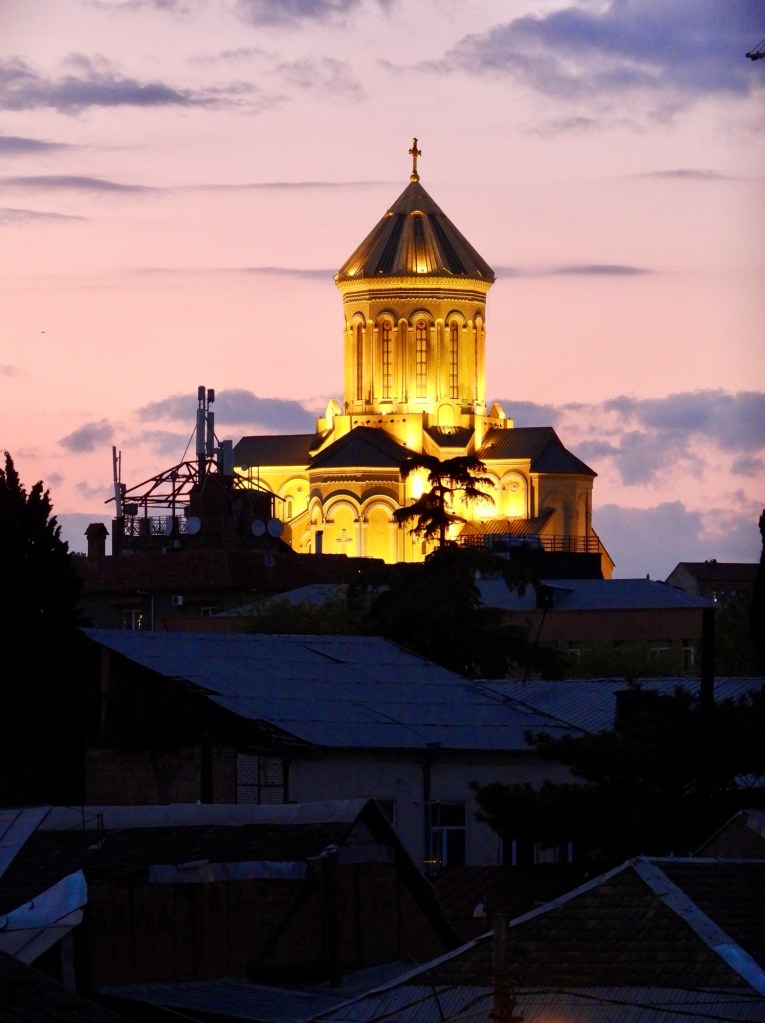
Being so pleased with the photos I had taken from my hotel room the night before, my destination was the Holy Trinity Cathedral of Tbilisi, the head church for the Georgian Orthodox religion. Given it was Easter Sunday, I was conscious of having a look around and being on by way before the Easter rush began. I did not even attempt to enter the church, as although it was open, I was definitely not dressed for it!
Despite the early hour, there were already vendors out selling candles and icons and of course, the standard stray dog guarding the doorstep lol.
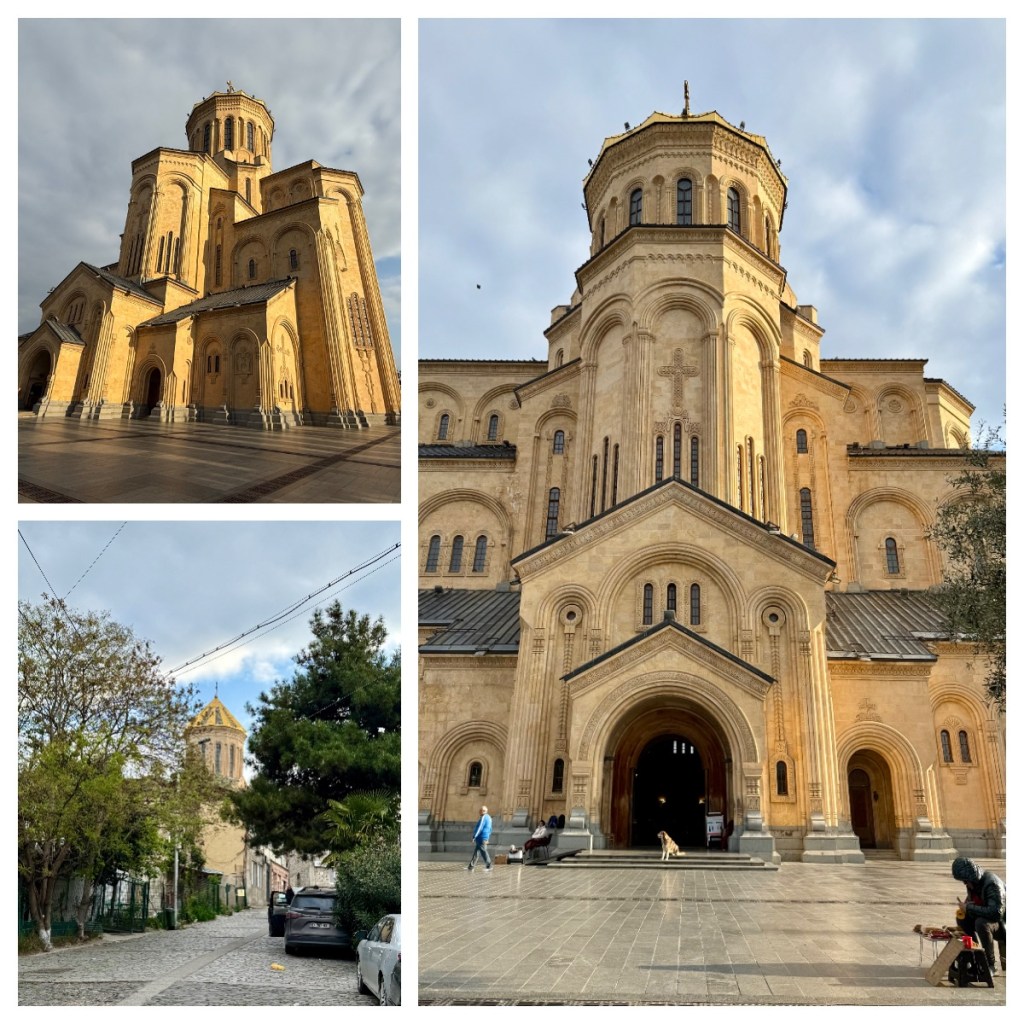
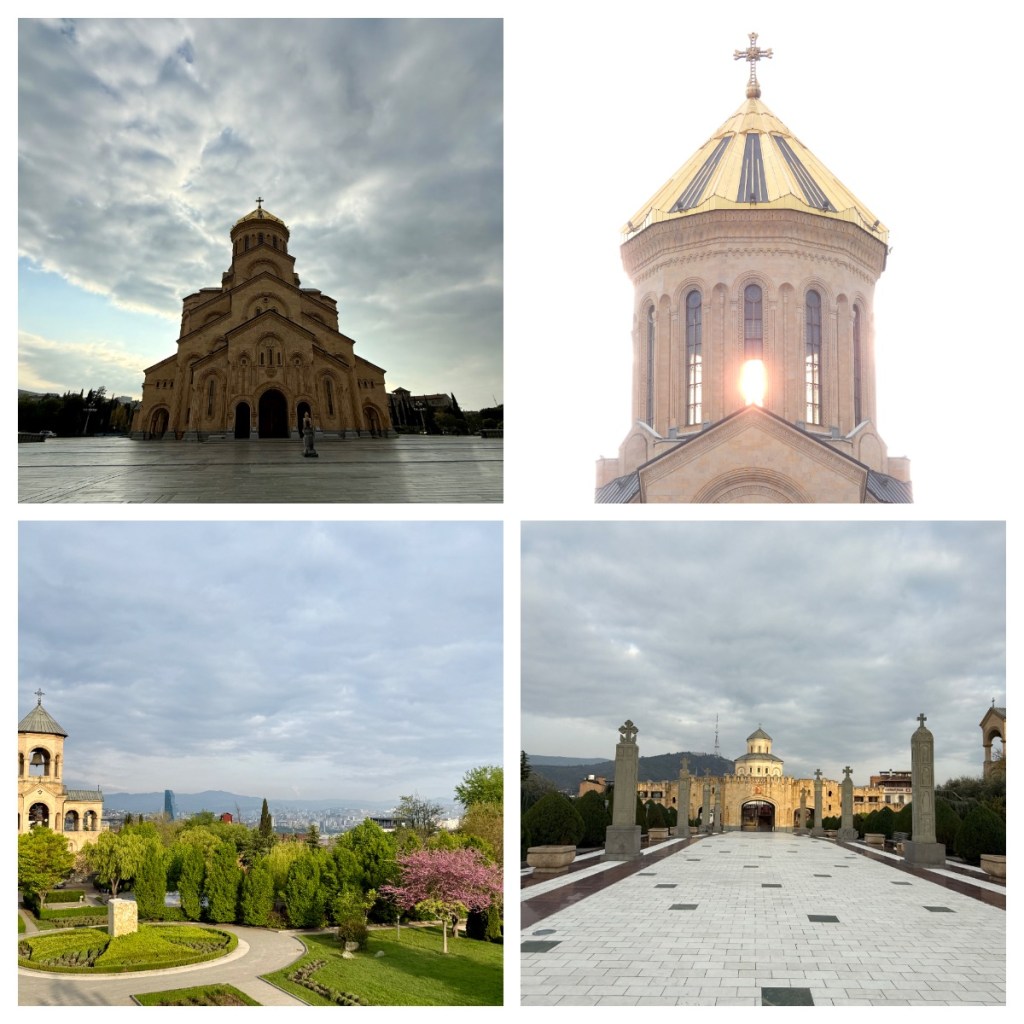
The cathedral, finished in 2004, is the tallest church in the country (at 101m high) and its golden dome dominates the Tbilisi skyline on this side of the Kura River. Although it was finished in 2004, construction actually started in 1995 and the first service was in 2004 and it was somewhat controversial as this was during the “12 years of suffering”, when most of the population was struggling to survive.
It is definitely an imposing structure and I managed to perfectly align the sun, rising behind the cathedral to take what is perhaps one of my favourite photos. This was actually only the second time I had taken my actual camera out with me and I was regretting not having got it out earlier! Although I am normally happy with the quality of my phone photos, the quality of those taken on the camera is another level. Why did I wait?

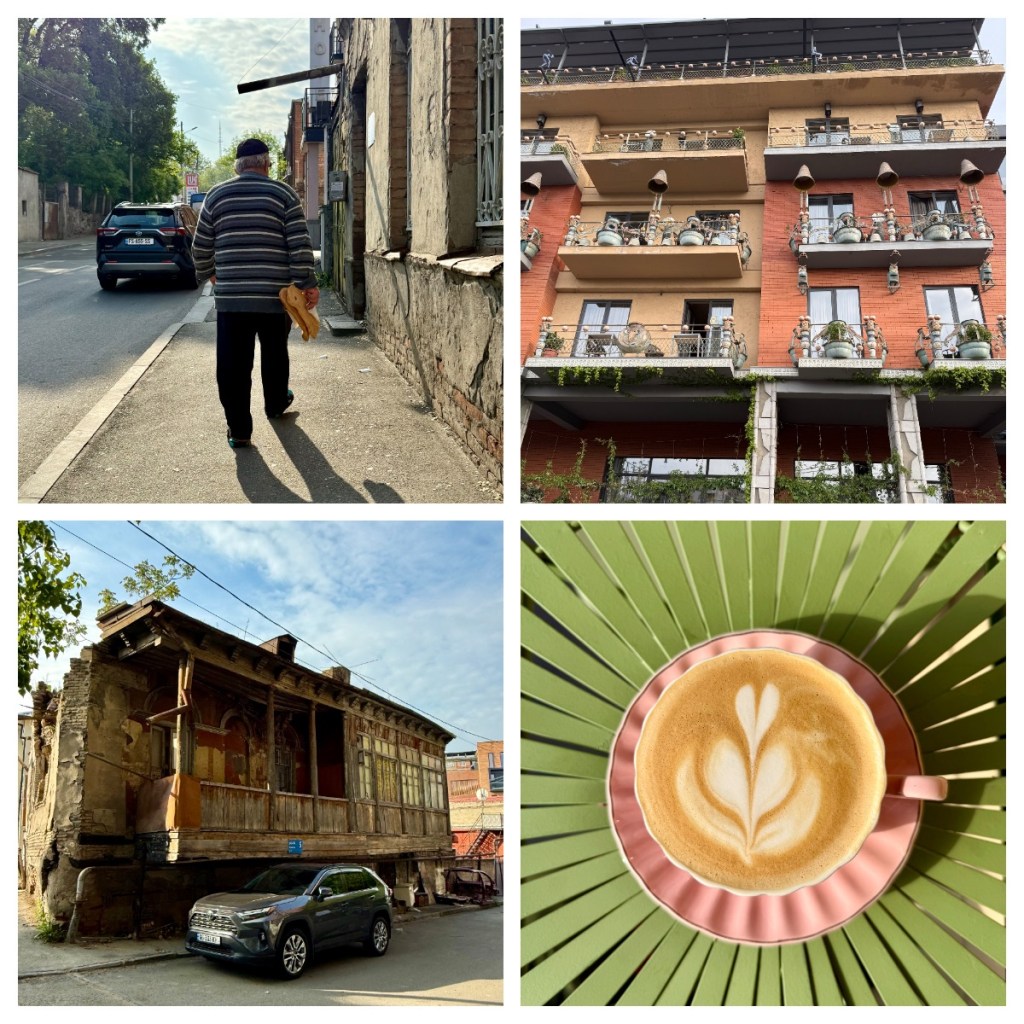
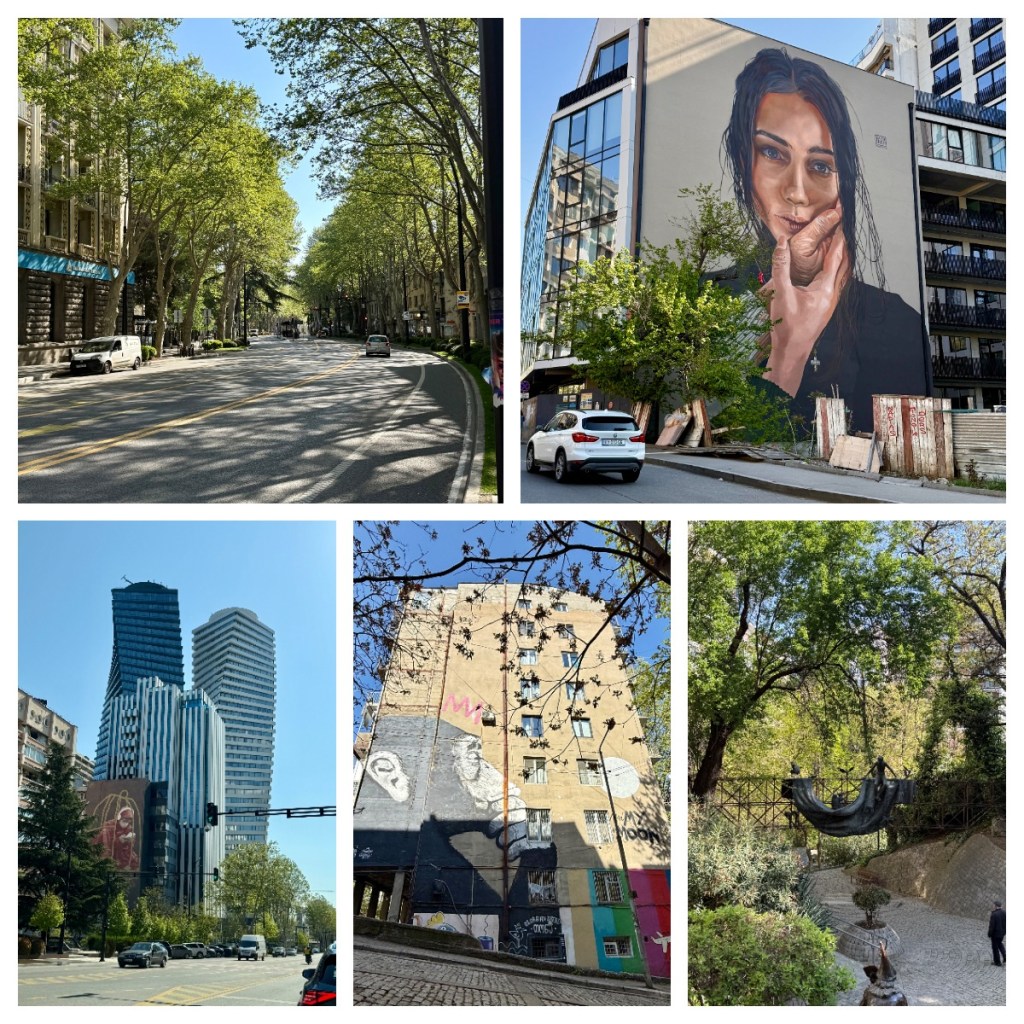
As I wandered back down through the streets I was shocked by the contrast from one street to the next. One street is full of run down and ramshackled buildings (with the cathedral towering over the neglected houses) and then the next is full new builds. The old buildings have real character so I do hope they chose to refurbish some, rather than just demolish them to make way for modern tower blocks.
It seems that not much opens before 9am here, even hotel coffee shops did not appear to be open, but I did finally manage to stumble across a cute little café which was open. Even better, the aesthetics were almost as good as the coffee ❤️.
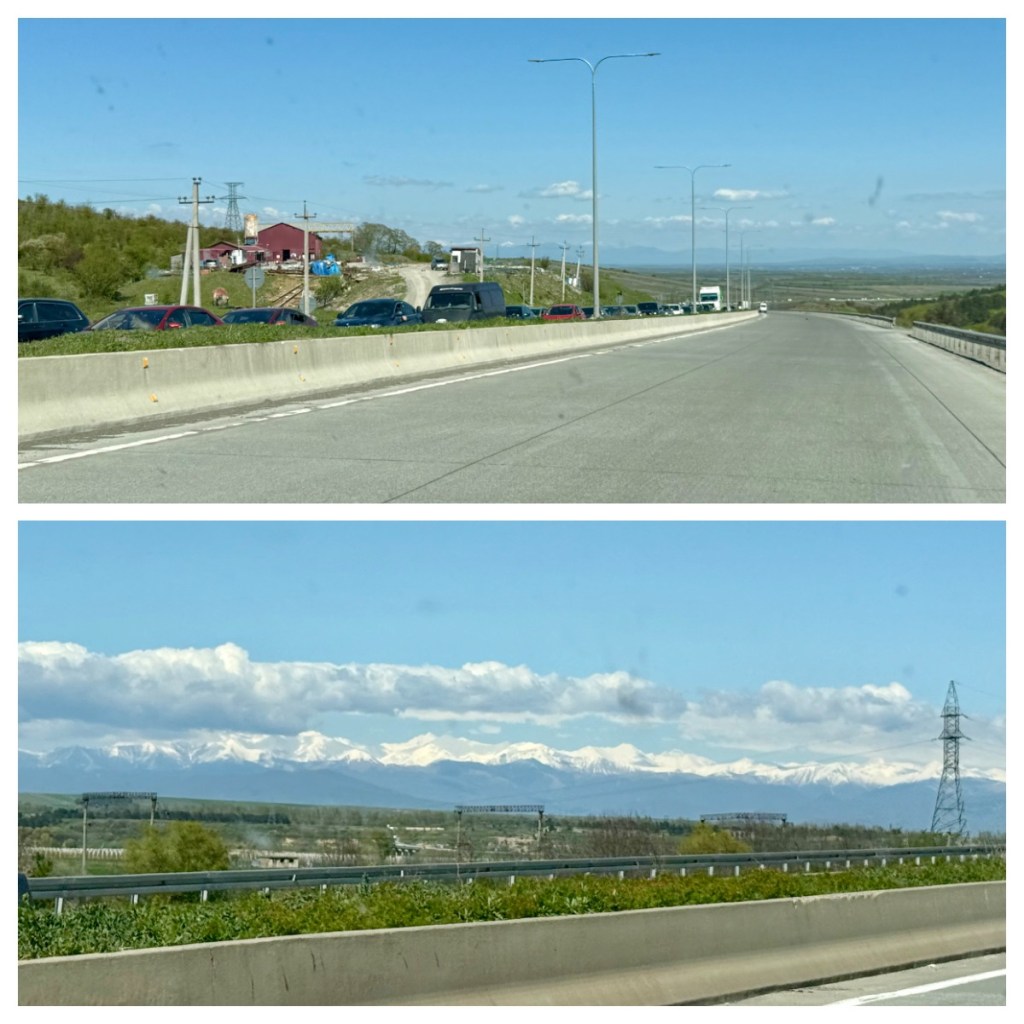
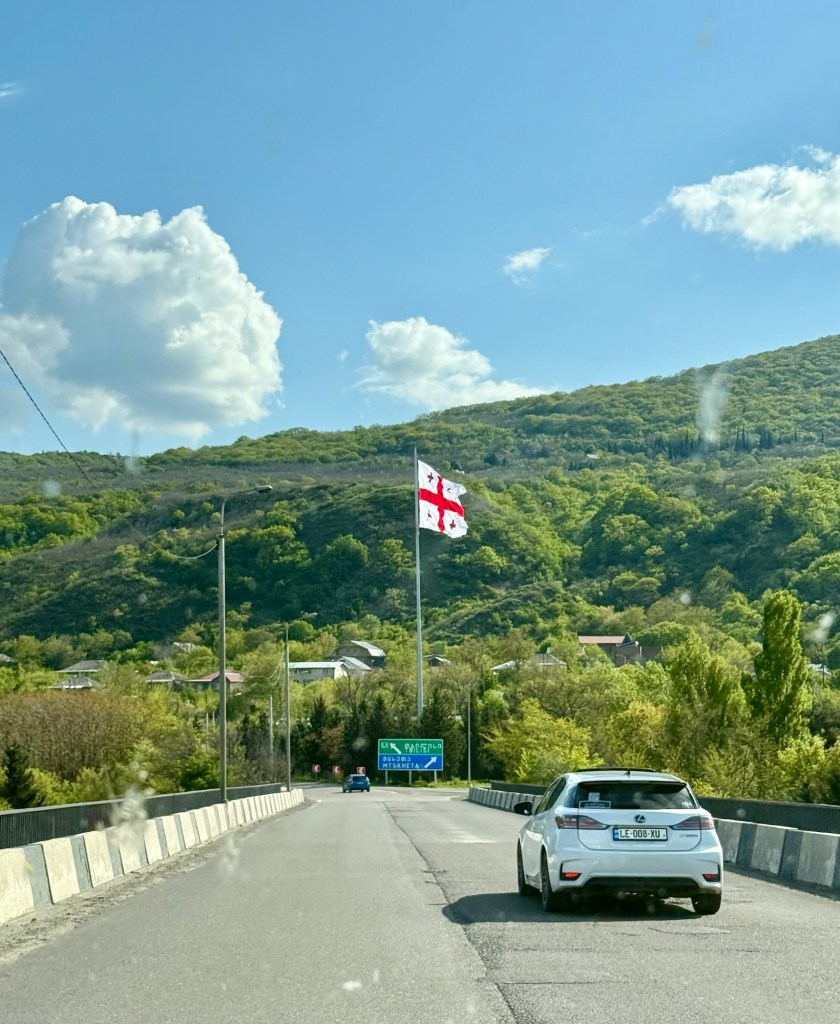
Tazo picked us up at 11am and we joined the traffic again heading out of town – apparently today many would be visiting cemeteries in the villages.
Our first stop of the morning was the Jvari Monastery, a 6th century monastery sitting on the edge of a cliff, overlooking the ancient capital of the Kingdom of Iberia, Mtskheta. The name translates to “the cross” and legend says that the cross of Saint Nino, who we met a few days earlier, was placed here (over a Zoroastrianism sanctuary) as she converted the people in the capital city below to Christianity.

Subsequently a church was built on that site. Although some of what we see today dates back to that original church, it has also been through a lot restoration work over the years – this has been a challenge given the state of the original building and the loss of the building records in a fire!
That said, it is still considered a site of great importance and one of the most sacred sites in the region.
We then went down into Mtskheta, once a grand capital city, today more of a tourist capital and quite possibly one of the most touristy places we have been with many stalls selling souvenirs lining the narrow, cobble stone streets of the old town.
Mtskheta is not only one of the oldest cities in Georgia, but also one of the oldest continuously inhabited cities in the world (along with Kutaisi) and it is believed that the original settlement was founded by the ancient Meschian tribes in the 5th century BC. As I mentioned above, from the 3rd century BC to the 5th century AD, it was the capital of the Kingdom of Iberia. It is also considered the birthplace of Christianity in Georgia.
The Svetitskhoveli Cathedral is the second largest church in Georgia, after the Holy Trinity Cathedral I had visited earlier in the morning, and what we see today was built around 1010 on the site of one built in the 4th century. Unfortunately a lot of its frescoes were lost due to whitewashing by the Soviet imperial armies over the years.
The town has been referred to as the second Jerusalem due to its status as a Holy city and is the burial place of Georgian Kings. Legend has it, it is the resting place of Jesus’s tunic, brought to the city by a Georgian Jew who had witnessed the crucifixion.
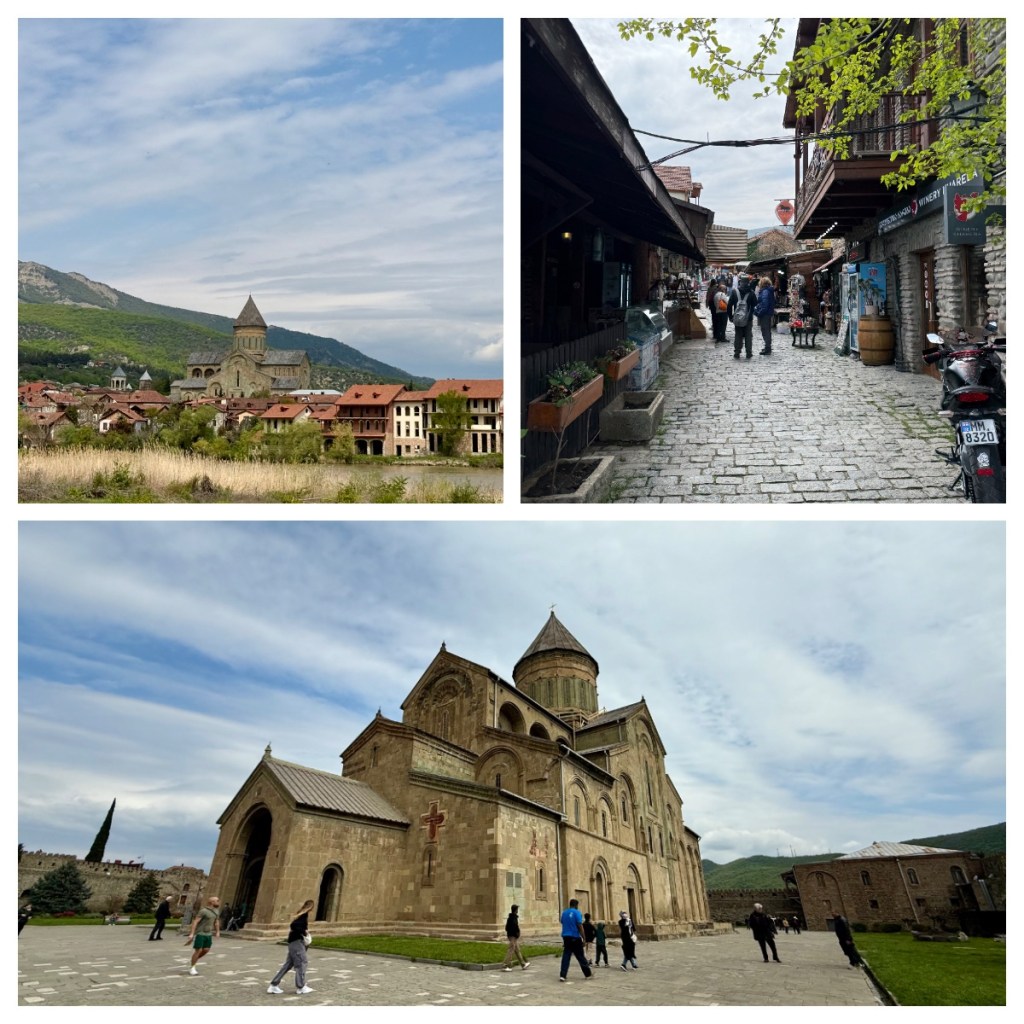
Given its holy significance, it was no surprise that this church had a higher dress code than others we had visited and we were provided with scarves to cover our heads.
There is apparently a tunnel that connects Svetitskhoveli Cathedral to Jvari Monastery on the hill above, along with a spring and space for 1,000 people to hid in case of attack (which came frequently over the years).
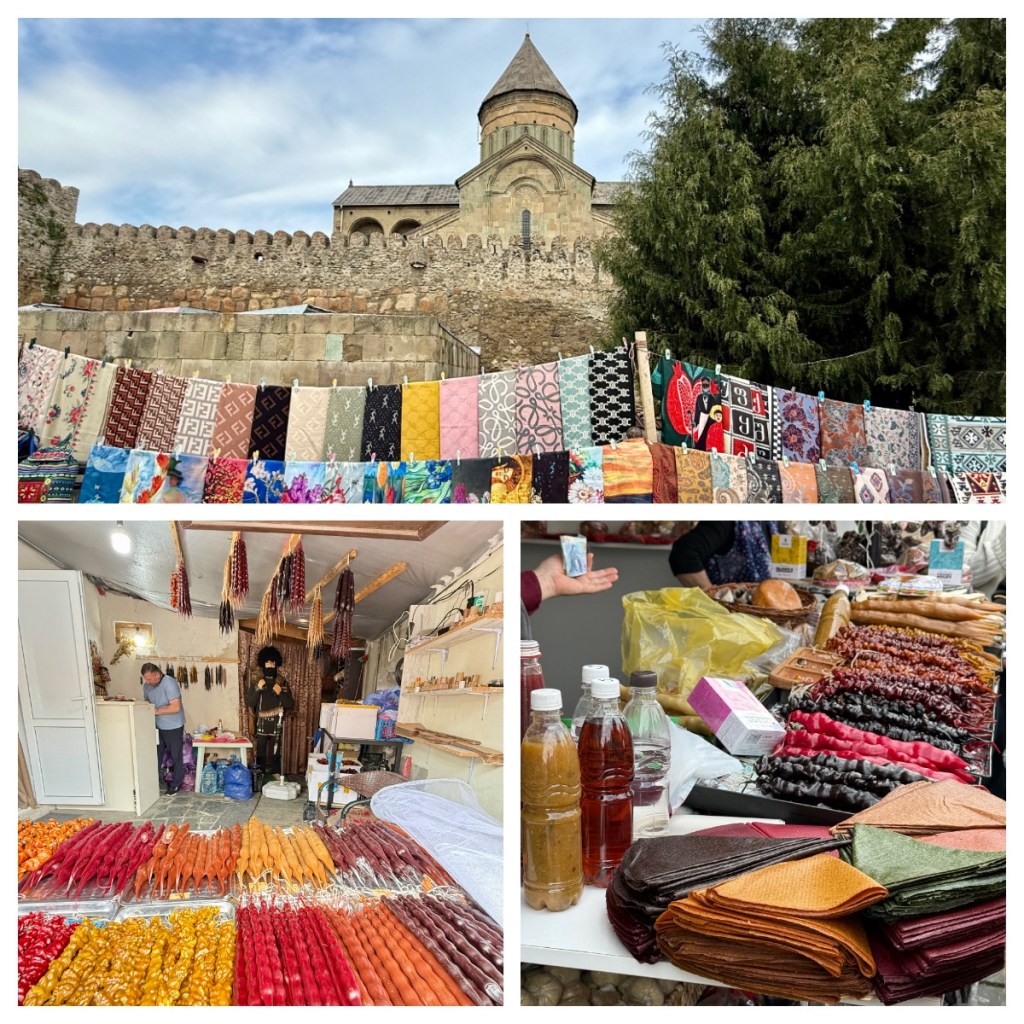
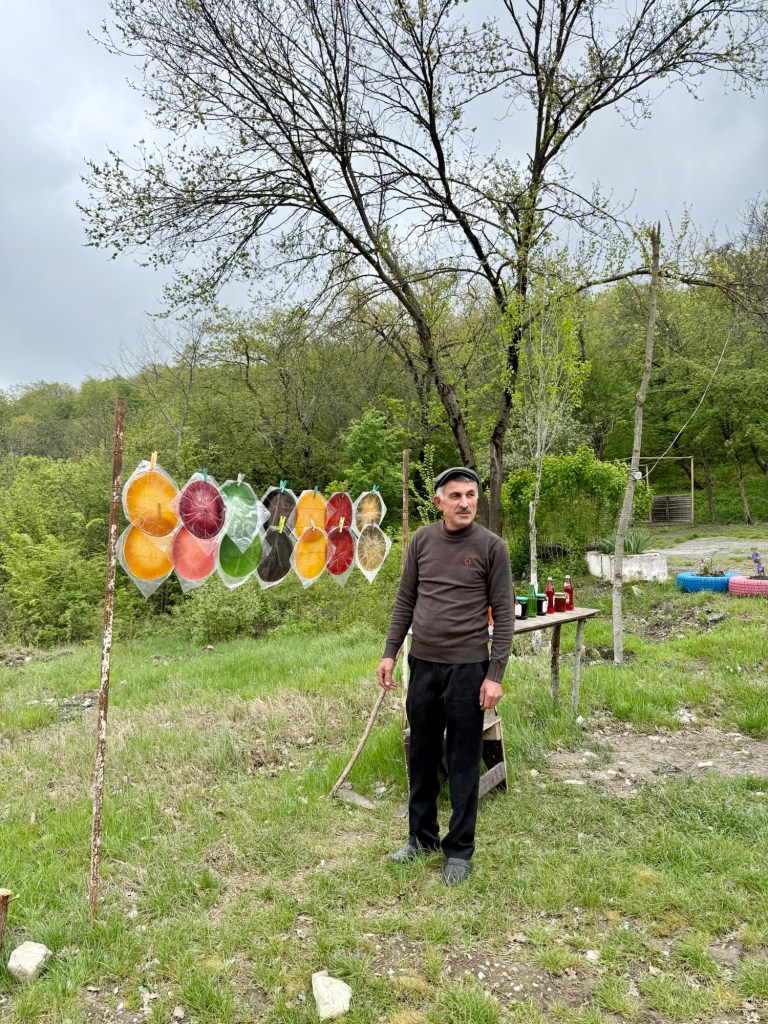
We walked back through the gauntlet of tourist shops and stopped to purchase some churchkhela – a sausage shaped sweet we had seen all over the place. It is traditionally made of walnuts, surrounded by concentrated grape juice, but other varieties have different nuts and different fruit juices. Apparently, Georgian soldiers used to carry them with them as they contained enough calories for one man of day! That was not great as I had to eat what I bought before I left as I could not take them home with me.
Apparently many that are sold these days are mass produced, but one seller here still makes them in the traditional way so we made sure to purchase from him. I really liked them but they were very sweet.
As we drove back in to Tbilisi, we passed some small protests happening around parliament. Apparently, there is some discontent with the last election held in October 2024 which re-elected the Georgian Dream party who have been in power since 2012. A number of international organisations have noted problems with the election and so opposition parties and many of the Georgian people have refused to recognise the results and have taken to the streets daily in protest.
These intensified when the current Prime Minister announced he was suspending talks on Georgia’s bid to join the EU. Currently Georgian’s have visa free access to EU countries and this could be impacted by this move.

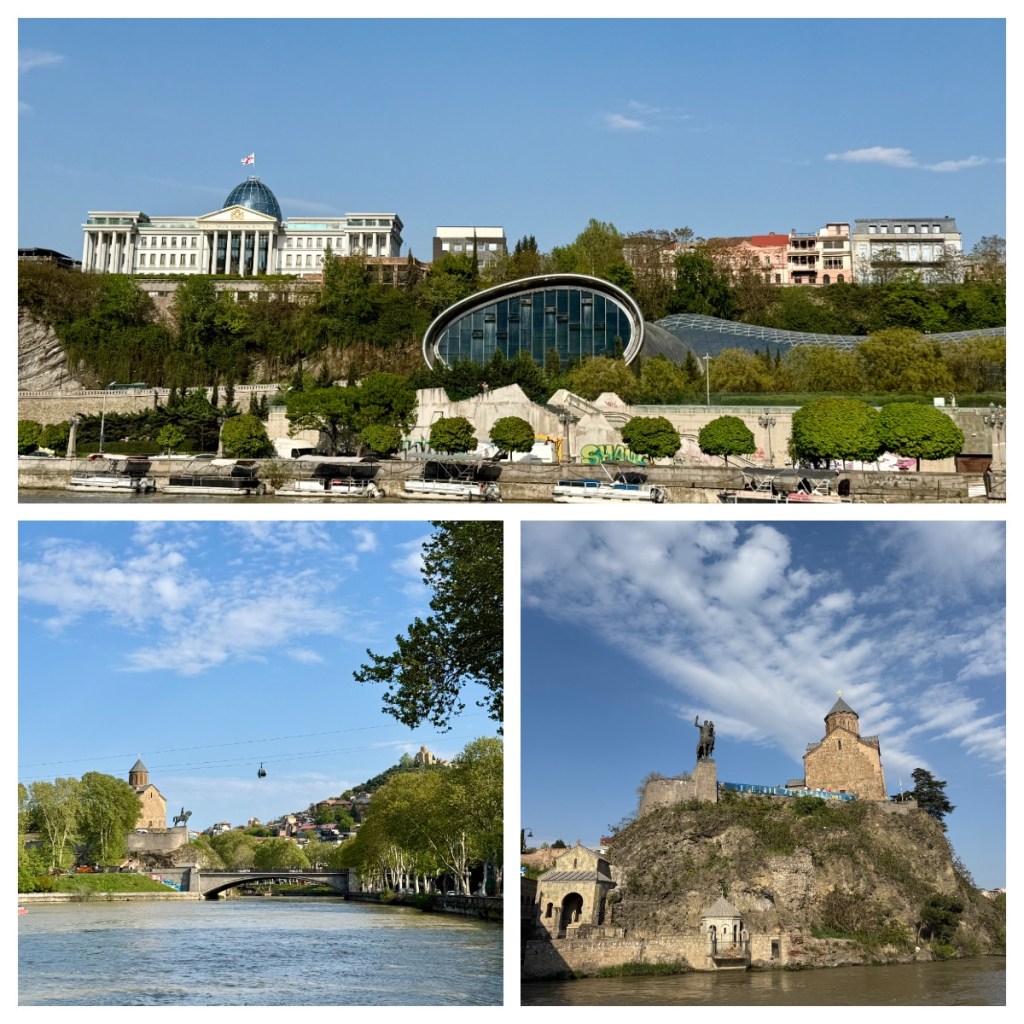
We continued on past a golden St George (on a very high plinth) before finding a parking space near the Metekhi church on the left side of the river. It is one of the oldest churches in the city and a great viewpoint across the river to the old city.
From here we walked down to the cable car station in Rike Park to travel 5 minutes over the river and old town and up to Narikala Fortress, perched on top of the hill, with great views of the city on the way. The cable car is a very popular way to get around for locals and tourists alike.
There is a beautiful panoramic view from the top, including a close-up view of Kartlis Deda or Mother of Georgia. Unfortunately the way she is situated you actually only get a close-up view of her behind! The “Mother of” is actually a soviet concept and many ex-USSR countries have one. The 20m Georgian monument was erected in 1958 and made of aluminium. It depicts a Georgian woman in national dress, holding a bowl of wine in her left hand to greet people who come as friends, and a sword in her right had for those who come as enemies. I am glad we got the wine lol


Instead of visiting the fortress (we have seen a fair few) we walked down through the National Botanical Gardens which lie in a gorge on the other side of the hill to the city. They cover around 160 hectares and it was a beautiful day for a stroll passed the waterfalls and trees with their spring blossom and even more great views – this time back across to the Narikala Fortress.
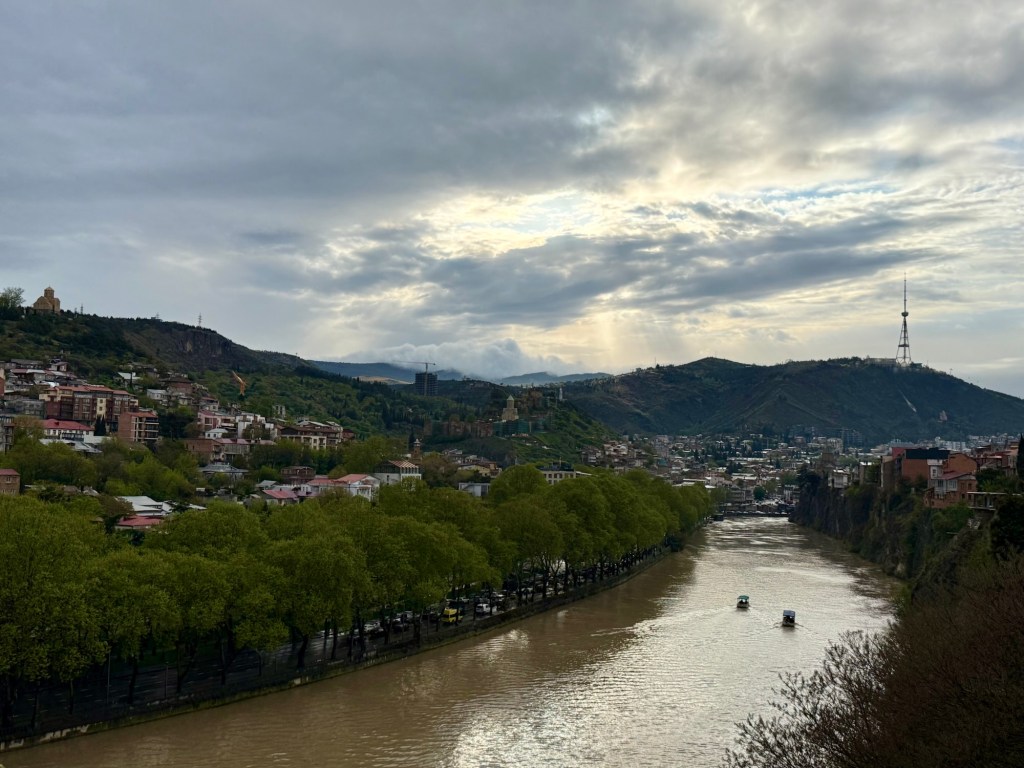
We ended up in the Tbilisi’s old town and spent a little time exploring the narrow, cobbled streets. Passed the famous painted houses with carved balconies, the very Islamic looking sulphur baths and views back across to the cathedral on the other side of the river.


We passed through the very tourist targeted area filled with bars, night clubs and cafes, before stopping to admire the Tamada statue. We had seen a smaller version of him on the fountain in Kutaisi, but this time he is much larger and a cultural landmark of Tbilisi. If you missed the Kutaisi blog, the Tamada is a toastmaster and is a symbol of Georgian hospitality. He is responsible for leading feasts, offering toasts and is considered a person of wisdom, wit and respect. A should also note, that the sculpture is based on an 7th century artifact found in Vani.

By this time it was almost 4 o’clock and we had not stopped so definitely time for some food. We found a cute café, and tried a couple of Georgian dishes we had not yet had. Pkhali, a dish of chopped up spinach leaves combined with ground walnuts and herbs (it tastes much better than it sounds) and another type of Khachapuri, this time Adjarian Khachapuri.
Perhaps the most iconic of the Khachapuris, the Adjarian Khachapuri looks like a boat of dough filled with melted cheese, butter and an egg! I was not really sure how to eat it but ended up using some of the dough to mix the egg and cheese together and then scope the filling. You do have to be careful of where you take the bread pieces from at the beginning so you do not get a flow of cheesy goodness all over the place. Again, I think it tasted way better than it sounds. Lol.
We washed this down with some wine for me, and a fresh tarragon lemonade for Ania (who is still on antibiotics). The wine was good but the tarragon lemonade was amazing, sooooo much better than the sugary fizzy stuff in a bottle.

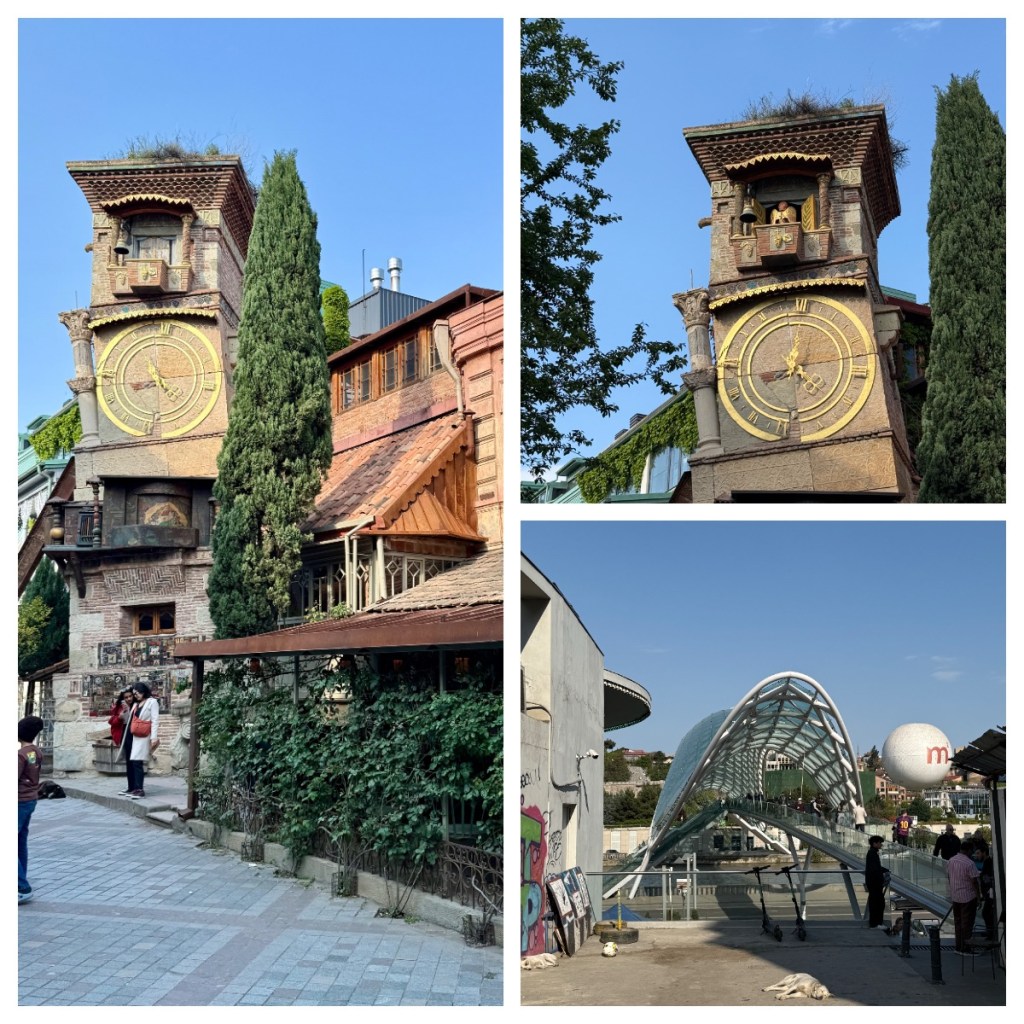
This part of the city felt with European and we continued on passed the Peace Bridge and ended up at the Gabriadze Clock Tower, more commonly know as the Leaning Clock Tower or Wonky Clock. We happened to stumble across it just before 5pm so were just on time to see the angel comes out and strike the bell on the hour. It is actually part of the puppet theatre building which was also created by Georgian director, screenwriter and artist Rezo Gabriadze.
We slowly made our way back to our hotel and over 20,000 steps later I was ready for a relaxing evening of packing and preparing for our next destination tomorrow.














































 Cockneykiwi takes flight